The CEO’s Art of Selling: Engage Customers, Employees & Investors
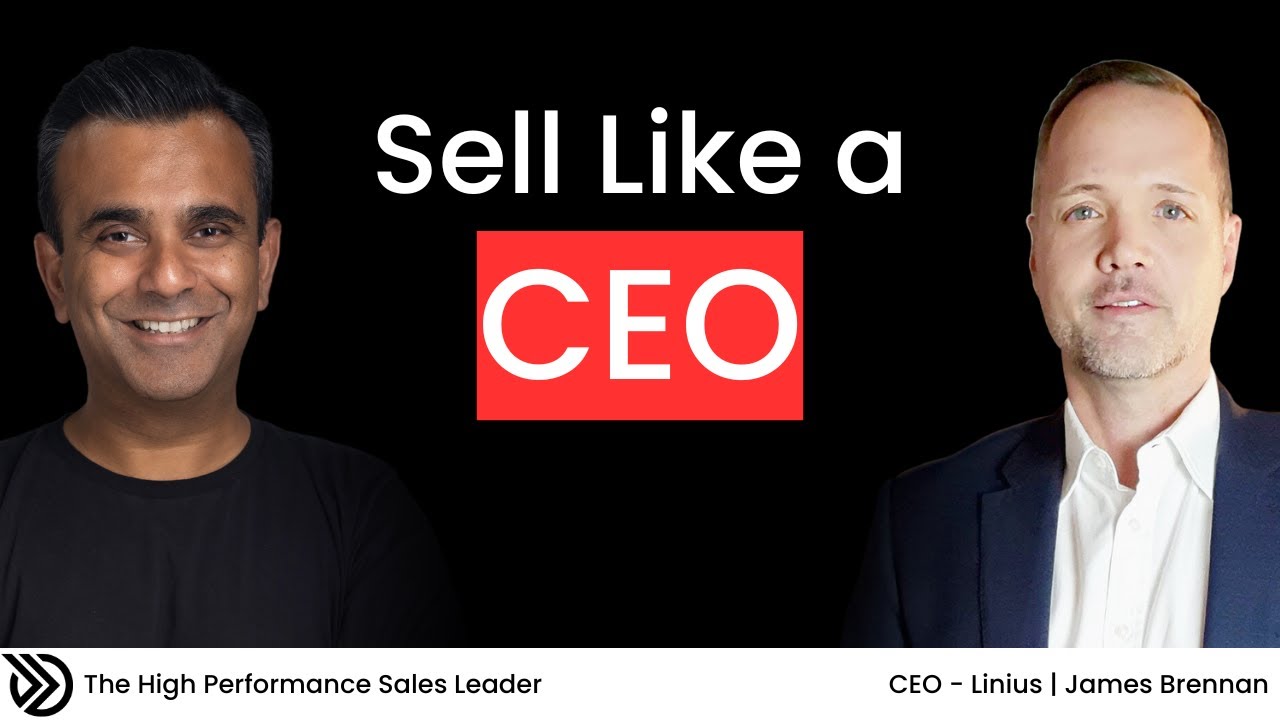
In this SwitchKeys Podcast episode, host Prasakha interviews James Brennan, CEO of ASX‑listed Linus Technologies, a small startup that has built a unique video‑archive personalization platform primarily for the sports market. Brennan explains how Linus transforms massive, under‑used video libraries into searchable data, enabling fans to receive personalized highlight reels at scale. He recounts his career path—from an accounting intern at GM to senior roles at Polycom, BlueJeans, and other tech firms—highlighting how his diverse experience prepared him for the CEO role, where he now wears many hats: customer success, engineering liaison, product strategist, salesperson, and investor liaison. Brennan discusses his sales philosophy, emphasizing a balanced pipeline of quick wins and long‑term lighthouse accounts, and how he “sells” product vision internally to align the team. He shares how the company navigated a painful restructuring, maintaining culture through clear vision, autonomy, and open accountability, resulting in zero attrition. The conversation turns to investor relations, where Brennan treats fundraising as a sales effort, adapting his messaging as the market shifts from momentum to financial results, and stresses the importance of personal credibility. Finally, he reflects on leadership lessons: trusting gut intuition, moving fast, and embracing speed in a startup environment. Throughout, he offers practical advice on communication, culture building, and managing the pressures of a CEO role.
Chapters
Welcome to the SwitchKeys Podcast. This is your host, Prasakha, and today I'm joined by James Brennan. James is the CEO of Linus Technologies, an ASX-listed company. He has a rich history of working with incredible companies like GM, Polycom, BlueJeans Network, all very different-sized organizations. He is also one of the few people that I know that has started as an accounting intern and progressed to managing business units, roles in product management, marketing, technical sales, and sales. So it's no wonder he was the perfect choice as the CEO to build an amazing startup like Linus. James, thank you for joining us.
Great to see you, Priy. Thank you so much for having me on.
Tell me more about Linus, James. What does Linus do?
Yeah, Linus has been an exciting ride for me. Really great company with some great products and technologies in a very fun and exciting market. We are an ASX-listed company. We're a relatively small company, under 20 employees, or early growth stage. And we have a technology that lets us work with video in a really unique way. We are focused on helping our customers unlock the value of their video archives. So there's these massive video archives. We're currently very focused in the sports segment. So if you imagine decades of amazing sports content that largely sits unused after the live broadcast, there's some highlights and things like that. But we can access this massive archive of video and we provide really deep-level search so our customers can go down and find those segments, those moments of amazing content, things that people have forgotten about, things that people would love to see but haven't seen in decades. And we can, with our deep search algorithms, we can find those individual moments across massive archives. They could be distributed in different storage locations or different file formats. And we can then take all those little pieces and recompile them back together into personalized video that's either curated by the league or the team or the rights holder themselves to publish on their website, or ultimately directly in the hands of fans. So I could go in and search for Mohamed Salah goals against Manchester United in 19 or 2019. And it will literally pull up the 10 or 15 goals and play that as a 5-minute video stream that's personalized for me. Or imagine waking up on Sunday morning and you've set your preferences. I like the F1 and I like AFL and some cricket, and it creates a 30-minute personalized highlight video for me. And we can do that at massive scale and broadcast quality.
Oh, that's amazing. I've got a little movie running in my own mind as you walk me through some of those scenarios, right? That's just— That's so amazing.
And longer term, the technology applies to any kind of industry where we're heavily focused on sport. As a small company, we have to focus and do one thing well, but it's got applications in education and security and defense and film distribution. So it's this massive opportunity where we're starting improving ourselves in one and then really looking to disrupt the video industry.
That sounds incredible. And I think there is an absolute need for that kind of functionality that you just described, right? Because who wouldn't want to be able to spend their time on the most interesting things to them as against somebody else owning your attention, which probably is the most valuable commodity. So that is super cool.
And we're used to that level of personalization in every kind of search that we do, but it's nearly impossible in video because video formats and video files are big and difficult to work with. So the level of personalization in video is much less than we get in news and the websites and every other data element. So we basically decided to treat video like data. We break it apart and we manipulate it at will because we've turned it into data.
Right. Wow. So you have a very impressive trajectory that actually stretches across the globe, starting with GM at one end, and then you seem to have gone to more innovative and agile companies with every move. Tell me what drew you to the role at Lineus.
Yeah, it is interesting. I have gone from one of the biggest companies in the world at the start of my career and now down to a very small startup. So I've worked my way down as we go. And Look, what drew me to Linneus is just the potential of the technology. Number one, you've got to believe in what you're doing and you've got to see the vision for what the products can do. But number two, it was a perfect fit for me career-wise that took all of that experience across accounting and marketing and sales and product and put it together like in the perfect role. This company had amazing technologies and an amazing foundation of capability. That really just needed that, that strategic element and the execution. Exactly what markets are we going after? What products are going to fit those needs? And then how do we execute on bringing that to market? And that, that really is exactly what I thought I could bring to the table. So it was perfect timing, perfect fit.
Fantastic. Wow. When I look at, like you said, you've worked your way down into smaller, more agile companies. I can see that the impact that you will have has progressively grown over the years as you move into smaller organizations, as well as the accountability on making it work. So tell me a little bit more about, in your shoes, what is it to be like the CEO of a startup with a high-potential technology? What perhaps you expected and what is the road that you've had to walk? I'm assuming there are some real challenges. So tell me a little bit more about some of the lessons and the challenges.
Yeah, look, it's one of the great things about the CEO role, but particularly in a smaller company, is you do have to do everything. One day I'm a customer success manager keeping our customers happy. The next day I'm deep in with the engineers and trying to figure out problems. I'm setting product strategy and I'm out directly selling. I'm leading teams. I'm working with investors. So It is literally a closet full of hats that I've got to put on and work through on a day-to-day basis. And it's just so much fun, frankly. It's getting to have that influence and that, like you said, that accountability, but it's the impact that you can have across all of those different elements. So that's really what keeps it exciting for me. I've learned an absolute ton and it has called on every part of my experience through my career. So for me, it's really a perfect culmination of everything I've done so far.
Wow. Fantastic. And then clearly, as a, as a, as someone who has the revenue responsibility, you've got to sell. And tell me a little bit more about the heavy weight of the responsibility of carrying revenue and, and what that has required of you.
Yeah. So interestingly, I never set out to sell. I never thought I would be a salesperson. I never wanted to be a salesperson. Like you said, I started out as an accountant, moved into product and general management and marketing. And I had a mentor at one point in my career recommend that if I wanted to be a general manager or a CEO one day, that you need to do sales. If you're going to lead a team and you're going to drive revenue, you have to have been in their shoes. You, even if you don't like it, even if you do it for a year or two, You have to do it so you have that credibility. So took that advice and Polycom gave me the opportunity to do that. It was a fantastic career opportunity and it turns out I loved it. So I thought I was going to do it for a year or two and then go back to product management. Turns out I did it for 10 years before returning to product management and moving back into general management. The sales component, it's critical that I have that experience because I sell in so many ways. Sales is part of everything that I do, whether it's directly with customers, whether it's internally, whether it's selling to staff. I've got selling activities with our investors. Sales skills and sales capabilities are critical across the board in everything that I do in the CEO role.
Fantastic. You've talked about different stakeholders, right? You've got customers, you've got your product Related ideas, you've got current staff, you've got investors. Tell me, let's start with customers. What are some of your biggest takeaways or learnings that you would pass on as advice when selling to customers as a CEO?
Yeah, so absolutely, that is one of the primary ways that I sell at the moment. So being a small company, our staff and our resources are primarily focused on product and technology. We don't have a big sales force, we We have myself, the founder of the company, some of our board members, and then we've got a few sales agents peppered around the world. But the majority of the selling falls on my shoulders and the founder's shoulders. That is a huge portion of what I do. And to me, it's— I've always had the philosophy in sales, it's about building a portfolio and building an overall strategy for your customer and your pipeline. So you've got to have these big, long-term visionary lighthouse kind of things that you're going But especially as a startup company and keeping funding going and revenue going, driving near-term revenue is incredibly important. So I've always got to have that balance of what can I do quickly? What can I do to get those proof points and those validation points into new market segments that we're growing? You've got to manage that speed with the long-term opportunities. So just as an example, we may work with some smaller leagues and teams and get things out very quickly and Learn from that, learn about our products, learn about the customer value proposition. But longer term, the real opportunities for us are with the likes of broadcasters. So you get one or two broadcasters, and that can dwarf what we've done in individual teams and leagues. But broadcasters take a long time, their sales process is very complex and a lot longer. So I've always found that it's about that balance. And even just as a salesperson, if you're only focusing on those big accounts, you're staking everything on those 2 or 3 deals in your pipeline. That is an absolute ton of pressure. And also, you've got to have that motivation as a salesperson. Momentum and closing deals and keeping things moving is always really important. So I always find that kind of that portfolio of pipeline has been most successful for me.
Yeah.
Wow.
That's fantastic. And I can see the The benefit of having worked in a larger organization in a sales role where you know that you can't just depend on a few big whales. You have to have a balanced pipeline. Otherwise, how many times have I heard of people on their way out because they waited and waited and it never came and they just ran out of runway? So that's really good advice. Tell me about, as you're listening to customers about what they need, and then trying to ensure that the team that's building the product, how do you find, manage that tension between what the customer is needing, what the product development and roadmap is? How does that work internally in terms of, let's say, selling or influencing internal stakeholders?
Yeah, so that's an incredibly important part. And again, general product management skills have really helped me there. But even the selling component of product has been really important. As a product leader and a product manager, I have specific ideas and things that I think, and from the feedback I'm getting from customers and the market, I have things that I believe are correct. And as a CEO, it could be very easy for me to just step in and say, guys, this is what we're building. I can literally make that decision and say, this is where we're going, this is what we're doing. But if they don't buy into that, if they don't have that belief and that ability, they're not going to have that same passion and that same vision for it that I do. And if I forced things into the organization, I'd be responsible for making sure that it got done. I've found that it's more important to bring people on the journey with you, get them to buy into those ideas. So you're selling your ideas, essentially, you're selling your vision, selling your concept of where the product and the market is moving. And if they buy into that, they then take that on as their own and they can then move forward and do that. Whereas just instead of saying, guys, this is what we're doing, to give them a list and they're off. It's, here's the vision. You tell me how we're going to do that. And if you buy in and you got that belief, so it's about selling that concept, selling the idea, selling the vision of where we're going.
That's amazing. And I think that is such good advice. Really with anyone who is trying to influence anyone else to do anything in the first place.
Yeah.
You've got to start with the why and good old Simon Sinek and where you can head with this thing. Because I love one of the quotes that I have from John Maxwell, which is that as a leader, if you are going somewhere and you turn around and there's no one behind you, you're just going for a walk. You're not leading people, right?
So So, yeah.
It's a good one. So, I guess going beyond the development of the product and that being something, then tell me more about how do you cast vision and build culture with your staff and make it a place that people want to journey with you towards that bright future? Yeah.
And this, I think it applies to current staff and even future potential staff and kind of growth. So I see it as two, two different things. And as a small company, we've been through some challenges in the past year. It's a tough capital market and we've had to restructure our business. So maintaining that culture and that vision and that belief of the team is incredibly important. We're really small. We're not big enough to have a whole lot of process and a whole lot of management. So Very flat organization. Everybody has input into it. And because we're moving so fast, you can't micromanage and you can't check in on everybody all the time. So it's really critical to have that shared vision, to understand the purpose of the organization, to understand where we're going, what we want to do, what we want to be, why we're doing this, what our customers want. And if everyone believes in that, you can move so much faster rather than having to be prescriptive in everything. You just get that kind of same mentality and that same understanding and that alignment. And then people are motivated and they're truly understanding and truly caring about where you're going. And then they can put their own spin on it. So we've had to institute a very open culture of accountability and autonomy and Make a decision, let everybody know about it, move, but don't wait for approval. Don't sit and debate and think about things. Make a decision, move on, learn from it, modify, and do that as you go. And making sure that is really clear to everybody that they feel that and believe that, it's incredibly important. We didn't necessarily have that. But about a year ago, we had to go through a bit of a restructure where we reduced our staff by about 40%. We cut back to a very core small engineering team and a smaller commercial team. And it was critical that we had everybody bought into that same vision. Guys, we're getting lean. We have to do this is why and where are we going and what's going to come out on the other side. And by having everybody bought into that, We were able to have zero attrition during the last financial year. So even after a really difficult restructure and people going, are we going to make it? I had everybody believing we're doing this for the right reasons. This is where we're going. And everybody was so bought into it that they, you know, came along for the journey. And it's been really great to see those people mature and grow with the business. And thankfully, we're now back in a position where we're growing again and we're hiring again.
Oh, that's fantastic. And I can just see the combination of having a vision and then obviously communicating that, right? I think that often I find with startup CEOs, there is a gap between what they see and what the others see. And it's actually a communication gap.
Yeah.
People just don't really understand or see where you're going. And I think, what are some tips that you have that you can break it down and make it simple so that people Can, can it, 3 to 5 things on how to communicate this with people?
Look, the first thing is you have to be clear yourself. You have to know what you want out of the business. What's your vision? What's, you know, if you're unclear and you're waffling, it's going to be obvious to everybody. So that's the first thing is really having that clarity in yourself. And that doesn't mean that it doesn't change, that you don't adapt and you don't modify over time. But you, you have clarity. And if it changes, you are clear and upfront about that. And then we haven't done this perfectly ourselves, but trying to bring everybody along on the journey. Sometimes you do get moving so fast that you forget that not everybody knows the same things. So it's about taking that time and remembering that you've got to communicate that, communicate what you've learned, communicate what you've found over the past couple of weeks or months, and keep people moving on that journey with you. You can't share everything. but you share the important things that make sure that they're clear as things continue to adapt.
Fantastic. And let's talk about investors. That's another huge part of your responsibility. So tell me about the component of selling, communicating, influencing, educating investors.
This has been the biggest area of learning for me. Previously, I've had general management roles, sales leadership roles, product leadership roles, where I've had influence on preparing CEOs to speak with investors and giving them the materials and reporting internally, reporting to a board. That's all very different than reporting to investors and having the responsibility and accountability and answering to the people who are actually putting their hard-earned money into your business. So for me, this was a part of the job that I've had to learn on the go. I've had to learn it as I'm doing this. And to some degree, it is a sales effort. I sell to current and future investors similarly to how I sell to customers. And it takes up— it's about 30% of my job is making sure that our current investors are clear and they're comfortable and they understand where we're going to. It's been a challenging 12 to 24 months in the capital markets. And you know that it's been a very dynamic time for me. So learning how we keep our current investors believing and trusting in what it is that we're doing and where we're going and how we attract new investment in a very tight, very competitive capital market. So to me, it's the needs of those investors have shifted over time. When I very first started, it was around providing news, providing momentum, providing clarity on new deals that are coming in. That was the phase that we were in. Our shareholders wanted to see that we were bringing on new customers and creating momentum in the market. Then they wanted to know the product strategy. In the past, we were very project-oriented. We had this amazing platform, this amazing technology, and every customer that we brought on was getting bespoke implementations of that. So we had to create a SaaS platform and a SaaS strategy, something repeatable and scalable. So that was a phase that we went through. And now everything is about financial momentum. So they've said, great, you've got some momentum, you're bringing on new customers, you've got this product strategy, you've got all this. Now where's the money? Now that— now it's where the rubber hits the road. So That's the stage that we're at, really showing our investors that, that momentum that we've created, the strategy we've put in is now really paying off and where we're going to in the future. So it's very much a sales effort. I have to convince them that the business is in good shape. I'm selling the business and the strategy and what we're doing, but almost more importantly, it's about selling myself. At the end of the day, I'm responsible. They're looking to me. I'm the face of the business. I'm the one that they're talking to. They have to believe in me. If they don't believe what I'm saying, I could have the best strategy and the best presentations and whatever it is. If they don't believe me and trust me, it means nothing. So that's probably the biggest thing that I've learned is Really believing in myself. Again, it comes back to that thing. If I'm not clear, if I don't believe in what we're doing, then it doesn't matter what I say. It doesn't matter what presentations or what story I spin. If I truly believe in the business, and at the bottom line, I absolutely believe that Linneus is a billion-dollar company. Our market share doesn't currently, or market capitalization doesn't currently reflect that, but we are a billion-dollar company. Our technology is going to revolutionize the video industry. That's the belief that I have to have, and I have to convey that to the shareholders.
Yeah. Wow. And yeah, that's amazing. I think that clearly you've got different audiences that require different things from you. How do you manage the pressure that can come with a role like this?
Look, there's a couple of key ways. You can't do everything yourself. That's one of the first fundamental elements is you have to have people on your team that you can trust and that you can rely on. Key members of your team. I'm not an engineer, but I've got someone that I completely trust on our engineering side. I used to be an accountant, but I don't want to be an accountant. So I've got someone that's looking after that. The board members that we've built around this business are fantastic. We've brought in some amazing talent that that act as mentors and guidance for me. We've got someone who's an expert in finance and capital. We've got someone who's an expert in operations and growing one of the biggest broadcasters in the world, and he's got experience in that area. And then we've got a startup CEO who has started up companies in the sports tech industry and worked with all of the sports. Companies that we're working with and talking to now. So it's about building up that support mechanism around you. That's the first thing because you literally can't carry all that weight yourself. And it goes across the board. Like I said, we've, we're less than 20 employees. So everybody on the team has to be pulling their weight. We've got a great set of employees with diversity. We're spread across the world. We've got part of our team here in Australia, part in the UK, part in India. So we're a truly global diversified organization that lets us support customers around the world. And then sometimes it does get a lot, frankly, it's long hours and it is stressful and wearing all those different hats can take a toll on you. I have to remind myself very consciously about that balance and things like my health and my family and mental health, things like that are incredibly important. And I do tend to have to force myself to remember that.
Fantastic. One more question before we wrap up. How has this experience so far changed you?
That's a good one. Look, it's definitely matured my thinking and brought together all the things that I've learned from my career in the past. It's challenged me and led me to really have strong core fundamental beliefs in My number one, my abilities, but my intuition. I'd say it's really about giving me that true understanding to just trust my gut. Most of the time when I make a decision, and maybe I'll analyze things and look at it from different angles, 95% of the time I come back to that original gut feeling that I had. And it's because I've had these experiences, I've gone through these things before. So I'm not saying Don't analyze things, but trust yourself. It's your— if you've gone through it and you've put in the hard work and the effort over a 20-year career, it's likely that your gut is going to lead you the right way most of the time. The other thing that I would say that I've definitely learned is move quickly, especially in a small company, especially in a startup world. It's all about speed. It's all about agility. And nobody ever looks back and says, man, I should have slowed down. Always those— it's— yeah, you never look back and think, man, I should have analyzed that more. It's about movement. You're not always going to be right, but make a decision, move on, get on with it, learn from it, adapt, grow. So speed is probably the biggest thing. That I've had to learn. In my past roles as part of bigger organizations, you've got just a portion of responsibility. You can afford to take your time and do things the right way. In a small organization, when you're at the helm of it, you've just got to move.
Fantastic.
And I do look back and over the past 18 months and go, I wish I had, I should have just made that decision faster.
James, thank you. This has been An absolute delight and very eye-opening. Thank you for the generosity of sharing all that you do. I appreciate it, and I know it's gonna help so many people as they come across this episode as well. So thank you for joining me today.
Thank you so much. It's been a great time. And look, we've known each other for a while, and I'm glad you've seen my journey, and I appreciate the opportunity to share it with everyone. Thank you.
More from Tom




Why GTM Leaders Still Struggle with Pipeline Visibility in 2026 | AI vs Traditional CRM





How to Build High-Performance Sales Teams | Direction Alignment Commitment (DAC Framework)

