How to Build Real Confidence When You Feel Invisible | Kay Fittes

In this Direct Your Life podcast episode, host Tony Suriano interviews Kay Fittes, founder and CEO of High Heeled Success, about building confidence and thriving as a professional woman. Kay shares her experience juggling presidencies of two organizations, emphasizing the importance of building a strong team, setting clear boundaries, and delegating effectively. She discusses practical communication strategies, the role of feedback, and how to conduct reputation surveys to uncover blind spots. The conversation explores the use of humor and role‑play to improve presentation skills and negotiate raises or promotions. Kay also reflects on personal reinvention, self‑awareness, and the concept of "designing" one’s life, encouraging listeners to view their life as a movie with evolving titles. The episode concludes with calls to action to visit highheelsuccess.com for resources, newsletters, and coaching services.
Chapters
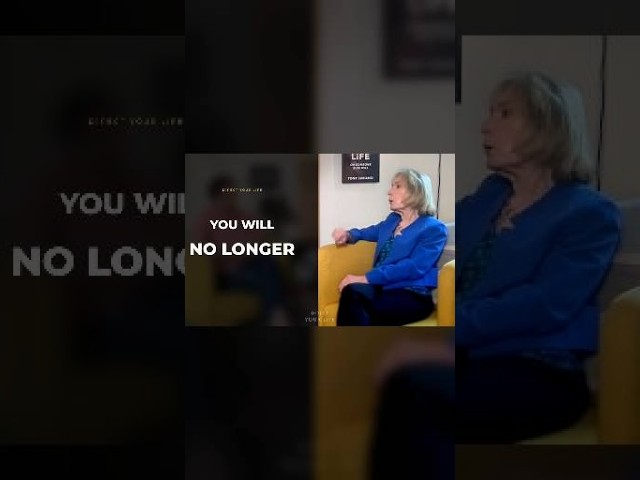
I'm learning as I go, and that's so important because if you wait until you're totally ready, you will never do anything. You will no longer even know who you are because there will be nothing left of you. Everybody will take a piece. If we've got a message that we really want to get across and we don't know how to communicate it effectively, What a loss, you know? If your message dies with you, think what it keeps the world from gaining.
How do you handle being a president for 2 organizations and then handle your internal chaos that comes with that?
There is one word that comes to mind, and that is—
My wife says this intro sounds like a conspiracy mystery. So I'll stop that voice and I'll just tell you, this show is here to give you some cinematic fuel, tools, and excitement so you can stop drifting and start directing your life better than any movie. Quick question for you. Have you ever thought, how do podcasts bring on such phenomenal guests, bring you quality content for free? Well, supportive people like you just hitting the subscribe and follow button. A lot of people are loving the show. They're enjoying the conversations, but some of you out there, you're enjoying, but you're not subscribed or following. So do me a favor. You're a supportive person. Click the button, follow, subscribe the show. Costs you nothing, keeps the lights on, and you'll never miss an episode. And I promise I'll do my best to make this show the best for you every single episode. And now back to Directing Your Life. My guest today is founder and CEO of High Heeled Success, one of the coolest names I've ever heard of so far, by the way. She is specializing in training, speaking, and coaching women eager for professional success. She's a professional and national speaker, author of multiple books on confidence, humor, courage, and communication. Her name is Kay Fittis. She's a mentor and friend of mine. I'm excited to have her on the show. Let's welcome Kay Fittis to the show. We're going to jump into what you're excited about right now.
Oh, I'm excited about 2 things right now. First, I'm excited. I'm president of American Businesswomen's Association local chapter, and this is an opportunity for me to really work on my leadership and delegation skills, and at the same time, do a next step with development for women of their professional skill sets. It is an international— national, not international, national organization, and one that has a lot of high expectations for women. And this is taking on presidency of 2 organizations at one time is A big hill. And at times I think I have lost my complete mind. And other times it's like, nope, that, you know, I know what I'm doing. I'm learning as I go. And that's so important because if you wait until you're totally ready, you will never do anything. Now, that's a real, real stumbling block for a lot of people, especially for women. So that's one thing I'm really excited about.
Wow. How do you handle being a president for 2 organizations and then handle your, your, you know, internal chaos that comes with that sometimes?
Oh, ask me in a year, um, and, and I'll— maybe I'll have a different answer than I do right now. There is one word that comes to mind, and that is team.
Team?
Yep.
Really?
Got it. You've got to have a good Team, really understand what people's skills and strengths are, and lean on them in the very best way possible. One of the things I'm realizing right now is people are offering to help, and I know that I have a little bit of a resistance to say yes because I know what they're carrying. In terms of a load for themselves personally and professionally. But if they're going to offer, I better say yes and take them up on their offer, or I will not make it through the next 2 years. That's, that's all there is to it. Yeah. The other thing I'm doing that is really enabling me to tackle this is knowing when to shut my office door closed tight, I could do my business and presidency of these 2 organizations 24/7. I really could. And if I allow myself to do that, I won't do anybody any good. Mm-hmm. I'll be burned out. And I know that I won't do the kind of job As president that I want to do. I'm really excited about that.
That sounds, that sounds exciting. You're, you're helping a lot of people and also you're growing.
At the same time. Yeah.
So team.
Yeah.
The other word that she just mentioned subtly is boundaries.
Oh, big time.
So everyone listening, we're gonna dive into boundaries, which is part of confidence and part of communication.
Yep.
Because if you don't have those things combined, it's hard to set the boundaries. So that's why you should listen to the rest of this episode. But Kay, why should people listen to the rest of this episode when it comes to whether leading leadership professionally as a woman, but also men?
You know, in every role you're ever going to take on, you're going to have an opportunity to lead. And if you don't really understand the value of a powerful team, and if you don't understand the value of boundaries, you're going to go down for the count. That's all there is to it. Because no one can do everything, and you certainly can't do everything well. And boundaries will— without boundaries, you will destroy yourself. And I cannot say that more strongly. You will destroy yourself. You will no longer even know who you are because there will be nothing left of you. Everybody will take a piece. Wow. And there's nothing left for you.
Now I'll put you on the spot. Can you run us through a little example of How to set a boundary? And you can either— maybe we pick a topic.
Oh, sure.
I could be the person asking. What would you suggest?
Okay, great example happened a month ago maybe now. We were at a Toastmasters meeting. We had one of the officers that's part of our district, and he asked me if I would be willing to take on an area director position. Well, I'm currently running a busy business and I'm president of 2 organizations. So what I said very kindly was, I am incredibly honored that you ask. At this particular juncture, that is not reasonable for me. Hmm. His response was so gracious. He said, that's kind of what I expected, but thank you for leaving the window open.
And you wanted to leave it open, perhaps.
I did, because at some point I very well may want to do that again. That's important.
Distinction, because sometimes people leave windows open when they shouldn't.
That's right.
And you have to know how to tweak that.
You know, and when you're saying yes and you know you should be saying no, You can feel it from the tip of your head to the tip of your toes. Yes. I mean, you know, I'm going to be sorry I said yes. I really do not have the time for this. I am not going to give it the kind of attention and expertise it needs. And this is a biggie, and you are likely to become Resentful. Lack of boundaries leads to a real short line to being resentful, whether it's home, work, volunteer situations, you know.
Anything. If, yeah, if you're not ready and you're going to be watered down.
Yep.
Resent. So there's 3 words that were dropped.
Yeah.
Let's say them. Destroyed.
Yes.
Boundaries.
Yes.
And resentful.
Yes.
Wow.
Could we get a little heavier here?
Yeah, it is so true. I have— I think that's one of my superpowers, boundaries. You said one of your—
So interesting.
Was observing and, and realizing, oh, if that's over there, yeah, I can offer that because I noticed. I do think boundaries are— and sometimes it can seem a little bit of a shut-off to people, and I've had to learn to kind of navigate that. Like you said,
there's a way, there's a way to do it. You know, if the person that is listening to you walks away going, well, I, I really did have a win there, even though they said no, you, you know you have done it with grace and aplomb.
Yes, yes. And that should be taught in high school. Oh, I say that about so many topics that aren't taught.
That's the truth. That would be a life skill that should be at the top of the list.
Communication. Why should people work hard, study, learn communication? What does it do for you if you learn how to communicate effectively and just progressively better?
Let's look at the contrarian of that. What happens if you don't? Because some people that are going to be listening to us today are more motivated by loss instead of gain. And if you do not communicate well, you have lousy relationships. If you do not communicate well, you will never succeed in the way you want to in the workplace because people— you will not get your message across, you will not get cooperation, you will not get the kind of help that you need, you must be able to communicate in a way— here's the key— in a way that people will listen.
I am thrilled to say the Direct Your Life podcast is brought to you by my favorite coffee, Danger Coffee. Why? Because my body is my temple. And if you care about your body, you care about what goes in it. Danger Coffee tests and screens for mold and toxins, which 90% of other coffees— nasty, sniveling coffees— have in them. That can affect your mood, that can affect crashes and all that stuff you don't want. I have never, and I mean never, had a crash drinking Danger Coffee. It is my favorite. It tastes the best. I've ever tasted. It also has 50+ trace minerals in it. I'm excited to tell you, you get 15% off your first order. Just type in the code TONY at checkout, or simply go to dangercoffee.com/directyourlife. Get your cup of joe in the best possible way with Danger Coffee. Now back to the show.
One of the best books I ever read about business had nothing to do with business. It's the title of it. I had a teenager at the time. How to Talk So Children Will Listen and How to Listen So Children Will Talk. Hmm, that's a good one. It's a good— I don't remember, quite frankly, the author, but go out and Google it. Take a look on Amazon because it is the The concepts are identical to any kind of business communication you're going to do. If you communicate in a way that turns people off, that makes them angry, that makes them feel insulted— Mm-hmm. Just had experience about a week ago being on a Zoom with someone that I truly believed wanted to be helpful, but they only came off as arrogant and a know-it-all. And I was observing, going back to powers of observation, I was observing everyone else shutting down.
Yeah.
Because of it. It was like— and finally, I had to just kind of shift the conversation and say, well, we've heard a lot from you today. How about we hear from someone else now? Because I thought, this person keeps on talking.
Yeah, and she doesn't— she's not aware.
She's totally, totally unaware. And so communication is so key. You know, we've got to get better at it. If we've got a message that we really want to get across and we don't know how to communicate it effectively, what a loss. You know, if your message dies with you, think what it keeps the world from gaining.
So many people pass on, and their, their friends, their family, they didn't really get to know them because they didn't know how to communicate.
That's exactly right.
They find, like, they're— if they have a journal, which I feel like if you're journaling, you're probably a better communicator.
Oh, I wonder. That's a good— that's an interesting thought. Very likely.
Wrote down the word that stuck out, another word dropper: awareness.
Oh,
so If you're listening and you think that was you, just work on awareness. Even if it wasn't you and you think you're a good communicator, think again, just because we always can grow awareness.
Here's something you might want to, to have your listeners consider doing. One of the things that I do with my individual clients in coaching is fairly early on in our time together, I have them do a reputation survey. I have them choose 3 to 5 people from their back history as well as their current life, both personal and professional, and ask about 5 really what I would call pithy questions that really get to the heart of the matter. And they— one of the questions that almost always brings out great information is, what can this individual do for themselves that they have no awareness whatsoever that they need to do? Wow. And I mean to tell you, the answers to that particular question blow people away. They— we've heard everything from they don't know how great they are to they have no awareness of how they are turning off other people by their body language. Mm-hmm. You know, I mean, the gamut runs just the full distance on what people find out about how aware or how unaware They, they are.
Yeah, that is— that's ambitious in all the great ways.
Yeah.
So how can someone that's reluctant get over the reluctant part? Because people are like, I don't want to know what people think about me, but they care what people think so much. How can they do that? Because for me, I don't know, I've just been in the game so long, I'm like, please tell me. Oh, like, like yesterday I actually announced my book signing coming up. Yeah, last minute, randomly. I wasn't It wasn't planned, and I, I just did it, but I kind of botched it. I was just like, hey, if you have nothing to do Saturday, come to the book signing. Well,
but you did it.
At least I did it. You did it. Thank you. But what I realized soon after is one of our guests came up to me, and she talked to me last time. She's a nice person, and she was like, you didn't really sell that well. And I was like, you're right. Good on you. The fact that I didn't really I had this thought of doing it, but I didn't really plan it right, and it was last minute. And she's like, yeah, you could have done better. And she just— well, great, she was direct.
Yeah.
And I was like, give me more. Yeah. What would you have done?
Feedback is its own subject, and I'd love to come back and just talk about feedback. But I will say this, the more— there are 2 ways of looking at feedback. One, get as much as you can get, certainly. And there's always a kernel of truth in feedback. But with some people, it is only a kernel of truth. Mm-hmm. Because there are people that will give you feedback that It is not meant to be for your growth and progress. It's meant to put you down. It's meant to be malicious. So you really have to weigh feedback. What's the intent here? But the more feedback you get, the tougher your skin gets. I'm the perfect, perfect example of that. As someone that had Pretty low self-esteem and pretty much big fat zero confidence. I was terrified of feedback for a very long time. Mm-hmm. And as time went on, I was— I would just count myself lucky because I had some bosses that gave just beautiful feedback. I mean, they did it in the way that people write books about it. It was done with, I would actually say, love. Hmm. I mean, they really wanted me to reach my potential. They really wanted me to have higher expectations of myself. So that part was luck. But I got to the point where I would take the feedback, I mean, the written feedback, and look at it and go, 1, 2, 3. Okay. I mean, this is really something that— 1, 2, 3 things that I really want to focus on. One, what do I absolutely believe is true about myself that I need to change? Hmm. Number 2, what is something that they think I need to change, but I'm feeling pretty darn good about the way I'm doing it anyway? So I'm still going to hold on to that one. And the third one, A great big question mark. I don't know. I don't know if this is real.
Let it sit, maybe.
I let it sit, but bigger than let it sit. I need some more feedback, maybe from them, but I likely need some more feedback from some other people I trust about the same issue.
Yeah, that's good.
Yeah, I mean, people can do that with feedback they get from their boss. They can get feedback for, you know, use it for any kind of feedback they get. But I do believe, you know, you've mentioned Toastmasters, that, that's, that's how we met. I do believe that people get better at taking workplace feedback because of being in Toastmasters, because every time they get up and present They get feedback and we do it in such a way that it is, it is loving. You know, it's meant to help that person be better.
That's been huge. Yeah. Being at Toastmasters has helped me continually accept feedback and sort through it in a good way, but also how to deliver it better. And we're always saying, say something good first.
Yep.
And then mention some improvements and then—
And specific improvements.
Yeah,
specifically show them how to do it.
Yeah, you
know,
I love that part of it. So what I wrote, a little thing here, getting and giving feedback. So there's 2 sides.
Yep,
you need to know both.
Yep.
And you— I loved how you have 3 specific ideas when you get it. So to re-remember that, you said, what do I believe is true about this feedback? What do I believe that might not be true, or what I really like, I sit well with it.
Yeah.
And then the big question mark.
Yeah.
That you can— whether you want to just let it sit or let other people you trust share their ideas about that specific idea.
Absolutely.
That's a great thing.
I'd like to add one thing there. I would say early on, oh, even as a child, if I got negative feedback I was defensive as much as one could be defensive. It has taken a lot of years not to lead with defensiveness.
I have to chime in there myself. When I was a beginner filmmaker, I started making films and I would show people. I would give like so many disclaimers before I pushed play, basically Excuses in case you think it sucks. So basically I could say everything bad about it so you have nothing to say. Yeah. So I don't feel attacked. And they would often say, just, just play it, come on, just play it. And they would start getting irritated because I'm like, so we, we only had, um, one day to shoot it, or 3 days. Yeah, there was no budget. Uh, this is the second film I made. I mean, every—
Every disclaimer under the sun.
And here's a tip, if that's you out there, this is what helped me I just changed the mindset. One, you don't need to explain anything.
Nope.
2, if you have a chance to edit whatever you're doing, whether it's a speech coming up or a film, in my case, when I show people that, if you have the ability to edit and improve, just accept that because you want a better product or a better whatever, better life. So No excuses. And, and it bothers me, and that's, that's a big word, it bothers me when people try to bring up too many disclaimers because I used to do it. Yeah, so I'm—
you recognize it.
Yes, yes. So that will help our lives. And, and man, you made me think of another class we need. So we need the boundary class in high school.
Yep, for sure.
Communication. And they need to role-play the boundaries.
Oh.
Inside the classroom.
Absolutely. That's something I do with my clients on a consistent basis. We role-play a lot, and I encourage them not just with me as their coach to role-play, but, you know, get a trusted friend, you know, role-play this with them. But I never use the term role-play.
Really?
Oh yeah. Because the words role-play freak people out. Ow! Okay, we're gonna do a demo, we're gonna do a mock run-through. Just eliminate role play from your vocabulary, folks, because you'll watch people look like they're gonna faint on you.
Yeah, yeah. Or sometimes role play, they're like, I'm gonna like fake it. Yeah,
I'm
gonna act it out instead of— exactly, kind of get it in your body. Yeah, feel how So then out there in the real world, you're okay with that uncomfortable feeling and you start understanding it.
Yes, but it is a critical tool to use when you are going to communicate about anything new. I would say one of the areas that I do mock trials with, so to say, with clients are When the women that I work with are going to be going to ask for a promotion, or ask for a raise, because those are 2 things that tend to stick in people's throat. Mmhmm. And to practice that with me in a non-threatening kind of situation is— really gets them to the point where they can communicate it effectively, and they don't feel so Horribly uncomfortable doing it.
Yeah, it's just practice.
It's just practice. That's right.
Now I want to ask you about humor. How, how does one start? I don't know if you can answer this. I don't know if you've always been fun and funny, but I believe humor is one key to directing your life better and enjoying life better. And not letting all the problems fester and attach to your, you know, your invisible cape because you're Superman, you're Superwoman. Yeah. But you let it hold on the cape. But with humor, it starts flying up.
Yeah. Yes. It becomes like a boomerang. I tell you, I wish I had the formula of how I got here because people tell me often, oh, you're so funny. I was not. I was not funny as a kid, for sure. I think it— the key for me really is playing off of my uniquenesses.
Yeah.
I use a lot of humor about being short. I'm 4 feet 11. For those of you that are just hearing my voice, you cannot see me, but I do look taller when I sit in a chair. So I play off of that. I play off of being a Southerner. I have a very strong Southern accent. In addition to being short, I'm petite. I'm tiny. I will give you an example of how I use that. I was in a business meeting one time. We were seated around a conference table, and this gentleman says to me, You are such a cute little thing. And oh, I was pissed. Every harassment bone in my body went, nyah! at the time. And I just turned to him and I said, you're a cute little thing yourself. I mean, there was no blood left in that man's face. Wow. He turned white as a sheet. and just nodded at me and said, I get it. I get it. And after that, conversations with him were not just great, they were profound. He said, I really was being patronizing, wasn't I? And I said, that's how it came across to me. I don't believe holding him to higher expectation— I said, I really don't think that was your intention, but that's how it felt to me. So in terms of humor, if you can use your uniquenesses, that gives you a couple of first tries. Let's say,
know thyself.
Know thyself.
If you know yourself, you can— you know who you are, you're comfortable in your own skin, you can make fun of yourself. Yeah, a little bit, not too much. Yeah, sometimes people make fun of themselves too much and then they cower.
Yes. This is not about really throwing yourself under the bus at all. It's just, in fact, it's playing up your uniquenesses. And some people are going to be better at doing this than others, clearly. I oftentimes, when I'm When I'm coaching women on presentation skills, I will— one of the things I teach them to do is to write their own introduction, and their bio is not their introduction. And I'm always recommending that they have a little bit of humor right before they are introduced, like the last line, the last sentence in the introduction. Mmhmm. And I will tell you, I can have people work hours on— not because I'm asking them to, because— but they struggle with one sentence that's humorous about them. So some people probably are never going to quite get that, and to expect them to may be too much. It's a skill.
Yeah, it's a skill.
It works for you.
I'm not saying it's a skill where You will learn to be funny. Let's not say that, but you will learn to have fun, which could lighten the mood or lighten the feeling. And I think, I think everyone— actually, no, I'm going to take it back. I think everyone can learn to be funny. Not everyone can learn to be an amazing comedian. No, I think—
and I don't even think that's even, even what we're shooting for. I'll give you another example here. Some years back, we had a flood in our basement. And as happens oftentimes when those kinds of things happen, my husband was out of town. So I'm— it's early in the morning that I found this flooded basement, and I'm down there in my tennis shoes and my nightgown, right? And I am mopping water, and I'm trying to clean it up, and I glance at my watch, and it's like, Oh gosh, I've got to be at the hospital for some preoperative tests in like 30 minutes. So I had to run upstairs, throw on some clothes, and get in the car and head to the hospital. So I get there and I'm— they— I'm putting on the gown and, you know, I have to take off my shoes. And I look down like my feet have turned blue. From the blue tennis shoes. The nurse walks in. Here I am sitting on the table, and she looks down at my feet, and you can see she's trying not to smile. And finally, I just felt sorry for her, and I said, I come from a long line of Smurfs. So the example is be in the moment. What can be funny about that moment? What is it like? And then before I knew it, she had pulled another nurse in and she said, you got to look at this woman's feet. She comes from a long line of Smurfs. And then before I knew it, I had like a room full of nurses looking at my blue feet. So the key here is find something that's odd, unique, different, And something that, that's not going to destroy you in terms of your, your confidence or your sense of self. It's just something weird. Let's go with the weird, Tony.
It's a great word. Words that I love this whole episode.
Weird is good.
Weird boundaries destroy and feedback. Now I have to make an announcement about being funny or having fun. Sometimes I'm having too much fun. I'm, I'm allowing myself to enjoy and laugh at the situation or myself, and the other person's like flippant or something. They're like angry. Maybe they're not with me, angry with me, but something happened and I just decided that this could be funny.
Yeah.
Like, even if it's really maybe a scary thing or something sad, I could still— there's some sense of humor there. And it just allows me to— what's the word— digest it or embrace it. And I think that's a really brilliant way to live. I just— I think that's what
it is. And, you know, this in many ways comes back to observation, because if you're And I love to be funny. I really do. I think I play off of maybe what a comedian feels when a comedian is being really funny. He gets this wonderful audience reaction. And I'm a big ham, and I love that. But if I am observant, I know when enough is enough. Yeah. You know, because it If I don't do that, it totally becomes about me and not the other person. And I have seen myself fall into that when I've done a training, probably earlier on in my career, that I was being funny and I was getting great reaction and I kept going with it. And then, then I realized this isn't about the audience anymore. This has become about me, and it's almost like I want to— listen to the sound effect here, folks— go, I'm slapping my hand, you know, like, stop, because it's not— this isn't about you, Kay. This is about the people in this training. So quit off of trying to be funny and get back to what's really important.
Yeah.
It's a tough line, Tony. It really is balance. Really is balance.
I'm going to throw something at you here, and it can be a quick thought if it comes to you. We don't have to go too much. But why I'm asking you this is because it's a key component in the Direct Your Life philosophy. And you out there listening and watching, I want you to ask yourselves this. It's going to be a compass for your life. And it can change, but right now, what would your life movie title be?
That's interesting because I've thought a lot about this, and it depends on which movie. So I'm thinking sequel here. Right.
Yeah.
The first one, the first movie is Little Girl Alone.
Little Girl Alone?
Which is a real sense of, of how I spent maybe the first easily 18 years of my life. And maybe Movie number 2 would be Just Maybe, because that's where my head was. Just maybe I can be more than little girl alone. Third movie, third one of the trilogy here is I did it.
Hmm.
I did it.
High five right there. Wow. Wow. Did you know I was gonna ask you these questions?
Not a clue.
I didn't know I was gonna ask you these questions.
No, but I have thought a lot about that.
Wow. Everyone out there, think about what your movie could be called right now. But if you feel like pondering in the past, that's good too. Just don't get stuck there because you have to know where you were, know where you are, and know where you're going. I did it. That is beautiful.
Yeah,
let's wrap this up. I have a final question, but before, where can people find you if they want to work with you or get to know you better?
I would love to have them come visit my website, which is highheelsuccess.com. I would encourage them to do a couple of things: to opt in for our newsletter. It comes out every other month. It is chock-full of career-building ideas. You can They'll also get a lengthy— don't get scared by the length— but a lengthy career assessment. And I would also encourage them to go to our library and take a look at all the articles chronicled there, which if you read all of them, it would be like getting a master's in career success.
Beautiful. And that will all be in the show notes. Where can they find you on the socials?
Oh yeah, yeah, go to the website and all the socials are there on the website. Just click, click right there.
Great, and that will also be in the show notes. Now my final question for you, Kay, and everyone out there, think about this: what does it mean for you to direct your life?
It's all about reinvention. If I can be— I know people say this all I tell people all the time, if I can do it, you can do it. I believe that at my very core. I got to the point in my life where I knew there was to be more, and I got very intentional. I mean, it, it follows your script of direct your life almost completely. My terminology was just one word different. Mine was design your life. So together, you know, we're helping them direct and design their life. You can do it. It's possible. Truly, if I can do it, anyone can do it.
You heard it first. All right, well, thank you so much for being on the show.
Appreciate that, Tony.
Yes. Watching out there, I hope you took some notes. Check out the show notes if you didn't, and get out there and direct your life. Oh, before you go, real quick, if you found value on this episode and you're enjoying the show, please leave me a review on Apple or wherever you're listening to this. Rate it on Spotify. You don't have to give me 5 stars, but if you— oh, you want to? Yeah, 5 stars is fine. Tell me what you think. I read every one, but most importantly, it helps others discover the show, the concept, the guests, so we can all direct our lives better. Thank you so much for tuning in. Thank you for the review, but leave it now. It only takes 30 seconds. It doesn't have to be perfect. You can go back and update it later. I appreciate it so much. And don't forget, direct your life or someone else will. Thanks again. Thank you.