House of Visionaries | What does it take to build world-class robotic teams?
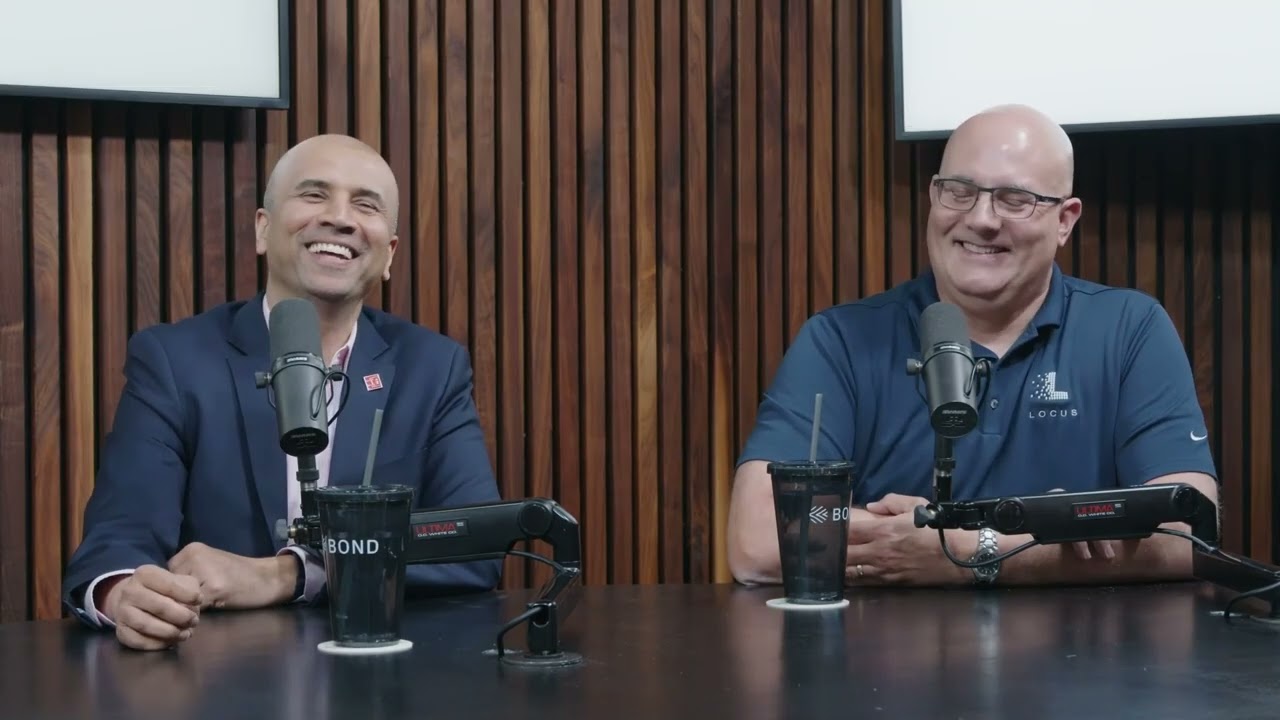
In this House of Visionaries podcast episode, host Speaker A convenes three robotics leaders – Tracy Simek (Chief People Officer, Locus Robotics), Hiten Sonpal (CEO, Rise Robotics) and Ira Renfrew (Co‑founder & CPO, Familiar Machines/Magic) – to discuss the unique people‑operations challenges of scaling robotics teams. The conversation moves through several interconnected themes: 1. Communication & Conflict – panelists stress the need for constructive conflict, clear frameworks (e.g., “just say it”), shared‑document updates, and psychological safety to keep information flowing in fast‑moving, multidisciplinary environments. 2. Culture & Values – each company codifies cultural principles that guide hiring, feedback, and daily behavior; rituals such as weekly all‑team docs and explicit norms reinforce speed of communication and alignment. 3. Performance Reviews – Locus uses a hybrid MBO (6‑month) and values‑aligned annual review; Familiar Machines runs lightweight 100‑day mutual feedback cycles; the emphasis is on measuring both output and cultural fit. 4. AI‑Native Organization – Locus, Familiar Machines, and Rise describe transitioning from transactional AI use to embedding AI in processes, establishing AI‑first “ways of working,” guardrails, security reviews, and hybrid adoption models that balance individual experimentation with centralized oversight. 5. Diversity & Deep Diversity – participants discuss surface‑level vs. “deep” diversity (mindsets, roles, cognitive styles), the importance of varied functional archetypes (starters, finishers, innovators, etc.), and early‑career pipelines to broaden the talent pool. 6. Technical Leadership & Player‑Coach Model – all three firms adopt a “player‑coach” approach where senior engineers retain technical contribution while coaching others; dual‑track career ladders allow engineers to stay IC or move into management without penalty. 7. Hiring from Adjacent Disciplines – the panel highlights the value of bringing in talent from automotive, consumer, defense, and other sectors to complement pure roboticists, especially for productization and manufacturing expertise. 8. Psychological Safety & Norm Enforcement – explicit norms are made visible, discussed regularly, and enforced through peer feedback, creating a safe environment for mistakes and difficult conversations. 9. AI Governance & Security – policies address IP protection, personal data handling, and vetting of AI tools; a hybrid model lets individuals experiment while a central authority reviews for compliance. 10. Mission‑Driven Attraction – each company markets mission, culture, and rapid impact (e.g., small team % ownership, climate‑tech focus) to attract talent, emphasizing growth opportunities and exposure. The discussion weaves these topics together, illustrating how people leadership, cultural engineering, and thoughtful technology adoption intersect to build high‑performing, innovative robotics organizations.
Chapters
Welcome everyone to the House of Visionaries podcast. It's so great to have you here. Thanks so much for coming out, battling traffic, uh, the craziness of TV Garden, that sort of thing. Um, this is the second time we've actually filmed at TV Garden, and this time, uh, nobody's in season, so it's a little less crazy, but the vibes are always really high here, and we've got an amazing group of people leaders, um, as well. So does anyone remember the last time they were at the garden?
Long time ago.
I think it was in March. I took my son to see a Celtics game.
Oh, nice.
Yes. Against the hated Oklahoma City Thunder. Sorry if you love the Thunder. I'm from Seattle.
How did it go?
It went well. We won.
Nice. Very good.
I can't even remember. I think it's been 5 years.
Oh, wow.
Yeah.
Nice. Well, welcome back. I'm not sure if this was all set up, but we've got all of our, all of our friends who are adoring fans, maybe we can call them. As well. Wonderful. So here's what we can do. We'll go around and we'll do a quick introduction for everyone. I would love to get names, background, a little bit on leadership, where you guys are currently right now, what you're building. Maybe we can start with Tracy down at the end of the line here and go through.
Sounds good. My name is Tracy Simek. I'm the Chief People Officer at Locus Robotics, and I've been in people operations for about 15 years now. I started in technical recruiting and worked at a bunch of different startups, including iRobot, where I overlapped with both of of our other panel guests here a few years ago. And right now we're working on building an AI-native organization. Like many other companies, we are working through the transition from using AI transactionally into baking it into all of our processes. And that is proving to be both very invigorating and quite challenging. So that's, that's the big project that we're working on in PeopleOps at Locus right now.
Wonderful. Thank you.
I'm Hiten Sonpal. I'm CEO of Rise Robotics. Before Rise, I spent a fair amount of my career at iRobot, where I led a lot of technical teams working on product. What Rise Robotics does is we build hydraulics replacement technology. We're still a startup, and so we're going through the process of finding product market fit and identifying which markets to focus on.
Awesome.
And I'm Ira Renfrew, the co-founder of Familiar Machines and Magic. I serve as the chief people and product officer at the company. We're building the physical AI platform for human connection, giving robots the ability to interact with us in ways that feel natural and comfortable and then hopefully welcome into our everyday lives.
Awesome. Thank you all for the introduction. So I'll set a little bit of the stage here and what we're doing specifically. So if everyone hasn't picked up on the theme by now, we are focusing on leadership in the robotics space. Obviously, Massachusetts is a huge hub for robotics talent. Globally. We've got household names. I think you all had met through, through one of them previously and all worked together one way or another. But we've also got a lot of capital that's running through startups, R&D labs as well. So we decided to start this podcast and kind of come together because we had a few members of the community talking about the specific challenges and opportunities of building robotics teams in the space. So why wouldn't we bring all these leaders together and and chat about what's going on here and tackle these challenges head-on. So, we've got a few different topics that we can approach from the perspective of people leadership, of building teams, organizations. But we will start with effective communication and culture in technical environments. So, the first question would be, robotics teams tend to be very highly technical. Autonomous and moving fast, which of course makes the people side of scaling a unique challenge. How do you build a culture of effective communication and behavior? And I'll let anyone start who has very strong thoughts on this.
Well, one of the things I've had to do with all of the teams that I've led is to instill, um, the desire to have constructive conflict. Almost every team that I work with is conflict averse, and that includes me as a person. We don't necessarily want to get into fights or have agendas that don't align, but getting to a good outcome often means surfacing all of the challenges and concerns that people have, putting them all out on the table, and then finding a synergistic way. Forward. And so that's been one of the things that I've had to do at every team, including the team at Rise. I've had to model how to have conflict. I've had to encourage conflict. I've had to bring right people in the room that don't necessarily want to talk to each other and bring the issues out and get them out on the table so that we can work better as a team.
You know, I think one of the keys to working in technology and managing conflict and then also communication are to make sure that you have the framework for what Hiten just said, positive conflict resolution, clear communication, and respectful discussion during any time that you have people who are on the opposite side of potentially a competing initiative. One of the things that we worked on at Locus is making sure that we don't have silos going on within our teams and making sure that we have effective channels to communicate directly between individual contributors or through leadership And we bake that into our core values and conflict resolution because it's so challenging right now. And early on, we did have some challenges with that in the very early stages. So what we want to do is make sure that people are able to talk effectively together to discuss all the merits of a particular situation. And then once we come to an outcome, however that's decided, that everybody can move forward positively, even if the outcome that's selected wasn't the one that they were advocating for. That's the crucial part, is to understand that the consensus or your leader has said that this is the direction that we're going to go in. And now, even if you were advocating for another outcome, go and take that as though it's your own and move forward with it for the good of the team and for the company. That's a very challenging thing, but that's something that we work very hard at.
Yeah.
Yeah, on our side, you asked about culture of communication. I'll talk about culture and then communication. So for us, the way we tackle this is first by starting with culture. And one of the things we did before we even started the company was to start to list down what are the behaviors and mindsets that we wanted to see in the teammates that we brought onto the team. And initially, it's here on my cards, created a set of cultural principles that we use when we're interviewing, when we're giving feedback, when we're recognizing, and really deciding, you know, who's gonna be part of our team and who's gonna keep being part of our team. And part of that is around communication, part of those principles. Personally, you know, it's my belief that when you're doing something innovative, when you're doing something in robotics, which is inherently cross-functional, as you guys were talking about, the speed of information transfer becomes a competitive differentiator. If you can speed that up, you will be more successful. If it slows down, if it gets stuck in silos or doesn't get surfaced because people are afraid of having conversations, that hurts you. And so we've been really deliberate in thinking about how do we create that speed of communication through a number of things. One, we have a cultural principle of just say it, which is really encouraging people to have those candid but kind conversations that then lead to decisions where you disagree and commit. And move forward without looking back and kvetching about it. One of the other things that we do is every week we have an all-team update. We're a doc-based culture. That's something that I brought with me from my time at Amazon. And so everybody on the team is invited to contribute to the update document and then read the update document. So at least once a week, we have pretty high confidence that everybody in the org is getting updated on what everybody else is doing and what they're planning to do. Which then helps to get ahead of things before they become an issue or conflict. If there's a dependency that people can spot, they can talk about it then instead of wait for it to sort of blow up in a disagreement or a misalignment.
That's a great cultural— that focus on culture, I think, is fantastic. You know, and I think one of the things that we can do as people leaders that's really important is to help people have those difficult conversations because we do find that every technologist pretty much is adverse to having difficult conversations. And one of the things that we can bring within our purview or remit professionally is to help people have those conversations positively and unthread them no matter how uncomfortable they may be.
Yeah, definitely.
What I really liked about your point that was implicit is that you created a space of psychological safety where people can speak up. So the just say it is preceded by something else that's already foundational, which I thought was was very interesting. Then this document-based culture thing, I think we're taking things— we take it for granted now, but shared documents have been a dramatic change in how effective teams can be because you can do updates so quickly and everyone can know what's going on and you don't have to put it into a Slack channel that someone might get it or not get it. But this use of shared documents has also sped up our organization.
It really reduces organizational friction too. And when we're talking about all the things that we're trying to optimize, you know, we've all just discussed, that's really the key is to reduce organizational friction. And conflict is one of the biggest sources of organizational friction.
I will say trying to keep up on my Slack is my biggest source of friction. It's an amazing wave of information coming through.
And going back to your point about silos, right, with robotics being so multidisciplinary, The trade-offs go across disciplines, right? And therefore, there's just inherently more conflict because you have so many disciplines all trying to get to the same goal, and there's so much give and take that needs to happen.
So true. And then you have people who are fundamentally different in the way they approach problems and solve, solve problems, right? So your embedded electrical mechanical engineering team is going to communicate and approach problems entirely different than your UX/UI team. Your frontend devs or your middleware layer devs. And being able to manage all of that and help those people get to each other and do the things that they need to do is challenging but very rewarding.
As I'm putting on my product guy hat, I think that can often be the function of a really strong product team of bringing those people together and recognizing when there are implicit assumptions that haven't surfaced up that need to be.
Absolutely.
Of course, other functions can do it too.
Well, then that's always the function of a company that reaches a certain stage in growth, is seeing that they have a robust product team that joins, because that really is the glue that binds it all together and helps those teams work together more effectively.
Mm-hmm.
Yeah, because sometimes those cross-functional trades can't be done without voice of the customer and sort of the business constraints that the engineering team may not see implicitly.
Yeah.
Great.
Great.
Thank you all for your contributions on that one as well. Kind of keeping on the same topic generally, but maybe we have some specific examples of this, but performance reviews in technical environments are very nuanced and need to track not just the right outputs, but the right behaviors as well, of course, as you already know. But has anyone landed an approach to evaluating behavior that and values that you're proud of, maybe in your current organization or previous or things you're working on right now?
So I can start with this. At Locus, we have two different review programs. We have a 6-month MBO review program that's very tactical and focused on what's directly ahead. There's almost always a learning and development component for— we give people the option to give 3, 2 to 4 things to be graded on. Usually people land on 3, and one of those will always be learning and development focused. But the other one is our annual review. And the annual review we've developed to align directly with our cultural values. There's only 2 or 3 questions that speak directly to pure technical performance on it. And there's an additional one if you're a manager. But mostly what we're talking about is how do you navigate the work environment and the professional environment in the framework of our cultural values? Are you working effectively with people? Are you a communicator? Are you helping people understand difficult technical concepts so that they can understand and understand them to be able to make the decisions that they need to make to move the company forward. And that part is fairly exhaustive. And that really is a great way for us both to guide people to follow our cultural values, to help continue to have it be spread throughout the organization and let them know how serious it is, how seriously we take them in the course of daily business. And how they work at Locus.
Maybe the, uh, giving a perspective of a younger, smaller organization, um, you know, we're thinking really carefully about what is the right amount of process for each stage, um, and not getting ahead of ourselves on process, but also, also not falling behind. Um, and so initially, uh, we've designed a very light process. Uh, you asked if we're proud of it. I'm proud of it for the stage that we're at. But if we still have this process, you know, in 3 years, I won't be a part of it anymore. And so we organize ourselves in what we call 100-day periods, essentially a quarter. And at the end of every 100-day period, we have a very light mutual feedback mechanism set up between managers and individual contributors. I mean, the expectation is that feedback is flowing, you know, all the time, certainly weekly in one-on-ones.. But we create a specific moment for it where it's a reflection on the work that's been done and also whether that work was done in line with the culture principles that we've set out. I think similar to what you're describing on the annual process. But it's very lightweight and that's the extent of what we do at the moment. And so people get this regular dose of feedback, but it probably doesn't dive— it doesn't dive as deep as some of the experiences I've had in larger, more established companies, like in an annual process, for example.
But it's a very creative solution. And I always say, look, with what we're providing, if we have 3 touchpoints throughout the year, and if those are the only 3 times that that manager is talking to that employee, that's a manager issue.
Yeah.
Yeah, when I joined, we tackled values and culture separately. So the values I wanted to put in place to help the team make decisions We came up with a very simple framework, 5 values: safety, customer focus, collaboration, which speaks to conflict, continuous improvement, and energizing. When making decisions, we would start off with, "Is this safe for the customers? Is it safe for our employees?" and so on and so forth. If it's not, we've got to make it priority number 1, and we have to fix it. The second piece is what the customer wants takes higher precedence over what the engineering team wants or even what the CEO wants. The customer says, We want dimensions in inches, we're gonna do it in inches even though everyone would love to do it in metric. And then, kind of, we work our way down all the way to the bottom. If you've got a choice between two decisions, well, which one's gonna get you more energized if they're both equal, right? And we try to apply that in the decision-making process. And then, for culture, this is something— this is a piece of my playbook that I stole from Ira when we were working on iRobot's lawnmower together where Ira became— We had a conversation. He said we should take our norms and we should make them explicit. And so we made our norms explicit and then we started talking about them at every meeting. And when people had issues with folks not following norms, we said, bring it up. Let's have the conversation. Let's get everyone to align on those norms. So we've also put in place a list of norms and we talk about them and we, we, we speak to them. And when there are issues, we talk to the employees and said, this is not our norm. You know, this is how we want to behave as a company. And we correct all of this in the background, you know, So it's safe and people feel psychologically safe making mistakes because people make mistakes. And even I step outside the norm sometimes and someone has to pull me aside and say, "That was not okay." And I'm like, "Yes, that was not okay. I'll try to do better next time." It's good that they do that, right?
That's a testament to the environment you created. Yeah.
Thank you.
Exactly. Exactly. And the state that you're— or the stage that you're at as well, usually that's a reactive kind of component of building culture as well. So the fact that everyone's already kind of bought into it, that can scale really well. It was very encouraging.
Absolutely, and I think, you know, Ethan, to support your point, it's very important that everybody has buy-in on culture from the top to the bottom. And when we set our core values at Locus, we had a— we created a team that included everybody from the executive level down to the office manager. There was about 10 people on it, and we worked that problem a couple of different ways. When we came up with what our suggestion was, we ran it through the ELT, then we ran it through the secondary level of leaders, and then from there on we have complete buy-in so that we can always be reinforcing that with our behavior and essentially living by example. And that's critically important because if you create culture, especially from a people operations perspective, very often it comes across as being insincere and difficult for people to integrate with their work lives. So if you're not If everybody's not living it every day, then it's very challenging for that to take root and have the effect that you want it to have.
Yeah, there's gotta be a good metaphor for this. I mean, I think of it as the people org being maybe the custodians of the culture, but it absolutely has to be driven by leadership. And so there's, you know, I think when it's seen as just an HR initiative, doomed to fail. Right. Right? When, particularly I think when the CEO lives and breathes that culture, then it's going to succeed. And then I think the people team can just expand the impact of it and the reach of it and help operationalize it.
Yeah, to your point, like you said, the CEO lives and breathes it. This aspect of modeling the behavior that you want to see and holding yourself accountable and then holding your leadership team accountable so that the entire organization feels like this is something we're all championing is very key.
I love that phrase, custodian of culture.
That's the best one I've got. But there must be something for this guardian expansion role, but then the CEO leading.
I smiled because I use that phrase all the time. That's how I see myself and also nurturing culture and guiding it. Yeah, right.
Absolutely wonderful. Only because we have time, and this might be opening Pandora's box a little bit on a wild card question, but Open it.
Wild card. All right.
I'm just going to go for it.
Go there.
How have you all been implementing AI into culture and approaching that within the robotics space? I think there's a specific challenge around how we approach AI and how employees relate to it as well. Have you all had any specific examples around that in your companies?
I mean, I can say that— So we have culture principles and then we have what are called ways of working, which are a little bit more tactical in terms of how we engage with each other. One of our ways of working is the goal of creating what we call a 10x org. And when we first rolled that out, we've been through a couple revisions of our culture principles and our ways of working. When we first rolled it out, I think it was called AI first, and we got feedback from folks that that put such a heavy emphasis on the AI. And then, you know, in our company we have an AI team. And so there was some confusion around did that mean that that team was being put first and prioritized? Well, no, because as we've been discussing, this is highly cross-functional and every team has a role to play. And when we step back, like, what are we actually trying to achieve? It was that idea of the 10x org, the org that's able to scale up without growing headcount at the rate that companies have in the past. And so we changed the title of the way of working, but we also made it very clear in the description of the 10xOrg is really people, process, and tools. People, it's about hiring incredibly high talent density. Process, it's about always thinking about what is the lightest process that we can create so that we're not burdening ourselves with process, as well as how can we set up processes that are AI or automation ready. And then finally, on the tool side, it's both AI and automation. And there are certainly a number of tools that existed before generative AI that can be adopted and put in place to get more scale out of an organization. And so part of that has been just sort of really being clear about what we're trying to achieve and that it's not just AI for the sake of AI. The other thing that we did was create a set of guidelines around AI use and sort of making it clear what the guardrails were for people in terms of experimenting with and adopting AI, while also making clear that we are wholeheartedly supportive of experimenting and adopting AI. We have, you know, we're not holding back like some companies I've seen.
I'll go next because I think you have a very comprehensive answer to this one. So we're a smaller organization and we went through one pass where the software team was leading the AI adoption. Then we're starting to look at what are the things that we can do to make our hardware engineers more effective. The AI tools in that space haven't advanced as quickly because of the lack of data on the internet, but I think they're getting there. We're also trying to find ways to do more with the same headcount.
As a company on the cutting edge of technology where we're always trying to work to optimize the sensors that we're working with and everything else that goes into the robots, We always have an eye on AI, and the key for us is to use it as a multiplicative force, as a force multiplier for our team. And one of the things that I learned on my very first job that I had right out of high school was work smarter, not harder, right? So what we want to use AI for is to help us work smarter and get more work done with our existing resources and empower our team to work more effectively. And be able to solve problems that we may not have solved either at all or in a more effective timeframe than we would have. So tightening up our delivery timelines, helping people to do more work, you know, with less resources is, is top of mind for us. Our adoption curve has been, I think, similar to many other companies that are, you know, have a few hundred people. We've looked at it. In just over the last year, almost every AI tool across the board has changed so drastically during this time that it's tough to stay on top of everything. But the key is to find tools that are going to help us and not adopt them for the sake of adopting them. Right. The challenge is saying, go be an AI-driven organization and bring me back solutions without guidance. You're just going to create chaos. So we're trying to avoid that and make sure that we're adopting tools that help us. In the sequence that we need to. We don't want to leave any opportunities on the table, but we also don't want to be chasing loose ends around and having our folks say home-baked tools that could be bought off the shelf that have a bunch of inconsistencies in code and application and may create more problems than they solve.
I'm curious how you guys think about should AI adoption be left to individuals and teams? To independently go find, explore, pilot, and adopt? Or should there be a more, you know, like centralized capability in sort of steering and shepherding AI adoption within an organization?
I don't know that we've come to the answer to that yet. I think that there are some folks within the organization who we want to be the point person for this, to lead us to the good tools. And there are folks that are ahead of this and are looking for it regularly. And there are other folks who would, given the choice, never touch a new technology. And they also can have a great contribution, right? So we're in the point right now, or the stage of adoption where we're trying to work both of those different personas together and be able to get the most out of the team as we move through this adoption curve. But to that latter point, I think it's going to be challenging for people who are resistant to adopting AI beyond say the end of 2026, I think it's going to be tough to be in a professional environment and not have done the work to at least be conversant with it.
What we've tried to do is capture in our policy the things that are— policies, the things that are important to our organization, like information assurance and making sure that the key IP isn't leaking out. So we have policies around that. And then we do allow our employees and engineers to experiment. —because new tools are coming out every day, and it's really hard to have a centralized organization that is going to keep up with everything that's happening. And so if people find new things, as long as it meets our policy guidelines, then we try to see what the results are. And then at some point, eventually, we decide if we want to make it official or not.
So we have a hybrid model there. That's a great point, Etienne. And I didn't key on that as well, but you really do have to have some sort of guiding authority that's approving new tools and reviewing them for security to be sure that you're not going to leak IP, you're not going to leak—
You're on my designs.
Well, exactly. What we work with is people's personal information. The PPI that we touch in People Operations is the most sensitive data of all. So with that being said, we want to make sure that we're thoroughly vetting it within our security and compliance processes as well. It's that dirty word, process. But process works for— it's necessary in the right amount when it works.
Yeah. Yeah, absolutely. Well, thank you for indulging me on that one. We said last week we were going to take a break from AI after all of the AI-focused topics, but we really can't get away from it.
Just can't help it. Yeah, couldn't help it. There is no break from AI. I had to pepper it in there. No, at all. Yeah, exactly. This was literally an AI conference last week.
Yeah, we wouldn't get the same engagement. No, I'm just kidding. Wonderful. Well, switching gears a little bit, obviously diversity is such an important topic and I definitely want to get to that before we end here as well. So what is being done right now to bridge the gap of diversity in the robotics space? And can someone touch on why it's important to have diverse teams as well? I don't know if there's any specific examples from your own companies that you are working on or just generally in the space.
Yeah, so for us, diversity of teams is very important. And by diversity, you know, we're not looking at surface-level diversity. We're looking at how people are wired. Certainly we need the diversity of disciplines. You already have that one challenge. But then it's also when you're thinking of team composition and how teams become effective, you need folks that are starters, you need folks that are finishers, you need folks that are innovators, you need folks that are You need optimizers. You need folks that are strategists. You need folks that are connectors. You want to get all of those types to make a healthy team. It can be very challenging in the robotics space because you're already caught up in so many different disciplines. Then to try and say, "Okay, we still want to get this healthy mix of other skills that make a team work." That is the challenge of being in this space. I'll say one thing that's common in all of the attributes we look for, and this is not on the diversity aspect. We want to make sure that everyone we hire is action-oriented. Like, that's a key thing, right? I talked about all the other traits, but like being willing to move forward and fail and figure things out and come back to the organization and say, "Here's what I discovered. We need to go a different path." We want that in everyone. So, in that way, we're actually not very diverse. We're very homogeneous.
Right. So, that's a great answer. I'm going to take it in a little bit of a different direction and say that tech is very challenging for diversity the way that most people think of it, right? So people of color, women at high level in technology are still comparatively rare to other professional disciplines. And one of the challenges that we found— and I've been recruiting specifically in technology for 13 of the 15 years that I've been recruiting— is trying to find people who can do the technical work that we want them to do at a high level and then adding diversity on top of that. For whatever reason, our educational system, our professional system is not welcoming to people of diverse backgrounds. And it's critically important because it adds a component to the workplace that you can't replicate with forced culture or with, you know, trainings or anything like that. So one of the things that we found at Locus as we were looking for people to fill roles from a more diverse background is that we had that paucity of talent. We they couldn't find the talent out there. And if you extrapolate to the warehouses that we work with, very often the warehouses on the work floor will have a very diverse population. And then as you go up to manager, it gets a little less diverse. And you go up to the, you know, the level above that, it's less diverse. And you get up to executive and it can be even less diverse. So with that being said, we are lucky enough to have created a foundation that is looking to help kids that are in middle school and high school to understand that there's a career in robotics and technology for them no matter what their interests are. So if they're looking at going into finance or marketing or sales, they can have a career doing— in a company that's doing something really cool, not just technology, not just a hard sciences background. We'll support them through that, but we want to make sure that they get through, graduate, and get into a program, whether it be a technical skills program, whether it be the military, whether it be going to college, that will support them having a, having a successful professional career, because that solves a lot of the problems that start pushing people out of technology. And a lot of the barrier is that people don't know how to get to that place. They don't know that they can have this. At some point, that optimism that anything is possible shuts off. And what we're trying to do is make sure that they continue with that optimism and are able to find a professional, successful career wherever it may be in a company as cool as all the ones that we work at.
Yeah, I would actually argue that one of the mistakes that the robotics industry is making is giving the perception that it's only for hardcore engineers, when in fact every robotics effort I've been part of is a much broader set of functions and skill sets that are all necessary necessary to actually succeed with a robot. And I think that probably starts with, you know, like robotics competitions in grade school, which are great and also give people the impression of like, oh, if you want to do robots, this is the kind of stuff that it includes. And it kind of misses out on a lot of the rest. And when I end up talking with school kids, I'm often saying like, hey, look at me, like, you know, I studied international relations and here I am, you know, in the middle of robotics. Like, you can do that too. Yeah. Yeah, I think— so when it comes to diversity, I think I'm going to give an answer that's kind of right down the middle between you two guys. First, you know, I think it is proven in research that diverse teams do better at creative activities. I tend to work on robots that are new and therefore involve a lot of creative innovation. And so I believe firmly that diversity is important for that and will get to better outcomes. The second thing is at Familiar Machines and Magic, I take a view of diversity, maybe a little similar to what Hiten was describing. I call it deep diversity. It's also the iceberg model sometimes people will talk about is there's types of diversity that are kind of visible above the water and there are a lot of different types of diversity that are less visible and below the water. That includes things like people's mindsets, right? Are you a strategist? Are you a tactician? Are you a doer or a thinker? Thinker, but it's also a lot of the other kinds of identities that all of us carry every day and don't necessarily like immediately surface based on your appearance or your name, for example. And so we do take that sort of broad focus on diversity and we try to create an environment where everybody can bring their whole self to work, where people can just show up as they are. And, you know, this ties back to psychological safety, right? But it's that idea of like whatever background or mindset where you come from, assuming you can do the job and assuming you fit within our culture, because that is same as you guys, right? That is the hard limit on actually, we don't want diversity in that sense. We want people who match our culture. But assuming you match with that, then you're welcome here. And then when it does come to diversity in the more traditional way that people talk about it, we're a small company, so the numbers are just small. And, you know, it's hard for us to do a program like the one you're describing where it's really about like placing the long-term investment. What we do try to do is look for a wide sort of diversity of intern candidates in the interns that we bring in. And that, that sort of are more, it's like a shorter timeframe in terms of getting people into the industry and has more immediate impact on us. And the other thing, which is I think standard best practice, is just having candidate pipelines, you know, for any given job that represent a range of profiles and backgrounds.
Yeah, I think those are— that's a really important point. And, you know, one of the things that's I think very effective about the type of sort of deep diversity nurturing that we're doing is that that tide, as it rises, will raise all ships. Everybody can benefit from that. We're not saying, in all the different things that we support, that we're doing this for Locus. We're doing it for everybody because we want to show that everybody can have a great opportunity. And really, you can. The other thing that I think we want to show too is that you don't have to arrive at a company fully baked, right? You don't have to have a master's in electrical engineering and 5 years of experience directly related to robotics. We have people who've worked into engineering from being part-time employees on the manufacturing floor. We've had people go from engineering to marketing, from marketing into engineering, and a variety of different other paths as well. Life is going to get longer as we hopefully continue to move forward, and people's careers will have many paths. And I think that it's important for people to understand that where they start may not be where they finish, and that can help increase diversity as well.
You've got me hoping I could still be an engineer someday.
These are wonderful. It's very thoughtful from all of you, everywhere from holding fast to culture that is collaborative, that everyone's going to succeed in, and making those environments, all the way to early career programs and having a great viewpoint of how everyone can fit into the culture and being open to that. So thank you all for your contributions there. We'll pivot a little bit to technical leadership. So, there's a lot of conversation right now about technical leaders, of course, being close to the work as organizations grow. But has anyone found a good model that lets kind of your technical engineers lead people without, you know, losing that spark that makes them really great on the technical side as well? Or, you know, this is a very multifaceted problem. I'm curious to see where each organization organization is landing right now?
Well, there's nobody at Locus who isn't a player coach. Everybody has individual contributor responsibilities regardless of our size. So we're all proficient in the discipline in which we work, and we're all working and got to the place where we are from having been good at what we did. But the challenge, I think, in technology is oftentimes you get promoted to manager just by virtue of being technically good at the thing that you do. And if you get to that place, some people are naturally wired for it. Most in technology are not. And one of the challenges that we see, and I think the big opportunity, is to provide mandatory management training as you promote somebody from an individual contributor technologist to a manager. And that doesn't mean an onerous process, but it does mean giving them some type of training, some type of learning opportunity that helps them understand that management is now a part of their professional discipline. Not only are you going to be doing the thing that you do well for a living, now the thing that you need to do well for a living is to coach people, to help them grow, to work through disciplinary issues, and to take care of all the extra administrative work that will come your way with being a manager. And to enjoy doing that, because nobody wants a manager who doesn't want to be a manager.
Yeah, we're a very small organization. So right now, all of the managers, as you described them, are player coaches. And recently I brought on board a fractional head of HR to really help them with specifically the challenge that you described, which is they've been really good at technology and now I need them to be great coaches and mentors while still being good at the technology. Long term though, I expect that I'll end up with the sort of traditional large organization model, which is will want to dual-track it. There are some folks who are really good with people, and I think they'd be better off mentoring those folks. And there are some people who are really good technically, and it would be a shame to lose them and have them spend some of their time on something that's not energizing them. So part of, as I mentioned, our number 5 value is being energizing. And so part of what we often talk about is trying to find out what gives people energy at work. And certainly, we can train them, but we try not to put people in roles where they're not being energized. Because that just doesn't bring momentum to the organization.
Yeah, I think on our side, actually quite similar. So, our managers are player coaches, our executives are player coaches, right? We're all player coaches, small org startup, kind of have to be. But I also expect that that will continue probably forever. Secondly, we've set up our leveling system so that it is dual-tracked. I experienced that at Amazon and was just really impressed by that opportunity for technical leaders to remain deeply technical and act as ICs while continuing to also expand their sphere of influence as they moved up and not feel like they had to go on a management track in order to keep progressing their career, which is what I think sometimes the trap that companies get into is they've created that as the only track for upward progress. And so then people hop over who shouldn't or don't want to, but it's just sort of seen as the only way to move forward. And so anyway, I think pretty similar approaches to the way you guys are thinking about it.
Yeah, and I agree with both of you. We have that as well. I think I crafted my answer more speaking specifically to management, but you have to have that. You have to allow people that outlet, otherwise you're going to close yourself off from great talent. That doesn't want to deal with managing. The other thing that I've found is that some people are ready for management at different times and may not be ready for management at other times. So we do allow people to move back and forth. There are several folks within the team that have been offered management and declined, and then a couple years come back and said, "I think I'm ready for this." We've had other folks that have been managers for some time and then stepped back into a senior contributor role because they found that it wasn't the right thing for them.. And we let them do that without penalty because it's important to maintain that experience and that technical knowledge and that contribution. It's not going to be the same for everybody. And there are many seasons to life. Many times it may not be that that lasts for your entire career.
I think it's so good that you guys leave that open because again, a mistake that I think companies make is you can't go back. Right, right. You take the new job. What is it, the Peter Principle, right? Suddenly you find yourself incompetent at the new job. But you can't go back, and so then your only choice is to leave.
And that's a tragedy. And that's a net loss for everybody. It is. It's a tragedy because you lose very talented people who get frustrated and feel like they have no way out.
I really like what you said about letting senior technical people expand their sphere of influence. And so maybe one of the best uses of AI might be to find ways to let them do management tasks easier so that they can get back to doing the technical work. Yeah, yeah.
Yeah, I mean, I think what I saw at Amazon was as people moved up in technical leadership, the expectation was that they also increased how much they were teaching and influencing. So it wasn't the sort of like lone genius in a tower doing their work. It was having a broader impact, but not taking on the people management responsibility. And that was really powerful because then you start to have these really skilled, experienced people who are then transferring knowledge and skills to more junior engineers and raising the level for everybody.
That's it too. And I can't count the number of times at Locus where I've gone down to the hardware engineering area and seen a couple of people crowded around the desk learning from somebody who's been doing what they do for 40 years. They don't manage anybody, but they love telling them about it. Sage. Exactly. And they enjoy welcoming people into the world that they're part of. And that's critically important. You don't have to force that person into a management role to get that experience. And if you do, you're not going to get the same experience.
That's wonderful. Yeah. On kind of a similar topic of bringing people into kind of what they're doing best, when you're building robotics team, what do you all think about hiring roboticists versus people coming from maybe adjacent disciplines? I know we touched on this a little bit before around the multifacetedness of teams. But how has that played out in practice for all of you as well?
So, I had the good fortune to talk to one of the folks that was running HR for one of Elon's companies. And she was telling me about one of Elon's strengths that folks don't know about. And she said that when it came to SpaceX, and it was time for him to build a team, an executive team, he didn't hire rocket scientists and he didn't hire necessarily all people from the rocket industry because he wanted to get into a different mode. He wanted to do mass manufacturing. And so he hired people from the auto industry. He hired people from the rocket industry. He hired people from defense. He hired people from consumer devices and he put together a team that was able to change the way they were doing things.. And when I think of folks that are roboticists, even in the 5 years that someone might go to school to get an advanced degree, you simply can't get deep on all of the topics. And so it's really good to have some of those folks that have that systems-level thinking and can understand a little bit about everything and see how it all connects. But when it finally comes to execution and attention to detail, you do need folks that are very deep in a specific discipline. So I think it takes a combination of the two.
Yeah, I would agree. A healthy mix would be my answer.
I would agree. And there are sometimes, to your point, Hiten, it was very well said, that you absolutely have to have somebody with experience in robotics. You're not going to get a ROS engineer looking for somebody who's a C# engineer, right? It's just not going to work. But in the mechanical electrical space, you may find people in adjacent disciplines who haven't worked on robotics, before. And certainly in all the other professional disciplines that aren't highly technical and specific, you can find that thing. But sometimes you do need to go after that base. I think the challenge for all of us is we've all been in robotics for so long that early on, like 10 years ago or so, it was tough to find roboticists at all in anything. Yeah. From when I was recruiting at iRobot to the early days of Locus, It was challenging to find people with enough experience in certain disciplines just to fill the roles. Yeah. Very interesting.
Wonderful. Any other thoughts on that topic before we move on to the final kind of conclusion? Great, great. Does anyone have the time, by the way? Quickly, just to see. Oh, wonderful. We're perfect on time. Did you have one more thought?
One more thought? Yeah. So one of the things that's important for robotics is getting them out to market and getting them into production. And so one area that I found that hiring folks that are not necessarily robotics people but have worked in consumers or have worked in B2B spaces has been very helpful is in designing something that's producible. And so that's been something that we're continuing to look for as a team, and I've seen it play out really well at iRobot.
I would agree with that too. One of the challenges when people come from a pure research environment is that very often the challenges facing us to create an environment for a— or create a product rather for a customer in a high stress results-driven environment can be challenging for somebody coming from a pure research background. That's right.
The product focus of, "Hey, we're going to launch a new version of this every year and we have to keep scaling." and we're gonna pick the features that we put in and so on. You do need experienced engineers who've done that. And oftentimes you won't find them in robotics.
And this actually brings us all the way back to where we started the conversation because it's those challenges that make that communication style so important that you can work through challenges and be able to accept an outcome that wasn't your preferred outcome. And very often in other environments that are non-commercial in nature, you can let that sort of fester and continue and not resolve those challenges. But in commercial where we've got a product and a customer waiting for it, it can be— you have to resolve that and move forward.
I like that tieback. Well done.
That was a perfect way to set me up for that outro also, by the way. Thank you, Tracy. Great. So of course we do have a little bit more time and I want the chance for you all to be able talk about what's exciting about your organizations and what's moving forward here. So for someone exceptional in this space, we talked about finding great talent, right? But if they're weighing their options right now, what makes your companies an exciting place to land and maybe a good chance to, to chat about what's coming up in the future that you can share?
Of course. Sure. On our side, in our People Team Playbook, we have a line is that we offer competitive benefits, but we compete on mission and culture. And that's really, I think, what we offer people and what people are really excited about. We're building something that is going to change the way that we interact with robots and, I'd say, more fundamentally, the way we interact with technology. And giving people a chance to be part of that and part of a great team so far has been proven to be very compelling for people.
Wonderful. Very similar on our end. I would add that we're a small company, so 14 employees. And so anyone joining is roughly 7% of the team. 3 people want to do something, that's a fifth of the company right there, and they can make things happen very quickly. So we, we, we do talk about that, of how agile we can be because we're small. And the second piece is that we are a climate tech company, and so that energizes a lot of folks, and we get a lot of excitement and a lot of mission-driven people joining us. That's great.
I think one of the things that's exciting for us is that we're still very much a startup at 500 people. So The opportunities that you'll have at Locus coming to join us are much more expansive than you may have at competing large and established companies. You're going to see more of the work that you're doing. You'll have more exposure to techniques. You'll have more exposure to different aspects of the relationship with the customer, and you'll get generally more experience with us in a year than you'll get in other companies in 3 years. So it's a great opportunity no matter where you come from to join Locus and see where we can help you take your career. Awesome.
Thank you all for telling a little bit more about that. And of course, the reason we invited all of you as well, from, from, you know, those perspectives, but then also your companies are really what people are talking about in the space right now. And so it's fantastic to have you guys here and talk a little bit more around, you know, not just what you're building, but really under the hood And how are you building it and what makes it a great place to join as, as you all scale through the future and continue?
We're very lucky to be here and I love to share it with people. Thank you for the opportunity. Thank you. Wonderful. Thank you.
Thank you for having us. Absolutely.
It was great having you all here. And this has been House of Visionaries podcast. We will hopefully see you all very soon. And thanks to everyone who's listening from home or from wherever you may be. Of course, you can follow all these companies and folks on LinkedIn and keep on track with the progress and the growth moving forward. Thanks, guys. Thank you. Thank you. Awesome.
More from Tracy
Your Employee Has Two Full-Time Jobs? W/Tracy Simek - We're not recording S2E03