A short explanatory YouTube video by Trenton Luera describing how college football scholarships work across divisions. Key points: FBS programs have 85 scholarships (full rides, non-split), FCS programs have 63 scholarships which may be split into partial awards, Division III offers no athletic scholarships (only academic/need-based aid), and junior college/NJCAA policies vary by school (California community colleges noted as having no scholarships). The speaker emphasizes that full rides are rare below FBS, cautions recruits to read offer breakdowns carefully (loans may be counted as part of 'aid'), notes signing timelines (offers increase toward Dec–Feb signing period), and mentions NIL/collectives supplement FBS offers.
Questions this video answers
85 (full rides; cannot be split)
63 (can be split into partial scholarships)
No — Division III schools do not offer athletic scholarships; aid is merit- or need-based only.
February (offers begin appearing in December–January leading up to signing)
Chapters
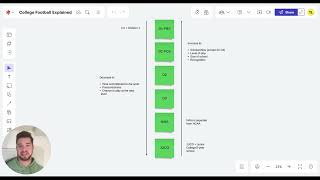
All right, so how scholarships actually work. So I've talked, I've kind of dipped my toe into this already with the first and second video that I just showed you. But in this one gonna go a little bit more in depth into it. Talk about it a little bit more. So as I mentioned and we're had this diagram because it has a good outline of like the different divisions and everything. So at the FBS level there's 85 scholarships. They're all full rides. They cannot be split up, broken apart, given to other people. At the FCS level they can be so FCS and down they can be splitting up. Obviously at the D3 level, I'll just save it for there. But at the FCS level it's 63 scholarships. I believe this is all top off the top of my head actually. But essentially it goes down and they can be split up into partial scholarships. Um, and then at the Division 3 level there's no athletic scholarships. There's only either merit based based on your academics or needs based based on your financials. Um, and then at the junior college level in California there are no scholarships. And then in the njcaa, it kind of depends on the school, but they can give scholarships out at some of the schools, so that's something to be aware of as well. But essentially how scholarships actually work is FCS and blow. Like you're very rarely going to get a complete full ride. I mean, I know for NAS themselves, like they can only give you a full ride based on tuition. And it's definitely not going to be like a full athletic full ride. Mostly it's going to be like partial, partial athletic, partial academic. It's going to cover your tuition, you're going to play, you're gonna have to pay room and board on top of that. And then at the D2 level they can cover everything. Same at the FCS level. But most time you're just not going to get everything covered. It's pretty rare. So that's just something to be aware of. Not saying it's not going to happen. It does. I mean, I've gotten those kind of offers before. It's just very rare that that does happen. But like I mentioned before, grades play big impact in this stuff because to get a scholarship, you know, your tape has to be the right fit for them. They have to know that you're going to qualify, whatever academically wise. I mean, like most time they're going to offer you a scholarship just based on the tape. So they're going to offer you scholarship and they're going to be like, yeah, hey, we love you. We want to recruit you this and that. They're going to offer scholarship. You're going to go through this process and you're going to get to, you know, let's say you're in high school, you're going to get to, obviously February is when that signing day is. You're going to get to December, January, they're going to start to officially offer you throughout that time and they're going to give you an offer breakdown packet. And sadly I don't have, I have an example one, but I didn't put it in here. But it's going to have the full breakdown of what that scholarship looks like. And again, if you're at the FPS level, this doesn't matter. If they officially offer you, you're good, full ride, everything's covered. Plus with nil, you're going to get money from the collective. You're going to get different deals like that. So like you're pretty much set, you're good. But if you're FCS and below, it's a little bit different. FCs, some of them do have collective, so that's a little different. But still you're going to get some kind of breakdown and it's going to say like, hey, here's athletic money that you're going to get. This is the academic money you're going to get. This is how much your out of pocket cost is going to be. These are all important numbers to know because the last thing you want to do is show up the class and you get billed for your semester. It's way more than you're expecting and that can be a lot of frustration. So you want to make sure they're clear on those things. Make sure that like a common thing that happens is like they sneak in the financial aid. So like the subsidized and unsubsidized loans, they count those in already. So your out of pocket cost looks really low. But if you don't plan on taking loans, then that's like sometimes, you know, 7k difference just in the semester alone. So like, knowing these things ahead of time just saves you a lot of confusion, saves you a lot of frustration later in the process. So that's how scholarships work. This is a pretty short one because we covered a lot of it with the grades and like what kind of division levels are and everything like that. But I think it's important to know that again it's rare to get a full ride of csm. Below. Again, program to program is different. Like some programs probably shell out full rides to a lot of guys and then they kind of just use walk ons for the rest of them or split up a partial amongst like 20 different guys. But it's just important to know that stuff because you know, you want to know what you're getting into. I think a lot of people think that like hey, you know, a D2, I'm going to get a full ride scholarship or D3 I'm going to get a full ride scholarship. Just don't want you to be in that position. Know this stuff ahead of time. Better to be pre prepared rather than you know, walk into something that you don't know what's going on. So hopefully it's helped. I'll see you in the next one. We're going to be breaking down the five step process that I used to get recruited. I use with every single recruit that I work with to help them get college football scholarships. The results that helped us get. I mean it's been 13 this last year. It's going to be even more by the time we're, we're done with this year. I mean projecting probably anywhere from 30 to 40 to 50 scholarship athletes within just less than two years probably by the end of this, this next season. So super excited to share that with you and we'll dive into that pretty soon.