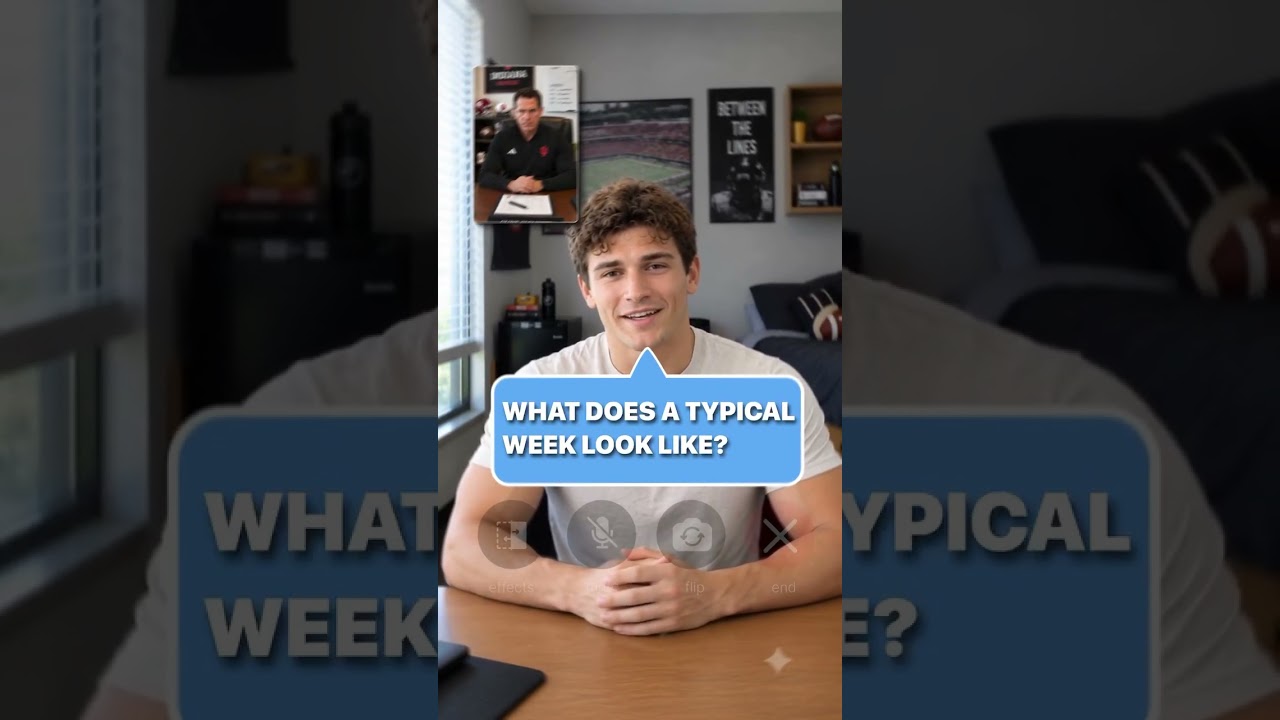
Trent Lower, a former college quarterback, shares three regrets: not doing sport-specific strength work instead of bodybuilding, avoiding competition when he should have sought it out, and skipping the small daily habits that compound over time. He says environment design matters most.
Chapters
If I could go back in time as a younger athlete, a younger me, this is exactly what I would do to make sure that I have even more success in my athletic career. And so if you don't know who I am, I'm Trent Lower, I'm a former college quarterback. I also run your first scholarship where we help families get their first scholarship and more. And so really I tried to think about a lot of the stuff that I do and things I talk about is like, what would I have liked to known before any of this? And so really the biggest thing is a lot of recruiting can be boiled down to, you know, hey, if you play well, you'll have good film. If you have good film, you just need to get to see my coaches. And so as an athlete, there's really three things that I would have done differently if I could go back in time. And definitely not saying that I'm not grateful of what I've done or what I was able to accomplish, but just things that looking back at it, you know, from, you know, me as a 23 year old back to then as maybe, you know, 14, 15 even, not even having to go back that far, just things I would have done differently. I think the first one is I would have focused on developing myself more as an athlete. I mean, I put a lot of time in as far as I probably trained every single, close to every single day as far as, you know, workouts, lifting, all that stuff. But I mean, you don't really. It's hard when you're younger. You see people lifting, you're thinking bench press, squats, all that stuff is, is cool. So it's worth it. And people do it most commonly. But the issue is you don't want to train like a bodybuilder. And one of the guys that harps off on this a lot is Coach Haddock, Isaac Haddock, who great content there, if you haven't checked it out. But you need to train like an athlete. You need to train functional movements that apply to your sport. If you are a golfer and you need to be working on rotational strength, if you're a football player and you play quarterback, you don't want to train like a defensive lineman. If you're a defensive lineman, you don't want to train like a db. You need to be training specific movements that apply to your position. And so developing myself as an athlete, not just from the strength perspective, but also from the mobility perspective as far as flexibility and just overall movement would have helped me out so much more if I would have focused on that earlier because that is the foundation that you're on is as an athlete. You continue to improve as an athlete, but also that, that's the foundation when you're younger. I think that's just so important. So, so focus on developing as an athlete, not just from a strength perspective, but also from a functional movement perspective as well. Number two, constantly compete. Um, I mean I, I love to compete, but like if I could have just competed more, I think that would have been so much more helpful. Um, and just having that mindset of like looking as competition as a fun thing. I think too many people like take it as like it's a bad thing and there's, there's all this pressure and stuff like that. Reframe it as a good thing and just look to find ways to have competition. And it doesn't have to be anything intense. Just find areas that will give you that edge. So that way you're just always feeling comfortable in competition and in those pressure situations. And then the last thing is creating small habits that lead to bigger changes. I can't remember the book. I probably have it on the shelf right now. Let's see if I can find it real quick. I can't, but there's a book about just essentially how small things lead to this exponential growth. And so I, I really wish I could could remember the, the title of it. But anyway, essentially like if I could do anything, I would just get myself these small little like one to two minute things that I could do on a daily basis that would lead to these big changes. Because if I could just like for example, if you, you know, study for five minutes every single day for 365 days, that adds up to, and I'm doing really fast math on top of my head, but it would be like over 1500 minutes of studying. And obviously that's, you know, a pretty good amount. That's hours of studying that you'd be doing, juncture to do five to 10 minutes of stretching whenever or you know, certain times. But I just didn't stick with it as much as I maybe should have. And I can only imagine how incremental, incremental improvements I would make over that time and eventually, you know, become a better athlete because of it. I think establishing those habits early on will have a large impact on your career. So if you're a kid listening to this, you're a younger athlete listening to this, I think the biggest thing is you could probably just help one and two by using number three, by creating those smaller habits by creating this environment where you're just constantly improving without even having to think about it is really the way that it's set up. Because everyone wants to talk about hacks and things to do and stuff like that, but the easiest thing you can do is just create an environment and get yourself into the routine of doing things that constantly help yourself. Because if you're surrounded, you know, if you're surrounded by, you know, nothing but weights in a football, like, you're. You're probably going to get really good at football and you're going to get really strong, but if you're surrounded by a bunch of distractions, your phone, your computer, your TV, your Xbox, your PlayStation, then, yeah, you know, you're probably not going to be a better football player. And so just creating that environment to continue to improve is a huge thing. And I think that, you know, if I could go back in time, those would be the three things, with the third one being the biggest. And hopefully you can apply this to your situation as well. So hopefully you got something from this. A little bit of a short one today, but just wanted to hit on it real quick and I'll see you in the next one. Peace.