Why grades matter so much in recruiting

Trenton Luera, a former college QB and recruiting advisor, breaks down why grades matter in athletic recruiting. Most prospects need a 3.5+ GPA to stay competitive because coaches use academic merit awards to stretch athletic scholarships further, and NCAA eligibility rules gate offers. Below 3.0 raises red flags across all divisions.
Chapters
Okay, so I'm going to be talking about grades, why they matter so much in recruiting, and what are some benchmarkers that I use to make sure that we're being successful in that area of grades. And if you don't know who I am, I'm Trent Luer. I'm a former college quarterback and I also help families with the recruiting process. I've went through the process twice myself. Once through high school, once through junior college. And today, like I said, we're going to break that down. It's going to be an unedited video. There's no cuts in this. So. So it probably ranged from 10 to 15 minutes. That's what I'm guessing from the start here. And so take notes. It'll be just kind of off my head, unscripted. So let's dive in. So the whole reason I'm recording this video, very simply, is because I posted this a few times, like this tweet, and it says, talent gets you recruited, grades get you offered. And it was usually pretty well received on Twitter. I posted on Instagram and it got a decent amount of hate and controversy. And I thought that was very funny because it's a fairly positive message. I think most people would be like, yeah, definitely, because athletes don't take care of their grades enough. We should definitely be pushing this. But some people decided to fight against it, which I thought was hilarious. And I'm all for it, an open discussion, but I thought it was pretty funny. So I guess we'll first dive into what they were saying and my response to that. So a lot of people were saying, like the scene, the common theme was, Nick Saban doesn't care about your grades. And again, I don't know Nick Saban personally, so it's hard to say his take. But yeah, sure, I'll just agree with it and say, like, obviously if you're a very talented player, a five star, a four star, you don't have to worry about grades. Like, as long as you're meeting the minimum requirements for the ncaa, everything's good on that. And you're going to get recruited, you're going to receive your full scholarship amount. Because of the D1 level, they can only give you full scholarships. You're getting nil on top of that. Like, your grades don't really matter in the long run. The funny part to this is, though, okay, so you're a four star, five star. You don't need to worry about grades. How many people is that? That's, I think in the five star Class I remember not looking too long ago for the class of 24s. There's only, I think it was single digits. It might have been double digits, may be wrong on that. I don't really check 247 often because that's not a part of what I do. But ultimately, five stars or four stars is probably a hundred people, 100 kids, maybe less than that. So I imagine if you're watching this video, you're not going to be a five star, you're not going to be a four star, your son's not a five star four star or top recruitment. And so the whole point of this is that if you're not a five star or four star, you should definitely be worried about grades. And even if you're a five star, four star, those guys are probably taking care of their grades as well. Especially in the day and age that we are in, if they're not taking care of their grades, someone's going to bring that up. That's going to be a question of concern. And so it was very funny to see that lash back. So now I'll dive into this and we'll get away from, you know, kind of my response to that is looking at, from, we'll just take from the D1 level first. Grades matter because the thing is like obviously coaches, if anything they're worrying about talent, they're worrying about ability. So they're plugging in people to worry about, hey, we're filling needs, we're filling, how are we going to win games. That's obviously their number one responsibility. But they also have the responsibility of academics as well. And so coaches get bonuses based on the team gpa. That's why things like walk ons are a big thing. Like if you're walking out to a D1 school, generally your grades have to be pretty good because you're almost looked to as an academic booster. And same with a lot of the backups and stuff like this. Again, somebody can fact check me on this and tell me, hey, at so and so school they don't do this. But I know at plenty of schools this is the case that there are kids on the team that hey there, not as talented athletically, but they're there for, you know, just team support and academic support to boost that GPA and so to say that grades don't matter at all, just flat out wrong. Obviously again, if you're a five star, four star, yeah, sure, if you have a 2.5, I think you're going to be fine. But you know, like we said there's a very small percentage that are that case. And especially once you get down, like we're just talking D1FBs, those top 100 and I think it's about 30 something teams now, they offer only full scholarships. So if you're getting a scholarship, it's full, it doesn't matter on the academics, you just have to qualify for the NCAA to be eligible for that. And then if you're a walk on, you're walking on, hopefully you get some academic scholarships. That's why it's also important to be academically up there. But then once you go below that division, once you go FCS, D1, FCS and below, you start to run into the partial scholarship game. Now FCs do have 63 scholarships but they can break them up into partials. And so you'll oftentimes see now they're definitely offering fools but you have to be very talented to be a full scholarship guy. And so if you're not in that case, you're going to receive a partial and you're probably going to have that paired up with some kind of academic scholarship. And that's why these academics come into play so much because then you're essentially getting money just because you took care of your grades in high school. And then you go to the D2 level, it's even less. I believe it's 36 scholarships off the top of my head. And then you go to D3, it's zero athletic scholarships purely based off of either merit based, which is academic or financial needs based. And then you get to NIA's and it's only 24. And again it's partial they have academic to pair with that. And so that is a big thing is like your grades are literally dollar amounts when it comes to scholarships, especially once you get below the fbs, especially below the FCS level. And so that's why it's so important. That's why I say those things, because it is true, like your talent gets you recruited and ultimately if you don't have the grades, you're not going to get a scholarship offer. Grades are probably the biggest thing, like biggest prerequisite to anything in recruiting because if you just don't have the grades, you're never going to be able to get recruited because you can't qualify for the NCAA or the naa. But also the dollar amounts that you gain by being a great student, I mean a lot of people come to play college football or play athletics in college to pay for school. Academics accomplish that. I mean I know of schools that offer $20,000 per year just for grades. That's a pretty substantial amount. And if you're not taking care of your grades, you just lose out on all that. And you have to hope that the schools can cover that with athletic scholarship. But if you're not good enough athletically, or if they just don't want to offer you that athletically, then you're not going to get that money. Because the thing is, you have to look at it from a coach's perspective. That's what I like to do. And it's just funny to me that I mean that people don't really see it this way is like, who are they gonna offer the kid? Let's say it's the same exact kid. You have a kid that same measurable, same talent, basically same film, and you got another kid in the same case over here. The only difference is their GPA. You have one with, let's say 3.5 GPA, then you have another with a 2.5 GPA. Who are you going to offer the scholarship to? You're going to offer to the 3.5 kid? Because there's multiple reasons for this. First off, we'll just say character wise, they take care of stuff in the classroom. You have a pretty high confidence that they're going to be able to take care of stuff in the college classroom as well. And they're not going to be an issue on or off the field, they're just a good kid. Second, they get more academic money so it's more beneficial to them. Plus it means more likely that they're going to take your scholarship because it gets closer to a full scholarship because of that. And then number three, this academic scholarship allows you to save money to spend on other players. So that is the three biggest reasons why grades matter so much. Because especially when you're not a D1 guy and you're trying to get a scholarship and you're trying to get somewhere that'll. Because ultimately if you're not going D1, hey, your chances of going to NFL are pretty low. That's just an honest thing. So you're just looking to not go into debt when you go to school. And by getting this grades component taken care of, you're accomplishing that goal of, hey, our out of pocket cost is really low. You don't have to pay for as much for school. And so that's the biggest thing to me, and I just look at it as a comparison game is like, okay, well, having good grades increase your chance of getting recruited. Abso freaking lutely. I bet you there's D1 schools that. I mean, there are D1 schools that don't recruit kids because of grades. I mean, you think of high academic institutions, I'm not even going to tell them the Ivy Leagues, but like Notre dame, Stanford, Cal, etc. Like, they have to recruit based on GPA because they cannot have a kid that has a low GPA come into their program and just. They won't make it academically. They know that. They will tell you that at their camps, at their visits, at their. Any information that you get about these schools. They have to recruit kids with good academics. Of course, they're recruiting great football players as well. That's a really hard find. And you see schools like Stanford and Cal kind of struggle to find that match. But that's the truth of it all. Is that like, yeah, I don't know. I mean, I could scour the earth for Nick Saban talking about academics, but I imagine he's also like, looking for kids with good grades because is that just a pretty easy thing to do generally in high school? And, you know, it just. It's often a good filter to make sure a kid's taking care of stuff off the field. So that's kind of my whole thing about grades, why it matters as far as the benchmark. So I mentioned the 3.5 number. To me, like, good grades is 3.5 and above average grades is 3.0 and above anything below a 3, it's immediately raising a red flag because you're below a B average and that. And also, I guess I won't go into this right now, but most of the time, if you qualify, you're going to qualify. You're going to max out most of your financial aid as far as academic scholarships and everything like that, around the 3.5 mark, they may have stuff for like 3.8s, et cetera. But as long as you're hitting 3.5 and above, you're gonna. You're gonna qualify for most of it. 3.0, you're gonna get something. And then three point below. Like, you need to get your grades up. The thing is, on top of that and why I say like 3.0 below really raises question marks. You may be like, oh, but Trenton, the minimums are 2.3, 2.4. I still can get a scholarship. The issue is, is that your core gpa, because if it's not your core GPA and you're counting in things like random electives, pe, your GPA is actually lower. Your core GPA is actually lower. Because that's what the NCAA is based off of, is core gpa, which is like core classes. It's things like English, math, sciences, social science, etc. Like, you can check out the NCAA. I don't have that stuff memorized because it's not really important if you're taking care of things in the classroom. But that's the biggest thing is, like, if you're telling me this happened to me the other day on a call. I was talking to family, mom and her son, and things were. We were having a conversation. I was like, okay, yeah, I think I can definitely help. I mean, mom, what do you think the issue is? And she goes, the biggest thing is I'm worried about is the grades. And I'm like, okay, well, tell me a little bit more about that. Like, here, tell me, you know, hey, I asked your son, like, tell me what's your gpa? Like, what's going on right now? And he told me, and the biggest red flag is he told me, I think it's somewhere from like a 2.9 or maybe a 3.1. And I'm like, immediate red flag. Didn't know his GPA off the top of his head, didn't know if it was core or not, which it definitely was not. And so that was a big red flag. And I told her, like, no, this is a big concern. I really don't think we should work together if we're not really taking care of this grades issue. I imagine, I'm imagining just based on the information he told me his core GPA is probably 2.5 maybe. And that is really low to that minimum eligibility requirement. And especially with the level of play that we're thinking he could play at, like, it just wasn't matching up. And I was like, look, he needs to take care of his grades. This was like, back in probably April, maybe March. And I just, you have to take care of your grades at the end of the day. And I just. I sent him away and said, hey, I'll check back in probably in June or July and see how things are going. But if the grades don't get fixed, then I just. I can't really, you know, that's something out of my control. So that is my thoughts on grades, why they matter, what you should be paying attention to. It's just, I mean, I was a high academic kid, so I definitely don't have the full understanding of what it's like to be, you know, on the lower academic scale. But I do get it. I do get it's time consuming, it's tough, you do have to pay attention to class and maybe you have bad teachers. But it is just such a crucial part when you just financially it just, it's mind boggling to me that you wouldn't put such an emphasis on it. Especially if you are not a four star, five star, which I again, I imagine you're not. And that's not a bad thing because I wasn't either. I wasn't any stars. But just putting that huge emphasis on that. And if you already take care of that component, awesome. You'll have amazing conversation with the coaches. They'll be amazed every single time. I would tell them my SAT was 12:30 and they would freak out because they hadn't heard a score that high, which in my high school wasn't even that high. And I would tell them that story. But if you're taking care of stuff in the classroom, it translates very well into the recruiting field. Because recruiting is not just you're watching this, you know, this is not just about what you put on the field, it's about what you do outside of the field as well. And so kudos to you for taking care of that. If you're not, then hopefully this is a wake up call that you start focusing on that and get things dialed in the classroom and hopefully you got something from this. So with that, if you got to this point, be sure to subscribe, follow like whatever you can do to, to share this with others. And also if you're looking for more one on one help with recruiting, then be sure to go to scholarship-accelerator.com you can go there, book a call with me, we hop on a 30 minute call, see if it kind of makes sense to work together. If it doesn't, no worries. Still point you in the best direction. So I'll see you guys later. Peace.
More from Trenton

POV: A College Coach Reacts To Your GPA 🎁 Comment “SCOUT” for a free list of 11,000+ college

What To Do Get Recruited 🔥 🎁 Comment “TOOL” and I’ll send you my free college football recruiting
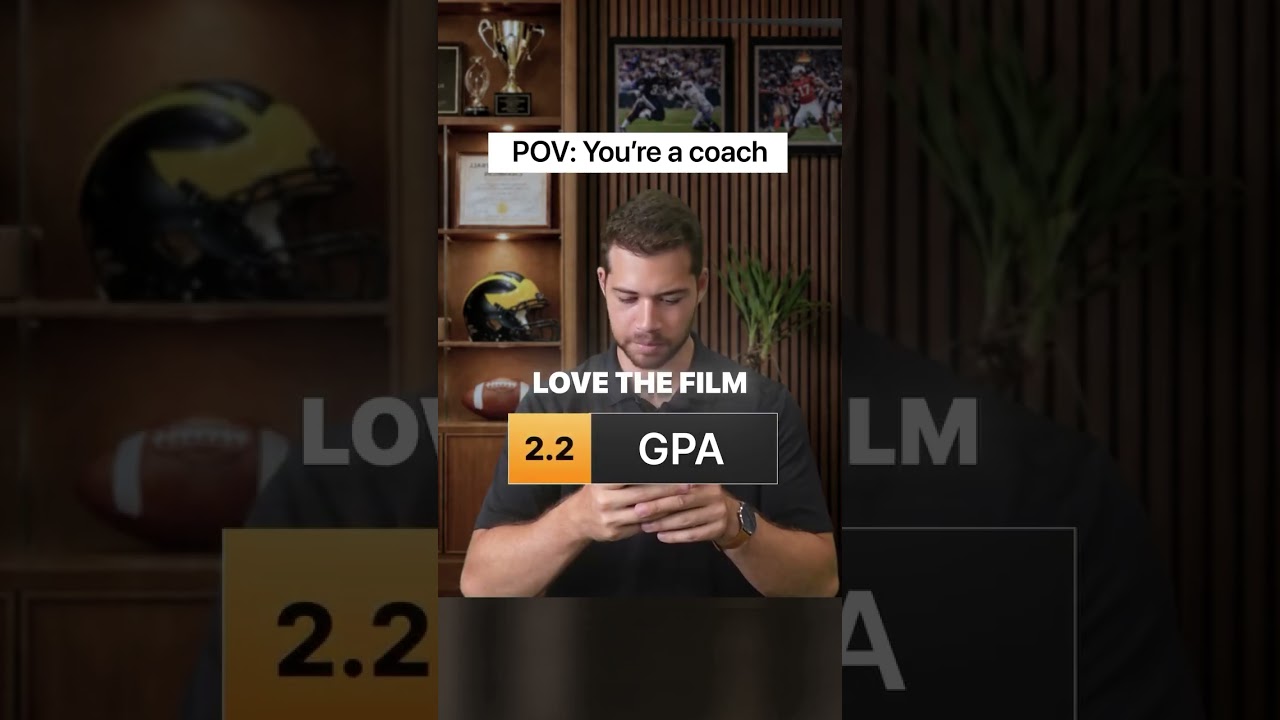
POV: A College Coach Reacts To Your GPA 🎁 Comment “SCOUT” for a free list of 11,000+ college

How To Setup Your X Recruiting Profile 🔥 🎁 Comment “PLAYBOOK” to learn how to get a college

What To Do After A Bad Game 💩 🎁 Comment “LIST” for a free list of 50 questions to ask a college

How To Setup Your X Recruiting Profile 🔥 🎁 Comment “PLAYBOOK” to learn how to get a college

What To Do After A Bad Game 💩 🎁 Comment “LIST” for a free list of 50 questions to ask a college
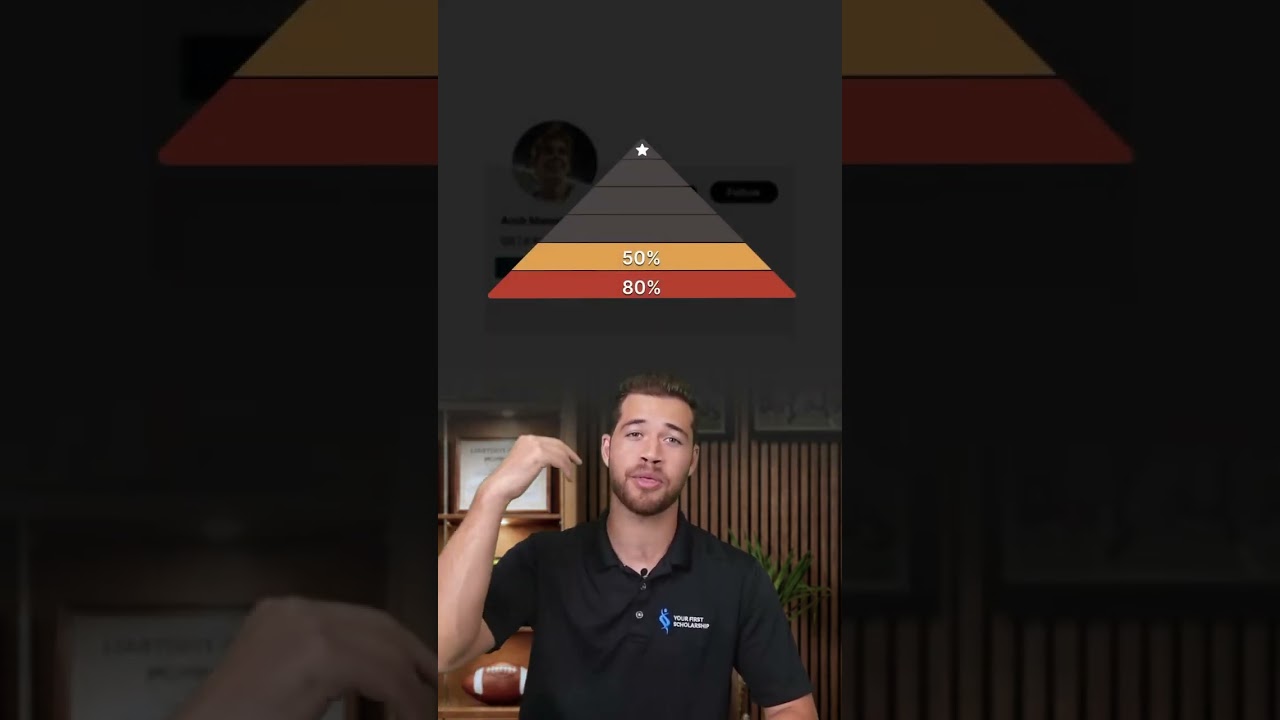
How To Setup Your X Recruiting Profile 🔥 🎁 Comment “PLAYBOOK” to learn how to get a college
What To Do After A Bad Game 💩 🎁 Comment “LIST” for a free list of 50 questions to ask a college

How To Talk To A College Coach 🔥 🎁 Comment “LIST” and I’ll send you my list of 50 questions to

How To Spot A Fake Offer 👀 🎁 Comment “PLAYBOOK” for my free Scholarship Playbook 🎁 Before you