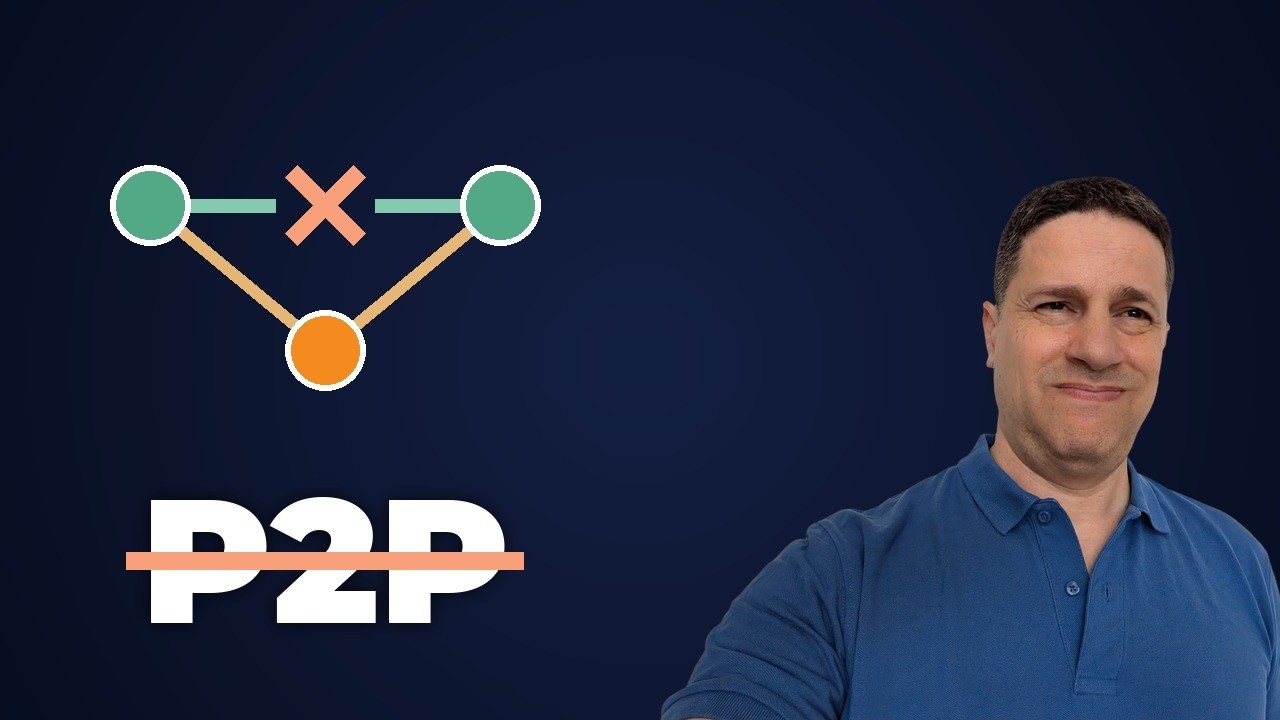
In this short technical monologue, the speaker contrasts TCP and UDP for live voice communication. TCP guarantees delivery by retransmitting lost packets, which introduces pauses and exponential back‑off timers that make the conversation feel out of sync. For real‑time voice, this reliability is detrimental. WebRTC therefore prefers UDP, a best‑effort protocol that simply drops lost packets and lets the audio codec conceal the loss, keeping the call "in the present." The speaker points out that the WebRTC getStats API reports a "concealed samples" metric, which counts the audio samples the codec invented to mask packet loss; rising values of this metric correspond to the robotic or underwater sound quality listeners sometimes notice. The overall message is that for live human voice, deliberately choosing an unreliable transport (UDP) yields a smoother experience than a reliable one (TCP).