How to run Google/Meta/YouTube Ads for Real Estate Wholesalers (Ft. CEO of LeadZolo)
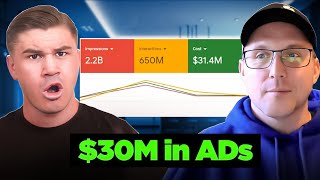
Tyson Smith and Drew Carroll, CEO of LeadZolo, break down paid-media strategy for wholesale real estate. Start with many small ad sets ($5-$10 daily), kill underperformers, and scale winners to $30K+ monthly. Retargeting delivers the highest ROI, and concentrating all spend on one platform gives the pixel enough data to work.
Chapters
It is a high barrier to entry of just like the technicality of running these ads. And there's so much to know.
We spent $31.4 million just in YouTube alone, 2.2 billion impressions, 650 million interactions on our ads, 19.7 million clicks. If I want to be a $6 million wholesaling company, then I need to be transitioning my efforts until I hit this in inbound leads. I would only need 150 hours to work those leads. I would need 0.9 sales. I could literally do $3 million in a year by myself.
I told Drew, I said, Drew, how much does it cost me for you to just give me every single lead from Phoenix?
He's like, I can't do that.
You pay $1,100 a click in some markets in Southern California, but also you can make $200,000, $250,000 assignment fees.
And if costs are going down, costs are going down for everybody. Costs going down means there's more people to compete with.
I can go show you right now, hey, I just turned $100 into $200. Playing roulette. But then, hey, go do that with $50,000, right, over the span of— and let's see what, what your returns are. I've spent tons of money on different courses on how to run Facebook ads and how to run Google ads, and I've, and I've hired mentors for this, and I've ran my own ad accounts for Google pay-per-click and, um, Facebook and, you know, Meta ads, all kinds of different things. And I've tried to do it myself, but I kept running into an issue of it is a high barrier to entry of just like the technicality of running these ads. And there's so much to know. And eventually I just started, okay, I need to start finding somebody else who does this and this is what they do and pay them. And I've tried tons of different people. I've had pretty much every single big company there is to run Facebook ads and run Google PPC for real estate wholesalers. I've used them. And it wasn't until I met Drew that I was like, okay, this is the guy that we want running our stuff. So met Drew through another wholesaler friend of mine, and basically he had come out with this product called LeadZolo, which I'm actually wearing their shirt right now, that provides leads for real estate wholesalers. And we started using we started using his company, we were paying for leads, and we started converting at higher rates than we ever have had before. Basically, the number of leads we needed to get from LeadZolo in order for us to get a deal were lower than any other marketing channel we'd ever seen before. And I started to realize, okay, Drew knows what he's doing over here. So I have tried to run these ads before, and to be honest with you, I just have never been very good at it. So rather than me teach you guys how to run these ads, I brought the guy I know who knows more about this than anybody I've ever talked to. Literally the best marketer I've ever met in my entire life. And that is Drew Carroll. And he is the CEO of LeadZolo, here to teach you how to run ads on all of these different platforms yourselves. So we're literally learning from the best right now.
Throw this really quick. If anybody has seen any of my webinars before, Yes, these slides will look familiar. This is not— it's not the same presentation. I just pulled some useful slides to help illustrate for this training. What I've also done is I've got some key points that we're going to cover today. Now, I've taken this— I've trained a lot of media buyers in my life, a lot of media buyers.
And real quick, can you explain what media buyers— what does that mean?
Sure. So I guess the first thing to mention is that I only do— my partner and I also have another company, an ad agency where we run ads for other companies. And a department in that company would be a media buying department. And we hire media buyers. What their jobs are, are to create the ads, create the copy and the like, send the client scripts to have them record them. They get them edited. They then take these ads and put them into the media platforms such as Meta, like Facebook, Instagram, TikTok, YouTube, Google Ads, and then run the ads in those platforms. Now, when I started hiring media buyers, we would start very, very tactically within the accounts and how to set things up. Over the last 3 years, we've learned that it's way more beneficial to teach the psychology of marketing before anything else. And that's what I want to present today. Anybody can go YouTube how to set up a Google ad. But the difference is the people that know what they're doing before they get to that point are the ones who are massively successful. The people who think clicking the buttons and that your bid and the keyword is where all the magic is are the people who end up wasting a lot of money because Although—
That was me.
Although those things are integral, they're literally like the end of the line. Like, that's like when you're done is when you go set up the ad account. So I'm gonna use probably the first half of our time here to just kind of explain general psychology of marketing. And then we could be— I'm happy to dive in. I have some just dummy accounts ready. We can just dive in and play around and I can kind of show you how I think about things. Phenomenal. So first I'll push through these. So I guess we'll start with the notes. What we're going to cover is what's the difference between inbound and outbound? We've kind of touched on that pretty well. The economics of it. What are the pros and cons of inbound? How and where to start? I think most people are looking for this. Please, again, let me impress upon you the importance of learning the other stuff before learning this.
And then tell you guys right now, look, there's going to be— this whole thing is going to be timestamped in the below. And if you want to go ahead and skip to the how to where and start, go for it, sure. But for those of you guys who actually want to understand what they're doing and where you're putting your hard-earned money so that you can really use this to go make money, you're going to want to watch all of this.
Yes. And then, and then we'll have some, some general business marketing discussion. And actually, you're kind of like touching on this point that I have here, which is like, don't look for quick wins or cheap, or that's exactly what you're going to get. So exactly what you're saying, like, don't try and like cheat code to what you think you need. Take the time to learn something. Everybody listening to this call is trying to build a business, right? And it's really, really, really important for us to separate trying to make some cash and trying to build a business because those are two very, very different things. And I think a lot of people approach business as how to make some cash and they'll just— you'll never get anywhere with that. You have to think business first and what you're doing to better the world, to help people. And then backtrack from there. And that's what I'm going to try and help us do here a little bit today.
I love that.
So really quick, host of the Business of Wholesaling podcast, CEO of LeadZolo. We, you know, since first quarter in 2022 when we started LeadZolo to today, we've spent $31.4 million just in YouTube alone. We also do TikTok and Facebook. Their screenshots aren't as impressive. So I just left this one because I thought I was kind of cool. 2.2 billion impressions, 650 million interactions on our ads, 19.7 million clicks.
Just so can we break that down? Because that is like $31 million of ad spend. And what is that, 2 years exactly?
Yeah, 2 years exactly.
So that— this is over, guys, $1 million a month.
Yeah.
Like, how much— what is that a day?
Just so it's $30,000 a day. It's about $32,000.
$32,000 a day on this platform advertising. Now, Drew, are you going to talk about the importance of ad spend later on of like how the platforms learn from the different spending and how it feeds data back in? Or you get like, is this going to be covered?
Yeah, yeah, we're going to cover data. Data is king. And why this isn't impressive. This is the biggest asset that I own, right, is spent money, which is kind of funny to think about, but it's the data collected from the spent money and the training of the algorithm and the pixels. And yeah, we're going to, we're going to jump into that. So yeah, expect to come back to this a little bit.
Is there anybody, is there anybody who is like, I mean, I don't know. I've talked to a lot of other companies and different people who have spent a lot of money on Google Ads, and I don't know anybody who's even close to this.
No, and it's, it's interesting. It's kind of like most things that, as with scale comes a lot of opportunity, right? So like Warren Buffett and Charlie Munger, when they're looking to invest in a business, what they're looking for is a company that doesn't always— that doesn't necessarily just have runway to scale, but are they at a peak scale where they currently are? Because at that point is when you start to get true benefits. I can command from Google in any given situation, a better cost or a better quality of a lead than literally anybody else in, in the USA. And it's because I have so much money spent. And on top of that, our tracking and our conversions are so meticulously pruned that Google knows exactly what I want. And that's what machine learning is, right? AI is— everybody thinks that AI is going to take over the world because it's good at just picking up from scratch and going. But AI, which is machine learning, which is what these ad accounts use to optimize, they were the first, not ChatGPT. What AI and stuff is really, really, really good at is taking something from 20% to 90%. What it's terrible at is 0 to 10%. When it doesn't have context, it doesn't understand anything. So what we've done with $31 million is, is give Google, Facebook, everything, because we also syndicate our conversions, which may be a topic for another day. We've just trained it more than anybody could possibly train. Like, name a wholesaler that's spending over $1 million a month right now. It's nobody, right? The only person that was ever been close to us was Opendoor. And Opendoor started back here when they had their $370 million of venture capital handed to them and they took their market cap They took their stock from $8 to 92 cents. Basically, now their company is worth 1/8 what it was used to. It's worth $1.4 billion, which is ridiculous after they put $370 million into a dumpster fire. And, you know, like, they're the only people that were ever close to us. And obviously they are not on YouTube anymore. They're done. They've— they blew up, basically. So. Funny to mention that, but yeah, I'll come back to this a little bit more in the further parts.
Now, the point is here is that Drew is the foremost expert on what it is we are talking about right now. You couldn't go find somebody who knows more about the subject, and we get to learn from him today on exactly how to do it.
Or at least—
thank you so much—
who is still— who spent the most money anyways. I just really quickly want to throw this in here because I'm going to impress upon it a little bit later as well. Our purpose at LeadZolo, I think it's really important to have purpose. Our purpose is not to make money. You know, money is great. I'll take money any time I can get it, but I won't take money over purpose. And I think that everybody as wholesalers, you guys have a moral obligation to help people who like you guys, you guys are intentionally putting yourself in a situation where people need help. So as far as I'm concerned, you have a moral obligation to fulfill that and you should start there. Like your, your team, team meeting should start there. Don't start with who has the best conversion rate. It's, it's, it's gross. Start with what are we trying to do? And I know with LeadZolo and a part of this training is help fulfilling that is to disrupt the status quo in the wholesaling industry by getting investors away from cold calling and other outdated lead gen strategies and focus on generating inbound leads so that you guys can help more sellers in need, right? This is what's most passionate to me, uh, everywhere I go. So just keep that in mind. And you guys should have a mission statement like this that rolls off your tongue because you say it every single morning standup with your team. Love it. Now let's get into the meat and potatoes. This is from last year, so I apologize. I could, I could update it. It's very, very small differences. It basically looks the same right now. But of 400 applicants to LeadZilla, we asked them all how you're generating leads. And this is literally how it breaks down. And there's this very, like, clear line right through the middle here. And it's showing you the top 3 things are outbound, the bottom 3 things are inbound. To me, all that's screaming is that this industry is still in the dark ages. This industry has not understood the value of this bottom portion. And we're still teaching people how to cold call, which is virtually illegal. I guess it's not fully illegal in the US yet, but every single day they're making it harder. And in Canada, it's literally been illegal for 8 years. So I'm not saying that Canada is the forerunner for the US, but like, you know, we can all take a sign and like see what's coming. Like, this is just not going to exist. So you have a business model built around this. I would be very worried, right? So when I look at this, all I'm seeing, all I'm seeing is that this industry is very amateur in how they're acquiring their business. And I just think honestly, it's just because not enough people are spending enough time learning about different acquisition methods. These things have worked in the past, so they just get retaught and regurgitated over and over again. And what it also shows to me is that If 75% of 400 are in these outbound areas and 25% are here, then I know if I'm going to get into the wholesaling industry that I would rather compete with 25% of the industry as opposed to 75% of the industry.
Excellent point.
I'm not going to go— if I have a choice to go play hockey and I can play the team who only 3 people showed up that day for their team or the team where 5 people showed up for, I ain't going to go play the team where only 3 guys showed up because I'm going to win because I've got 5 guys on my team. That's really how I look at this is just why in the hell would I compete? There's no need. I can come down here where it's low-hanging fruit. And of course, this is kind of just cheekily from another presentation. You don't see on here is YouTube. Nobody's on YouTube. And I'll show you guys. I'll show you guys how to take advantage of YouTube. The biggest thing for me is like we want to target sellers who are specifically distressed, looking for a solution. Right. Not non-sellers that you might be able to convince to sell because they answered their phone. This is me like comparing if you're cold calling and I know you guys have very great scripts and I'm sure Tyson, you have, you know, you have fantastic scripts that you teach everybody and stuff like that. But for me, when you're cold calling, you're calling somebody out of the blue to say, hey, if I gave you the right offer, would you sell your house today?
It's a shot in the dark.
Shot in the dark. You know what? If you called me right now and said, hey, if you gave me the right price, would you sell your property? I would say yes. The right price for me is well over market, but I'm going to say yes. And now it's just like, oh, we've qualified this guy as a lead because he said yes. Now it's going to get pushed through a leads manager maybe. But regardless, it's going to end up on an acquisition or a sales guy's CRM to call the next day. And now his time is going to be wasted, in my opinion, with somebody who's not actually going to sell. And I'm using an extreme here. And there's a lot of smaller cases here where like maybe somebody does have a house that's worth $300,000. And they said, yeah, I would be potentially willing to sell it for $225,000. But they're not really that serious. Like, what's their motivation? They don't have motivation. You're, you're having, you're asking them just kind of some pie in the sky question where they're not motivated at all. And the sales process is now you trying to convince them of something. Where the opposite is us putting our hand up, putting a big billboard out like you said before, and just saying, hey, by the way, if you basically— if you are valuing time over money right now and are willing to take a discount on, on your property because you need the money faster than if you were to list it and go about it that way, then I'm willing to help you with that. Now, if that's the message, obviously creatively done through copywriting. But if that's the message, and then now somebody goes there and fills out 12 questions about their information and then waits for a phone call afterwards, now the power is completely shifted. You're not now trying to convince them to do something that they weren't aware of 20 minutes ago. You're now— yep, you are now answering their call. They have come to you saying, I have a problem. Would you please help me solve that? And sound— so now you get to sit in this advisory position helping this person through a situation that they've raised their hand about.
Well, I love what you said about the, the switch of like power. The power is in your seat. Like at this point, it's the true nature of this inter— this interaction where you're the buyer and they're the seller. You know, they have to sell you.
Yeah, it's the difference between door-to-door selling fish door-to-door and having a fish market with people coming. If you have a fish market and people are showing up to your fresh fish market, you don't have to put anything on sale. You don't have to do anything. People are there because they specifically, they put tuna, they wanted tuna tartare. They decided 3 nights ago they're gonna have it Thursday night. They promised it to the wife. They're gonna go buy the fucking tuna. It's very easy, right? When you're door knocking trying to sell red snapper, like you've got, there's a very small percentage of the people in the world that are gonna care about that. And so like think about your time versus money. Right. So this comes back to, okay, if you have all this time and a lot of money, then yeah, go door to door and start selling some snapper until you can afford to buy a fish stand somewhere and command people to come to you.
And here's the beautiful thing about wholesaling is it doesn't— it's not like you have to work crazy hard to all of a sudden come into the money to be able to do these things, right? The evolution is very fast, like of going from the point of Okay, I have no money to all of a sudden I have a lot of money because that's just one deal that, you know, it allows you to shift into this, this other world.
But that's so true, right? Like, if you make it $20,000, like $20,000 on a deal, obviously, like, there's payroll and there's business expenses. But like, if you can drop $10,000 into a PPC campaign, you're not going to have the best results in the world. That's a really good start. Like, it's a damn good start because most people who start off with like PPC and all this kind of stuff, they start on really low budgets and I'll explain the cons to that here shortly. But yeah, like to your point, Tyson, you need one, you need to grit and grind for one friggin deal before you can transition to inbound.
This is exactly what I tell people. It's like, look, you have to make it out of the mud on the first one. The first one sucks. There's no, like I cold called 8 hours a day, me doing it.
For 2 months.
But that first deal, I made 15 G's, and I immediately— and I didn't place it even in the smartest way possible, but I placed it, and then that made my second, third, fourth one so much easier. And it wasn't long, like, I was driving a Porsche 911 within a year of me starting, and it's because I just started to put that money back into places that started to make sense, right? Yeah, man, this is When I say, oh, you can use that money to make getting your second, third, fourth, fifth one so much easier, this is what I'm talking about.
Darn right. Yeah, right, right on point for sure. I totally agree. Um, this is Robert Wensley from Investor Lift, if anybody's heard of him. Um, you know, this is a direct quote from him. His clients are doing over $6 million a year, right? $500K a month is $6 million a year. 90% of their marketing dollars are spent on inbound leads. Right. This says something, right? This says something. If this is what the big guys are doing, why would you aspire to do it differently? This— it blows me away when people who think they can outsmart people who are making millions of dollars, it's like, no, somebody's making millions of dollars. I want to go do exactly what they're doing. If I knew better than them, I would be making more money than them. So that's what— that's all I see when I think about this is, okay, That means if I want to be a $6 million wholesaling company, then I need to be transitioning my efforts until I hit this in inbound leads. He says specifically Google. Don't worry, I've changed Robert's mind. He likes YouTube a lot now too. I think you've changed everybody's mind. Yeah, trying to. So I want to look at the KPIs. I'm not going to like read this word for word. Screenshot it, pause this, read it, whatever you want to do. There's 3 key metrics. One is return on ad spend, right? If you put $500 or if you put $5,000 in and you can get $10,000 out, that's great. That would mean you have a 2x return on ad spend. You put $5,000 in and get $50,000 back because you closed 2 deals at $25,000 assignment fees. That's a 10x return on ad spend. Just to briefly explain that, and we'll go through some, some other examples of this, but cash conversion cycle, this is an important metric that most people should know. Especially if you're going to get into paid advertising. If I put $5,000 in and got $50,000 out and a 10x, how long did that take? I challenge anybody right now who has cold callers. I want to ask you, from the moment you generate your first lead to the moment that assignment fee is wired to your bank account, how many days was that? And count that over and over and over again. And you should know that per marketing channel. And that's really friggin important. So we're talking about millions of dollars, right? I'm talking like I float ad spend. I do, I own an ad agency. If my cash conversion cycle from taking a client on to making money is 5 months and I'm spending $5,000 per month with this client, that means I need to float $25,000. That's crazy, right? That's hard. So if you have a cash conversion cycle that's like 90 or 120 days, you should be monomaniacally focused on reducing that so that you can put money into marketing and get that money back into your account as fast as possible so that you can start the cycle again and start, you know, relying on the 8th wonder of the world, which is compound, and just keep compounding your money, and then you'll be driving the 911. Uh, the 3rd thing, and this is what nobody talks about, uh, except for Tyson, is, and indirectly I think a little bit, is, is sales per man hour. And again, I'm going to show you the importance of knowing this here shortly. But very, very simply, if I worked all month doing cold calls, doesn't matter what I'm doing, if I'm doing cold calls all month, 40 hours a week, and I made $35,000 because I made one assignment fee of $20,000, one assignment fee of $15,000. So a total of $35,000. I would take the $35,000 divided by the 160 hours that I worked. And so now I know that every hour I'm working, is worth $218 every hour I'm on a phone, say. Really, really important. It's important for you to understand this as an individual, as a solo entrepreneur. It's also very, very, very important once you start hiring because you're going to want— if Tyson's going to come into my company, he's going to cost me— he's not going to cost me, say, a $30 average, uh, um, um, $30 per hour. Plus commission, he's going to cost more than that, right? He's going to cost— I've got an HR department now that's going to have to onboard him, that's going to follow up. He's going to have pension, he's going to have health care, he's going to have all this kind of stuff. Plus there's time and there's meetings and there's training. Like, your employees cost you way more money than you think. And so what you need to know is that you are at least getting a 4x from them. So if Tyson is worth $218 every, every hour that he's on my sales floor, I better be only paying him $50 an hour. That's, that's a negative way to look at it. The positive way is how do I increase this? And everybody should be asking that every single moment of every single day is how do I increase the sales per man hour of myself to start until I remove myself from that portion of my business? And then once I've removed myself from that portion of the business, how do I keep increasing the sales per man hour as of Tyson? Of my, as my sales guy and then of my dispo guy and of this person. So let's, let's kind of take a look at how we would do that. And again, this is from another presentation if anybody's seen it, but I'm going to explain it a little differently here today just to the context of this. So, okay, so if we take a look at 3 marketing channels, right? We have SMS, texting, cold calling, Google Ads, and YouTube. Let's pretend we got 100 leads from each of these. Now, if we were to take— and these are last year averages, beginning of last year averages. These numbers are a little bit different into this year, but they're actually a little more favorable. So trust me that these are quite favorable numbers and they're 100% accurate. At the beginning of last year, they're slightly different. Like YouTube's actually up a little bit. PPC is actually up.
These definitely look right for, for my stuff.
Yeah. So yeah.
Perfect.
So your average cost to generate a lead through SMS. So the cost of the data, the cost of the software, the cost of learning how to do it, all that kind of stuff is about $50 per lead. Cost for cold calling, $60. Google Ads is $150. It's actually a little bit higher than that right now. And YouTube is $179 if you're buying from me. Haha. So typically most people stop here. And they just look at this and go, well, looks like I'm gonna go figure out SMS because they just— everybody talks about cost per lead all the time. It drives me batty because cost per lead has nothing to do with how many dollars go in your bank account at the end of the month versus how many dollars came out. It's showing you one small metric of a complex system. So what I think people need to do more of is spend more time looking at complex systems. And here's a little you know, tidbit for everybody in life, everything is a complex system. Things should not be taken casually, specifically when it comes to money in business, because now that we have this cost per lead and we know that this is accurate and average, the next question is what is my actual conversion rate on these leads? We know SMS and cold calling have a lower intent like we were speaking about earlier, and that Google Ads and YouTube have a much higher intent because these are people who are seeing what you have to offer and who are in pain because we are targeting intent. And we'll talk— we'll look at that later a little bit. So their conversion rates are significantly higher. So now if I take their cost per lead by their conversion rate, I can actually see what does it cost to get a contract from this marketing channel. Leads aside, what is the cost per contract? And look at how dramatic this is. Right? Like, this is, this is crazy. Less than half to get a contract from YouTube than using SMS or cold calling. It's insane, right? But nobody wants to go the extra 2 columns over, the extra 3 columns. This is in a bad spot. This should be over here. But like, nobody ever wants to go 2 more columns down the line. Everybody gets stuck right here and it just, it's crazy, right? When this is the reality of it.
So just, just to make sure that everybody explains or understands this, Drew, at YouTube, if you're converting at 10%, That means 1 out of every 10 leads you get is going to be a contract. And if the average cost of a YouTube lead is $179, then you're spending $1,790 to get those 10 leads that are going to turn into 1 contract, right? Whereas if you're doing SMS, you're converting at 1.2%, meaning that— what is that? How many? That 1 in like 80? Yeah, 1 in 80, something like that. So let's just say 80 times 50, whatever that is, $4,000 that you have to spend to get that same one contract. And this is just now just talking about the money. And now Drew's going to explain even deeper.
Yeah, yeah, exactly. So that's, that's just the money. And it's crazy how stark the difference is. And like, I challenge you, like, please go find me somebody who's talking about this that isn't Tyson.
Like, no, the only reason I know is because I saw in your webinar and I completely blew my mind. I'm like, oh my God.
It's crazy. But then so now let's go to the next point, which how much time do you have to spend per lead? Right. People don't— nobody wants to talk about this now either. And it's like you just— sure, you just got 100 really cheap leads from SMS, but you have to call them now, right? And, and yes, some conversations take 5 minutes. Yes, some leads are just dead on arrival. That happens. But there's other ones that take 4 hours. There's other ones where you're driving out to the house multiple times. There's all this kind of stuff. And on average, through— I think it was like 670 of our customers that we pulled on this— on average, every channel is the same for how long it takes to work the leads. And on average, it's 45 minutes per lead. So now let's take that back to working these leads. Like, like Tyson was saying, that means to get one contract from a YouTube lead at a 10% conversion rate, you need to talk to 10 leads. That means at 45 minutes per lead, that's 450 minutes to get this contract, which means 7.5 hours of talk time. Now compare that with SMS. You have to talk to the 80 leads or whatever it is each for 45 minutes. It'll cost— it'll take you 3,750 minutes to talk to all those leads to get that one deal, which is 62.5 hours of talk time. That's you started Monday morning and the next Wednesday you got a deal and you talked for 8 hours a day to leads. That's grueling to me. That's like, holy crap. Versus this guy who started Monday morning, took a half an hour lunch because his wife wanted him home for a minute, and then he closed by the end of the day. And then he got to do the same thing on Tuesday, and then he got to do the same thing on Wednesday, and he got to do the same thing on Thursday, and he took Friday off because he wanted to. That's the difference, right? To expand it a little bit more, let's pretend that, uh, let's pretend you have a sales team, or you're— you count yourself as a salesperson in your business, and you count your hours because that's what you should be doing. You should always be counting your hours as your role in your company, even if your company is just like me as a CEO where my job is to be public and be on talks and podcasts. I have a contract with my own company that accounts for every hour that I work. Very important, especially if you want to— if you're going to sell your company one day. So at this, if I— it costs, say, your sales team, you pay them $20 an hour. I know you obviously pay them commissions. If we were to work commissions into this, this will look even more favorable for YouTube and Google Ads. Believe you me. Now you're paying your sales guy $20 an hour. He has to work 62.5 hours to get that one deal from the SMS leads. That means you've paid him $1,250 in labor costs. So now we take the $4,167 it cost us to get the 80 leads at $50 a lead plus the $1,250 you just paid that salesperson in labor or your time to be a total cost of $5,417 for that contract, right? Versus if it was YouTube, he only worked 7.5 hours at $20 an hour, which means you only paid him $150 in labor on top of the dismally small amount of money in marketing spend you cost for that contract, meaning that you got that contract for, for less than $2 grand. Right? It just blows you away that everybody wants to just stop here. Like, it just, it blows me away every single time. I haven't done this presentation in like 6 months, so this is just kind of making me laugh looking at this. So now it's taking way less time, it's costing way less in marketing, it's costing way less than labor, and now you're getting a contract, let's say the average $15,000 for $2,000 and you're getting a 7.73 ROAS. That means $10,000 in, $77,000 out. That means $100,000 in, $773,000 out. Now look at the SPMH we were just discussing before. Remember before when I got those 2 deals in 1 month working 40-hour weeks, I was at $218 for every hour I was on the phone. If I'm working inbound leads, I'm worth to my company between $1,000 to $2,000 every time I'm talking on a phone. Right. So if you're working, if you're managing a sales team, I do suggest there's multiple nuances to working this. But from a very high level, if you know that every hour they're speaking to a seller is worth $1,500, call it on average to your company, That means you have a lot of room to pay these guys a good amount of money and keep them friggin happy. And they're closing deals every single day, right? This is a huge difference. And then finally, this is just kind of to cap it off here. If you are looking to get— what is my number? If you're looking to do 20 deals a month, right, call that $250,000 a month, let's just say. Let's just say it's a little over $10,000 per deal. That's a $3 million per year company, which is, which is pretty amazing, right? $3 million is above most— like, it's probably like the top 80 percentile of companies, right? You would need, if you're just doing SMS leads, you need 1,667 leads to get those 20 deals. You would need 1,250 hours of sales reps or yourself to work those 1,600 or 1,700 leads to get those 20 deals, which would mean you'd need 7.8 full-time sales reps working to make for a $3 million business. Now we're getting a little, getting a little scary. And on top of that, It's a 2.77 ROAS, so call it a 3x. So to make $3 million, you've got to put about $1 million just into ad spend. So now you're down to $2 million. You have to have 8 sales reps, probably a couple lead managers, probably a couple of people. So call it 12, call it 12 people. Say their average is $100 grand a month. Now you just put $1.2 more million into that $3 million business. I mean, at this point there's only $800,000 left over. That $800,000 is going to cover every other expense that has to do with your business, let alone if you have a physical space to hold these people in and all the software and the tracking and all that BS. That's now turned that $3 million company into a not very profitable company. And now the question is like, what are your cash conversion cycles? If you have too high of a cash conversion cycle, you're gonna have a hard time floating money on a low margin company.
Compare this. I, I ran into this exact problem right here. I did this.
Yeah, I did too. I did too. 100%. Now, if we're looking at the same thing, we want to do a $3 million business. So we want to do 20 deals a month. If we're just doing inbound YouTube, we would only need 200 leads. I would only need 150 hours to work those leads, which means I would need 0.9 sales reps. I would need one person. I could literally do $3 million in a year by myself. If I wanted to work full-time, I would probably hire a couple people personally. But, but it goes to show the difference, right? Time for money. And so I really hope that this illustrates everybody who's watching this, that this is the gold, right? This is how you look at Tyson and all these other big wholesaling companies and stuff out there and seeing how they've scaled and they're making all this money. It's not grit and grind, right? They grit and ground to get to a place where they can hit a tipping point. And the tipping point is typically once you have a trained team in inbound leads and then things start getting easier. It is way easier to make $10 million a year than it is to make $1 million a year. Way easier. And, and that's what everybody needs to be focused on. I said this before when I was showing the Robert slide. Where it's like, you know, if somebody's doing $6 million a year, I want to— and I want to do $6 million a year, I need to do exactly what they're doing. You need to be doing this math, right? The reason I spent $31 million in the last 24 months is because I understand this very, very well and I can manage my business on this. And there's some other stuff that we'll go through, too. Okay. I think that's it for this. I'm going to move on to the next portion. Do you have any questions or did you want any further elaboration on anything?
No, I just want to say that also, like, I didn't know any of this until literally I talked to Drew and he showed me this stuff. I'm like, holy fuck. Like, because I was like, dude, okay, these leads, all I was worried about was cost per lead. And then he starts to break it down. And this is where, like, dude, there's nowhere you're going to learn this stuff until you get around the right people, right? Like, you don't learn this in getting an MBA. You don't learn— like, this right here is the stuff that's like, oh, okay, you get around the right people like Drew who understand these things and have built businesses and see this, it's like, okay, this makes sense, right? And for me, this just completely— like, the first time I saw this, it completely opened up my eyes and it made the path to where I wanted to go so clear. Like, okay, there we go. Exactly like Drew said, you, you get the team trained, which can also just be yourself depending on what you want, right? It could just be yourself getting one person who's dialed in on the process, and then you're not afraid to pay $179 a lead because you know what that can turn into.
Yeah. Well, and then even more because there's a whole other part of this we won't get into today, but like, that's a hefty margin right there, right? So then it's just like, you know what, I want to dominate Phoenix. Haha, don't try and dominate Phoenix. Everybody is, including Tyson and myself. But then it's like, okay, you know what, I'll go spend $300 a lead. I'm willing to give away a little bit of this for higher volume and to bully other people out of the market because that's what the big guys are doing. They look at this and go, man, we'll run on a 2x for all I care. Let's go start bidding $500 on these leads so that nobody can afford to buy them because they don't understand their numbers.
I told Drew, I said, Drew, how much does it cost me for you to just give me every single lead from Phoenix? He's like, I can't do that.
Yeah, we're directly competing.
Yeah, it makes sense.
So, okay, so those are kind of the numbers. Those aren't kind of the numbers. Those are the numbers.
Okay.
Some other stuff here. Let's just check the notes and kind of see where we're at. So I feel like we've talked a little bit about the difference between cold calling, SMS, direct mail, door knocking versus like PPC, digital ads. I lump TV ads into inbound as well. I would probably lump Billboards in there. I would probably lump bandit signs in there, but I don't— they, they deserve a different topic when we're talking about economics because they're very different. You have less control over them and you don't get like immediate feedback from them where you do get immediate feedback from digital ads and TV. So for sake of argument, when I'm saying inbound, this is what I'm referring to. And maybe like down the road we can have some spinoff conversations about how I look at other types of advertising. But at the end of the day, I can lump these together because they, they act the same. So I think that we're clear on that. It's really cool. What are the economics? So we went over that very thoroughly here with the leads, and I want to touch on what we— how we're ending that conversation a little bit. With this Dan Kennedy quote, and it's the business that can spend the most to acquire a customer wins. The goal is never to produce the cheapest leads. The goal is to always maximize the leads you get so you can afford to keep paying more for them. And this is a— this is something that took me a very long time to get my head around. And I think most companies struggle with this. Even like Fortune 500 companies struggle with this. But it's a huge differentiator. One of the— I knew the quote and I think I knew it intellectually for a very long time. It wasn't until I was working with Dean Graziosi and Tony Robbins campaign where I fully understood this. And without getting too much into their business model, they look at customers and because they've got a really huge customer base and their company makes a lot of money, they have a lot of float. They can handle long cash conversion cycles. They know a customer who buys a $1,000 product is worth $5,000 to them in 3 years. So when we, when I was running an ad campaign for Tony and Dean, their metric was if it is keep the cost per $1,000 sale below $3,000. Isn't that weird to think about? So they're selling a $1,000 product and their KPI is it better cost less than $3,000 to sell that $1,000 widget. And that was it. They didn't give us any further explanation past that. And we all just like, we're like, they're willing to pay $3,000 for a $1,000 sale. And they'll do it day in, day out because they know after that $1,000 sale that they know their numbers inside and out, right? 64% of them are going to— in 6 months, they're going to resell those people into a $2,000 product. And then they know of those 64%, 20% are going to join the 10K per year mastermind in a year. And they know 2 years after that, that 10% of the people in the 10K mastermind are going to join the 100K mastermind. And, but they have it so dialed in that they can just lose money at the front end because to them it's about owning the market. It's a very— they can spend $3,000 to acquire a $1,000 customer, which means they can just frank advertising everywhere. Have you ever tried to compete with Tony Robbins in like a very specific market that he's in? Like if you tried to compete with his date with destiny to go head-to-head with him, he would laugh because you would need to be profitable on the first transaction where he's just like, "I don't care. I don't care." Yep. If it costs me $3 million to put $1 million in a stadium, good, because next year he's going to resell them, and the year after that he's going to resell them, and the year after that. So in wholesaling, it's not very crystal clear.
Right.
It's not very easy to think this through in wholesaling because it's like, okay, I got a lead. Well, they just sold me their friggin house. Like, what else do they have to sell me? So that's a— a lot of people get stuck there. But I'll tell you that there are large wholesaling companies that specifically look to break even on their ad spend. And the idea is, is that they're actually building two other things. They're building brand recognition. And what they're building is basically a downline of referrals. They just on the referral notes— is it here? Oh, I don't know where I put it. Somewhere. I think it doesn't matter. They treat as a wholesaler, they treat their customers like a realtor would.
They—
yes, they bought their home from them. They helped them in whatever situation they were or sub-to or whatever they did. But they still send them yearly Christmas cards. They still touch base with them every 18 months to see how things are going and so on and so forth. Because they know— and I don't know the numbers. One person said it to me once, so don't hold me as this is a general— I know one company specifically. They know that 12% of completed transactions will turn into a second transaction, either through referral or— and I hate to say this— people who typically fall on hard times typically do it habitually. So it's very— not very common. It's, it's the plausibility of in 10 years for them to buy another home and then be in trouble is, is relatively high. So they know to keep in good contact with them because they might have another house. And/or they help this person. Their intention coming into this was to help this person, not rip them off. So they know they did everything they could for this person, so they feel good about it and they feel good about the relationship they have with every single one of their customers. And so they know when one of their customers have a friend who's in need, that they're going to refer them to Tyson, right? They're not going to say, oh, go find a cash buyer online. They don't even know that terminology, right? They're gonna say, dude, there's this Tyson guy. He helped me out of a really tight situation, right? So they'll spend, you know, they'll spend $10 million this year to break even on that $10 million because they'll get $1.2 million in the rears just from referrals. Now on top of that will be brand rec, which is another way for an agency to say conversions that come in outside of the direct response. So if I spent $10 million on LeadZolo, you would see my ads everywhere and you might not ever click on one of my ads. But one day when you're in need of leads, you'll just go type LeadZolo.com in and you'll go buy leads. They'll never get attributed to an ad campaign, but you'll just know me through brand rec. And brand rec can account for up to 20% of sales in some industries. I don't know that that's true in this industry. It's, it's up there. It's, It's above 10%. But if, if say it's 15% on BrandRec plus 12.5% on this, now you're at 27%. So these guys will spend $10 million to break even on $10 million to make $2.7 million in profit just from this stuff. And what they're doing is they're just bidding it up, bidding it up, bidding it up, make it so expensive that everybody else can't come in and buy leads or advertise on Google because they're paying Google so much money and they've drove the bid so high that nobody can afford to because they know that it's not about getting cheap leads, it's about making the most out of the leads they have.
That's why, like, people ask me, like, what's the best market to wholesale in? And I say it's Southern California. Like, no, the houses are too expensive there, everything's too— like, yeah, the houses are expensive and it costs so much to— your average, like, cost per lead, you can pay $1,100 a click. In some markets in South— in Southern California. But also you can make $200,000, $250,000 assignment fees. Yeah, right. If you make $200,000 in assignment fee, you only have to do 5 assignment fees a month and you're making $1,000,000.
Yeah. Yeah, absolutely. Like, that's exactly it, right?
And then Phoenix is on their way there.
Yeah. And people get like this bad taste in their mouth and like people are like, oh, $200 leads. It's like, No, to your point, like, I didn't know that it's $1,000 a click in SoCal, but I know in Northern Cal—
where it's not $1,000 a click, it was when I was running there, I was paying $1,100 a lead though.
Okay, that makes it— yeah, I know it's about $250 per lead in like Northern California. So like it's expensive, but why is it expensive? Because everybody's driving up the bids because they know how much friggin money they're making on it. And they'd— they want to make it scary to people like you and I who are just like, oh, $200 a click, man. I was hoping for a— I was hoping for a $50 lead. Yeah. So there's a big portion on that. And just while we're here, since I have this open, I kind of want to run this down a little bit.
The—
another part that everybody should be really, really focused on, especially in wholesaling, because this industry is so vanilla, right? It's so freaking hard for you guys to separate yourselves. If it's me and Tyson side by side, our companies in Phoenix, why would one person choose me over Tyson aside from price? I can't think of a single reason.
You get lucky. That's what I tell people.
It's timing.
I caught them at the right time. I caught them right when they looked at their credit card bill and you caught them right after they won like $100 on a scratch-off ticket.
So yeah, yeah, that's a good— that's actually a really good example. Because to illustrate mindset. But I think that you and I should also be trying to push for some side, some sort of unique selling prop. I don't have the answer to what that is. I have some ideas, like, for example, a mutual friend of ours just told me this a little while ago. I won't name him because I don't know how much— what trade secrets I'm giving away here. But he works in Dallas-Fort Worth. And he's a, he's a local guy. He doesn't do virtual or nationwide or nothing. He's all about local, local, local. And his favorite thing to say, and his whole team knows this, if they're talking to a seller and the seller mentions that they're also talking to another wholesaler, they immediately go, "They're not trying to buy your house over the phone, are they?" And he was just like, immediately they just flip the script, right? And then they follow it up with, you know what, I'm like 20 minutes from your house. I'm going to grab something from Starbucks. What do you drink? And I'm just going to come and I'll show you what our offer is. I'll even tell you if the other guy's offer is better, give it to them. If you feel comfortable selling a house over the phone, it's just like that's their— they just like double down on this whole you're trying to sell the biggest asset you'll ever own in your entire life over the phone. But it's a unique selling prop for them that they're able to do. And I'm not saying that I have to do that. But I think it's clever. Exactly. It's very clever. You know, I can think of the same for the nationwide, right, where it could be like, you're going to sell your house to a mom and pop.
Yeah.
Like, right there. Like, framing.
Yeah.
You're just— we're a national brand. So I think you call it framing. I think, I think that's a brilliant term for it. I think really focusing on your frames, really focusing on your unique selling USPs, unique selling props, to make sure that you're differentiating, right? There's, you know, name pop brands off the top of your head like Coke and Pepsi, right? And then it's just like, oh, I don't know, like RC Cola, like, I don't know, right? Everything else is just this lump, right? But like Coke and also I was never a waiter, but I ran some grocery stores for a long time. You get the exact same response every restaurant you're in. If your restaurant has a contract with Pepsi and somebody asks for a Coke and you go, is Pepsi okay? The response is exactly the same every single time. The response is always, oh, if I have to.
Yeah, right.
And it's because— but what's the difference between Coke and Pepsi? Nothing other than Coke has done such a good job branding and they have this super— they come across as very unique in compared to Pepsi. Pepsi just looks like they're trying to clone Coke and that's more of a timing thing and a growth thing. But, but they have this like assumed unique selling prop that they are the premium cola, right? It's like the difference.
Interesting on that, Drew. I saw Pepsi was running a direct response like ad that was just— it was a Pepsi and it said, is— and then it was like the soda. It was a Pepsi is— and then that fine? And they were like leaning into it.
Interesting. Yeah, I like that.
Yeah, I know.
It's like, it's like Wendy's commercials up here are always making fun of, of clowns cooking your burgers.
Why is that? It's like a Tim Hortons thing?
No, it's a stab against McDonald's. Oh yeah, they're intentionally taking— and this is, this is off topic from this, but like they're intentionally taking like some unique selling props for McDonald's and making fun of them. So it's like they're using, uh, McDonald's brand wreck to tie people into their advertising campaign. And it's— it's— that's like— that's like—
there are levels.
Yeah, yeah.
That's so—
um, okay, let's, uh, let's jump out of this for a second. So The economics. So we went through the economics on the sheet. Why pay more for a lead? We just covered that. And so I would— what I'm trying to impress upon with this point is you guys should be focused on how to get higher assignment fees or how to make more from leads, whether that's being the best fucking follow-up company in the world, whether that's like— I don't know. I don't know what that is, right? Maybe that's sending after you call somebody and they're on the fence to you know, send them a bouquet of roses or something like you need to be different. You need to make more from your leads because you will never get leads cheaper. Next year this time we will be laughing that I ever sold a lead for $179 because leads, solo leads are going to be $250 by next year. This time they'll be $350 a year after that. There's no— it doesn't come down. Life just goes up. So just so by feeling good about that, like an investor would, right? Like investor, if PayPal goes up or Amazon goes up today, I'm excited. And it's because I'm in it. And so we need to think about that. And if costs are going down, costs are going down for everybody. Costs going down means there's more people to compete with. So as costs go up, you just, you want to stay on top and just be with the smaller pool of people because I'm telling you, it's the top 20% of people who make 80% of the income in this industry and in every industry. The actual cost, this, this is me to remind to go through the sheet again. So when I mean this, I mean like you should also be counting, talking, thinking through your labor cost and your time cost, which is what we illustrated earlier. Pros and cons. So the number one thing about media buying is to understand that all media buying leans on AI and machine learning of Facebook or YouTube or Google or whatever it is, right? Like I made the joke earlier that ChatGPT has made AI famous, but it is certainly not the introduction of AI to our lives, right? AI has been around for a very long time. Google touts that they have over 50,000 data points on each one of us. Over 50,000 data points. So they use those data points. So now if I have everything set up correctly and I get 10 leads come in and I go to Google and go, these 6 are the ones I love, like these, I want more of these 6. Google then goes and takes the 50,000 data points on all 6 of them, sees which ones correlate, and then knows to start now gearing its targeting towards those correlations, right? So everybody gets wrapped up in like, what audience should I target? And what keywords should I target? And those are important to begin to train the pixel. The goal of media buying is to get to a place of no targeting, right? The goal of media buying is to train the pixel and the algorithm so well on what you want exactly that you don't have to layer it layer it with, um, uh, whatever it is, right? Layer it with people who are interested in Teslas or whatever, all these silly different things. Those are the things where you're initially telling the, the engine what to look for. But what's all important is the data that comes back to it. So that's why we're, we're aggressive about following up, um, with CRMs and stuff like that of our own, but also to find out like Like we have a dispute policy. We want like when somebody gets a lead and say it's a bad contact information, somebody just filled out the fake information, they send that back, we credit your account, no big deal. But we don't stop there. Then we take that lead and we go back to Google and go, this was a bad lead, don't do this ever again. And so now it's going to take this pile of bad leads that we have and now it's going to cross-correlate those and go, okay, here's the leads they want based on 50,000 data points. Here are all of our overlays. So let's start targeting these people. Here are also the people they don't want. Let's see what correlations we have with the 50,000 data points, and we're going to put that into an exclusion bucket below. So now I'm training, I'm training the AI from both sides, right, to get narrower and narrower and narrow. And so now when you get to a point where you spent $31 million, you like, I just need to whisper sweet nothings into Google's ear every day. Like, that's it. It knows everything about me. In terms of what I want. It's not—
guys, so remember earlier, like, I love the point you just made. There's 50,000 data records on everybody. Google knows more about you than you know about you. Like, they know what the fuck you're about to do, right?
Yeah.
But Drew has $30 mil of weight behind him. He said that's his number one asset. Exactly like you said, he doesn't have to— like, his account is so trained on what it is that it's looking for, which are people who are going to sell their house fast and they're going to sell it for a discount. Yeah, right.
Yep. It's exactly what we're looking for. It's exactly what we're training it.
And exactly why I said, oh damn, I'm never going to run my own campaigns ever again.
Yeah, exactly. Why? When you could leverage ours, especially the price too. And we can talk about that a little bit after. But yeah, like That, but that's why I can get a better price. Not only can I get better quality, I can get a better price where we're talking about $250 clicks in SoCal. I can sell you a lead for $179 in SoCal. There's a lineup of like 14 people who want them, so it'll take you a little bit. But yeah, like our pixel being that trained is why that works so well. And now if we look at why people have a hard time getting started, with PPC or any sort of stuff. This is why is that you need to train a pixel. And when you start with an agency, an agency, like they're very upfront, like it's going to take some time. Like if you're going to, if your budget's $50 a day or $100 a day, like it could take a year before you're even getting any sort of consistency.
Right? Like, guys, I want you to think about what he's saying here. If you're spending $50 a day, then you're only getting 50 bucks a day worth of results of the, you can tell Google, yes, I like that. No, I don't like that. Right? And then eventually that will compound and it's gonna get a better idea. But compare that to somebody who had $30,000 a day of results to say, yes, I like that. No, I don't like that. Yes, I like that. No, I don't like that.
Yeah. Right.
When we, when we wanna talk about what, what, what is, what is your phrase for it? Unique value propositions. Yeah, this right here is the one that Drew told me that I'm like, oh, I'm a lifelong customer of LeadZilla.
Yeah, yeah. Because you'll never be able to train a pixel like I can. None. And I'm going to take margin, right? I'm going to obviously need to profit off the lead I sell you. But even with me taking a profit, you can't generate a lead at the price I can, let alone a consistency. And to be completely hands-off, you never have to worry about an ad or an actor or all this other crap.
Yeah.
Which is definitely the pros. And I'm jumping around a bit, so I'll have to recap for myself here in a second. But like, this is how some PPL companies like us— I don't have any interest in promoting my competition, but I can't think of anybody off the top of my head who does the same thing we do. But, but this is why, like, a PPL company can offer what seem like really cheap leads. When it's just like, well, I did a PPC campaign and in my area and it was costing me $300 a lead. How do you sell me a lead at $179? Well, I have way more data. Google loves me way more than it's ever going to love you. I just gave Google $31 million. Like, believe you me, Google answers the phone. So, so there's that. But the other side of that is the cost of segmentation, right? This is one of the biggest things a lot of people don't understand. Segmentation comes in many forms, but if we just want to look at geographic segmentation and we can— let's use an example here. This is the, this is the inside of a YouTube ad or a Google ad account. I'm not going to show you too much of what's going on here. It was a test account. I was going to show you some data, but not a lot of it's relevant, so it's not a big deal. But if I go to Google Actually, let's just do this. And I give— and I go, Google, I want to spend $1,000 a day. And I want leads from all of the United States versus I want to spend $1,000 a day in this one little spot on the United States. What's going to cost more, do you think? For that, for my $1,000 across the United States, Google will likely charge me about $20 per 1,000 impressions. And now there are things that are going to like, if my ad has a high click-through rate, That tells Google that my ad is super relevant and that people like it. So it's going to give me a discount on my CPM, which is how much it costs per 1,000 views, because Google is all about making a good customer experience. But if I'm saying I want to spend $1,000 in this one little area, Google's going, well, there's 300 million— is it 300 million? Yeah, there's 300 million people here for me to show it to. There's only 3 million people here. So it's not going to cost you $20 per 1,000 views. I have to charge you $80 or maybe $100 per 1,000 views. So your ad could be just as good as mine. Your landing page could be just as good as mine. But if you're just targeting Phoenix and I'm targeting the United States, my cost per marketing, my cost per 1,000 people to see that ad will be a fraction of what you pay. So when we're talking about $250 clicks here, that's, that's if we're only targeting there. Now, if I go United States and I spend $35,000 a day, I'm going to get leads from everywhere, but I will also get leads from over here because it will evenly distribute my spend based off of some other parameters and whatnot. So a paper lead company who is not— so there's two different types of agencies. Agency one is I took on Tyson, he's in Arizona. I took on Drew who's in Toronto. I took on whatever in Miami and they run separate campaigns and separate accounts for each of these people, meaning they're paying this huge premium because they've geographically segmented so tightly in each campaign. And so $250 clicks, blah, blah, blah. The other agency model, which we are doing with LeadZolo and hoping to change many industries with, is I'm going to use my own money. I'm going to target all of the United States to make sure that I'm getting a really good cost per lead overall. And I'm just going to keep getting leads everywhere. And I'm going to, as I get leads, I'm going to now go find people who want to buy those leads in those areas and sell them to them, as opposed to you know, this cost per segmentation and just doing it in specific areas for specific people. So that's how when you go on to a pay-per-lead platform, you see it's $250 a click in SoCal, but they're selling leads for $179. How the hell is that possible? That's how it's possible because they're using— they're leveraging the fact that this is what we're doing. We're leveraging the fact we're using one account, one, you know, social, one centralized place where all of our ad spend is going through. And set of ads and all this kind of stuff. So Google just like gives us the priority literally everywhere because we got to think of what's, what's Google's purpose. Like what is their business model? Their business model is to fill inventory. They have tons of ad inventory everywhere. They have it before you watch a YouTube video, they have it 5 minutes into the YouTube video, they have at the end of the YouTube video, they have it, they have ads fricking everywhere. So they have all this inventory where they can put ads. Their job is to fill the inventory. So when I say, hey Google, you go throw my ads anywhere you want in the US versus Tyson going, I only want it in Phoenix and in this zip code. Google goes, all right, dude, you're gonna pay a lot of money for that. And Drew, okay, here you go, man. Like it's very favorable to be bigger always. Now this also comes to other things. Right. Segmentation does not just focus on geography. You can also segment by— I'm getting, I'm getting a little deep into media buying here. So this will be super interesting for some people. I could segment by age, right? So knocking out 18 to 24 and unknown, that's made CPMs go up a little bit. That's a worthwhile trade-off for me though, right? But that's something that we've had to figure out over millions of dollars to spend, right? We know that anybody 18 to 24 are lower converting leads.
How many 18 to 24-year-old people have a house, you know?
Yeah. And if they do, they just bought it. So the odds of them being in trouble are pretty tough. Yeah, right. And then unknown could be— spam comes from unknown. That's just a random thing. But, but By taking this off, this is— these get a little bit more expensive, but it's worth it, right? And so you have to always— it's not always just about like open targeting worldwide. It's just like, yeah, you're going to get a lot of leads and you're not going to like them. So segmentation is a necessary evil. Here's another one, and I'm just going to throw this out there. Look at how this spent. This is kind of interesting, right? Top 10%. All of these are kind of even distribution. Just count views as spend. It doesn't matter. It's all the same. Pretty evenly distributed across here and all this money into lower 50%. Now my offer here is going to apply to lower 50% pretty significantly. There's also a little— there's a second level thought here as well, right? I'm on YouTube. I'm competing with all the other YouTube ads. What do you see on YouTube all the time? Webinars and $2,000 products, $1,000 products, book a call and they're gonna sell you into an $8,000 product. So YouTube is getting dominated by— Jason's laughing because he knows what I'm saying.
I run those ads. Yeah, I want to be running those ads, but I do too.
But when you and I run those ads and everybody else in the world, what's the first checkbox we X off?
The lower 50%.
Yeah, we don't want people who are in the lower 50% of income zip codes. We want these guys. And so that's what everybody does. And so what does that mean? That means that these income brackets are at a premium. So you're gonna get charged a higher CPM for them. And this income bracket is at a discount because they can't fill the inventory because nobody wants to sell to it. So it's not— this isn't super relevant to wholesalers because all of you guys target lower 50. It's just, it's good. It's where your people are going to be. But just kind of thinking through media buying and trying to be on a second level thinker, like this is the stuff that needs to pop out to you and go, oh shit, right? It's like if you're ever going to run a weight loss offer, right, the target audience is this. And parental status is non-apparent. There's anybody wants to go do affiliate marketing, go find some diet pills and just run it to that market all day long and you'll make a shit ton of money. Like it's just, it's there, right? But that means for the rest of us that not apparent's a little more expensive and typically females are more expensive in those industries. Males are more expensive than others. But yeah, so kind of, kind of interesting. How do we get there? Oh, we're talking about segmentation. So, so that's— there's also— so these are the real generic segmentations. The, the final thing is actually creating an audience in which you're going to target. And I'll show you. I don't want to get too deep into this because again, this is very like go Google search it. It's super easy to find. Not that I don't want to show you, it's just I don't think it's a super huge use of time. But you can target a lot of different ways in YouTube and Google, right? So these are in-market audiences. These right here are audiences that Google has already made and knows. There is literally an audience that Google has made that you can go target today called Cash for Homes. So there are people who are specifically looking for cash for home. Here are some example Google searches that these people have made, and the reason why Google has deemed them. I don't need to go on Google Search and put in these keywords because they're going to be $100 a click, right? What I'm doing, what Google's doing here is taking these keywords, looking at all the people in the last year who have used these keywords on Google, took the 50,000 data points on all of them, cross-referenced them all, and now has this huge pool. You don't have to type in buy my house to get targeted by other people who have typed in buy my house. You just have to be showing the same behaviors, i.e., you just went to a financial consultant, i.e., you've Googled what to do in pre-foreclosure. I like things like these, these are a part of the 50,000 data points. That Google is cross-referencing and why it's super creepy sometimes.
The ads you get, they're like, oh, this person just bought a bunch of moving boxes, right? Like, yeah, oh, perfect. They're going to be selling their house.
Like, yeah.
And that's just a tiny— they've got like 50,000 points.
It gets— it can get super obscure. It could be like why Tyson says he's married, but he's looking at pickup lines. Right? Like, like that's a, that's a, that's a slight indication of something, right? That, that's an indication that maybe Tyson's not happy. That's an indication of maybe a pending divorce. Google will actually know, like from the first time you type that in to when you're gonna get divorced. Like it's, it's, if, if, if that were to happen, but like, like Google knows that stuff. It's like insurance companies know to the month when you'll die. Like it's insurance companies have more data than the United States government does. On health. Like, it's gross. And Google's the same. So you can literally come in here and search for all of these. Real estate for sale by owner. This is an audience that also exists in Facebook. If you're going to run ads on Facebook, I would suggest this because these are people who have just haphazardly thrown a sign in the front yard and have decided they hate realtors. So yeah, go get in front of those guys. There's obviously a lot of different things here, but each one of these is segmentation. So it's about being careful and intentional. Now, let me— since we're on to media buying, I'm just going to— I'm going to give you an overview of how I look at media buying and how you guys should look at media buying. So this is what— this is how I build a media buying campaign. I look at media buying as investing. What I want to do— and not that I would 100% invest this way, but kind of— what I want to do is create all of these stocks, essentially, right? So each one of these is different in one way. So they'll have— this is targeting cash for houses and has a certain group of ads in it. This is—
when you say a certain group of ads, meaning so this is all targeting cash for houses, but there are 3 different or 4 different creatives.
Yeah, that's it. Let me— you're right, I should, I should take a step back. A campaign— each of these are very separate campaigns. So each campaign consists of your targeting and demographics as well as your creatives and your ads. So this single campaign, if we go into it, we'll go into the ad group. I won't explain that. It doesn't matter. In here I have these ads, a whole pile of ads as well as— oh, I don't know where it went— as well as this single audience. So that's great. Now I'm going to go let that run. How I would start this. So that's this one, right? It had that one audience in that group of ads. I would start everything always at $5. Oh my gosh, every time. Uh, okay. So let's just pretend like we just made these. We haven't run these. So I've, I've made my segmentations and I've done that. And now in this campaign, I have added different ads and different audience. Right? So this— so you can look at this as two very different things, right? The results from these two will be very, very different because I've changed variables, which means the inputs I've given the AI or the machine learning are different, which means that you will always get a different result. It would be very common, for example, If this started working really, really well and there was, say, it was one ad in here and it was working really, really well, I would then go duplicate this 10 times and try that one ad with a whole bunch of different audiences or maybe—
And also different, like the copy that comes with the ad, you change that up or change the actor that was in the ad using the exact same script or a million things you can—
Great point. That's a very great point. So look at all these ads. They're all the same ad. They're different actors and different editing styles. So what I'm— what you're trying to do is just throw in as much variable as possible in controlled segments that we control at the campaign level. And then when we find a winning segment, we try and reduce it to a single variable, whether it be the audience or the ad. And then we call that a winning ad or a winning audience. And so let's say that the audience, audience we're targeting here is doing really well. We're going to duplicate it and then go create a whole bunch more ads. Okay, now we've got 10 with the same audience with different ads, right? Let's go see how they do. And the idea here is to never, ever, ever, ever, ever get to 1 or 2 campaigns. The idea here is to always be adding campaigns because that's how you scale. Right. So again, don't trust this data. It just, it's just data. But if I was to say we ran this for a few days, we spent some money and now we're looking at this and it's just like, okay, well, this has got me $57 leads. This has got me $50 leads. This is $73, $34, $84, $32. And say that I still only have, what's here, 11 by 5, I only still only have a $55 budget. So what do you do? Well, that's giving me a $169 lead. This one gets paused and now I'm going to take this $5 from this investment that just failed and reinvest that $5 into this one. So now this goes to $10. Great. Now this one's—
this is how you actually— this is what you do. So you— your media buyers are in here just doing this all day long.
Yep. Yep. We have campaigns that are— we have accounts that have hundreds of campaigns in them with budgets that range anywhere from $1,000 per campaign to $20 per campaign. And we're just constantly churning out more creatives and more audiences.
Right. But so now you are— you get to the point where you see the trends of like what creatives work and you're like, this editing style just time and time again has proved to be good. This kind of actor is like proved to be good.
Yeah, you, to an extent, everything is going to act differently. The AI is always going to be— the machine learning is always just going to take something and spin with it. Um, and it's never— it's also important to think like, I spend $1 million a month, that's based— it's a splash in the bucket for Google. I'm still in the million dollars a month, I'm maybe— my ads are still only being shown to like 1% of the population. So it's a real gamble as to where and what little chunks of the world that Google is going to show stuff to. So like I could take this one campaign, I could duplicate it 30 times and I'll get 30 different results out of it. Really? So that's— yeah. So that's why when we create these campaigns, we don't like the campaigns built, we don't touch it. We find a winning variable in here, we duplicate that campaign isolate the variable in another campaign and then start giving it budget. I would never touch an ad or a targeting or nothing near. The only thing I would ever touch after creating a campaign is the budget. You're either increasing it or decreasing it every single day. Every single day we come in, average is $53. Anything over $53, I'm either going to decrease or pause and reinvest that money. I'd pause and reinvest. I'd leave, I'd pause and reinvest. I would look for reasons to invest. So at this point now, I'm gonna come back and go, yeah, average is 53. This one's 54, but screw that. It's only 53 'cause these other things. So I'm actually gonna pause at 54 and start putting budget towards this 32. Kill this, put more budget in that, kill this, put more budget in that, and then start creating more variables. I just, Pause 5 campaigns, I better make 5 more with different variables. And then I'm just scaling and scaling and scaling everything that's working and killing everything that's not every single day. And that's, that's how you get to spending $30,000 a day. So you get spending $300 a day is just by isolating and scaling. And then eventually purposefully what you're doing is once you're starting to get like this is obviously astronomically amazing results, right? Like $53 wholesale leads in Canadian. So it's really like $45 American. You know, this would be like, go spend $1 million a day, everybody. I could sell $40 leads all day long, right? Obviously things tend to get more expensive as time goes on. But what's important is just like maintaining the structure. Like you don't just let it run and blow up where people will like, oh, this is giving me $30 leads at $5 a day. Well, why not make it $5,000? It's like, well, this campaign's gonna operate very differently at $5,000 a day versus $5 a day, right? So I've gotta, I've gotta incrementally be increasing this until this $32 like jumps to $50 in a day and then I step back and maybe that was at $250. And, and, but if I, every time I go to $300, it like doubles the cost per lead. It's like, okay, well then $250 is it. This would go to done and that's it. It's worth— this campaign is worth $250 a day to me. That's it. If even if I'm trying to scale to $30,000 a day, this one segment will give me $250 a day of that. Great. Next, next. Let's find more that we can get to $250. And that's how you intelligently scale for evergreen media buying campaigns.
I feel like I just got a fucking PhD in that.
Well, yeah, this is baptism by fire hose. I wasn't, I wasn't planning on going this deep into this. And I'm saying a lot.
No, I appreciate it.
Listen to this multiple times.
Honestly, this, but this is what, what shows me just reinforces my idea of I'm only at, I'm not going to do this. I'm not going to, that's not going to ever happen to me. Is what I'm going to do instead as a business owner is do the smart thing and go hire the best person I can find, which clearly is—
buy leads from LeadZone.
Yeah, very easy decision.
Yeah, yeah, absolutely. And like, so, you know, this, like, in all transparency, Tyson's working with our other agency, Of Course Creators, to put ads out on TikTok and YouTube and stuff. And what What did you just do on the copy call? Like, what was the purpose of the copy call? Like, do you know what the copywriter is gonna send you today or tomorrow?
No. Well, I mean, yeah, they're gonna send me scripts for the ads of like, yeah.
And the scripts are gonna be, they're gonna give you 2 bodies, like main part of your script. And then she's also gonna give you 10 hooks to record in isolation. You're gonna send back 10 hooks and 2 ads. Our editing team is gonna turn that into 20 ads. Because it's 10 hooks we'll do on the top of each set of ads. So now you'll have 20 ads. So like us starting with you is we need 20 creative variables and then we'll go find 100 audience variables, right? So now we have 2,000 basically campaigns. We won't launch all 2,000 at once. We'll start with our favorite 100 and as we kill things, we'll relaunch other things. But that's what media buying is.
You don't—
it's not Oh, I know how to write an ad. Here's my ad and go throw it on TikTok and scale it to $1,000 because I targeted people who are trying to sell their house or whatever. Like you might get lucky for a few minutes, like you might get lucky for the first 7 days and like get some cheap leads and stuff in, but your creative's gonna die so quickly, especially if you're at scale. And when I say creative's gonna die, creative fatigue.
Right, because even though the creative was perfect, all of a sudden people start to see it so many times or something and they just, tune out.
You don't, you don't see, you have ad blindness. So you need to, you need to refresh and refresh and refresh. And like, like this account spent $1,800. It was, it was a joke account. I'm not even actually gonna tell you what it was about, but it was me trying to prove to somebody that I could do whatever I want. So 44, I have 44 ads in this account and got like They're, uh, uh, what's a better way to see this? And it's not like they're like crazy ads. Right. And now that versus— architecture and even haunted properties will buy your house in no matter what condition it's in, right? There's no, like, nothing here. It's different when, like, we're doing a webinar and stuff, but, like, This is— there's nothing crazy about this offer. We just have to keep saying it in different ways with different faces and different people and be recycling— not recycling, but be spinning the flywheel constantly, right? Like we'll get a campaign up to $1,000 a day. It'll last for 45 days. And then every day after that, cost per lead is going to get more expensive and more expensive and more expensive. Click-through rate is going to come down and down and down. And we just, you need to recreate it. And that's why this methodology of using multiple campaigns and multiple variables is the winning one. Like there's, you know, we have clients, well, at least all this for 2 years, we've run the same, basically the same offer to the same audience in the United States for 2 years. And every year we're getting better right now. But that's not because we have one campaign at $35,000 a day with one ad in it.
That makes sense.
Okay, let's, let me get back on track here. The high barrier to entry, I think this is kind of said and explained even just us talking about this, like I'm talking about this very, very, very quickly. I could do, we could do a 4-hour training of me actually setting up ads in here another time, wouldn't be 4 hours, maybe 2 hours. But it's all the mechanical part of this. I think what's important is understanding the theory behind it. Um, but do know, like, you don't need to do this stuff yourself. Come to Lead Solo. Like, we will, we will just give you leads. We don't have to pay us a retainer and all that kind of stuff. We have it all set up so it's easier. Another thing to understand is when you're— if you're gonna go hire another company for this and you're gonna pay them a retainer, like say you're going to pay them $3,000 to manage $10,000 a month of ad spend or something like that, you need to understand that just at a basic level, your goals are not aligned, right? If your goal with that $10,000 is try and turn it to $40,000, right? Their goal is to get to make sure that you keep spending money. So it's, it's a little weird. They have, they have no incentive to make sure to help you scale. They have no incentive to make sure that you're having a higher ROI. Their only incentive is to keep convincing you that you wouldn't be able to do what they're doing anyways, even if it isn't a huge return, right? They— it doesn't matter to them if you made a 10x or a 2x on your money, so long as you pay again the next month. That's the whole agency Partner support gets more training in an agency than a media buyer does. And the reason for that is that it's partner support's job to make sure they pay the next invoice. Think about that.
No, that completely makes sense, right?
And, and they legitimately get— they have more one-on-ones, they get more training time, and there's less partner support per client than there is media buyer because it's more important to convince the client to stay on board than it is to work an ad account in most, in most agencies. They're not all shitty, but that's, that's how it is. And there's a super low barrier to entry to become an agency. There's a lot of cheap courses that teach people to do it. So I would just, I just wanna throw that warning out there. I, I own an agency that we charge retainer for in a, in a different industry, but just make sure your goals are aligned. Make sure they're tiered. Make sure that they're, you know, yes, you want to pay them more, the more money that you spend on ads, because that means that they're incentivized to make you spend more, right? That's different than making you spend the same amount of money. If I'm trying to get Tyson to spend more money, that means that I need to get him better results so he has more money to dump into it. So I'll kind of leave it there.
I can't wait till this is on YouTube and it breaks the fourth wall because somebody got a mid video ad from me and then they hear us talking about, yeah, you promoting your webinar, like pops up right now.
Damn right. That's going to be so good. Another warning I just got to throw out is relevance, right? I am probably guilty for this and Tyson's probably guilty for this. And if it's for the purpose of motivating people, then that's great. But like, Don't look at somebody who's like, I'm getting $7 leads on TikTok and I just closed one and they've spent $14.34, got 2 leads. It was probably they fucked up their tracking and it was really only 1 lead and they just like happened to win the lottery and close that lead. Like, come back to me after you spent $50 grand and tell me how you're doing. Like, it's really important not to be misled on small chunks of data. Like even this, like I'm specifically not trying to like talk about this being a great number and stuff because $1,800 CAD, $1,500 USD is not enough money to know anything. Like this could double tomorrow. This is also like the beginning of last year. So things are very different. Like I'm— I am not getting $53 leads in my LeadsAllo account. God, I wish. But just be super mindful of that, that you will see it all over. I have a good friend, mutual friend of Tyson and mine actually, who does this all the time because he loves his, his TikTok and his Facebook ads that he's running himself. But he's running like $20 days and he's specifically like taking a time frame of one day where two leads came in and neglecting to show you the 12 days where they spent, you know, $800 and didn't get a single lead. Right. It's— I could I'm not going to play the game here, but like, I could literally, like, pinpoint a specific day and one campaign. They're probably getting $12 leads that day.
Well, shoot, I could show right now, hey, we're getting $53, right?
Yeah, exactly. We could screenshot this and place it all over the internet. $53 highly motivated seller leads. And it's like, it's, it's, it's not right. It's not just for this moment in time.
It's easy to go when I can go show you right now, hey, I just turned $100 into $200 playing roulette. But then, hey, go do that over this— exactly, you said, go do that with $50,000, right, over the span of— and let's see what, what your returns are, you know?
Totally. Um, okay, I think we've covered most of all this. I just want to make sure— okay, how to start, how and where to start. I think we've been covering a lot of that. I do want to say too, this concept of multiple campaigns and isolated segments. This is what we do in this. There is no different difference between YouTube and Facebook and TikTok.
They all look— all of the things look the exact same.
They're all the same. Exactly. And so media buying is all exactly the same here. This is exactly what you saw before, right? This is what we just saw on that YouTube account. Sorry, let me shut off. An extension I got going on here. Whatever. Get out of here. Right. So here it is. There's a whole bunch of ads. You can see a bunch of them were shut off. This was obviously the winning one in this, in this single— well, I did it in ad sets here, but counted as a campaign. So this one single campaign, that's how you reduce. You can see all the budgets are different. They would have all started at $5, right? And I would've scaled some as I, I would've killed some, right? Like this one got up to $500 and I eventually killed it. It means I broke it at $500. I, I was probably too aggressive is what happened. But then like this was, you know, this has ended up being the winner for that, for this time. This is obviously, this campaign is paused, right? Like things don't last forever. That's why there con— needs to be constant rotation. We ended up moving accounts, but that was, That was the thing there. Okay. I think this is the part what everybody really wants to hear here is where to start. If you wanna start buying media on a shoestring, where to start if you already advertising elsewhere, I think that's very important. And where to start if you have some buying power. Number one, I am obviously super biased, but I would always just say go buy some from me. Like go buy some from our platform where you're guaranteed a price and test it out and see if it's worth working because $179 a lead, go buy 5 of them, go buy 10 of them. You will not get out of one of these platforms, pick one, you will not get out of any of them for less than $2,000 before you even know if it's worth it. That's super important to understand. Right? I don't care. You want to go throw $5 a day at it? You are literally walking to a convenience store and buying a lottery ticket every day. That's it. And some days you're going to hit, some days you're going to win a free ticket, some days you're going to win, you know, a couple decent leads, but you're just playing a $5 lottery ticket every day on a low budget, hoping for the best. I do not suggest that as a strategy as a business owner. I suggest that as toying around with things. That's fine. But understand, you can go buy 10 legitimate leads from us, or you could go spend that $1,800 learning a platform. And I genuinely mean learning it. Not— I would not expect results out of anything for $2,000.
No, I completely endorse that, by the way. There's no reason to be trying to run your own. I just to tell you guys just where I've been with this. I've been up to the point where I was spending that at my most on Google Ads was $30K a month. So I'm spending $1,000 a day and I've never been able to get as good returns from what I was doing when I said I was like, let me just go buy them from the people who know what they're doing. Leads over.
Yeah. And I wouldn't be able to either. I don't know if I could go and just target one location, say Toronto. I'm in Toronto and just target Toronto and build a business here. I don't know if I could. I just— it's these platforms these days are not built for us, right? These platforms are built for Coca-Cola. These platforms are built for Netflix, for these guys to come in who have $100 grand a day to blow because they can just set it up at $100 grand a day. They can lose money for the first couple of months until the algorithm like kind of learns what they're looking for and then they know they'll make money in the years to come. We're hacking systems. Even at $1 million a month, I'm hacking systems to try and compete with big guys. So it's, don't try and do it on $2,000 or do, like, that's how I, like, you gotta start somewhere. If you're gonna do this yourself, don't think you're gonna get a return. And if you get a return, don't think you're a magic savant. Understand that you just got the lucky winning, the lucky lotto ticket. Um, but okay, if I were to start on a shoestring, and I am going to define shoestring as $6,000, what I would do is spend $100 a day for 2 months. It's a super low, and like, I— this is super shoestring. You would be way better off to start with $12 grand doing $200 a day for 2 months. And what I would do with that is exactly where we started here. I would go, I would get a bunch of creatives, I would get some scripts written. Again, we could do another training. We can cover like scripts and little things like that. I think those are like the small little things that anybody can go Google and figure out. Yeah, use ChatGPT for like, it's not that important, but go on Fiverr. Hire these people. It'll cost you $100 or $200, I don't know, per video that they make for you. Hire somebody for $100 to edit them, right? You're going to be $500, maybe $1,000 in on ads alone, right? Then create a single campaign for each ad. And in each of those campaigns— oops. And again, we can be agnostic. It doesn't matter what platform I'm in here. My— what I'm telling you to do is exactly the same. You would come in, I'd go Christy, I'd probably go, so here's a Christy ad and maybe I have a Christy and a John. Maybe I only have 2 ads. That's all I could— that's all I afford to do. So I'm going to do those 2 ads. I'm going to find 10 audiences so I can do Christy 10 times with 10 different audiences and then John 10 times with 10 different audiences. So now I have 20 campaigns and I'll start them all at $5 a day. And each of the audiences, very simple here, right? Like I come in, I'm like, these are just exclusions, right? So like I have every lead we've ever generated gets auto imported in here. So if you've ever like filled out a form on one of our websites, you'll just be excluded from our marketing moving forward. Well, what am I looking for here? Oh, so yeah, so for in this case, I do have multiple audiences. So this is kind of a catch-all, but I would then duplicate this campaign and X out all of these interests and just leave one. So I'd have one campaign that would be Christie credit finance. Next campaign for $5 a day, Christie credit history. Next one, Christie— these are all credit— home repair. There is sell with a realtor as well. But so, oh, for sale by owner here, this is— I'm a little secret. This makes us a lot of money. So then I would have those 20 campaigns, they'd all be at $5, and I come in here every single day and I would go, you know, this one's shit. It's been— I've spent $50 and I'm getting $10 clicks. And on this one, I'm getting $2 clicks and a conversion, I'm going to shut Scott off and reinvest his $5 into this. And that's just what I would do every day, spending $100 a day or $200 a day and just like coming down to your winning variables and get them each to $50 a day. And so to get down to 4 at $50 a day, there's your $200. And then I would, I would start creating more variables and taking from Peter to pay Paul and all that kind of stuff. But That's what I would do on a shoestring budget.
And this is— and this is if you want to run ads on Facebook, on Meta or Google or whatever it is.
Yep. It's all exactly the same. And don't try and diversify across them. Just pick one. Like, just pick one. The next thing I would say is if you are already advertising, if in some way, shape or form people are hitting your website on a semi-regular basis, like if you have a good social media presence or something like that, and in your bio is going to your website, going to your website, I would immediately just have retargeting going. Retargeting is 100% worthwhile. Even at $5 a day, you will never— it is the biggest bang for your buck ever. And I know everybody says it, but like, I would take it very seriously. I would figure out— I would set up a pixel on my website. For every platform. And I would set up an audience. Most audiences are 540— is the— well, 540 is the max in Google. I think 180 is the max in here. Doesn't matter. Whatever your max timeframe is and be anybody that touched my website, serve them an ad and set it at $5 a day. That will work like gangbusters for you if you have a way of getting people to your website already. So Yeah, that's— I don't know how to further elaborate on that without going down a whole other rabbit hole.
I think that's perfect.
But yeah. And then finally, if you have some buying power, again, you're not gonna like— I would just say complete Zillow. But if you're going to do it, if you have some buying power, do not try and diversify your buying power across like Meta and Google Ads and TikTok and whatever else you can think of, Snapchat. Pick one, like, pick one. Buying power to me means you gotta bid $30 grand. Go, you spend that on one platform because $30 grand is not a lot of money to train a pixel. So you'll, you'll only be able to, like, if you're trying to diversify $30 grand against 33 different platforms, that means each platform's only getting $10 grand, which means you're only giving $10,000 worth of information to each pixel. Pixel. Give all $30,000 to one pixel, right? Set up, start with— I don't even— it doesn't even matter. Start with Meta, start with YouTube, but just do one. Do exactly what I'm talking about, breaking out like this, and just make sure your conversions are set up accurately. That's number one thing. Your tracking needs to be set up. I won't even talk about third-party trackers at this point, but set that up and put all $30,000 into one platform. Do it intelligently, Get Perfect Ads, start at $5 a day on 20 campaigns and scale slowly, but put it all into one platform or put it all into LeadZilla. Okay. I think we've touched on basically everything here.
So what I want to know from you, Drew, Yes. For everybody who's kind of like me and they're like, wow, glad I learned all of that. I'm glad I understand it, but I'm not going to do that. I'd rather just go to the guy who's already got the account that knows how exactly what kind of leads we're looking for, already running the ads we need to see. They're managing all of that and I just get to buy them for this crazy cheap price that I'm not even going to be able to do unless maybe I do this on my own for the next 10 years. How, how do they get to get started with LeadZolo?
Well, you can just come to our website, you can book a call with one of our people and they'll talk you through. I just finished running a big special. I think we should reopen for you guys. Basically what I can offer everybody who's watching this is we can give you 50% off nationwide leads, which means you are paying $64.50, I believe, or $65 per lead. It's literally the cheapest we've ever sold a lead. I challenge anybody, if you can go generate PPC inbound leads in your target location for less than $65 at like a $5,000 spend, I'll give you free leads because this is literally not— I don't generate them for $65. This is— it's worth me This is how I get people into the system. People end up paying full price for them eventually, but it allows me to give a free, free hit of, free hit of some drugs.
You're getting them addicted.
You know, I learned a lot in my high school years and this is how I built my first business. I might as well build this business this way too.
Excellent. Wait, so how do we, how do we take advantage of these? But also, if anybody's watching is interested, you're going to have to hurry because I'm going to go buy them all.
Yeah. And like, honestly, it's not a scare tactic. We shut this down on the 1st of January. We can't leave this open constantly, but I will go to leadzilla.com/nationwide-sale. I don't— whenever you're— if you're watching this 2 months from now, it likely won't be available. But if you're watching this anytime relatively soon, do it. I'm sure Tyson will throw this in the description wherever this is posted. Yeah, but I would type this in and get 50% off our nationwide leads. There is literally no cheaper way to get inbound leads. Now it's nationwide. You're not going to get $65 Phoenix leads. If you want just Phoenix, you can go stand in line and pay $179 like everybody else. These are like, you'll get leads from everywhere across the US. But yeah, Check it out for sure. I'd be super happy to have you on board and, um, you know, hear the success everybody has. It's definitely the best part of my day.
And if you don't know how to close nationwide leads, you just hit the link that's right below that one and sign up for the free training that I'm going to be doing this week, where I will show you exactly step by step how to close your first, um, virtual nationwide deal. It doesn't matter where the market is. I'll show you where to find buyers, how to do the whole thing virtually, so you never need to go see the house, meet the meet the buyer, whatever it is. It's because of these strategies that we're able to take advantage of things like LeadZolo and we can get nationwide leads. It doesn't matter where they come in. Last year I closed deals in 20 different states.
Drew, holy crap.
And guess where all of those leads came from? LeadZolo.
LeadZolo, not, not Toronto. And, you know, and like to attest to that, I believe in what you're doing. Like, you are one of the first people that started this in this journey, like You buy, you buy your first lead from LeadZolo, you get like a little backend training program and Tyson's the sales guy, man.
There we go.
Cool.
Show you how to do it. Drew, thank you so much for taking time. I literally— this was— I mean, you gave away like that was easily a $25,000 masterclass. Like people would pay that to go sit down at an Airbnb with you and you give that exact same presentation.
I gave this presentation in Boise at the ClickFunnels Mastermind. I— this is, this is how I changed my—
You just said the ClickFunnels Mastermind. I know what mastermind you're talking about. What is the cost to join that mastermind?
It's $50K a year, I think. Okay.
So it's Russell Brunson, Russell Brunson, the owner of ClickFunnels, widely regarded as one of like the all-time marketers, asked Drew to come talk about this. Right. Um, as if you needed any more, uh, social proof of how much you know what it is you're doing. Um, thank you so much for giving such a high level. Um, I know I learned a shit ton, and, you know, I feel like I've— and also I've just seen many presentations that you give, and every single time I do, I learn more.
Uh, my pleasure, man.
Well, listen, the link is down below. Remember, I want you guys, all to think of right now, that first table that we talked about when we went over the true cost of leads, right? If you guys have learned from me on how to turn leads into signed contracts, then you're going to have the skills that it takes to convert 10% of your LeadZilla leads. Right now, you know, if you know what you're doing, then statistically you should be able to turn a $650 investment into a deal, which my average deal size is $19,567. Show me any stock or shitcoin that can give that kind of return on investment, right? So this is a phenomenal investment. I recommend it to everybody who's able to take advantage. Click the link below. Take advantage of these nationwide leads before they're gone. Once that special is done, if you're watching this 5 months from now, 2 years from after it is posted, I'll still have LeadsOla's information there. Like we talked about earlier, you're just getting a crazy deal with this. But even if it was $350 a lead, it would still be worth it to me and I would still be buying them because we're still making money.
Amazing.
All right. Is there anything else, Drew?
No, but leave comments below. Like, if you guys had more interest and you want to get more granular and want Tyson and I to like go through accounts and build campaigns, we can do that too.
Check it out. So if you guys do have more questions, you'd like to see more of these, drop them in the YouTube comments below. If you're watching this in one of my other— if you're watching this from my email list or on Wholesaling 101, go to YouTube and leave comments so that we can both see them there.
Okay, cool.
Thank you so much, Drew. I appreciate it. And everybody else, we'll see you on the next video.
Peace.
More from Tyson






Join My Luxury Wholesale Coaching Call For FREE // Tyson Smith & Matthew Tooker




