How Wholesale Real Estate Contracts Actually Work (Free Templates)
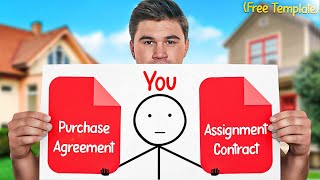
Tyson Smith, who has closed over $3 million in wholesale deals, breaks down the two contracts that matter: the Purchase & Sale Agreement and the Assignment Contract. Master five elements—inspection period, EMD refund language, buyer and seller remedies, assignment rights, and non-refundable deposits—and you make money. Smith shows exactly how to fill out each contract and offers free templates.
Chapters
The number one thing that scares beginner wholesalers more than anything is understanding the contracts you need to use to lock up and sell properties. Staring at all these legal templates online, trying to figure out what any of it means, can be extremely overwhelming. And signing the wrong thing could mean you're stuck in an agreement to purchase a property you never actually wanted to buy yourself. So I made wholesale real estate contracts stupid simple in this video, and I'm going to be giving away the exact contract templates I use in my business for you to use in your own deals. And I'll tell you about how to download those in just a second. You need to realize I've closed over $3 million worth of wholesale real estate deals, and I can tell you the thing that separates people that make money from those who lose money is actually understanding the contracts. Most people see all this legal language and they just don't know what half of it means. They're not sure what lines are in there to protect them and what lines could destroy them. So they just copy and paste some random template they found online and hope nothing goes wrong. And that's how you could end up personally liable for a six-figure property, lose deals, or even maybe get sued. The truth is you only need 2 contracts to get that assignment fee into your bank account. But in those contracts, there are 5 things you need to understand that can make or break your deals. 5 specific things to protect you and make sure you get paid. Everything else is just legal noise that doesn't change whether you make money or lose money. So by the end of this video, you're going to know exactly what those 5 things are and exactly how to fill out both contracts so you can get started wholesaling real estate. You want those free contract templates? Make sure you hit subscribe and drop a comment right now. I'm going to get my VA to reply to everybody who comments with a download link for the contracts we use and Virtual Flip Formula to close deals on the daily. All right, so what most people think wholesaling is all about finding motivated sellers and cash buyers. And sure, that matters. But I've watched people find perfect deals and still lose money because they messed up the paperwork. So let's start with what actually matters. There are 5 things in the contract that will either make you money or cost you money. First up is the inspection period. This is your get out of jail free card. You go under contract the seller for $100,000. Sounds great until you can't find a buyer willing to pay enough for you to profit. Well, without an inspection period, you're locked in that deal. You have to buy that property. In best case, you lose your earnest money deposit, or worst case, you could have a lawsuit on your hands. The inspection period is what allows you to back out of the bad deal in a clean way that releases all your liability. So if you can't find a buyer for the property, all you have to do is tell the seller something along the lines of the property did not meet final underwriting guidelines, and you can legally back out of the contract and get your EMD back absolutely for free. Even if the only reason you're canceling is 'cause you couldn't find a buyer. If you're a beginner, you're going to want at least 15 days inspection period, but once you get more comfortable, 5 or 10 is plenty of time. Now, here's what you don't want to do. Don't wait until the last day of the inspection period to cancel. If you know a week in that the deal isn't working, cancel it. Waiting is just going to make you look shady. The second thing you're going to need is language specifying that you can cancel for any reason and that if you do cancel, you get your earnest money deposit refunded. As you can see here, I have in clear language the buyer in buyer's sole and absolute discretion may through written notice to the seller, cancel this contract during the inspection period, and obtain a return of the earnest money. And the following section makes it even clearer that the title company is to return the earnest money deposit to you in the event of cancellation. Third is a section on buyer and seller remedies. As you can see here in Section 9 of my contract, there's a whole bunch of legalese here, and the important part is where you see that the seller accepts the buyer's deposit as their sole right to damages. This means that in any event they decide to sue you, that any judge is going to look at that contract and see that the most they can come after for you is your earnest money deposit. And as a bonus, I had that in the buyer's remedy. That's us is being able to sue for specific performance, which means it would make it really easy for us to force a sale if for some reason a seller tried to back out after we'd already had the property assigned. The fourth thing you need to have in your contract is a section on your ability to market your contract interest. As you can see, Section 12.3, I have a whole section saying I can market my contractual rights to the property on the internet. That means I can post the deal for sale on Facebook groups, and in some states I can even post it right on the MLS if I wanted to. And if the seller has any questions about this, it's actually a super simple objection to handle. All you have to say is, well, have you ever driven through your neighborhood and seen one of those coming soon signs? Well, that's exactly what we want to do. And then they have no problem. The fifth killer is tying deposits from your cash buyer. So this is actually on the assignment contract. You don't understand, small deposits mean nothing, right? Somebody put down $500 and changes their mind, they're just going to walk away. You're going to waste weeks. You're going to have nothing to show for it. And real cash Cash buyers do not hesitate at real deposits. Somebody with $100,000 cash ready is not going to balk at $5,000 down, and that's $5,000 minimum with $2,500 being the absolute floor. Anything less and you're just not dealing with a serious buyer. Plus, the deposit must be non-refundable. If they can get their money back, you haven't locked in anything. As a bonus, you also want to make sure your contract is assignable. This is super important because that's the whole nature of this business, is assigning contracts. And in some states without it, you actually can't wholesale the property, period. So your contract with the seller needs to say the contract is assignable by the buyer. As you can see, we have an entire section for this. Some contracts just have a checkbox, but you need to have it written in. I do everything all the way above board, so I have a full contract saying we can assign it, right? This gives us the legal rights to transfer the contract to somebody else because that's literally the entire business model. And if the seller pushes back, you just need to keep it simple, right? You let them know, hey, we actually work with investors and it's very likely we'll bring in a partner. But the thing is, most motivated sellers don't care who actually buys their property. They just want to make sure that it's sold and they want to be able to have it be easy, convenient, and make sure that they're getting the money. Now, let me explain how these two contracts work together. Okay? Your purchase and sale contract goes between you and the seller. So you go and you agree to buy their property. You sign this and now you legally control that deal, but you're not actually buying it yourself. You're finding somebody else who wants to buy it. And that's where your assignment contract comes into play. The assignment contract goes between you and your end buyer. You're transferring your buying rights to them. You're not actually selling the property. You're selling your contractual rights to buy the property. So the entire process flows like this, right? You find a motivated seller. Let's say that their house is worth $150,000 fixed up. You agree to buy it for $100,000. You sign the purchase agreement and you now control that deal. You then find a cash buyer and let's say you sell the contract for $110,000. They're getting a property that's worth $150,000 for $110,000. You and them sign an assignment contract. They're going to go ahead and put down that $5,000 non-refundable earnest money deposit. You submit both contracts to the title company. The title company just follows the directions on the contracts. They make sure the seller gets their $100,000 and then they cut you a check for the difference of $10,000. All right, now let me walk you through actually filling out the purchase and sale agreement. Before you touch the contract, make sure you've negotiated the entire deal first. The contract just confirms what you've already agreed to verbally. You want to nail down every detail in conversation and then get it in writing. First, you have the property address. Simple enough. After that, you have the APN, which stands for Assessor's Parcel Number. You can find this easily on virtualflipleads.com, but if you don't have an account, just ask ChatGPT for it by entering in the address. Then you're going to have the earnest money deposit. This is the only money you have to pay in the transaction, and I use the quotes because it's refundable when the deal closes or if you cancel during the inspection period. I typically only do $100 here. The only people that care about earnest money deposits are real estate agents, and there are no real estate agents in this transaction. So you can even go lower. I've literally done $1 or even $10 deposits. The thing is, motivated sellers don't care about big, big deposits. They're not getting that money, right? They just want to sell. So don't let the deposit stop you. The purchase price then is going to be whatever you negotiate and agreed upon with the seller, and you Agreed upon $100,000, you write $100,000 there. The closing date is the day when the property will be sold and the seller, or if the seller has tenants, would need to be out of the property, right? This is the day that the seller gets paid, the buyer becomes the owner of the property, and you get your assignment fee. You want to set the closing date to be at least 30 days out when you're first getting started. Then you have the escrow agent, which is just another name for the title company. Now you need to make sure your title company is one that actually understands wholesaling, right? Not all do. So you need to search Google for title companies in the area where your property's at, call them up and ask if they work with wholesalers. Most companies do, but there are some that don't. The title company is going to actually verify that the seller owns the property. They'll check for liens, they process all the paperwork, they hold the deposits. Most importantly, they disburse your fee at closing. After that, you would have the party section for the seller and buyer, right? For the seller name section, it's really important that you copy their name exactly as it is on the deed. So county records, virtual flip leads, all that stuff's going to have it online. For instance, if it says John A. Smith, you're going to write down exactly John A. Smith. If there's two names on title, you need to make sure they're both there and they both sign. You need to match it perfectly or else the title company will kick it back to you. For buyer name, you just need to put your name or if you have an LLC, the name of your LLC. Now during the negotiation, you're going to offer to pay all the closing costs. And on the closing amounts paid by section, you check all the boxes that say 100% by buyer, right? This makes our offer a lot stronger, but it's your end buyer who actually pays them when you assign the contract. Then you have the additional term section, which is for custom agreements. You really won't be using this as a beginner, but for example, You could put something like the seller wants to keep the fridge, but they're going to leave the washer. You just write in here anything that's not standard language. We go ahead and add right there. After that, we have the assignment contract. You're the assignor. The buyer is the assignee. You copy the property details from the original contract. You know, write in the amount you're selling the property for the cash buyer to first written out, and then you put it in numeral form, and then you're going to add the close of escrow date, which needs to be the exact same as it is on the original contract with the seller. Last, you can put down a nonrefundable earnest money deposit. Again, absolute minimum of $2,500 here. And after that, the information of the title company and when they have to deposit the EMD back. 90% of the time I make it by the end of the day, the day I'm sending them the assignment contract. Real buyers get their EMD in ASAP. They don't wait around. Now, the first deal is always the hardest, especially if you're doing it by yourself. And that's why I dedicated an entire video on my channel breaking down each step you need to take to make $50K a month as a wholesaler. It's completely free and it's helped guys like Luke make $200K in a single month and helped Anthony close his first deal for an $18,000 profit. And like I said, it's completely free. All you have to do is click right here to watch it now. So that's it for today's video. Subscribe to the channel, drop a comment if you want my contract templates, and go ahead and watch my free real estate wholesaling course.
More from Tyson






Join My Luxury Wholesale Coaching Call For FREE // Tyson Smith & Matthew Tooker




