12 Maxims on Running from Haruki Murakami
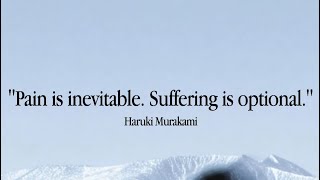
Liam Applegate extracts twelve lessons from Haruki Murakami's running memoir, tying them to work and creativity. Never take two days off in a row. Don't use busy as an excuse. Murakami ran a 62-mile ultramarathon using a machine-like mantra to refuse walking.
Chapters
Today we have our first podcast episode with video, and every single podcast episode that I do, I am trying to innovate more and more. And so the whole goal is to grow this podcast. And so, um, this is the first step into going into an interview style podcast, uh, every 2 weeks. So I want 2 interviews a month. And so the whole goal with that is going to be to get more people on that are uncommon. They're excellent at what they do, but they're also a new face. And so that's my whole goal with Uncommon Excellence. That's what I constantly want to do no matter what I am doing and where I do it. So let's get into this episode. This one's about running. Again, this is part 2 to the— I have the book right here with me and it's not going to show up as well for you, but Haruki Murakami, What I Talk About When I Talk About Running: A Memoir. Really good book. Love this book so far. I think I am 120 pages through. And so these highlights are going to be the part 2. So I have part 2 to this, and what I'm going to be doing is I'm going to be going through all of these different highlights. And so just really good things about running, but also pushing yourself. So if you're getting into running like I am, then it's going to be a really good episode. And we have about 12 different highlights, or I have about 12 different highlights that I think are really going to change the way that you look at running and also are really helpful just in every day-to-day life. So let's start with the first one. The total amount of running I'm doing might be going down, but at least I'm following one of my basic rules for training, which is I never take 2 days off in a row. The reason why this one's really important and interesting is that when they talk about the total amount of running I might be— like, you're gonna get older. Right? It's inevitable. So you're going to get older, things are going to happen, and ultimately it's not going to go the way that you think it is. You're going to hit your peak and then you're going to start declining. So the whole goal is to, like he said, never take 2 days off. Funny enough, I would say I take 2 days off in a row just because Saturday, Sunday, that's kind of my 2 days off. But I work out 5 days a week. So just a good reminder for if you're a runner, That might be something you might be looking into. Never take 2 days off in the future. And that's just something I wanted to bookmark as we go into— or as you just, you know, get older, right? It might be an important thing because he is getting older. The next thing is, if I used— sorry, if I use being busy as an excuse not to run, I never run. I have only a few reasons to keep on running and a truckload of them to quit. This is that whole mentality of, um, this is the whole mentality of being accountable to yourself. And if you're using being busy as an excuse, you're gonna be busy doing 100 million different things. You're gonna be busy, uh, going to the grocery store, uh, doing all these different things. And the whole thing with this is that you should limit that and you shouldn't make excuses because I, I would look at it the opposite way. The few reasons you have to do it are more important than all of the, the, as he says, the truckload of them to quit. So the whole goal is to find those few, few reasons of why you do something, stick to that, make a really strong mission and why you do something, and that's gonna be the whole goal. So that, that's something that's really important. And I think that's something as you go into your day, as you go into your week, that's something you need to keep in mind, uh, get those couple of reasons why you shouldn't quit and prioritize that over everything else. The next thing is focus on the ability to concentrate all your limited talents on whatever is critical at the moment. This is signal versus noise. So I put signal versus noise. The reason why is because this reminds me of Kevin O'Leary. Kevin O'Leary is the top of his game. He is one of the, um, he knew Steve Jobs, he worked with him well. Steve was 80/20, so he was 80% signal, 20% noise. Elon Musk, he said, is 100% signal, 0% noise. You want to have limited noise in your life, so focus on the ability to concentrate all your limited talents on whatever's critical at the moment. So the whole goal is like, all right, I'm looking at the next 3 days. What can I get done in the next 3 days that would best help my company, but also I could get done in a row? To make sure that I'm optimizing for the best. And so that is the whole thing with that. And so the thing is, he also says concentrate on all, focus on the ability to concentrate all your limited talents. What does that mean? What does limited mean? Well, the thing with limited is it means that you're not going to have infinite resources. One thing that is very limited and one of the most valuable things that every single person on this planet owns 100% is time. Time is the most valuable asset. So when people ask you to do things, when people, and I'm not saying be a jerk about it, and I'm not saying, uh, do, you know, of course do things you don't want to do, um, and go, you know, be nice. But the thing is, when people want you to do things, are you going to give them your time? Are you going to pay them with your time? If you can see an investment in that and get an get an ROI. It doesn't always have to be an ROI, but just doing something to do it or because you're peer pressured into it, I disagree with that. And so you have limited talents. Everyone has pretty much the same amount of time. You don't know when you're gonna die. So use that time wisely. And I think that's what he's saying. So it's the whole idea is the ability to focus, to concentrate your limited talents on whatever, whatever's critical at the moment. This is signal versus noise. This is a concept that Alex Hormozi uses. Steve Jobs, Elon Musk, Kevin O'Leary, you just go down the list and that's the whole thing. The next thing is without that, so without focus, you cannot accomplish anything of value. While if you can focus effectively, you'll be able to compensate for an erratic talent or even a shortage of it. So the thing is, it's just going back to focus. He's hammering in the idea of focus and we're gonna keep going through these where it's all about focus. So the next thing, Or what he's saying in this is without focus, you can't accomplish anything of value. And so one of the ways he does that is he, he says, I generally concentrate on work for 3 or 4 hours every single morning. I sit down at my desk and I focus totally on what I'm writing. It's about zoning in. I don't see anything else. I don't think about anything else. This is one of the concepts of being present in the moment. Being present in the moment is one of the hardest things you can do. The reason why I say that is we have a thing called a phone. The phone distracts from everything that you do. So being able to put that down or put, put the TV down or the phone or whatever you're watching, whatever you're consuming, right? You're not going to be able to accomplish anything of value, but you're also, you're not going to focus on anything as thoroughly as if you were to put down your phone and just work on it. So that's another thing that's really important when you think about it. So he focuses by just sitting down for 3 to 4 hours in the morning and just straight writing. And then he also runs a lot. So he said that you have to continually transmit the object of your focus to your entire body and make sure it thoroughly assimilates the information, information necessary for you to keep writing every single day and concentrate at work, on the work at hand. So the whole reason behind this is the, so the idea of focus is really easy to talk about. It's really easy to say, hey, I need, I need more focus. I need more this, I need more that. That's good. But being able to really transmit that, to really take it in, to absorb it is one of the hardest things you can do, um, just in general. And so the thing is, What he's saying is that it is one of the hardest things to really take it in, absorb it, and really get it down to your bones. Focus, focus, focus. And you, you, you gotta make sure you come with it every single day. You, you're concentrating. It takes concentration just to even focus. It takes concentration just to concentrate on what you're doing, on the work at hand. I love this and I love what he said, but He says that Raymond Chandler once confessed that even if he didn't write anything, he made sure he sat down at his desk every single day and concentrated. I understand the purpose behind him doing this. This is the way Chandler gave himself the physical stamina a professional writer needs, quietly strengthening his willpower. This sort of daily training was in its indispensable to him. And for me, this reminds me of George Lucas. George Lucas was so committed to writing Star Wars, or so committed to writing that story that he locked himself in his room and made sure that he didn't go out the whole day because he, even if he didn't write anything, he had to just sit there and he would get bursts of, you know, information and, or just knowledge and he would just write. But the thing is the, the fact that you're taking endurance to sit down and really focus on what you love to do and really doing that, that's something I think everyone needs. I think it needs to be a lot better. And that's just something that is really important as you go into your day. The next thing is exerting yourself to the fullest within your individual limits. That's the essence of running and a metaphor for life and for me, for writing as well. I believe many runners would agree. So if you really unpack this, what is he saying? Exert yourself to your— the fullest every single day. Focus on what you're trying to accomplish, achieve, but exert yourself to the fullest within your individual limits. We all have limits, whether you're sick, whether you're, you have a disease or whether you have a, you know, a, I don't know what you call it, but you like, let's say you're missing an arm or something like that, right? The thing is, you're going to have limits. Everyone has limits. But the thing is, if you can try to maximize and push yourself to the fullest within those limits that you have, that, uh, he compares it to the essence of running and a metaphor for life. And for me, or for him, it's writing as well. And so the thing is, if you push yourself every single day to get better, you will get better no matter what you do, no matter who you are. If you push yourself to get better, you keep your, you keep yourself accountable. That is something that's gonna be invaluable for you, especially if you start right now at my age, um, or just getting outta high school, but especially as you go into your day, um, and just into your later years, the 20s, the teens and the 20s are the most effective and the most, um, the most formative for your life years or for just the rest of your life. Um, and so that will affect Years upon years, if you can push yourself to your limits, you have a standard. That standard is excellence. I want to be excellent in every single thing that I do, you know, and I will stop at nothing to achieve that. Or, you know, it's all about priorities as well. So what's my number 1 priority? Number 2? Number 3? Is it my family? Is it like, what is it? Is it God? Is it family? Is it— what is that priority list for you? And then go achieve that and go Make sure you're within those priorities, but you're going forward, um, and you're pushing yourself to your limit every single day. Um, it's better to have 0% in the tank left at the end of the day than it is to have 20, 30, 40, 50%, even 100. I mean, you just go down even 5%. I mean, you want 0% left. You want to go to bed, um, hit your head on that pillow and say, man, this was a good day. So. That's something just to remember. So the next thing is, if something is worth doing, it's worth giving it your best effort. In some cases, beyond your best effort. So that's, that's a big thing, right? Because if you're, if you're going to say you're going to do something, again, I've talked about this, but this is Matthew McConaughey. Matthew McConaughey says, if it's worth doing, if you're, if you say you're going to do it, go do it. Do not dip your toe in and then get out of the water. You, you wanna go dive in full. If you say you're gonna do it, go do it and then do it well. And then he says here, in some cases beyond your best. So not just doing your best, but you wanna hit beyond your best. That's that 110%, right? So you hit that 100%, but you try to go above that. So this next piece of the section, He's talking about his 62-mile ultramarathon. So he said he had only run up to a marathon at this point. So he gets up to the marathon. He does it. He says it's decently hard. There's a runner's wall that every runner runs into. Wall, as in, like, your legs just don't work, and that's for miles, and that's like 19 or 22 miles in out of the 26. And so he— that's as much as he had done. Before this, but now he wanted to do a 62-mile marathon. The one thing with this, or it was an ultra marathon. The thing with this ultra marathon was that once you, you have to keep going because if you don't, well, well, the thing is you have to hit time limits. So every 6 miles there's a time limit. And if you don't, if you don't reach that time limit within that time, you're just, you're, you're automatically disqualified. So you can't say like, I got this or I got that. No, you're disqualified. So he had to push himself with this. But the thing is, he, so he started running, he got to the 34-mile mark halfway through, tired, his legs, you know, pretty burnt. But he got to that point, he had lunch, he, whatever, he kept going. And so this is where we go. From the 34 to the 47-mile mark. And he says, ultimately, using every trick in the book, I managed to grit my teeth and make it through the 13 miles of sheer torment. I'm not— and this is the mantra he kept repeating to himself. I like parts of it and there's other parts I don't. But he says, I'm not a human. I'm a piece of machinery. I don't need to feel a thing. Just forge on ahead. I love parts of that where it's like, you know, just get rid of your feelings. Just do it. Like just go after it. But the thing is, you gotta realize where your limits are, right? When he said individual limits. And so part of me really likes that and the other part of me doesn't. But ultimately you, you need to go push yourself through hard things. So yeah, saying I'm not a, I'm not a human, I'm a piece of machinery. I mean, it's, it can, it got him through. It might get you through. But if you push yourself, just remember, have a mantra inside your head or someone helping you, right? Where you're like, who is getting you through this? Who's helping get you through this? Why are you running? Is there a mission behind it? Is it for fun? Is it, you know, because you want to push yourself? What, why is that reason and what are you doing it for? So it's just a really good mantra and reminder. I don't agree with the whole mantra, but that's just parts of it. So the next thing is, instead of forcing myself to run, perhaps it would have been smarter if I had walked. So after the 47 miles, or in between that, the 34 to 47 or beyond, what happened was all these runners started walking. And so he's talking about this. Instead of forcing myself to run, perhaps it would have been smarter if I just walked. A lot of runners were doing just that. Giving their legs a rest as they walked. But I didn't walk a single step. I stopped a lot to stretch, but I never walked. I didn't come here to walk. I came to run. What I really like about this is he's talking about the idea of running. It's the art of running. It's what we talked about, what I talk about when I talk about running. This is for him. He was in the New York City Marathon, was running the 26 miles, and the last 3 miles his legs just started cramping. It was, it was terrible. And, uh, his, his legs were just, you know, seizing up, all this stuff. And so he literally could not run. And so he had to walk. He would have to like stretch. The stretching wasn't help, uh, helping. It did that for like 2 or 3 miles and then he finally got out of it and ran the rest. But the thing is, it could it taught him a lesson where he did not come here to walk, he came here to run. And so he said, no matter how slow I might run, I wasn't about to walk. That was the rule. Break one of my rules once and I'm bound to break many more. And if I had done that, it would've been impossible to finish the race. So the moment— I love this— it's the moment you let yourself fall a level and you keep falling to that level is the moment you've you're breaking those rules. You've, you've gone from this level to this level and you're keeping at this level. But instead you want to say, hey, even if you do fall to that level, you, you go back up. You want to always go back up. And so for him, he knew if he started walking just like them, he would not finish this race. It'd be impossible. So that was one of the things he wanted to keep personal accountability, do it well, finish it well. And so he, um, guessed that his, uh, final race time would be around 10 hours. But what the race time actually was, was 11 hours and 42 minutes since the start of the race. So that was with all the 6-mile breaks, um, or 6-mile times, water stations, and then the 34-mile timer. So just remember, as you go into your day, as you go, um, into your just everything that you do. Just remember, push yourself to that next level. Do not allow yourself to walk. Do not allow yourself to crawl. If you have to, that's what you have to do. But try not to let yourself fall down to that level. Have accountability. Keep pushing yourself to go up. If you need other people to help you with that, I guarantee there's someone in your life that will help you. So just keep going, keep pushing. And we are getting close to the end of this episode. Our next episode after this, I believe, is going to be an interview styled podcast with, there's 2 people that I'm about to have on. Really excited for this and really can't wait to have them on. Can't wait to start this new journey and season. The one thing is I'm going to be doing 2 posts a week, or sorry, 2, 4 episodes a month. 2 are gonna be interviewed and 2 are gonna be just normal where I read a book, you know, just like, just like this. And I'm gonna be reading my book and I'm going to be doing this. I'm gonna try to transition more into a video style podcast 'cause that's, I really like it and that's the future of podcasting. But let me know if you have any comments, questions, or you just wanna leave a review on this podcast. I would really appreciate it. And thank you for taking time to watch our first video podcast on the Uncommon Excellence Podcast. Thank you for watching.
More from Liam
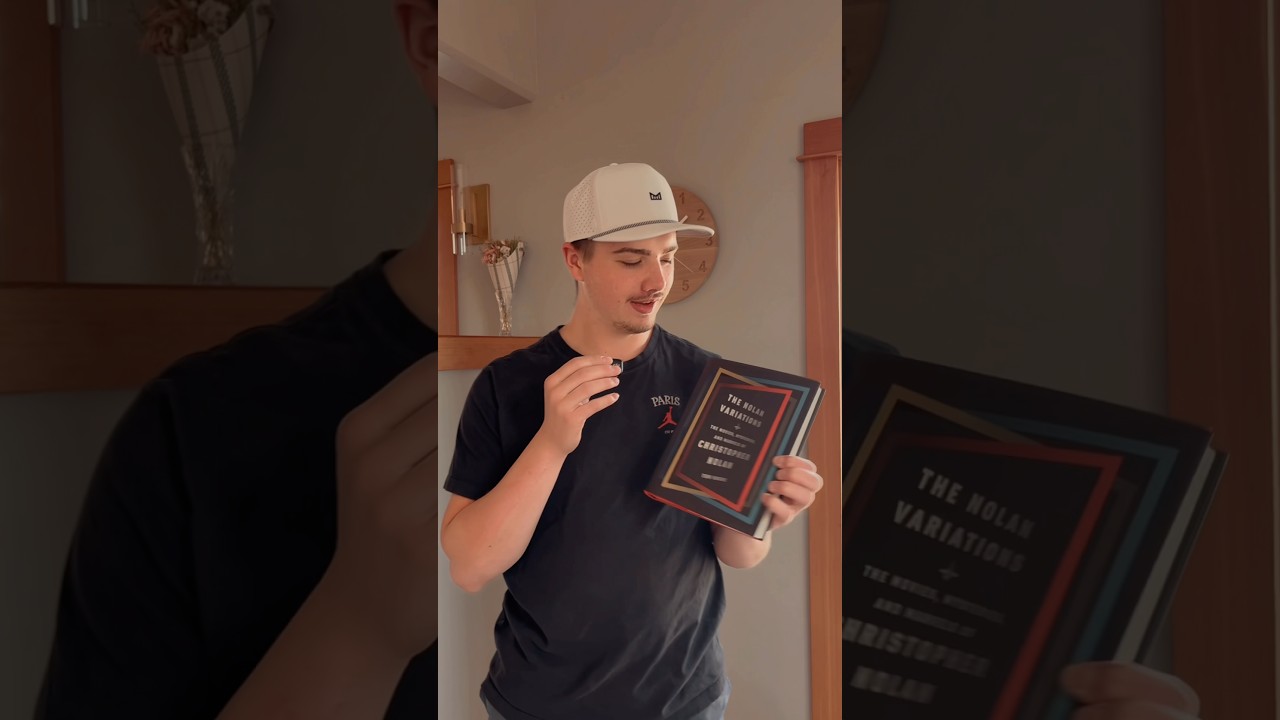
Just picked up The Nolan Variations by Tom Shone, a deep dive into Chris Nolan. #books #booktok



Walt Disney never believed in doing sequels… #disney #sequels #sequel #waltdisney #advice

Thanks @ChrisWillx for the encouragement and the support! #chriswilliamson #modernwisdom #podcast
Take Risks #business #risks #excellence #money #podcast #success #entrepreneur #motivation #elon

Cherish Life… Spend time with your loved ones. #business #life #love #cherishlife #success

Walt Disney poured his heart and soul into one figure… Mickey Mouse. #waltdisney #business #success
“Never trust the reports”-Elon Musk #business #motivation #entrepreneur #success #elonmusk #podcast

The whole Walt Disney company was made successful by one figure…a mouse. #disney #waltdisney #walt