Question Everything with Jonathan Jarecki
Jonathan Jarecki challenges the protein-per-pound rule, citing research linking high animal protein to elevated IGF-1 and cancer risk. He argues endurance athletes develop three times more arterial plaque than non-athletes, recommending zone-2 exercise instead. Jarecki emphasizes testing ideas yourself and staying open to what feels good might not be optimal long-term.
Chapters
So I am here with Jonathan Drecke, and I want to just jump into this. Your mantra is question everything. What does that mantra mean to you and how do you live that out, like, in your daily life?
Yeah, no, it's, it's an awesome question. It's, it's honestly the foundation of how I live and how I think, and I think it's what has brought me to, like, where I am today. You know, it, it, it kind of says it for itself, right? Question everything. Like, when I say that, I quite literally mean that. I mean, question every single aspect of what you think, of what you're told, of what you say and what you read, everything, you know? So I think for me, it has paved the foundations of my current views because you see, like, in our world today, we— or you go to school, whatever the teacher says, you think is just has to be correct because it's the teacher, right? They have power over you. That's just how the dynamics work. And so for me, I, I don't, I look up to authority obviously, but I don't look up to authority and think that just because they're an authoritative figure, they have to be right about everything, right? That could be, that couldn't be more from the truth, right? So, so for me, like, I think it honestly, it starts obviously as a college student, it starts in the classroom of questioning what I'm being taught. Um, and I think when you do question, question these things, you learn so much more. So I'll give you an example. Um, I, I've taken a bunch of biology courses in middle school, high school, now in college. I'm a bio major. So, um, obviously it's the majority of the courses I'm taking. And a technical example, but I think it will resonate. So one of the things you learn in any entry-level bio course, and I've taken multiple entry-level bio courses, some in high school and one in college last year, and one of the concepts you learn is how muscles contract. So you learn this whole— there's this whole diagram and you learn all the different structures of the muscle and you learn how they— how it contracts and When you learn this thing, you, you are, the way it's taught is that it is the absolute truth and it has to be correct. Right. Um, and it's a simple thing. It's like how muscles contract it to, to any student. You'd be like, oh, of course we know how this occurs. Right. Okay. So I questioned this thing. Um, and when I was learning this, I, I, I, I questioned it. I was wondering, are there any other theories? So it's quite, it's called the sliding filament theory. Right? The theory's at the end of the word, so it's a theory, right? Obviously there's a lot of evidence for it. That doesn't— just because of its, its theory doesn't mean there's a lot of— there isn't a lot of evidence. There's a lot of evidence for it, but it is a theory, right? So I, I questioned it. I was wondering, are there any other theories? I stumbled across, um, this, uh, professor out of the University of Washington. His name is Dr. Gerald Pollack, and he started his career in, um, in muscles. He was studying muscles and muscle contraction and when he was, uh, when he started his career, he was just like every other, um, uh, person in the scientific field, and he thought the sliding filament theory was the correct theory. Anyways, to make it long story short, he, uh, he got in contact with this, with this person who had a different theory, and he eventually went, went down that rabbit hole. And to his, his conclusion, his current conclusion is that our current theory of how muscles contract is incorrect. And so it's things as, as simple as that, right? These, these little things that we learned in any, in a simple biology course that just because our teacher is saying it, just because it's written in a textbook doesn't have, doesn't mean it's right, right? I mean, there's, there's actual published literature out there that is, that is saying that the majority of what's in our biology textbook, our science textbooks are actually incorrect. Especially within our like medical textbooks, what's taught in medical school. I mean, things in science are changing all the time, right? And this isn't just— this doesn't— you, you can apply this to many other topics other than science, right? Um, I, I, I use it for, I use it for quite literally everything because I believe that if you, if you don't question authority, if you don't question what you're being taught, then you're not gonna be able to think for yourself, right? So I think the only way— I mean, look, God gave us a free will, and with that free will, we are able to think for ourselves. We should be able to have our own opinions, right? And there's a great, great, great quote: if everyone is— if everyone is— if everyone thinks the same, then something's not right. It goes something along those lines, right? If everyone's thinking the same, something's not right, right? Because that's really good, because it just— it doesn't make sense, because we'll never be able to find the truth, right? I believe that there's there is a truth out there. But being on this, being on this earth, we— it's a continual strive to figure out the truth, right? And the more evidence we can, we can, we can get for, for something, the, the more we can get closer to the truth. Doesn't mean we're ever going to actually get there, right? But, but, um, but bringing it back to, to Question Everything, yeah, I think in order to question everything is to have your own opinions. Right. That's, that's, that's my, that's my foundation of it.
Yeah. Wow. That's, dude, that's incredible. I, I really like that because it's, I think for me, um, and you know, this is not everyone, but, uh, I'm still in school, right? Yeah. So the whole idea of questioning everything, it, it like goes against, it's like questioning a standard. Yeah. It goes against everything. Yeah. It goes against everything cuz it's like there's a standard or there's this, uh, common cultural, just known fact, right? Where it's like, oh, of course this is this way that we do it. But it's like, and this goes with business too, where it's like, 100%. You, you said we are doing all these processes and this is the whole Elon Musk thing, right? Where he's like, mm-hmm. All right, well with the Tesla car, can we strip it back down to its like core and build from there and not have all these processes? So it's like, it, it is a really good reminder cuz I think question everything, it, literally goes for everything. I think, yeah, I heard you talk about this with your one podcast interview. You said that you question your faith on a day-to-day basis. You question, you know, college, you, you question all these different things. And I really appreciate and like really admire that about you. What do you, what are, so you talked about how you question everything in like the college realm. How do you do it in health and wellness? How do you do it just in your day-to-day job? Like, what does that look like for you?
Yeah, health, the health and wellness one is huge because you go on social media now and you, you go on your feed and one person saying, oh, every single vegetable is bad for you. And then the other person saying, oh, seed oils are bad for you. And the next one is seed oils are good for you. And the next one, meat is terrible for you, right? You're hearing so many contradicting things now, now on social media. And so I think in the health and wellness field, it's, it's even more crucial to question things, right? Because I, I, I, I would, I like, I like the saying just like be your own doctor, right? So do the research, do the research for yourself, right? See what works for you, right? Don't just because, just because you hear some big influencer say this is the best diet to do, don't just take that as, as truth like we've been saying, right? I mean, I would, I think the best thing to do there is do your own research. And a lot of people either A, don't wanna like, let me, let's say read the scientific literature or don't have time. Well then just try a diet, your try a diet out yourself or try these new trends out yourself. See how it works for you and see, see if it works well. And that, that's, that's kind of the, the thinking behind it because if you just take whatever these influencers are saying as, as truth, you're never gonna You're, it's gonna be much harder to succeed at least in, in let's say your health journey or, or things like that. Um, so yeah, the health and wellness space, it's so important to, to question things. And like you, you mentioned, um, like questioning my faith, I think, and this doesn't go just for faith, but I think questioning for me, questioning my faith only builds my faith even stronger, right? If, if you don't, if you don't question, if you don't question these things, you're gonna, you're gonna never grow in your understanding of these things, right? So for me, for my faith, for the example of faith, questioning my faith has helped me to dive even deeper into it, to read more about the evidence for these things, the evidence for the existence of God, the evidence for the Bible. And it's helped me to have a stronger foundation in that. So, yeah, it doesn't just go for science, doesn't just go for health and wellness, it goes for religion, goes for Everything.
Absolutely everything. Yeah. So I want to get to like who you are. So when you strip it all back, what is the essence of what you're trying to teach or just share with the world? Like what are you trying to accomplish, uh, through what you're doing, through what you're studying, um, and just every like habit that you've learned, what, what are you trying to accomplish and what are you trying to share with the world?
Yeah, it's, it's a, it's a great question. Um, I think at the, at the like core foundation of it all is I, I just want to help people, right? Like, that's, yeah, that's my ultimate goal is to help people, whether it, whether it be through their health or whether it be just from talking to some random person, right? Like, my, my whole goal in life is just to, to help as many people as possible. Um, and I, now I I've taken that goal to the health side of things, as I think our health is our foundation of, or is one of our foundations of life. And if you don't feel well, you're not going to be able to live the life that one, God has designed for you, and also that you would want to live. People don't like feeling poor, right? I don't think anyone wants to feel bad and feel feel, uh, or have, have a disease. I mean, 60% of adults in the United States have a chronic illness, have a chronic condition. I mean, it's absolutely absurd, right? And so I think, yeah, so my, my path to helping people I see is, is by, is by helping them in their health journey, um, and by getting them back into alignment with, with, with nature and with, with how they should actually be feeling and how they're how their body should actually be functioning and working. And so, yeah, so that has been— that is my core mission in life, I would say. And yeah, I just think people need to wake up to, you know, like, we're headed in a very— in my opinion, we're headed in a bad direction. The stats The stats say it for itself, and we need to wake up to that and we need to find a different path because what's happening right now is not working.
Yeah. Are you talking about like Maha?
Yeah, for sure. I mean, Maha is a great initiative that's going on. And yeah, it's just the fact that so many people are are just sick and going and, and not feeling well and have these chronic conditions, they're not living up to their ultimate potential of what they actually can be, can be doing. And, and that's just part of me wanting to help people. And I think that's one of the biggest avenues that can, that can be started.
Yeah. What do you, so on one spectrum we have the people that are not like they're sick, illnesses, all this stuff. What do you think about the overachievers like the David Goggins or the— do you think there's a ditch on both sides or do you think that, I mean, I'm assuming that you would think that overworking is better than underworking, but what do you, what do you kind of see in that?
Yeah. Yeah. For sure. There, there's, there's always, there's always extremes with everything, right? You know, you have like the thesis, the antithesis, and then the synthesis somewhere in between. And I think that is— I think there's always going to be more truth in that in-between section, right? So for instance, yeah, like you have the people like David Gong, it's like who go so, so extreme. And then you have the people who are, are super ill and, and have these chronic conditions, right? I don't think either of those, either of those sides are, are good. I mean, I just came back. I went to Europe for the first time this summer and I was in Italy and like, you see these like old Italians, they're living life like, sure, they, they, they eat a lot healthier than the standard American diet, but they're not eating like, you know, like Bryan Johnson or like these people who are eating like the cleanest, cleanest foods, right? I mean, they have pasta and they drink wine, right? And some of them smoke. But, and I don't think that stuff's good for you. I don't think you should be doing that. But there's clearly something more than just like taking all your supplements and running for 5 hours a day and being in the gym for 3 hours and doing all these things, right? There's, there's definitely something more to that, um, more than just that. But, uh, but yeah, there's, there's two extremes. I think you need to find a balance, right? For instance, like, a big part why, like, diets don't work is because you can't follow them. Like, it's, it's very hard to, like, follow a lot of these diets, right? And so, yeah, the best— I mean, like I say, the best diet for you is the diet you're going to follow. Right? And so, like, for me, and I've, I've dabbled in, in certain diets and whatnot, um, but I've come to a middle ground of, all right, I, like, personally, I eat what I want to eat when I want to eat. There's a lot of things I don't want to eat, um, and, right, and so, so I've found, I found a balance between it. And I think that's the really key things, because another part of health is your mindset, right, and how you think and how how you're, you're, and, and like stress levels and stuff like that. And there can be a lot of stressful things that come with diet, with like specific, like hardcore diets, you know? And so I think, yeah, I think finding that balance is, is super key to, to, to, to living a healthy life. 100%.
Yeah. So kind of going along with the whole mindset, just, just the whole thing with the mindset, what do you think is one mindset or principle that separates the top 1% from everyone else? Like if you were to, like, whether that's a health practice or whether that's just like, you know, they have a David Goggins mentality. What do you think is separating the top 1% from just everyone?
Yeah, awesome question. I'll take it away from health for a second here. So I think, and I see this in, you know, the the people who have succeeded, at least seem to have succeeded in life, um, and, and I do this myself, is people care. People just care too much about— whether that be care what people think, or whether it be just caring about how things go in their life, right? People just, they, they put too much of emphasis on, on, on stuff. And it creates a big burden, right, on you. And like, for me, I don't care what anyone thinks of me, right? Whether that be— so like, for social media, I mean, I started posting like— so right now I just post like health content and science stuff. But I started— if you like scroll all the way down to my Instagram page, it's me like working out, videos of me working out. And like, for a lot of people, they would be like embarrassed to post that. I have no care in the entire world. What the heck anyone thinks about me. Um, and so I went ahead and posted it, posted it, right? And I think, I think that's so key, um, is like your mindset around, around caring about things and caring about how just ordinary things in your daily life go, right? If something doesn't go your way, like, all right, didn't go your way. Like, that's, that's like, honestly, I'm being completely honest, that like, that is my mindset on, on everything. That's just how that's in it. It makes you healthier. You're in a better mindset, right? You're not worrying about, oh my gosh, this didn't go my way. Oh my gosh, didn't go my way, right? It's such a— I think way, way— I honestly, I think like if you were to round up, it would be like the entire population in the world cares too much about things. And so I think that is what separates the top 1%, right? These I mean, these people who have really succeeded, whether it building a business, whether it be just like living a happy life, I see like they don't like care what these other, what other people think and they go with the flow. And having, I think also one of the big things is having trust and faith in some entity. So for me, That's God. Um, and I, you can, if, if, if someone could put their faith, um, if you put your faith in God, you can let go of so much of the burden of so many things that go throughout your daily lives. Right. Um, and it's not, it's not on you. Right. And so I, so I think that's, that's another really key thing. And that's, that ties right back into, to not caring. Right. I, the reason I don't care about how things go is because I, I know that God has, God has a better plan for me. And so if something doesn't go my way, I know there's— I know that, that there— everything's meant to be, right? And I, I acknowledge that, and it's something that is continuously on my mind, uh, and I think, I think that's what, that's what separates people, um, whether you want to call it the top, top 1%. Yeah, I think that's, I think that's what it is.
Yeah. So to kind of follow up on that, when you say, you know, and I completely agree with you in terms of like the don't care and just everything you said with the, like with not caring, is there a point to where you should care? Uh, like in, in terms of like business and all that, like I understand like, all right, yeah, make it the best quality possible. If it doesn't go your way, we'll try again later. It, the whole failure and try again later. But in terms of like with people, what would be your advice to someone that cares too much about what other people think? And then also, how do you, like, is there a certain group of people that you do want to impress or you want to have care about you? How do you, how do you deal with that?
Yeah, that's a great question. Like, like, like we, like I previously said, there's always a middle ground, right? So I'm not saying don't care about everything. Like, I'm saying question everything. I'm not saying don't care about everything, right? So I think obviously, obviously you want to have— I have so many things I care about, right? And, and I, I want to go a certain way, or I aspire for, for something to go a certain way. But for instance, with that example, with things going your way or not, when it doesn't go your way, you can't— it's like you care about them, care about it going your way, but when it doesn't go your way, you can't like put that pressure on yourself, do you know what I mean? So, um, it's like that's the key thing. And, and yeah, you— so, um, and for— yeah, so for people who, who, who care too much like my own, like the only advice that I have is to find your faith in God. I mean, that is like honestly the absolute foundation of this because you're not gonna like, that's the only way I've been able to do it, right? I don't have any good advice outside of that. Because, because yeah, like for me it's like I've, I've put my faith in God and that has just taken the burdens of caring too much about things off of me and I, it just, I just don't care anymore. So it's like, it's not, it's not a, uh, like procedure that I can walk someone through. Um, it's more something that they have to be able to find themselves.
Yeah, that, that makes sense. I understand like the whole thing with not caring. I actually, I think it's one of the most important things you can do, and I do agree that it separates the top 1%. Um, the one thing, like I, I listened to Kevin O'Leary the other day on, uh, what was it? Uh, Diary of a CEO. And he was saying that, you know, being honest, like people think I'm blunt, or he said people think I'm blunt. But the thing is being, uh, loving and caring is actually just telling them the truth. And now it does vary like on how do you approach that? How do you deliver that? But also just like not caring and like putting that pressure on yourself and just telling them, it saves a lot of time, a lot. And you need that in business. You need that in just your every day-to-day life. And so I think that whole thing with not caring, I think that goes right into that conversation cuz it's just like. It, it is something you need to have in order to be successful or just to live your life in the way you want to.
So, yeah. Yeah. No, 100%. And that's another huge thing is like being honest like that, that, that brings you a very long way, um, in life, in, in every single aspect, right? Is, is just to be honest because people are, again, people are too afraid to, to be honest to someone and get that reaction back, whatever that reaction may be.. And, and so yeah, so, so I think on, I mean, to, for a lack of a better phrase, honesty is the, is the best policy.
Yeah. Wow. That's really good. So I want to go into kind of this whole like business side of things that you're involved with. So you started a protein bar company at 19, or what, you're a founding member. What made you want to build that and How does that tie into what you care about most, like your values?
Yeah, yeah. So, so yeah, I'm a founding member of, um, company called Forward, uh, and we are launching with the Forward bar. So it's a protein bar, first ever protein bar made without protein powder. Um, there's no artificial anything in it. Um, so it's like the, the cleanest protein bar on the planet. Um, and my brother and his girlfriend, my brother Joe, his girl girlfriend Emily. They're the co-founders of the business. Uh, and, and yeah, so I, I can, I can walk you through a little bit of backstory of how this all came to be. So, um, I've always had like an entrepreneurial mindset. Um, so I owned a clothing brand back in high school. Um, I, I was— it was, it was in a time where I was, I was very passionate about, uh, graphic design. Um, and and art and all that kind of stuff. And I was actually doing— I had a graphic design Instagram account and I was doing graphic design for like people in the musical industry, small artists, but like doing like album covers, merch and stuff like that. And I was doing like merch for some of these artists and I was like, it'd be so cool if I could have like my own merch essentially, right? And I was like, all right, let's start a clothing brand. So I started a clothing brand. I, yeah, so I've always, I've always like had some, some thing or some business that like I'm, I'm working on, right? Um, because I just love it. It's like, it's so fun. Uh, and, and yeah, so I was, so this was, um, November of last year. Uh, I was actually flying home for Thanksgiving break from my, from college up in North Carolina, and I, I I always keep a notepad. I always keep like these little, you know, those like black and white, like big notepads that you would bring to like college, like for writing notes in. I always bring like a very small one, like a pocket-sized little notepad. I carry it around with me and just like write ideas or whatever. And I was on the plane and I was just like thinking, I mean, you know, you have no phone service, none of that stuff. So I couldn't. Scroll on Instagram or anything. And so I was just thinking and I started like coming up with ideas and I came up with the idea of like we should create a bar that is like actually clean with no protein powders, no processed anything, right? Just a whole foods bar because it literally doesn't exist. And it's crazy it doesn't exist.
That's crazy.
Now there's, there's healthier, there's healthier bars in the market obviously.
Yeah.
But there's, there's no single protein bar that is just whole foods and no processed, processed anything, right?
Yeah. Obviously. What does that, yeah, what does that mean? Yeah. Like I, because I, I think of like, I go of like Jocko Fuel or I just go down to like my local co-op and I just grab some like protein bars. What, what is the difference between those?
Yeah. So, okay. So essentially if you, like if you go to Whole Foods or you go where any grocery store and you go to the protein bar aisle, you pick up, let's say you pick up the healthiest protein bar, whatever that may be. Um, there's some cleaner ones out there now. Uh, every single protein bar will have a protein powder, a protein isolate. So that could be either whey for a, like, animal-based, uh, protein bar, or for more vegan, vegetarian, plant-based protein bar, that would be either pea protein or, um, uh, um, soy, soy protein. Right. And so, and so these are protein isolates. So essentially what they do, so for instance, with, with the whey protein, they, they get milk and they process it down into just the protein from that milk and then they turn that into powder. And there's a whole process that goes into creating this product. But yeah, so it's, so it's a, so it's a processed protein powder. And now, yes, it's really high in protein. The, the reason why these, these, a lot of these bars can be, can get anywhere up to like 20. Now you have like the David bar that's I think 28 grams of protein. The reason they could do that is because they're isolating the protein from the source, whatever that may be, whether it's milk, like I said, or, or peas or soy, soybeans, whatever that, whatever that original product is, whatever it is, they're isolating the, just the protein, right? So they're taking away the fat, they're taking away the, the carbs, all of that, and they're just isolating the protein and then they're putting that into bars. So they're able to get the protein really high, but you're now left with a processed, um, processed product. Now that's not the only, um, let's say, uh, um, ingredient that you would want to worry about. There are, um, there's other ingredients. So, um, now with the more cleaner bars coming on the market, they, they're honestly, they're, they're decent, right? They're still not great, but they're decent, right? But a lot of protein bars, the vast, vast majority of them will have artificial flavors, will have high amounts of sugar, and that sugar can come from a bunch of different things like brown rice syrup. Just 'cause it says brown rice doesn't actually mean it's healthy. Brown rice syrup has a very high glycemic index. Yeah. Basically how it affects your blood sugar. Whereas for instance, what we use to sweeten our bar is, is dates and raw unfiltered organic honey. Everything in the bar is organic. Um, but so dates and honey, um, and those, um, especially dates have a, have a much, much lower glycemic index. And so you have these brown rice syrups, these again, processed syrup. The whole idea behind the bar is that we want to get to the most unprocessed product that you can, yeah, you can make in a factory. Um, um, and so that is using whole, whole seeds, is all whole foods. So whole seeds, um, dates, honey, so all whole products. Our flavoring, this is a big thing with a lot of bars, is the way they flavor the bars. So you, this is huge in like drinks, like electrolytes or like things like that. You look at, it's like, like strawberry flavor. You look at the ingredients, there's no strawberries in it, right? It will say nat. So a lot of them will say either artificial flavors, which is just literally just made in a lab, like really, really bad for you, or it will say natural flavors. So a lot of people think natural flavors, and this goes for protein bars. So a lot of protein bars have what's called natural flavors. Natural flavors, a lot of people think it's nat— it says natural and it must be good for you, right? No. So natural flavor is essentially what it is. So, well, first off, natural flavors can be 100, more than 100 different chemicals that are made in a lab. Um, so it has to start Yeah. So the regulations behind it are very, very vague. Supposedly it has to start with a natural product. So let's say you're getting lemons, whatever.
Yeah.
It has to start with a lemon. They process it down all the way until they get the specific molecule that where that lemon flavor is coming from. And then even with that molecule, they can further process it down to what they want to, oh my goodness, what they want to do with it. So they can further enhance the flavor with it. So that's crazy. So it's, It's honestly pretty crazy. But yeah, so the Forward Bar, essentially, first bar, no, no, it's all whole foods, no protein powders, no artificial anything, nothing's made in a lab, everything's organic, everything's good for you, and that's the goal of it. Now, I'll also say, ideally, no one is eating anything processed. Anything with an expiration date, right? Ideally, it's every, every single thing is Whole Foods, but unfortunately the world we live in, it does some, sometimes we just, we have to go for a quick snack or we have to just like get something quick or we can't like make food in our house. We can't cut up all the vegetables and, and, and clean everything and, and all that. Right? So, so this is sort of a solution, a middle ground solution for that. And it's, it's giving you the, the best option that you can possibly have. For, for a protein bar, right? It's giving you all the micronutrients, all the macronutrients that you need. A lot of these protein bars don't even give adequate, like, macronutrients, right? They're— because they're not giving— they're not giving you the fats, the healthy fats that you need, right? A lot of these bars advocate, like, zero fat bar. Zero fat's not good for you. You need— your body needs fat. Your body needs carbs. Your body needs calories, right? And so, and so that's, that's the problem with a lot of these bars. But anyways, I want to quickly go back to like the origin story behind this. So, so yeah, so I get this idea, I bring it to my brother. My brother's in, in the finance world, but we're— so my whole family has been raised in the health-conscious household. So we've always had, especially me and my brother, have always had a passion for, for health and wellness. And my brother more so as I've been, as I've also been increasing my love for it. But so, yeah, so I bring this idea to him and then he— I was basically like, take this idea and like, let's like make it happen. I'm here to help any way I possibly can. But, but I was also in school at the time. I work as well, things like that. So yeah, so my brother and his girlfriend They started essentially making these protein bars in their, in their kitchen because it was also like, it was perfect because my brother was going to his office and they had like, they had protein bars and snacks for him there that just were terrible. Right. And he was like fed up with having to like, like these are his only options. So he started, he started making the bars in his kitchen. He started bringing them to work. He started eating them himself. And then people were like, what the heck do you have in that? Like in that little container there, this bunch, it looks like, like, what the heck is that? And so he had some people, some of his coworkers try it and they were like loving it. And so actually, so I didn't, I wasn't even able to try the bar until I came back home for winter break for Christmas. And I tried the bar and I was like, wow, this is like, this is insane. It tastes so good. And wow. And so, so yeah, so once we were like, all right, like this tastes like we, like we had the recipe. My brother and his girlfriend, they had the recipe down. They, they handled— I, I, I helped them with like what should go in the bar and stuff like that, but they, they like created the whole thing. They made— they, they, um, they perfected the recipe. Um, and so yeah, so now it's being made in a professional manufacturer facility. Um, and we are— we have our branding, our packaging, our social media is up and running now. Um, and we, uh, are launching in— we're launching Labor Day weekend of this year. And yeah, we're hoping to get the bar in the hands of as many people as possible because so many people are eating these honestly just like garbage bars and they're not health enhancing, right? They're detrimental in many aspects. So, we wanna just have the option out there for people who who wanna actually eat something clean and, and something that aligns with, with their biology.
Dude, that, that's, that's incredible. I feel like I'm sitting down with like a genius or just like a dude, like, but like truly, like it, it sounds like something, the origin story sounds like something like Elon Musk or just like it. Yeah. I think what I really like about it is you saw a problem And the problem was most people, and I'm just gonna say how it is, I think people are lied to in terms of like organic might not necessarily mean it's so good for you. Or like it says, yeah, it says organic or it says processed or like all natural.
It's like, it's so natural. There's so many, there's so many marketing gimmicks out there that, that get people. I mean, it works, right? People just, people just care about the little, This goes back to the very beginning of this podcast. Question everything. You see all natural.
All right.
Yes. Flip the bar on the back, look at the ingredients and actually see, is it all natural? That's, that's the whole, that's the whole thing.
I've heard this thing and I don't know how much this is accurate, but I, I heard that you shouldn't eat anything that you can't pronounce on the back of the bar. Yeah. I don't know how accurate that is, but it sounds like, because you go through and it's like, something acid or something like blah, blah, blah. And you're like, yeah, all right. I, I mean, this is in a, you know, somewhat healthy bar. I guess I'll eat it. It's like, yeah, how would you, so, I'm trying to think of like a, a bar, like Clif Bar. I'm assuming those are really bad for you or just any, yeah.
Yeah, exactly. Or like we can take like, let's say we'll take like what people think is like a very healthy bar, like the RX bar, right? Yeah. The RXBAR is so in the very front, they— I mean, it's genius. They list all their ingredients, right? 3, like 3.
Yeah, yeah.
1 egg white and whatever it is, right? They list all the ingredients and then at the very end it says no BS, right? So you'll see, you'll see on our packaging we say no BS, dot, dot, dot, actually, because there's no BS. All right. So you take the RXBAR, you flip it on, you flip it, you flip it around, you look at the ingredients. I will say this, it's a cleaner option without a doubt. It's a cleaner option. That doesn't mean it's— that still doesn't mean it's good for you, but it's a cleaner option, right? Doesn't mean it's good for you. Okay. Flip it on, flip it around. There's two ingredients that I— two ingredients for the reason why I avoid the RXBAR. The first one is egg white powder. So egg white powders, eggs, think of them as generally healthy. Pretty good, right? But One, the quality of egg is very important. You probably heard this going around like on social media and stuff, but it's a real thing. So again, another marketing gimmick. They'll say like organic eggs or cage-free eggs or free-range eggs. These terms that sound like the eggs are, or sound like the chickens are living a great life and are healthy and the eggs are healthy, but in reality, it's not the case. So pretty much the only eggs that I would want to eat and consume would be— this would be the ideal: organic, free of corn and soy. So chickens that are not fed corn and soy. 99% of chickens out there are fed corn and soy feed, so they supplement their feed with corn and soy to make them fatter and all this. So, so organic, no corn, no soy, pasture-raised. So what pasture-raised means is that these chickens have a huge pasture of grass that they're able to, to, to eat the worms. Like they're, they're eating the worms. Like chickens are meant to eat worms, not corn and soy, right? Yeah. So anyways, so that, that's kind of the standard of, of eggs, right? So now you, you look at the RXBAR, it's egg, egg white powder. All right, so couple problems. One, you don't, you don't know One, you don't know what type of eggs are they using, first off. Now, I will just tell you, it's gonna be the lowest of the lowest quality of eggs. Like, these chickens, most likely, I don't know, I haven't looked into this, but most likely, since it just says eggs, when it just says eggs, that's like the worst. So when it just says eggs, pretty much what it is is you have a chicken that's in a cage where this chicken can't even like turn around.
Like, it's— oh my goodness.
This chicken can't even turn around. It's being fed. Corn and soy and just feed. It's not being fed worms, right? It's on a veg— they'll say another term, vegetarian diet. People think, oh, they're on— oh, the chickens are on a vegetarian diet. Chickens are not supposed to be on a vegetarian diet. They're supposed to be eating worms and bugs and all these things, right? So, all right, so that's the first problem with RFR. You also have— now you're further processing this egg, right, into the egg whites and then into the powder, right? So there's a heating procedure that has to go down to create these egg powders. So that's the first thing. So that's how it gets its— I believe it's like 12 grams of protein in an RX bar. I think they now come out with like higher protein RX bars, but the original RX bar that everyone eats is the 12 grams of protein. So that's where they're getting their protein from. And then it also says natural flavors. We already talked about this, right? Natural flavors. It's not actually natural. It's not actually good for you. You should avoid it. And yeah, that's that's a problem with RXBAR. So you have these, you have a lot of these bars that, that seem to be healthy on the outside. But you turn around, you flip it over, you look at the ingredients, it's, it's not, it's not the, it's not whole foods. There's no single bar out there as of coming up soon that are, that are just whole foods.
Yeah. So dude, that's, that all of this is crazy. So this is gonna be my question just because it's like, I want to know, and you might not have this yet, but what would be the price of your bar and is it sustainable to actually get to market or is it pretty—
yeah, yeah.
So you just walk me through the process.
Yeah, yeah, yeah. So, so we are— so we're starting off with a smaller batch, obviously, since it's just going to be our first launch batch that our manufacturer is making. So it's going to be on the smaller end, still, still a lot of bars, but It's going to be on the smaller end. It's going to be around 20,000 bars that we're going to be producing in the first run. But no, like, I mean, if you compare, like, relatively, that's very small. And for a production run— now, for a first production run, it's pretty— it's a decent size for sure. But yeah, so each bar, it will be just over $4 per bar, which is on the more expensive, more premium side of protein bars. But my brother was just in, we're just in New York a few weeks ago and he was at like a very high-end store, health store, and the David bar was on the shelf for $5.50, right? So, so that's like, that's extreme. That's insane. But yeah, our goal, our goal with it is to obviously bring the price as low as we possibly can. Now with a Whole Foods bar, it's going to be on, it's always going to be on the slightly more expensive side. But as we hopefully, obviously, as we sell out of the first batch, we'll produce our second batch, and that second production run will be an even larger order. And obviously, the larger order sizes, the cheaper we can make them. And yeah, so that will be obviously the end goal. But as of now, it's gonna be just over $4 per bar, which even, even that in itself is, is a pretty, pretty affordable for what you're getting, right? You're getting the healthiest bar on the market.
Yeah. Well, I mean, when you think about it, it's like, yeah, why would I pay $2, $3, $3.50 for a, a bar that is not as healthy? It, like, if I'm, if I'm like, I wanna be the healthiest and I want to eat a protein bar that is the healthiest or the cleanest, Why would I pay, like, why wouldn't I pay the extra 50 cents to a dollar? Exactly. Yeah. I mean, it, it's a genius idea and I'm, you know, it's amazing that you guys came up with that and you just thought of that like on the plane.
Yeah.
And you brought that to your brother. That's crazy.
Yeah. And then, yeah, I, I, I just thought about like, there's no Whole Foods bar. There's just not, or, okay, I shouldn't say that. There are whole, there are some Whole Foods bars. So, but they are more like snack bars, so they're not protein bars. So they'll have anywhere from like 3 to maximum 7, but probably like 3 to 5 grams of protein per bar. And these are like those like date-heavy bars, like bars that are heavy in like dates. They taste like delicious. And a lot of those are like really are whole foods and really clean, but you're not getting the protein aspect. And also a lot of them, so with our protein aspect, since our proteins come from seeds, comes from pumpkin seeds, hemp seeds, flax seeds, and almonds. Since it comes from all those, you're also getting a lot of micronutrients. So it is 70% of your daily manganese, 45% of your daily magnesium. So, so you're getting, you're getting a really great dose of these daily vitamins and minerals that your body needs, which you don't see, you don't see a lot in these high protein bars because they're stripping the protein source, they're stripping all the protein away from it. So now you're just left with protein. You're not left with all these other micronutrients that are really, really important for our body and for our health. And so, yeah, so that is— so that's the idea of it. And yeah, I thought about there should be a protein bar That's Whole Foods. And yeah, brought it to my brother and they, and we all contributed and we created what's now, now the Forward Bar.
Yeah, that's amazing. So a couple questions and these are more like technical in terms of the actual bar. So I, I have like 3 things. One is how many grams of protein would be in a, be in a bar? Two would be what is the expiration date because this is Whole Foods. And then, uh, 3 is, are there gonna be other flavors?
Amazing. Yes. Okay. So first question, it's 12 grams of protein in each bar. Oh yeah. Um, so like I said, that's the same thing how, how the RX bars are 12 grams of protein. Um, uh, so yeah, 12 grams of protein. Uh, your second question, remind me of what that was. Oh, expiration date. Yes. Okay. Yeah. So this was, this was really awesome. So So our bar will last approximately a year. So that's the, that's the expiration date, which is like very, very good for a whole foods bar. And honestly, that is like, that is like pretty standard in the protein bar space. It's, it's anywhere like around a year, give or take. And so, so the way we're able to actually do that is from two things. Mainly from honey. So honey is actually a great preservative. Oh, natural preservative. Honey actually, honey never goes bad. So you can have a honey, you can have a jar of honey in your house for 10 years and it will be fine. Honey never goes bad. So honey is our first natural preservative. And then we also have what's called psyllium husk. So psyllium husk is a, is, is the husk from this plant. And it is a, actually, I've actually been taking it as a, you can take, you can consider, I guess, a supplement. But it's, it's a, it's a whole foods. It's, it's a husk from, from this, from this plant. And psyllium husk is, is a great source of fiber. So psyllium husk is very high in fiber. And a lot of people, a lot of people take it for digestive issues or, or just for like overall gut health and gut issues. It's a great prebiotic. So a lot of people, a lot of people talk about like probiotics, right? See, people take probiotic supplements, fermented foods, things like that. But another really important thing is to focus on is prebiotics. So prebiotics are foods that aren't necessarily themselves a probiotic or have probiotics, but once your body digests them, it further enhances your microbiome. So it, so it actually, it actually sort of like it's like a friend to your, your, your microbiome and your prebiotics or your biotics that are inside of your body already. Yeah. So yeah, so that was, yeah, so that's, so around a year. And then third question.
Yeah. The third question, which I'm trying to remember. Let's see. So expiration date, how long?
Not a protein. Yeah. Oh, flavors.
Flavors. Yes. Yes. Flavors.
Yeah. Yeah. Okay. So we are, so we're starting with 4 flavors. Oh, wow. They will be mint chip. So how we get the mint chip is the mint is from mint oil and— and yeah, so, so, so when you— so mint oil is actually— I don't know if you've heard of like essential oils before.
Yeah, yeah, yeah.
So mint oil is essential oil. It's a very— it's a very, very low process that goes behind it. They actually extract it from, from from very light steaming, um, and they steam basically oil out of it. If you actually get mint— I actually have mint right over there— if you get mint and you like crush a mint leaf in your finger, you'll like get oil on your finger, um, because mint just naturally has oil in it. Um, so yeah, mint oil and then chocolate chips. The chocolate chips are the cleanest ingredient chocolate chips you can ever get, just cacao and dates, 2 ingredients, that's it. Um, and then, yeah, so mint chocolate chip, we have a chocolate chip again, just chocolate chips. And then we have a lemon coconut. That is just lemon. That's just lemon zest. So the zest of a lemon, you just the lemon peel, you zest it and then just shaved coconut. That's it. And then the last one is vanilla chai, which is so we've done, we've gone on the streets. If you look at our Instagram, you'll see some of these videos. We've gone on the streets in Miami and my brother and his girlfriend did one in New York., and just having people taste test to see how the bar, how they like the bar. And to our surprise, cuz my, so my, my favorite flavor and my brother's is, is the mint chip. Um, but people are loving this, this last flavor, which is vanilla chai. Um, so it's just chai spice. So, um, I'm blanking on, there's a, there's like give or take 4 different spices in there. So I know there's cinnamon, there's coriander. I don't know. There's a few just different spices. And then vanilla, vanilla extract. So that's it. Wow. Yeah. So those are, those are 4 flavors we're starting with. We have a couple other flavors that we've been testing around with, which I won't disclose as of yet, but those will, those will be in the next production run.
Dude, that, that's incredible. That's— man, that's amazing. Who is the— so was it your brother who is the kind of formulator, like with the different, what do you call it, flavors? Or was it you? Or like, how did you do that?
So the flavor, yeah. So the flavors came a little bit after the fact, honestly. So we, so my, so my brother's girlfriend, they were the ones who like basically created the whole, the, the base formula. So I would say base formula and that would just be the, so I'll just list all the ingredients. So it's not in the exact order of quantity, but dates, raw, organic, unfiltered honey, pumpkin seeds, hemp seeds, flax seeds, and then psyllium husk, and then the flavors. So those are ingredients. So the, so the base, the base ingredients is the ingredients without the flavors, right? And so they, they iterated all that in their kitchen and then we sent it to the manufacturer. Manufacturer, we told him all the quantities and everything. He created, he made one. He sent it to us. It actually did not taste very well, very good. When he first sent it to us, we were like, all right, I don't know what you did, but yeah, we gotta change this stuff here. So we went back to him, changed some stuff, iterated some ingredients and some quantities of different ingredients, gave those instructions back to him. He sent it back to us, tasted great. And then from there, and then from there we did some flavor stuff. So we came up with some flavors we thought would taste really good. We had our manufacturer, I, it, it, it's really great. So our manufacturer produces a lot of other like healthy products. So he has a lot of these things already in his warehouse and in his factory. And so he, so we had him kind of play around with the flavors and he sent us some samples and we tried them and we decided which ones would be best to start with.
Yeah, dude, that's incredible, man. I love talking with you because this is like, just, you don't see people doing this, especially at your age where it's like, like people don't naturally go towards this. Like, I wanna start a business, I wanna do something extraordinary. And like, it really—
I don't know why.
I really don't know why.
I don't know why.
And do you like, Man, it's tough because it's like, yeah, I, I know people that are like, you know, they don't have that same drive and intensity or they, they don't have that same, like, I call it founder's mindset where they want to build a product or a company or, and it's really strange to me because it's like, you know, we are called to, uh, almost like subdue the earth or take over the earth and, uh, kind of go, go throughout and just like do things that are extraordinary and amazing. And so it's like seeing this, it's really inspirational because it's like people don't think like that. And if someone is in that same place, it's like the, they'll have the idea but not the action. And it's, yeah, it's just incredible.
Yeah, 100%.
Yeah. And I love seeing this. You, you're gonna have to send me some because this sounds amazing.
Well, I'll, I'll, I'll have, I'll have some sent your way. We're actually, We're gonna be doing a first, we're gonna, we're, we're about to be getting a bunch of samples in the packaging. So as of now, we, we haven't actually seen the bar in its packaging. Yeah. So we're gonna be getting a bunch of those and we're gonna be sending it out to peo— some, some people. So I'll, I'll, I'll definitely get some of your way.
100%. That's amazing. I also saw in the video with your brother, he talked to, who is it? André Porchel.
André? Yeah.
André. Yeah. Yeah. Yeah. Dude. I saw him at HOS, but like he was in the video and I was like, oh man, that's really cool.
Yeah. Yeah. He was at, he did an interview with Life, with Life, right?
Yeah.
Yeah. Or Life Network. Yeah.
Yeah. I forget what he does, but I know like he was there and yeah, he's basically like a health coach essentially. Very, very good health coach. Yeah. That's awesome. So to understand kind of this mentality that you have, what is What is one book that's really changed just how you think, like just completely and why?
Yeah. Well, I'll give you two books. Yeah. So first one, 1000%, the Bible. That is the best book recommendation I can give to any single person on this planet. So I would first say that. A lot of people are into like self-help books. And things like that. And I think that's great. I love reading self-help books. It's awesome. But the Bible is the best self-help book you'll ever, you'll ever need and ever, ever need to read. Uh, but I will say the best self-help book that I've read, um, has been The Four Agreements, um, by Don Miguel Ruiz. Have you heard of the book?
No, I haven't.
Okay, it's an amazing book. Um, it essentially goes down the list of, of, uh, his, his, his, his, what he calls the Four Agreements. So there, there are four things to basically live your life by, and it's a super, super short book. It's like this thick, it's like this big. So really, really small pages. Anyone can read it. You don't need to be someone who reads a bunch of books to read it. That's why, that's one of the reasons why I love, um, why I love, uh, uh, why I love it and why I recommend it to so many people. So, um, I was, I was running through the 4 agreements. So essentially, um, the first one, um, don't take anything personally. Uh, and this really ties into, I think honestly this is where this has like strengthened, um, this line of like not caring. Um, and, and, and this is, this is maybe said in a better way, right? Don't take anything personally. I think I like I like that much more than just like, don't care about anything.
Um, yeah, yeah, yeah, personally.
Um, be impeccable with your word. So essentially, always tell the truth, like speak, speak with integrity. Um, and like hold your word with, with, with great value. Uh, the third agreement is, uh, to not— don't make assumptions. Right.
This one is a huge—
Yeah.
That's a big one.
Yeah. Especially with like the way our world works today with phones and texting and like all this, like there's so many assumptions made with like, just like communication, like everyday communication, you know what I mean? Um, and so, so this one is don't make assumptions, right? If you're, if you're not sure about something, ask, right? Ask someone. This is, this is great in like not only just day-to-day conversation, but also like in the classroom. Right? If I don't— if I'm confused about something, I'm not gonna like assume that what my understanding is like correct. I'm gonna like raise my hand, ask the teacher something. Um, so yeah, don't make sense. And then the last one is, uh, always do your best. Uh, so with everything you do, always strive for greatness and always try to achieve the best outcome you can do. Always, always do your best. And so those are the, those are the Four Agreements. Um, And yeah, the book, the book's amazing here. Like for reference, for people who are watching, like this book is like a small book, like look, very thin.
Um, yeah.
Wow. Are super, like the words are big. It's a very, very, very easy read. Um, and so look, let's see, 130 pages and the first like 40 aren't even about the 4, aren't even like running through the 4 agreements. It's kind of like an intro. Oh wow. Wanted to even skip those, those 40, I would read the 4 chapters, just the Four Agreements. Super simple. Awesome book. That is a book that I would recommend to everyone. 100%.
Yeah. So kind of going along with, um, just like the third one, which is like, don't make assumptions. Something that I find really hard to do, but something that is really important is like always assume the best intent from someone. Like, because you have no idea like where, where they're at, like in their mind, um, just like in general, cuz like you have no idea whether or not they assumed good intent or bad intent. But I like that idea of like always assuming good intent and also, you know, don't make assumptions. Like it, it's kind of a weird paradox, but it also is really important.
Yeah. They can go, they can go hand in hand for sure. Because like the, the idea of don't make assumptions is is honestly just like, like, like finding the courage, finding the courage to ask questions and to express what you really want. Like, don't try to like, like, like ease your way around it and like, like, you know, go, go around the question. Like, go direct, like, at, like, like express what you really want. And like, the idea is just to communicate with others clearly, you know, um, and like avoid, like avoid, um, uh, uh, mis— like misunderstanding someone or misrepresenting someone or, or things like that. Yeah. So that's the idea of it. And yeah, like 100%, like assume that someone's intentions are always the best. I think, I think that's a good, uh, good tenet to, to, to live by.
Yeah. So I, I was listening to, uh, your podcast interview and something that really struck me and something I, want to dive deeper into is you talked about, you talked about losing your dad at a really young age. I think you were either 15 or 16. This was 3 or 4 years ago, 3 years from 2024. So 4 years ago now. How did, how did that shape your views on life? Just, I know you talked about health and then just like responsibility. What, what Just walk me through kind of what happened and then how that really affected you.
Yeah, for sure. Um, yeah, so it, it just came up to 3 years ago now.
Um, oh wow. Yeah.
And yeah, earlier, earlier this month. And so, yeah, so essentially I was, uh, 16 turning 17. Uh, and my, so a little bit of backstory, my parents were divorced when I was 5 years old. And, uh, and so my, my mom, um, my mom got my dad— when my mom and dad met, my mom got my dad sort of like on the health trend and on the health track.
Uh, yeah.
And when my parents split, my dad kind of went off that side of things and went back to sort of how he used to live, um, before he met my mom. And he, uh, he, he was older, so he was 71. So my parents had me. I, I'm, I'm the youngest child. I was a surprise child, they like to say.
Yeah. Wow.
Yeah. And so, so he went off the health track. And yeah, so 3 years ago, he, uh, he had COVID, um, but he also had a lot of other underlying issues, leukemia, and, and he was overweight and wasn't in the best shape. Uh, and yeah, so he unfortunately passed away, and it was very quickly also, so it was a sort of a surprise to like the, the whole family. Um, yeah, and, uh, so yeah, so he passed away, and it, I mean, truly changed pretty much everything. Um, I mean, it's obviously, it's very, very difficult when I mean, I was young, I was 16 years old, so that's extremely difficult to like lose your dad. And we were very close. Obviously, like the divorce, like whenever you have, if you have divorced parents, like it obviously, it takes, it like ruffles the relationship a little bit.
But we were very close.
Um, yeah, and, and so he— yeah, so when he passed away, it was a, it was a very big wake-up call for me, um, for a few reasons. Um, obviously I was young, I'm in good health and things like that, so it wasn't all like, oh shoot, I need to get into like really good health, but it was more so wake-up call like, you don't know what's gonna happen like tomorrow, right, or later today, like We like, nothing is, like, nothing is, nothing is for certain. Um, and, and that really, really struck me because, I mean, I, no one knew. Like, my dad, that would be crazy if you told me like the week before he passed away that he was gonna pass away. I would think like, you're, you're crazy, you're crazy, you know? Yeah. So it was a big way to call like, like, you don't know what's gonna happen tomorrow. And that was, that was really big for me to like realize. And that totally shifted my entire mindset of how I live my day-to-day life, right? And obviously it was, I mean, it was obviously a huge struggle, struggle that I had to deal with, um, when I first, um, when he first passed away, uh, but, but it was something that I was able to, to, um, to find strength in. And I, I, I took it I took it to help me grow, you know, and that's what it did. I grew so much from it in maturity and everything. And yeah, it really was a pivotal moment in my life. Mindset-wise, when you come to the realization that you don't know what's going to happen tomorrow, um, you, you start to live life a completely different way, right? Um, and, and you start to really take advantage of the life that you, that you have. Um, and, and that's what I did. And I think I think obviously it was a tragedy and I wouldn't wish that upon anyone else, but it's really shaped me in many different aspects of my life. And I'm forever grateful and fortunate for the experience, right? Again, super terrible and I wouldn't wish that to happen to anyone, but you have to deal with what happens in your life and you have two options, right? One is to like be a victim of, of these things, or it's to find the, the, the better outcome that comes with it. So that, that it's completely, it's completely shifted my, my perspective on life.
Yeah. Something like that I, I, I think is a good reminder or just something that you see is like most of the time when someone passes away unexpectedly or something bad happens just out of, like, just out of the blue randomly, I think most of the time it's to teach you a lesson or to bring you closer to, like, in your faith or bring you closer, uh, bring you closer in something that you're doing in your life. Kind of like, like you said, a wake-up call. It's like almost to bring you back to reality. And I think That's something that you see, uh, not just in your case, but like in tons of other people's cases, like something happens to their parents or just their siblings, and then it just brings them back. And I think that that's something I see, you know, with you. And I mean, I couldn't imagine if I lost my dad at 16, that would, I mean, that would be a year ago for me, but that would be devastating. I mean, there's. But it would be a wake-up call where it's like, yeah, it, it's something that you can't really, for you, probably can't explain. Um, but I mean, it, it's sad, but I'll, I also like, I know that either it's what was needed to kind of bring you back or, you know, and like you said, you're like grateful for that. And I, I like that idea of, um, no matter what happens, if it's bad or good, just always keeping that in mind where it's like, all right, you know, how are you gonna respond to that? Is it going to be, are you gonna be upset or are you gonna be happy or, or like not happy, but are you gonna take this as what can I do better? Or yeah. So yeah, you know, and like you said, I wanna be healthier. I wanna, um, that's something that also it propelled you towards.
Yeah. It, it kickstarted my passion. So yes. Yeah, it was a wake-up call. For one, how I live life. It was a wake-up call also for living a healthier life. So at the time, I would say I was probably much living a much healthier lifestyle than the vast majority of kids my age, but I was still eating, you know, some junk food and stuff like that. Wasn't the best. So it was a wake-up call for me to like really, really dive deep in to into health, um, for one, for not only my future and for my kids in the future, but also for like the people that I'm surrounded by. Because if you— I want to be an example for everyone that I get— I, um, encounter— have an encounter with, right? And so, um, so that went with, um, my mom. And I mean, I have like the best relationship with my mom, and the last thing that I wanted during this time, and even now, is like for her to pass away as well, right? And so, I wanted to do everything I could to, you know, have our entire household including my mom, my stepdad, my siblings, and everyone to live a healthier life. So, that's when I started really diving deep into like the science. Like I said, I was raised in a health-conscious household my entire life, but it was more so I was just listening to whatever my mom said and like taking that as truth and, you know, just living like that. But I was like, "All right, if I'm going to have these beliefs," I should probably have a foundation to these beliefs, and this foundation should come from real evidence and real data and stuff like that. So I was really getting into science. I was reading books, watching podcasts, diving deep into the literature, the science, the scientific literature. And, um, and so yeah, so that's, that is 1,000% how I got into this journey. Like, I would not probably be here talking to you on this podcast if it wasn't for that.
Yeah. Dude, that's incredible.
And, um, and you also mentioned like my faith journey. I— it also completely transformed my, my faith. I had zero relationship with God before this. Um, I knew that God existed and I knew these things, but I had no relationship. And so that is what started my, my relationship. And that— for that, I'm forever grateful for it, right? A lot of people think like, oh, how can a God exist? If you see all these terrible things that happen in the world. But I would say losing your dad at 16 is pretty, pretty terrible thing, right? And I couldn't say it more that like, that was a lesson that God wanted me— that was the thing that God wanted me to experience so I could have this better outcome. And it truly is a better outcome to have a relationship with God and to have all these different things that I have grown into to, um, experiencing because of, because of that one experience. And a lot of people would, would think that, like, would, would think it's a, it's a tragedy and it 100% was, but, but you know, you, there, there's so many things that can come from, from, from things like that. And a lot of them, honestly, all of them for me have been for the better.
So. Yeah. Well, also it plays into that whole thing that you were talking about where it's like you see things as, like if something bad happens, you see what's the good outcome? Like what is the thing that's good? And I think with, um, you know, when God gives you something like that where it, it's something, uh, that's just really hard, really, um, like a tragedy almost. It's like, but also look at how many other good things he's done. Um, it, yeah, it's truly incredible. Um, what is, So since that time, or just in general, what is one habit or practice that you've really adopted? Just like one, one thing that's really impacted your health that you think everyone else should be doing?
Yeah, amazing question. I think it's a, it's a super simple answer for me, and that is sunlight. I'm a huge proponent of sunlight. And the benefits that being outdoors has on our body and our health. And so I would strongly recommend for every single person to get outside more. We, the stat is 90, a little bit over 93% of Americans, or sorry, sorry, sorry, sorry. All right, Americans spend 93% of their day indoor. Like, it's—
oh my goodness, crazy.
But I mean, if you think about it, right, you, you wake up inside your house, you get ready, you eat a quick breakfast, you leave, you exit your house. All right, you're outside for 2 seconds, you get into your car. All right, now you're back in inside, you drive to work. All right, you exit your car, you're outside for maybe a minute, you get inside your building, you're working from 9 to 5, you leave your building, you go back in your car, you go home to have dinner, you're outside You're outside from what the, from what the data, from the data that we currently have, you're outside 7% of your day, right? It's crazy. So 93%.
Oh my goodness.
Of an American's day is spent indoors. So it's, it's truly, it's truly a detriment to our health. And this is something I've really, really dived deep in, into all of the, the, the health benefits of being outdoors. And then also the, the the detrimental aspects of being indoors. So, indoors under artificial lighting. So, whether that be from LEDs and fluorescent lighting overhead to your phone and your screen and all things like that. So, the light that people are exposed to is really something that one, I think is actually gaining a little bit more traction, a little more attention, especially in the health space at least. And it's something that people don't consider, right? People just think, all right, diet, exercise. Once I have those two things in check, I'm good. Right. But that's really not the case. Um, I would say diet and exercise are super important. 100%. Don't like, don't ignore those things. Definitely focus on that. But, um, your light environment, what I like to say, your light environment is, is what really is the driver to really supercharge your, your, your health. So yeah, so light is the best thing. And I mean, kind of like for like really, really just actionable steps for people, this is the ideal way to enhance your light environment. All right, in the morning you wake up for sunrise, you go outside and you watch the sunrise. You don't have to directly see the sun going over the horizon, at least if you're outdoors during that time. So maybe you have like a building in front of you that's blocking it, right? Obviously try— the best thing would be to try to go see the sunrise and actually like see the sun actually rising over the horizon. But the best thing to do is just get outside during that time. This will— I mean, there's so many benefits and if you want, we can go into it. I know we have a lot of things to discuss, but yeah, sunrise. Next, the next thing would be, all right, now if you're indoors for extended period— well, yeah, if you're indoors for extended period of time, try to take breaks and go outside. The best thing to do is if you have a lunch break, if you're working from a 9-to-5 job, you have a lunch break, go outside during that lunch break, go eat outside, right? Definitely do not sit inside and eat for your lunch break because then you're indoors from the entire 9 to 5, right? Have as many breaks as you can outside. Okay, if you can't go outside, the next best option is to stimulate as much as— sorry, simulate as much as possible the sunlight. All right, the only way to do that really is through the incandescent bulb. So with how the lighting industry is going now, um, it is going more towards energy efficiency. So energy efficiency is, all right, how can we get the brightest light bulb, um, while spending the, the least amount of energy? And that's why we have LEDs now. LEDs are very energy efficient, right? They, they don't take very much energy, um, uh, but they emit a lot of light. And the way they can actually do that, the way these— the lighting industry does this is they, they selectively, um, uh, amplify specific wavelengths of light, particularly, particularly the blue wavelength of light, because blue light into the human eye registers as like brighter light, right? So you can have the same intensity. Yeah, blue versus like, let's say, red light, But blue light will register in our system as, "Oh, that's really bright." Also, you're in a working environment under artificial light that we know this is very well documented that enhances productivity because it puts you in a more alerted state of mind. It increases your cortisol and increases these stress hormones that put you in this altered state of mind that's really focused and really driven on whatever the task you have in front of you. And, that's great for for getting work done. It's great for a company, it's great for a, a big, um, a big corporation to have all their employees, uh, under these artificial lights, but it's really bad for the person's health. And so, um, and so that— so that's a problem with these, with artificial light. So bringing back what's, what, what's called infrared light. So light, there's a spectrum. Yeah, visible light, which would be like if you see a rainbow, those are all the colors of a rainbow. And then If you see white light, that's all those colors of the rainbow into one light, right? And then you have UV light. Everyone probably has heard of UV lights, what creates, uh, vitamin D. Um, there's a lot of other purposes for UV light. Um, and then there's infrared light. So that's on the other side of the spectrum, and that's also an invisible light. Human— the human eye can't see infrared light, but infrared light is really, really important. Everyone in the health space is talking about mitochondrial health. Mitochondria health, this mitochondria health, that. It's great. That is like the key pillar to health. Like, if you have healthy mitochondria, you're gonna be healthy. That's what you need. Now, how do you get healthy mitochondria? That's another story. But one of the aspects of, of having healthy mitochondria is to expose yourself to this infrared light. So if you think of mitochondria, mitochondria can be thought of as like a battery. Um, if you think of mitochondria as a battery, you need to charge your battery. The way you charge your battery is— I mean, there's various ways to charge your battery, but One of the really, really key ways is through infrared light. So infrared and red light, a lot of people do like red light therapy. Those two things, um, are, is what's gonna charge your battery up to 100%. Uh, and so bringing back an incandescent, I have an incandescent light bulb right here, um, below me shining infrared light on, on my body right now. And so bringing infrared light back into, into your environment is key. So if you're in a work environment, get an infrared bulb and get a little lamp that you could put on your desk, and that, that would be amazing. Okay, well, yeah, say, yeah, I'll quickly, I'll quickly wrap this up. Um, and there's so much more even from this stuff, but, um, another really key pillar is to watch the sunset. Okay, so this is, this is like a very easy thing. Okay, let's say you have, you have dinner with your fam, you come back from work, you have dinner with your family. After the dinner Go for a little walk outdoors and just like view the sky getting darker. Like, that is what's really key. If you can watch the sun actually set, that's even better. But be outside when the sun is setting. And this is— this all has to do with circadian health. So your body runs on this internal clock, and that clock, the biggest— it's called the Zeitgeber, which is this like a timekeeper. Um, the, the, the best timekeeper for this internal clock which governs every single cell, every single organ in our body, is light. And the best light to get is from the sun. Ideally, we're outside 24/7. Obviously, that's not the case. Everyone sleeps indoors. Um, but yes, so light— short story— light is, is, is so crucial for, for our health. And that's what I would— that's, that's something I've learned, um, in the past couple years.
Yeah, so man, all that's Just amazing. With regards to light, sunlight, what is the preferred time for someone to get like, what do you say, like 20, 30 minutes? Like, what does that look like? And then also with infrared, what's kind of like if you have this or you can do this, what would be like the best time for just all of it or just those two things?
Great. So, So ideally in the morning hours, you're outside for a minimum of 15 minutes with, so with morning light and late afternoon light, the longer you can be outside, the better. But ideally you're out there for a minimum of 15 minutes. So that would be kind of like the bare minimum to be outside in the morning and late afternoon. Midday light is also very important. So midday light, Midday light is gonna be much higher in UV. It's gonna be a much stronger sunlight. Now, if you have very, very pale light skin, which I used to have, I've built up a tan, but if you have very light skin, you should start with very small amounts of this light exposure, right? So, that can be anywhere from like, even if you're— so, there's a Fitzpatrick scale, which is like your skin type. The color of your skin. If you're Fitzpatrick 1, you might only wanna be out in like really high UV midday sun for a few minutes on the first day, and then second day a little bit more, third day a little more. So increasing exposure, you, the, the key thing is you don't wanna burn. Now my belief is if you're living a really, really healthy lifestyle and you happen to burn, it's not the end of the world, right? Your, your body has tons of repair mechanisms to combat some, uh, negative effects from, from UV light. Um, and so if you happen to burn living a healthy lifestyle, that's fine. Now, the average American, the average American, which are the people that are in these studies that show, um, that, uh, burning can, can cause, can cause, um, certain types of skin cancers, uh, are unhealthy people, right? So that's just how the studies work. Like, they— you, you can't get 100,000 really, really healthy people. Honestly, it probably doesn't even exist. And then those people probably wouldn't even wanna be in a study in the first place. So it's hard to find like the right people. But yes, so don't burn is kind of the, the big thing is don't burn and, and, and go, go slowly. Um, but yeah, 15 minutes in the morning, in the, in the midday, I would say like, you know, just start really slow and get up there. If you have really dark skin, you're right, your body's gonna be able to handle, your body's gonna be able to handle more of that midday sun exposure. So, it really, really depends. I'll give, so if people really want to get dive even deeper into this, I would give two resources. One would be Dr. Jack Kruse, who talks all about this stuff. And then, the second resource would be Dr. Alexander Wunsch, who who's a German— yeah, he's an MD-PhD, uh, and he has so much great information on this on the internet. Um, but yeah, so that's, that's the key thing with, with timing, uh, and— but again, the— but I will say this, the more that there is— you can be outside for an unlimited amount of time, especially if you're like under shade. So even if you observe like an animal, like my dog, I'll be like laying in the sun, he'll like come sit right by me and like lay, soak in the sun for like 5 minutes, then he goes, seeks the shade because it gets hot, right? Like, like, we not— like, our body naturally knows when it's time to get off. So like, be in tune with your body when you're sunbathing. Don't like be distracted on your phone and like, because now your mind's not thinking about, oh, I'm sunbathing right now, I need to like focus on this. It's thinking, it's just like scrolling on the phone, right? So when you're sunbathing, like, be very intentional, be in tune with, with your body so your body will tell you when to go under shade. Um, and so So yes, that, that, that's the, that's a key thing with timing. Um, but, uh, but yeah, really just people just need to get outside more. That's, that's the big thing.
Yeah. That, I mean, that's something that, you know, I think I need to work on where it's just like getting outside. It's, well, for, you know, me, it's somewhat hard to do when like your work is online or, well, I guess remote. I mean, you, you were talking about this, like remote, you just work outside all the time. Like our place is not the best place in Idaho where it's like, you know, you just go out in the sun and I mean, you can, um, but it's easier to just work inside. So I, I really like that and I think it is practical. It's like you don't need to pay to go like look at the sun. Um, yeah, it, yeah, it's amazing. What, what is one piece of advice you just hear all the time, like whether it's on the internet, books, anything that you actually think is just terrible advice?
Um, yeah, this is a, this is a cool question. Um, I'll take it to like, I'll take it into like health. Um, I mean, there's tons of health advice that I think is, uh, is wrong. Um, or maybe misinformed, but, uh, I would say the biggest thing right now is this protein craze. And look, I'm starting a protein bar company, right? And I'm, and I think the protein craze in this world right now is like absolutely insane. Like people eating, people are eating way too much protein in my opinion. And my opinion, but my opinion based off of the evidence that I have looked into, right? And so yeah, people are eating way too much protein. The, the recommended protein, like the, that the US agencies recommend is, I mean, obviously it depends on weight and stuff, but I think for like 150-pound male, it would be roughly a little bit over like 50 grams. And you have people eating like 200, 300 grams of protein. Now I'm not saying perhaps 50 grams is not the correct amount, but these people are eating like 200, 300 grams of protein. Even like, it, it just, it's absolutely absurd. So that is, that's the big thing that, that I, um, that I disagree with. In, in, in the health space especially. And look, like if your goal is to build muscle, then yeah, a higher protein diet is gonna probably fulfill that goal sooner, quicker, and more efficiently without a doubt. But if your goal is for optimal health, then these really, really high protein diets are not, are not suitable for, for that goal. There's really great, some, some, some great people doing research on this right now. The first one that comes to mind is Dr. Valter Longo. He is a researcher out in California who has a few good books, but his, his papers that he's published are really, really interesting. Looking at these high protein versus low protein diets and seeing which are, he doesn't, he doesn't Uh, he has a couple papers on muscle and muscle retention and things like that, but more so he focuses on longevity, uh, and, and healthspan of people. Um, and he is very conclusive from his, from his research that lower pro— lower protein diets, uh, are much more suitable for longevity and for healthspan than really high. Yeah.
That's really interesting. I've never heard any of this cuz, you know, I try to keep track of like protein and all that stuff. And then one thing I always hear is like, you should be having a gram of protein per pound of body weight. So like, you know, for me it's like, do I need to be eating 180 grams of protein a day? It's, it seems hard too when like the most you can get from like a protein bar is like, you know, or average is like 12 to 15 grams and it's like, How, like, do I just gotta eat like 10 of those to get to my, it's like, I, yeah, I, I don't, yeah. So are, are you saying that like you don't need to, like you, you think that's like a myth or that's all just a craze?
Yeah, I, I think, I think it's a craze. Now the, the foundation of, yeah, the foundation of the craze is because people, at least from my perspective, is because people want to build muscle and they're working out a ton. And that, like I said, that's suitable for building huge muscles. But if you look at all the centenarians, centenarians, these people who live past 100 years old, none of them are these jacked bodybuilders. They're not even like, even bodybuilders, like too much. Like none of them have like huge muscles or anything like that, right? They're like your average, like Joe, you know? And they're living like such a healthy life and they're not eating high, high protein diets. And so there's a lot of really, there's a lot of really interesting research with cancer. This ties back into Valter Longo. A lot of his research is cancer and the specific growth hormone called IGF-1 insulin-like. Yeah. So IGF-1, basically this growth hormone that he's found that these I'll quickly, quickly touch on this just so people can have a little bit of reference. He's found that there's these subgroup of people who are, he calls them like these little people that are quite like, they literally, they have a mutation in their genes that prevents them from producing IGF-1 or at least high amounts of IGF-1. And so they don't grow, they don't grow very much. So they're shorter people. They're not very big. And he's seen that there's almost zero— that in their population, there's almost zero rates of cancer. And then he's— so he's looked at that. That's more observational studies. Then he's brought this into the lab with mice. He sees the same stuff. If you have mice with high IGF-1, they have a higher rate of cancer. All right. Now the question was, all right, how— where do these high IGF-1 or rates of high IGF-1 come from? Liam Applegate, and he has shown very conclusively that eating a higher, eating a very high protein diet, especially from animal protein, but pretty much across the board, you, your body produces more IGF-1. And yeah, that increase in IGF-1, there's a greater chance of cancer. And so, so the, obviously there's always more research that always needs to be done in every single area. However, he's done a ton, um, and it's pretty inclusive from, from my readings of it. But, but yeah, so the whole, the whole protein craze, it's— and that, that is what it is, it's a protein craze and it's, it's too much. I will, I'll just tell, I, I'll share a little, just very small, like what I do. Okay, not saying everyone needs to do this, but I don't think about anything I eat. Like I said in the very beginning of this, I eat what I want to eat when I want to eat. A lot of things I don't want to eat, right? So I don't want to go eat chips, right? Like Lay's potato chips, or I don't want to eat like all these like bad foods. I want to eat whole foods because it makes me feel good, right? Um, now I don't track— I, I used to track protein. I— there was a stage where I was eating, um, 150 to like 170 grams of protein a day. Um, uh, keep in mind it was all plant protein.. So a little different, but still very high protein diet. And in the end, and I only did it for, I don't know, a few months, a handful of months. In the end, it just wasn't working for me. I, it, I didn't feel very great on it. And now where I am right now, like this is the best I've ever felt. I don't track my protein. I don't track my calories. I don't track my fat. I eat—
that's crazy.
Tons of olive oil, tons of olives. I, yeah. So I don't, I don't track any of that stuff. And my goal isn't to look good and have big abs and big biceps. That's not my goal. My goal is to, to feel healthy, to be healthy, to have my biomarkers correlate and represent that same how I feel, right? And so, so that, that is my goal and, and that, that's, that's how I eat. But yeah, I, I suggest people to, to try it. Like what is it gonna hurt someone if they go try a lower protein diet? Like, hey, try it for a few months, see how you feel, see if your gains drastically decline, which I don't think they will. I think people will be surprised. They, they probably won't. I mean, you are going to lose some muscle and you're not going to be able to gain as much muscle, but that's just a fact of the matter. And if you want to just build muscle, then eat high protein diets. But if you want to achieve the highest form of health, then I would suggest a lower protein diet.
Wow, dude, that's, that's crazy because it goes against like everything that, you You know, I've been told. Yeah. Yeah. Something I wanna kind of dive into, cuz I, I've been reading this book called What I Talk About When I Talk About Running, and I've kind of gone through this series. I'm 2 episodes into this book, and something I'm learning about running is like, people just like to do it. And they, they really like to do it, not just because they're running, but It's more of like a mental thing. It like really helps them. I, I wanted to get your take on running cuz I, I think I heard you talk a little bit about this. But are there benefits or downsides that most people don't realize? Cuz as a person, like I'm, I'm getting into running, I'm not great, but I'm like getting into it. Are there things I need to be aware of or are, are there things that you like would caution against or say, hey, I know you're into running, but these are the benefits or downsides.
Yeah. All right. Well, first, thanks for asking this question. This is a great question. I think people need to hear. I want people to hear my response to this. Okay. I'm going to first start with saying, if you enjoy something, there's a great benefit from getting that enjoyment. Okay. So, I'll start with that. Okay. Now, this is going to get very controversial. I would say no one agrees with my opinion here. Yeah, there's some people, and that's where I got it from. But yeah, most people don't agree with my opinion here, but I, I'm, I'll share, I'm gonna share 3, I'm gonna share 3, 3 points here. 2, my last 2 points are gonna be, I'm just gonna give you some studies. Okay. All right. The first thing in Chinese medicine, there's a motto and it is the faster you move, the faster you die. So the essence of that is, is slow movements in Chinese medicine. This is where the idea of like qigong comes from in the practice of qigong. So qigong is. This meditative movement practice that really just does extremely, extremely slow movements and cultivates what's called qi, which is your energy force in Chinese medicine. You could sort of think about it as— I would honestly say you could think about it as mitochondrial health. Yeah. It doesn't represent it entirely correctly, but there's no good thing in like in Western medicine that represents what qi actually is. But anyways, yeah, qigong cultivates qi. Now, yeah, again, in Chinese medicine, the faster you move, so if you, if you stray away from this practice of like qigong and you move like super fast, like running, things like that, cycling, that is the idea is that that would dampen your, your qi flow and your qi energy, and that would create a deficiency in, in your qi. So, so that's Chinese medicine. I know a lot of people aren't gonna be very open to, to hearing that. So, and, and I mean, I'm open to hearing anything. So I was very— when I first heard about this, I was very open to that idea, like, interesting, like, and I was doing fast movements. I was never a runner, but I played a ton of really fast sports and, um, and did fast— a lot, a lot of fast trainings, things like that. Um, So I was open to— I was a little skeptical, right? Especially I was hearing about this as I started getting into more of the science. So I was already getting this like scientific mindset, like, all right, I need to see this on paper. I need to see this in like scientific study. I need to see this, right? Okay. So I looked into it and I could share a whole ton about this, but I'll share two really interesting studies. So the first one, um, the first one was done and It was so this group of researchers, they had, they got 500 men and they split these men up into 3 groups. And it was, it was observational. So they had, they had 3 groups of men. They had non-athletes, which are people that they described as working out less than 3 hours a week for their lifetime.
Oh, wow. Yeah.
Yeah. They had late onset, late onset endurance athletes, which are these athletes that did endurance training from after they were 30 years old all the way up to the study. And then they had the lifetime endurance trainers, which are athletes who trained before they were 30 all the way up to the study. So practically their entire lives, right? So these 3 groups of people, non-athletes, late-onset athletes, and lifetime endurance athletes. Okay. So what they did was they took these individuals and they did what's called a coronary CT angiogram, which is considered one of the best tests you can do for evaluating plaque buildup in your arteries and in your heart. And so, this, the CT scan, they do a CT scan on these individuals and they test to see how much plaque they have in the artery. So, you have your artery and you have, if you're in poor shape or I mean, anyone in later, so these are older individuals. So, they were around their 50s or maybe a little older. And so, most people that are older, they have plaque buildup in their arteries. And that is a sign of— it's not a sign of good health, right? So, obviously, you want zero plaque. That's ideal. And so, they did this CT scan. And what they found was super shocking. So, they found that the non-athletes had less plaque buildup in their arteries than the lifetime endurance trainers. Wow. And the specific data point that it was, was an almost 3-time increase. So, so the, so the entire endurance training, the lifetime endurance athletes had, um, 3 times more what, what is called soft plaque. So soft plaque is the more what you, what they would call a dangerous plaque because it has the chance of being broken off the artery and then it can clog your artery and then that could lead to heart attack or other severe cases. And they found that they had— so the lifelong endurance trainers had 3 times more of the soft plaque, this more damaging plaque. Okay. Now this is a correlation, right? So you see that there's a correlation between endurance training and plaque buildup. Now, like we know, correlation does not equal causation, right? So, so That I just told you doesn't, doesn't, um, represent a causal, a causal link, right? However, I told you there was 3 groups of people, right? So there was the, there was the, uh, non-athletes, late onset endurance athletes, and then the lifetime endurance athletes.
Okay.
Yeah. What they found was that as you increased in these 3 groups, as you went up in these 3 groups, the non-athletes, late onset, and, and lifetime, you saw an increase in plaque buildup in their arteries. So that's what's called the dose-dependent curve. So there's a dose. So as you increase the dose of endurance training from nothing to a little bit more to a lot, there is an increase in plaque buildup. And so it's very well known in, in, in science and in, in data collecting that if you have a dose-dependent curve, there is a much stronger chance that this correlation is actually causation. Again, doesn't mean it's causation, but it's a very, very strong piece of evidence. And if you look more into this study, um, um, they act— the, the researchers do a really, really great job in, um, accounting for other variables such as diet, such as, um, uh, genetics, family history, things like that, that could, that could skew the results. 'Cause like if everyone in the late onset, or sorry, everyone in the lifetime endurance trainers had, if every single person had a genetic predisposition to having plaque buildup, then it would skew the entire result of the study, right? Yeah. So they accounted for that. They accounted for that confounding variable. And they still, even with that accounting for, they still saw this statistically significant correlation. All right. So that's the first study. I will also say, so these these endurance trainers were, were mainly runners, cyclists, and swimmers. So those are the main things. There are some other, there are some other like sports that, that were, but those are the main ones. Big, big main ones. Okay. That's the first study. Second study is more of a, you could say like more, more on a molecular level. So that was more like broad picture. This is more to make their likelihood level. So what they did was they, um, they took a group of, a group of people and they put them on a cycling bike, so a stationary cycling bike. And what they did was they did a muscle biopsy. So essentially what that is, is cutting a piece of— it was from their quad, so cutting a piece of muscle out of your quad, uh, and, and to biopsy it, um, to, to put it basically under the scope and see what's happening. And, what they showed just to cut to the conclusion is that as you increased cycling speed and output, when they took the muscle biopsy, they looked at the mitochondria of these muscle cells, in these muscle cells, and they saw that there was a, you could say, a weakened output mitochondrial function as you increased in the, in this, in the cycling.
Now, interesting.
Again, this is, this was a, this was, this was one study. Uh, there was only 12 people, so it was a very small cohort of people. But if you think about it, it's very hard to find a large group of people that are willing to give them, give them a piece of their, give you a piece of their muscle, right? Yeah. Um, so like a study like this is probably not even gonna happen again. If it does, great. I want it to happen again. Like, we need to replicate the study. So, so there's a lot more to, to, to, to look at here. But those are two really interesting studies that really caught my attention. And I would love, like, I, I've been trying on my social media to, to have to like hear like a bunch of these like big doctors and PhDs to like hear their perspective on the studies because I've never heard anyone talk about these two studies. I don't have the study name on top of my head, but if you want, I could, I'm happy to share the links with you. You can put them in the show notes or whatever for people to read. But, um, but yeah, though they're, they're really shocking. Um, and that is where, so that is my, my current stance on, on running is if you enjoy it and you find a lot, a lot of enjoyment from it, that enjoyment's something, that enjoyment's, no, like for real, that, that enjoyment is, is Right? So you're gonna, you're gonna, that there's a benefit there, but there may also be a downside that isn't talked about and that people should at least be aware of.
So, yeah. Yeah. I guess my follow-up to that is like, all right, if, if there is a problem with running, what would be the solution? Would it be walking? Would it be, is it kinda like zone 2? What Peter Attia talks about where it's like, you don't want to go, you don't want to push yourself too hard, but you also don't want to like not do anything. So you're kind of in this zone 2 movement. What is kind of the solution to someone that is like, they're running, but they also want to kind of balance that out?
Yeah. So, so zone 2 is really great. I think what Peter Attia has been advocating for is a, in a much, much better direction than these like really, really high intensity trainers., and what they're doing. So I think zone 2 is really great. Is, I think that's a great middle ground. If you really wanna run, do a light jog and do zone 2, or if you wanna like cycle, do it, be in zone 2. Um, now it's a little tricky to tell like if you're actually in zone 2 or not. You can tell, or they say you can tell based off your heart rate. It's really lactic acid levels and you would then need to like prick your finger every single time while you're running and like no one's doing that. Yeah. Like actually test lactic acid levels, but a good, a good, a good marker is heart rate. But yeah, so being in the zone 2 is much better. I actually, I've read Peter Attia's book Outlive. That was actually one of like the first books when I started really getting into this stuff. And it was a great book. So yeah, I think zone 2, great option, much, much better direction than than where people have been going.
Yeah, that's really interesting cuz it's like a ton of people run. There's hundreds of thousands of people that they do that as like either for fun or just like they wanna push themselves. My question is, when do you, like with cold plunge, when you're doing a cold plunge, you're going in and there's something like a mental challenge, like, and then when you're running, you're pushing yourself. So there's this mental challenge. Where is there health studies or something like with stress or just anything regarding that where it's like pushing your, pushing yourself is good, but also, like I, yeah, like what does that look like with like cold plunging, push yourself, pushing yourself in running? Is there health benefits, downsides? What does that look like?
Yeah, there, so there's, hermetic stressors. So hermetic stressors are stressors that actually end up being good for us. So like, um, exercising, like let's say, let's say weightlifting, like weightlifting, you're damaging your, like fundamentally you're damaging your muscles, right? You're tearing your muscle cells, which is like, if you think about just that, that's a bad thing, right?
Okay.
Yeah. But it's a hermetic stressor. So it's a stressor that in the moment it's, you can, you can look at it at a, at a very microscopic level and see, oh, that's a bad thing. But later on, there's actually tons of benefits from it. So, um, so yes, the hormetic stressor of like mentality, I'm not really sure on. I haven't really, I, I don't know too much about it. Um, but I will say, I'll, I'll, I'll say this is that you do wanna push yourself for sure. Um, but there is a, I would say there's a threshold of pushing yourself too far. And too much, right? And that's, that gets back into like intensity of, of these workouts. So if you're pushing yourself like crazy, that, that goes against, that goes against what I would say would be healthy, a healthy hormetic stressor or healthy exercise essentially.
I ran into that this week where I pushed myself a little bit too hard on my workout and it just like completely destroyed me for, I wanna say the rest of that day. And then I had to like take a recovery day cuz it was just like, I pushed myself, probably shouldn't have done that. And now, like, I'm still, I'm still recovering even now. I mean, that was Monday. So it's like, you, I, I, I do agree. It's like push yourself to your limits, but don't exceed that because if you exceed that, it's not healthy or it's just not like good for you.
Um, exactly.
Yeah.
I, like, I, I couldn't agree more and Like I'll say this one other quick thing. When you look at these really, really high, let's say endurance trainers or these huge bodybuilders, I mean like Hulk Hogan passed away yesterday. I'm not saying that's the reason, but, and it's very sad, but like you look at these like really, really intense athletes and long-term, at least it's been looking like this from history, like they don't do very well, right? And again, this goes back to like centenarians. If you look at the centenarians, none of them are these like huge endurance trainers or these huge bodybuilders or anything like that. So that's, that's kinda the bottom line. But yeah.
Yeah. Earlier we talked about questioning everything and I guess my question is how do you, and this is more for, well, people listening but also me, how do you balance just questioning the status quo? Like this is, what people are saying with just staying grounded in your beliefs or just what works for you, where it's like, all right, people are telling me to do this, I'm questioning that, but then how do you stay grounded? Peter Thiel has this idea of being a contrarian. Being a contrarian is not going against the flow, but it's actually thinking for yourself. How do you, how do you balance that where it's like, all right, I'm questioning this standard or this, thing that culture is telling me, but also staying grounded in what you believe?
Yeah, it's a great question. I would say a big one for me is my personal experience. So like, sure, I could read a ton of studies that tell me one thing, but if I'm— if like, and I think this goes for everyone, like if your personal experience tells you differently, you're probably not gonna like— you're probably gonna just side with your personal experience. That's just like how humans are wired to be, you know. Um, so I would say for me, personal spirit experience is everything. You know, my, my mom raised 4 children including me in this, in this sort of pretty much the same ways of how I think. Like, even we just talked about exercise, like this, that idea of exercise has been from my mom and some other health people that my mom was surrounded by. Um, uh, and, and so it's like these sort of things, like it's the experience of my personal experience, my 3 other siblings' experience of in, in the health space, um, and, and my mom's experience, like all these things. So, so that's, that's what's really big for me. And I think if people like really think about it, like you're gonna side with your personal experience, most likely more. And that's, that's where I, I would say, hey, question these things, test them out. If it's a diet, test the diet out. If it's a way of working out, test that out, right? Um, and, and test it out, see how you feel. And I'll, I'll also say, like, just because you feel good— so that, so this is where, this is where it gets really interesting and, and a little challenging to explain, but if just because you feel good doesn't mean something's actually good for you, right? Um, yeah, I feel like— I feel great if I eat a whole bowl of— or in the moment I feel great if I eat a whole bowl of pasta, it tastes amazing. But later on I may not— I might not feel so good, you know? Uh, except when you're in Italy. I don't know what's going on there, but their pasta doesn't—
yeah.
Um, there's reasons behind that anyways. Yeah. Um, So, so yeah, I would say, yeah, I would say, I would say, so I, I hold, I hold fast in with my beliefs and stay grounded with my beliefs, but I also always know that my beliefs may not be right. And so that for me, like, like, I don't know if I'm right about anything, right?, but these are my current views and my current understandings of things. And I'm going to, in the moment, like, think that that is correct, but always open to it possibly not being correct and possibly a different direction is, is the correct way. And so, because I'm not gonna just live my entire life in uncertainty, you know, I'm gonna wanna have some certain, some, some, some, something in my life that I'm certain about. And so I'm gonna, I'm gonna like think obviously that my, my views on these things are, are correct, but also acknowledge that they may not be correct. So that's kind of my, my perspective on that.
Yeah. Um, so man, that's amazing. So this is going to be the question outta nowhere.
Um, okay.
What do you think of Bryan Johnson? Like, what are your takes on that?
You're vegan, right?
The Vegan? Yeah. Or just Brian Johnson. Don't Die.
Yeah. Okay. Don't Die. Don't Die. Because there's also the Liver King.
Oh, yeah, yeah, yeah, yeah.
I know.
Yeah. Yeah. That guy's crazy too.
What do I think about him? Okay. A lot of stuff.
I would—
Yeah, I would— I would— I say he's way too extreme. There's a lot of things that he does that I don't agree with. Um, there's a lot of things he does that I do agree with. Specifically, I think, um, so I advocate for more of a plant-based diet. I don't think there's one diet that fits all. I don't think my diet is the diet that everyone should follow. Um, yeah, but if, let's say, if I were to be like coaching someone in their health journey, I would, we, we would personally, I would personally have them be on a more plant-based diet. Um, it doesn't mean vegan. I'm not vegan myself, but a more plant-based diet. So I, I, I do agree with him on, in his, in his diet. I think his diet is actually pretty solid. Um, I think it's actually a lot better than the carnivore side, um, of things. Um, so I agree with him there. I completely disagree with him on his sun exposure habits. Yeah, he, he fears the sun and doesn't like being out in the sun. And he has, uh, when he wakes up, at least from the latest video that I've seen of him, like when he wakes up in the morning, he has this like artificial light that stimu— that simulates the sun. There's no light in the world that can simulate sun, simulates the sun of like that activates your, your body. Like, no, yeah, that doesn't exist. And that, that is nowhere near the benefits of actually being outdoors. And it's free, so you don't have to go buy this $5,000 device or how much, however much it costs. But yeah, so there's some things I agree with him, some things I don't. I think overall his mission is really great. I love that he has everything out, like all his data is out there on the internet free for people to see, all his meals and all his, like all his procedure of how he does things. Is out there for free. I love that, that he's not like gatekeeping this stuff and like making— putting like a paywall behind it and making people pay for, for the information. So I love that. Um, yeah, I'm never gonna— I don't think anyone's ever gonna agree 100% with anyone else, you know. So there's always, there's always some, some things. But overall, I think, I think it's a, I think it's a good mission what he's doing. I, I would say— I'll say to the one point on the The idea of don't die, I definitely cannot get behind that. Every human being dies and that's not something we're ever going to get around. And yeah, I'll leave it as that.
Yeah, there's a— I've heard Naval Ravikant talk about this where he's like, Bryan Johnson is continually like, it's a new way of thinking. It's advancing technology because it's like pushing the limits, which I do appreciate. The whole mantra, like, don't die. I mean, I think that's just a marketing ploy.
I think it's just like, because like, I'm pretty sure he says he's not going to die.
Like, I think, yeah, he says that and he's built a community around that. I do think it is marketing though, because like, what is the opposite of don't die? It's life or live. It's like, yeah. It's, it's, it's almost like clickbait title, but I do think he believes that.
I think the negative there.
Yeah, yeah.
Negative gets— is what gets attention.
Yeah. And so kind of transitioning into the next question, we like, we look at Bryan Johnson, you know, and kind of the legacy he's going to leave behind, depending on what that is. You know, we don't know yet. But what is the legacy that you wanna leave behind and how do you think about building that day, just day by day, like every day?
Yeah, great question. Really, I just wanna have a positive impact on the world, however that may be, whether it be through me educating people on health or whether it be any, any aspect of, of how I live my life. It's, I, I just wanna leave a, a, a positive impact on people's lives and leave the world better than I found it. That's, that's like the ultimate goal. If I, if I can do that, I think, I think I've succeeded.
Dude, that's amazing. Yeah. If you could give one piece of advice just to someone listening who's striving for excellence or just doing something out of their comfort zone in their life, what would it be?
Yeah, if you're even like— so if someone's even thinking about doing something out of their comfort zone, my best piece of advice is do it, right? Like, hey, Nike's slogan is really the best. Just do it. Like, that is what people need to like actually embody, is like just go ahead and do it. If you have a dream, like think about that dream and make it happen. Like, I'm a very strong believer in if you have an idea and you have this dream of something, like 1000%, you will be able to make it happen. Now it's a matter of, yeah, are you gonna do the things to make it happen? Like, that's like, that's the big thing. That's I think what differentiates people. Yeah. But if you, yeah, if you have that dream and you have that vision for something, just, you know, make it happen. You're gonna make mistakes. You're gonna fail, but you're gonna learn it. I hope that people learn from their failures, you know. If you don't learn, then, then you're probably not going to succeed, most likely. Um, you need, you need from, from, from those, from those failures. And so yeah, I would literally just say like, get things done, like do it. And like, don't, you know, have that, have that vision, have that dream. Always have a dream. I think having a dream is one of the best things you can do, because if you don't have a dream, then like What are you even like, what are you working for?
Yeah.
What are you aiming for? Exactly. So yeah, that's, that's, that's what I would say.
Yeah. Something I would add to that is also actions speak louder than words. Just because the thing is there's a lot of people that have great ideas or they have like, I want to start this or this. And I think going along with your thing is like, just do it. You know, there's this whole idea of like, um, you know, perfectionism or, uh, trying to perfect the product before you release it. It's like if you just release it, you'll get that feedback immediately. Or, you know, if people don't like it, it's like there, there's like kind of a fear behind that where it's like, all right, what if I don't do this? Or what if I don't do that? Or, uh, if I didn't get this right? And it's like, I, I think that it's just really important that your actions are speaking louder than your, your words and just anything that you do. And I think that just goes along with your point.
Yep. 100%. Couldn't agree more.
Yeah. So kind of as we wrap this up, I wanna know, so I know you talked about your protein bar company. What's next for you? What are the goals you're aiming at? And yeah, just kind of, you know, what's the, what's the end goal, you know, for the next like 10 years? What do the next 10 years look like? What does that look like for you?
Yeah. Awesome question. I have a lot. I have so much stuff that I'm looking forward to for the future. So currently I'm in college up in Davidson in North Carolina. I'm a rising sophomore. Wow, crazy. A whole year already went by, which is insane. So rising sophomore., bio major, neuroscience minor on the pre-med track. So, um, so my, so that is definitely something I'm looking forward to at it currently is, you know, continuing, continuing, continuing that track and eventually going to med school and hopefully making a difference in our current medical establishment. Um, and one of the, one of the big drivers of that is, so I'm, so I was just actually at a fundraiser in Arizona, um, for an organization called the Vital Choice Project. And it's a nonprofit that starts clubs and chapters on college campuses to bring on speakers and to educate pre-med and pre-health students, our future doctors, our future healthcare workers, and educate them on how to not rely on the pharmaceutical industry and how to actually disease rather than treating sickness, which we don't even really treat. But that's just, you know, how it is in our current medical establishment. And so, yeah, I think this, so this organization I'm really, really excited about, I'm starting. So in the fall, I'll be starting this chapter on my college campus. And, you know, the goal really of it is just to like have these pre-med students and pre-health students that at least like hear these things because if it's not for this club— this, this club is doing such great things, or this organization doing such great things— if it wasn't for this club and for this organization, like, more than likely— and I mean, social media is also a really great platform— but more than likely, these pre-med and pre-health students, they aren't going to hear this information, you know, this more, this more preventative, holistic side of, of health and healthcare, uh, and medicine. And so they're not going to hear about this, right? You don't learn about it in undergrad. You don't learn about in med school. You learn the complete opposite in med school, really. And so, and so that's really what I'm looking forward to. They, the two founders, their names are Garrett and Ashton. They're two young kids who started this and the fundraiser was super encouraging. There was a ton of really great doctors there speaking on the panel. Two other students were flown out alongside with me. And so, it was super cool to see. I really think things are changing for the better. And what's really awesome is that, like I said, I was raised in this holistic household and my parents were juicing longer than I've even been alive. And my mom tells me, and I witnessed it when I was younger as well, but when she brought up, "Oh, she's juicing," or something like that, her friends thought she was like, some crazy, like, weirdo person, you know? And now it's like, the amount of times juicing was, like, talked about at that fundraiser was, like, it was insane. Like, it was talked about, like, and everyone goes and eats, drinks juices now, you know? So, it's a pretty cool sight to see how things have changed already in the span of 20 years since I've been alive. And And, and yeah, it's super encouraging to, to see that there's a big movement towards this more, um, towards real health, truly. And there's a great, um, so the organization, their, their sort of slogan is create healers, not dealers, right?
Mm-hmm.
Wow.
That's good.
Our, our current medical establishment, our med school and pre-med, these are, these, these programs are creating these dealers, right? These dealers to the pharmaceutical industry. I mean, that is like, that's what you're taught, quite frankly, as a medical student. You're taught the way you help people is to give them drugs. And so this movement is really, you know, creating the next generation of doctors to actually know and learn and be able to heal rather than deal, essentially. So that's what I'm really looking forward to. And it should be exciting, should be really exciting.
Yeah. Are you going to kind of take a, like, take a Huberman approach in terms of like social media and like running your own lab and like, what does that look like for you?
Yeah. So, so my, my goal, so my goal as of now is nope. I mean, yeah, my goal as of now is I go to med school, I do 4 years of med school and I get my medical degree. If I specialize in something, we'll see down the line, who knows. But there's also, I would, I also love research. So I have definitely thought about getting a PhD as well and potentially having my own lab, potentially being a professor. I love teaching and I would absolutely love to be a professor and to like get kids to really start like questioning stuff. And so yeah, all that stuff's up in the air, you know, I'm still in undergrad. But I will say, no matter what I do, I will always have some social media presence because I think that's so— I mean, it's pretty— I mean, even— I mean, obviously my community and my following is smaller relative to these big names, but I mean, you know, if 8,000 people see one of my reels, like imagine 8,000 people, imagine like I'm on stage and there's 8,000 people listening to me. Like that's like unbelievable, you know?
Yeah, it's amazing.
Even if you have like 100 people, like imagine you have 100 people that watch your reel. Now imagine those 100 people in real life listening to you. Like that's like so crazy. So social media is so great, I love it. I mean, I have my riffs with technology and But I think overall technology is a pretty cool thing. And I would say for sure I would love to have, you know, a huge podcast and influence as many people as possible. I mean, that's the goal. The goal is to help as many people as possible, to influence as many people as possible, and to spread the word and to help people to better understand how to better their health and to give them honestly like to the word doctor. The, the word doctor means to teach, a teacher, right? That's what, that's what a doctor should be. A doctor should be someone who teaches their patients, right? Not just forces them or, you know, tells them, I'll take this, take this drug, whatever. It should really be to teach. So I think that's, that's, that's my, I, I, that's my, that's my passion is like to teach people. Um, I think for sure, like, you know, Andrew Huberman's a huge inspiration of mine. Um, he's the re— he's one of the reasons why I started talking about science on my Instagram page. It was pretty cool. I got to, I got to speak with him at a health conference a few months back.
Yeah, I saw that video. That was awesome.
Yeah, it was super cool. So yeah, he's a huge inspiration to me. Love what he's doing. Don't agree with everything he promotes, but I love it anyways. And I think, yeah, for sure, I would want to have have a podcast for forever. And like I said, I got spoiled with my last in-person podcast that I did because the in-person is just like so much cooler. But I'll probably be doing more. I will say, as so with college coming up and with this organization that I'm having, this club I'm starting on campus, as well as another club that I have, the Free Speech Alliance. I'm the president of Free Speech Alliance, which is basically this club that brings different perspectives to college campus or to campus for, because, you know, college campus can be very one view sided on a lot of different topics. And so be able to bring free speech to campus. And so I'll be having a lot of really cool speakers to campus, which I hope to do in-person podcasts with them alongside with them speaking with students. That's actually what I did with Gerald Pollack. He spoke with students, we had him come campus and I also got to do a podcast with him. Which is super cool. Yeah, I'll probably be doing a lot more in-person podcasts, um, this upcoming year, which would be really exciting. It's just— it's— podcasting is so cool. So like, keep it up. You get to talk such like awesome people. You get to like learn face to face. Like, listening to a podcast is one thing, so all the listeners keep listening to podcasts, great. But being able to like be like the host of a podcast and be able to talk to people, it's just so cool. It's like building— it's really awesome. So So that's what's on the horizon. A lot to come, a lot to be excited about. I'm super blessed. And yeah, that's what's happening.
Dude, that's amazing, man. You're like a genius and like just everything you're doing is incredible. Where can people go to find, you know, more of your content or just want to look more into you?
Yeah, the best way is Instagram. My handle's just @LiamApplegate. My first name, last name, Jonathan Jurecki. And that's the best way. If you DM me, I will more than likely DM you back, probably with a voice message. I leave a lot of, or like a voice memo. But yeah, I'm happy to always talk on there. I have a bunch of people who ask me questions every day, and I'm always there to answer what I can. If I can't answer it, I will gladly say I don't know. But if I can, I'm more than happy to speak there. So yeah, Instagram, my podcast is called Whole Health. So if you look up Whole Health on all major streaming platforms, YouTube, Spotify, Apple Podcasts, anywhere you listen to podcasts, Whole Health. And yeah, those are the two main ways.
That's amazing. Well, it was amazing to talk with you. Really blessed again to have this incredible interview first interview too on my podcast. So really appreciate you, Jonathan, and I'll talk to you again later.
Yeah, thank you so much, Liam. I really appreciate you, one, having me on the podcast, getting to have this conversation has been super fun, and thank you for having me as the first guest. I'm super honored, and keep up, keep up the great work. It's gonna, it's gonna bring you a long way.
Thanks. Thank you, man. That was awesome. Great.
Thanks.
More from Liam
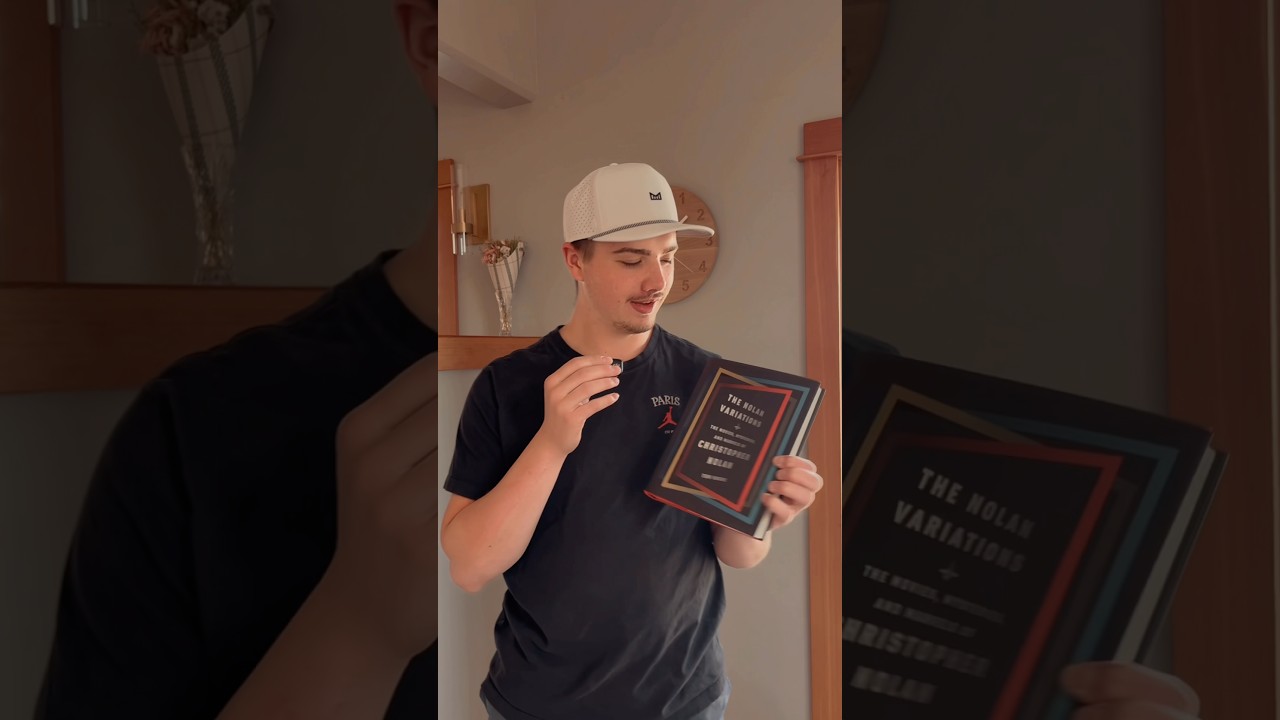
Just picked up The Nolan Variations by Tom Shone, a deep dive into Chris Nolan. #books #booktok

Walt Disney never believed in doing sequels… #disney #sequels #sequel #waltdisney #advice
Thanks @ChrisWillx for the encouragement and the support! #chriswilliamson #modernwisdom #podcast
Take Risks #business #risks #excellence #money #podcast #success #entrepreneur #motivation #elon
Cherish Life… Spend time with your loved ones. #business #life #love #cherishlife #success
Walt Disney poured his heart and soul into one figure… Mickey Mouse. #waltdisney #business #success
“Never trust the reports”-Elon Musk #business #motivation #entrepreneur #success #elonmusk #podcast

The whole Walt Disney company was made successful by one figure…a mouse. #disney #waltdisney #walt