Chassidus Unpacked with Dr Elad Ben Elul.
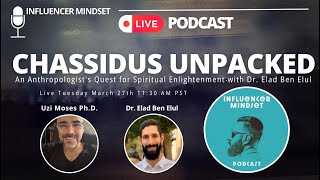
In this Influencer Mindset podcast episode, host Uzi Moses PhD interviews Dr. Elad Ben‑Elul, an anthropologist, author, and teacher of Kabbalah and Hasidic thought. Dr. Ben‑Elul recounts his spiritual awakening after fieldwork in Ghana, where local conversations about Judaism sparked a crisis that led him to explore the Tanya and discover Rabbi Menachem Friedman’s YouTube lectures, which framed Judaism as a non‑religious, purpose‑driven path. He explains how anthropology and Hasidic teachings intersect, viewing Hasidut as the study of humanity with a divine perspective. The conversation delves into his collaborative process with Rabbi Friedman, turning oral lectures into sourced, Hebrew books that bridge academic rigor with spiritual insight. Dr. Ben‑Elul describes his teaching of Tanya in Tel Aviv and online, highlighting transformative experiences for both secular and religious students, and shares a key “punchline” that God needs humanity, which reshapes personal identity. He discusses recent projects—a war‑focused booklet, a book on intimacy and gender, and future ideas such as a psychology‑of‑future series—illustrating how Hasidic wisdom can address modern societal challenges. A poignant anecdote about a mother in Gaza using the book to comfort her daughter during captivity underscores the practical impact of these teachings. The episode concludes with reflections on the role of Hasidic thought in fostering personal growth and societal harmony, and provides contact information for Dr. Ben‑Elul’s online presence.
Chapters
Welcome everyone, to the Influencer Mindset podcast. Good morning, afternoon, evening, wherever you are in the world. I'm your host, Uzi Moses. And today we have the pleasure of hosting a truly remarkable individual whose journey into the depth of Jewish wisdom has transformed not only his own life, but the lives of countless others. Joining us is Dr. El Ad Benalul, an anthropologist, author, and teacher of Kabbalah and Hasidus from Israel. Dr. Elul's profound insights into the teaching of Rabbi Manis Friedman and the work of Rabbi Zalman Schneur of Ladi have reshaped our understanding of the soul and its psychology. So get ready for an enlightening conversation as we explore the intersection of anthropology, spirituality, and personal growth. Without further ado, let's welcome Dr. Elad Ben-Haloul to the podcast. How are you, Dr. Elad Ben-Haloul?
Thank you so much. Wow. And for the amazing introduction, I was touched.
Yes, I can tell you that when I first got your book, your first book, Lovey Kashi LaVo LaOlam, which hopefully will be translated into English soon. But it's just really, was for me, mind-expanding, just the way you were able to bring all those concepts into, you know, into every human being almost. And this is a very high elevated concept. So, Before we delve into more of your story, can you share with us the pivotal moment when you first encountered Rabbi Menachem Friedman's teachings on YouTube and how it impacted your life?
Yes. So I was, at the time, it was a bit after I came back from my field work in West Africa, in Ghana. So I'm an anthropologist and I was doing my PhD and I decided to research urban life and technologies in Ghana. And it was a very big challenge because the culture is very different and I was there on my own and suddenly you're like thrown into a completely different reality and what you thought of reality is starting to break away and you start to see life from a different perspective. So what happened was that the locals were talking to me a lot about Judaism, Torah, and God and Israel, and it touched me. And the whole experience kind of awakened me in a spiritual way that I felt like I always knew one day I will become more Jewish, but it was like, I can't deny it anymore. I can't postpone it anymore. So when I came back, I was a bit lost because on the one hand, I was like, I want everything. I want Shabbos, I want tefillin, I want this, I want that. But on the other hand, I felt like I don't want to be religious and I can't be religious. And I grew up on such cosmopolitan values and liberal ideas, and I had my world and my life, and it just seemed incompatible. So I was, I think, a bit depressed because I felt trapped in my own reality, and I felt like none of the options are right and true for me. And at that time, I started learning. I did start keeping Shabbat, and someone gave me a book that explains the Tanya, and I started learning about the Tanya, and this really kind of put things in order for me and helped me more and more. And I started learning more Judaism, observing a bit more mitzvot. But then one day I found a video on YouTube that says, warning, religion is bad for you. And I see a rabbi there, and I'm thinking, how can a rabbi say religion is bad for you? So I click, and from that moment I was hooked. So Rabbi Manis Friedman was basically explaining that Judaism is not a religion, that we should not become religious, and it's not the purpose of life. And that was so refreshing for me and liberating, and a whole new path kind of opened to me, and I just started following it. I think also Rabbi Manis caught me because here in Israel, you know, we have many rabbis, but they're religious. I'm not. So there's like a limit to how much discussion can be there. But with him, I felt like he's really speaking my language. And as an academic and just as a young man living in Tel Aviv, I felt like he's speaking my language academically, spiritually, everything, and I can relate and it makes sense and it's clear and it's real. So I started listening obsessively to the lectures. As someone who's very curious, I had different mentors that I liked, different rabbis that I enjoy, Jonathan Zachs, different mentors like Jordan Peterson. So, you know, you try and you learn from everyone. There's lots of wise men out there, but with him, I felt like I really need to take this seriously. I can't stop. Like, I have to listen day and night. Like, I felt like as if I was malnourished and suddenly I'm getting lots of water and I need to make up for all these years that I didn't have this information. So I just listen and listen and listen. And as I'm driving, as I'm cooking, as I'm everything. And it just, yeah. So that was Rabbi Manis.
That's amazing. First of all, the fact that the people of Ghana that you were working with kind of reminded you of who you are and kind of brought you closer to who you are. And then The idea that you were always afraid of religion, and then there is like the biggest rabbi on YouTube telling you it's not a religion. But what did it really mean for you that it's not a religion? That there is no set of laws that somebody just put there and you have to follow, but it's just more of who you truly are that needs to come out?
I think First of all, socially, it liberated me because it wasn't about me joining a group. I don't want to join this group. They're not nice sometimes. I don't know if they'll accept me. They probably won't accept me, or probably I'll have to shut off so much of my colors and of my story and of my spirit. And so the one thing is, if it's a religion, then you have to find the group that practices this religious and join it. So that was already liberated. And then what is it really? So it's about your connection with God. It's about you fulfilling your mission and doing what God needs from you. So that's something you can do. Wherever you are, and it doesn't matter who you are. It's unconditional. It doesn't matter how you live your life at the moment. You can start doing things for God and giving more room and space for God in your life. So it puts it in a much healthier context. It feels like more of a process, more of a journey. It feels like it's you and God. It's not it's not under the pressure of a social group or people who have— they put on lots of other things to it. And it's also just, as you said, understanding that this is who you are. Like, am I religious? No. Am I Jewish? Yes. When did you become Jewish? I was always Jewish. I was born Jewish. Are you more Jewish? No, I can't be more Jewish or less Jewish. I just am Jewish. So there's nothing to change really. It's more about expressing who you already are.
That's amazing. I think that a lot of people are finding this challenge and this fear of like, oh, now I'm going to have to join a group or a cult or something like that. To kind of connect to godliness. And I think a lot of people are missing out because of that. So this is very inspiring. Hopefully it will inspire more people to not be afraid to connect to God or to this wisdom without having that fear of joining a group or becoming a part of a cult or whatever it is, the stigmas and stuff like that that are out there about religion. But as an anthropologist, right, I remember I took a class once in anthropology. It was evolutionary psychology, which was kind of interesting because it's like a new science of anthropology. And so my question to you is, how do you find the link between anthropology and the wisdom of Hasidus and Kabbalah and everything that you teach?
That's a great question. First of all, if we're talking about Rabbi Manis Friedman, I always tell him he's an anthropologist because he has this talent of observing things culturally, socially, historically, and then adding the spiritual twist or punchline to things. So that was for me very interesting because I felt like I'm talking to someone who has observation about human life and the human experience. So I guess the connection between anthropology and Hasidut or Judaism, the obvious one can be I study cultures, I study groups. So this is a cultural group. Let me study it. Let me see how they dress. Let me see what practices they have, what habits, what rituals they have, what's their history, what's the language. I'm going to study it. But this is not how I connected things. I connected things on a deeper level. My connection was anthropology means the study of man. It means studying humanity. Hasidus means the study of humanity, of human experience, and the study of God. So really, Hasidus, from my experience, is anthropology with the added benefit of realizing that there's a creator to the man we're studying. So in cultural anthropology, what we'll do it is much more tolerant to spiritual experiences than other fields. And I think that's why I was attracted to it deep down, because in anthropology you don't say, oh, look at those morons bowing to a statue or worshiping a tree. No, you take it seriously. You're like, this is their cosmology. This is the meaning of their life. What is the depth in it? So I like that in anthropology. But you still kind of say, this is the subjective experience of those people and how they interpret life. But you can't really use God as a fact. And you can't really say anything about that is essentially truthful about men within the traditional anthropology. But in Hasidus, it's like, Yes, this is God. This is what he meant when he created you. This is how he created you. These are the powers that work in you. This is how your soul is structured. This is how your body is structured. This is your purpose. This is your connection with materiality, with objects, with the environment, with nature. So suddenly a whole new level of anthropological knowledge was made accessible for me. And the book, Lobikash Tila Vola Olam, if you notice, it says, the subtitle says, Understanding the Purpose of the Creation of Man. And I see it as an anthropological question. If you want to understand humans, You need to understand why are there humans. You can't just say there are humans, let's study them. You have to go back a bit. Why are there humans? But this is a question that science is very scared of asking because there's only one answer really that you come to when you ask that. So it's better not to ask it. We just We just see it as a fact, it's a given fact, now we analyze it. But this whole analysis is now wrong because you don't have the purpose.
That's a beautiful answer. And also the idea, again, that I think it's like a global fear of religion that's going on in the world, that people are just afraid to say, oh, there is a creator, then, oh, now I have to go and be religious somewhere or join this group of people that I don't want to be a part of or whatever it is. That people are afraid of. And that's also in what you just explained in the science of it. They will look at the man in anthropology, but yet they will not see him as a created being, so to say, with a purpose, mission. And certain values that he needs to follow, which is an amazing connection. I never thought about it this way, but that's quite fascinating.
And then they also have, once they try to back away from this idea of the creator, they have to impose their own values, really. They can't really remain neutral. So they have their own ideas of human rights or liberalism or equality. And it's very hard to study humans that way because if you come already kind of like with your own ideas of what life should be, then you're actually religious as well. You're practicing a religion. It's just a religion that you collect. It changes according to trends and it's according to how you want to feel about yourself or what will make you more accepted in the academic lifestyle and so on. But you are practicing a religion anyway. It's just not a prophetic religion. And yes, they're scared of it because, as you said, it automatically is associated with a certain group. So even if you say, yeah, God gave us Torah and he created the world and he has a purpose, and I'm Jewish, so then suddenly people will say, okay, so what if, what about all the non-Jews? If, how can it be that only Jews are right? How can you say that all the others are wrong? So it is, it creates a lot of tension there. Yeah.
That's pretty, pretty cool. So, so you, you personally co-written books with Rabbi Menis Friedman. I personally have two of them. I have, uh, Lobi Kasti La'Vor Olam, which means I did not ask to come to the world. And I have the second one, How to Win a War, which just came out. It's kind of like a new one. But I know there is another one that came out about relationships and partnerships between a man and a female. That just came out in Israel. And so can you tell us about your collaborative process and the insights you have gained through this partnership with Rabbi Menas Friedman and how you guys came about to do this? Because I think that this is an amazing collaboration that creates gems of knowledge.
Wow. Thank you. And I heard your podcast with Rabbi Manis about the new book, To Win a War. It was really great. And so it starts with me realizing that whatever talent I have or ability I have, all I have to do is to think, how can it serve God? This is the purpose of life, really. That's all you need to do. You don't need to become religious. You don't need to move anywhere. You don't need to become anything. You don't have to change anything. But you have to ask yourself, where I am at the moment and the gifts that I have, how can it be of service to God? So after 10 years of studying in academy, I studied in London, so my English is good enough. I know how to do research. I know how to write. I know how to structure. Rabbi Manis is an amazing speaker, but he didn't have, at least in Hebrew, he didn't have books. And so I realized that I have the ability to make his knowledge approachable in a book form and that it's very, very important. There are a few things that putting something in a book really changes it. First of all, I think it kind of connects it to the canon of the Jewish book library or the Jewish book collection. It becomes part of the Masoret, part of what we pass on. So a book is incredibly meaningful in Jewish life. So the speaking has to be put into a book form, but it's a very different medium. So you have to really think, how will you make this a medium that reflects the style of Rabbi Manis? So I kept saying, when someone reads this, I want him to know Rabbi Manis. I don't want it to be something detached from him. I want him to get the sense of his character, of his humor. Of his simplicity. So that's one thing. But on the other hand, it's a different thing. It has to be much more structured, much more ordered. So the first part was just listening to hours and hours and hours of lectures. The second was curation. Which ones are the best? Which ones will tell, will convey the message that I want to convey the most? And then it's about kind of like transcribing, translating, but then reinventing it in a way, rewriting it because it has to be a book and it has to be for Israelis and it has to be in Hebrew. So I guess it's a process of really kind of like bonding with the materials and going again and again over them and exploring them and making them uniting with them as much as possible so that you can express them in writing in a natural way. And then a whole very important part of my job was Rabbi Manis doesn't speak with sources so much because for him, he's saying things the way they are. This is just how it is. Torah is real, God is real. I'm just speaking who I am. But in Israel, we're not so easy. So we would like to know who told you this? Where did you see it? Where is it written? And I knew that if I'm gonna say such new, exciting, almost revolutionary ideas that were never heard before, I cannot do it without backup. So my project was also to add lots and lots and lots of sources. So I'm hearing something he says and I'm like, where could it have been? Where could he heard it from? Where did he pick it up from? And so I would go to the Hasidic writing, to the Rebbe's writing, which are the obvious, Tanya. These are the first obvious sources. And then it will take you to the Gemara, it will take you to Halacha, to Kabbalah, to Torah, lots of midrashim. So it's an amazing journey of also connecting to references. I was just reading that the Rebbe, the Lubavitcher Rebbe, was also a very big admirer of references. And it's something he did a lot from a young age, finding references to knowledge. And kind of linking it to the tree of previous knowledge and backing it up. I thought that was very important to do.
That's amazing. You know, I think we have a mutual friend, Dr. Yehiel Harari. So, yeah, he's a good friend of mine. We kind of grew up together since age 15. We know each other. But I noticed that in his books, like at least a third of it at the end is just sources. He's very particular about that. So definitely I agree with you when it comes to Israelis, they want to know where did you hear this from, what's your source. So obviously that's kind of put things in, just give it more credibility. It's not that, God forbid, Rabbi Menashe is not credible, but just like as you said, He probably needed that collaboration and to put that together in a way that kind of makes everything more transparent as far as the sources, which is quite incredible. So how do you envision the teachings of Rabbi Zalman Schneur of Volodymyr, the Alter Rebbe? How does that resonate with the modern audience of today, you know, on Instagram and all the channels that we're using to spread it?
So I teach Tanya, I teach it in Tel Aviv and teach it online. And what I see is that this is the most relevant, refreshing lifesaving method that exists today that I know of for religious people and for secular people. They both desperately need it. It's a healing, it's a gift. It's a huge gift. At first I experienced what it did to me. You mentioned Yechiel HaRavi. So the book I said that I read, Explanation of the Tanya, that was Yechiel's book. So he really opened the door for me to Tanya and also to the idea of the fact that you're an academic and you went to academy doesn't mean that you have to stay there. If your passion is Hasidus, you can do it. So Yechiel Ahari's book explained the Tanya, and then I really helped myself with it. And I realized, wow, I understand myself better. I see things in a clearer way. I know how to make choices in a better way. Just everything is easier and more clear. But that's one level. The second level is when you start teaching it. When you start teaching it, you have a wider sample of your witnessing people's process. And this is amazing. So every round of Tanya takes about a year and a half or 2 years in my rhythm, the way I teach. And in those 2 years, I just see people's life transform. And just like seeing them coming out of the lesson, clicking things in their mind, rethinking their life, making positive changes in their life, that's when you know, wow. And At first you think, okay, this is because I'm teaching mostly secular people. So it's the first time they're exposed to spiritual knowledge, to God, to Torah. So obviously it's life-changing, it's exciting. But then you have the religious people coming and they're even more blown away. They're like, why did no one tell me this? How did this happen? What's going on here? Sometimes they get really upset. Sometimes they feel like I can't believe no one told me this. Why did I have to go through everything I went through? And everything suddenly makes sense, relaxes, just becomes truer. And so I think this book is a book that will accompany us all to the days of Mashiach, and it has the power to heal us if it's taught correctly, by the way, because it can always You know, people always can turn it into a mechanism of, uh, for example, some people are traumatized by studying Tanya because they feel like it kind of encouraged them to oppress their feelings, negative feelings in them, um, to reject themselves because this is the animal soul. So you don't have to, you can't treat it. Uh, you can't give it power. You have to only give power to sometimes it can be a bit traumatic if it's learned in the wrong way. Also, it can become an idea of like, you're learning Tanya to become a Hasid, to become a Chabadnik. So you, yeah, put on the yarmulke, grow your beard, become a Chabadnik. So that also kind of, I noticed, kind of puts people off when it becomes a way of recruiting people for a group. But when it's taught honestly, openly, in a sensitive way, This is the future of personal coaching, mentoring, psychology, all the methods, CBT, I don't know, NLP. There's so many methods going on, theta healing, everything. At the end, those mentors will come to Tanya and they'll be like, wow, this has everything and more.
I agree with you on that. That's definitely a life-changing book. You gotta find the right teacher who is going to deliver the content in a way that's liberating and relaxing and not limiting because there is this thing in America especially that people are very afraid of religion. In a sense that it's limiting life. Now, you're not going to be able to do the things that you like to do or live in a certain way, which I don't agree with. I think that it actually does the opposite. It's liberating more than limiting. So, can you share a personal anecdote of transformative experience that highlights the practical impact of Hasidic teachings in your life?
If I have, so, you know, for me, it touched me on very deep and personal. I made huge changes in my life to go beyond the scope of this podcast, but I just went on a journey and I just started really living a life that is In a way, it's on the edge because it becomes bigger and more meaningful and there's more responsibility to it. But on the other hand, it's much more structured, ordered, more balanced. So it's this idea. I think just the way I am, I think two things. The way I'm a much happier person. I just don't let sadness and negativity define me. It can be there and I let it be there and then pass, but it doesn't. It's not that real anymore. There's just like this pure unconditional happiness in me. From just understanding what life really is. When you realize the punchline of life, you're like, wow, this is a really great story and I'm really lucky to be part of it. So nothing can change that. So you're happier. And another thing I noticed is just I love people much more. Like, I was more critical of people and judgmental. And suddenly I love people. I'm like, wow, I really love this guy. Wow, this is amazing. People, they touch me, they inspire me. So it can be a very simple person and he can tell me something like, have a great dance. I'm thinking, this is a godly soul giving me a blessing. I see people as godly souls. I see their godly spark, and it just— Jews make me excited, but generally humans. But yeah, Jewish people are amazing. And that's something that Tanya makes you really feel. It's not theoretical. It's not something you're supposed to feel. You feel it. You just become less judgmental. And I'm much more confident against rabbis being judgmental and being deterministic and being scary and negative. I'm like, no, this is not Judaism. This is not right. Not for now, not for this generation. I have full confidence to say this is not healthy and this is wrong. And this is thanks to Tanya. Thanks to the Alter Rebbe, the way he explains everything. It puts it in context. What is an Avera? What is a Mitzvah? Who is God? By the way, when I was learning Tanya, I learned it with a really great shaliach and was really open-minded and exciting and inspiring. And we learned it chapter by chapter and we were singing and I was very, very going all the time. And as I started learning more about Rabbi Manis' approach to the Tanya, so he has this whole idea that God needs us and that this is what Tanya explains to us really, because Tanya says it starts with you. It starts with saying you need to become a beinoni, you have to work on your middah, you have to do this, you have to do that in order to become beinoni. But then suddenly it shifts away. Kind of drops the idea of you and how you need to become. And it says the purpose of all of the creation, of all the worlds, and of the creation of man is that God wants a dwelling place in this world. And from then on, it focuses on how to do this for God, how to create, build a home for God. So what Rabbi Mani is saying is that Tanya really explains to us that God needs us more than we need him. And when I came with this insight, the teachers, the rabbis that were teaching me Tanya, they were like, this is wrong. I can't accept it. And stop saying this in here. It's not true. And then I couldn't learn it anymore that way because I felt like the most important point in Tanya is the is the idea that God needs us. And this is how it becomes really liberating. When you understand this in a healthy way, you get the whole effect that it's not about you. It's about a much bigger and more eternal, essential plan. And you are not the focus, the center of the world. It's about how you contribute to God's purpose. These are the ideas that really got me excited about Tanya. And if I see people who teach it in a different way and they put you at the center, I feel like they're just turning Tanya into another psychological or self-help book, self-guiding book. And it's not. It's much more than that.
It's amazing. So you were mentioning a punchline. What was that punchline that kind of made you feel it and awaken to it?
In Nithanya?
Yeah.
You know, I'm just going to say yesterday I was teaching a Perek Nun, and in Perek Nun, it's the Perek that is most connected to Lobikashila Voralam, the idea of I didn't ask to be born. What it says there is, You were united with God in heavenly amazing worlds. And suddenly you find yourself here in a painful challenging experience, in a bodily experience, in a physical world with so much hardship. And you know what? You didn't choose it. You didn't want it. You didn't ask for it. and there's a part in your heart that will always yearn to go back to being nonexistent, to go back to your source, to just escaping this whole thing, saying, I don't need this, I'm out of here, bye-bye. And going back and just being with your source. And the way he's recognizing this feeling, giving it a name, giving it recognition is so important because you say, hey, I'm not crazy. You know, people who want to commit suicide, I think if they will hear this, they won't commit suicide because they'll be like, oh, this is what I'm feeling. I'm just yearning for God. And then he says, so what do you need to do afterwards? Connect to this because it means you love God. It means you miss him. It means you remember that you and him were united. but then add another step to it and say, oh, but he has a mission for me here. He needs me here. So if that's what he needs, I'll come back here and I'll do what's needed. And what happens in this, when you go through this process on a deep level, is that you are no longer trapped in life as a condition. That you have to kind of survive in. Life doesn't have a hold on you because you don't need life. You don't need life. You're here because he needs you. So I'm no longer sad that I didn't get something or something didn't happen or I'm worried or— because I don't even need any of this. I'm here for him. So what do you want from me? Where do you want me? How do you want me? That's up to you. I'm just listening to you and I'm letting you do the lead. And I think that's just such a healthier way of living life because we are becoming very narcissistic by putting so much focus on ourselves.
That's an amazing punchline. I remember reading it in your book and And it just kind of explains that people shouldn't be worried about anything because anything that happens to you, it doesn't really happen to you. It happens to God in a way because he puts you there to do something. So there is no really failure and there is no real successes because, I mean, there is, but it's not really when you have that mindset that you are here for a reason and you are created being and God needs everything that you do. Then if, God forbid, you failed in something, you didn't really fail. It's God put you there to learn something so you will become stronger and smarter. Just like it's written in the Torah, everything that Yosef was doing, Hashem was matzliach, Hashem was successful. And it's the same kind of concept of what you just said. So So now, you know, what advice would you give to someone who is seeking to deepen their understanding of Jewish wisdom and spirituality? And they're afraid, they're like, they have all this.
So I would give them the book, Lobikash Ti Lavoraram, because it's a great starter. it doesn't matter where you are. People, you know, people read this book and they immediately buy it to people they know, to their family, to their friends, to their colleagues. Um, they just give it away because they know that this is something that anyone can just open and get a whole new introduction to God. And by the way, if you were religious all your life, you still need a new introduction to God and to Judaism. So it doesn't matter if you're religious or secular. This book will give you a fresh perspective. So I would suggest starting with this book because it will relax so much. It will tell you why you shouldn't be religious. It will tell you the difference between living and existing. It explains why you were born, why are you here. It will give a whole new perspective on what is the future of the world. So I see, by the way, yesterday, I had a really special guest in my Tanya lesson. Her name is Merav Berger. She's a mother of Agam Berger, who was kidnapped on October 7th from the military base that she was serving in as an IDF soldier. She's 19 years old and she's a violinist. Maybe you saw her picture of a violinist who was kidnapped.
And she's still there.
Yes, she's still there. The mother is doing everything she can to release her. And apparently, 8 months before This happened. The grandmother passed away, and the mother, Merav, was searching for answers about life, about the soul, about the meaning of life. Why are we here? So someone told her, read Rabbi Manishev Lobikashiraboyola, read the book. She read the book, and it really inspired her. She really liked it. It clicked. It explained a lot of things. She started observing, keeping Shabbat. Doing things. Her daughter, when she went on the military, she wanted a specific role in a specific place, and she didn't get it. So she was disappointed. And the mother told her something she learned in the book. She told her what you said a few minutes ago. You know, we are here to serve God's purpose. So we can never be in the wrong place because wherever we are, this is where we're needed. So don't be sad that you're not where you wanted to be, but just think about where you are and be happy that this— it means that you are needed here. and the daughter really took it in and absorbed it. And I think a few days after, I don't know, the whole thing happened. So you can't stop— you cannot imagine that this message from her mother is in her right now as well. And how do we know it? So listen to this crazy thing. 2 women were released from Gaza who were with her at the same place and spent a lot of time with her. They were released, first of all, with their hair braided. And it was braided, and they told because she was braiding the hair because he said, when you are released and there's media and television, I want you to feel good about how you look, so I'm going to be there for you and braid your hair. They said that she supported them, that she helped them, that she comforted them, and that she blesses over the food that she eats. They get a tiny piece of bread and some olive oil, and she blesses over it. And she keeps the Shabbos. In Gaza, in being held captive. So much so that when, I don't know if you know, but they are using them as slaves over there, sick people. They're putting them in families' homes and just using them. When they asked Agam, to cook a meal on Shabbos, she refused several times. She refused. She said she's not lighting fire or cooking on Shabbos. She's not a religious person, just a Jewish woman, very brave, very strong, who just asks What is the purpose of where I am at the moment? It cannot be that there is no purpose for me being here. And the purpose must be godly because I am Jewish. God put me here. So there's something meaningful that I can do here. So you see, it echoes, as you said, the book, the messages, they echo. They're in Gaza now. They're everywhere.
What a story. What a heartbreaking story. And, you know, I just really, really pray that because of this podcast and many more good deeds that we're going to be doing, they're going to be released, God willing, as soon as possible back with their families. But this is an incredible story. So are there any further projects or collaboration with Rabbi Menis Friedman that you can hint at or share with us?
So this, we had the Lobbykashi book came out 2 years ago. We really want to do it in English as well. But then suddenly, only in this month, 2 books came out at the same time because when the war broke, basically we thought American Jews are really experiencing lots of antisemitism. And they're also confused and they don't know what's going on in Israel and what's happening and who's right and who's wrong. So we wrote a book that explains the situation in Israel and the conflict from a spiritual Jewish perspective to win a war. It's a tiny book. We wrote it in 2 weeks, very, very quickly at the peak of the war. And that's out and And a few weeks after, the book here in Israel called Return to Innocence came out, and it's a book about intimacy, marriage, relationships, gender. So we're taking the current ideas about gender that's going on, especially in America, but also here. What is a man? What is a woman? What does it mean when someone doesn't feel like he's one of them. How does this relate to the purpose of life? What can be done about it? What is the purpose of marriage? Amazing, brave questions about gender and intimacy and marriage for our time. And this book just came out and we hope to issue the booklet, the war book in Hebrew as well, because Israelis are also in need of some enhancement and knowledge about how we should be proud of our Jewish identity and purpose and mission as we're fighting this war. And then in the future, I really hope to do something about the reading of the Torah stories, the story of the Parasha, the Bible stories, kind of like you know, to give the Hasidic, the Rabbi Manis kind of has a unique reading about it. In Lobikashti, we have a chapter about Adam and Eve and how he reads the story, but he has amazing interpretations for all the stories. So that could be fun. And we also had a web series called The Psychology of the Future, where we take different psychological problems and traumas and disorders, and we analyze them and try to give a solution to them according to Hasidut. So I think that can be also a great book, just taking different things like OCD, intergenerational trauma, different things. And so I don't know, I'm saying this out loud. I don't know if it's going to happen, but step by step.
What can I say? I hope it will happen, uh, because it sounds amazing. It sounds really amazing and, and innovating, and, uh, you know, like they say in the startup industry, disruptive, you know. So, um, good.
So you're encouraging me to, to do it?
Yeah, absolutely. So, so in, in your view, what role And this will be the concluding question for this podcast. So in your view, what role do you see Hasidic teachings playing in addressing contemporary societal challenges and fostering personal growth? Because again, we are bringing something that was uniquely studied by very conclusive groups of people in some shtetl, in some shuls somewhere around the world. There wasn't access to it. And now, boom, there is a revolution. The internet opened it up to the world.
Great question. I think we are at the stage where when we have a conflict and a disagreement on an issue, whether it's a political issue, a gender issue, a social issue, it doesn't matter. You'll have one side and the other side, and they'll just fight. And maybe a few people will move to this side, and then a few people will move to this side and say, I'm woke, and then I'm woke. But you're constantly stuck in a struggle, in a tension, and it's a dead end because every side actually brings a certain truth and a certain lie. And so no one will really accept the other side because then the truth that is on his side will be missing. So we're stuck in a very conflicted world. What Hasidut adds to the picture is that it doesn't approach things from a judgmental perspective or a moralistic approach or even like a self-benefiting, self-serving approach. It just says, do you want to know what God thinks about it? Would this change anyway your opinion? Would this influence this debate in any way if you had access to the perspective of creator of the world? Would that matter at all? Which religion is right? What about God's idea? And then suddenly people are willing to really rethink and reshape their ideas because we are wired in a way that if we know that the creator has a certain will for us, we trust him that this is something that we would like to do. So I just think it resolves and adds unity and harmony to everything because it just adds godliness to everything without canceling it. In a way, it's an introduction to the Torah of Mashiach. So the Torah that we will learn at the end of days when everything is is really perfect, is something that we can't just out of nowhere start learning. So we're starting to get ready and prepare ourselves to these times by learning Hasidut, because Hasidut helps us kind of inject God and introduce God into every issue. We published a book about relationship and about the war. At the same month. And in Israel they said, what is your specialty? Like, you can't just choose something. But I think this is Hasidut. It's like something that you can really apply to every topic and just add the godly factor to it, including to religion, because even religion is missing God. And then it makes sense.
That is fantastic and beautiful, Dr. El-Ard Ben Elul. Thank you so much for joining us today on this podcast. I truly, from the bottom of my heart, wishes you tremendous success, not only in Israel, but also around the world. Your English is amazing. I'm very impressed by it, by the way. And I'm so looking forward to read more, learn more, and get more inspired but through your future projects and endeavors, especially with, I call him the Rebbe, the local Rebbe, Rabbi Menis Friedman, the YouTube Rebbe, that you're going to just continue doing that until really we're going to see a shift in consciousness, which is what we're all waiting for. And the end of war, pain, and suffering for all humans around the world.
Thank you so much for the invitation. It was a great talk and great questions. And I don't know who speaks Hebrew in your audience, but if someone speaks Hebrew, wants to learn Tanya, so they're welcome. But also Rabbi Manis and I give Zoom lessons, which are bilingual every week. So Also, you're welcome to join that. We'll send links.
So how can people get in touch with you and follow you?
So on Instagram is a good way, or I have a WhatsApp group that has all the updates, so I can send you the link and people can join.
Okay.
And the books are available on Amazon, all the books. And the 3 books are all the books, Dr.
Elad Ben Elul. And then you have a website, right?
Yes, eladbenaloul.online.
eladbenaloul.online. Okay, so I'm going to put also the links and the WhatsApp group link at the bottom of the video on the edited version. So this is the live version, but we're going to have an edited version. Thank you so much for joining us today.
Thank you.
Dr. Elad, all the best. Much, much love.
More from Uzi





The Secret of Reincarnation According to Ancient Wisdom. Save it, share it, and follow for clarity.





