The Power And Awesomness Of Dreams. Dreams Seminar.
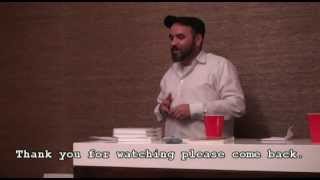
In this 2011 YouTube seminar, Uzi Moses PhD presents a comprehensive Kabbalistic framework for understanding dreams. He begins by linking dreams to the five-part structure of the soul (Nefesh, Ruach, Neshamah, Chaya, Yechida) and explains how the soul’s garments—thought, speech, and action—shape dream content. He then outlines the three intellectual faculties (Chochmah, Binah, Daat) that generate mental activity, noting that during sleep the brain’s sensory input is shut off, allowing the soul to travel like a “1/60th of death.” Moses describes three categories of dreams: prophetic (Chalom Nevui) with four diagnostic signs, protective (Heshbir) that guard the dreamer, and natural dreams reflecting daily experiences. He distinguishes angel‑delivered dreams from demonic ones, offering protective practices such as reciting Shema Yisrael, fasting, and the Atabat Chalom ritual. Practical guidance includes recording dreams immediately, interpreting them only with trusted, knowledgeable individuals, and using dreams as a “paycheck” that reflects one’s spiritual state, moral choices, and level of mitzvah observance. He cites biblical examples (Avimelech, Jacob, Joseph) and Kabbalistic concepts like Kaf Hakela, describing dreams as a purification process for the soul. The talk concludes with a promotion of the Hebrew book “Chalomot V'Shmotam” (Dreams and Their Meanings) by Dr. Hinnerani, efforts to translate it into English, and a brief reflection on Rosh Hashanah, emphasizing the unity of the soul and the collective birthday of humanity.
Chapters
Okay, good evening everybody. Thank you for coming tonight. Thank you, Arianne and Michael, for hosting this class. Tonight we're gonna be speaking about dreams and basically what are dreams, what are they, What is basically sleeping? Is there any meaning for dreams? Why do we need to sleep? How the things that we do or don't do affect our dreams, affect the design of dreams. So first, I want everybody to know that the whole idea of dreams is connected directly with the structure of the soul. We know that the soul has 5 parts, which is Nefesh, Ruach, Neshamah, Chaya, and Yechida, which is the 5 parts of the soul. The 2 parts, the The two upper parts of the soul are something that we can't understand. It's the actual part of Hashem. It's the link that's constantly connecting us to Hashem. It's the source of life. And then we have the Nefesh, which is the lowest part of the soul. Welcome, welcome. We have more people coming in. So, okay, so, so what I was saying until now is that tonight we're going to talk about dreams. And basically what are dreams? I mean, what's the significance of dreams? Why do we need to sleep? How the things that we do or don't do affect our dreams? And to understand a little bit more about dreams, we have to understand about how the soul is built. And the soul has 5 parts to it. It has the Nefesh, which is the lowest part of the soul, and then the Ruach, which is the the part that this is where all our feelings are, the Ruach, which is the spirit. And then we have the Neshamah, which is the soul, which is— we call all the soul for that part, Neshamah, but this is only one part of the soul. So we know that the Nefesh also have garments, just like the body has clothing. Our Nefesh Our soul also has clothing. The clothing of our souls is the thoughts, speech, and actions. That's what makes the clothing of our souls. And just like we have, you know, the Admor HaZaken of Chabad explains that actually we don't have one type of soul. We have two types of soul. We have a godly soul and we have an animal soul. And each one of those souls— and we have the body— each one of those souls basically have that garment, which is the thought, speech, and action. So the Torah actually talks about how dreams are not something to take for granted. Dreams are something very significant, and it could be a great tool for us to grow spiritually and in all areas of life if we know how to understand our dreams better and look into our dreams a little bit in a deeper aspect. And basically, dreams are made out of thoughts. The only difference is that when we are Awake during the everyday life, we have the brain which is in control of what we think. The only difference is that when we sleep, our brain does not control what we think. So our thoughts go to different directions and they are totally disconnected from the, from the sechel, from the mind. So, we know that we have external effects, things that are external to us that affect our thoughts, and things that are internal to us that affect our thoughts. But when we go to sleep, the main thing that affects what we think is being shut off, which is our sight. We go to sleep, we can't see. So I want to talk about more what does it mean to not basically not see. So it says this. There is a saying, says, which means that that the more a person works on his ego, the more a person takes down his ego, the more wisdom can come to him. When a person is really full of himself, he's basically as far away from wisdom, it's called. He could have knowledge but not real wisdom. And he says that There is another saying, it says, "Hachacham Einav V'roshov Vekseer B'choshik Le'aref," which means that the wise person can see, and the opposite is like walking in the dark. So, okay, so we'll talk about how the garments of the soul, which is thought, speech, and action, how they are affecting— we need to understand them a little bit better, you know, a little bit better, the thoughts, speech, and action, and how they affect— to really understand what dreams and how we can really control our dreams and really grow with them and use them and being able to look at them, we need to like really understand a little bit more about how the soul is built. So, So, to understand how the mind is built, the mind is built out of 3 forces, which is Chochmah, the wisdom, Binah, is the understanding, and Daat, which is to connect. So what does it mean, Chochmah? Chochmah, it means, it means like if you get an idea. The idea comes to you. Binah is the ability to look at that idea that came to you and to analyze it, to see how you can, you know, you can break it down and make it happen. And the Daat is how you can connect all of this and actually manifest it. Okay, so these are the forces of the mind. So what happens when we go to sleep? Our soul leaves our body. It's 1/60th of death. That's why they said every person who goes to sleep will taste a little bit the taste of death. Sounds scary, but that's what really happened. That's why when we go to sleep, we say, we say Shema Yisrael, we surrender our soul, we say Shema Yisrael, and then we say say to Hashem, I will put my soul in your hands. "Chadito." And they said that, why do we do that? Because we know that the soul leaves the body. There is parts of the soul, there is still something stays in us to keep us alive, you know, to keep the body breathing. But the main part of the soul goes. And we know that that the soul, unlike the body, is unlimited. The soul can travel through time, places. It's not limited to a place. It could be in 5 countries in a few minutes, from India to Australia to America. But we also know that sleeping is basically not for the body. The reason why we go to sleep is for the soul. Because we could sit on a chair, we could sit on a chair or sit on the couch, right? And our body is resting. I mean, if we sit for a few hours, we just lay on the couch, but we'll be awake. The body is resting. So why do we have to close our eyes and like, "Pshh," and fall asleep? What's the idea? That's for the soul. The soul, the body really doesn't need to sleep. The soul is, because that the capacity, our capacity to really grasp everything that's going on in our life on a daily basis is limited. The vessel that we have can contain a specific amount of information throughout the day that we can take. That the soul can take. That's why the soul has to release itself to go to wherever the soul goes when we go to sleep and basically charge itself and then renew itself and then get new information and come back to the body when we wake up and almost bring us back to life. That's what we say. The first thing when we wake up, we say, This is the first thing we say, which means that we acknowledge that our soul left and acknowledge that we just received a new life. It's like resurrection, like literally. This sentence, all the sentences that we say when we first wake up in the morning, it literally talks about the resurrection of the dead. If you look into the depth of that sentence. So when we go to sleep, we say, we give the soul to Hashem. When we wake up, we thank Hashem that He resurrected us. So after, you know, after usually, usually like if there is a really big decision that we have to make, we go, let me sleep on it, right? We go, we sleep on it, we wake up, we have a little bit more clarity about what we want to do. If it's a business deal, if it's an a new job, or if it's to fly somewhere, or whatever, sleeping really helps the soul to kind of like, you know, empty the vessel and prepare for the new day, for the new information to come in. So also some people say that dreams, just like another, you know, like the body has all kinds of needs, right? You go to the bedroom, you drink water, you need to go to the restroom, you eat, you know, stuff like that. So also dreams. Like, you go all day, you know, you work, you see so many things, so much information comes to you that when you go to sleep, the dreams is kind of like a reflection of what happened throughout the day. But, you know, a lot of people say that Dreams, the dreams are not important. They only talk nonsense. There is not really anything, you know, like serious about dreams. But not the Torah. The Torah actually treats dreams in a very, you know, in a very like serious way. And in the Torah there is actually 10 dreams that are described in the Torah. And the first dream, it was a dream of Avimelech, Avimelech Gerar. There was a dream that Abraham and Sarah was about to come into Israel, and then Avimelech was the king there. Sarah was very beautiful. Abraham told her, listen, tell him that you're my sister. That he will not kill me and take you. And he ended up taking her. At night, Hashem came, gave him a dream that, you know, he must return. He woke up in the middle of the night. He went, he said, oh, why didn't you tell me that you're a man of God? So sometimes— so that was the first dream described in the Torah. And then there is two dreams after that. It was Jacob, you know, And then it goes on about the dreams of Yosef. If you guys remember that Yosef was dreaming about the almot, the wheat. And then it goes on and on. And the Torah actually tells us that there is some things that we should not take too to take too seriously about dreams, but some things that we should take really seriously. So there is a— just like a dream is 1/60th of death, it's also 1/60th of prophecy. So a dream actually could tell us what's the future. You know, if we are really in tune with our dream, we can know the future. So, through our dream. So there is 4 ways to know that if the dream that you dream could actually tell us about the future. And the first thing is if we dream the dream early in the morning, which means that the first hours of the morning, you know, from like dawn until we wake up. If we had like a serious dream during that time, that may be a prophecy. If somebody dream about us, somebody comes to you, "Hey, I had a dream about you," that could be also dream that could have some kind of, you know, prophecy features to it. And if the dream, if you dream a dream and within the dream You dream that you're dreaming and you're solving the dream within the dream. It happens sometimes. Sometimes you dream and you know that you're dreaming and you're solving the dream that you dream without even waking up. But when you wake up in the morning, you remember what you dreamt. That could be also a sign for prophecy. The dream could have prophecy in it. And also another dream, a dream that keeps repeating itself. If we have a dream that constantly repeats itself, there's something, there's a message for us. You have to understand also another thing, that a dream that hasn't been solved is like receiving a package in the mail and never opening it up. So let's think about what, let's talk about a little bit more. About the type of dreams that we have. So we have a dream that it's called Chalom Nevui, which is a prophetic dream, which has the 4 things that I told you before to make it prophetic. Like if it repeats itself in early morning, a dream within a dream, and what was the other thing? And dream that somebody dreamed about you. When you have all these 4 things, you know that there is some kind of prophecy into it. So you should ask all the questions and try to find the answer. And then there is a dream that is called "Heshbir Chi," which means it's a dream that comes to protect you from something. It comes to give you like, uh, it's like almost like Divine Providence. You know, sometimes you go and by Divine Providence things should have been worse and now they're okay. So there's also dreams like that, that you dream about it and it's actually come to protect you. It's just like the dreams, for example, like Joseph in the Torah. We know The Midrash means that, for example, what happened to Joseph was he was in jail, and then the two ministers of Pharaoh came into jail, and the first thing he asked them is like, why are you guys sad right now? He was in jail two years before them. They just came in. They still have the new clothing and the perfume smell on them, and he asked them, why are you so sad? This is actually the reason why he became the king of Egypt, but we'll talk about it a little bit later. So sometimes— so those guys, they had a dream and they came to Yosef. They told him about the dream, and that's how Yosef got out of there. So that's the dream that is the It's like the protective dream. The dream that came to protect you. And then there is the natural dream. Natural dream, it means that, let's say, it's very cold at night, your home is very cold, and you dream that you're in Alaska. You know? Or it's too hot in the house and you dream that you are in the desert. You know? So this is the— well, let's say if you're hungry, you dream about food. So this is like natural dreams. So there's the 3 types of dreams. So most dreams, most dreams, they don't really mean anything. Most dreams are just thoughts that are in our head that don't really have any significance. The ones that do have significance, the ones we remember. So how do we know if a dream is real or not. A real dream is a dream that comes to us by an angel, an actual angel from Hashem, an angel. For example, how do we know if it's an angel? We are very calm, our heart is not beating like that, we're not afraid. You know, there is no fear, there is no, you know, everything seems very like calm and you're getting the information and it sounds like that's a dream that comes from an angel. But there's also dreams that come through demons. And that's a little bit scary. Those are the dreams that, you know, you wake up and your heart is beating and you're sweating and it's like a nightmare. And the way, basically the way to, when you have a bad dream, the best way to get rid of it is to wake up and say Shema Yisrael. Okay? If you say Shema Yisrael, you're guaranteed that you will not have, this dream will not repeat. This is basically just So what's this Atabat Chalom? Atabat Chalom? Yes. Atabat Chalom is when you had a really bad dream and then you want to fix it. So you go and you fix it in front of 3 people, and there is a special Nossach that you read, and they're making the dream better. It's an old ancient custom that we used to do it like back in the days. Some people still do it in the Kabbalah center and places like that, but it's not common, like around Hasidim and stuff like that, unless it's really a horrible dream. But usually, when people have really, really bad dreams, you have to sometimes fast. People said even if you had a bad dream on Friday night, you fast on Shabbat until night. So sometimes dreams are very, you know, they really scare people off. But the idea of dreams is is that they come to, and I will talk about it a little bit more, that they come to show us where we are at exactly. A dream is an indication of our situation, our spiritual situation, where we are in terms, you know, like how, how are we in good terms with Hashem or not in good terms with Hashem. The dreams could tell us that. The dream could tell us what we need to do, what kind of work we need to work on ourselves, what we need to change or not to change. So—
But I heard that— I heard in the boot challenge that somebody said that you have 3 things that you really must to fast. One of them is if you, in Yom Kippur, open the Sefer Torah and you're studying in Yom Kippur in front of the Sefer Torah, so you have to fast. That, and the other one, if you like, you feel like you're like kissing something. Yeah, and another one that I don't remember, like 3 different things you have to try. Yeah, what if you're drinking someone else's tea? Someone else's? We can get, we can get to Interpreted Dreams if you guys want at the end.
I have a very special book here. That has basically all interpretations of most of the situations of dreams. So if you really have a dream that you want to know, come at the end and I will tell you approximately what it is. But there are situations where you need to fast, and it's true. You know, sometimes if the dream is too bad, it's too harsh, you have to fast. There's no other way. So What? When? Right when you wake up until the night, until sundown.
Yeah, only the morning. It doesn't mean anything.
So, I will explain to you a little bit more. Look. There is two types of demons that come to us at night. Okay? There is the first type of demons, it's called Shedim Notraim. Those demons, they come to give us false information. They come to you know, take us off the path, okay, so to say. And they know all the tricks, those demons. So let's say if you do Shema Israel, if you do Shema Israel and you still have nightmares, that means they already onto you. They know your tricks. They know that you're trying to do the Shema Israel to get rid of them. That means that you have to do the Shema Israel with a lot more intention, and you gotta be mean. When you do the Shema Israel, don't just say it, just do. So, and then there is the Shedim Yudayim, which is the demons that they host themselves like rabbis, or they come as like Moses from the Torah, or they come as like big beards, and you know, you think, "Ooh, what am I seeing here?" When you have a dream like that, when you have a dream where you see like a spiritual person comes to you with a white beard and he tells you, "I am Moses," or "I am whatever, this tzaddik or that tzaddik," what you need to do in that situation, you gotta ask him a direct question. Who are you?
You're sleeping.
Yeah, okay.
He comes to you in your dream.
No, but you say you have to ask him.
I'm dead asleep. I don't know what I'm doing.
I don't know what to do. That's why you're here now. That's why you're here now. That's why you're here. Hashem put you here for a reason. Oh, okay. So when you see him, when you see him, you just have to remember this. You ask him, who are you? And if he tells— I'm very serious— if he tells you, I am Moshé from Mount Sinai and he says it clearly, you're actually talking to Moshé. If he's going to tell you, I'm Elijah the Prophet, right away he tells you, I'm Eliyahu Hanavi, you know this is Eliyahu Hanavi. But if you ask him, who are you?
And he's like, err, err, err, err, err, wake up, Seishma Yisrael.
Okay, this is very weird. It's very weird. It's very weird.
So, um, but what he's saying, you have in your mind, you have a mindset, and you, you control your dreams. You can be there and say, hey, who are you?
This is your job as well.
The guy pulls you over, you're like, you're going to see your back.
Okay, so what is a dream? What is it? What is a dream? A dream is basically life. Life is a dream. When Mashiach comes, we'll see that actually now we're dreaming. And when we're dreaming— okay, I don't want to go too deep. Okay, so basically dreams are indication that we are alive. How do we know that we are alive? We dream. If we dream, we know that we are alive. Why? It's written— where is it? It's written that, you know, "Shenama alot, reshuv nashem et shivatzion, einu kecholmi." From that we know that basically when you dream, when you remember your dreams, "Oh, I had a dream," it means that you are alive. It's an indication to life, basically.
So if you don't dream, you're dead?
If you don't dream more than a week, if you did not dream more than a week, you have to do something about it.
If you don't remember your dreams? If you don't remember them?
Don't remember is okay. Don't remember is okay.
You cannot know the right if you don't dream or you don't remember.
You don't know.
Any question?
No, you know. You know if you dream something.
I don't remember. I don't remember. Maybe I don't dream. I don't remember. But you dream once a week? You dream once a week? I dream every night.
Wow. No, no, the thing is this, that When you wake up, usually you forget. Most of the time you forget, unless it was a really serious dream and you go and you write down right away. But you know that you dreamt something, you know? Like, it's not like that you go to sleep and it's blank and then you wake up, boom. No, it's not like that. If it's like that, then it's, you know, like the machine in hospital, it's like, okay. So, I'm saying, if you're not dreaming, it's not a good sign. If you're not dreaming, that means that you have to change something. I don't know, change something, you know, just maybe start lighting up a Shabbat candle if you don't light up Shabbat candles. Or start to do a mitzvah, you know, add some kind of a mitzvah or something like that. It will help.
I'm sorry to say that, but For years. For years. I don't remember. I don't drink. Me too. Okay. No drinks at all?
10 years. And you too?
What?
10 years you didn't drink? Dreams, it's like what you get. It's like your paycheck for what you did throughout the day. The paycheck that you get is the dream. So basically, if you have constantly in your mind, you're thinking about Chas V'Shalom, bad things and doing bad things, usually those things, they say, This thought that you have, if it was, let's say, not such a positive thought, this thought does not disappear. This thought turns into a dream in the middle of the night. Okay, for example, if you went and you was watching a horror film, you sit home, you watch a horror film, you know, Jack the Ripper or one of those movies, Saw, I see commercial. People love to go to see those movies. I just see the commercial, I get scared. I have a bad dream. Not to mention to see the movie. It's, uh, so, I mean, don't be surprised if you watch bad movies, you're gonna have bad dreams, you know. And the same thing is if you actually watch good movies, or if you, if you, if you, you know, you had a positive day and you're thinking positive thoughts, you're gonna have good dreams, you know. But basically, when you are doing, when you're really making an effort to do good in life, when you're really making an effort to do good in life, which means that, you know, let's say you see an old lady trying to cross the street and you make an effort and say, you know what, I'm going to get out of my car and I'm going to help her, even though I'm in a hurry, it's going to take me 5 minutes, just an example. And you really, you're making an effort, so the more effort you put in, you put in towards your day to do positive things, the better dreams you're gonna have. That's how it is. The more Mitzvot, the more connection you're gonna have, your paycheck at night will be very, very nice. That's how Hashem works. Hashem pays you through dreams according to your actions. Okay, this way sometimes it says that which means that even if you have good thoughts, Hashem looks at it like you did good, like you did good deeds. Sometimes you don't even have to do anything, just think positive, just think good thoughts, and it's like you're already doing good things. Hashem looks at it like you're already doing something positive, and that will affect your dreams tremendously. And You have to understand that throughout the day there is constant movement between us trying to, you know, between the selfish us, the us that is, you know, the ego, and then the us that is the, you know, the Alter Rebbe calls it the godly soul and the animal soul. So the animal soul is the part in us that is a little bit selfish. Selfish, a little bit careless, that is a little bit, you know, trying to take care of his own personal interest. And then there is the part of us that is the G-dly part, that we are more caring, that we, you know, we're more sharing, we care about the other person. So throughout the day there is constant fighting, there is constant, you know, control. Who's going to take over your body, your mind, your thoughts, the garments of your soul? Remember, Your soul has garments. Just like you have a new dress, a jacket, your soul also has that. Your soul has thoughts, speech, and actions. So when your soul is dressing up with the right thoughts, speech, and actions, then your dreams would actually help you. And I will go over how much a dream can help In ways of when you feel, for example, when you feel a little bit, you know, blocked emotionally, you know, just by looking at your dreams, you know, you could say, you know what, I think I need to open up a little bit more emotionally, open myself up a little bit more, open my heart a little bit more, you know, awaken awaken the fathers of the feelings. You know what is the fathers of our feelings? It's "Ahava" and "V'irah," it's love and fear of Hashem. So when we're working on those things in which we are really connecting with our Godly soul, and we're awakening love and fear, then things will be okay. Look, there is actually a sentence in Tehillim What does that thing mean? It means who will go up to be next to Hashem? Which soul will ascend to be next to Hashem, to dance with the angels, to have a bliss at night. "Mi shelo nasal ashab nafshi," which means a person that is real, a person that did not lie or did not hurt another person during the day, a person that was good, Hashem takes his soul at night, takes it all the way up, you know, to the Mountain of Hashem, which is where we want our soul you're supposed to be when you go to sleep. So guys, I really, I'm not, I'm not, uh, Hashem be Shalom, trying to scare anybody about the dreams and stuff like that, but, but, uh, you have to know that a dream, the dreams, when you really are able to look at your dreams and to say, you wake up in the morning and to say, oh, I was dreaming this particular dream. For example, if it was a dream that you dreamt that you were doing something wrong, and you're honest with yourself and you say, "I dreamed it. In the dream I was wrong." And you were able to look and to be honest with yourself and to see, then you can grow spiritually tremendously from looking at your dream and saying, "Oh, I shouldn't have done that in my dream." Because sometimes even in your dream you can make a mistake and you wake up and go, "How can I do that?" 'Oh, how can I not do that?' Then you— it's like it's a tool. It's basically, it's a tool to shut down the ego. To shut down the ego, shut down the animal soul, and to bring up the Godly soul that we have. You know, and it's also, again, it's an indication of where we are. You know, when we dream and we have a dream where You know, I spoke to, I have a younger brother. You know, he wakes up, he always tells me he dreams. But you know what he tells me? "I dreamt last night there was like 7 girls." He's a young guy. I'm like, "So? And what did you do?" He said, "What do you mean what did I do?" So this is where he is now. I mean, but if you tell somebody that he's trying to work out, "There were 7 girls and I said no to them." and I went somewhere else. So this is also indication of where he is spiritually. I mean, he's young, he's not religious, it's okay, that's his dream. But this is an indication where he is spiritually. His level, this is where his level is. You know, sometimes we can have dreams that we really could, through the dream, we could understand our spiritual level. And we can elevate ourselves because of that dream. Because if we are able to look and to see what we did in that dream, in the situation that we had, we know where to go. We know to go in a better direction than we did before. So, um, so it's very, very recommended to, when we have a really dream that it's intense, Wake up in the morning, write the dream down, be honest with yourself. Say, "Oh, you know, this was my situation in the dream. What do I need to do today to make my life better?" And dream also, it always presents opposites. There is the laws of opposites in dreams. Sometimes things look like the worst thing in the world, but they're actually good. There is opposites in dreams. For example, the Gemara talks about "Haba limobachalom, it's a fel bina," which means that the person that goes, the dream that he sleeps with his mother, which is a terrible dream, and the Gemara says it's fel bina, which means that he should expect to be enlightened with understanding of Kedusha. And then it also says that, uh, "Haba na'aram u'vasa, it's peled yad Torah." If a person goes and he sees himself sleep with a woman that he's engaged, which is a terrible thing, I mean, nowadays, but actually if you dream about it, it's not so terrible. It means it's a peled yad Torah. Which means that she also should expect of learning Torah, of understanding Torah in a better way. And then there is another example, a person that dreams that he sleeps with his sister, which is also a terrible thing on a daily life, but if you dream about it, it's not so terrible. It actually means that it's a pelech of chokhmah, which means she should expect wisdom.
What if you dream about a dead person?
What?
A dead person?
It depends. It depends on the situation. Who is that dead person? What is it to you? Where are you? I mean, how are you connected with him? When did he die? There are many different questions that need to be asked before I can tell you what it means. But there is a meaning for that. There is a meaning for that.
If your grandfather, for example, comes back to you in a dream?
So, okay, maybe somebody else very spiritual. Okay, uh, you, you have to first, you have to understand, you have to get a little bit back to me to kind of like tell you what it means. I got to get a little bit background on when did he die, where is he buried, which country. I mean, was he, was Was he Jewish? Not Jewish? Was he buried according to Jewish religion? Did somebody do Kaddish on him? Yeah? Everything was okay? Jewish Kaddish, the whole thing? And he came. So maybe he has a message. Maybe he has a positive message. Because usually sometimes when there are souls that depart and You know, the family don't care, they don't do Kaddish, they don't do this, they just bury, and the soul having hard time, and it goes to family members, shows up in dreams to say, "Help me." You know, I actually heard a story about a mother, she lived in France, and her daughter passed away in a car accident, and she took her to Israel. Very sad story. And she buried her and she bought another piece of grave right next to her. She said, "When I pass away, I want to be buried next to my daughter." Okay. She did all the arrangements. She was there. She went to France. At night, her daughter keeps coming to her in the dream. "Mother, they are not buried right." Mother, they took my thing. Mother. She called, she wakes up in the morning. The dream keeps repeating itself. I have goosebumps when I talk about it. The dream kept repeating itself. She called Chevrat Kadisha. She said, what's wrong with my daughter's grave? They told her they went, they checked, they saw that they actually did not bury her daughter there. They buried somebody else, and her daughter is buried somewhere else. So So things like that are real. They're happening. Okay, so we'll continue that a dream— you know what, I'm going to— let me see how much time do we have still here. Okay, I'll continue just a little bit more. I mean, not to make it too long and too boring. Okay, so we know that dreams actually could be a very powerful tool for us to know ourselves. To know where we are in terms with Hashem, our spiritual level. But it could also be a prophetic tool that could actually give us a glimpse of what the future is going to be, you know, the near future, the far future. And I think that the prophetic, the idea that there is ability that we could actually see the future through our dreams, it's quite fascinating. A lot of people would love to know, you know, when are they dreaming and what's going on. So, unfortunately, most of the time dreams are a are basically some kind of— there is a Kabbalistic term called Kaf Hakela. Anybody heard about it? Kaf Hakela, it's like, it's a process that happens after death. You know, the soul is actually being shown, being shown in a movie all her life. But the soul is watching all her life goes by and the soul cannot participate. Like the soul could see, oh, you know, in that scenario I should have done this, I should have done that. It's a terrible thing for the soul. It's written in the Zohar, it's a Kabbalistic term, it's called Kaf Hakela. It's like not being here or there, it's like being between worlds. They say it's described that the way it's described is like there is an angel in the other side of the world and another angel from the other side of the world and they keep playing ping pong with the soul. And the soul goes through a terrible, terrible pain. But the reason why is because this is how the soul gets purified. When the soul sees all her life and says, oh, you know, in this situation I should have done this, in this situation I should have done that, then it corrects itself. It starts to understand what's the right thing to do throughout her life. And then it reaches a point that it understands and it knows, and then it could go back to the next level. And a dream is something, sometimes a dream is like that. Sometimes we don't have any control, we dream, you know, there is things that goes by, we don't even remember what's going on, you know, and it feels like it. We feel like almost like there is nothing we can do. But we have to understand that sometimes those dreams, they come to clean us. They come to kind of like take us to the next level. Even though it's not an easy experience, sometimes dreams could be not so good, but we should know that even if that's happened, it's almost like a purification detox process that our soul is going through, through the dream. Okay, so I'm gonna finish by saying that, that when you looking to solve your dreams, which is very, very important, you had a dream, you wake up in the morning, you want to know what is it, you're very curious, you go to the first person you see, Listen, I had a dream. I was here, I was here. What's going on? Don't do that. You should only tell your dreams to a person that you trust, a person that you know that loves you, and a person that will give you a good interpretation to your dream. Because you have to understand, most of the results of the dreams is by the way the way it was interpreted. Okay? Which means that if somebody comes to you and tells you a dream, and the dream is good, but somebody will tell you something bad, something bad will happen. So you got to be very careful. And I'm going to end with this. You got to be very careful who you tell your dreams, who interprets your dreams. Don't tell it to just people you meet on the street. Tell it to your husband, tell it to your mother, tell it to, you know, somebody who is really close to you. To somebody you can trust, somebody you know is not gonna mess up your life because you told them the dream. Because it could happen. You can tell a dream and somebody could give you a really totally wrong interpretation and it's gonna mess up your life. Hazl Shalom. So you got to be very, very careful, uh, who you tell your dreams and, uh, all that stuff. So we're going to end. Thank you very much, guys. Thank you.
Thank you.
Hopefully we'll have, uh, we'll have more. So on that note, few words of Rosh Hashanah. Rosh Hashanah is coming like next week. So why do we celebrate Rosh Hashanah? On You know why do we celebrate on Rosh Chodesh Tishrei? The reason why is because it's the birthday of the first man, Adam HaRishon. Adam HaChavah, Nolad. Adam HaRishon Nolad, he was born on Aleph Bet Yishrei. The world was created on 25th of Elul, which is, I think, 25th of Elul. It's like soon, it's like a few days. In 4 days. In 4 days, this is when the world was created. And then 6 days Hashem created from that time, Hashem created according to the Torah each day. And on the 6th day Hashem created man, and that's why We celebrate Rosh Hashanah on Aravot Tishrei. Another thing is that Hashem created only one soul. It says that Hashem created one soul. We think that we have, you have, you have a soul, I have a soul, everybody has, but it's actually we are all one soul. And the best way to describe it is Think about a body, right? The body has different organs, right? That if one organ, let's say, is Chas V'Shalom, doesn't feel well, all the rest of the organs also feel pain. You know, it's like, this is exactly how we are. To a point that, that, you know, I don't want to get into more stuff, but just to make it short, Just to a point that if, let's say, to feel really complete happiness, we have to make sure people around us are happy. You know, because if somebody around us is in pain, we can never really be happy. And the reason why is because we are one. We are one. We maybe don't look at it, maybe don't feel it, but just to understand that there is only one soul that was created, and we are celebrating its birthday on Rosh Hashanah. So during the year we have two birthdays. We have the global universal birthday, which is Rosh Hashanah, which is our birthday because we are part of the first man. And then we have our personal birthday, which is the time that we were born. So on that note, I want to wish everybody Shana Tova, Amitu Ta, Shana Shel Atzilacha. Happy birthday. Happy birthday to everybody. And again, thank you very much for coming tonight. Thanks to my wife.
There's bookmarks over here.
Oh yeah, another thing is that there is bookmarks. I'm actually representing an organization started in Israel by one of my best friends. His name is Dr. Hinnerani. Is a professor, PhD in philosophy, that did teshuva, and he started writing books like these books here. And this is actually— the lecture of dreams was based on this book, which is called "Chalomot V'Shmotam," Dreams and Their Meanings. And basically what we do now, we are trying to spread those books, which is— they are non-religious They are not religious books, but they take the wisdom of the Torah and they kind of bring it toward the average person who is not religious, that he can connect with. Those are the books in Hebrew. We are working on translating those books to English, and b'ezrat Hashem, open a center here in Los Angeles to bring people to a non-religious environment to connect to knowledge, to connect to information, because the soul is thirsty. The soul is thirsty.
Especially in California.
Especially in California. So, uh, so yeah, so, we all, you know, gonna make it together to Jerusalem with Mashiach Tikenu and the coming of Mashiach, which is very soon, every day now.
Thank you very much, guys.
More from Uzi





The Secret of Reincarnation According to Ancient Wisdom. Save it, share it, and follow for clarity.





