
Is Overplay the Future of Fan Engagement and Content Creation?
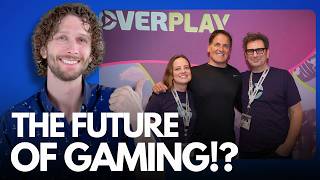
In this interview, host Peter Harris talks with Caroline, founder of Overplay, about the company’s no‑code platform that adds a lightweight gaming layer to streaming video, turning any short‑form clip into a snackable game. Caroline explains the product’s value proposition—dramatically higher engagement (over 30× versus regular video), rapid, cost‑free game creation, and a TikTok‑style experience—while outlining the key stakeholder groups (sports leagues, broadcasters, creators) and their need for deeper fan interaction. She details Overplay’s B2B SaaS licensing model, the upcoming SDK rollout with 3‑5 large partners, and the current consumer‑facing Overplay Games app. The conversation moves to metrics (repeat plays, high‑score loops) and the company’s fundraising strategy: multiple rounds on WeFunder, allowing everyday investors to back the business, and the role of a Shark Tank appearance that secured Mark Cuban’s investment and advisory support. Caroline describes how Cuban’s involvement adds credibility and opens doors (e.g., SXSW booth). Finally, she outlines the three conditions needed for Overplay to become a billion‑dollar company—no‑brainer pricing, seamless third‑party integration, and clear value—and urges viewers to invest, try the app, and provide feedback.
Chapters
Overplay will be known as the way to gamify video. It's going to enter into the vernacular in that way. We found that Overplays have over 30 times more engagement than regular video. This is one of those things where I really feel like Overplay is right place, right time, right need. And on the content creator side, on the streamer side, it's a need for differentiation. We believe Overplay is going to be ubiquitous. You know, having these business conversations now where we're blowing the socks off of people because they're like, oh my God, we could actually do this with our content. To give normal people a seat at the table and being able to invest in a company that we think is going to be changing the industry of media, I think is a wonderful thing.
Please meet Caroline, the founder of Overplay, who got a deal from Mark Cuban on Shark Tank. And right now, here's the kicker. Anybody that's watching this in the month of February and March, can even invest in the company alongside Mark. Caroline, thank you for joining us today.
Thank you for having me, Peter.
So tell us about Overplay. What is it that you do? And tell us too a little bit about your background.
Sure. Yeah. So Overplay, in a nutshell, is a light layer of gaming that sits on top of streaming video. So now anyone can make any video into a game, all no-code. We're democratizing gaming. We want anyone who's, you know, if you're filming your pet, you're at a sports event filming, or you can be, you know, filming something that you're doing outside, say you're mountain biking, you can turn all of that now into games in minutes. And so we're bringing the cost of making games basically down to zero and the time that it takes to make games only a few minutes. These are snackable games, like 1 to 2 minute games. It feels almost like TikTok for gaming. And my background and my co-founder's background as well is that we met at Sesame Street. We used to make really cool stuff for kids. I did all the streaming deals. We made stuff in AR and VR, console games, all of that stuff. We're always thinking about how video could be taken further. And we came up with a whole new way, a patented way of making videos into games. And we're bringing that to the public. So that's what we're doing.
So let's dig into that a little bit more. You've got several different stakeholders, we'll call them, whether they're customers, partners, what have you. Walk us through kind of each of those and what is the big pain point that you're helping solve for them?
We've already found from Overplay, from the proof of concepts that we've done over the past year with folks like various NASCAR teams, various big broadcaster names, and other sports. Leagues and teams that you will have heard of that I can't mention right here, right now. But we found that overplays have over 30 times more engagement than regular video. And so these partners are looking for ways to engage fans, keep them on the sites longer, but also to reach out to Gen Z. You know, they're on their phones, they're on social media. They're also used to short-form content., and so now that short-form content can be gamified with Overplay. So it's just a natural progression. Overplay really is the next thing for content.
What does the business model look like when you're working with one of those big creators, we'll call them for now?
Our business model truly is a B2B SaaS licensing model. There is an opportunity though for ad revenue, also in-app purchases on our own app. But our, our focus right now though is releasing the SDK Signing on the first large 3 to 5 partners, which knock on wood, we are almost there and we're going to be making those announcements soon. And, but the end goal for Overplay is really for us to be ubiquitous anywhere where there is streaming video, there can now be interactive content made on top of that video.
Tell us a little bit about how users engage with the product. So are they having to download your app? Are they using your partners' apps? And this is embedded, an embedded experience within that application? Is it somewhere else? Just curious what that looks like.
Yeah, at this very moment in February where we're recording this, the way that you access Overplay is through our own app. You could download that. It's called Overplay Games. Just look for it on the iOS and Android stores. And it's a free app, free to play. It kind of works like TikTok. You just scroll up for more games and you could have that experience. And you could also make games as well. So there's an in the menu, you can click on Make Games and upload your video and then make a quick game. The tutorial actually takes you through, you actually learn how to make games by actually making a game in our tutorial. It's pretty cool. That's the way that you access Overplay right now. However, we have some large partnerships that we will be announcing in the coming weeks where you will be able to play games from your favorite streamer, broadcaster, or your favorite sports team on their own app. And that'll be using Overplay's technology. It'll probably be happening on the backend. You might not even know that it's Overplay on the backend, but if it is truly anything where there is interactivity on top of streaming video, you'll know it's Overplay because we frankly have the patents for all of that.
It's amazing. So you mentioned engagement being like 30 times, you know, other forms of content. What other metrics are you really proud of?
As we look at fan engagement, it's about the amount of times that people are playing the same game over and over again to get the high score. It's about how much time they're spending. And so say, for instance, there is a POV mountain biking video and you have a POV mountain biking game made on Overplay from that video. We were finding that there's 30 times more engagement with that game than that video. Part of that, though, is that we were finding that people were playing the same game like 20 times in a row in order to get the high score. It's the marriage of the interactivity and the short-form video content that really drives people to play a lot.
So I know you've raised some traditional venture capital, but why are you raising on WeFunder?
We really do believe that overplay is going to be huge. We believe overplay is going to be ubiquitous. And so coming from the industry, understanding the need and talking, you know, having these business conversations now where we're blowing the socks off of people because they're like, oh my God, we could actually do this with our content. We believe that this is something that is going to be big. And so it's great to be able to bring it to normal everyday people, to be able to invest like $500, $1,000, $5,000 in Overplay. Prior to, you know, working at Sesame Street and working in media, I was an investment banker and I used to take companies public., but the only people that had access to investing in those companies were huge funds or huge family offices that had, you know, hundreds of millions of dollars. You normally don't get access to amazing Wall Street deals and things like that if you're a normal person or pension funds, you know, but no normal person has access to that. So to give normal people a seat at the table and being able to invest in a company that we think is going to be changing the industry of media, I think is a wonderful thing. And WeFunder has been a really great opportunity for us to raise capital. This is actually our second WeFunder that we've been doing. This is our third round of funding. We raised half of our second round of funding on WeFunder, and it's proving now that we're raising half of our third round of funding on WeFunder. And so really been wonderful to have thousands of people behind us and be our initial investors. Another thing too, I will say that Shark Tank found us on WeFunder. So an associate producer who was snooping around for really cool new deals, they discovered us on, on WeFunder. We would never have applied to Shark Tank on our own because we're a software company. They reached out to us and That was the beginning of that story.
I want to talk just a little bit about Shark Tank because that's really exciting that you were on there. What do you feel like Mark Cuban saw that others didn't?
What did the other sharks— Yeah, so we really did, um, focus on Mark for the pitch, and we kind of knew he was going to come last and be like, save the best for last for, for Overplay. And I think the other sharks knew that as well. They were all kind of waiting for Mark to say his piece. Mark in general though, he built his fortune on software and, you know, mostly on Shark Tank, he invests in consumer product and other things like that. But his whole portfolio is predominantly software. So when he saw us, we saw him scribbling down a lot of notes when we walked out and we were talking, we're like, Mark's going to have a lot to say. I think that he grasped onto the fact that we have such huge potential I think he liked our background and Mark immediately saw how big this could be. It was so much fun being out there. It was one of the best things I've ever done in my life and a really fun thing to do it with my friend Dan, who I've known for so long. And just to be bringing this thing to life was, it's just been such an adventure.
How has Mark been helpful since he invested?
When you're a seed stage company, you know, establishing cred is really important. And so credibility, having Mark be in images with us, you know, he came to, we We were finalists at the Innovations Award at South by Southwest, and Mark came over to our booth, stayed there for like 2 hours talking to people about Overplay. Nobody knew, by the way, why he was there because it was the day before we aired on Shark Tank. And so we couldn't actually say why Mark was at our booth. And just like, oh, he really likes the tech. You know, we had people who were discovering Overplay because Mark was at our booth. He took pictures with us. We could then use those pictures to help with fundraising. We could put him in our deck. And people love Mark Cuban and they think he's a smart guy and a good guy. And so it really does lend credibility to Overplay. And that's the first way that, you know, Mark has been helping us out. Mark did come on both as an investor and an advisor to Overplay. So more to come with Mark Cuban.
As we wrap up, for this to become a billion-dollar company, which you referenced earlier, what has to be true in your mind?
A few things. I think that Overplay has to be priced in such a way that it's a no-brainer. Not, and not just price, but like the integration into the other apps, into third-party apps has to be super easy. People have to see the value from it. It has to be priced in such a way where it's like, yeah, of course we're going to do this. But right now what we know is that Overplay works. It's easy to make games. It's fun to make games. We have really great fan engagement from it, and now it's about truly rolling it out. And so I think that those are the, the 3 pieces, and once you have that, then it's like wildfire. Overplay will be known as the way to gamify video. It's going to enter into the vernacular in that way, and that's what we're kind of aiming for over the next few years. But I think we're on our way. We've really been hacking at it.
I love it. Anything last that you'd like to share with our audience?
Yeah, we're still raising on WeFunder. The round is going to be closing soon. We wrap up the round at the end of March, actually. And so you only have a little bit of time yet to invest. You can invest, our minimum is $500 to invest. But yeah, share it with family and friends. Try to make a game on Overplay. Check it out. Like, go on to Overplay, download the app. Play some games, and yeah, and you know, you could feel free to reach out to me at any time too. I'm Caroline at Overplay. I'd love to hear your thoughts and, um, yeah, see how we can make the product even better.
Awesome. We have links to her WeFunder page down below in the comments, as well as links to the website and links to download. So be sure to check those out. And thank you so much, Caroline, for joining us.
Thank you so much, Peter.
I appreciate it. All right. So what did you think of her pitch? Please drop down in the comments. Let me know. Here's what I thought. So things that I really like. The pain point that she's solving is a really interesting one in that, you know, just the other day I was reading an article that Matt Damon, when he was filming the latest movie for Netflix, Netflix told him specifically, like, we need you to repeat the plot multiple times throughout the movie because we know that today Viewers are not looking at the screen the entire time they're on their phone, they're being distracted with lots of other things. And if you don't repeat the plot, they'll get lost. And clearly, like, getting people to engage with content is like a huge challenge for a lot of these content creators. And when I say content creators, I'm not just talking about like influencer content creators, but movie creators, sports creators, like all kinds of things, right? We just feels like we have a limited amount of attention. And so their approach of actually building games where you have to kind of focus on the content and participate with it results in much higher engagement and better brand recognition, I imagine, and everything else, and help solve this massive problem that these brands and content production houses have. So I love that. I love the fact that she's talking to some very, very big organizations. And so there's a lot of potential that if one or multiple of those hit, that could tee this company up for significant revenue growth in a relatively short time period. I'll tell you like the risks that you have to be comfortable with on this. So there's a, there's a few risks. One is like execution and the ability to land these large contracts because they are kind of dependent on those to at least get things going. The other thing that I worry a little bit about is how much of this product is a fad. It's something that, you know, maybe let's pick a random company. I have no insight here if they're working with them or not, but like, think of like F1. So maybe they work with F1 and like, this makes a ton of sense because you can play the video game, you know, pretending that you're driving, uh, in the cockpit of an F1 car, right? Makes a ton of sense. How long does F1 actually use that for, right? Is this like kind of a gimmicky thing that they use to engage people for like a season, or is it something that becomes long-term that they continue to, to use, uh, in subsequent seasons? I will say that I like that it's kind of broadly applicable to lots of different types of content. So not just racing, not just sports, but like you can also imagine a world where you're watching shows like Sesame Street and you're able to engage and create apps and games that tie into what they're seeing on the screen. So I do like the broad nature of it. I just worry that like maybe it's something that people think is interesting and exciting for a little bit. It's kind of a fad and then fades away. Also say like this is a huge lift of what they're building. And, you know, I'm hopeful that this funding round that they're raising gets done so that they have the resources to hire and build out the rest of their team, because I think that'll be a necessary part to be able to close and service these potentially large contracts that they're working with. Overall, you should go and check out their Refunder page if this is interesting to you. Ask lots of questions of the management team through that portal. And let me know what you end up deciding. Is this an investment worth your money or not? Drop down in the comments and let me know what you ended up deciding, and I'll see you there. Thanks.