E1030 News Roundtable! Wade Foster & Monique Woodard on Journos vs VC, Twitter fake news fix & more
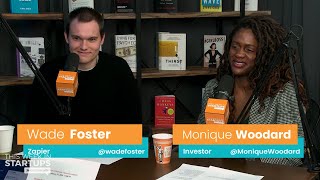
In this episode of This Week in Startups, host Jason Calacanis (Speaker B) is joined by Zapier CEO Wade Foster and investor Monique Woodard for a wide‑ranging discussion. They begin by dissecting Blue Apron’s dramatic fall from a $1.9 billion IPO valuation to a $58 million market cap, debating whether the failure was due to poor product‑market fit, weak unit economics, or timing of a public listing. The conversation then shifts to a sponsor segment promoting Dell for Entrepreneurs, highlighting free IT consulting, hardware financing, and cash‑back rewards for founders. The trio moves on to the controversy surrounding Lambda School’s Income Share Agreements (ISAs), questioning the accuracy of placement statistics, the quality of instruction, and the ethics of marketing potentially misleading outcomes. Wade and Monique compare the expectations of private‑market growth versus public‑market profitability, using Uber and other high‑profile companies as examples. They reflect on the inevitable early‑stage mistakes founders make, the mental‑health toll of operating under a public microscope, and the importance of keeping experiments small and learnable. A major theme is the democratization of software through the no‑code movement – Zapier, Webflow, Bubble, and the vision that a majority of people could launch startups without writing code. Wade shares Zapier’s hiring philosophy, its distributed‑team model, generous equipment budgets, equity and profit‑sharing structures, and the company’s approach to board composition and diversity (including California’s requirement for a woman on the board). The conversation also touches on angel‑syndicate investing, minimum ticket sizes, and diversification strategies. Later, Jason discusses podcast sponsorship dynamics, ad reads, and the value of aligning sponsors with the audience. The episode closes with light‑hearted advice on dating, a brief mention of unionization concerns in media, and a reminder that the show aims to provide a safe space for founders to speak candidly without “gotcha” journalism.
Chapters
This Week in Startups is brought to you by LinkedIn. To redeem a free $100 LinkedIn ad credit and launch your first campaign, go to linkedin.com/thisweekinstartups. BetterHelp, providing access to easy, affordable, and private professional counseling anytime, anywhere. Get 10% off your first month at betterhelp.com/twist. And Dell for entrepreneurs. Level up your hardware today and save up to 43% by going to dell.com/twist.
Hey everybody, welcome to This Week in Startups. It's what you always wanted. It's what you demanded. You love a news roundtable. You love when I talk about the news with really smart people. We've been doing so many great interviews. We've had these long-form 2-hour interviews, Dan Rose, George Zachary, the list goes on and on. And so many great interviews coming up that you're going to love, including Sarah Tavel from Benchmark, amazing guests we've had on the pod. Today we're lucky to have a longtime recurring guest and friend of the pod and friend of Launch, our investing company, Monique Woodward. She's an early-stage investor. Welcome back to the pod.
Thank you. Thanks for having me.
This is like your 5th or 10th?
It's only my 2nd.
No!
Yes, 2.
Oh, for the roundtable?
For the roundtable.
But you've been on panels and other things that have wound up on the podcast, I think.
Yes, I've been on panels and other things.
Yes.
Yes.
And you invest in early-stage companies. You were at 500 back in the day. You're doing your own thing now. Mm-hmm. You invest in what?
I'm owning the space around demographic change. So I invest in areas of demographic change, specifically the rising aging population, women who can drive companies to billion-dollar outcomes, and then the new majority where people of color become the majority in the United States.
Absolutely. That's fantastic.
Yeah.
Huge opportunity. People don't know this, but like the number one company in terms of raising money coming out of our accelerator, Black woman.
Yeah.
Crystal from Ruby Love raised $15 million coming out of the accelerator.
Yeah.
It's pretty amazing. Like, if you think about driving culture, you look at Instagram, you look at Vine, you look at Twitter.
TikTok.
TikTok. People of color are driving these platforms.
Yeah.
And then they're massively underrepresented in the funding space. This is a huge opportunity.
Exactly. Black culture is American culture and is pop culture, and that drives culture all over the world. And so we need to be investing in more people who are creating platforms and creating new, new companies. And we also need to figure out how to better reward creatives for creating things on TikTok and on Vine that eventually go viral, like, uh, Jaleel's, uh, Renegade Dance, or, you know, when everyone was saying eyebrows on fleek, which came from Vine.
Right.
Um, we don't have a good mechanism to actually reward people for creating things that drive the culture forward.
And they're, yeah, they don't have equity in those platforms.
Right.
They're making the platforms.
Yeah.
They don't have equity.
Black Twitter is driving Twitter.
Black Twitter is driving Twitter.
Twitter would be nothing if it wasn't for Black Twitter.
I have an inside story about Black Twitter. I think you know the story, 'cause I think you and I talked about it. There was a moment in time where trending topics were getting so, Black Twitter was driving trending topics so much, it was half of the trending topics. And then all these white people were like, "I don't understand what's going on." So the person in charge of it was like, We need to localize and personalize the trending topics so that you get San Francisco topics or for your demographics. They started personalizing. This is my internal— this is a long time ago. Yeah, but that's how influential it was, was that. And now I'm having it happen with Korean culture. My entire— I don't know if you're having this in San Francisco, but there is this Korean boy band, BTS. BTS.
Yeah.
And when these BTS fans go crazy, it just floods my—
Yeah, I see BTS show up in random Twitter threads.
I can't take it. Yeah. I can't take it. I'm just trying to find out what's going on with impeachment. I wanna know what's going on with Roger Stone.
I just wanna see Black Twitter. I don't wanna see VC Twitter at all.
I would like to be able to switch to Black Twitter. Sounds like it's gonna be more fun.
It is more fun over there.
It's a lot more fun. People, I just, I love, my favorite Twitter, NBA Twitter. NBA Twitter is the best Twitter because literally like someone like Harden flops and they just, it's every SpongeBob meme, every meme you can imagine of people falling over not gracefully.
Well, the players are so into it too, which is what makes it fun. Like you get way more interaction and stuff like that.
Especially Kevin Durant with his burner accounts. He's like, I'm still gonna do a burner account. OK, so our other guest today is back on the pod. He was on the pod, Episode 626, back in March of 2016, when he was trying to figure out this little company known as Zapier, which makes you happier. Tim Ferriss mispronounced it on his podcast. What's the proper pronunciation, so we're just clear?
Zapier. Zapier makes you happier.
Zapier.
Zapier makes you happier.
Yeah, you got it.
Because you can make zaps. Yes.
And they automate your day.
And they automate your day. I've been a huge fan, as you know, of the of the product for, oh, how long now? You started back in—
We started in 2011.
I was about to say, it feels like we're getting close to a decade.
Coming up on it.
Why did you start Zapier?
We, uh, my co-founder and I were getting hired, like little side projects to connect these apps for folks. So we built like a WordPress forms plugin that you could funnel leads into Salesforce. We had another one that was like PayPal sales into QuickBooks. And, uh, my co-founder was like, hey, we could probably just make an off-the-shelf thing where sort of your everyday knowledge worker could set this stuff up on their own without having to hire us to do this work.
It's such a brilliant platform. What's the footprint now of the company? You guys have raised money. You're making money.
Yeah. So we're 300 people, fully distributed. We only raised $1 million and change, but been profitable since 2014.
I remember one of your investors contacted me. It was like early days. They were like, what do you think of this thing? Is it ever going to be something? I was like, I use it every day. Like, I have my own, like, bots going in the background. I think it's brilliant. I don't know about monetization, but you figured out, obviously, you got 300 people, and you've only had $1 million invested into the business. So, the business is doing tens of millions of dollars?
Mm-hmm. Yeah, the last announcement we made was a year and a half ago. We had $50 million ARR.
What? With $1 million invested? Mm-hmm. And Monique and I are not on the cap table. No. You know what? Monique makes so great—
There's not very many people on the cap table.
Listen, Wade, after this, we'll see how this goes.
Alright, alright.
After this, I just want to say, you might need a board member who understands business and culture. You might, you know, maybe you can chip off of whatever we're talking about here, 50 basis points, maybe even 75 bps. She's good. She's good at what she does. All right. I'm just, I'm looking out for you, Monique.
Thank you.
We're in this together.
I was broke in 2011, so unfortunately, I wasn't too far behind you.
It's amazing. You are like the mega Pegasus. You turned $1 million $10 million in investment into $50 million a year in a highly profitable business that you guys own. The investors own 20% of the business or something? Ballpark?
Mm-hmm.
And the rest of you own 80%. God, you are the model.
That's amazing.
How did you do it? Was it just bootstrapping and being lean in the beginning?
Yeah, I mean, you know, we sort of took the money we need, we went through YC, and then did the seed round right after, and then sort of treated it like that was the last money we would ever see. So, you know, we had some— I think the most money we ever burned in a month was maybe $20,000, which is $20,000 a day.
Right now, Monique and I are falling in love with you, Wade Foster. The way we're looking at you right now, it's just like, uh, if we could swipe right. Swipe right on this startup. We have people who are burning $200,000 a month. The product is still not out.
Yeah, yeah. When you look at some of these growth-stage companies, it's like $200 million in like a quarter or something, like some of these, you know, Uber and Lyft, as they were growing.
Take it easy there on the examples, okay? We're not into profitability right now. Speaking of— well, there's no segue here, but this was the big story of the week, and I think it's pretty relevant. Tech journalists and the technorati went to war this past week, and Balaji, as you know, @balais on Twitter, he worked at Andreessen Horowitz. He's an expert on crypto and on biotech, and he was talking about how people were not covering, you know, the story properly. And a reporter from Recode who's only been there for a month, her name is Shireen, and I offered her to be on the pod, she declined. Balaji was gonna come on the pod, and then he canceled on us because Kara Swisher wanted to be on the pod as well. and there was just a little bit of me and Kara fighting for the same guest, and Kara and I had been fighting about this, but the tweet came, the DM came in, and he published the DM, and we all get these from journalists, and the journalists have been pretty negative, and I just said, based, and she said, hey, we saw your tweets on top, would you be available to chat more about this on a brief call? And he was sort of speculating that this is gonna wind up being another link linkbait, hysterical story. So I wrote, founders, my advice is never talk to journalists on the phone. You will likely be misquoted and your answers will not be as, I should put a little typo there, as crisp as email. There's so much gotcha journalism linkbaiting. Always use email and let the journalist know you plan to publish your answers on your blog. This is my advice to founders. Because the downside of talking to the press today in this kind of very negative environment is high. Kara Swisher comes out swinging, as you would expect, to defend her person. She's like, "Oh please," with a dopey snark. She's doing a great story, and yada yada. Then I go into it, and Kara Swisher and I get into it. We're friends. We're going to talk about it on her podcast. Long story short, the story comes out and boom, the story, no handshakes please, the tech industry is terrified of the coronavirus. The worst, she literally said, you know, we have this big debate that this story is gonna be linkbait and it's all downside for a founder to talk to her. And then she proves it to us. And then Balaji says, incredible, last week I called our journalist who I thought was writing a piece that would be a disservice to public health. Unfortunately, my concerns proved well-founded. Recode's virus piece ignores WHO and CDC, gets the science wrong, and focuses on the handshakes. Because here in Silicon Valley, people are saying, hey, let's not shake hands. By the way, that's what everybody's saying around the world. This is not unique to us. Monique, when you look at this craziness, oh, and then by the way, Balaji then goes on to dunk in a tweet storm because he has massive knowledge compared to a writer, a journalist has 5, 10% of the knowledge he's gonna have on this subject. By definition, a journalist versus somebody who spends their time on this. And he just fact checks the whole thing and dunks on her. Monique, you've been in the industry for a long time like me, a couple decades. Has it ever been this contentious between us and the press?
No. This is the height of—
Peak contentious.
Peak contentiousness. And I understand the media business model is sort of failing right now, right? And so they need those clicks. Investors don't want to shake hands is a much better story than the real issue around coronavirus, right?
Right.
It's a much less exciting story, but this is, it's become really difficult to talk to the press. And I've had my own issues with the media and with the press. And I was actually around the same time that this was happening, I was going to make a tweet about a complaint that I had about the press, but it got so, people were dunking on the press too much. And I just felt like, I felt bad making it. But people often reach out and ask you to make comments and you know it's going to take a terrible turn. Right. Right. So you know already that it's, that it's what you say is going to be misrepresented, misconstrued, or placed into a story that doesn't really give the full, the full weight of what you actually said.
No context.
So I think a lot of investors and a lot of founders have rightfully sort of pulled back from doing a lot of press and are sort of controlling their own media narrative, controlling their own story through podcasting, through writing, through other mechanisms. And there has to come a time when the press starts to pull back on this Silicon Valley is bad, these investors are terrible, these founders are dumb.
They're kooky, they don't want to shake hands. It's all becoming very personal and unnecessarily dunking on us.
Yeah.
And this is—
And I don't have particularly thin skin.
No.
At some point it gets to be a lot and gets to be very one note.
It's 9 out of— if you got 10, if you were contacted the last 10 times by the press, of those 10 times, how many times do you think it was a negative slanted story?
So many times.
7, 8, 9?
7.
Okay. I was going to say 8 or 9.
Yeah.
And I always write back to them. This is the 3rd time you've gotten back to— you've, you know, DM'd me. Yeah. Because they slide into your DMs like, hey, want to talk on the phone? I'm like, no, I'll talk to you. You ask my question here. And it's always the same thing, like, you know, Uber this, this, and I said, do you want to meet any of the 200 companies I've invested in since Uber that are doing really important stuff in the world? Because you haven't written about Blockable, you haven't written about CafeX, you haven't written about LeadIQ, you haven't written about RubyLove. Can you do a profile on one of these companies that's doing a great job? And, you know, as I tweeted, tech leaders are asking the tech press to take a pause and ask themselves if they could do better covering tech less hysterically and negatively. Which is very similar to what the tech press asked tech leaders to do over the last couple years, which is be better and act more honorably. Both parties can improve. Wade, you're a founder. Your company was not built off the press. You didn't need the press. When you're watching all this going on, how do you think about the press as a founder with not a lot of investors and a ton of revenue? Do you even bother with the press? Do you have a press strategy? How do you look at the press as somebody with an at-scale business?
You know, obviously the press is important because they can help amplify a story. So like, if you can do it well, then it's advantageous. But it is tricky. Like, you know, you're competing with things that get clicks. And so, you know, there's a lot of hardworking people in press that are trying to write good stories, do good work. But as a culture, as a society, we like watching a train wreck.
Right.
And so It's hard when you're running one of these businesses saying like, hey, I want to write a feel-good story when as a culture, like, that's not what we want to watch. We love watching this. People dunk on each other. That's what we like. And so there's— I think there's more systemic problem here where it's like, like as a society, how can we get our attention more on things that actually are generating positive, good things happening in society and try and just move more that direction instead of, you know, watching things fall apart all around us.
Is the ascension of podcasting, 'cause you kind of alluded to this, Monique, and I think it's a really interesting and subtle point, the ascension of podcasting in a way is a reaction to the dissension and the degrading of journalism in print, or journalism in text. They're not making any money there, they're quoting us out of context there, they're desperately trying to get clicks, so they will spin the stories to be as tribal and aggressive as possible, sometimes to the point as in this case where it's just a goof, it's a serious story and they made it goofy. Like you could really lean on Silicon Valley to give you very good insights. You could have gone to Google, you could have gone to Facebook and said, hey, do you have any data on how coronavirus is being talked about and does that relate in some way to how this is spreading? There's so many ways you could spin this. When we get back from this quick break, I want you to, Monique, tell us about podcasting in relation to what's happening now. We get back on The Swing Startups. Listen, time and place is everything. You know this, and especially in marketing, right? Location and time matters. But in today's age, when people are getting a million messages per minute, how do you catch people's attention? Well, with over 62 million decision makers on LinkedIn, LinkedIn Ads make sure your messages get through to the most relevant people because they know job titles, location, the size of companies. It's not just about awareness. LinkedIn Ads are driving traffic and engagement such as visits to a landing page. So this isn't just to get your name out there. This is to get an action, right? To get people to come to your landing page. So with precise targeting, SMB, small and medium-sized businesses, which include startups, can speak to the people that matter and not waste your ad budget on people who don't. LinkedIn ads are helping smaller businesses get massive results. And here's a video of our marketing manager, Maureen, creating an open office hours lead gen campaign. So she sets the company size since we're trying to get small companies, emerging companies, right? And she sets the title. You know what we want? We want founders and co-founders, of course. And after the targeting is all set, she creates the copy, the creative, and links it to a custom lead form. And within minutes, the campaign is up and running. So here is your call to action. I can't believe it. My friends at LinkedIn Marketing are doing it again. LinkedIn.com/thisweekinstartups for $100 in LinkedIn ad credits when you launch your first campaign. Terms and conditions apply because they're giving you $100. Obviously, it's a big, generous offer. And I just want to say to the LinkedIn team, especially the marketing team, thanks for supporting independent media like This Week in Startups. It means a lot to us and the listeners. And thanks for the hundy. I mean, everybody could use a hundy and everybody needs a little marketing, some more customers. All right, let's get back to this amazing episode. All right, Monique Woodward is back with us. You can follow her on the Twitter @MoniqueWoodward. Woodard, I'm sorry, I keep saying Woodward. Yeah, Woodard.
How long have we known each other?
Over 10 years. And Wade Foster is here. @WadeFoster on the Twitter. He's the CEO of Zapier, which makes you happier. Hey, and you're sponsoring the podcast. Thank you for that. I was really heartwarming to see, and super easy for me to do the interview because I use your product every day.
That's— yeah, it's easy to sponsor when you love the product.
We do use this every day, so here's how it works. The way I actually started using yours was, remember Twitter and Instagram got in the war?
Oh yeah.
And they wouldn't support it, so I was like, anytime I post on Insta, repost my image to Twitter. That was when I found out about your service. Yeah. Um, uh, so we were talking a little bit, Monique, about the ascension of podcasting. We can all sit here and spend 15, 20 minutes talking about this issue of journalism, and we'll talk about 4 more, 5 more issues in this great episode. And I can't misquote you here. You speak for yourself. People can see the look on your face when you say something. They can hear the context. When you say something to the press, You can say something like, "This isn't really important, but certainly, you know, X factor comes into play here." And they can take that, cut out "this really isn't the important point," and just take whatever you said and put that in the headline as the lead to the, you know, as the headline or the link baiting or whatever. Is podcasting the future of all this, you think? And subjects, you kind of alluded to this, that we're kind of routing around. —like I don't go to the press anymore. I am the press. I have 25 million listeners a year. I don't need to be on anybody else's podcast. I don't need to talk to any journalist ever. Why would I talk to a journalist? If I have something to say, I say it here. Audience comes direct, can't misinterpret me. Is this the future?
It's not just podcasting. It's podcasting, it's Substack, having your own newsletter, controlling your own email list, and being able to control your voice and what you put out into the world. So podcasting is certainly part of that. Definitely gives people who either didn't have a voice or felt that they were, they were misrepresented in some way, a voice that they can control. Right. So I think, you know, the rise of podcasts obviously, obviously started with like voice as a platform and having, you know, these devices in our home. Right. So that was like the first foray. Yeah. And then we started layering podcasting on top of that. And I think it will continue. I think people want to control the way that they are seen by, by the public. Right. And people want to be able to control what they put out into the public. And I highly recommend to founders, to anyone, you know, in the industry, control your message. Don't let the media control the message for you. Right. Right. And do it either by writing regularly, podcasting regularly, or some piece of content that you are able to like get out there into the world.
Yeah, you got to develop that muscle as a founder because you will get spun. I mean, look what's happening to Lambda School right now. I think that might be in the notes coming up, but they're getting savaged online, and luckily, the kid Austin who runs that, who's been on the pod, he's coming back on the pod to talk about it, and these journalists are never going to be able to talk to him. You know who's going to be able to talk to him? Me, because I'm not going to try to do gotcha journalism with him. I'm not going to have him come on and the first 5 minutes just grill him. I'm going to say, "Hey, tell me what's going on. How's the business?" Tell me honestly. And that's why our podcast is bigger than any journalist podcast in tech. We're gonna be just much bigger than the journalists because we're gonna get better guests because they feel more comfortable having a real conversation here. You listen to a lot of podcasts, Wade?
I've started to listen to more. You're getting into it? Yeah, starting to get into it. We started sponsoring stuff. I'm like, all right, I gotta understand the medium.
I gotta understand it. Yeah, yeah.
You have any you like? Well, Reply All is the place I started because those guys do really good. It's like fun, quirky, like interesting. It's weird, yeah. Yeah.
Cool stuff. Yeah, mm-hmm, so. People like that one. Yep, mm-hmm. I like to listen to the people who are the most polarizing on each side. Oh yeah. And I like to listen to them back to back. So sometimes on my drive home, I'll listen to Rachel Maddow and Ben Shapiro, and they'll talk about the same stories every day. Yeah. And one of them is talking about Bernie Sanders in one way, one the other, and then when they sync up is when it gets really interesting, because they might say it slightly differently, but they're both a bit worried about Bernie Sanders not being— you know, Ben Shapiro is like, Bernie Sanders can't beat Trump, he's going to just be like 40 people— Trump's going to take 40 states. And Rachel Maddow saying the same thing, like, we better be careful what's going on here, we're not going to get Trump out with Bernie Sanders. They were like in sync on that actual issue. All right, moving on. And Kara Swisher, looking forward to being on the pod. I think the solution to all this, by the way, for journalists, Do a better job. Balance your coverage 50/50. If you're going to do— for every time you're going to do one of these pieces that might be negative or critical of press, just try to write a profile of something promising. And remember, you know, why this industry is here, like building interesting products that help humanity. Like, we're not here to, like, destroy humanity, even though, like, sometimes that does seem to happen, that, like, a technology is bad for humanity. There are some good things going on here. Hey, SpaceX announces a plan to carry up to 4 private citizens into space by the end of 2021 or early '22. They announced an agreement with Space Adventures, a space tourism company. Price of the mission will not be disclosed. We have a quick video of the SpaceX cabin design. It's pretty beautiful. My friend Chamath partnered with Richard Branson on Virgin Galactic for low Earth orbit. And Bezos, obviously, is doing Blue Origin. Virgin plans on sending customers to space later this year. Blue Origin, Virgin Galactic, about $200K. And I guess the question is, is this— you guys, would you ever, if you even had the money, consider doing this, Wade? I mean, is this appealing to you?
Like, as you can afford this, actually, as a kid, like being able to go to— like, how cool would it be to look down on Earth?
That's pretty appealing to me, except for the danger.
Well, sure. But like, I don't know, like you get to be one of how many people have ever done it. I wouldn't be the first, but maybe the third. I don't know.
You know, First to third is kind of the same.
I think there's some people on the same— I guess that's true. So maybe I'll be on the third flight. Yeah, yeah, no, not for me.
Yeah, 3,000 flight, no problem. Yeah, I'm gonna do the 3,000 flight. I'm gonna look at how many blow up because I think it's, you know, I think it's a 1 in 500 chance these things blow up. Yeah, so I— that's, that's not my kind of odds. Yeah, I mean, I was actually thinking about the Kobe Bryant situation. Tragically, I think it's 1 death per 100,000 hours of helicopter flight. Yeah, which That seems very safe. Unless you're Colby and you've been flying helicopters for 30 years, you know, 5 days a week, and now all of a sudden it looks like maybe you got a 1 in 10, you got 10,000 hours under your belt, you're starting to—
Yeah, those odds are starting to not look so good.
Exactly. It's sort of like the odds on a motorcycle. Like, you know, it's really about how often you're on those things. Would you do it? Is it interesting to you at all? No. Not interesting, right? No, you want to be safe.
There's— it's not even the safety, it's just like, why? Why? There's so much stuff down here. Yeah, it's pretty good down here. I think it's pretty awesome. Yeah, like go to Paris, go to Bali.
Like, $200,000, go a lot of good places, right? Yeah, there's a lot of Aman hotels that cost $1,500 a night. I, I look at $200,000 right now, I think that's 100 nights in Aman hotels. You know what the Aman hotel is? You're gonna start going to that? Absolutely. Yeah, yeah, when you Now that you're making $50 million a year and you're profitable. Jesus, wow. Probably more. You could take this and publish.
I'm Mr. Minimalist over here.
I know. What do they call those people? What's Tim Ferriss doing now? They're all doing— not Socratic. They're doing like a Spartan kind of thing. They're trying to be— I mean, minimalist.
I'd like to say—
There's another word for it. I forgot the other word.
I don't know what the other word would be, but yeah. Stoic is good. Are you stoic? I mean, I've read some of the stuff, but I wouldn't say I'm like Tim Ferriss levels of stoicism. But yeah, I think it's healthy. Why? Well, I think it allows you to have perspective on things, which is good, so you don't always get caught up one way or the other. If times are good— Too pragmatic. Yeah, times are good, times are bad, whatever. This too shall pass.
This too shall pass, from Lord of the Rings. There you go. All we have to do is decide to do with the time we've been given.
Yeah, there you go. I like that.
That's all. Yeah.
When I hear that quote, I get a little emotional.
I know, right? Wow. It's good. You're going to orbit the Earth 2 to 3 times, 250-mile height, which is the International Space Station. I think Virgin Galactic is going to be kind of low. I think this is going to become a thing. I wonder how many people have already signed up for Virgin Galactic. And by the way, the stock has tripled. I don't know if you saw that. They haven't even done these flights yet and they tripled. But from what I understand, they have a large number of people who've either paid in full or put the deposit down. Do a quick search. Tell me how many people have done this. And let's go on to the next story, which is Kickstarter employees have unionized. Yes, the average salary is $97,000 at Kickstarter and they've unionized. 46 employees voted in favor, 37 opposed, which is kind of interesting in and of itself. And the debate's been a source of tension at the company for a number of months. But the reason they're doing it seems to be that there was a lot of tension about which projects they take. So it's very easy to look at this, and I sort of dunked on this, as I'm prone to do on the Twitter. I said, "Thank God the union was approved. Not sure how much longer these Kickstarter employees would last under these conditions." conditions. And then they screenshotted that the average salary there is $97K. Um, but I actually think I would rather see these people get stock and have it go public. This is really weird to me that people who are making a ton of money need to have a union when they could leave this company and have 20 other jobs. Like, tech workers need a union? What do What do you think, Monique? Am I missing something here? Is this my white male privilege speaking?
I'm not opposed to tech workers unionizing.
Right. What is it?
I'm actually thinking, I think it's net positive. Okay. Right. I think if tech workers start to unionize, you know, you'll have better issues around treatment, like as you get older, getting pushed out of a tech company. Okay. Age discrimination. Age discrimination, all types of discrimination, sexual harassment, all of those sorts of things.
But aren't all those actionable already? Like, why do you need a union to, step in to do that? You can just sue people if they do something bad like that.
You can, but it's really hard to sue a massive tech company that has a lot of money.
Really?
Even as a person who makes $97,000 a year, which is not actually that much here in San Francisco.
I wonder. I think there's a lot of people who take it on contingent, but I'm just wondering, would you want somebody, as a high-paid tech worker, would you want somebody in between you and your ability to negotiate? Because my understanding is a lot of these companies want this to happen. This is the back channel that I heard. Okay.
Give me the back channel.
I'm giving you the back channel. This is fantastic. Now we don't have to negotiate salaries anymore because everybody with 5 years gets $97,000, everybody with 6 years gets $103,000, everybody with 12 years gets this. We no longer have to have some, you know, otherworldly developer who is, you know, the 10x developer, which does exist in the world. You can have a 5x or 10x of anything. 10x salesperson, 5x salesperson, 5x marketer, 5x, 10x. We don't have to pay them more because we just look at the union chart and say, "Well, the union says this is what we pay you." And when Gawker and all those, all the media companies, which are like sinking, as we talked about in segment 1, they're all sinking and unionizing at the same time. So they're literally fighting over like the last little bit of, they're literally fighting over the remaining lifeboats on the Titanic. That's the way I look at it in the media sense. In this sense, these things are going up and to the right. What do you, what do you think?
Yeah. I mean, I think the fact that that is the back channel kind of speaks to the need for better worker protections. Yeah. Right. Is it, is it that sort of making the case?
I did think that actually, it's interesting that we were thinking the same thing. And I thought to myself, well, I think they would rather not deal with a union person. Yeah. Like coming to their office and be like, I represent 3,000 developers at Google. They all want more Kind Bars. And then I would just be like, okay, you know what? We're now turning all the food to paid. No more free food. Like, that's what this is going to turn into because the benefits that people have at tech companies are absurd. Yeah. So what is the union going to do and be like, Google, you're spending— Google spends $17 a day, I think, on lunch for each person or something crazy like that. Just lunch. Like, what do they do? Come in and say, we want you to spend $24? I don't know. Wade, what do you think? If your employees came to unionize, would you be like, "OK, fine," or is this necessary?
I don't know. The union I'm most familiar with is the players' union for Major League Baseball. Clearly, those people are very well paid. I mean, highest of the highest. Absolutely. However, you can look at how the Players Association in Major League Baseball are not happy with the agreements they have, because when you're early in your career, your salaries are depressed. So you see a player like Mike Trout, who gets paid basically nothing for the first 5 years of his career, but he's the best player in baseball. But that's what the union has negotiated with owners.
So he can't be outside the union.
Yeah, so he can't.
Everyone is a part of the union. That's what I want to understand. Can you be outside the union? If LeBron James said, "You know what? I don't want to be a part of the union." Well, I'm not really sure if he can.
I think he has to be a part of the union.
I think you have to be, right?
And it creates this weird incentive where you sort of— in Major League Baseball, your career arc looks like the first 5, 10 years of your career, you're playing at the top of the game, but you're under these union issues where you can't be a free agent. Then by the time you're a free agent, you're sort of over the hill a little bit. So like, you clearly have earned that salary and you go out and try and get one, but no one wants to pay you that because they don't think you can deliver on it anymore. So what's happened is what the union has negotiated in Major League Baseball isn't what's best for the players. So it feels like you can have unions that do a good job of negotiating on behalf of their workforce, and you can equally have unions that do a bad job of negotiating on behalf of your workforce. So in my mind, unions are neither good nor bad. It just is how capable are the people who are running those of advocating for the workforce.
It's fascinating to me, in the NBA, they look at the rookies because they also have capped salaries. Yeah, they want those players. And they're like, this rookie is an asset because it's— oh, they're getting paid $2 or $3 million, but they're performing better than this $15 million, 32-year-old. Mm-hmm. That— and it's like, well, that's like unnecessarily insane. Like, why would a person who's performing over have their salary capped? It's because the union negotiated that. So for other protections, like Hey, if you're going to drug test people, or there are times when a group of people saying, "Hey, enough," because with the NBA players, they wanted to take blood samples and put wearables on them and just have every single piece of data on them 24 hours a day. And they're like, "Yeah, no, I am not a piece of livestock here where you're going to put me into a pen and literally study everything. I mean, this is really oppressive." paradoxically, some folks are opting into it because they want to optimize for health, and they're doing blood tests on their own and hiring third parties to do it. But there's something weird about like, my boss is taking my blood test and like knows my sleep patterns and everything every day of my life.
Yeah, there's something very weird and invasive about that.
It feels invasive, right? And so that's what the Players Association looked at. And then also NBA players can't smoke weed. What? Yeah, like San Francisco, I can't not smoke weed if I walk down the street. We had a meeting in the studio the other day, we opened the window, the guy was blazing a joint that was so fat that the whole room smelled like weed. This poor guy sitting by the window couldn't pitch his company. I'm not joking, he was contact high. Yeah, well, congratulations to Kickstarter. Kickstarter is also like a charming company in a way because They decided they would be a benefit corporation, never go public or anything. So I think Kickstarter does not— is in no way representative of tech actual companies. I think that unionization of tech companies is going to fail because at a company like Kickstarter, which is a socialist company, like literally like a communist socialist kind of company, they don't want to go public. They don't ever want to pay their investors back. They've been very public about they want to be a B Corp. They would be a nonprofit if they could. They were upset about a punch, a Nazi book, I think, either being taken off or put on. So the actual employees want control over which projects they put on Kickstarter. So I think that's the core of this. Interesting. Which is even more interesting. It's not about pay. I think it's about what— if I come to work at Kickstarter, do I want to have a Ben Shapiro or a Milo Yiannopoulos Kickstarter up on there?
You know, like, or I want to have a say in the sort of moral or ethical work that we do as a company. Yeah, right.
Which is really getting interesting here. I mean, I don't know if you saw the Oracle thing with Larry Ellison. It's like hosting Trump and like somebody who did a petition. I was like, that person doesn't want to work at Oracle, apparently. Can you imagine? You're at Oracle. Larry Ellison has a fundraiser for Trump, and then you go on to the Oracle My understanding is this person went onto the Oracle chat system or whatever and circulated a petition. It's like, yeah, you work for Larry Ellison. The guy owns half the samurai swords in existence. Guy bought every piece of samurai armor in the world. There's no samurai armor left. I was talking to another billionaire. He's like, you can't get any samurai armor. I'm like, what are you talking about? He's like, all the samurai armor is in— That's first world problems right there. Literally billionaires. Larry Ellison cornered the market on swords and armor from like feudal times in Japan. You get new stuff. You want to get a new samurai sword, you can get it.
Just not the old stuff.
You can't get the old stuff. He's got it. It's either in a museum or Larry Ellison's backyard. Well, I was in the market for some samurai.
Well, you know who to go to.
I know.
I think you can convince him. You know what, I'm looking at a new—
I'll show up at the Trump fundraiser.
I have a new SaaS company you can look at. It's Samurai as a Service. I'm actually the co-founder. You basically just take out your phone, you just get a samurai shows up. How about that? It's like $200 an hour. Listen, some people have bodyguards. I just walk down the street with a samurai. You can't carry a weapon, but you know, a gun, but you can have a samurai with a sword. How great would that be?
That would be amazing.
This is what I'm gonna do if I'm ever a billionaire, Wade. I'm literally, when I'm a billionaire, I'm going to get 2 samurai guards. Just walk around. I'm just gonna walk around with 2 samurai. And people go, can I take a selfie? And the samurai's gonna go, shh. Short haircut and like look at him.
Okay, you do sound like— Yeah, I always wanted more of a jam band behind me. You know, pump up your life a little bit. I think that would be cool. I'm into it. Yeah, really?
Yeah, just have like, uh, there's like a commercial about that, you know, a guy like Bob Weir behind.
Yeah, it's like, you know, he spills his coffee on his shirt and it's like just needs a little bit of a pick-me-up or something.
Absolutely. Yeah, Blues Traveler. Yeah, get a harmonica. Who's got the harmonica? That guy. That'd be great behind you. All right, when we get back, We're gonna talk about a great new world. A lot of people making products for old people or aging people, which I am gonna be part of. I'm gonna be 50 this year. It's over for me. We're all gonna be part of it. We're all gonna be part of it. Eventually. I hope I'm gonna be part of this because I'm hoping that I can make it to 120 years old. I want to be— what do they call those zones where the people make it to 120 or something? Blue zones? Over 100? No. No, no. You want to go out? Yeah. On top of your game. Put my head in the oven. I like— all right, that's fine. It got dark. We'll be back in a minute. Listen, if you broke your arm, would you go to the doctor? Of course you would. Mental health, no different. If you're suffering right now, you got to get some help. You may have some stuff that you're dealing with at work or at home that you need to talk to somebody about. And BetterHelp is the world's largest counseling service for improving your mental health. And there's a reason why they're here on this podcast. Because they know a lot of people in our audience are people who are optimizing their lives to be high performers. Well, mental health is part of that. BetterHelp is going to help you assess your needs. They're going to match you with a counselor from their network of licensed, accredited, and board-certified therapists, and you can start communicating with one in 24 hours. It's that simple. This is not a crisis line. It's not self-help. If you want to get a book on Audible, or if you got a, a crisis I have this issue, you know what to do. You know, dial an 800 number, one of those emergency lines. No, this is professional counseling done securely online. And with BetterHelp, you can access a counselor network with a broad range of expertise. There's somebody for everybody in there. And you can avoid the 9 to 5 of traditional therapy where you got to take off from work, you got to miss what's going on. No, you can message your counselor anytime, which is what we want to do. And you can easily change counselors if you need to. And this is one of the reasons people don't get help is because they have a therapist that it's not a match, it's not a fit for whatever reason. And then you're like, oh my God, I gotta go through this whole rigmarole to try to get a new one. Well, BetterHelp will quickly change counselors if you need that. And you can schedule video sessions or phone sessions with your personal counselor. It's super easy. You'll never have to sit in that uncomfortable waiting room again. Nope. You can do it all online. Get that therapy in the comfort of your own home for less than a traditional counselor. BetterHelp is on a mission to provide everyone with easy, affordable, and private access to professional counseling anytime, anywhere. So get started today. This Week in Startups listeners get 10% off their first month at betterhelp.com/twist. That's betterhelp.com/twist. H-E-L-P. Let's get back to this amazing episode. Alright everybody, welcome back to This Week in Startups, our news roundtable. February 21st, 2020. Monique Woodard is with us. And Wade Foster from Zapier, which makes you happier. Gray new world. Is the gray world— is that a new term for this industry? Services for people over 50 or 60?
You know, I think people are calling it a lot of different things. I've heard people calling it elder tech.
Elder tech, I heard it.
Or calling it the longevity economy. You know, I just happen to call it the gray new world. Yeah, love it. Thank you. Okay, boomer. OK boomer.
OK boomer. It's like they're saying OK boomer now. Yeah, exactly. To Gen X. How old are you, Wade Foster? Are you 32? 33. Yeah, I got that. So you're a millennial or you're on the—
I'm a millennial.
You're a millennial. So you would say OK boomer to Monique and I in an ironic way, knowing we're not boomers. Ah, okay.
That's how it works. Got it.
You're like, yeah, I don't participate in this thing. So in this study done by by Cake MX, whoever that is. 500 people, age 55 to 70. Uh, I don't know who they are. Um, it's me. That's your fund.
I did the study, Jason. We talked about this at dinner. I didn't know what Cake MX is.
Is Cake MX your company? Sorry, that threw me off. I knew you would do it. You did a report on it, but I didn't know what Cake MX is. Okay. So Cake MX is yours. Yeah. This is your 2020 report on aging.
We're very good friends. We actually are. Uh, what does CakeMX stand for? It's cake mix.
Got it. Perfect. Uh, 72 million boomers in the US spend $3.2 trillion annually. By 2030, 20% of the US will be 65+. I didn't know that. We have an aging population. And they spend 27 hours a week online. $7 billion in online shopping. And 10,000 boomers returning 65 every day. 79% plan to age in place, not move to a retirement home. Why is that last piece so important?
So previously, a lot of people would expect to move into an assisted living facility, a retirement home, or some other sort of place outside the home as they age. But what we're now seeing is that people are actually wanting to age in their homes and stay in their homes, which brings up— Which makes sense to me. Yeah.
I don't want to leave.
Well, see, you'll be aging in place. But it brings up a lot of interesting challenges and issues. So how do you help people remain safe in their own home? How do you help them continue to age as they lose mobility and maybe can't move up the stairs? So one, I think there are lots of opportunities to help them age within the home. How do you help people remodel their home so they can stay in it longer? How do you help people continue to afford their home on a retirement salary.
Right.
Right. Reverse mortgage.
Exactly.
Airbnb being part of it. Right.
Or something like Silvernest where I'm an investor. Where— What's Silvernest? Silvernest is a platform that matches, uh, like-aged roommates. Um, so that you can rent out a part of your home. So it's Airbnb for seniors. What a great idea.
Yeah. This is one of the things like where I live here in the peninsula, I live in the Hillsborough, Burlingame area and Very few homes come up for sale because the way we do taxes here is taxes are based on whenever you bought the home. So if you bought the home in the '70s or '80s for $1 million or $500,000, you're paying 1% of that. Then the home becomes worth $5 million or $10 million, and you can't leave because wherever you go, the taxes are going to be so high. So people are living in 4,000, you know, 5-bedroom square foot homes with 2 people, the kids, they're empty nesters, and they need to do something with those extra rooms. And so some of them are doing Airbnbs or they put what's called an ADU, accessory dwelling unit, called an in-law unit.
In-law house. In-law house.
They move into the in-law house, they rent the main house, and then that's how they make their money, right? So for their retirement. And we're totally seeing stuff like medicine and prescriptions go online. Definitely you have Nest Cams and remote telemedicine happening. Yeah, this is gonna be a big space. Any other companies you find in here? There was one company we had on the podcast that's doing loneliness for women over 50. Yeah, Revel. Revel, that's a great idea.
Revel, Papa. Papa's also focusing on social isolation, sort of grandkids as a service. So having college students come over, run errands, play chess, you know, do all the things that grandkids might do, but You know, people, families are much more distributed than they were before. Right? Right. So you may live 1,000 miles away from, from your grandparents. Right. And so it's creating these really interesting challenges. But that's where I think startups can step into the middle of and create platforms and services that are specifically targeted to this massive group. And we're also on the cusp of a care crisis. We don't have enough care workers to actually take care of people as they get older and care, home care, home health care is a huge turnover industry and people are tremendously underpaid for the services that they're actually providing. So how do we help people access better care as they get older?
Yeah, we had, we had an investment in Home Hero, which was trying to automate this. It didn't work out. And then we had Seth from Honor on the pod as well. He's trying to make home care automated. That's so expensive, so hard to do. But what I love about Poppa and some of those other platforms is they're not medical attendants, they're just people who run errands. Exactly. And that loneliness is such a big part of this, and online can solve that. Um, yeah, wow. What a great space.
Yeah, it's a great space. It's one of the major demographic changes that I think are changing the way we should be investing.
Uh, for those of you wondering, uh, Lisa from Revel was on episode 970, and, uh, Andrew Parker from And Papa was on episode 875. We're getting to the point now, Wade, that everybody's been on the podcast. So anytime we mention every company, we just say a number. You're like, oh yeah, Wade. Wade was, uh, 626. 626. That's your number. 626. 626. I'll have to remember that. Just remember 626. Anybody asks you, just say 626, look it up. 3 figures. So are you going to raise a fund around this, you like a specific thing?
Yeah, I am going to raise a fund around that demographic change. Space. Aging is certainly a part of it. It won't be just aging. Right.
You said before, yeah, you want to also do changing demographics.
I think there are also other changing demographics that are going to be areas that investors should be investing heavily in. Yeah.
We actually have a company in our accelerator called Nude Bar, and Serena Williams also was an angel investor in it. And they make undergarments that come in 12 different shades because Erin, the woman who's the founder, was a Knicks City dancer, my team, and she shows up and they give her like a pair of stockings and leggings for her outfit and they're beige. Yeah. And she's Black. And there's many tones in the skin tones now because we have so many people who are mixed race. My kids are mixed race. I mean, like so many— Charles— so many people are marrying each other and having mixed race kids. You don't even have underwear that matches for women. Yeah, I mean, cosmetics is also—
cosmetics and beauty have also been huge industries. The rise of Fenty. Fenty? Fenty is Rihanna's beauty brand. Oh, right. Yes. So it was one of the first that came out with like this huge array of shades that would actually match skin tones that weren't light, medium, and dark.
Right. That literally were the three tones. Right.
They're like— Mented Cosmetics, which I invested in, beauty brand for women of color. Right. Also trying to give you better lipsticks that actually match browner skin tones, better makeup. Amazing.
Like such a huge opportunity. And all these demographics just totally underserviced. Exactly. It's like when you put a product out that's good, if there's no other competing products, you're competing against nobody. It's like just a perfect path to victory.
Yeah. Consumers are super hungry for this. So I think this is a massive opportunity. Huge.
All right, Twitter is combating fake news with some new features. NBC News put up an article. There's a leaked Twitter demo, and they plan on putting— and let's see, they're testing new ways to fight this. And Ben Collins-Sussman says here's what it might look like. Might. This is his design. These are screenshots from that were left on a public testing site. Twitter confirmed they're possible iterations. So these are not official yet, but Bernie San— it's a Bernie Sanders tweet that says, "40% of the guns in the country are sold without any background checks. We have to end the absurdity of the gun show loophole." Harmfully misleading. Twitter community reports have identified this tweet as violating community policy on harmful misleading information tweets. Visibility reduced. That's bonkers. And this shows you how hard it is to police speech. Yeah, like, this is not Twitter's job to do this. I mean, just from this tweet, this will never work. What do you think, Wade Foster? You're glad that you have a platform.
I'm glad they're trying. Yeah. It's a Herculean task, but Twitter for so long, it hadn't changed. It hadn't tried to do anything. I like seeing technology companies at least make an attempt. Yeah.
I like that there's an attempt to filter out fake news, but I worry that this can be weaponized by troll farms. Of course. Right? Because it is community-driven rather than an editorial board or something. Something like that. I can see this easily being weaponized by people who have wrong intentions.
[Speaker:AARON_ROSS_POWELL] There's an interesting article on Wikipedia I read a while back. I forget where it was, maybe the New York Times or something like that, where they talked about how Wikipedia has managed to remain somewhat neutral in a community-driven way because anyone can make changes to that. It really dug into how 2 polarizing sets of people can attack a controversial topic inside of Wikipedia and come out with it something that reads fairly, fairly neutral.
[Speaker] That's because they pause the page, they lock it down, they've got this like cabal of like early editors who kind of all agree, like librarians. I think the co-founders, Larry Sanger and Jimmy Wales, co-founders of Wikipedia, really Larry Sanger was the person who actually came up with the concept, and Jimmy Wales took credit for it because he paid for the servers. Um, just a little point of history. And they locked those pages down. Those people are all librarians in that early cohort. They went to people with library science degrees. So what's actually happened is when a page gets, you know, really controversial, they just lock it down and they don't let anybody's edits go through. Yeah. And then if they— they'll unlock it like a month later if there aren't a bunch of edits. If it happens again, they just lock it down. Any controversial page. And here's where it gets when you want to talk about like how insane it is to try to do this. The potential UI: Question 1: Given current evidence, is it likely this tweet contains harmfully misleading information that could cause real-world harm to individuals, society? Likely harmful, misleading, unlikely harmful, misleading. Question 2: What percentage of the community members will answer the same as you? The more accurate your answer, the more your report will count, the more you receive. Question 3: And they have a slider from 0 to 100%. What about this tweet does or does not make it harmless bullying? This is the kind of interface that's so easy, as you're saying, to just game. I mean, the Russians are like, "Thank you. Clear shot on goal. Everything Trump says is 87% true. Everything that Bloomberg says is 14% true. Block her up." Isn't this already built into Twitter that you can reply and retweet people and fact-check them? So why not just— If I was Twitter, you know what I'd do? I would hire a third-party company with 20, like, serious researchers on it, make it public who those researchers were, and then have a Twitter account called @FactCheck, and I would make that account verified. I'd explain what that account does, and I would say, every day, look at the trending tweets and reply to them with a fact check based on what these 20 people say. We have gone away from the age of respecting expertise to thinking the crowd knows better. The crowd does not always know better. Quotes from the article: "Disinformation or misleading information posted by public figures will be corrected directly beneath the tweet by fact-checkers and journalists who are verified on the platform and possibly other users who participate in the community reports." Okay, well, that was just my idea. Yeah. Yeah. Oh, I didn't realize you already did it. There you go. In one iteration of demo, Twitter users can earn points and a community badge if they contribute in good faith. I would not make this a community thing. I would literally hire 20 experts and let those people debate it on a different forum. And actually, I had this idea. I bought the domain name annotated.com and I still own it. And my idea was to just hire 20 fact-checkers, maybe one on our team would do this, and just have them annotate stuff on the web they think is right or wrong. How would you do it, Wade Foster? What would you do here? What would your approach be? You think this is going to work? You think they're going to execute on this? You said it's nice they're trying. I agree.
Yeah, I, I mean, it feels like it gets heavily slanted towards the majority opinion, like the majority belief will stand out, uh, and so it could reduce the voice of folks who are just simply underrepresented, which, you know, I don't know if that's good or bad. It seems like there's— we should have all viewpoints represented here. Um, I certainly like the idea of having fact-checkers like literal experts that are digging into these topics replying to it. Maybe it helps, but I don't know. It seems hard. I'm skeptical.
Alright, when we get back from this quick break, Blue Apron went from being worth $1.9 billion to a market cap of now $58 million. The stock is down 97% since their IPO. I want to know, is this a bad sign for DoorDash and Seamless, or are those different types of companies? And what we think went wrong here. They raised $200 million of funding before the IPO, and is this indicative of some bigger picture? We can spin it into the fight between DoorDash, Grubhub, and Uber Eats. We get back on the Sweetest Stories. Hey everybody, have you been thinking about upgrading your workstation? Do you want to be more efficient at work? Well, Dell for Entrepreneurs wants to help you level up your tech hardware. This program was created to support founders, just like my program, Launch, and they do it by providing resources and tools that will help your startup grow and scale your technology. Scaling your company means more than just hiring. Of course, hiring is important, but you want to get the right equipment so each of those hires is getting the most done with, let's face it, the least amount of effort. You want to be efficient. I love these Dell monitors. I've been obsessed with them for a long time, and that's actually how the relationship started. Somebody on my team mentioned Dell for Entrepreneurs. I was like, by the way, open your eyes. Everybody here has a giant Dell monitor for a reason. Well, founders that register for Dell for Entrepreneurs will have a wide range of free resources for startups, such as free IT consulting from experts who are ready to help you with any IT-related question. Your needs, your projects, doesn't matter what size. And you're gonna get access to capital for buying hardware with Dell Financial Services. They're thinking about founders and entrepreneurs, and you know that that capital is precious. And if you can use Dell Financial Services to spread out those payments, well, that's going to put you in a low monthly payment as opposed to a giant capital expenditure. They give you great rewards like earning up to 6% cash back on Dell products. So here is the CTA, the old call to action. Every founder should take advantage of this program. Right now. Level up your hardware today and save 43% by going to dell.com/twist— dell.com/twist— and registering for Dell for Entrepreneurs. That's dell.com/twist, and you'll save up to 43%. Tons of great products from Dell, but the monitors— ooh, I love those monitors. Thanks again to Dell for supporting independent media like this podcast. All right, Blue Apron continues its, uh, fall from grace. Wow. $1.9 billion at their IPO. Now the market cap is $58 million. Stock down 97%. Was this just a bad business model or a bad product-market fit? What do you think?
Did you ever use it? I've never used Blue Apron. I used it.
It was actually good. Yeah. We didn't keep using it, but we did use it and enjoy it. I could see—
There's the problem right there. Yeah.
Well, I think if I was like a busy person, I would use it. I'm not actually that busy, and I like to cook, but I like going to the market and buying stuff. I don't like somebody else doing all that. I enjoy going to the market. I'm like one of those people who likes to go to the farmer's market and look at stuff and pick it. That was our problem too.
Yeah, same. My wife wants to pick out the produce. She doesn't trust anyone else to do it for her, and so.
Yeah, are there enough busy people? Yuppies who want this.
That like to cook? Who actually do.
Have the time to cook. Have the time to cook, so won't order things online. right? And want to have things delivered to them in a box. And for how long do they want to do that? And pay a premium for it. And pay a premium for it.
Ah, right. So it fits between ordering on Uber Eats and DoorDash, Postmates, or buying your own food and cooking it. It's not that much different maybe than buying your own food and cooking it. Mm-hmm. And I—
And if you're busy, you go to DoorDash or Uber Eats.
Or you just go out. Right. Or you go out to. Yeah, it seemed to fit, it didn't fit. What I think is really interesting, and I do, is I go to a couple of shops locally that prepare food and they freeze it, 'cause when you have kids, you get busy. And they have this great mac and cheese, this great eggplant parm, the girls love it, I love it, and I'll just keep that in the refrigerator, and then if we're busy, I can just pop in the mac and cheese, eggplant parm, from, you know, maybe, you know, roast chicken and boom, we're done. And I like that kind of a service that would keep your refrigerator like that. And there are some of these new stoves that are doing like pre-prepared meals that you can slide in. But I guess they may be up for sale. Yeah, this just seems like going public before you have product-market fit is a bad idea. That's how I would file this.
I mean, the unit economics of this business were just not good.
It was difficult.
Yeah. This was always a difficult business to run.
And I just think the public markets didn't drink the Kool-Aid.
Yeah. You know? Yeah. I mean, the public markets, say what you will about them, and there are weird moments that happen, like all these people shorting Tesla and then all these people who are long Tesla. Like, these are very weird moments. And in a way, it's just like people betting. There's a huge incentive system. Money, and people can bet against each other as to what they think is going to happen, just like they do in sports, and the betting line moves in sports. Well, the betting line here said, "I don't think that this has enough margin to scale." And then with Uber, they did the same thing. They said, "You know what? We would like you to prove to us that you can be profitable." And what did Uber do? They were like, "OK, we're going to sell some unprofitable units. We're going to shut down some offices." And every time they do that and they close the gap, the stock goes up $2, and I'm like, "OK, if this is what it's going to take." By all means, I still have most of my shares. Let's go. Yeah, let's make it profitable. That's what the public market wants. And I think what we found is the perfect system. Private markets go for growth. If you have good unit economics, go for growth, build the biggest pie possible. And then public markets, you got to shift gears a little bit. So maybe it's— it can be too— we can make that happen a little smoother. But I do think in the private markets, if there's enough private funding, why not go for growth if you have good unit economics? But you did it differently, Wade.
Well, yeah, I mean, I think eventually all businesses are meant to generate cash. They have to generate some cash, enough to pay your expenses. Yeah. And in the private markets, perhaps you can sort of delay that, but not for forever. Eventually, the sort of tastes of, you know, the private markets will change. And if your business isn't set up to manage that shift, you're going to be caught, you know, with the tides going out on you.
I assume that your business is either very profitable or could be if you chose to. When you look at the end of the year and you say, hey, well, we could have, you know, whatever amount of money coming back to shareholders distributed to pay taxes, do you just look at that and say, well, I'll just invest it in the business?
Yeah, we generally are trying to figure out, hey, where are the new areas we can go invest in? Right. And chase those things.
Right. So, you like to do what Bezos did, which is the $1 profitable company.
Yeah, it's like, you know, you want to sort of manage it. We set a baseline for the year and say, hey, this is where we think we're going to be at the end of the year. That's our budget. Perfect.
Did you ever go over and say, hey, let's be more aggressive? Like you just were too profitable and like, you know what, let's just see if we can deploy this money towards—
We've never tried to spend more than that.
Not more, but if you got close to it, do you say, like, let's try to invest more? Have those moments happen where you're sitting around a table saying, how can we grow the business faster? How can we put more money?
Oh, sure. Yeah, we'll ask those questions of ourselves, but we're always looking at the end of the day, is this fundamentally sound? Is this a thing that can generate cash over the long haul? We're not trying to come up with plays where it's like, well, we hope that some third party is going to decide that we can keep having our fun over here. We wanna be able to control our own destiny.
[Speaker] Yeah, smart. I had that happen with the podcast itself. I was like, well, the podcast is doing really well. Let's try, and I did it last year, I was like, what if we spent 10% of whatever money we make promoting the podcast? So we just would promote clips to people we probably don't know about the show. So we'll take some clips from this, and every episode maybe put $1,000, $2,000 to promoting those clips that then get people with the thing. And since we started doing that last year, the number of people who stopped me on the street went up 5x. And it's like, oh, there are people who weren't fans of the show who are running into the show. They're running into a great guest. And then we pull them into the longer episode.
Yeah, you get more casual fans to check you out.
Exactly, because people are busy. And marketing actually works. Lam to school in these ISAs, income sharing agreements. Have become quite controversial. Just so people understand, you can go to a school called Lambda, L-A-M-D-B-D-A. They will let you pay, I think, $20,000 in cash. We had Austin, the founder, on. He was on episode number— come up in my chat in a minute. Anyway, Austin was on the pod, really smart kid, and he's very vocal on Twitter. They will let you pay $20,000. I think it's a 9-month program. You pay it up front, or you can pay a percentage of your salary that's higher, and that winds up being $30,000. They were bundling all of these ISAs, income sharing agreements, basically like student loans, and bundling them, selling them to people who were like, "Oh, wow, we're going to make whatever, 10% on this, not 4%, it's a good deal." So they would bundle them up. This, to me, sounded like a good use of the financial system. The issue that's come up now, and again, back to the press being potentially either watchdogs or overly negative, uh, the headline: Lambda School, a buzzy online coding boot camp backed by big Silicon Valley names, could be placing far fewer graduates in jobs than it says. That's actually a pretty straight headline. I like it. And that's from Business Insider. Uh, they claim 86% of graduates, according to this story, are hired within 6 months. On May 19th, they told investors that that roughly 50% of students are placed 6 months after graduation. So who knows if these two numbers were changed over time. It could be changing over time. Lambda says the numbers were taken out of context and that it will be releasing its own data shortly. I'll take them at their word. Students allegedly felt the quality fell short and some even likened it to a cult. I like the idea when people make it a cult. That's to me like a good sign that something's powerful. But not everybody is going to get the value of the education. So if you look at them— the way I look at this is you look at the college education system. How many people come out of their degrees and are like, well, that wasn't worth it? I think that's like 80% of people probably look back on their college degree and are like, well, on a dollar basis, I mean, I'm glad I did it, perhaps, but on a dollar basis, maybe not worth it. What do you think is going on here?
So I think the bigger issue is that students have been complaining about the level of quality. That their instructors kind of churn out at a high rate and that they're not getting what they paid for. So I think that is the biggest issue that I see. The 86% versus 50%, who knows when those numbers were quoted.
I love 50%. I mean, do 50% of college graduates get a great job in their field? I don't think so.
Right. So I think as long as they're not misrepresenting wildly misrepresenting those numbers, right, to potential students in particular, I think, you know, I'm not that worried about it. I tend to agree.
I mean, the ISA is, it's intriguing. Like, if it works out, like this is better than going to college. College is expensive and it takes a long time. So if this is fruitful, then great. If the marketing is misleading, if they're sharing false numbers, that's a problem. Like, you don't want to hoodwink someone into, to spend time on your program if you can't back it up. So I don't know, if I'm in their shoes, I'm being very careful about the numbers I put out.
Always be conservative. You don't want to hoodwink people.
Yeah, you want to bamboozle people. You want to under-promise, over-deliver. Don't lead them astray. Totally.
It's going to turn into a Donniebrook. All right? Crazy. Yeah. No, I mean, I am very attuned to this because people are like, "Angel—" Oh, you can and we have a thing, thesyndicate.com, which you should join, Wade Foster, now that you're richening up this company. You should start angel investing. But anyway, you can look at the deals I'm investing in. You can put in $2K or $10K, and I'm very clear with people, like, majority of startups fail. I'm not kidding. 80% go to zero.
This money is probably disappearing. Yes.
And the people who have, according to AngelList study or any relative study, you need to hit a certain number of investments to have a chance of an outside return, like maybe investing in a Zapier. That means you're gonna have a lot of Blue Aprons and maybe hit a Zapier on your 30th. And I tell people, I think the number is 30 in terms of diversification, but that's my guess. Only invest money you can lose. And that's why I put in our syndicate the lowest possible minimum, which is like $1,000 or $2,000. I think we go $2,000. And if somebody emails like, "Can I put just $1,000 in?" I'm like, "Sure, if we have room." I don't want anybody ever coming to me and saying I misrepresented anything, right? And I don't think that serves Austin either. The weird part that nobody's talking about here is, my understanding of this is, if you don't get a job— You don't pay, right? You don't pay. So what are we talking about here? If they're taking the risk of giving you the education for free, what does it matter if— let's just say there's no— they don't chase people down. When they become a barista and say, we're gonna take 14% of your barista income after the 9-month program, if 10% got jobs, it would still be worth running because they took the risk. And if 1 out of 10 people, and it costs $20,000, if it costs, let's say, $15,000 to provide the program, that's their actual cost. If 1 out of 10 people actually became a developer, that would actually be worth it for society. And then people are like, well, what if you waste 9 months, and what if you drop out of college to do this? That's like what some people might say. This is where the expectations are what matters.
If those students come into that agreement knowing that, "Hey, the odds are 1 in 10, and it's likely I'm one of the 9 of 10, and I'm still willing to put the effort in," that's on them.
Listen, if it's 1 in 10 and it's 9 months, I think a lot of kids should go spend 9 months trying 10 different things. It's like 6 or 7 years of your life. It's called your 20s. Go try it. I would rather see students, instead of going to a college and going $250K debt for a—
philosophy. I would have rather done this.
Yeah, yeah, try. Here we go, we're going to try, we're going to try up to 10 different careers, 9 months each, and maybe you get to career 3, 4, or 5. Each one is, you know, $20,000, but we'll take the risk, and whichever one hits, hits. Fantastic. Yeah, well, I don't understand, it's like you do something good in the world, I think people are just looking for a way to attack you.
I think if you back up from Lambda School as a company and think about how much attention is paid to relatively young startups that are going to kind of make some mistakes. Right. That's the idea. Right. Exactly.
Yeah. Yeah. Let's make some mistakes and see if we can make something that changes the world.
Exactly. So I think, you know, one of the bigger issues is people paying way too much attention to super early, super young startups that might win, that might fail, that are probably going to make a lot of mistakes and expecting them to be, these perfectly formed companies really early in their lifecycle.
Yeah, you're going to make mistakes. We all make mistakes in the first couple of years. Like how many things, Wade, if you look at your first 3 years in business, would you change if you go back?
I mean, we tried to like— there's a bunch of small mistakes. You try and make your mistakes small. So you go back and there's things where I'm like, well, that didn't work. We spent too much money there. We hired the wrong person there. We spent We launched a feature that didn't work. Like, there's tons of that stuff, but you try and keep them contained. You try and keep them small. And that way, when it doesn't work out, it's not that big of a deal. Yeah, it sucks. You wish you wouldn't have done it differently, but—
We call it an experiment in the business. Yeah, we ran an experiment. It took 6 months. We should have done it in 3. Yeah. Or we should have run 2 experiments or we should have constructed the experiment better. Yeah.
But imagine having to make those early mistakes under a microscope. Yeah. I mean, that's— and how detrimental that would be to both like your mental health as a founder, but also to the business itself.
Oh yeah. I wouldn't want to be under the microscope that, you know, Austin's under right now. Like, that's intense. That's hard.
Also, by the way, Wade, I wish all my founders made the mistake of raising $1 million and generating $50 million a year. Jesus, please, let's make some of those mistakes. Yeah. You don't even know what's going on in Monique and I's portfolios. We got people who took $10 million, burned it, and made $1 million. I like this $1 million to make $50. 'Oh my God, you're efficient.' Yeah, that's a great feeling. Look at us, I know, who would have guessed it?
It's a, it's a good business. Not me. Yeah, good business.
It's a good business. Great business. Yeah, people want to buy your business, that's what I understand. What's the path for your business? You just want to keep doing this, don't you? Well, so we're trying to democratize automation.
Like, everyone should have the ability to like sort of create apps, the whole no-code movement.
Like, that's the You are the no-code move, by the way. I had the guy from Webflow on. Yeah, Vlad. And Vlad, and I had Bubble on. Yeah. And I was like, you know what no-code means to me? Zapier. Mm-hmm. That's no-code. Mm-hmm.
And it's the point of it. Like engineers have known this for a long time. If we were able to build things, you automate things, you have leverage on the world. You can do things and create value in a way that others can't. Well, turns out not many people can code. So if everyone has this ability, they can create leverage too on the things that are around them in their job and their businesses, whatever they're doing. And so how do we give that superpower to everybody? That's what we're trying to do.
We're loving it now. We, we, because we have thesyndicate.com has 4,000 members now. By the way, if you have one of these great deals, we could send it to the Syndicate. Maybe we could co— you know, split the carrot or something. Maybe, you know, if you got something, maybe we'll give you a little taste. I'll cut off a little slice for Monique. And what's going on with the, uh, we got the 50 Bips says you need a board member. What's going on? It feels like you're halfway there. Maybe you guys get coffee after this. Uh, episode 973 for Webflow's Vlad and episode 1021 for Bubble co-CEO Emmanuel. I'm actually going to start a no-code podcast. We're starting a no-code newsletter, inside.com/no-code, because I think this is going to open up for Monique and I in terms of investing in startups. You know how there's like this, Y Combinator thing, you have to be a developer. Yeah. Which I think rightfully so. You would be able to answer this better than me, Monique. People felt was a little bit of bias in there.
Yeah, I think—
Some implicit bias that maybe— Right.
It's, oh, do you have a CTO? Yeah. And having that be like the one and only thing that sort of kicks you out of the process.
Well, I mean, we've been talking about Blue Apron. Blue Apron could have been a no-code startup. For sure. There's no reason that they need sophisticated No, they need a great product. Yeah, they need to be able to deliver stuff on time. It's a logistics business. Right. But it's, you know, we're pretending that it's a software company.
So many people come to me and they're like, I have an idea. I'm like, go ahead and no-code it. They're like, what's that? I'm like, Google the word no-code and get to work. Yeah. And now there's no excuse. Like maybe 5% of people can be developers. 10%.
Yeah, if they really set out to do it.
Yeah. Something like that. It's hard. So if 5% of people, you know, have the wherewithal, the aptitude and the desire to be a developer, I think no-code in the current state puts it at 20%. I think if you grind another 10 years on Zapier and Vlad on Webflow and Emmanuel on Bubble and a couple of other things come out, I think we could be looking at the majority of humans on the planet could start a startup without a developer. Yeah, that's going to be amazing for society. What a democratization. Yeah. If somebody who's not a developer, but who's a liberal arts person, or who's a philosopher, or an artist, could make a startup and not wait for a developer. That's the— finding the developer co-founder is what? It's hard. It's hard to find that person.
And there's so many industries that, you know, sort of your traditional software engineer is just not gonna get that excited about.
They don't wanna do it.
Yeah, but for you, you might, be in love with that thing. And so if you're able to take that first step, that second step on your own, that's so much more powerful because then you can get some traction, you can get some things going, and then your doors are open. What do you want to do from there? You want to raise money? You don't want to raise money. Do you want to hire software engineers? Do you not want to hire software engineers? You got choices. So this is— it's all about just giving people tools that they can, you know, make it happen on their own. All right.
It's been an amazing episode. Austin's going to come on the podcast and we'll talk it out with him. I think we're going to do that in a week or two. Anybody else who's got problems, if your startup is struggling, just a message to other founders and investors, and you want to have a fair— it's not going to be easy. I'm not going to just give you softballs, but if you want to have a fair conversation and not be with a gotcha journalist who's just trying to get a link-baiting title, come on This Week in Startups, because I'll give you the space and the respect, and I'm not going to just try to gotcha journalist you. I'm going to let you— I'm going to let the conversation breathe. I'll still ask you a hard question, Austin, about the numbers. We'll have the hard conversation, but this is a safe space. #SafeSpace. It's been a great episode. You hiring? Absolutely. Always. And your name is Wade. Yep. And your company's name is Zapier.com. Yep. Did Wade in shipping get Wade@Zapier.com, or did you get that email?
Wade@zapier.com.
I got it. You got it? Yeah. Okay, good. Wade in shipping didn't get it. No, no, he didn't. People are always like, how do I, how do I email the CEO? I'm sure he didn't say in my email.
I know. I would have said it anyway.
I mean, just spoiler alert, like, yeah, type first name at any company name, it's likely to go to that person. Yeah. So give it a shot. If you— what do you hire for? What's the hardest position? Oh, what's the hardest position?
We're looking for a design leader right now. A design leader for Zapier?
What a gig.
We'd love to have them. —A great design leader.
—A world-class design leader here in the office or at home? So, we're totally distributed.
We don't have an office. So, wherever you want to be.
This person could be in Australia, they could be in Sydney, they could be— doesn't matter, time zone?
Yeah, you got an internet connection, so we're good to go. And you created design.
And have Photoshop? Illustrator? We're a Figma company.
Oh, you're a Figma company?
Yeah. People are crazy about Figma.
Oh yeah, it's our design system.
Wait, we never had the Figma founder on. What's going on, Nick? Figma, episode 0. No Figma. Let's go, producer Nate. Let's get Figma.
TBD. Figma TBD. Episode TBD.
Episode TBD.
It's coming. This is what we do now.
We listen to what people say on the podcast. Go get it. This is the, like, elite producing. Somebody drops something on the podcast, we're like, book them. Book them. Let's go, Figma. Get on the pod. That'd be a good one. So, designer. Yeah. This job pays well. —of course. Six-figure job, working from home, whatever Mac you want. You want the Mac Pro? Get the Mac Pro. $6,000 or $7,000 Mac Pro. Is that included?
We do set you up with a, like, an office budget, like, you know, get your— Oh, really? Yeah, equip things. Yeah, get it set up for yourself.
Now, for a design lead, that's going to be a little bit higher. So, the average person, what, has like a $4,000 or $5,000 budget?
So, I think what we do Oh man.
Like stand-up desk, laptop, everything?
I'm gonna have to remember what it is off the top of my head. Wow. So I think we give folks $7,000 for your first 3 years that covers like everything you need. Laptop, desk, chair.
If you leave after 3 years, you have to keep it for a dollar or something?
Yeah, we let you keep it.
Yeah, so this is a really cool thing that's happening in startups now. I love this. If you stay for 3 years, you get to keep the laptop for like a dollar. And then the company doesn't have to worry about inventory and getting it back for you to leave.
Yeah, especially in a distributed company. Like, we'd have to chase that stuff down.
Chasing it down is the problem. Then the other thing we do is it's on a 30-month thing or 36-month thing, so the price depreciates 1/36. So if you stay with the company for 36 months, you get it for free. But if you leave after 18 months, you can buy that stuff for half. So if you bought a stand-up desk or whatever, you just feel like, you know what, I'll just keep it. Now I got my— now I'm set up for my next company. But now if— let's just say 7 is the average for the creative director of Zapier. It's the same. No, come on now. It's the same.
Look, you gotta come in. This is like—
wait a second, you know that iMac, the one that they're selling, that beautiful iMac Pro tower? They want to get a RAID array in there. Maybe we go up to 10.
I'm sure they, you know, they can, they can make that happen.
I'm gonna go ahead and say, for the creative director, you don't go from 1 to 50 without a little fiscal responsibility. That's true, that's true. But I'm gonna go ahead and say this is a great job. You get some equity. Equity in this company, which is, let's be honest, this could be like Mailchimp, Uber-level equity. I mean, you're kind of like Mailchimp. Do you model yourself after that? We do a little.
We do a profit sharing like Mailchimp does as well. Oh, that's nice. That's really nice.
Yum, yum. On a percentage basis, range of what that could be in salary?
Yeah, it's 20%. What? Yeah. Don't hear—
anybody working in my company, you didn't hear that. I give people like 5%, sometimes a little cash bonus. Bonus at the end of the year.
We set up goals and stuff like that.
I know. Jesus Christ, Sir Charles just started a union here at This Week in Startups. You guys start a union, you know what, that $6 coffee you got upstairs, that's gone. You want to see somebody fight with the union thing? Don't ever start a union with me. That's it. Krispy Kreme's out. Kind bars out. You guys are going to get the generic— what's the generic? Kisha bar? Kesha bar? Kesha's bar.
He's not gonna give him the name.
I'm not. Yeah. All right, listen, this has been great. Look at us. Who'd have thought it? Wade, hey, thanks. Oh, by the way, thanks for sponsoring the podcast. I do appreciate that. Yeah, of course. It's always nice sometimes now, like, I have these weird moments where like, they're like, oh, can you read this ad? I'm like, we, we have Zapier as an advertiser? I love Zapier. Wade was on the pod. They're like, yeah, we know. He's like, oh, that's great. Then the other day, "Oh, can you read this ad for Calm.com?" I'm like, "Uh..." They're like, "Will you read an ad for Calm?" I'm like, "You want me to read an ad for Uber?" And Uber sponsored the pod at one point. When they were— when Dara came in, they were doing their apology towards the new Uber. I'm reading the thing. It's fantastic. It's great. Great to support the pod.
Yeah, we love, you know, for podcasts where people use the product, we love sponsoring it, because it's like, look, you're already going to talk about us anyway.
It's just great. This is what we do. We do this thing, Zap of the Week for you guys, where I just make a zap. Yeah. And then you did Tim Ferriss. He mispronounces the name of the company. I'm not just saying. I'm making Zap of the Week. Yeah. Tim Ferriss doesn't know how to pronounce Zap. Yeah. But you know, he's Tim Ferriss. You gotta support Tim.
I love Tim. I guess. You know what he did?
It was so funny on his podcast. Tim's podcast, by the way, is getting great because he moved from like self-optimizing and now he's into love. And he's got a girlfriend. He's been very public talking about this, but you know, he didn't have a girlfriend for a long time. And yeah, he was like self-optimizing and he's like, I'm going to optimize my girlfriend. Like, I just heard that. I was like, good luck with that one, brother. That's not exactly what you're going to do. I can tell you right now you're not optimizing shit. But he has literally figured out how to be happy in a relationship and he's talking about it. And I was texting with him that day and I said, Tim, I think this is the best Tim Ferriss ever because he was talking about podcasts. I was like, I wonder if everybody's going to be like 4-Hour Body people, 4-Hour Workweek people, like the self-optimizers, are gonna be upset that he's talking about relationship goals and relationships. I was like, Tim, trust me, your nerd guy male audience, yeah, if you can teach them, I mean, how to talk to a woman, help, and make eye contact and take them on a date and meet a girl, like, your audience has no ability to do that. This is going to be amazing. Your podcast is going to go 10x.
What's the next book? 4-Hour Relationship.
That's what I was like, I don't know, it doesn't quite ring off the tongue the same way. 4-Hour Conversation Till 3 in the Morning. 4-Hour Marriage.
Feelings. How about that? 4-Hour Conversation About Feelings. Here's how to do it. Oh boy. Um, I actually literally have been teaching like some young colleagues of mine how to like ask a girl on a date, they don't know. They don't know. Yeah. It's really easy, Wade. You're married. I'm married. Yeah. These kids don't know. I was like, it's very simple. You look the person in the eyes and say, I really think that you're an interesting person. I'd love to get to know you better. Would you be interested in getting coffee?
To be fair, like 40-year-old men also don't know. That's true.
Speaking for 40-year-old men. But Monique, if just theoretically, if a guy just said the simplest sentence to you, Yeah. I think you're a fascinating person and I'd love to get to know you better. Yeah. Would you like to get a cup of coffee with me sometime? I know you're busy, but I just love to spend—
I would at least consider it.
I mean, you don't have to be crazy and creepy and you don't have to overthink this. I think you're interesting. I'd love to get to know you better. May interest you in going on a hike or maybe getting a cup of coffee at some point? You know, I guess pretty simple. And then just wait.
Wade already wants to go out with you. I know. Wade, I can tell.
Maybe go to Sideglass. You want to go to Sideglass? Yeah. Wait, you have a board of your company? Do you have a board?
It's the 3 founders of the board.
That's it? All right. I'm just going to say it right now. If Monique's not available and— I am available. You're going to go public. This is the thing. I can see it happening now. If you want a real independent board member who will go to bat for you.
Yeah, you think it should be you?
No, I think it should be Monique. Oh, okay. I'm saying if she says no, I've got some references. I don't think you need a white guy on your board. Is it 4 white guys? 3 white guys?
Well, yeah, the 3 founders are white guys. Yeah.
So you might want to have a little more diversity. We do need that.
Yeah.
In California, I think now is that you have to have a woman on the board, right? Yeah. Thank God. If you're a public company. I mean, it's so brutal for me going to board meetings. Like, I'm like, guys, you think we might want to like make this not— like, I literally have been on some boards where it's 6 white guys and like 4 went to Stanford. I'm like, guys.
Yeah. Yeah.
That sounds fun.
Can we get a 7th person who's not from Stanford? We'll see you all next time on This Week in Startups. Bye-bye. Look at us. Hey, look at us. Look at us. Who would have thought? Not me.
More from Wade




From Workflows to Agent Teams: Wade Foster on How AI Reshapes Enterprise Automation

The Top Scaling Lessons from Zapier's AI Transformation with Wade Foster, Co-Founder & CEO of Zapier


Why Companies Force AI: Zapier’s CEO Wade Foster Explains | Belkins Podcast Episode #21



INSIDE How AI Startups hire, AI Roundtable with Wade Foster, Mikey Schulman, and Ali Ansari | E2225
