Finding Balance Between Automation, AI and the Human Touch With Wade Foster | S1 E28
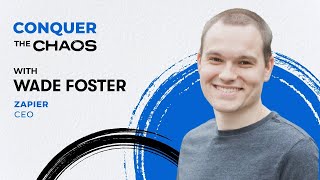
In this episode of the Conquer the Chaos podcast, host Clayton Mask (CEO of Keap) interviews Wade Foster, CEO of Zapier, about how small‑business owners can leverage automation and AI to reclaim time, increase efficiency, and grow their businesses. The conversation starts with a brief overview of Zapier as an integration‑and‑automation platform and why many entrepreneurs still view automation as technical, impersonal, or out of reach. Wade explains the psychological barriers (lack of tech passion, imposter syndrome) and the practical hurdle of activation energy, noting that modern tooling and AI assistants now lower those barriers. They discuss the most common entry points – marketing lead capture, lead enrichment, and follow‑up – and walk through a detailed example where a lead is enriched via Clearbit, screened by ChatGPT for a free‑email flag, and a draft email is generated for a sales rep to review. The dialogue then shifts to the importance of human‑in‑the‑loop design, illustrated by Zapier’s internal sales‑handoff workflow that uses automated briefs to keep reps informed across departments. Wade advises entrepreneurs to map their daily repetitive tasks, pick one low‑hanging automation, and iterate, emphasizing that small wins spark broader adoption. The conversation moves to AI, distinguishing two primary use cases: (1) AI as a conversational assistant that suggests automation ideas or helps interpret documents, and (2) AI as an autonomous worker that processes unstructured data (e.g., extracting information from PDFs, generating copy, summarizing reviews) and can be chained with traditional Zapier workflows. They acknowledge the trust gap – users need to review AI‑generated output before full automation, likening the learning curve to early email autoresponder adoption. Finally, Wade shares how listeners can learn more about Zapier (blog, Zap Guesser, LinkedIn, X) and Clayton promotes Keap’s Let’s Grow Summit as a venue for entrepreneurs to explore automation further.
Chapters
Hi, I'm Clayton Mask, and on the Conquer the Chaos podcast, I talk with inspiring business owners about what it takes to build a great business and a great life. That means more money, more time, more control, more impact, more freedom. So keep listening to hear the tough lessons they learned so you don't have to repeat them. Welcome everyone to this episode of the Conquer the Chaos podcast. I am Clayton Mask. Co-founder and CEO of Keap and your host of the Conquer the Chaos podcast. And today I'm really excited because we're going to talk about one of the things that's near and dear to my heart. Talk about it as one of the keys to success for entrepreneurs. It's automation. And who better than to talk about automation for small businesses than Wade Foster, CEO of Zapier, longtime partner of Keap, longtime friend of the company. Wade, great to have you with us.
Yeah, I am stoked to be here, Clay. Thanks for having me.
You bet. For those who have been under a rock or don't know what Zapier is, and, or who call it Zapier, by the way, so Zapier it is. They are Zaps. That's the way you connect it. Tell us a little bit more about Zapier so that everybody who's listening knows what Zapier does.
Yeah, Zapier is an automation platform that helps you automate chunks of your work. You can use it for, you know, across any part of your line of business. A lot of folks use it for, uh, you know, sort of like marketing, sales automation, but there's a lot of back office automation that people are doing for like project management and things like that. You know, we started as a big integration library where you could connect, um, tools, and then you'll quickly realize that, um, hey, it's not just integration that like folks are really after. Um, the integration is sort of like a toehold to this bigger problem, which is, you know, people are just doing a lot of like manual dirty work inside these businesses. And if they had software that really helped them streamline the work, they— and it was easy to do, they'd automate a lot more. And so, you know, we've been investing just a ton in automation over the course of the last 5, 6 years to really make it easier for folks to, you know, get rid of big chunks of labor inside the organization and allow folks to focus on the more creative endeavors at work.
Well, we love what you guys do at Zapier. So many of our customers use Zapier to advance their automation. And, you know, if two automation company CEOs got together and didn't talk automation as one of the 6 keys to success, I think everybody would wonder, hey, what the heck's going on? So we will definitely talk about automation and talk about the use cases and how automation changes the lives of entrepreneurs. You know, I say all the time that automation is the great game changer for small businesses. It's the thing that puts hours back in the day for small businesses. It's the thing that enables small businesses to get out of the business of trading hours for dollars. It's the thing that enables small businesses to get the freedom they want and not be so beholden to the business. And yet, even here we are today, years, you know, years down the road from when we started our automation companies, and many small businesses still think it's a pipe dream. They still think that automation is very impersonal, that it's a technical thing, it's out of reach for them. And so today, folks, we're gonna talk about the use cases of automation. We're going to talk about how to make it more accessible, more friendly, more desirable for people to use it because it will put hours back in your day. It will, it will enable you to achieve the freedom that you want. So let's talk about that. I'm going to, I'm going to share one little fun fact as we start here. Some people may not know that years ago when we were in FusionSoft, we kicked off at one of our conferences a Battle of the Apps contest. And this was like all these different apps that were in the ecosystem. And the winner of that first year of the Battle of the Apps was Zapier. You guys were the winners. And it was a— it was the beginning of a partnership for us that we did, that we've been working, working together on for many years. So thank you for the years. I don't know when that— what that year was. Do you remember? It's probably like 12 years ago, something like that.
I want to say it was 2012. I want to say. And I remember it too, because we had I think 5 full-time employees at the time. And the gentleman who built the then Infusionsoft integration with Zapier was actually a part-time contractor. And so when you shared like, hey, you all are going to win this, this award, I was like, well, I need to invite him out to come because he built it, he did all the work, etc. And he was like, well, I got this full-time day job, like, you know, it's kind of weird for me to take off. And we had, we, you know, we'd been very like meticulous with our money. We were like, we didn't like to spend a lot, et cetera. But we're kind of getting that point where we're like, you know what, I think we could probably hire another person. So when he, when he said that, I said like, well, would it help if you just worked for us full-time? And he was like, I think it would. So that's how that guy got a job offer.
Uh, that's awesome. I never heard that part.
Yep.
That's so great. I love it. Yep. Well, so let's talk, let's talk about automation. Let's talk about, why don't you take just a second and share why you believe small businesses— and I know you guys do automation for more than just small businesses, but I think that we, we share a pretty common overlap in that we do it for small businesses— why do you believe that small businesses don't use automation like they ought to?
Um, I, I think it's probably, you know, a couple things that we find. Um, You know, one is I think a lot of small business owners, they didn't start their business out of some like deep-seated love of technology. You know, they started it because, you know, they, they love gardening and they wanted to start a gardening business, or they, you know, they loved, um, you know, uh, making tacos, so they started a taco truck, uh, right, you know, or they loved, I don't know, like selling insurance or whatever. And so like that was the thing that they obsessed about. And, um, you know, the technology side of it felt like a, you know, like almost like a necessary evil. And so, you know, I think there's a passion challenge for a lot of these folks, and then I think there's probably an imposter syndrome bit that comes with that as well too for a lot of folks where they're like, hey, this stuff is pretty technical, like I don't, I don't really know, like I'm not sure, uh, and that creates like an activation energy hurdle where, um, you know, look, maybe, uh, 10, 15 years ago when you and I were starting, hey, the technical hurdles were pretty real, where it was like, yeah, this is like— this does require somebody who's willing to like roll their sleeves up and learn it. But candidly, like 15 years later, I mean, yeah, you have to like learn a few things, but the tooling is really stinking good now. I mean, you put like what's capable with AI too, a lot of times you can just ask the AI like, hey, I run a gardening business. Like, what are, what are 10 ways I can add automation to my business? And the AI will give you like 10. They're not going to be like the most creative ideas, but they're going to give you 10 really good starter ideas. And you're probably going to look at 10 of them, go like, well, you know what, these 3, I think I could probably do that. Like, that actually feels right in my wheelhouse. And that's often I find like the best way for folks to get started is to just break it down to the simple stuff and say, you know, I end up doing this every single day. Like, is there a way that I can you know, just simplify this little bit. You don't have to start with being like, oh, I've got— I'm running these complicated machine learning algorithms, and you know, that's looking into this and this and this. It's like, that, that's not where most people start. Most people say, hey, you know, I'm, uh, I'm collecting leads on my website over here. Sure would be nice if like those landed in my CRM, or sure would be nice if I got a text message whenever, uh, you know, somebody, uh, important came in. So you could start with this like pretty basic stuff.
Yep, totally. And that's what we see too. We see that people are driven to it more by the pain that they're experiencing, the frustration, the menial nature of the work they're doing, or the pain of the waste. They see dollars wasted, hours wasted. And what I find is that small businesses, they're doing their thing. Like you said, they've got their passion, they're doing what they do, and they don't even realize that this time and money that they're wasting could be addressed. You know, they don't even really— and then it gets to a point where it gets acute, the pain gets acute, and they're like, okay, hold on, we just, you know, spent this much money on this marketing campaign and we're realizing that a lot of the leads are slipping through the cracks. So man, if we could just improve the conversion, or they're hiring people, you know, and they're putting a lot of dollars behind and hours behind tasks that need to be done. And so what we find is it's the pain that usually gets them to finally go, okay, what can I automate? And most of the time our experience has been that people will do that in the marketing arena first because it's where it gets the most acute. You spend money on leads, you're trying to generate new customers, and you realize, oh, there's a lot of loss there. But I really appreciate your point that there's so much that can be automated and And really just, it's a matter of asking, if not the AI, asking yourself, well, what am I doing over and over again? Like, what do I just keep doing again and again? And it seems like, you know, if I'm doing this over and over each week, multiple times a day, multiple times a week, then that's, you know, a pretty good indicator that it could be automated. So let's go to what do you see as being the most common things? You know, I definitely see on the marketing side, and maybe you see something similar, but But where do you see people start to dip their toe in and then go, oh wow, this is amazing. I'm sure you guys have said something similar to what Scott and I have said forever, that once entrepreneurs get addicted, they get a taste of automation, it becomes addictive. And they start to look at what else they can automate, how they can automate all across their business. What are some of the areas that you see where people jump in and start to, you know, the use cases that cause the light bulbs to go on, they're just like, oh my gosh, I gotta start doing more of this.
Yeah, I, I, like you, I, I think marketing automation is probably the one that is like most, uh, like earliest recognized. And I think, um, you know, a lot of times the tooling is more like— is better for folks in, in that sort of, uh, realm. Uh, and, uh, it often is the area that has like the fewest engineers often like attached to this stuff. And so, uh, it's like prone for just like a kind of a smart, savvy person to sit down and go like, hmm, what, what else could I do here? And then to your point, like, there's actual real dollars lost if you do this poorly. Like, your conversion rates are going to be bad, you're going to let money slip through the cracks. And so there's this drive to make it work better. Um, yeah, specifically within marketing, the place that obvious— like, that seems the most obvious starting spot is like right around sort of like lead generation, lead management, um, like follow-up, lead follow-up. That sort of whole pipeline there, there's a whole bunch of touch points that are really, really useful. So like for, like on Zapier, like a lot of folks will, you know, maybe they'll have a forum on their website or maybe they're using like Facebook lead ads or Google lead ads or LinkedIn lead ads. They're using, you're spending money on those platforms to drive, you know, leads their way. And then the first question is like, well, you've got somebody, well, now what are you gonna do with it? And, you know, the basic one can be like, hey, just like, you know, text me when I have it and I can call them, right? So that can be a simple one if you have low amounts of lead volume coming through. As you start to get more leads coming through, you're like, well, maybe I need to actually like store some of those somewhere. So hey, I should probably put that in a CRM to like manage it and keep up to date with it. Um, so that might be like, hey, you're getting a little bigger, maybe you move to that. Uh, then maybe you're like, well, you know what, I'm, uh, now that I'm storing them, I sure would like to know a little bit more about these people. Like, all I have is like their first name, their last name, and their email address. That's not that great. So maybe I can do some lead enrichment. So I'm going to run it through a service like Clearbit, and now I'm going to know their title, the company they work at, all this other stuff. And so now I got a whole bunch of other things inside of my CRM that I can do. Uh, and then you start to go like, well, if I can enrich these things, maybe I can actually run a whole campaign off of this. And so, you know, we had a, a customer, uh, Sticky Chen, who's at Runway, who set up a really cool one where his website started to go viral, and he went from like barely getting any leads to getting like you know, dozens every minute. And, uh, he's like, hmm, I know what I can do. I'm gonna run this through Clearbit to enrich the lead, then I'm gonna have it, uh, go send a note to ChatGPT and tell me if it's a free email address or not a free email address. Then based on all the lead enrichment and if it's a business email address, I'm gonna have ChatGPT write the email that I want to send to the customer. And so I'm going to feed it all this information, and I'm going to tell ChatGPT, hey, you're an expert sales rep and you're trying to sell this, and I want you to be you know, direct and follow these brand guidelines. I don't want you to get cute or clever or cringe. Like, you know, just gave it all the guidance and instructions. And then he said, you know what, um, I don't want you to actually send the email auto right away, but I do want you to drop it as a draft inside of Gmail, um, because I'm not ready to have every bit of this automated. I want to go there first. And so then, you know, him and this, uh, the two sales reps on his team, they'd wake up and they'd see a whole bunch of you know, DreamMail drafts ready to go. They quickly review, they'd send them out and get off to the races. And I bet what's going to happen is over time he's going to start to realize, um, you know, most of the time I'm just not making any edits, I'm just gonna press send on these things. And then now all of a sudden you start to realize, like, you know what, this whole automation, not only is it, um, uh, like, it's, it's now as good as a human, but you know, it's way faster too. Like, I can have— I can follow up with my customers way, way quicker, which I could I could never do that with a human. Yeah, I was up like, I only have so many hours in a day. And so automation is actually the only way that they could scale, or they could throw more bodies at the problem. But they throw more bodies, costs go up, they have to raise their prices. If they raise their prices, are the same customers gonna be interested in it? And so you realize like, hey, automation, it kinda, it does become a strategic advantage to sell. And it all can start with that like basic idea of like, hmm, you know what, if I get a lead, maybe I should text myself. And you can sort of see the like stages of like that funnel getting more sophisticated as you— as the company grows.
Okay, we're going to keep this going. But first, a quick message for you, Conquer the Chaos listeners. Let me talk to you straight for just a minute. You're running your business and it dominates your mind. It can be very difficult to take a step back and see what's needed to create balance in your business and your personal life and to create great growth and development and progress in your business and personal life. One of the most powerful ways to gain the perspective that you need is to get away from things and immerse yourself in an environment where you're going to be inspired, where you can see possibilities, where you can create connections, and where you can learn and grow and develop. And I know of no better place for entrepreneurs than Keap's Let's Grow Summit. For years, we ran this conference as just an amazing mecca for entrepreneurship. And then truth be told, for a few years we didn't run it. We got back to it last year and this year we're putting it on and it is going to be awesome. I am so excited about this and I want you as our listeners to not miss out on this event. It's going to be November 20th through the 22nd, downtown Phoenix, with the main days being the 21st and the 22nd. You can register for it by going to keep.com/entrepreneurship. Keep.com/letsgrowsummit. That's keep.com/letsgrowsummit. And you can take advantage of our early bird registration pricing, which expires the end of July. So if you are needing a reflection time, an opportunity to take a step back, gain greater perspective, inspiration, and most of all, see what automation, the fifth key to success, can do for your business, then make sure that you attend the Let's Grow Summit. keep.com/lets-grow-summit. November 20th through 22nd in Phoenix. I look forward to seeing you there. All right. Now back to our chat. Right. Well, I love the example you gave because it, it, it highlights how the automation and the, and the human being are interacting. You know, it starts with just the individual getting notified that he has a lead. And now, you know, what do you do with that? And I think what I find a lot of times is people when they're applying automation, they need a little guidance on how to elegantly intervene the technology with the human connection. And then over time, as they get more comfortable with it, they realize that they can have the technology even do more and more of it. But in the first place, you know, you called kind of that initial connection of the technology and the human intervention of just being, hey, just notify me that I've got a leak, just text me that I've got that. And what I see is, particularly in a sales process, it's the elegant integration of technology and human intervention that creates the really personal connections that enable conversions to go up, that enable the business owner to get the yield that they're looking for on their marketing dollars. Is there anything that you've seen in that dance between technology and human interaction where, you know, where you bring those together in a way that's really powerful and very personal, because that's a lot of times people, they don't want that. A lot of times people don't want, don't adopt the automation because they feel like they're going to lose the personal touch. So anything that you've seen or any guidance you could give on customers you've seen where they've very successfully maintained that personal touch by bringing together the technology and the human intervention?
Yeah, yeah. I'll give you an example that we use internally, which is You know, in the last couple of years, we've started to sell. We, for longest time, Zapier didn't have a sales team. Last 2 years, we started to have a sales team. We're starting to sell to larger organizations. And so we have sales reps that are talking to our prospects and they're educating them and they're coaching them. And these are folks that would never buy from us if we tried to fully automate that end to end. That human touch is pretty valuable, right? But we had a problem, which is that, uh, you know, in the lead funnel there's a lot of handoffs going on. Now when we have this, um, going on, you've got, you know, lead comes in, maybe, uh, they have a conversation with, you know, someone in marketing, something over here, some notes get logged in the CRM, uh, they get handed off to the sales rep. Now there's sales, you know, has a whole conversation over there. Maybe in some cases legal gets involved and has some comments on a the terms of service over here. Maybe we're lucky enough to close the deal. The deal gets handed now over to like a customer success person whose job it is to help get them up and running. Every step of the way, we are learning something about the customer and what they need and what they want out of that experience. But every time they're moving between departments or teams, that's a place where we have the opportunity to show up as a disjointed, fragmented, big out-of-touch organization, right?
Each handoff causes that disconnect.
Exactly. And so, you know, on one hand we want to show up as humans, but on the other hand, um, these handoffs are making us actually look kind of like, you know, dunces. And so one of the things we thought was like, well, you know what, we still want to have that human own that, like, the personal touch, but we have to do a much better job of equipping the person who's just talking to the customer with all this historical context. And so now what we've orchestrated in our stack is that every time before one of those meetings, um, you know, we'll look at, uh, you know, the, the daily calendar, and, um, it will go collect information out of the CRM, out of the customer management tool, out of like the historical context, and it'll create a brief for the person to say like, hey, they've talked to this person, they talked about this topic, they talked to this person, they talked to this topic. So now when that sales rep or that customer success person gets on a phone or gets on a Zoom with them they're still having that one-to-one conversation, but now they're equipped with a bunch of information to say, hey, by the way, I saw you talk to, you know, Lisa last week about this, and she mentioned you wanted to follow up with me on this particular incident. Did I get that right? Is that what you were wanting? And now all of a sudden it's like, yeah, it actually feels like a continuation and like a fulfillment of a promise rather than, you know, the sales rep going like, so tell me why we're talking today. And they're like, well, shouldn't you know? Like, your own team handed me off to you, right? And so avoid some of those, those challenges. And so So where am I going with this? I think the reality is, you know, for folks who are maybe nervous about, hey, you know, do I want to just fully automate this or not? You don't have to fully automate it. You can, you know, you can design the experience you think your customers want, and you can put human in the loop in the places that you think humans are going to do the best job. And then in the places where you think automation is actually going to help augment the humans, Um, use automation to support them. Uh, and so that to me is like the way in which you should be thinking about it. It's like, what's the best tool for the job here? Because in some places humans are still going to be— I mean, we're unmatched at a lot of things. We're really freaking, freaking incredible creatures. Uh, and so there's probably places we want to put ourselves in the loop, and then there's places where, as you know, humans, we're, we're kind of dummies, and like it would be nice to get like a super machine to sort of augment our, our skill sets in these other areas, right?
I, I love that. I appreciate that, that the case study that you just mentioned, because it's a common problem that happens through a sales process, through the onboarding process. And what we find is when, when customers adopt automation, like you said, it's not that they're adopting it for anything and everything. They adopt it for pieces that are very manual. And so, you know, for an example, a customer that's, that has, that uses our pipeline tool to, to manage the workflow of of moving a lead from an interested convers— you know, somebody that's interested in having a conversation all the way through the buying process. You know, if you're just selling something online, you can do that through automation with a funnel. But when you have sales conversations like you just described in your business, like we have in our business, in pretty much any business that has a, a high-dollar item that they're selling, there's, there's human capital that goes into this. There's, right, there's, there's these conversations that are happening. And yet If we have, if it's totally driven by human conversations, it can become very inefficient. And so setting up a pipeline where with the click of a button, the sales rep can move the prospect from one step in the pipeline to the next step in the pipeline, and then that can fire off communications to, a sequence of communications to the prospect. It can fire off tasks to other team members. Keeps track of all of that. It makes notes in the CRM. You know, all of those, all of those little steps that get done with a click of a button are time savings through automation, but it's not independent of the human interaction. And so I, you know, I draw that, I draw that example for people because a lot of times when people might be hearing two automation company CEOs talking, thinking it's you automate everything, it's no, you start with the manual tasks, the redundant things that have to be done repeatedly, and you package those up in automations, and then you start to automate more and more. Like in the first example you gave, where you can actually have emails being written for you, and then you can go in and tee them up and send them off. So thanks for going through that. I appreciate that. Are there other examples of automation that you would call out for people who are listening and thinking, you know, I, you know, We're going to get to AI in a little bit more detail in just a second. But before we get to AI, is there anything else that you see that you're like, hey, here's just low-hanging fruit that people need to be taking advantage of that all too often they're not?
Well, I think the other exercise that can be really helpful for, you know, a small business and whether it's an individual or team in that business is just taking a bit to like really document your day. I know this for small businesses where, you know, you're waking up and it's just like task after task. Go, go, go, go, go. Um, this can sometimes feel like, I, I don't got time for that. Um, but it is a really healthy exercise to just sit down and say, like, where are the consistent pain points? Where are the activities I'm just doing over and over again? And like, actually surface those somewhere that you can sit and think about, like, what could I do about that? And the job is not to look at all that list and say, okay, great, I'm gonna in one fell swoop automate all of this, right? The job of this is it just to get— yeah, get you thinking about where this is, and then pick one and say, hey, there's one thing. Maybe I'm not automating even the whole thing. Maybe I'm just finding a way for an automation to just be a little more assistive here, make it a little bit easier for me. And then what we find is that folks who go through that exercise and then finally find one thing to automate, there's almost like a light bulb moment that goes off where they're like, oh, I get how I can think about this now. I get how I can use this in my business. And it goes from this, like, you know, one-off small thing that maybe, maybe doesn't do much for the business to now starting to see the opportunities much more clearly in the organization. And it become— it can become an intentional craft of the organization to say, we're going to think about the ways in which we can reduce waste, improve conversion rates, um, make our lives more like just increase job satisfaction. We can use automation to just make this business more effective, um, and as we grow through, through automation. And that's that just simple act of observation I find is like the step that a lot of folks just skip over.
Yep, totally. We, we talk about is mapping your business, understanding from when the lead comes in all the way through to lifelong client that, that, you know, or, you know, somebody that leaves your business. There's a whole process there, and identifying the pain points and identifying the breakdowns and where there's, you know, this is where the leaks in the bucket are, that, that time and money are, are, are dripping out of the business. So, um, that's great, a great suggestion. And then like you said, just picking one to start with and kind of realizing, okay, we can now automate the next thing and the next thing, the next thing. So let's, let's talk about AI for a second here, um, as we come to kind of the, the tail end of our discussion. You and I have seen automation in the early stages. We've seen it starting to mature. We've seen it, you know, I still, I still believe we're in the early stages of small businesses really adopting automation. But now there's this hyperwave of, of activity around AI that combines with automation. You know, what are your, what are your thoughts and where this is going for small businesses and how they use automation and AI together? To create even greater efficiency in their business?
Yeah, I think there's, you know, probably like two pretty common ways that we see customers using it, how heck, how we use AI ourselves. The first I already talked about, which is this idea of an assistant. It's like, hey, what, you know, asking it questions around like, hey, what could I automate? You know, give me 10 ideas. Or like, hey, I'm, you know, I got this contract that showed up on my desk. I don't, can you help me like, reason about what's— what does this phrase mean? Um, and so you kind of have this, like, sidekick that's there helping you with a whole bunch of problems. Is it perfect? No. But I think it really quickly helps you go from, you know, uh, like, zero to, like, competent at, right, um, a whole bunch of, like, disciplines really, really quick because you can just go have conversations with it, learn, etc. Um, and so that's a really—
like, about 25 years ago when I first started to really get the power of Google. It's like that to the next, you know, to a whole nother level. And so if you just use ChatGPT as an assistant and don't use AI in any other way, you will get benefits of knowledge acceleration, progress that, that, you know, a lot of people probably are not yet availing themselves of. I think most people are starting to get there, but maybe not. I like your way of describing that. Just think of it as an assistant.
So that's like maybe use case 1. And then use case 2 is, okay, what if I actually want the AI to do tasks for me? I want it to actually go do work on my behalf. And there are certain types of work that AI is really good at, and it's opened up a whole new set of use cases that was really hard to automate, or you could automate it, but it would do it kind of clumsily. And, you know, AI is particularly good at working with unstructured data. And so what do I mean by that? Well, it could be like a document, like a big PDF or something like that, or a big block of text. And, you know, okay, I want you to go analyze the document. I want you to go extract contact information out of the document. I want you to go categorize a whole bunch of comments as, you know, positive or negative about my business. Or I want you to go read all these reviews that I've collected. I want you to summarize the common themes. What do they like about my business? What do they not like about my business? So it works really well with unstructured data. Um, the, the second thing it does is also really good at generating text. So, you know, you can feed it a whole bunch of information and then you can say, hey, I want you to go write something about this. Maybe I want you to write a, like, a draft of an email, or maybe I want you to go generate a blog post or a social media post, or maybe I want you to write a memo of this. Um, and so those can be like really powerful tasks. And the thing we found is that you can combine that with more traditional automation to get really high reliability around certain things like that. So coming back to, uh, you know, Siki Shen of Runway's example, you know, he had this deterministic traditional workflow. It was like, hey, I'm going to take a lead from my website, I'm going to go enrich it, um, through Clearbit, but then I'm gonna go have it generate an email based on all the stuff I found. And so like, hey, come up with that. Where in the past The old way of doing that automation would be kind of like a mail merge where it's like, hi blank, you know, thank you for visiting my— you know, I saw you worked at blank company, you know, you got that sort of thing. We've all been on the receiving end of those emails, right? And they're not very good. Yeah, it just doesn't work very good. Whereas you find the AI version of it, you look at it sometimes and I'm like, I don't know if I would have written anything better than that. Like, that's pretty darn good. Yeah. Uh, and so it has this you know, when it's, when it's working with unstructured data, that's just where it really, really thrives. I think you can combine that with these like traditional workflow software and get an AI to literally just go do work for you on your behalf in certain tasks. And so those are probably the two most common ways we're seeing, you know, people interact with AI in small business today.
Yeah. Yeah, I definitely, you know, I appreciate the point of the assistant and then seeing what, you know, as we see AI get more and more integrated into workflow automation software, you know, it's fun to see customers and partners who grab onto this. I think we're still in the very early stages of people trusting it because, you know, it's like, okay, well, this can create a campaign for me with multiple emails, with landing pages, you know, and it creates it for me and it pulls in notes and data and information from the CRM. And it sent, you know, it's going to send out this, this communication. And sometimes people are not very trusting of it. You know, they're kind of like, whoa, I got to, I got to see this first and, and really experience it. It's not too different than a couple of decades ago, people experiencing autoresponder email sequences for the first time. And it was like, whoa, this is kind of a new thing. I'm not, you know, I'm not sure I want it to say that 3 days later or, you know, in 2 weeks or whatever else. So it does take a little bit of getting used to. But I think as people work with it more and they start to have that, that eye-opening moment where they're like, oh my gosh, like that really is better than what I would have said, you know, then they start to lean into it and realize, my gosh, for the time savings, if, if only to take advantage of the 80/20 rule, you know, if I can get 80% there in 20% of the time when usually you can actually get even, you know, even more than that, close to 100%. So yeah, but I do, I do appreciate that. That learning curve that people need to go through to play with it for a little bit and get comfortable and then be like, oh, okay, let's take the next step and the next step and the next step.
Yeah, I think it's spot on.
I think—
Go ahead. Yeah, I was going to say, like, I think this is like a pretty normal thing. You know, the way to solve that is to have a human in the loop, insert yourself and say, hey, you know, I'm going to have you do all these tasks. And then right before we sort of make it official, I'm going to review your work. This is just what you would do when you hire an employee. You don't take an employee off the street and just say, hey, go, you know, go close, go, go do sales calls, right? You're like, no, I want you to sit down next to me and I'm going to do the sales call first, and then I'm going to run the whole thing. And then next time I'm like, hey, why don't you prep for the call? I'm still going to do the sales call, but like, you're going to do all the prep work. Okay, next time, like, I'm going to sit next to you, you're going to do the call, but I'm going to watch you the whole time.
Yeah.
And then finally you're like, okay, I'm going to you know, let you go do your thing. And, you know, maybe I go listen to every 30 calls you do, or every 50 calls. I'm just check in and see, like, is it still doing good, or any tips and tricks I have for you, right? And, you know, the AI is, I think, going to follow sort of a similar progression where, you know, you're gonna increasingly delegate more to it, and you're going to trust it more and more over time as you've had a chance to see how it's working and see that it's getting better at these things, uh, as you, as you're able to tune the system to work the way you want it.
That's right. I mean, there's a reason why we call it training the AI, because you're training it and then you trust it. You train it, you trust it. It's very much like hiring an employee. Well, it's been fun to talk with you, Wade Foster Foster. I love what you guys do to push the envelope of automation. It's fun to me, for me, just like it is for you, to see small businesses adopt automation and have the light bulbs go on and be like, oh my gosh, there's so much I can be doing to save time, to, you know, to grow the business in a more efficient way. Where can people learn more about you, more about Zapier to take advantage of the ways that you guys are making automation more available to small businesses?
Yeah, check out zapier.com. We have an amazing blog that, you know, talks all about this stuff. If you sign up for the product, we have a Zap guesser. So if you want to describe what you want to build, it'll kind of, we'll try and go build it for you. I'm active on LinkedIn. You can find me on X. I'm easy to get in touch with email. So I try and try, I love hearing from folks and hear how they're using it. Using automation, or hear their ideas for how we can make the product better, any of that stuff. So if you have ideas for us, reach out.
Well, thanks for sharing, Wade. You know, so many of our customers, many of them use Zapier in conjunction with Keap and are using all kinds of different apps to tie things together. You guys, you know, I think your greatest strength is your automation. Your integration is really powerful. It's one of the cool things that people are able to, to use your, your integration in order to automate things from all different systems. So we appreciate what you guys do here in the Keap world. Thanks for taking a little bit of time and sharing your, your passion and thoughts about automation. For anybody who's not yet practicing automation, if you're not using Keap, if you're not using Zapier, you should use them. They can make a huge difference in your business. And if you're feeling like, hey, you know, I just need a little guidance on that, well, that's what we do obviously here at Keap. We're very hands-on in helping you to use automation in ways that will benefit your business. So until our next episode, you know, get out there, push the envelope a little bit on automation and use it to keep growing. Thanks, everybody. Thanks so much for listening. Subscribe right here on YouTube or in your favorite podcast app to make sure that you don't miss a single episode of the Conquer the Chaos podcast. And hey, if you like this episode, let's get this out to more entrepreneurs. We all know that it is not easy to grow a great business and a great life. And so let's get this message out to others. Make sure that you hit the like button, that you comment, and that you share it with others so that we can help other entrepreneurs build a great business and a great life as they conquer the chaos. Keep going, keep serving, and keep growing.
More from Wade




From Workflows to Agent Teams: Wade Foster on How AI Reshapes Enterprise Automation

The Top Scaling Lessons from Zapier's AI Transformation with Wade Foster, Co-Founder & CEO of Zapier


Why Companies Force AI: Zapier’s CEO Wade Foster Explains | Belkins Podcast Episode #21



INSIDE How AI Startups hire, AI Roundtable with Wade Foster, Mikey Schulman, and Ali Ansari | E2225
