Jason Lemkin & Wade Foster debate Hybrid Work, AI, & Email vs. Search
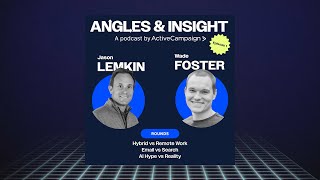
In this Angles and Insight podcast, host Casey Hill moderates a debate between SaaS veteran Jason Lemkin (SaaStr) and Zapier founder Wade Foster. The conversation covers three major themes. First, they dissect hybrid versus fully remote work in 2024, discussing how the pandemic shifted revenue professionals to side‑hustles, the difficulty of locking office doors, the importance of VP autonomy in choosing team structures, and the role of brand reputation in recruiting. Second, they compare their most efficient marketing channels: Wade champions search/SEO and partnership models as low‑cost, high‑return levers, while Jason emphasizes the need to double‑down on owned assets like email lists, podcasts, and content repurposing, warning against the volatility of social platforms. Third, they explore AI’s transformative effect on sales, support, and marketing, noting AI’s rapid adoption in Zapier (50 M AI tasks), its potential to replace large swaths of B2B staff, the necessity of human‑in‑the‑loop for quality, and examples of companies (Intercom, Opus Clip) that are leveraging AI effectively. Throughout, both guests stress pragmatic decision‑making, the trade‑offs of scale versus agility, and the need for clear performance standards in remote teams.
Chapters
Welcome to Angles and Insight. We created this podcast because so many of the conversations that happen today occur in echo chambers, but there is a deep value in differing opinions and lived experiences. So each episode, we will pair up two leaders in the tech world to discuss specific issues from differing angles and get their distinct points of view. Through these debates, we aim to give everyone a more rounded and balanced view of critical topics that affect our day to day. First up today, we have Jason Lemkin. Jason sold his first company, EchoSign, for $400 million. He has become one of the top VCs in the industry, and he runs Saastr, the largest SaaS event company in the world. Also at the table is Wade Foster, founder of Zapier, a category-creating brand that makes all your tech work together seamlessly with no coding required. Zapier was last valued at over $5 billion. And I'm your host and moderator, Casey Hill, senior growth manager at ActiveCampaign. Let's dive into the issues. Our first topic is hybrid work and what is the best way to approach it in 2024. On one hand, Wade Foster launched Zapier as a fully remote company in 2011 when remote was not mainstream, and they have stayed remote since its inception. Jason, on the other hand, has noted before the importance of a hybrid model with local hubs, especially near big customers. He added in late 2023 that many CROs have confided in him that they want folks back at least 3 days a week and that those outside of the top 5% of performers suffer from a remote model. But how are they thinking about it today? Let's check in on this issue. So first kind of topic I want to unpack a little bit is around return to work. And around hybrid work. And I think this is a subject that gets talked about a lot, but I'd love to get into the nuance of, does it matter by company size? Does it matter by industry? Kind of what is the data showing around this? And, and Jason, maybe I'll start off with you because I believe, and correct me if I'm wrong, that you guys hire both remote roles as well as regional hires. So what has your experience been around this?
The distributed workforces of today are radically different than when Wade started. They're radically different. And I'll tell you the number one reason why. And maybe, Wade, I'm wrong. Before March 2020, when people were distributed, they worked one job. Today, I would say the majority of revenue professionals work multiple jobs. They work multiple side hustles. Some of them work two jobs simultaneously. When, when, when March 2020 hit, we laughed and we heard those stories of engineers working, you know, 4, 6-hour jobs. But it has become rampant in the revenue side of the industry. Side hustles. It was hard enough to do a side hustle when in the office together. When you're at home working 3 hours a day, you can't help yourself, right? So I think that's the biggest change. And I was literally just in Miami and I was talking with a founder of a multibillion-dollar company who said he could only get 20 people a week to work, to come back to the office, only get 20 people. Only 20. So I'd much rather hear from Wade. I just, my view of all this is the ship has sailed. When Wade started here, it was visionary, it was edgy. I remember Wade said, we did, I taught, we did a podcast like not that long before March 2020. And he said, to make distributed work, you gotta lock the doors, right? I don't know if you remember, you used to use a lot, it's the only way to make it work. So Amelia and I who run SaaS Growth, we tried, we actually tried to lock the doors in our San Francisco office. But people kept banging on the door, so it didn't work. I mean, but, you know, the doors have been locked for 4 years and no one wants to go back. No one wants to go back through them. It's the truth. No one in tech wants to work in the office, right? No one wants to.
Yeah, I think that's like the hard thing. Like, you know, when we started, it very much was like, we're going to play the hand we're dealt. And the hand we were dealt was, you know, Sounders splitting time between the Bay Area and central Missouri. You know, we're first-time founders, no hiring expertise at all. We have very little money. So, you know, like, did we want to compete for engineers that are getting offers from Google and Facebook and stuff like that? And candidly, we don't know how to hire anyway. And so we felt like we had a competitive advantage trying to recruit out of, you know, the Midwest, places where we knew folks already and we knew the markets better. And so, like, it was just easier for us to set up shop that way. And it gave us a real advantage that helped our dollars go farther, helped us tap into a talent base we knew and trusted. And that was like the cards that were dealt to us. And then to your point, Jason, we got good at it. Like we figured out, okay, we know how to make this model work. We were born this way. And as a result, like I thought, I think we've done a good job. Now there's real tradeoffs and we make those real tradeoffs. We have some very clear advantages and some very clear, you know, tradeoffs that we have to make. I think the challenge with March 2020 is there was a lot of people who weren't born that way who got forced to go do it. And those folks, I think, had a much tougher time. And then you've got this entire talent base that once you get a taste of it, it's really hard to convince somebody that like, hey, being in the office, you know, 5 days a week, you know, 40 hours a week is like the best way for them to live their life. And if enough employees or employers sort of defect and say like, hey, we're going to do it this other way, like it just, it just changes the, the hiring market. And so you, again, you have to play the hand that you're dealt a little bit. I think the thing that like helps is it does force the management job to get much different if you're going to do sort of like a remote job and you have to be really clear about what like the bar looks like. And I think in part because of what Jason's talking about, like, you know, people are doing 9 other jobs, like they're probably not going to be very good at any one of them. But if you know what excellence looks like in, you know, sales or support or engineering or whatnot, and they're hitting that bar, like, I kind of don't care if they have a side hustle or if they're doing something else. Like, in some ways it might actually help them. They might learn a few things that they wouldn't naturally learn on the job. But as long as they're hitting that, that bar, the challenge is like not a lot of managers are really good at managing performance to that degree. That's like a skill that you just have to learn to get better at over time. And it's taken us a while to get good at it as well too. And I don't even know that we're great at it yet, to be honest. We're still learning.
Is it culture? Is it productivity? I mean, what is the most pronounced kind of challenge or barrier there when we think about remote work versus in-person? Feels like there's kind of that dichotomy between more access to a talent pool slash employees are happier, this is the norm, against on the other side, how do you keep culture tight? How do you maximize productivity? Is that Are those the two sides that you both see?
But they're not. The problem is, when Wade started doing this, to some extent, it did lead to employee happiness, right? At least the folks that self-selected on that, the folks that were willing to do the daily scrums outside of engineering, that were willing to do what it took to make distributed work. I actually think people are generally the unhappiest they've been in tech in my entire career today, the unhappiest they have been across the board. And there were, you know, 2021 was crazy, right? It was a crazy boom, right? 2022 was like a falling, a knife falling down, right? In terms of public companies. 2023 was the year of layoffs. 2024 is the year of efficiency. And now every public company is twice as efficient as they were 2.5 years ago, or even 24 months ago, 18 months. So they're twice as efficient. And, um, and you know, I think that This whole debate has changed because I don't think any of this makes people happier. I don't think working from home has made people happier. I don't think going to the office— A subset of folks are happier in the office. It is kind of fun to see people, but I don't think there's any magic way to make people happy. You can have a no-layoff policy. I've watched a lot of startups do that in this crazy environment. People are worried they're going to get laid off. It doesn't make people happier. Wade Foster and I talked years ago about profit sharing. Doesn't make people happier. We have to, as leaders, we have to make people happier. But actually, I think it's harder in 2024. I don't think just letting people work from home, it's become table stakes. And like a lot of things, table stakes doesn't make you happy.
Hard to disagree with that. I think, you know, at the end of the day, like, you know, you have, it is a, I think there is like a cultural element to it. Like, people like to do well. And like, you know, if you, you know, if your recruiting engine is dialed in well and you get the right folks in, you're going to have a higher chance of just like building a company that wins at the end of the day. And you can do that remotely. You can do that in an office. You can do that hybrid. There's a lot of ways to do it, but it is all harder than it was 5 years ago.
Do you think— Wade, just curious, not to monopolize Casey, but since, since Zapier is a brand, right? It's at, it's at that level where it's clearly a brand. It's not a mini brand. Does that give you a recruiting edge these days over others? I think there is a flight to brands. I think people do want to work places they know. Are you getting a little bit— I do think the leaders are getting boosts for a whole bunch of different reasons. The bigger companies are growing faster in some cases than the smaller. Does it help for recruiting to have that brand?
Yeah, definitely. Like, I think, you know, being good at remote for a long time helps. Having the brand helps. You know, the fact that we've been very financially efficient helps. You know, the fact that we've got an AI story that's like very real helps. Like, there's all these things that like you know, help on the recruiting edge. And like, the talent pool is like quite good right now. Like, there's a lot of really excellent people that are available, but there's also a lot of folks that like are just mediocre available. Like, that's always a challenge when the hiring pool is like— there's just— it's just kind of— you got to sift through that for sure.
And I guess on kind of one thing to bring this all together, is there any advice that both you have? And I know generic advice can be kind of challenging because it's so conditional, as we've kind of talked about. But for folks who are on the fence and maybe you're considering remote for certain positions but not for other positions, is there any kind of parting wisdom that you would have for how folks should think about this and make decisions for hiring in 2024?
I mean, the best advice I'd have is have one culture. Um, I think that's like the toughest thing is that I see a lot of folks trying to do this hybrid thing, but they're creating a bunch of subcultures. I feel like that's the hardest thing to do. So look, if you want to do all in office, do all in office. If you want to do all remote, do all remote. If you want to do hybrid, that's okay too, but like you have to think about it. So like if I was trying to do hybrid, I might actually say, you know what, I'm gonna do hybrid all in one city, and like we're gonna come to the office 2 days a week and, you know, or 3 days a week or whatever, and not the rest of the time. But I don't think you get the geographic advantages going that way, but you do get the like team cohesion advantages of all being relatively close. Um, but I think that puts everyone on the same playing field, same operating cadence, etc. The like anyone do every— like, uh, anyone can do anything sort of thing, like that feels like it's just really tough to have any sort of standards and expectations. I, I wouldn't know operationally how to like really make that work. That feels like the hardest.
I'll tell you where I think, um, we get this debate wrong, you know. Um, 4 years into the new world, the new age. I think at this point, this debate, listen, most founders, not Wade, but most founders quietly say they want more people in the office. 90% of founders I talk to, that would be their choice. They may not, just like the multi-billion dollar company I talked about in Miami could only get 20 out of 2,000 people to go. Most founders don't get what they want. But I think the reality is if you recruit the best VPs under you, let them decide what types of teams to build. Let them make the decision. That's the, that's, you got it. It's going to Wade Foster's point of playing the cards you're dealt. You also got to lean into the strengths of your VPs. So if you have a VP of sales that loves the work it takes to build a distributed sales team because he or she can access all different types of talent and could load balance time zones and costs, and that's a superpower, right? If you love your CRO, Love, love him, but he wants to force everyone to go to Soma, even though it's crickets and it's like a post-apocalyptic land, not San Francisco, but Soma. But he's going to do that. And he says, listen, Casey Wade Foster, I'm going to bring 200 reps into Soma and I'm going to hit my plan and we're going to do a cost effect. And he— but he's truly an A+. My vote is let him do it, right? You're going to have— it's not— hybrid sound is a great thing for big companies. I think we just are going to end up with heterogeneous teams in startups and we got to trust our leaders. To build the types of teams they want. And they each have different DNAs, right? And some may want their senior folks in the office and not care about the rest. But there's a lot of, there's a lot of prime variations here.
Do you let them do that on day one, or do you wait to see if they're actually truly A+? Because like, the challenge is like, you know, startups and executive hiring is not a— like, a lot of times it's a coin flip. You might find they make a bunch of choices, and now you're dealing with the fallout when the coin doesn't come up in your favor.
Well, I'll tell you my answer. You said, actually said something to me, Wade, at this Traction event, probably in 2019. It really resonated with me, believe or not. You gave me a great teachable moment.
Trying to remember what this was.
You will. It was a backstage conversation and you, we were talking about great VPs versus very great VPs and good, like good versus great. And you said, if I'm lucky, half of my VPs will really go beyond their role. They will really care. They will be the ones I can do no-look passes to. If you're lucky, we all talk about how we all want to hire A pluses and 10s, but that's, you're lucky to have a bunch of 8s, 9s, and 10s. Like that would be great. That's the real truth. So half of your management team, if you're good, you fall in love with them before day one. The really great ones I found, I'm just, it's not just that they're the best of the 30. It's just, oh my God, you know, Casey's gonna change the game for us in marketing. I already know that before he started. I'll let Casey run within reason, help him with budget, help him, you know, backfill him, talk through the issues. But if Casey at the end of the day says, you know what, I'm gonna run the marketing team from Atlanta in office, I'm gonna try, if he's one of the ones that are off, The tough one is the VPs where you're like, well, it's the best I could do. Or they're pretty good. Like, I'm not sure about Lemkin, but my board said he's good. You know, Byron Dieter said he was great. Wade Foster worked with him at his last company. And you're like, it's not that he's bad. That's the one where you get nervous when he wants to run their own playbook, right? And that, that I think is an issue, just irrespective of— it's an issue in a million things. Who they hire, because you start to second-guess who they hire. You start to second-guess the systems they put in place, right? You start to second-guess the order, right? And, you know, that's where you can get stuck with a weird geography or other split. But yeah, that's why I just think you gotta— we, I think we all let the hiring bar down in 2020, '21 into 2022. We all did. Everyone did. And we're still dealing with some of the implications of that today.
That was a lot of good nuance. I appreciate that from both of you. In this next section, we get into what marketing channels are driving growth. Jason is one of the most prolific content creators in the SaaS industry, generating hundreds of millions of impressions across his podcast, LinkedIn, blog, Quora, and other channels. On the other hand, Wade Foster has steered Zapier to a multi-billion-dollar valuation off the back of a remarkable SEO content playbook. Let's get into the details. Shifting gears a little bit, getting into what is the most efficient marketing channel for each of you in 2024. And I very specifically use the word efficient because I know for a lot of teams they have very high paid spend, right? But it might not be the most efficient lever within their organization. And so I'd love to know what is What is exciting you? What are you seeing that seems like it has really good return on investment?
I mean, it's not, I don't know if it's particularly exciting, is what we've been good at for a long time is search. Search has always been very efficient. You know, you find, you know, you've got good domain authority, you've got good keywords you rank for, like that's incredibly efficient. And so that and our partnership model has like, been sort of like our 1A, 1B combo for a long, long time. I know it's not particularly sexy or like novel, but it really does work. And, you know, look, it is changing. Like, I think it's more competitive than it used to be. You know, obviously there's a bunch of questions around like what's going to happen with Google and AI and all this stuff. I think those are all real trends that are definitely going to in time change the playbook for marketing. But if you're just asking me in 2024, what's working? Like search.
Yeah, I think it's interesting. I think, you know, if you watch what a lot of marketers say, right? In forums and social media and stuff, they'll say SEO gets worse and worse and worse. And I think it's true. If I look at the SaaS data, for SEO to work, you have to work each year, you have to work like 10 to 20% harder, but it's still magical.
Yep.
That's Wade Foster. It is— people that think SEO is dead or content marketing is dead, I think they're just not trying hard enough. They're not creative enough. It isn't dead. It's just, it does, it is kind of annoying that everything in Google above the fold is an ad. Yes, that makes it harder and the algorithms change. But the fact that there's 100,000 Zapier pages talking about integrations and data flow and data, like it's, it's a, it still works. Even if you have to maybe do twice as much work for the same output, it's still, That and email are like the great gifts of the internet. I can still send Wade an email and it's open and SEO is open. Everything else is closed or pseudo closed or part closed, right? These are, if you don't take advantage of email and search and content marketing, you're shooting yourself in the foot. Everything else is much harder, right? I will add just one thought at a high level. So I think Wade's answer is actually A+. Teaching moment. I do think all the marketers are and founders are just asking the wrong question here today. I think what has happened is the pendulum has swung too far back the other way. Everyone has gone into cut, cut, cut mode. Even companies doing well have gone into cut to get profitable. Even companies that are profitable have gone into cut mode to get even more profitable, right? And what has happened is marketers are all doing the wrong thing. They're all in market, in marketing, you know, no one thinks you won the end of the year with no pipeline, but you spent nothing. No one says, good job, CMO. You spent $5 million last year. You spent zero this year. But we have no new pipe. Like, it feels good for, like, to say no, but you get fired. That's why CMOs get fired after 13 or 14 months, right? What we lost track of is marketing is hard because everything's expensive. Everything that isn't free is expensive. Ads are expensive. Events are expensive. Field is expensive. Steak dinners even are expensive, right? There's inflation in meat. Everything's expensive, right? Podcast ads are expensive. And so it's easy to say no. The art is to say, look, we're going to spend 15% of our ARR this year in marketing. And the good marketers just get better and better at deploying that 15%, not saying no. But I have talked, we have 200 and something sponsors at Saastr, and I didn't really talk to any of them before about 2021. I talk to a lot of them now to learn. And too many are just cut everything mode. And I get it, but I know they're not going to have a job next year because there's no pipeline. So, the art of a marketer is, and this is a tough bet, taking $5 million, $10 million, $20 million, maybe at Zapier scale, even though you guys are profitable, maybe it's $30 million a year all in and saying, look, I got to do the best I can with $30 million and it's going to be hard to turn $30 into $60, but turning zero into zero is no good for the company. We got IPO at some point.
Yeah.
So everyone's been overcut marketing and they think they're geniuses, but they're not, right? They're not. The genius is, is figuring out how to deploy it and still make a nickel. Right. And we've gotten everyone's in cut mode and we're all regret— we're all going to regret it in 2024. Everyone that overcuts is going to regret it.
I think the thing I would add to that is like all these channels are so saturated and so the bar that it takes to stand out is just a lot higher. And the mistake I see folks change is like they'll do a little SEO, they'll do a little social, they do a little YouTube, a podcast, do a little events. They do a little of everything. You're not going to stand out doing a little of everything. It's just not like maybe your team sees it and they get excited that you did like, you know, a YouTube ad or something like that and feels good for a moment. But if you really want to like cut through, you do kind of have to find a thing that you're great at and it takes a minute to get great at that thing. And then once you get really great at that thing, probably 80%, 90% of your time and energy should be on that thing. And then you can spend the extra 10, 20% trying to find something new. I mean, honestly, like, you probably won't find— like, the first thing that you're good at is probably the thing that you're going to be good at for a really long time. Like, it just— it's kind of how it works.
Where does— where does like repurposing fit into that? Because I think of SaaS and I see SaaS content in so many different channels. You got the newsletter, you have the webinars, you have the YouTube videos, and it seems like that strong core messaging is used in a, in a very multi-purpose way. Is that, is that fair to say, Jason? Do you take that really strong kind of keystone content and then leverage it across different mediums?
Not really. I think that's what great, like, B2C marketers do. What I learned— it took— I'm pretty slow to learn all these things because for years I just wrote a blog post a day and kind of went on with my business that worked for about 5 years. That was hard though, right?
Yeah.
Like, but back in the day there just weren't that many of us. So the bar was low. I learned a lot of things.
You got the Quora thing going too. Like when Quora, like that was working and now it's dead.
Now Quora is dead, right? There's a lot of learnings about like different social media and they go in and out, right? We could talk about that. A different learning though that I realized when I started, when we started doing events, I would bump into people and they would be like, Jason, I read the blog post. Jason, I read the Quora post. Jason, I listened to the podcast. Jason, I saw the YouTube, even things we barely did back in the day like YouTube. Jason, I love your free courses on SaaS University. And what I learned is, or Jason, I love your tweets or LinkedIn posts. And what I learned is, and this is important for customer acquisition, is different people like to learn different ways.
Yep.
And some people really love podcasts, right? Some people love them. I bet you love them, Wade. Maybe you don't. Maybe you can maybe say no, right?
When I had kids, like, that's when I got— I didn't used to do podcasts at all. Had kids, switched over to being podcast because I found myself walking the dog, doing dishes. So a lot of podcasts these days.
But you used to learn different ways. Maybe you read blogs before and don't read blogs anymore. And so what I learned, and this is different than the kind of the content marketer trying to optimize things, I more learned that it's tiring, but you want to be in as many channels as you can produce quality content because people learn differently. I don't like this term repurposing because this is what people, lame marketers do with mediocre content. Oh, I purchased an article on API syncing from an agency that's really mediocre to hype my company, and now I'm a kind of a lazy marketer, so I wanna reuse it 8 times, right? Mediocre content is repurposed. Great content, I think, likes to find multiple homes. That's the way I think about it. Great content, and great content, if it's not too specific, if we're not talking, about today's drama in Ukraine, if it's a little bit timeless, like, like a lot of, a lot of the Zapier content, it has a long life, right? So you want to find it. You want to find the right moment where people can learn that content. And people may be up at night trying to figure out how to sync my one app to another, right? They may be working at 11 or maybe. And so maybe at night I want to read because I'm in bed on my iPad, right? But maybe during the day I'm bored and want to watch a YouTube video. Maybe on my run, I want to hear it on a podcast. And so if you can find a way, but you do need to tailor the content a little bit. The media are not the same.
Yeah. You know what Jason's saying here is like a really savvy thing for marketers is to just understand like how did like your audience, like how are they spending their time? Where are they going on stuff? And that starts to help you hone in on like, you know, the channels that you should be spending more time in.
Yeah, I think that's powerful. And I guess just to cap this off, is there any substantial changes? I'm hearing good fundamentals and a lot of things that have been working seem like they're still working. Is there any large shifts from 2023 to 2024 in how you're thinking about those primary channels, or is it this plan is working and we're going to do more of it?
Well, look, for marketers, if the audience is marketers, and again, I'm not an expert, Wade and I are just practitioners that have learned a lot doing it. But the brutal thing is that for SaaStr, what I've learned, look, SaaStr's got some scale, right? But what I've learned is just the brutality of social media. So we all know it's very difficult to embed links, right? When Elon took over Twitter, Twitter used to be a great place. You'd throw up a SaaStr article and 1,000 people would read it from Twitter. I'll pull one up today. 50 people will read it. That's an algorithm change. Okay? It's life, but it's not just the Twitter. LinkedIn did it. Twitter did it. Everybody did it. Quora died. Threads doesn't really work. And what has happened is all of the social media, in my experience, are quiet walled gardens today, which just makes it that much harder to use them to drive to your website or property. So you have to be smarter. You have to be smarter. Frank, you have to make sure that your content and message survives on its own. And that part people sort of miss. And then ultimately going to, you know, ActiveCampaign more, you got to build your list because the marketers say your list is the only thing that you own. Right. And that's true. But it's more than that. It's that email will work for our grandkids. But if you're going long, if you want to run Zapier for 20 or 30 years and you want a marketing job for 5 years or 10 years, Quora will die and Twitter won't work anymore. And Shorts, you know, everyone says TikTok's so great. I don't know a single person that says they ever got a real B2B customer from TikTok. They all claim they got 10 million views, but how many enterprise customers did you really— I closed IBM off TikTok. I mean, maybe, right? It's just, it's all ephemeral, right? All third parties are. And so it just all got harder. It all got harder, I think. And that's okay, but you gotta be clever and clever. And everyone wants you to just stay in their platform.
Yeah, I mean, the big new thing is AI. Like, that's the thing that's worth talking about. But I think AI is, um, it's a tool in the tool belt. Um, you know, I think we're seeing a lot of folks try and use it as a silver bullet. Like, you'll see folks, you know, hey, I'm going to have AI generate the content. But that's the like that's the same SEO content mill spam stuff that just never cuts through. But what the smart marketers do is they use it to really help them be more efficient. They have a good story, they have a good message, they have something that really matters, and then they're using these tools to really speed themselves up. You know, if you're at a small shop, if you're the only marketer there, it's really nice when you can use image generation tools and video generation tools and content generation tools like You can be a lot more places at once if you're still having a good story to tell. If you have— if you're inserting yourself in the loop there, that's the key thing. And so I think the smartest ones are doing that kind of thing to really punch above their weight class right now. And then, you know, there's a bunch of folks that are like, you know, I think we're like, you know, you talk about marketers and where they get a bad name, like spam has been a problem in our industry for a long time. So there's a lot of folks that are just using AI as just another tool that's been on a long list of tools to do bad marketing, but the best ones are like taking a great story and then they're using an AI to just be better and punch above their weight class.
Next up is AI. It's a clear buzzword and teams know it's important to the future. But what is table stakes and what is really transformative? What brands are doing something different and distinct? And how will AI change how we work and run our businesses? We will get into all of that. In this next segment.
I think it's slower the larger the company, to be honest. Like, I think there are probably individuals in those companies that are doing interesting and novel things, but I think larger organizations just move slower and they have more questions around data privacy and, you know, all those sorts of things. And so I don't know that you, outside of maybe a small few, like you probably don't see it writ large. Smaller companies, I think, are seeing a lot more experimentation happening. And they are doing things like just really accelerating a lot. Like it's, you know, like the keyword research you can do with these tools is incredible. Like you can feed it a list of ideas and say like, hey, can you come up with all this stuff? And then you can say, hey, can you go find, can you help me generate stub articles? And then you can have it create the stub and then you could come in and add stories and edit them and really make them better. And so, you know, I think these, you know, it's accelerating research, accelerating content creation, and then with a human in the loop every step of the way, they're able to just go faster, be better, do the things like put the ideas they already had in their head on paper or in a video or in somewhere way, way quicker. And so that's what I'm saying. And it's not like I said, I'm not seeing as much from the larger brands, but I'm definitely seeing it from like smaller startups, small, small businesses using these tools to just punch above their weight class.
Yeah, I tell you, I'm— I've radically changed my perspective here the last 60 days. And I'm only gonna speak from a very B2B focus, a classic B2B focus. If you'd asked me in December, if when we were talking about it at SaaS Annual last year, a lot of B2B tools were experiments, they were betas, or they were things that were sort of neat like Jasper that would make your email nicer, which is great, but it didn't change the game, right? I remember just last September I interviewed David Sachs and they'd raised $3 billion for Kraft and I said, how much is earmarked for AI? He said 80%. So $2.4 billion. And I said, what's the coolest B2B app you've seen? He said, well, it's mostly demo-ware. Okay, that was September. Everything's changed. And what happened to me about 60 days ago, I've done a ton of investments in contact center. Okay, I have invested in Gorgeous, which is number one Shopify contact center, Talkdesk, Maestro QA, Front, Intercom, like way too much contact. Like once you do one, I did like, and The majority of the new budget is going into AI and automation, the majority. And the largest customers are eliminating half of their support teams. And we could talk about why. It's coming for success. So support and success are gonna be cut in half by the end of this year. And I believe that half of the sales and marketing resources we use in B2B will not exist in 24 months. They just won't exist. And so I didn't, you asked me last year, I would've said, Everything needs to be human in the loop. That's silly. We've always said this about sales. We've always said this, but no, you should be able to go into a marketing tool, into your HubSpot, and just how it does everything else, click a button and your marketer is there. It's— and that's why Dharmesh was so early on this. I didn't get it. I'm like, okay, we're not really gonna replace— I sort of get it in support, right? Another crappy support bot. We've had crappy support bots since the '70s, since, since the '40s, since Fortran. But no, it's— it's because the thing is, for the B2B stuff, it has to be like 80% as good as a person. And then you will just— it's so efficient. In 2021, we didn't care about efficiency. It was $100K in revenue per employee. At $400K in revenue per employee, the cert people will sacrifice 2% of NRR. They will sacrifice a deal at the margin to have an AI AE. They will sacrifice a little bit of churn to have a customer success team that is automated, that, that, that solves my problems in an hour or a minute. Not next week, not when it's worth their time. They will, they will, people will tolerate a slight, they won't tolerate the experience of, you know, 2019, 2018 technology, the crappy, the crappy chatbots. No one wants a crap. No one in the world has ever wanted a crappy chatbot, but but 80% as good as a human that doesn't complain, that doesn't quit, that doesn't create issues, that works in every time zone. It is, I think this is gonna be a force, an utter force of nature by the end of the year. By the end of the year.
100% agree.
Utter force of, and I didn't get it, utter force of nature.
It's the fastest growing category on Zapier. We have over 50 million AI tasks that have happened in the last year. Like it's legit. Like it's real. And to your point, like you think about, just think about like, Sales outbound, like, you know, how many bad BDRs are out there sending templated emails? Like, that's like, yeah, it's— and you know, you actually say, hey, you know what, I got a lead from the website and I can feed it the domain of the website, I can feed it the person's LinkedIn profile, I can feed it this context, and now the AI writes the BDR email. It's better than that templated garbage. It's better.
It's better.
You didn't have a human in the loop.
It's better. It's better than a mediocre. It's not better than the best. No, it's not better than the rest.
But for a lot of things, like if you're, if your product, if the ACV is relatively low, if that efficiency really matters, it's the difference between having a sales function and not at all.
Exactly.
And that's, that's big. Like that makes a big difference because you can compete in areas where you couldn't compete before.
I think everyone in sales, customer success, and marketing in B2B should realize AI is coming for their job. And you can ignore it, you can hide from it, and that's cool for like 12 to 8, 16, 18 months, but it's coming for your job. It literally is coming for your job. I would much rather spend $20,000 on an SDR that is always there, that doesn't quit in 6 months, that doesn't need to have 18 meetings a day than spend $100K all in for someone better. I'd rather spend the $20K on software. It's just a better deal, isn't it?
Well, I'd say the difference is like, I think, I think we're— I don't know how long we're off for the jobs. It's definitely coming for big tasks. Like there are certain tasks that, that those buckets will get out. And I think it will be— you're going to have top-tier marketers paired with top-tier AI and like that's, that's like the magic spot.
How many brands do you think are going to build internally, let's say larger brands, versus try to acquire and bring that technology in through an acquisition motion?
I don't know that anyone's going to be like building a lot of like their internal, like foundational models or things like that. I think most marketers and salesforce want to just like get off-the-shelf stuff. So they're going to be using stuff like the AI capabilities that Zapier has or that HubSpot has, or that any of these tools build into their products or any of these new startups that, you know, Jason's funding and whatnot. Like that sort of feels like the place it's going to be. Like, I struggle to think that like, you know, most of these enterprises or things like that are going to be building their own stuff off the shelf because they don't think it's going to be— it's not going to be like where they differentiate. They're going to differentiate on something else.
I think there's— I think, of course, that's right. That's always been the history of software, right? I think the only slight nuance today, and I think it's still— I still agree 1,000%. I think the efficiency gains are so high that we are seeing the Klarnas and the Shopifys and others and more than have been announced. Building their own apps on ChatGPT that maybe they wouldn't want to if there was the perfect vendor. But, but if I can get rid of 1,000 CSMs, they're going to do it right now. So that is happening. And maybe it won't happen in 24 months when the existing vendors are more mature. But it's a weird thing that they're not waiting. Like they're not waiting because if they want so much efficiency, that's one thing. The other thing is like the fun thing about it is, Look, we run, there's probably 20 apps that we're addicted to that we can't run faster without, right? Zapier is one of them, right? So anything, and we trust the app. So anything you guys add in AI, we're just gonna use, like without question, like 100, and we'll pay 50% more. Like we don't even care. It's not like, I know some people think the app's expensive, but for us it's cheap. Okay. So like, if it, whatever, like there are, for us, you're like Canva, you wanna charge us more? We don't care. It's such a good deal. I know there are, I mean, not everyone, it might be the bigger ones don't agree, but My point is, whatever you do that's cool over the next 24 months, we'll pay for it. But we'll also buy a best of breed thing that does something else. Like, there's enough to do both, right? And that's going to settle down. But there's this like tech VC debate of will incumbents win or new vendors? I think the fun thing about AI in the short term is the answer is both. But what we don't need is 10,000 automated SDR standalone apps, right? That's what we're going through. Like, we are going through this explosion of apps. And it's okay, right? But there is a bit of a vibe of 200 per category, right? That's just life. That's just life in the competitive ecosystem. But I do think there'll be one or two in each category that build, you know, 9 and 10-figure businesses. And I think every trusted app that has great leadership will win too. Because there's some great APIs out there. There's no, I want to bolt this onto my apps that I use and I want a best of breed thing. It's a weird time when both can win, right? You're seeing folks like IBM and Cisco, like an Oracle rejuvenated, SAP rejuvenated from AI, right? And you're also seeing startups explode. It's a fun time. It's actually fun if you think about it.
It really is a fun time. Like, I, yeah, it's like I felt like I was talking to another founder, I don't know, on a panel a few weeks ago, and he sort of made the comment that during sort of like the ZERP era, we were all shipping Command K and dark mode and things like that. This is way more fun to be working on.
This is the one thing I would say, a cautionary tale is not— listen, not— there are plenty of startups doing reasonably well, doing 8 figures or more revenue that have good but not great engineering teams. Okay. A lot of them can't get there. You got to make the changes. I see ostriches now too. I see folks saying, hey, AI is not important in my category. AI isn't going to make a difference in, I'm making this up, payroll or something else. Or categories that are already automated. You might say they're good enough, we're automated. We don't need AI on top of automation. And look, I'm not saying that some of them aren't right, but I hear excuses because my engineering team can't make the jump. I hear excuses because they don't know how to do it because it's hard, because it's different. And this is a phase established folks and startups are going to win, but folks that can't evolve are going to start dying this year. You had a little window where you could make fun of this stuff. You had a little window where you could say it was a toy or a widget or it was all turning text into cartoons. And what does that matter in the enterprise? You had a window, but I— the force— Wade Foster, as Wade Foster said, they're like, maybe SMBs are buying more quickly, but the force of nature in the enterprise to gain efficiencies through AI is such a powerful trend. That if you cannot latch on to that trend as a vendor, it's going to steamroll you. It will steamroll you whether it impacts your revenue this month or this quarter or at the end of the year. The trend is unstoppable, right? CIOs want to use AI to create— not to create cool things, but to get efficient, to really have a step function in efficiency. And if you can't do that, they're going to pick a vendor that can. Even if it's flawed, even if it's imperfect, they're going to pick a vendor that can.
Is there one brand each of you would point to that you've been incredibly impressed by? In what they've done so far in AI outside maybe the big obvious examples, not OpenAI or anything like that, but B2B SaaS that you think have done a really good job?
I'd probably point to Intercom. Like I felt like they were sort of in the bullseye of this, you know, sort of service, etc. But Das and Owen over there, like I think they kind of like, you know, pretty early on recognized like, hey, this is both an existential threat to our business and a huge opportunity to transform the business. And very quickly just like pivoted the whole org to say, this is who we are. This is like in our DNA. We got to go get it. We got to go get after it. And I think that speaks to what Jason is saying is like there's going to be companies that sort of, sort of pretend like it doesn't matter in our category. We can ignore it for a while. And I just think folks that are showing up that way, like you're just fooling yourself. Like it's way better to just accept that like this is a groundbreaking set of technologies and just start figuring out like How is it going to play? Because it's coming to every category sooner or later. And if you sort of put your head in the sand, like, I think that's going to be pretty tough.
I think so. There's a bunch that I could say I get at a micro level just for fun. There is one I am a super fan of called Opus Clip, and I'll tell you why. So Opus Clip is one of these ones that in one year went from nothing to 8 figures in revenue. Nothing in 8 figures in revenue. We hear these stories, but a lot of times they're techs to to cartoons or they're infrastructure-based, right? And for years, Harry Stebbings and others would be like, you gotta do TikTok, you gotta do Shorts, you gotta do this. I'm like, I got no peoples. I can't do this thing. And there are a couple of these folks that built Clips for YouTube and TikTok and others. But they finally were the ones that got it all to work magically, right? One URL, it auto-schedules, it auto-does everything. And it finally worked for me, you know, about 8 months ago when they were started. And the fun thing is when you watch a team at the cutting edge of what AI, the software they really put out each week, it's just fascinating to see the compounding rate, right? And if you can also go from nothing to 8 figures in 1 year, if you can somehow keep that up, it's pretty epic, right? And what was interesting is, listen, this was something that all the agencies we worked with and everybody couldn't do. They'd be like, oh, it's $10,000 a month. I'll give you 3 clips, but it would take them like a month and it would be late. And it, what's the point? Like, I already moved on. I already had 7 other interviews. Wade and I already did ours a month ago. Like, I can't wait a month for $4,000 for a 60-second clip with, you know, a pig playing the bongos. Like, I don't need that. But now you could do it in a, like, you can take something that took months and you can do it for 2 orders of magnitude cheaper and 3 orders of magnitude the time. And it's, 90% is good. It's 90% is good, right? And, and so that is just one, but I think there's going to be 50 or 100 of these. And all of our business processes that we can't get anybody to do on our team or that are too slow or happen late, it's going to happen. And we're already seeing in website generation, like everyone in the website space has a generative product now, right? Generate the full website. Not only do the horizontal players, but the vertical folks have them. Everyone in restaurants, everyone, everyone, like it'll just take all of your data and instantly you'll have it. There's going to be 100 of these and it's going to let us do so many things we just can't get done today, right? It will lead to too much of everything, but this opened my eyes to like, I want 100 of these, right? And I may not have budget for like another sales tool, but I got a budget for like 50 of these Opus Clips. No problem.
Yeah. Opus Clip is exciting. I was just at South by Southwest and saw them winning awards, met up with their team. We actually just started using it, so I've been very impressed by the functionality. And even in terms of editors, their editor is a step above a lot of the kind of magic clip editors that I've seen kind of built into a lot of other tools. So I think they're in a really good spot.
The thing you said that comes back to is like, there's just going to be more of this everywhere. Like circling back to the marketing topic, like it really just ends up like, do you have good ideas? Can you cut through the noise? Is your story worth telling? Like, it kind of comes back to first principles where it's like, that's what marketing was always about, is like, can you do something compelling? And the tooling is going to be less and less of a competitive edge when everyone can kind of do everything or anything. And then, you know, you talked about the models being 90% as good. That's how it is now. What happens with GPT-5 and GPT-6? Like, Could be better. Probably is going to be better.
I love it. Well, guys, I know we're running close to time here. Super grateful for both of you taking the time to sit down. I think we shed a lot of nuance on a lot of these things, topics that get talked about all the time. But I think there's a lot of depth into them. So thank you both so much for hopping on.
Thanks, Casey.
Thank you for joining us. This has been Angles and Insights, a podcast by ActiveCampaign, an intelligent marketing automation company that helps small teams power big businesses. Learn more and try free for 14 days at ActiveCampaign.com.
More from Wade




From Workflows to Agent Teams: Wade Foster on How AI Reshapes Enterprise Automation

The Top Scaling Lessons from Zapier's AI Transformation with Wade Foster, Co-Founder & CEO of Zapier


Why Companies Force AI: Zapier’s CEO Wade Foster Explains | Belkins Podcast Episode #21



INSIDE How AI Startups hire, AI Roundtable with Wade Foster, Mikey Schulman, and Ali Ansari | E2225
