Remote Talks: Episode 5 with Wade Foster - Global Leadership, Async Work, and Remote Compensation
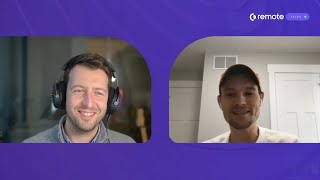
Wade Foster, CEO of fully distributed Zapier, explains how the company of 400+ employees across 30+ countries operates without an office. Zapier pays the same salary for the same role regardless of location, structures teams for 3-4 hour overlap, and uses weekly written memos and an internal podcast to keep everyone aligned. The company once paid employees $10,000 to move out of the Bay Area.
Chapters
Wade Foster, welcome to Remote Talks. It's very nice to have you here. I very much look up to your company, but for the people on the other side that don't know who you are and what it is that you do and what it is that your company does, I would love to hear it from you directly.
Yeah, so my name is Wade Foster. I'm co-founder, CEO at Zapier. Zapier is And it's the easiest automation platform for small businesses, you know, of any kind to basically help them automate their work. So we hook into 3,000 different apps, things like, you know, the common tools we use at work like G Suite and Slack and Dropbox and Trello and QuickBooks and Mailchimp, things like that, all the way to, you know, startups and niche software that is utilized in specialized industries like for real estate and accountants and marketing and all what have you. So anytime you're thinking about, hey, I got to connect this to that, integrate this to that, automate this and that, Zapier is likely there to help you out.
I think Zapier is turning 10 this year.
Yes, uh, in September.
And how big is the company today?
Uh, just over 400 people.
And where, where are those people? Where, where's the office?
There's no office. We've never had an office at Zapier. In fact, the only time in the company's history where everyone worked in the same location was when we went through YC in the summer of 2012. 3 founders lived in a 2-bedroom apartment in California for about 3 months. But after that, you know, we sort of went back to the distributed, you know, lifestyle, I guess.
Yeah, we did the same at GitLab in 2015. And I think we were 8 guys in one small house for YC. Yeah, it was tough for sure. It's like, Immediately turned us off of ever working in the same space again.
Yeah, if you can do that, you can get through a lot of things though.
Yes. And so, you know, how does Zapier work internally? Like what is the company culture like?
Oh, that's a big question. You know, we're, so a couple of things that are really important to us. One, we have a couple of values that help guide us in how we work. So first one is default to action. I think when you have a distributed company, You have to try to hire folks who are predisposed to finding problems and solving them. So you want those folks who are going to be naturally curious, naturally motivated, self-starters, spot an issue and get in there, roll up their sleeves, and just sort of take ownership of what that looks like. I think it's important because you don't have that office to fall back on where it's like, hey, I can see that that person's maybe stuck, or I can see that they're struggling a little bit. And so maybe, you know, I'll tap them on the shoulder, see if I can help them. Out or like, you know, you don't get that in a remote company as easily. Maybe somebody's figured out how to do it. But for us, we found that it's just trickier. So we try to hire folks that naturally self-starting. And so this provides— there's a lot of, you know, just sort of, hey, see that? Let's— can we fix it mentality? To accompany that, though, we have a similar value, default to transparency. So if you want folks that are going to spot problems, go solve problems, it's important to empower them with all the information they need to make good decisions. You don't want them to have half the information and thus make a half-good decision. So, you know, we make sure that things like company finances, strategy, systems and processes, metrics, things like that are all available, you know, in a transparent way. You can search them, you can find them in a wiki, like you can, you can go through Slack, like all that sort of stuff is out in the open. We try and avoid, you know, DMs and other types of communication that is in a private setting. For all but the most— there's some things that have to happen in private, HR personnel issues, things like that. But by and large, everything else we try and keep out in public so that folks can come along and ask a question and see that it was already solved before somehow. So I think that's at a high level our approach to work. We work distributed. We're across— 6 continents. The only one we don't have is Antarctica, you know, 30 countries, something like that. And so there's always something going on inside of Zapier, always work happening. We lean more asynchronous because of that. You know, there is— we try not to be too heavy of a meeting culture, but there always— there has to be synchronous stuff at times to work on things. So, and it's always changing is the other aspect. Like you grow and you realize, hey, some things that worked before aren't working as well now and you try and fix them. So we're constantly evolving as well. So I think that kind of gives a good high-level summary of how we work.
Yeah, it's very interesting to hear. I mean, there's a lot to unpack here, but one question that immediately came to mind is, you know, you have people all over the world. Do you— are there particular practices that you have? Like, do you, for example, build teams based on their location and how much overlap they have in working hours?
Yeah, this is something that has changed over time. You know, I think early on we were a bit naive about the impact of time zones. One of the first people we hired outside the United States, we hired in the UK. And when they joined, you know, we sort of talked to them and say, hey, we've never done this big of a time zone difference before. I'm not sure it's going to work, but we think it will. Hopefully you're up for giving it a try too. But I just want to be honest that we just don't know. It ended up working great. Like the— was quickly one of our best, most productive engineers on the team. And So we sort of were like, oh, time zones, not a big deal. And that kind of was our viewpoint for a little while. And then it kind of got to a point where it was like, oh, you know, I think we had a situation where we hired a new engineer in, you know, APAC, and then they were joining a team that had engineers in Europe and in Americas. And it just was like so difficult for this person to like get up to speed to be have camaraderie with the team that they were on. And it just kind of was like, ah, it just was everything that sort of normally worked just kind of naturally just didn't work in that situation. And so that kind of caused us to step back and reflect a little bit. And since then, we've been a little more intentional about how we approach it. Some teams have natural time zone diversity. You think of your support teams, you know, 24/7 follow the sun is great. Anyone that's doing like ops infrastructure, great to have that sort of 24/7 follow the sun model. But in your, like, maybe core product teams, you actually want, like, maybe 3 or 4 hours of time zone overlap. And so we've been moving more towards that over time. It's not a hard and fast rule. It's more of a guideline. It's like, hey, this is probably going to help these teams be more effective. And so we try and lean that way where, where possible.
And so is there In hiring globally, is there anything that surprised you? Like anything particularly good or bad that came out of like truly hiring across the globe?
Sure. I mean, the talent is incredible across the globe. I think that's one thing that was quickly obvious to us is that, you know, while there are some maybe executive level functions that are trickier to hire globally, by and large, your engineering roles, your support roles, your marketing role, sales role, there's great talent everywhere. And so, Limiting yourself to San Francisco or New York City or whatever, just sort of artificially limits the talent pool you have access to. So I think that's one thing that's just very obviously a good thing is the access to talent you get from hiring globally. The time zone thing, we talked a little bit, that definitely surprised us a little bit how it ended up being a little more tricky. You know, you know this well, there's a lot of compliance and regulatory work that you have to deal with when you enter in different countries and things like that. And so that's been a learning curve for us throughout the years, just getting good at, you know, how to make this work for folks and how to do it in a way that matches their expectation and is sort of fair and equitable across all the teams. So that's like a different approach versus when you're like hiring everyone in one city. Everyone has sort of the same market-based mindset around how employment works. So those are a few things that come to mind.
Yeah, that's great. And I mean, remote is about a quarter of the size of Zapier today. And so I want to learn here from you, you as a CEO, you want to be able to speak to the company, but obviously it's impossible to get the whole company on a single call at the same time. So how do you lead as a CEO? How do you speak to the whole company and whatever else do you do to just to make it work at such a global scale?
Writing is really what it boils down to. You have to get good at writing. You know, I write weekly memos to the team about what's on my mind, what matters. You know, sometimes they're very like company strategy, company-specific, like project-specific things. Like this matters, we got to do this very tactical thing here and here. Other times it's more, you know, about the vision and more inspirational. Sometimes it's very personal. It's like, hey, I had a kid and here's what I'm experiencing as a new time I had, you know, the first time I had a kid, right? So, you know, I do that every week and it just gives people, I think, a chance to hear from, you know, a leader every week. And so I think that's important. And lately I've been experimenting with my co-founders a little bit more on podcast format. So we're running an internal podcast. I got this idea from a crew at Shopify, I guess, has a pretty prolific internal podcast. And that's been fun. It's a little more free-flowing. A little more, you can get a couple people to sort of riff on an idea or a concept. And, you know, we'll see how it goes. You know, we've produced, I think, 6 or 7 episodes so far, and they're each on like an individual topic. And I expect that they become like pretty good canonical examples of like particular issues that we have inside of Zapier that are related to our product or company culture so that when new people join, they can go see like, hey, How does, you know, X leader in this very specific but very important part of Zapier think about this area of work? So we're trying that. We'll see how that goes. But I think that's— I think it's writing doesn't, I think, always get your personality across as well. And so the podcast is another way to just get that in. I think one of the things I've learned as we've gotten bigger and bigger, too, is that folks learn and digest things in different ways. And so, you know, if you can produce different mechanisms to like help people get on board and understand the direction, like that's probably a good thing. Not everyone's going to be like a prolific reader. And, you know, maybe in a remote team, it's probably more heavily indexed that direction, but you get big enough and it's not going to be everyone's preferred format. And so, you know, if you can mix things up a little bit, have different ways for folks to catch things, it's generally a good thing.
Yeah, we've been experimenting with videos a lot. So rather than like, I always speak at our all hands, but obviously only about half the team can make that at best. So we've been recording like little Loom videos. The nice thing is now you can also have them be transcribed. So one of my reports that recently joined, I recorded a bunch of videos for his first day. I was like, well, you know, you could just watch these in your own time. And then the time that we meet, we can actually have a discussion. And then he told me, yeah, I just read the transcriptions of them, which is really goes to your example. Like, yeah. I wanted to transmit this personality through the video, but like, that's just not his preferred way of consuming information. And so he just read them, which is kind of cool that that works as well.
Works great, right? Like people can sort of pick and it's a choose your own adventure sort of style of learning, which I think is good.
A few years ago, Zapier offered employees $10,000 to leave the Bay Area. What was the outcome of that? Did many people take that? And what was the response internally?
Well, we didn't actually have that many people employed in the Bay Area. I think this is one thing happens when you have these fully remote companies. It was just for Jane. Yeah, it was like, there's, you know, a couple of folks there, not a huge number. But the reason we did it is we did have, we'd hired two people recently that after getting hired immediately left, like one went to Pennsylvania and one went to Florida, I think. And so we were like, hmm, that's interesting. And, you know, had this idea to turn relocation on its head a little bit instead of saying, hey, you should move to San Francisco, you know, as a condition of your employment, you have to move to San Francisco. We said, Hey, it's a condition of your employment. Move wherever you want. And so hence, Delocation was born. And it's been pretty successful. I think we've— about half the people that we hire in the Bay Area end up moving pretty much right away and leaving. So I think it's definitely been something that has helped us attract some talent on the margins. I don't think It's one of those things that I don't think it probably affects most folks, but if you're the kind of person who's in the Bay Area and you're at that moment in time and you just need like a little bit of a kick to sort of make the move, it's one of those things where it can be the, the cherry on top that helps convince people to do it.
Yeah, yeah, I think, I think it's a, it's a great initiative. Um, one thing that all, almost all companies I speak to that are hiring, hiring globally are struggling with is, is around the idea of compensation as a whole? Is there anything particular that Zapier does?
Uh, you know, I think the, the gist of how we've approached it is, um, same country, same role, same compensation. And so the reason we've approached this, I think we're moving more and more to global markets, um, in terms of compensation. And so the roles that you play, you should, you should be paid the same as your peers. Um, you end up— the reason we ended up drawing the line at country is because there's a lot of country-by-country differences that you just have to take into account. And so we try and make it somewhat even across countries, but you can't when you just take into account things like currencies, benefits, compensation that governments provide. There's a whole bunch of things that just make it different to be employed in one country versus another. And so that's kind of where the sort of— we sort of say, OK, we do have to approach this country a little bit different than this country. But, you know, as much as we can sort of smooth out the differences, we try to. It's not perfect, as you probably very well know, and many folks who have tried to do this know, but it's the approach that we take. And I think it works pretty well on the whole.
Yeah, I think the country-by-country differences are— they are very stark. Just earlier today internally, we were discussing that, for example, in the Netherlands, the government fully subsidized the childcare. So if your kid goes to daycare, which is really expensive, it's like €2K a month per child, so like $2,500 at least, and the government fully subsidizes it if both parents are working. So that is a very meaningful difference. Like you can take, you know, $40K less in salary and you would still be in a really good position living in the Netherlands if you have kids.
Yeah, 100%. Yeah. Those types of differences I think are Like you said, they're stark in many countries.
And so, you know, the one thing we always hear from companies that are either not remote or recently have gone remote is like, it's very hard to build a company culture, to build a place where people bond and they, you know, form connections. How do you deal with that? Obviously you haven't been working from the same place and the same for a very long time. So how do you make sure people still connect with each other and build a company culture?
Yeah, this is a really important thing. You know, I think it helps that we've done it from the get-go. But a few things come to mind. One, we onboard folks in cohorts. So every 2 weeks, we have a group of folks that start together. At our size, it's about, you know, 10 people every 2 weeks or so that start together and they get onboarded as a cohort together. So they go through a set of live over Zoom onboarding calls or sessions, classes, I guess, mixed with self-guided material. The actual live stuff is really important because it gives them a chance to get to know different people. I think some companies take a fully, like, async approach to it, but that sort of reinforces the isolation aspect of remote. And so you actually need things that bring folks together. And so that's why we have, like, a mix of it, half and half, maybe about. And they get, like, their own dedicated onboarding channel in Slack where they can sort of hang out together, get to know each other. And you see those channels stay active. You know, they die down a little bit after the first month, but you'll see people chime in, you know, Hey, happy one-year anniversary to the crew. And they sort of become this, like, you know, well, they're a cohort together, basically. And so, you know, when we have our events and things like that, you'll see them hanging out together because it just builds a special bond when you onboard with somebody together. So that's one thing. We also have a whole set of off-topic channels that happen in Slack that sort of recreate that water cooler. We all— they're all prefixed with fun. And it's things like fun, sports, movies, gardening, parenthood, homeownership, like you name it, there's tons of these. And, you know, they're just places where people who share an interest can come hang out and get to know each other and, you know, chat about whatever is in the current zeitgeist of, you know, their lives, I guess. And it helps again, build those bonds and those connections. We do these things called Donut Pair Calls. I think a lot of folks do these now where it randomly pairs you up with one other person. You get to know each other that way. And then a lot of people within their actual core work teams have developed sets of rituals and ways that they sort of build camaraderie amongst them that are not a sort of tops-down initiative. That's something that's wholly unique to the— that group of folks that they sort of felt that that was really important to them. And so they do that stuff. I think the last thing that we found it has been really important is our retreats. So twice a year we do these retreats. We haven't been able to do one now for over a year. And we're noticing it, I think, you know. So even in a fully remote company, that in-person time is really effective at bringing that camaraderie, building those bonds, building that sense of community. And not having had that for about a year, like, we're feeling it. And so I think that's something that I, you know, if you're going to fully remote, don't forget that, hey, some amount of you know, in-person connection does go a long way.
Yeah, yeah, that's— it's, it's, you know, it's very sad to see that at Remote, we see this very starkly because we used to come together once a month pre-pandemic. We were a team of 10 people, so it was very easy. Today we are 110 people, a little bit more even. And so, you know, since the pandemic have started, we have not had that opportunity at all. So the majority of the team has never I have not met anybody in the team at all, including of my executive team, only, you know, my co-founder and people that I happen to have met before the pandemic, I have met in person. But yeah, across the company, almost nobody.
Is there—
did you see other things that, you know, this pandemic has changed meaningfully inside of Zapier except for the inability to meet in person?
Yeah, I think You know, I think this is not unique to Zapier, but I think it's, I think it's something that all of us are sort of trying to deal with. And I've seen some pundits call this the Great Reset, where I think a lot of folks have been cooped up in a house or wherever, like their apartment or a condo, whatever, wherever they live. They've been cooped up for over a year. You know, they haven't had a lot of control over their life. It's been disrupted in so many different ways. Maybe there's been illness and death in their family. Maybe they're dealing with Zoom school. Like what ha— like there's the, the experiences are unique, but there's many that are shared in common as well. And one of the things we've noticed is like, that just means there's a lot of folks that are, you know, taking a reset on like how they think about what they want. You know, we had a contract, a small boutique contractor that we used for a particular function in the company. And they notified us at the beginning of the year that the business owner, she ran the whole thing. She's like, hey, I'm going to stop doing this. I'm going to go to culinary school instead. And it was just like a totally, like, it was just a very much a left turn, right, from what they'd been going on. And we see that inside the company as well. You know, we've, our turnover is a smidge higher, not a lot. We tend to have like really, really good retention rates normally, and it's a smidge higher now. And I think a lot of it just comes down to this reset period where folks are looking for some control over their life, looking to have some way of taking their day-to-day into their own hands. And a job change is one. It could be moving locations. We moved locations. It could be, you know, getting a pet, as simple as that. It could be having a kid. We had a kid. It doesn't matter, but people are looking for some way, I think, to take it on. And that, I think, is one of those those things that we're dealing with at Zapier. I talk to tons of other CEOs and you can tell that inside their companies they're seeing that as well too. And so I think, you know, we all, the whole world needs, we need this vaccine, we need it to get out, we need everyone to get vaccinated. Hopefully we can get that happening by summer and, you know, we can have a big summer party.
Yeah, yeah, it's been a really crazy time. And I think even instead of remote, you know, And I'm sure it's the same in Zapier. You have a fast-growing company, there's a lot of exciting things happening, and you know, there can be pressure on people. We have to regularly remind people, look, this is the worst time. Like, this is the worst time. You have to take care of yourself. Next Monday we have a self-care day, which we stole directly from GitLab as an idea, which is everybody just has the day off on Monday. That's it. Like, you don't get a choice. You have the day off, you can do whatever you want. The idea is to just give you like a day of margin, a day of like, look, you have unlimited vacation days, we have a minimum set of vacation days, but we're going to force you to take this day off. So you— yeah, many people, including myself, take it off tomorrow, Friday off, so you have a really long weekend so you can, you know, recover a little bit or spend some more time with you.
I like that. It's— we've never— we actually have not done that. I think we maybe have done it once or twice, but I think it's good because one of the things we've done at Zapier is just our approach to vacation and holidays has to be very different when you're across all these different countries. And so like our approach to holidays is, hey, you take some holidays off based on where you're at. So just take them. Like you don't have to, you know, get approved. There's no official company holidays. And because they're different between cities, or not cities, between countries, you might still have like some of your team in the office. And so it creates these weird, well, not weird, it just creates this tension where folks naturally get drawn back into the office because, hey, some folks are working and they're creating you know, content or creating tickets or creating whatever, and someone happens to see it, like there's that pullback. And so in a remote culture, I find you have to be like, you have to, like, it feels like you're almost repeating yourself ad nauseam. That's like, hey, it's okay. Take time off, do this, do this, do this. We constantly are saying that over and over and over again. And I don't think we can say it enough, candidly. I think, you know, I've never found in our history of the company that we have said it enough times. And so it's something that we just get used to. It's re— re-important. Take care of yourself. Take time off. Don't burn yourself out. It's— remote, I find, tends to have the opposite problem in that regard than in an office. I think folks think that remote workers are going to watch Netflix all day. I think it's the exact opposite. I think they're— if you hire right, their motivation to do well is so high that they will risk burning themselves out to prove that they are working well.
That's a great place to end. Thanks so much, Wade Foster.
Yeah, thanks for having me.
More from Wade




From Workflows to Agent Teams: Wade Foster on How AI Reshapes Enterprise Automation

The Top Scaling Lessons from Zapier's AI Transformation with Wade Foster, Co-Founder & CEO of Zapier


Why Companies Force AI: Zapier’s CEO Wade Foster Explains | Belkins Podcast Episode #21



INSIDE How AI Startups hire, AI Roundtable with Wade Foster, Mikey Schulman, and Ali Ansari | E2225
