Rounding The Bases with Wade Foster
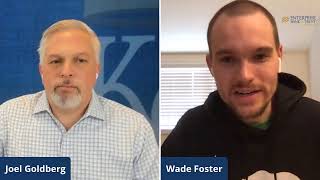
In this episode of the Rounding the Bases podcast, host Joel Goldberg interviews Wade Foster, co‑founder and CEO of Zapier. The conversation traces Wade’s early life in Jefferson City, Missouri, his shift from aspiring astronaut or baseball GM to software enthusiast after a post‑2008 job search, and the serendipitous formation of Zapier during a Startup Weekend hackathon. Wade explains how the company’s core values were defined early, embedded into hiring and performance reviews, and became the DNA that sustains a fully remote, 400‑person, globally distributed team. He describes the product’s evolution from a clunky first prototype to thousands of daily iterations, emphasizing the importance of simplifying the user experience. The discussion moves to culture during the COVID‑19 pandemic, highlighting the financial and cultural foundations that allowed Zapier to offer relief funds, flexible work, and employee support. Wade also shares personal anecdotes about music, baseball analogies, and lessons from missed opportunities, such as not going full‑time sooner. The interview concludes with advice on keeping remote teams engaged, the distinction between values and camaraderie in culture, and Wade’s long‑term vision for Zapier as the go‑to platform for easy automation.
Chapters
Welcome into Rounding the Bases, the podcast about culture and leadership with a baseball twist, presented by Enterprise Bank and Trust. Hashtag no stopping you. Enterprise Bank and Trust was founded by entrepreneurs with the core focus of serving privately owned small and medium-sized businesses who have a story to tell. Enterprise Bank's commitment is to listen, learn, and guide clients to a lifetime of financial success. Enterprise Bank together There's no stopping you. My name is Joel Goldberg coming to you from the Kansas City Audiovisual Studios. They create engaging spaces. Check them out at KCAB.com. I have an episode today that I've been looking forward to for, I think, probably about a couple of months since we set up the interview. And I think it is one that entrepreneurs will learn from, leaders will learn from, basically anyone that is interested in a culture within your organization, which I think should be everybody. Will find this one fascinating. If you're interested in time management and efficiency, this will certainly be an important one for you too. My guest is Wade Foster, the co-founder and CEO of Zapier. If you know what they do, you know. If they don't, we'll talk about it. And you can certainly find their website at zapier.com. On the website at zapier.com, the description is we're a team of 250+ people living and working remotely in 24+ countries. We're 100% distributed team helping people across the world automate the boring and tedious parts of their job. We do that by helping everyone connect to web applications they already use and love. As for Wade, on his bio, it reads, 1987, born in the middle of January, a January snowstorm in Missouri. Yes, he is from Jefferson City. He says, I didn't always have entrepreneurship in my blood. Growing up, my dad worked for the state and my mom a pharmacist. There wasn't much entrepreneurship in my extended family either. Teachers, lawyers, doctors, insurance agents, but no entrepreneurs. Um, just live the typical upper middle class life, playing all the sports. And then he ends up co-founding a company that has made it big, and he's out in California right now. It's, to me, the phenomenal entrepreneurial journey and story that I think so many people out there, whether you're in the Midwest or on the coasts or around the world for that matter, have dreamed about. And Wade is living that and staying humble too. Brand new father. And I'm excited right now to bring in the— we'll call him the pride of Jefferson City, but now out in California, Wade Foster. Wade, how are you?
I'm doing good, Joel. How are you?
I'm doing great. One, congratulations. You were telling me that your wife had a baby in the middle of all this pandemic. And I've got to think— I'll dig right into the sentimental side of things— that that has to help keep perspective whenever times are good or bad.
Oh yeah, I think, you know, 2020 was hard for so, so many reasons. But for us, like, you know, one of the best things ever happened to us. And so we feel, we feel pretty grateful for what we've got right now.
Well, it's awesome. And obviously your journey, which will come second to family, it should always, is an amazing one, especially for a guy that didn't grow up, from what I understand, envisioning this. What were you envisioning as a kid growing up in Jeff City, Missouri?
Well, you know, honestly, I grew up thinking, hey, you know what I want to be? I want to either be an astronaut or I want to be a GM for the Cardinals. Those are the two things that I was like, hey, one of those things would be amazing. And then, you know, I got to be in my teenage years and I was like any teenager where I was like, I don't want to do anything. Like, I'm not interested in any of this stuff. I just want to hang out with my friends and have fun. And, you know, it took me a while to sort of find my passion, find what I care about, and then, you know, build the skill set that made it capable of pursuing those things.
I think it's fascinating too, because in reading up on your story and your journey, it was so similar to what so many successful people, or those that have struggled and failed along the way, and we all have, have gone through, where you almost thought, this is where I'm supposed to go, but it didn't feel right. That world, I think, is changing some. You could see it in the schools now. It was always, this is the path, this is the way you do things. You go through high school, you go through college, you move on, you check all these boxes. And there's so much more independence right now. And we're seeing even more of that during this pandemic with the work at home. But tell me about that process of understanding that you needed something different than the path you were going down.
Well, yeah, you know, I went to high school in Jeff City, you know, went to University of Missouri, big state school, in part because I was I was like, well, I don't really know what I want to do. So at least at Mizzou, I have a lot of options on the table. If I can figure something out, I will. I was always good at science and math. And so people were like, well, maybe you'd like being an engineer. So I went to engineering school. School always was like, it came pretty natural to me. It's not something I had to work super hard at. And so I never like went really sort of off the path to go figure out what do I really love? Like, what is the thing that I wanna be spending my time on? Honestly, it wasn't until after the financial crash in '08 where I was looking for jobs, for internships, for anything, couldn't get anything. No one was hiring. I was like, "Wow, what am I going to do?" It really forced that question. I was fortunate enough to find a small software company in Columbia, Missouri that was looking for some marketing help. I didn't know much about marketing at the time. You know, read a book and sort of, you know, talk my way into an interview and they hired me. And it was a 7-person company. They were working out of a house. And it was just so different from anything that I'd ever experienced before. You know, people were wearing shorts and t-shirts to work and we were just building things on the, like, on the internet. And you would put it up on a website and someone halfway across the world would buy this thing. And to me, that was just, like, it just opened my eyes. I was like, oh my goodness, the fact that, you know, these sort of 7 people, these random folks, can click a couple keystrokes on a computer and then, like, you know, someone in, you know, the UK or in Australia could find your stuff and buy it. Uh, it just opened my eyes to sort of a whole new world, and I really fell in love with software at that point in time.
Which is amazing because that's not what you envisioned growing up, and, and then it turns into the explosion of Zapier. It wasn't just you, I know that one. So let's talk about that a little bit, the process of the three of you getting together and making this work and, and continuing to make it work.
Yeah, so, you know, another, I think, pretty fortunate thing along the way— I'd grown up playing— one thing I was really into as a kid was music. I played saxophone since fifth grade. And so, uh, all through, whether it was in high school and college And even outside of school, I played in quartets and big bands and, you know, just what, you name it, I would sort of play in anything. And one of my co-founders is a guitar and bass player. And so he and I had met each other at Mizzou and ended up playing in a quartet together. And so we gig around Columbia from time to time. And while we were doing that, we were always thinking like, maybe we should build something together. What should we build? And we'd be tossing back an idea for, this type of company or that type of company or this product or that product. And eventually he had this idea for Zapier. And, you know, he had this other colleague, Mike, that he introduced me to. And we went to this event in Columbia called Startup Weekend and built the first version of Zapier in about 54 hours. It's a sort of all-weekend hackathon. And we built the first version of it that weekend. And, you know, we had a lot of fun working on it together. It was The kind of thing that I was like, wow, this is the sort of thing that I've been looking for to be able to sort of work on an exciting problem space like this, do it with, you know, people that I really like working with, people I really enjoy just being around. Like, I, you know, we could be doing the most boring thing in the world and I'd love doing it with these guys. It wouldn't matter. And so like, to me, that was like, okay, let's, let's figure out how to spend more time working on this. And so, you know, that, that after the weekend ended up, we started up working on Zapier nights and weekends for as much as we could just to try and get the thing off the ground. And so that's where the story began.
Was there a moment or a thought that weekend of, okay, we're on to something? Or maybe you had that in advance or maybe it came later, but what was that aha moment?
Yeah, you know, you know, I think in the back of our minds we were like, hey, maybe this could be something. It feels good, but you never really know for sure. To me, the moment that really set in that we were on to something was when we got our first customer. I remember emailing a handful of colleagues, some folks I'd found on the internet that were asking about problems that Zapier could solve. And one of our first— well, our first customer emailed back and said, hey, I am interested in this. And I gave him access to the software. He couldn't figure out how to use it. It was too complicated at the time, not kind of buggy, hard to use. And so we jumped on Skype, I walked him through it, and as we're walking through it, I can see how much of a struggle it is for him. I'm like, "Oh boy, this is not good. Like, we're gonna have to do a lot of work to get this to be a lot better." And, you know, we get to the end, he has his first Zap set up. He— it's taken his— the Zap he'd set up was a lead form on his website, so he's collecting email addresses and putting them in his email newsletter automatically. And so we go to test it. He fills out the form on his website. It automatically puts him in his emails list. His eyes light up and he goes, "Wade, this is gonna save me so much time. This is gonna be great." And in the back of my head, I was thinking, "You just went through this horrible setup process, this tedious, confusing, you know, setup process. And at the end, your reaction is, 'Oh my goodness, this is gonna be so great for me.'" And so that to me was the insight where I felt like if we can just get this to be simple enough, it's game over, because these people love it even when it's hard. If we can make it so that they— that it's easy, you know, it will be unstoppable.
How many iterations over the years? I mean, it's thousands, right?
Yeah, you know, we, we ship code to the site daily, and so every day we're, you know, identifying little things that are confusing or adding little new features here and there, changing copy here and there just to try and make things smoother for folks and make it easier for setup. So countless iterations.
The other thing I love when companies make it, especially startups, and you start with 1 or 3, 2, whatever, in your case 3, is to see where it, where it has gone over the course of about 10 years, right? Where we're closing in on around 10 years. How many people from what started as 3 guys from the Midwest? All 3 of you from Missouri, right?
Yeah, all 3 of us grew up in Missouri. Uh, uh, me and Jeff City, one from Lynn, another from St. Louis. And today, you know, it's an over 400-person team. Uh, we're spread across the United States. I think we're 11 states that we don't have people working in yet. So we're 39 states, and then across the world too, over 30 countries that we have people working in. It's, you know, I have to pinch myself sometimes.
Well, and that's one that's obviously amazing that you three were able to build something that has lasted and has grown and has affected so many people in their daily lives. The other side to it is I know how important culture is to your company and to you. It's in every article that anyone could possibly read about you guys, which really is what caught my attention being someone that studies and speaks about culture on a regular basis. I think what makes that all the more impressive is doing it remotely. It's easier to build a culture when you could see everyone face to face every day. And I think that a lot of companies right now are trying to figure out how to sustain their culture at a time where they're away from each other. But you already had that. So my first question on that topic is, what's the key to building and sustaining a culture when you're remote?
Yeah, for us, I think it boiled down to really establishing what our core values are early and then making sure that those were things that we live up to. You know, I think a lot of teams and companies think of culture as, you know, the ping pong table that they got in the back office or the happy hours that they go to. But candidly, I never felt that, you know, those are the reasons that people show up to work every day. The reason that people show up to work every day is because they care about what you're working on. And so, if you can create a culture where the people that are there care about the mission, care about what you're trying to do, it kind of doesn't matter if it's remote or in an office. You know, people are going to want to show up and doing that. And so we, you know, we establish those values very early on. We set and we make them part of our hiring process. We make them part of our performance review process. And as a result, they're this undercurrent that's sort of just in the DNA of the company now. Employees across the business will cite the values regularly. They'll advocate for them regularly. They'll push back on me. They'll say, Wade, I don't think that that's part of who we are. And I'll have to think like, okay, fine, fine, you're right. So if you get it right, you start to feel it's not just what Wade is saying or what the co-founders are saying. It becomes what the community shared values are. And that, I think, is when you really know you're on to something, when it's not you as the owner or the founder of the business that has to advocate for it, when it's the people that you've brought in that are the ones that are propelling it forward, you're in a special spot.
It's very much what I've seen in, and I'll use your Cardinals, I won't hold that against you. You know, I worked in St. Louis from 1998 through '07 and I've been gone since '08. So I've been in Kansas City a lot longer than I was in St. Louis, but nothing's really changed there. Some teams have been better than others. Some teams have been worse than others. But they have been able to keep their culture and their values. What they call the Cardinals Way has remained the same so that when new players come in, they're not searching for it. They're taught it, uh, every single moment of the day, and it just keeps passing itself on. I've now seen that with the Royals in the last, uh, 7 or 8 years or so. And even though they went down in wins and losses or wins, the culture stayed the same. They never had that when I got here. So let's talk about that, what it means to have so many advocates for your culture within your community.
I think you just hit it on the head. It's one of those things where when the community takes ownership of it, it's something that endures from generation to generation, right? You see this with a team like the Cardinals, you know, those players are that, that, you know, you were around in the '90s and the aughts, most of them are gone. Like, they're not there anymore. But every spring training, you still hear people talk about the Cardinal way and how it's done. And, you know, I think a lot of fans around baseball sort of roll their eyes at the Cardinals when they hear that said. Um, but, you know, you see it show up in the wins and loss record at the end of the day. You say, hey, how are they able to get Sometimes these players, you look at them and you go like, on paper, these players shouldn't be able to live up to that expectation. But oftentimes, the Cardinals find a way to eke out a couple extra wins compared to what maybe they should have based on the on-paper talent. And I think it's hard to attribute that to anything other than the culture and to the commitment to playing baseball a certain way. Well, it's the same way inside your business. When you set those standards, I think you can take folks who maybe otherwise, maybe they're not the A+ talent, but maybe they're B+ talent, but you sort of get people working well as a team, you understand, you have a shared commitment to the mission, shared commitment to the values, and all of a sudden you realize, hey, we're actually capable of a lot more than what we would have been capable alone. And to me, that's what these sort of getting these values right makes it possible to do.
I couldn't agree with you more. And it's easier said than done, in my opinion. But when it's a focus every single day, I mean, that's one of the biggest things that I've learned, Wade, is culture never takes a day off. And we have all the different cliché expressions and all that type of stuff, but there's no box to check. It, it never goes away. To me, the, the companies that have been able to succeed during this pandemic not only found a lane and found a need and took care of people, but they, they stayed true to their culture. And that's hard to do when your back's against the wall and you're a little bit panicked and you're just trying to find anything, that it's easy just to cut those corners. But I've been so impressed with so many of the companies that have stayed true to who they are. And I know that you guys have too. What I want to ask you about this pandemic is how have you made it work? You had an advantage going in because you had all been working remotely, but you're now having a workforce, employees that are stressed, are going through things, are locked up in their homes in certain cases, different situations depending on where they're at, whether it be physically or politics or whatever it might be. How did you push through that as a company?
Yeah, well, you know, I think honestly the answer is not what we did during the pandemic. The answer is what we did in the 10 years leading up to the pandemic. It was establishing the strong culture and values. It was running a business based on core financial metrics and making sure that we are generating revenues, generating profits, building, building a balance sheet, building a loyal customer base such that when tough times came, it meant that us as a business, we could serve our employees, we could serve our customers because we had some give in the system, we had some slack in the system. And so when we noticed in March, hey, you know, a lot of our customers are going to have a tough time. A lot of our employees might have a tough time. It enabled us to do things like set up a customer relief fund and say, hey, if you're a small business in, you know, travel or in retail, like, you know, we can, we can discount your or give you free Zapier for, you know, 90 days or something like that. We can give our employees a day off or a couple of days off. We could let parents work half time. We could do these things that said, hey, we recognize that this moment in time is rare. This isn't how the world is normally going to operate. But given that where we're at, us as a company can do something to give back to the customers, to the employees that have given so much to us over a decade. And that's not something that you can choose to do if you haven't committed to running a business that way for years and years and years in advance. You know, a lot of people weren't in that situation because, you know, maybe they, they run super leveraged, or maybe they hadn't built the profits in place, or maybe they hadn't built the culture. And so they were caught in a situation when the pandemic hits that, you know, they didn't have that goodwill, they didn't have that balance sheet built up that just made it harder for them.
Yeah, and it's a reminder of why it's important to put that work in. That it will pay off for you down the road. And that reminder to, to just take care of people. You can, you can never go wrong in taking care of your own people and others. And it, it comes back. It just does. And it's who you are. Either you are or you're not. All right, time for the baseball-themed questions. We'll, we'll let Wade have it, even if he is a Cardinals fan. Brought to you by Kissa Construction. Trust a team, reliable partner. Check them out at kissaco.com. Professionally speaking, And I'm sure we could just say starting Zapier, maybe that's it. I don't know. What's the biggest home run that you have hit?
Yeah, I mean, it's, you know, I think starting Zapier is hard to pick anything other than that. But what I will say is I'll go with actually something different. It was starting to play music with my co-founder Brian, because I think that led to everything that Zapier contributed down the line, us getting to just sort of hang out and go to gigs and all that sort of stuff. It led to to me meeting Mike, it led to Zapier starting. So to me, that sort of chance encounter was one of those just, just changed my life, honestly.
And I'm sure an initial build to some chemistry that musicians can have in understanding each other at a level that has to translate to business.
Oh, absolutely. You know, I think you get used to— musicians understand what it's like to play as a team, right? You want the group to sound good. It's not about one player sounding good. And so you understand that. Team aspect just innately.
Well said. All right, how about a swing and a miss and what did you learn from it?
Yeah, swing and a miss. You know, I think one of the things I think about here is, you know, always trying to put the ball in play, I guess, to keep the baseball analogy going. So you don't— I tend to not like to take big, big chances where you sort of can wind up in a really tough spot. So most of my misses have been pretty small. You know, the one that I think in hindsight I would have changed is just going full-time on Zapier sooner. We spent 9 months working on this as a side project. And knowing what I know now, we should have been willing to see, read the tea leaves a little bit and see the reaction some of those early customers are having and saying, you know what, this is one that we should commit to all in. And I think until you've really experienced what it is to be on to something, you don't always know that, like, well, is it actually going to turn out the way that I hope it was? And so I think we were probably a little more cautious than we should have been. In those early days.
And then the final baseball-themed question, the small ball question. That's what I wrote the book on, Small Ball, Big Results. What are the little things that add up to the big things for you, Wade Foster?
To me, this is showing up every day, helping your customers out. You know, you have all these folks that rely on you, that their business doesn't work without us. And so for me, being able to get up every day, you know, if customer needs help, Answer their emails, do it timely, do it with a smile on your face. And that's the kind of stuff that builds loyalty over years and years and years. And not glamorous, not super sexy, but it just, it pays dividends if you commit to doing it day after day.
The small ball question to me too is essentially, at least when I started asking that question to guests, it was my culture question really. I mean, it's so much of who you are, your values, And I was reading an article where you talked about culture having two definitions or seeing sort of two versions of culture. And it all made sense to me. I just had never seen it spelled out this way. So tell me about that. I was really fascinated by your view on that.
Yeah, well, you know, I think of, you know, when a lot of people ask about culture, I think what they're really asking about is camaraderie. And so in my mind, I think culture is is the values that you have. It's the commitment to the craft that you, uh, are serving. And so I think that's one aspect that's really important, uh, and most people forget about that. That to me is 80-90% of getting it right. And then there's the other aspect, which is camaraderie, which is how do we do, you know, how well do we work together as a team, you know? Do we have the, the aspects, the chemistry to sort of build something good together. And that's, you know, the part that I think for us has been something we've had to actively work on because we're so distributed, because we're remote in nature. You have to build new, new ways of working that allow people to get to know each other and feel like they're part of a team and feel like they're a part of a community and have a sense of purpose together. And so I think that, you know, the values versus the camaraderie aspect is such a good distinction to keep in mind when you think about culture. Culture can often be this amorphous concept that is hard to put your finger on. And so the more I think you can make them concrete definitions and work on them in a way that are a little more tractable, it's easier to have success in building a strong culture.
All right, 4 final questions as we round the bases. I'll hit you with 4 different ones. The first one is this: that music career, and it was a little bit of a money-making career for a while, turning into entrepreneurship. And if I read it correctly, sort of started sparking that entrepreneurial journey when you were at the Governor's Mansion. Tell me about that.
Oh goodness. So I was in 9th grade and I, you know, my saxophone instructor had a quartet that played at the mansion. And, you know, I think they must have been pretty desperate. One of the fourth members had moved away. I think there was maybe a health issue. I'm not entirely sure. But they needed a fourth member. And so they thought the best thing they thought to do was to ask this 9th grader to maybe come try out and see if I could play. And so I went to a rehearsal with them and tried to sort of hang with what they were playing. And they thought I did well enough, or that desperate thing again, they said, hey, why don't you come and play the gig with us next week? And so I went and played for 2 hours, got a free meal out of it. I made $50 and just thought, as a 9th grader, I was like, wow, this is the life, right? How could you do anything other than this? And I remember that contrasting to that summer, my first sort of real job was as a lifeguard. And you'd work out in the hot sun, you're basically babysitting people's kids, you're cleaning toilet paper out of locker rooms, and it's not a super glamorous gig. And I'd work all day and make something like $40. And I did the math on that and I said, Hey, 50 is more than 40. I should be a professional musician. That's definitely the life for me. So that music start definitely sort of got me thinking about entrepreneurship in a little bit different way.
So interesting. And the start of a long and successful journey. Second question as we round the bases. Yeah, everybody always asks the question about an influential book or what are you reading right now? But if I saw correctly early on, it was a Seth Godin book. That provided you some inspiration. Is that the case?
Oh yeah. I mean, I was a reader of Seth's, not just his books, but also his blog daily. And I just thought, you know, he does such a good job of saying so much with so little, right? You know, he'll write a couple paragraphs and it'll change your mind in terms of how you think about things. And for me, getting exposed to somebody who thought about how to have an impact in that way, caring about your craft, caring about your time, caring about your customers. It was so different from what you learn in school. What you learn in school is, here's your assignment, do your assignment, here's your next assignment, do your next assignment. And Seth was saying, nah, it's not really— real life's not like that. Um, real life's more about who you serve. And so to me, yeah, his, his, his material was one that definitely opened my eyes a little bit.
Love the message on that one. Third question as we round the bases, and this is one I think that For a lot of my listeners or viewers that are tuning in, they'll say, okay, if they're running a company or they're in management, our people are getting antsy right now. They've been home, they figured out, they pivoted, they've made it work. We're being successful, hopefully, but everybody's getting fatigued. That expression we now come to learn, Zoom fatigue, and they want to get back to work. Not all of them want to get back to work. And you talked about keeping people connected and successfully doing that before the pandemic and during the pandemic. What are the biggest keys to keeping people engaged? And I agree with what you said before, too. The ping pong table or fill in the blank, the keg in the community room, it's fun. That certainly helps the camaraderie piece. It doesn't necessarily build the culture. It doesn't solve all the problems. So you could try these little tricks even virtually, but it's not going to make everything go away. I think it'll temporarily make some people happy for an hour or two. So how do you do it? What's some advice you would have?
Well, shoot, you know, I wish I had a silver bullet for folks. I think even, you know, us here at Zapier, we're tired now, you know, a year into this pandemic. I think, you know, I think a lot of it's just trying to listen. Be an active listener and understand where your employees are coming from. What are their needs? What's making life hard for them? And then, you know, putting your creative thinking on and figuring out, okay, is there something I can do this week or that week to help make life a little easier for folks? You know, a lot of that's been, for us, has been just being extra flexible and saying, hey, you know, if you've got to attend to kids, if you've got kids on Zoom class that you got to, you know, give up a space in your house, okay, that's fine. A lot of that's saying, hey, we're going to lean on asynchronous work a lot more so that you don't actually have to get on Zoom. Instead, you can read an email or read a document, and that can be the way that we sort of give feedback on the work that we're getting done. And so I think a lot of it's just trying to be willing to adjust how you work to serve your employees and understand that we're working in new working conditions. And so a lot of that's just listening and being creative and trying to adjust. I don't think there's any silver bullets here. It's, you know, year-end, it's wearing thin on all of us. And so I think we're all pretty optimistic to see these vaccines get going and hopefully, you know, this year see life get a little bit back to normal.
Agreed. And it'll be also interesting to see what life, what the new normal looks like, because it'll never be what it once was. But I do believe we'll be going back to a lot of those elements which we're all starving serving for so much right now. Final question, the walk-off long-term. Now you're about 10 years in. Where do you see Zapier 10 years from now?
For us, you know, we want to make automation really easy for everybody. I think there's so many folks, no matter your line of work, that can benefit from automation, can benefit from having a computer that does a little bit more work for you rather than you doing a little bit more work for the computer. And so for us, that's what we're trying to figure out. And how do we make that happen? You know, I expect to be working on this for decades to come. And so hopefully over the next several decades, we'll just keep being able to build things that, you know, the listeners love and makes their life a little easier.
Well, can't wait to see how it continues to change and evolve. I told you before we got on, I am gonna— I'm gonna learn how and sign up how to use Zapier because I need the help. I need the automation. I need to make my life a little a little bit more simple. So I'm looking forward to that. I'm glad that we had the chance to have the conversation. Congratulations on all of the success with Zapier. More importantly, congratulations to you and your wife on the baby. That's the greatest news of all. And it was great to be able to spend time today with you, Wade.
Yeah, thanks so much, Joel.
All right, that is Wade Foster, the CEO and co-founder of Zapier. And my name is Joel Goldberg. It has been another great episode here on Rounding the Bases. Real quick shout out to my sponsors, Kansas City Audiovisual, Kisa Construction, and Enterprise Bank. Businesses often come to Enterprise Bank because they demand and frankly are worthy of more than the status quo and need a local partner who understands their business. If you want to reach me, I'm all over social media. You can find me there. My website is joelgoldbergmedia.com. I've got plenty of books if anybody's interested in that, Small Ball, Big Results. And of course, you could find Zapier at zapier.com. I'm Joel Goldberg. Thanks for listening to Rounding the Bases and hope to catch you next time.
More from Wade




From Workflows to Agent Teams: Wade Foster on How AI Reshapes Enterprise Automation

The Top Scaling Lessons from Zapier's AI Transformation with Wade Foster, Co-Founder & CEO of Zapier


Why Companies Force AI: Zapier’s CEO Wade Foster Explains | Belkins Podcast Episode #21



INSIDE How AI Startups hire, AI Roundtable with Wade Foster, Mikey Schulman, and Ali Ansari | E2225
