Startup Grind hosts Wade Foster (Zapier)
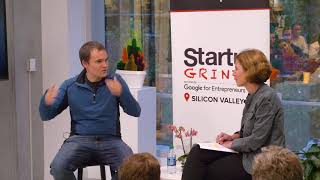
In this interview, Wade Foster, co‑founder and CEO of Zapier, shares the unconventional origins of his career, the humble beginnings of Zapier, and the strategic choices that shaped its growth. He recounts a teenage gig as a saxophonist, the early days of building integrations on nights and weekends in Columbia, Missouri, and the decision to take only a modest seed round after joining Y Combinator. Foster explains how Zapier’s product‑first, partner‑driven flywheel—first hand‑built integrations, then a developer platform that lets partners create apps—fuelled rapid user acquisition. He discusses the company’s remote‑first hiring model, the practicalities of managing distributed teams across time zones, and the evolution of pricing from a whimsical Fibonacci‑based plan to a data‑driven, usage‑based model. The conversation also covers venture‑capital interactions, the importance of partner quality and QA, leadership influences (Netflix, HubSpot, Basecamp), the shift from founder‑centric management to structured people‑management, recruiting senior talent, growth experiments that succeeded or failed, and the long‑term vision of making knowledge workers more productive through better distribution, education, and frictionless onboarding.
Chapters
You want to tell more about that job?
Well, we— I wasn't exactly a professional saxophone player, I wouldn't say. I got a— my teacher at the time, he was— the fourth member of their quartet moved out of town and they were like stranded and they needed a fourth player. And for whatever reason, they thought this 9th grader might be able to cut it. I don't know why they thought I was capable, but they invited me to come play. And they played at the Governor's Mansion in Missouri regularly. So I got to go play at this Governor's Mansion, and I got $50 for 2 hours and a free meal, which was awesome for a 9th grader. And it kind of spoiled me because the next summer I worked as a lifeguard, and I made $48 for 8 hours of work in the hot heat of Missouri. And that's how I decided, you know what, I think I should be a professional musician for a living, because they get paid $50 and a free meal for 2 hours.
Well, we're glad that you actually got an engineering degree, so, and got yourself into tech.
It worked out all right.
But still kept that as a hobby, which is a great story.
Yeah, yeah.
My story was a little bit different. So I came, or my family came from Ukraine as refugees, and we couldn't find a good job, or frankly any job, and I was the only one who spoke English. And the only job I could find actually did not require much English at all, but it required ringing the bell. And it was a tough job, because when I would go home at night, I would still have that bell ringing in my head. But later on, we opened our own computer business, and I got passionate about computers, and now I'm lead marketing at Intercom. For this conversation, you and I talked about a lot of questions, but there are questions you guys can add, so feel free to add your questions and we'll try to be respectful and include those. But I'll get us started. Tell us a little bit about what Zapier is, what do you guys do?
Yeah, so in a nutshell, Zapier helps you connect all the common business tools that you use. So we have integrations with things like Intercom, things like Google Apps, Slack, Trello, Salesforce, 1,300 different apps, and you can connect them together, build workflows, automate things, and hopefully be a little more productive at work because of it.
Yeah, and that's a huge value, right? Not to have to build all of those integrations. So where did the idea come from? Like, and tell us what the early days looked like for you.
Yeah, so we, Brian and I, Brian's my co-founder, we were working at this mortgage company in Columbia, Missouri, and we were freelancing a lot nights and weekends and things like that. And we got asked by some clients to build these one-off integrations, and we built, I remember building a PayPal QuickBooks integration, we built like a WordPress plugin that, a WordPress Forms plugin that helped you save things into Salesforce, and Brian messaged me one day on iChat and was like, hey, I think we can build something that would allow people to set these things up without having to know how to write code, how to deal with all these APIs, and I remember those two contracting gigs we did, plus at the time I was working with the Marketo API at work, which, which was, I wasn't being as successful as I'd hoped doing that. And I was like, ah, if we had a tool like this, this would be a huge help. And so we started working on this with Mike, our third co-founder, nights and weekends. We're in Columbia, Missouri. There's no such thing as like, you don't walk out the door and like a stone's throw from like an angel investor that'll throw you a couple hundred grand or whatever. That doesn't exist in Columbia, Missouri. So we worked nights and weekends while we kept our day jobs. and you would work from coffee shops and from our apartments and from, there was this grocery store that had takeout Chinese and a place to eat, and so we would work there a whole bunch. Just trying to get the thing off the ground, and we did that for I think 9 months before we had a version that was ready to launch. So we would be, it was literally a grind. We would do our day job, 6 PM would roll around, we'd go get some food, and then we'd work until 2 AM, and then, We'd start, go back to the day job a little tired, and rinse, wash, and repeat for 9 months until finally it was at a spot where we could do this full-time.
That is a great story. And I know a lot of people, I've been just talking to people here as we were grabbing food, share that, where they had to do both. It's pretty inspiring to hear that you could do that and build a whole company out of it. I think what's interesting, you made a decision not to raise any funds. Not to have any external funding. Not only because it wasn't available, I think it was actually a conscious choice, right? Can you speak a little bit about why?
Yeah, sure. So we did take a little bit of funding. So we went through YC in summer 2012 and raised about $1 million in seed funding after that. But this was after we'd launched. For us, it was, the reason we took that at the time was I was doing customer support from, I'd wake up in the morning and I would do customer support until like 3 PM every day. And super valuable, like you learn a lot talking to your customers, but it was also tough to like build the next, the things that they wanted. They were asking for features or there was bugs and it was like, oh, we gotta go build this stuff, we gotta go build this stuff. And so we were making some money but not enough and we felt like we could see the future clearly where it's like, well, if we could just get a little bit of a head start, like some money would get us there. And so we took some money and it did get us there. Like we were able to take that and never never have to raise money again. And in part because we had good distribution channels. We had good word of mouth. We had a product that was easy to use. And so that allowed us to attract customers really quickly and become profitable fairly quickly. And once that flywheel was working, we've always felt like the company was growing at a pace that was as fast as we could keep up with. And so putting more money in didn't, like we wouldn't have been comfortable. It's like we're just keeping the wheels on the bus as is. So going faster would probably not have been helpful. Helpful for us. Totally.
So tell us a little bit more, and especially for folks here who are interested in going and having those conversations with venture capitalists, can you tell us what was that experience like? Any kind of feedback or tips for other folks? How do you build relationships with venture capitalists? What should you keep in mind?
Yeah, I think the thing that I learned over the years is that Like, it's VCs' jobs to take meetings with entrepreneurs, and they'll take as many meetings as you allow them to take. But your job is to build a company, and so you have to focus on building the company. Otherwise, they'll just keep eating up your time. And it's not malicious or anything like that. It's just they're trying to get to know you, and they're trying to see if you could be someone that could be a good partner. But the reality is, like, you gotta focus on your customers. That's gotta come first. And so, I think the thing that I learned over time was like, okay, it's flattering that they're interested. It's flattering that these big names are, you know, that have funded all these wonderful companies want to talk to us. And it's okay to take a meeting to get to know them, to like tap into their network and things like that. And if you do think funding is in your future, like that's going to be useful, but don't get sucked into just taking meetings for the sake of meetings. Otherwise you'll never have time for your customers and for your product and things like that. So I think it takes a lot of, It takes a lot of kind of just like self-awareness to have those meetings productively, because like I said, the VCs are trying to sell you on investing in their company, and so they're going to flatter you, and they're going to tell you that you're great, and they're going to tell you that like, oh, I think your thing could be the next big deal in the world. That all feels good, but like you got to keep your customers front of mind and keep focused on all that stuff.
That's interesting. And do you continue leverage that relationship with your venture capital investors to drive as your studio grows?
[Speaker] Yeah, I mean, you know, they're certainly, you know, well-connected, and they can help with introductions, and they can help speed up learning. I think that's the biggest thing is, you know, the toughest thing as you grow, especially for me as a first-time founder, is there's a lot of things that I haven't done before. And the best source of advice I found has been fellow founders and CEOs who are a little further along than I am. And so oftentimes when I'm like stuck on a particular problem, I like, well, I would like to go talk to some folks who are a little bit ahead of me. So, you know, every 6 months or so I'll be like, hey, can I talk to a person who's like maybe, you know, got like a 300-person company and they're dealing with this type of scaling problem or this type of scaling problem, and try and get a feel for like what broke for them, what worked well, what do they wish they would've done different when they were at our stage, and try and ask some of those questions. And your VCs can be helpful because in theory their portfolio companies should be, a good source of potential advice for you.
I agree. So let's talk about scaling.
Mm-hm.
Got the funding, you were able now to invest in your business. How exactly did you scale your business? Like, what did it take, and what were the key things that you learned from that experience?
Yeah, I think the thing that we focused on was kind of these, like, distribution flywheels. [Speaker] So we learned early on that when we added new partners to Zapier, that was new users that could potentially use the product. And so the first, you know, 50 or so apps that were on Zapier were things that we'd built ourselves. Like we built the integration, we found the public API, read the docs, and made sure that that app existed. And every time we launched a new app, we'd get some new users, and we'd grow a little bit. And, you know, maybe the partner would write about us and say like, "Hey, we have a new partner, like you should check out Zapier because they're good at this." and so we'd get a little influx of users that way. And so we'd keep building these things. And then it got to a point where we were at about 50 or so apps, and we started getting inbound from other companies saying like, "How do we have a Zapier integration?" And I remember getting an email from Aaron Levy over at Box at like 2 AM on a Saturday like, "Why isn't Box on Zapier?" And it's like, "Oh, we're just, there's just 3 of us. We just haven't gotten to it yet." And we're like, well, that's interesting though. Like, if he's interested in this, maybe if, he's got a bunch of engineers, so maybe those folks would do the work if he cares enough, right? So that was kind of our hypothesis, so we built the first version of our developer platform and started allowing people to build into Zapier. And it turned out that that was, people cared enough. And so along the way, we stopped hand-building these all ourselves and we allowed other people to build off of the stuff that we had already built. He tapped into, and it worked because we'd built up a thing that was valuable enough. We couldn't have started with that platform because people were like, why, who are you all? That doesn't make sense. But because we'd done all these things by hand, it got enough folks interested and the flywheel started to move. And so with the developer platform then, all these partners started coming to us. And at first it was like a couple a week, and then it was, or at first it was a couple a month, and then it was like a couple a week. And then now it's like one every day is like launching through Zapier. And that every new partner is a new set of users for us. And so that growth flywheel just gets going. And for us, when the growth wheel is going, then you're just trying to keep the wheels on the bus. So then you're thinking about, okay, we need customer support teams to help finance this. We need engineers to make sure that the code's like built to scale. And you're putting just all the supporting infrastructure in place for the company to kind of keep up with the growth. But as long as the top of the funnel is there and the product is really rock solid, Everything else is just like, how can we support our customers? And how can we help them grow?
That's exciting. The experience you described reminds me of my experience a couple of times when I had to open up developer platforms or app ecosystems. I was at PayPal, and I was there leading marketing when we decided to open our platform to third-party developers. And at this point, I think about at least 2/3 of PayPal growth comes from third-party developers building on the platform and allows PayPal to extend itself into all all the other environments where you wouldn't necessarily even think that PayPal or Braintree is the driving force. And then at Intercom, we have decided, made a decision to open our app ecosystem to third-party developers. And we did that about a few months ago. We went public with that on, and you're part of that, at the end of July, so on July 30th. And we had hundreds, over 400 applications, and we have 100 different apps. In the Messenger. And the cool things that it does is just like you said, it just increases extensibility, right, of your offering. You're now more relevant in so many more use cases, and so that's very exciting.
Yeah, exactly. I think that's the key thing that most folks who are launching in SaaS these days, you have to realize your product has to work inside of other people's toolkits. You're one piece of an equation for what the work piece should look like, and if you aren't connecting well with others and playing well with others, it's gonna be harder for you to build a sticky product. 'cause if the tool works alongside their other toolkits, it's easier for them to try it out. And then once they kind of get it stuck in a critical workflow, they're gonna keep using it because it's working.
One of the questions that's on the board, as you were scaling the business, you decided to do it with 100% remote workforce. That's non-conventional. Can you talk about that? Was that a cost savings decision?
No, not really. So we had, coming back to being a side project, we'd got comfortable working in kind of non-traditional environments, in coffee shops and apartments and via chat and via online tools and things like that, when it was just the three of us. Then we went through YC, all three of us were living together for that period. It's the only time in the company's history where everyone was in the same place. But at the tail end, Mike moved back to Missouri to be with his then girlfriend, now wife, who was finishing up law school. And Mike said, a critical partner for us, you're not gonna say like, well, you're out of the company 'cause you can't live here anymore. Like that just didn't make sense. And so we kind of thought about it and like, well, it's not too different than like when we were doing it the side project way. We were working through GitHub and pull requests and like Trello and things like that already. So we'll just kind of go back to doing it that way. It worked pretty well for us. So that was the first piece of it. The second piece was hiring, was, a thing that we had to decide how to do in the early days. And again, I'm a first-time founder, so circa 2012, I've never hired anyone in my career before. So I'm a novice at this, figuring it out. And you know, talk to some folks like, hey, any recommendations? How should we go about this? And they're like, well, you know, since it's your first time, maybe you should go look at old colleagues. Talk to old folks that you've worked with before that you felt like you had a good professional relationship, and that'll help minimize the risk for you. And that made a lot of sense. Makes a lot of sense. Well, we don't know anyone in the Bay Area, 'cause we've lived here all of 2 months. All of our professional colleagues are back in the Midwest. And so the first person we hired was in Chicago, for our customer support. We hired an engineer that was in Columbia, Missouri. And so we were kind of like, well, I guess we're trying this remote thing out. Let's see how it goes. And it turned out it worked really well for us. We were able to ship product. We were able to do it pretty successfully. And so we kind of just leaned into that. Cost savings later were like helpful, but it was not the principal reason for like going down that path. Now, you know, we're 170 people and we're able to hire people all over the world and there's like real benefits for us for operating this way. But we leaned into that over time and then we kind of found the things that weren't working as well and tried to just minimize those things. Mm-hmm.
That's pretty cool. I'm sure we'll get follow-up questions on that. Pricing.
Pricing.
We didn't really talk about that. But you've thought about, like, where do you start when you offer a new product, when you start building it? And then later on, what did you learn from that?
Pricing is, you read all the advice on pricing and it's like, well, pricing is one of the most important decisions you can make for your company. And that's true advice. And so we've read the advice and we're like, okay, so it's so important, we gotta get this, we gotta get this right. And so back when we were, you know, 3 of us, it was probably like 1 AM, we were debating what should our first pricing model be. And I remember like Mike and Brian and I, we were going at it and we were like, ah, it should be this, it should be that. And like, no, it's, you know, 9s are better than 0s, 3 plans are better than 4 plans. And you know, we kept debating all these nuances. And then finally we just were like, screw it, none of us know what we're doing, we're just gonna make it up. And so because we're a bunch of nerds, we decided our first pricing plan should be the Fibonacci sequence. So it was $11, $23, and $58. And because we wanted it to be on brand, we have this zap thing going on, so we named the plans ohms, amps, and volts. Just to double down on the geekiness of all this stuff. And it was clearly not the optimal pricing plans, but it worked. People paid us money. So like, in fact, I still think there are There are some people on that $11 a month plan from the very beginning days. You know, so I think the advice is, I would give around pricing is like, just don't get too caught up with like perfection out the gate. Like just charge something, figure out what the reaction is to it. And eventually, yeah, pricing is going to be very critical for your growth and for financing the growth of the business. And you're gonna have to get it right. But you're, I just guarantee you're not going to get it right on day one because nobody does. It's a really hard thing.
It is hard. And I love the idea of test and learning, not assuming the pricing you launch with is the right price, but actually looking how it performs and then test and learning over time. I've had several experiences with pricing, and I think what's difficult in the SaaS business, when we think about pricing, we not only think about the initial price we charge, but we actually We care about acquisition, but we really care about the recurring revenue, the subscription revenue post-sale. And so thinking about what is a pricing structure that will get somebody to sign up and to keep going. I'll give you a silly example. Prior to being CMO at Intercom, I was CMO at BigCommerce. It's an e-commerce platform. And when I joined BigCommerce, believe it or not, this is an e-commerce SaaS e-commerce platform. We had flat pricing. So, what that literally meant that our most profitable customers were inactive. They were not using anything. They were like, this is backwards.
The value is backwards.
So, if you think about aligning your company incentives with your customer incentives, they were not aligned. Customers were deriving value from using our product, and for us, the more they used, the less money we made, because it just cost us a lot more to support them. Clearly, it was the wrong model. We ended up moving to a usage-based model, so the more you use, the more orders and volume you process, the more you pay. But I think for, I think a lot of folks here in the audience, as you guys think about your pricing, if you can think about what is the thing that your customers care about and what do they value, and actually charge for that long-term value, that's pretty hard. The more closer you align your pricing to what customers care about, Customers will find a way to keep using your product because it's so valuable to them.
Yeah, and what you described is something we had no clue in the early days, like how to do that. And you know, you mentioned changing from flat pricing to usage-based, and that allows you to do things like net negative churn and positive expansion revenue, which are things that I never heard of when we started. It's like, I don't even understand what that means. But as you get bigger, you start to learn like, oh, this is how financing a business works. And you start to realize, ah, these pricing decisions actually affect impact our ability to grow and serve more customers. But it's stuff that you just learn as you go along. And so, I think, you know, there's not a perfect answer out the gate. And if you feel like you have to have one, you're just going to hold yourself back.
So, sorry, I'm looking behind you, but they ask about what was the lowest point in your journey. And there's another question later, like, what advice do you have for new founders? So maybe we can combine the two.
The toughest part, I think, for me, it actually wasn't Zapier itself. So, you know, I mentioned, you know, we were working these nights and weekends, like literally doing the grind in the early days. And we started in 2011 doing this, kind of crazy hours, like work all the time. And in 2012, late 2012, October 28th, 2012, I remember the date, I get a call from my mom. My dad had a heart attack and passed away. And that was, it was a bit of a wake-up call, 'cause it's like, you know, I'd been working so hard, and I didn't get to spend as much time with him as I, you know, in hindsight, I wish I could've had that. And so I think that was one of those things where, you know, you step back and you reflect and you say, hey, what do I really care about? And you know, I care a lot about Zapier, and I want it to be really successful, but I also care a lot about the people that I get to spend time with. And so that was like a good learning moment for me to figure out, you know, what is it that I want when I'm, you know, hopefully 70, 80, 90 years old, and really take stock and reprioritize the things that I thought mattered the most.
Yeah, thank you for sharing that. So if you were to summarize like the advice any advice for new business owner or for the founders to add, to remember?
Yeah, I mean, I think you're going to have to work hard. Like, you're going to have to put in the hours for sure. But, you know, don't forget the people that were there for you. Yeah.
Is there anything in your journey that you would have done differently if you could redo it again?
I mean, there's a lot of things that, like, you kind of wish you have— you wish that you had those moments back. But I kind of believe you're the sum of your experiences. And so, you know, I don't know that we'd be here if I hadn't had all those experiences. You know, you can look back and say, like, well, I wish we hadn't priced our pricing with the Fibonacci sequence to begin with. Like, I wish we'd have been a little smarter than that. But, you know, it worked out, and we were able to learn and iterate from that. So I think kind of those, those experiences really shape where you head next. And so I don't know that I would take any of them away.
Thank you. So going back to the remote comments, and now we have questions about that. Now that you're in so many countries and all of you guys are working remotely, how do you deal with that? And then specifically around software development, how do you manage your development cycle with so many different time zones?
Good question. The time zone one is a tricky one. There are areas where you try and make it work for you. So like your infrastructure team is gonna benefit from being in multiple different time zones because now, you know, if there's an outage, a major issue, and you have coverage, you know, across the globe, someone is awake when that happens and they can just be the first line of defense for any sort of issue. There's very few like 3:00 AM pager duty alerts inside of Zapier in part because of this, because there's people all over the world that can handle these issues. So in some cases, your time zone diversity can be a huge advantage for scaling a company. The place where it's more of a challenge is when you start to think about like your product engineering cycles, your feature engineering cycles, where things need to be a little bit more collaborative, where your product managers and your designers and your engineering teams are working together to figure out this stuff And in those cases, we've had success with people in different time zones, but also our biggest failings have come with the most diverse time zones as well. Particularly around new teams. We had a situation where we had a new team getting put together, plus new engineers who were totally the opposite time zones of the new team. And like there was just not enough communication overlap for them to build kind of enough trust for that to be successful. Now eventually we kind of worked through it and sorted it out and got it going, but now we kind of have this a bit of a new philosophy for where, hey, if it's a new team, we want, you know, you need to have like 2, 3 hours of overlap a day. So at least you can do like, you know, a quick Zoom call to like discuss a tricky part of like the UI that you're trying to sort, or maybe like a tough piece of code that you're trying to work through. Because you need to have those moments a day where you can sort through that stuff together. So some teams, you know, it's a benefit, like these infrastructure side of things, but other teams, like, you really have to kind of find ways to work around some of the time zone diversity side of things.
Yeah, I would imagine hearing voices of local customers and partners is another huge benefit.
Yeah, you know, I think for the partnership side of things, You know, there's a reason, like, I'm still here in the Bay Area. It's like, you know, folks like you are here, and it's a lot easier to get together in person and meet. And, you know, there's more and more companies that are, you know, accustomed to jumping on Zoom calls and, like, doing things that way. And so that works great for the partners and for the customers that are willing to do that and are kind of have adapted to that style of working. But, you know, when you're growing a company, especially, like, if your biggest partners and your biggest customers aren't used to doing that yet, You kind of want to adapt to their style and say like, hey, you know, I can, I can meet you where you all are at and make it easy for them. And so, you know, you got to be, I think, pragmatic about the approach. You can't— if you're dogmatic, you're gonna sacrifice your business a little bit.
But those 2 hours that you said— so our company was founded in Dublin. We are headquartered here, but we have, I don't know, 400 people or some crazy number of people in Dublin.
Dublin.
And those morning, morning hours, like up until like 10 AM, oh my gosh, they're sacred. This is from my Dublin time.
Yeah.
And that's very important to communicate, and we use that time pretty heavily for all of our communications. Now we added office in Australia, and I think now it's just getting a little bit more complex. I'm sure we'll figure it out, but we'll talk about it.
Yeah, you're gonna have early mornings and late evenings.
It will it'll work out.
Yeah, you'll figure it out.
Yeah. Going back to the partners, and I think you touched on it, but because it's there, I'll ask again. When was that point in time when you felt that you can stop building integration yourselves and actually start using partners to build them? Or maybe you continue to do both.
So once we launched that original developer platform, We started encouraging heavily folks to build on that. And in fact, most of the development did shift that direction. So I would say, you know, today 99.9% come through the developer partner partnership or come through our developer platform.
Wow.
When we first launched the platform, it was probably 90% going through there. So we really pushed heavily and said, hey, this is the way that you get this done. The places where we still build are where it's very, very critical. So it's like massive company, massive user base, massive opportunity. And we'd rather not go through kind of like, "Well, we really think you should build it. We really think you should build it." And spend months trying to convince them like, "Hey, I think that's the way to go about things." When in reality, like, okay, sure, we're resource constrained. We wish we had more engineers to work on things, but in reality, this partnership is gonna matter. Meaningfully for us. And in those cases, we're going to say, hey, we're going to build it because in this case it is going to move the needle for us. But over time you get bigger and bigger and like the number of partners that have that meaningful effect gets smaller. And so you— and also you get bigger and more attractive as a partner as well too. So the larger you are, the bigger your user base is, the more people are going to want to work with you. So there's a bit of a pendulum that kind of swings just as you grow up.
And that's great success to get to that point in your growth. So when you were building this partner ecosystem, what were some of the keys to creating a really thriving partner ecosystem from the beginning?
I think the thing that we missed in the early days, that if— here's one of those things, if I go back and do it again, I think one of the things that is so critical from a partner ecosystem is quality. We got impressed with logos very quick, where it was like, oh, so-and-so is building this integration, like, oh, that's going to be awesome, we're going to have this, like, you know, great integration with this name brand partner, and like, people are going to flock to us because of this. And I remember a company, super, super popular company, they'll go nameless, integration got built, and launched it, and within a fairly short amount of time period, there was 4,000 people that tried to use this integration, and there was only 4 successful Zaps created. And we were just like, oh, and also lots of customer support tickets. Lots and lots of customer support tickets. And that was kind of a wake-up call where it's like, okay, like that clearly does not work. That's not a good way to create fans. Like, there's all these customers are angry at us. And so we kind of said, okay, let's step back and reconsider what it means to partner with us. Because we can't put, you know, if their first experience with Zapier is through that integration, that colors everything else we do. They start to think like, the Intercom Zapier integration doesn't work, or the—
It works.
Yeah, it works great. It works awesome. But, you know, one, one kind of bad apple can spoil it for the rest. And so we decided, okay, here's what we think a quality integration looks like. Here's what our— here's what the best integrations do, and this is what, you know, the growth rates look like and what the bugs look like. And we started to put standards in place. And so now we have a whole launch process and a QA process that we put all these new apps through. And it can be sometimes painful for like partners who haven't gone through like this quality thing, who maybe are a little younger and haven't figured out like, hey, this quality piece matters a lot. They're, I mean, I get it, we were the same way. But it pays off in the end because now when you come to Zapier, you can trust that all of these apps are gonna work. There's not gonna be inconsistent quality experiences. And so I think that was one of the things that we were You look at partnerships and think, oh, this is a growth strategy. This is gonna help us grow. But you can't put the cart before the heart. Cart before the horse. There you go. Let me get the words right. Because if you do that, it doesn't matter. Like, users are not gonna use the product you build together. So the integration, the partnerships you build has to be one that's valuable to the user.
Yeah, I couldn't agree with you more. I think in many ways we approach partnerships the same way. The other things that I'll add, which is fascinating to me at Intercom, and I haven't seen it done before, in addition to making sure it's high-quality integrations, but at Intercom we had a company-wide goal on not only on opening the partner ecosystem and having great experience for partners, but we created the goal on what percentage of our customers will use at least one partner app. And we felt that second goal was very important, because if our customers are using partners' app, then our partner's gonna be happy. And then, on top of that, customers will be happy that we have the right set of apps in our ecosystem to help them do more work inside our Messenger. But making it a company-wide goal, and everybody was measuring that, and we were reporting on it, and within, like, a month after launch, we have 50% of our customers use at least one app. But making that a goal and measuring to that goal made it very, very important to have great apps, but also have people use the app on an ongoing, at least one app on an ongoing basis.
I think that's super smart. I think it's so easy from a partnership's perspective to get like focused in on like, ah, these marketing initiatives and all these things that you want to do. But if you put the customer first and you say, hey, we want to create raving customers and customers that are successful, It's a subtle framing difference, but it matters because then you're thinking, ah, which apps are the ones that are going to create happy customers, rather than like, oh, this is just the biggest brand name that exists here. And so it really does focus— that customer-first mentality is what's going to help you build a strong business.
Building on that, the question here is, have any of the partners approached you about revenue sharing, and what's your take on this?
It's somewhat rare in the SaaS ecosystem to do revenue sharing. It comes up from a couple times. I tend to think it's a bit of a short-sighted approach. You know, when you think about a partnership, it's we're here trying to build something for the customer together. And Oftentimes these rev share deals actually slow down building something great for the customer, 'cause you get caught up in like, ah, what piece are you gonna make? How is the payouts gonna work? And you start getting caught in kind of just legal hell, honestly. When in reality, you know, you could build a great thing, your partner could build a great thing, it could work really nicely for your customer. Both vendors charge a fair rate, and then the customer gets a good deal at the end of the day. and you go a lot faster. The rev share side of things just slows things, grinds things to a halt, and often for not a lot of money in the grand scheme of things. Mm-hmm.
So let's switch gears. Let's talk about leadership and culture. What companies do you admire in terms of leadership and culture? And maybe you can talk about a little bit of culture that you try to create at Zapier.
Yeah, that's a good question. I'm a fan of companies that like do a good job of like stating their culture, even if like I don't always agree with everything that they do. So, you know, I think one of the things that was a great document for me to learn from is, you know, Netflix has their culture guide, and I think a lot of us have read it, and it's so well articulated. There's things where I would not do those things in our company, but I love how clearly it's articulated and showcases to anyone who wants to work at Netflix If you believe these same things, you're going to be successful here at Netflix. And I think that's a really great way to do things. You know, HubSpot also has a really strong culture code, and they kind of live that out on their sleeves. You look at companies like 37signals, Basecamp, they've always been very strong advocates of what they believe and how they think about running their business. And so I look at these companies that do a really good job at like standing for something, and I think that's a really good, like that's a valuable way to build a strong culture. Because now the folks that are joining your company and joining your team are saying, like, hey, I believe in the same things. I share the same values that you share. I think of the thing, I believe that we should serve customers in the same way, and I believe that we should build business in the same way. And that builds a lot of alignment internally and allows you to go quicker on things. Mm-hmm.
And so just building on that, how would you say your leadership style as a CEO, how has that changed over the years? As you've gone through different stages of growth?
Yeah, hopefully I've gotten better at it. You know, I think the roles you take kind of change. You know, when it's 3 founders, you know, you're doing everything yourself. There's not really much of a leadership style when it's, you know, we're just building what we can to help our customers. You're writing every line of code, you're writing every line of copy, all that stuff is you, there's not much of a leadership style. And I think the thing I didn't appreciate as much in those early days, you know, being an entrepreneur, I kind of thought management, ah, that's, you know, they don't really add much. Like, it's the engineers that do a lot of the work, right? We build things and make things happen. And so I kind of was like, ah, management, eh, that's a bit of a soft thing. But then, you know, we got to, I think, 20, 30 people. Nothing bad happened, but it was like, Things aren't going as fast. Stuff's not getting shipped as easily. What's going wrong? And I did that thing where I go out and talk to companies a little bigger than us. Like, hey, what did you see happen? How do you think about this stuff? And it kind of dawned on me. It's like, ah, this management thing. There's a reason it exists. And so I started to try and learn a lot. I read things like High Output Management. I listened to the Manager Tools Podcast, which is an awesome source. It's like a crash course in like how to be a good manager. And learned all these skills around like how to listen in one-on-ones and why one-on-ones are important and how to give feedback and how to coach and how to delegate and how to do all these things that once you aren't writing every line of code and once you aren't writing every line of copy, you have to get good at those things. And so I think that was probably the biggest change was just learning the basics of like how to be a good manager.
[Speaker] Wow.
And if you learn those things, it's gonna create a much calmer company because you're approaching things in a way that is tried and true. There's a reason all these management structures exist, and it's fairly routine and standard at most companies, and it's 'cause it kinda works. Mm-hmm.
It's amazing, actually. Yeah. So one of the questions up there is, what were growth strategies that you thought would work for you and didn't work? Maybe there is the opposite. Which ones did work.
Yeah, growth strategies that we thought could work but didn't. You know, we tried the Dropbox-style referral system, like refer a friend and get free credits and stuff. Didn't really work very well for us.
Never worked for me too when I tried it.
Yeah, yeah. What else did we try? You know, we've, We've never really, we don't have a sales team at Zapier. We've never really gone down that path. We tried it a little bit, but you know, you have to get your pricing and stuff really set up well to make something like that work, and it never felt aligned with like the business at the stage we're at. I think that's something that probably will work for us in the future, but at our stage it didn't work very well. We tried doing things like webinars and didn't see like a lot of traction with that stuff, at least at the stage we were doing it. The funny thing is like we're circling back and trying them again and seeing more success. So I think with growth strategies, a part of it also is like stage-specific. So some things that like you try in the early days that just don't get you anywhere, you'll find that when you circle back to it later and you have a bigger brand and you have more customers and you have more partners, like all of a sudden Well, they kind of work now. Like, they work a little bit better than they used to. The vice versa is true too. Like, strategies that worked early on don't necessarily scale with you. So some of the ways we got our very first customers were I would post comments in forums where people were asking for integrations. I'd say, hey, I'm working on a little project that might help you out. Maybe check it out here. And we'd get like 2 or 3 customers from that, and it was awesome. When we had 10 customers to have 2 more customers, we just grew 20%, this is amazing. But you know, when you have a much bigger base, posting in comments in these little forums doesn't move the needle enough. So you have to go searching for bigger, bigger distribution channels. And in fact, I think this is one way that startups can actually compete with bigger companies is they can do stuff like this, like post in forums and like build a bit of a base because they can be scrappier than a big company. A big company will never never put resources to doing something like that. And so there's, this is a way that small companies can create a wedge and get a bit of traction against a bigger company that they're just gonna ignore that type of stuff.
[Speaker] So question about recruiting. As you were thinking about maybe that level of management that you mentioned you do need to bring in, and looking back at your earlier days, what recruiting strategies did you use to bring more senior, I don't know if you did, but to bring in more senior and more experienced talent?
This, I have learned, is one of the hardest parts of the job, is hiring executives. The only thing, the only advice I really have is just meet more people. Like, when you're looking for VP, C-level types folks, start sooner than you think you'll need to and meet as many folks as you possibly can. Go out and talk to the best the best, you know, engineering leader that you know, or the best product leader. Ask for introductions to them. They're probably not hireable. You probably can't hire them because they already have a job that they love and you just won't be able to get them, but at least you'll know then. You'll say, ah, this is what greatness looks like. I think for a lot of roles, you don't know what greatness looks like. When we hired our first CFO, like, I didn't know, okay, well, I know we need some help with the finance side of things. Like it's, you know, we're making do, like I'm doing the books and it's kind of okay, but like this is clearly not what we're gonna need for the long haul. And so I went out and talked to a bunch of really great CFOs to understand what does a really good CFO actually do? And then you go out and meet more folks and you kind of build that network, and eventually you'll find someone who you have a good rapport with. Turns out they might have a good rapport back, back, maybe there's an opportunity. But it's not going to be like hiring other types of roles where there's this more liquid job market where folks are moving around as much. And the VP-level, C-level folks, people tend to like commit, and they commit for a while. And so you really have to take the time to find someone that you have a good relationship with and you think you can kind of go the distance with.
So looking forward, 2020 and beyond, what are you focusing on? What do you see as big growth strategies for your business?
Yeah, I think the thing for us, our goal is we want to help everybody be more productive at work. So we look at the 50 million knowledge workers in the United States, the hundreds of millions if not billions across the world, and say, hey, these are folks that we can help. You know, our penetration into those numbers is just a drop in the bucket right now. So the things we got to do a really good job at are distribution. We got to find ways to get the name out, get the company out, get the product out in front of more folks. We got to make sure that the education is really good. What is Zapier? Why do you care? What is this category of thing that you could do? And it's got to be really, really simple to use. So you got to be able to— you got to think about, you know, the accountant in Omaha or a lawyer in Raleigh, North Carolina, and and create an experience for them that when they see it, they go, "Ah, this can help me." In one or two clicks, they can be off and running. And so we're focusing a lot on these recommendation engines and these simplification projects to really create this sort of product that folks can get started with in 10 minutes or less. Because that's the kind of stuff that's gonna allow us to help everybody be more productive at work.
That's exciting.
Mm-hmm.
More from Wade




From Workflows to Agent Teams: Wade Foster on How AI Reshapes Enterprise Automation

The Top Scaling Lessons from Zapier's AI Transformation with Wade Foster, Co-Founder & CEO of Zapier


Why Companies Force AI: Zapier’s CEO Wade Foster Explains | Belkins Podcast Episode #21



INSIDE How AI Startups hire, AI Roundtable with Wade Foster, Mikey Schulman, and Ali Ansari | E2225
