The Founding Story Of Zapier (Wade Foster)
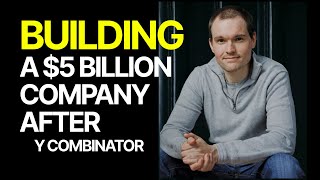
In this interview, Zapier co‑founder Wade Foster recounts the company’s origin, early growth tactics, team‑building philosophy, financing choices, and the evolution of Zapier’s product from simple SaaS integrations to AI‑driven workflows and autonomous agents. He explains how a frustration with manual API work at a mortgage‑lending firm sparked the idea to build a no‑code integration tool, how the founders acquired their first users by surfacing in product forums, and how a developer platform created a network effect that grew the app catalog to thousands. Foster describes Zapier’s “don’t hire till it hurts” hiring mantra, the decision to stay bootstrapped with only $1.3 M of venture capital, and the influence of Y Combinator partner Paul Graham’s advice to write code, talk to customers, and aim for 10 % weekly growth. The conversation then shifts to Zapier’s recent AI strategy: adding AI steps to deterministic workflows, building natural‑language Copilot experiences, launching Zapier Agents, and fostering internal AI fluency through hackathons, show‑and‑tell sessions, and published rubrics. Foster shares observations on enterprise AI adoption, the need to re‑think functional roles, and Zapier’s role in guiding customers through AI‑enabled processes. He also discusses emerging pricing trends—moving away from seat‑based models toward usage‑based and outcome‑based billing—and predicts the rise of the “AI automation engineer” role. Throughout, he emphasizes a pragmatic, customer‑centric mindset, disciplined growth, and a belief that AI will reshape work while cautioning against hype.
Chapters
I think there's two PG-isms that like have really stand out to me that we still think back on constantly. The first one, which was, you know, a thing he told us on the very first day of the batch, which was, "This summer you should be doing three things: writing code, talking to customers, and exercise." The joke we say is we exercised on day one and then we spent the rest of the summer writing code and talking to customers. But I think that advice is so brilliant in its simplicity because because so many founders, so many companies get distracted by all the other things you're supposed to be doing. Supposed to be going on events, you're supposed to be on social, you're supposed to fundraise, you're supposed to do this, that, or the other. But really what makes a company successful is if you make something that a customer loves and you're able to effectively sell it to them. And so writing code, talking to customers, like that is the one-two punch.
Welcome to our first episode of Big Ideas by NewEconomies, a show where we learn how the most iconic founders have turned a crucible moment into global companies. Our guest on today's episode is Wade Foster, the co-founder of Zapier, which helps companies with their software automations and more. In this episode, we cover a wide range of topics such as the early stages of building Zapier, early growth strategies and user acquisition channels, Building the team and the company philosophy. Bootstrapping versus raising venture capital money. Lessons from Y Combinator and office hours with Paul Graham. Navigating growth. Adapting AI to new technologies. The future of AI and market trends. AI fluency, the new essential skill. AI transformation in enterprises. Emerging pricing models and the rise of AI automation engineers. So grab a notebook or your favorite AI note-taking tool. I bring to you Wade Foster, the co-founder of Zapier. Wade Foster, welcome to the podcast. Thank you so much for your time.
Yeah, thanks for having me, Ollie.
Um, I've been a big fan of a long time, so I'm super excited to chat more. Um, but I know one thing you probably think a lot about is supporting SMBs, enterprises with automation. So we'd love to find out the founding story of how did it all come about?
Yeah. So I was— this would have been 2011. I was working at Veterans United, a mortgage company specializes in a VA home loan. And I, my now co-founder and I were both working in the marketing department there. But beyond that, we were also just spending a lot of time together. We played in like jazz and blues quartet together. We would do a bunch of freelance work on the side, just kind of anything to make a buck. Like WordPress sites, plugins, you name it. We were kind of just doing a bunch of random stuff and we always were like pitching ideas back and forth, thought, hey, maybe someday we'll start a business, this could be fun, etc. And that was like just a pretty common thing we were doing. And one day Brian messaged me on iChat and was like, hey, I've been noticing that for a lot of these tools we're using, you know, we're using things like 37signals products and Mailchimp and Evernote and Dropbox, like some of those early SaaS companies, if you go to their forums, folks would be asking for integrations. And when you read through the forum threads, uh, there'd be a lot of customers often +1ing saying, yeah, I want this too, I want this too. And it would go on for some time before a product manager would chime in. And the product manager would chime in and usually say something like, hey, thanks for the suggestion, everybody. We'll take a look. And if you work, you know, if you work at any of these companies, you know, like that basically is code for not gonna happen. And, uh, so Brian pitches me and says, hey, I think we could build a really simple tool that makes it easy for folks who don't know how to code, folks who don't know how to use the APIs to just build integrations between these tools. And When he said that, I was thinking about my day job at the mortgage company. Uh, I was in charge of the Marketo implementation there, and I am a bad engineer. I'm trying to learn how to code. Um, I'm not particularly competent, and Marketo has this old-school SOAP WSDL API. The documentation is in a PDF. I'm just having a bad time, like it's just not going well for me. And so when Brian pitches me that, I'm like, oh, if that existed, that's exactly what I would be doing right now. I wouldn't be messing around with this stuff. I would be using what is now Zapier to set this up. And so, you know, the very founding of Zapier was just really focused on solving this integration problem between SaaS services. And, you know, fast forward 14 years and it's evolved from integrations to workflows to automation to AI orchestration. To agents, you know, over the course of 14 years. But it all started with just like, make this integration problem like a lot less annoying.
I mean, it's a big problem companies have, right? There's so much going on. They're trying to automate everything. And as Long Phan says, saves so much time. But I can imagine back in the early days, you know, scrambling to try and get those just first users or the first few hundred users. How do you find them?
Well, yeah, I mentioned Brian has— was spotting those forum threads. And so the early tactics that we would deploy was go into the forums, and I would often chime in and say, hey, you know, uh, if you're looking for an integration between this and that, like, here's the APIs you can use, you know, if you know how to code. And if you don't know how to code, I'm working on a project that might be able to build an integration between this. So, uh, you know, get in touch if you'd like. And, uh, you know, we would have, every time I do that, we'd probably get a handful of folks that would reach out and, uh, you know, it wouldn't be huge numbers. We're talking like less than 10, you know, people that would ping me for every time I would do that. But the interest level was sky high because these people were literally like posting on forums, like, I need this, give me this integration. And so, you know, the conversion rate would be like 50% to like actually sign up and try Zapier, uh, for those early folks. And that was, yeah, I think the thing that surprised me the most was, you know, the early versions of the product were just not very good and it didn't matter to these folks. Like I remember walking our very first customer through setting up his first zap on Skype and, uh, You know, watching him just try and try and try, and every step of the way I'm having to explain, click this, do this, click this, do this. This is not his fault. It's totally our fault. Like, we, we just have— it's just a poorly designed, poorly implemented prototype at this point in time. And I remember getting to the end and actually testing his first app out, and it works. And when it works, he's just like, oh my God, Wade, this is incredible. Like, this is going to change how I do my work. And I just remember thinking like, holy cow, like we're really onto something if we can make this just not suck. Like, yeah, I think we're, I think this could work.
Was there like an insane network effect? So as soon as customers started using you, they started referring all their friends?
You know, not really. The place where we started to have like a little bit of a network effect was on the integration side of the house. So, uh, you know, about a year in, we made a developer platform that allowed other people to build integrations into Zapier. And, you know, because we were starting to get good at integrating all these different services, oftentimes people would start using us and then they'd realize, ah, like this one software that I use is not on Zapier and I really like it to be. And so they would go talk to that company and say like, hey, can you build a Zapier integration? And so the more users we got, the more they were going out and telling their other vendors, build a Zapier integration. And so that created a little bit of a network effect to build out the, what is now 8,000 different apps on the platform, um, came from folks just, you know, saying, hey, I need a Zapier integration. I need a Zapier integration for this, that, or the other.
That's insane. I mean, landing those first customers is the biggest win, right, for early-stage companies. But also you need people to help you. I know there's yourself, two other co-founders, but when you started building a team, like right in the early days, who were your first hires and, you know, what role do they play in the company?
Yeah, we had a philosophy at Zapier, which was don't hire till it hurts. Mostly for a couple— well, for a couple reasons. One, We just were like very cost conscious and so we wanted to see how far we could get with as few as people. Two, we didn't have like a ton of experience hiring and managing teams and so we kind of wanted to go slow in terms of how we built the team to make sure we really understood like, you know, how we were going about building it. And so the side effect of that don't hire till it hurts mantra is that the early teammates were all very focused on places that had like problems in the business or bottlenecks in the business. And so the, the, the, I remember our very first hire was someone for customer support and we hired that person because we would wake up and until 2 or 3 PM in the afternoon, we would just be like working through the support backlog. And on one hand, it was really valuable experience to do that because we really understood like, what do customers need? What are they struggling with? So, so we got a ton of value from that, but on the other hand, we just didn't have much time to go fix it. And so we needed help just to free up some time for ourselves to go fix those things. And so, you know, we hired someone there and then, you know, a few months later we hired an engineer to help us, give us more bandwidth to go fix some of these issues. And then we hired another engineer to go fix some of those issues. And then, you know, I think from there we started to get to a bit of a steady state and we wanted to see, ourselves start growing faster. So we hired someone on marketing to help us, you know, uh, put more content out there. And so that kind of formed like a little bit of the early team there.
What, um, what I find amazing about the whole CPA story is you've only raised $1.3 million to date, um, you support millions of customers, uh, do hundreds of million dollars in revenue, why did you not decide to raise more capital than expected for most software companies?
I think there's sort of two reasons why we went a more bootstrapped approach. So one is, I think, more of a just like philosophical point of view. You know, we were 24 and 22 when we started the company respectively. Uh, we had, we're from Central Missouri. We don't know anything about venture capital. That's sort of like a foreign world to us. Uh, Veterans United, the company I mentioned that we were all working at, that was, uh, started by two brothers. They owned it 50/50. Uh, they never raised a dime. They'd raised a couple other companies before that had been pretty successful. They'd managed to have a couple exits. Uh, when I joined, I was employee 500. When I left to start Zapier, 10 months later, there was 1,000 people at the company. So we'd seen that like big impressive companies could be built in a bootstrapped way. And then you've got sort of just all the normal sort of like FUD that's out there around working with VC. It's like, hey, are they going to fire you? Are they going to take over control? Are they going to mess your company up? All that sort of thing. And You know, we just sort of hear that stuff and are like, hey, like, I'm not sure we're just like ready to jump in bed with this stuff. We don't really understand it well enough to like sign up for this, this deal. At least not, certainly not in the early days. So you got kind of that, uh, on one side. And then on the other side, you've got the more like rational, like calculated math around how the business is working. So you know, our— we've got this like little network effect we're talking about where integrations are coming from, uh, the, the community. We've got a really scalable customer acquisition source. So folks are searching for integrations for this, that, or the other. It's basically, you know, rounds to free. And as a result, like, our customer acquisition cost is not that much. We're getting new apps without that much, uh, and so we don't need to hire that many people. Uh, and the bottleneck for growth is not capital. Like, that's not the thing that's like slowing us down. And so, you know, we're not just like jumping at the bits to go take on more dilution, raise more money if the bottleneck isn't more capital. Uh, so we, we were able to just go for a really, really long time. I mean, basically since that seed round, we haven't raised any more money, uh, without having to entertain fundraising discussions.
It almost feels like there are two types of founders, and neither is, you know, right or wrong. You have the first set of founders who want to just raise as much money as you can, scale as fast as you can. But I actually prefer your method, which is go slowly, uh, you know, you can control the destiny, right? Versus having a bunch of investors telling you what to do. If you were to look back at the founding story now, do you wish you had raised more capital, or not raise at all?
Uh, I mean, looking in hindsight, like, the answer is we would have raised less. Uh, like, that would have been even less dilution. You know, I think the, the most money we ever lost in a single month was like $20,000. Uh, and, uh, but most months was much, much less than that. And, you know, we were in the black within a year, uh, of, you know, uh, taking on that initial funding. And so, you know, in hindsight, you know, we would've needed, I don't know, $250,000, $300,000, I don't know, would've been probably, uh, uh, uh, enough to get us to where we needed to go. Um, but you know, we wanted a little bit more of a cushion. So, you know, we had enough more, you know, with the $1.3 million, we had a, a little bit of a cushion to keep us safe.
Well, you've become one of the founding successes of YC. Um, You went through YC, and I read you had a couple of office hours with Paul Graham, um, who's obviously famous for founding, uh, YC. What did he teach you about scaling and running a successful startup?
I remember the— I, I think there's, there's two PG-isms that like have really stand out to me that we still think back on constantly. Um, the first one, which was, you know, a thing he told us on the very first day of the batch, which was, this summer you should be doing 3 things: writing code, talking to customers, and exercise. The joke we say is we exercised on day 1 and then we spent the rest of the summer writing code and talking to customers. But I think it's, I think that advice is so brilliant in its simplicity because so many founders, so many companies get distracted by all the other things you're supposed to be doing. Supposed to be going on events, you're supposed to be on social, you're supposed to fundraise, you're supposed to do this, that, or the other. But really what makes a company successful is if you make something that a customer loves and you're able to effectively sell it to them. And so writing code, talking to customers, like that is the one-two punch. And I found that like in the periods of Zapier where I've gotten most confused or most uncertain about what to do next or what the next step should look like, that advice of just coming back to talk to customers, make some stuff, it's like, it really is a, it's as close to like you know, winning playbook as I think you can, can get. So that's the first thing that stands out. The second thing that stood out was the initial office hours we did have with him. Uh, you know, he was asking like, hey, have you launched yet? Or you're not launching? We hadn't launched yet. He's like, okay, your first thing to do is launch. And then the second thing is, you know, you gotta figure out how to grow. And I remember him saying, you gotta shoot for 10% week over week growth. Uh, you know, 20% is great. 10% is, is, is the goal. You know, 5, 5 is less than 10. 2% is less than 5. Just basically explain, explaining number ranges to us. Uh, which is kind of silly in hindsight, but I think it was again, brilliant in its simplicity, which is to point out that, you know, if you're able to just grow 10% week over week in those early days, and then you could start to compound that for as long as you possibly can. You are gonna, by like, by trying to engineer that outcome, it is going to force you to do a lot of things right, um, to get those, to get that happen. And the reality is it might seem insane, but in the early days it actually is not. Like if you have one customer and you're trying to grow 10% week over week, well, you really only need to get a tenth of a customer in the next week. But it turns out it's actually not that hard to go from one to two. So it's like, okay, I got 1 customer, now I'm at 2. And then you can go from 2 to 4 and then 4 to 8. And then, okay, now we're, you know, 8 to 12 and 12 to 16. It's like you start to stack that over and over and over again. If you can hold up that 10% week over week for a year, for, you know, 2 years, you are really off to the races and doing this stuff. And so, you know, every time we're starting something new, or like trying to work on something in Zapier, like oftentimes I'm trying to figure out how to narrow the problem down to force ourselves to be more ambitious about the growth rate of that, that narrow things. Like, yeah, it may not be growing, you know, Zapier at hundreds of millions of dollars in revenue now, maybe we're not growing 10% week over all of that, but in this area, we actually can have that kind of ambitious style of growth rate. And I think that helps folks think bigger about what's possible.
I imagine that 10% growth on growth, uh, growth on growth week, uh, you know, probably happened for quite some time for, for you guys. Um, how do you avoid being distracted? You know, you see the dollars coming in the bank, you see hundreds of new customers signing up. I feel sometimes it's easy for founders for it to all go to their heads and kind of get more distracted. How did you stay focus and not get distracted?
Um, well, I, I think it might have helped that like we were just pretty boring people, uh, at the end of the day. Like, you know, we— the, the sort of like raise a bunch of money, like Silicon Valley parties, like that sort of scene, like that just never really appealed to us much, to be honest. Um, What we liked doing was writing code and building the business and talking about it with folks. And so that's where we spent all of our time and energy and effort. Uh, and so it probably just was fortuitous that the, the thing we liked doing was the thing that we're supposed to doing. And the things that most people like doing, the, the things that people would typically get distracted by just didn't have much appeal to us.
Well, we love founders who just hack away, right? And, um, okay, so you went through YC, you had some cash in the bank afterwards. Um, what was the next phase after you, you raised this more round?
Yeah, so we've got, you know, year end, we're raised, we got a million bucks in the bank. Uh, we've got a tiny, tiny little bit of revenue. And I think the big thing is to just really figure out how to keep that 10% week over week growth number going. And how do we, you know, just attract more customers to the platform. And so it was really two efforts that we were focused on. One was we need more integrations. You know, when we raised that $50 million, or that million bucks, like I think we had 50 apps on the platform. And so we're like, okay, how do we get to 100 and then 200 and then 500 and 1,000? And we knew that if we could get a lot more integrations on the platform, that would fuel a lot more customers being able to use the product. And so, so much of the effort was just focused on scaling up the available integrations.
Fast forward to where we are today, we're now in different times. Um, AI is just on everybody's minds, right? And for, uh, listeners listening, we actually published one of the first generative AI market maps. I think it was like a couple days, uh, a week after ChatGPT came out, and there was all of these tools, you know, text-to-video, voice, and image, and so on. At the time, there are only, I think, a couple hundred companies. And fast forward a couple of years today, there are now thousands. And now the whole kind of AI agent space is coming along. But the space is just moving so quickly. And on top of this, 30% of all venture funding is going into these AI startups, and that's only going to increase, right? Um, love to find out how has this product changed in recent years, you know, with the advancement of AI and how is Wade Foster thinking about AI in general?
Yeah. Uh, well, in some respects we were pretty fortunate in that some of the best usage of AI has been in traditional workflow automation. And so. This same workflow product that does deterministic workflows, like, you know, take a lead from, you know, Facebook and, uh, run it through Clearbit to enrich it and add it to Salesforce. That same paradigm works great when you introduce AI steps. So you might say, hey, get a new lead from Facebook, now go do deep research on it in ChatGPT, and then take all those learnings and add it to Salesforce as a note. And so like that same style of paradigm, it's so great for folks who want to just like get into AI and figure out ways to like add automation with AI. So much so that like AI is the fastest growing category on Zapier, and it's, it's not particularly close, you know. It's grown, uh, shoot, almost 300% year over year, uh, in the last year, and the revenue base on that is, is not small. Uh, so yeah, I think that's been the fortuitous thing. Then for us, it's been recognizing that opportunity and saying, okay, how do we actually facilitate more of that? Uh, you know, I think where we were advantageous was that it was easy to add AI applications as steps into Zaps. So that part was pretty straightforward. I think the thing we had to work a lot more on was how do we make building workflows easier. You know, in the past, building automations, you know, no-code style required a lot of like click, click, click, click, click, and you had to think through the system and think through the logic, which that was a hurdle and is a hurdle for a lot of folks. They're not able to break the tasks down step by step by step by step in that way. And so we put a lot of effort into Copilot experiences that allow folks to come in and explain their workflows in natural language. They can say, hey, I want to when I get a Facebook lead, can you go ahead and add that to Salesforce for me? And just be able to describe it in sort of basic ways. And then Zapier is able to understand that and go like, great, here you go, we've set that thing up for you. And so we had to— we've had to do a lot to build those copilot experiences. And then the second thing that we've spent a lot of time on is building our own agents product itself. So instead of having AI just be a step inside of a traditional workflow, what would it look like to actually build an agent and give it access to tools? And those tools being the same integrations that you might use, like Salesforce or Slack or Gmail or, you know, your Google Calendar or something like that. But instead of working in that deterministic way, instead giving the agent instructions and saying, hey, whenever I get an email, I want you to go figure out how to reply to that account, or I want you to figure out how to do these things. And so we've been able to build out entirely new products that take advantage of a lot of the same integration ecosystem we've had, but work in a different way, work in this more agentic architecture.
What's been the adoption of the agents? Have you seen, uh, is it mostly AI startups using it? Um, yeah, what's been the adoption of that?
It— so where Zapier agents is especially powerful is for folks coming from less technical backgrounds. So we have a lot of marketers and sales folks and, uh, you know, startup founders that are less technical, or HR or finance people that are able to come in and build agents on Zapier, um, where, you know, they don't know how to use Cursor, they don't know how to use Cloud Code. Like, those are tools that you know, are much more oriented towards a developer. And as a result, we're seeing folks just build like a lot of simple automations inside of that that solve problems in their work. And, you know, maybe they're building like customer support agents that, you know, reply to emails or, you know, they're building out research agents that help them better understand leads that are coming into their website and such and things like that.
What's your whole take on the AI space now? Are we kind of in this bubble? You know, you're seeing hundreds of startups emerge, they're reaching, you know, a couple million dollars in annual recurring revenue, monthly recurring revenue, like so quickly. Are we just, are we in a bubble or is this going to just continue? Is this going to continue for the next, you know, few years?
You know, it's a tough question to answer. Um, I definitely think, uh, that we are in this period where, um, AI is unquestionably the most important technology that I've seen in my lifetime. Um, and I'm convinced that you know, it is going to, uh, reshape pretty much every piece of society. Like, I, I truly do believe that. Um, that said, I do think that there are, um, there's a lot of hype too. Like, that's undeniable. There is absolutely a lot of hype. And, uh, you know, when there's a lot of hype, um, you can definitely get people that are excited about what is happening that is beyond what the current technology is capable of doing. Now, the thing that does separate this period of time compared to others that I've seen is that, uh, the pace of improvement of the technology is far faster than anything I've seen. And so is that pace of improvement gonna hold? And if it does, like, you know, we'll keep up with the hype, uh, it won't be a— be an issue, um, but You know, I do think there are reasons to believe that like, hey, this is going to take a little longer to truly, you know, uh, change society in the ways a lot of the hype suggests, um, than maybe folks, uh, think it will.
One of the aspects we see changing is people are going to be, uh, more AI equipped. And you posted One of the posts went slightly viral recently, the AI fluency. We'll put a photo of the post here. Tell us about it. What's happening?
So, you know, one of the things that we've started doing internally is whenever we are hiring folks, like we want to bring in folks that we think meet like a standard of what we call AI fluency. Now, I think that's really important if you want to be an effective organization for the next, you know, into the future. Like, I think this is going to become like a foundational skill for all knowledge work and for us to get an edge, it felt important to do that. But, you know, I also felt like, hey, we can do a service to the ecosystem by, you know, publishing what our standards look like. You know, when we— when I first tweeted out that we were doing this, you know, I got a lot of folks that were like, yes, but what does that actually mean? And in hindsight, that was like, that should have been obvious that that was going to be the first question that came up. And so that's where we came back and said, okay, here is actually what our like rubrics look like. And this is what it practically looks like for a couple different functions internally. So if you're in marketing or in sales or in product management, these are the like different stages of maturity that you might consider screening folks on to understand like, uh, you know, how, how good are people truly at using AI?
We see, I think, one of the next big, um, focuses for companies is how do they actually train and equip their whole team with, like, just how to become better at AI in general, right? What's the thinking, uh, on this front, and how you actually just, you know, educating your team on, hey guys, this is how you can use AI, go and use tools and go and be independent?
Yeah, so for us What has really helped grow our AI usage internally is a handful of tactics. So first, you know, about 2 years ago, we, we called an AI Code Red. But as part of that, um, we did a week-long hackathon. We paused everything going on in the company and we said, hey, every individual, we want you to go build with this stuff. So, you know, if you're an engineer, go get familiar with the OpenAI APIs. You know, if you're a non-technical person play around with ChatGPT, things like that. And that was really powerful for helping people just build some familiarity with the tech, what's possible, et cetera. And as a result, we continue to do those hackathons every, you know, 6 months or so. And that has really allowed us to keep pace with the innovation that's happening here. And folks are sort of like, ooh, I can, I get a, I get a feel for like, how the models improve, how the tech gets better. I'm constantly introducing new tools to the stack, and we're also just using Zapier more. Like, Zapier is a great, great tool for using and adopting AI inside of the workflow. And so it helps us just internally because we're just dogfooding more, and so it helps us make the product better for, for our other folks. So that's thing one we did. The second thing we've done a lot of is show and tell. So we have all hands once a week and not at every all hands, but maybe once a month or so, we'll do AI show and tell and we'll just invite, you know, 2 or 3 folks to show off like various use cases that they've built. And that fosters like a little bit of recognition, but it also fosters knowledge sharing and it creates inspiration for others to see, oh, I could do something similar. Like I have a problem that's adjacent to that, so maybe I could do it as well too. And, you know, then there's just like a lot of informal stuff as well. So like we have Slack channels that are dedicated to like sharing and learning where people are just posting constantly about what they're reading about with AI. Some of it's just like AI news, but sometimes it's like, ooh, check out this new tool or check out this new demo. Like, hmm, I wonder if we could do something with that. What would it look like if we solved this, that, or this other problem in this way? So those things have like really helped create this groundswell internally where folks are just turning to AI more often to solve problems. Then the last thing is we've realized, hey, we can take a lot of what we've done internally that has worked well for us and go share that with our customers. And so, you know, we're doing a lot of this through things like publishing our rubrics for AI fluency. So you know, we're giving a lot away, a lot of like free content and material that sort of says like, hey, if you wanna do it ourselves, you can sort of DIY it like in a similar way that we have. And then for like all the way to like our enterprise customers who are buying and using Zapier agents and Zapier workflows and all this other stuff, we're saying, hey, we'll come in and we'll run a hackathon with you. We'll help you do some of this transformation work alongside of buying the software and the tools itself. And so, that's helped other organizations go on their own transformation journey.
That's so cool. When your company said, well, they found out, "We're shutting down for a week," did they go, "Wade, are you mad?" You know, it definitely was, it wasn't a universally popular decision at the time.
So, there was folks who were like, you know, this is sensational, this is alarmist, like, you know, this is not necessary. But I think in hindsight, it was 100% the right call. You know, earlier this year when, you know, those memos were going around from like Tobi at Shopify and the Duolingo CEO and, you know, various folks talking about like, hey, we're now doing their own similar version of this. We had internal chatter where I remember, I remember actually reading one engineer who was like, you know, at the time, like, that was pretty stressful, but man, I'm really glad we did that. Like, I'm glad we got that out of our system. Now I feel like I can just surf the wave and like, I really just enjoy working with AI and like, I have a much more, I guess, balanced view of what is happening with the technology today.
So cool. All right, so we've covered a lot, the founding story, the growth side of things and you know, how you're thinking about AI. One of the traditions on the podcast is we love to find out what our guests are thinking about in terms of tech trends. And we have 3 trends which we're gonna cover today, right? One is the AI transformation in enterprise. The second is new pricing models analyzed by AI. And hands-off automation. So let's start off with the first one, the first one, AI transformation in the enterprise. What are you thinking?
Well, it's been interesting to watch. Like, I think as much as there is a lot of hype around this, most enterprises, I think, are struggling or having like a little bit of a failure to launch moment around AI use cases. There are a handful of places that are definitely working well. You know, code generation is working exceptionally well for folks. You know, certain customer support use cases are working quite well. Beyond that, often what we come up against is that, you know, folks have bought, you know, ChatGPT licenses or Claude licenses or Copilot licenses, and they've given those to everyone in the organization. But when they look at the, like, usage and adoption, it's pretty varied. You know, maybe you've got little pockets of folks who have really figured this stuff out and are deploying it in interesting ways. But I think mostly you've got folks kind of doing some basic stuff. It's like, oh, you know, it kind of helps me, you know, write a status update for, you know, my next meeting, or it helps me do some basic research on, you know, a topic or two. But it hasn't really you know, transformed the way these companies work. And, you know, this is where I think we've started to come in and help a lot of these organizations reinvent how they can approach running a certain function. You know, our, our, like, last 2 years, we've basically been doing this. And so, uh, you know, oftentimes we'll, you know, have our CFO talk to their CFO, or our, you know, head of sales talk to their head of sales, or have their head of product, talk to their head of product, and we'll just show off like, here are use cases that you ought to be thinking about. Here's how you should be thinking about your, you know, content generation pipeline. Here's how you should be thinking about your lead management systems. Here's how you should be thinking about closing the books every month. Here's how you should think about employee onboarding and offboarding. And these are areas that, you know, most companies have these types of workflows, but they're all sort of like mostly stuck doing the pre-AI versions of it, and they're not exactly sure how do I, how do I go from, you know, this old version to this new version, uh, along the way. And so this sort of like show and tell has been especially effective at helping people go from, you know, basic like research tasks to like actual true meaningful AI reinvention for key workflows inside the organization.
We actually published a report, uh, recently around how to adopt AI in the workplace. So basically mapping out all of these tools, and it still feels that most of these tools are focusing around what you mentioned— marketing, HR, engineering, sales. Um, what do you think is missing? And if you weren't building today, what type of company would you start in this space? Where is the opportunity?
Well, what is missing? I think the, I think the biggest opportunity that— I mean, shoot, even we haven't we definitely haven't solved this, but I know that most enterprises haven't, is I think there is a, a refactoring of how roles and functions actually work inside of an organization. What I'm seeing in very young companies, you know, these days is that with AI, they're able to be a lot more general in the way they approach work and they have less specialized roles. And so, there's a question for me around like, well, in the future, do we have, like, is the functions, you know, is it sales and marketing and product and engi— like, are those actually the functions? Like, do we have pillars like that in that very specific way? How often are these functions actually going to, the line's gonna blur and they're actually gonna find them smashed together. You know, it's not lost on me that like, you might, we might eventually find ourselves in a world where you don't have like product engineering design, you just have one job that's like builder. And your job is to go understand what a customer needs, prompt these systems, and build features that solve those problems. And you might not have this like extreme specialization. Now, I think we're, you know, still a ways from being able to do that because I think there's a lot of craft that still has to get pulled out of a human's head to pull that off. But that feels like, you know, sort of one of the next frontiers, you know, beyond simply like reinventing how, you know, these like lines of like these, these functional workflows work. Like, how do we actually rethink how the functions work in the first place? Um, like that, that feels missing. Then your second question was like, what company would I go start if I wasn't doing this today? And, um, yeah, I think the thing that I get pretty excited about is there is a huge opportunity to look at legacy industries, um, that have struggled to adopt new technology. You know, you think about things like education, government, healthcare, energy, you name it. And these are, these are areas of the economy that predominantly work with unstructured data. They predominantly work on, I mean, shoot, there's still a lot of stuff in paper or PDFs or things like that. And that's where AI is especially good. Uh, is like working with unstructured data. And so I have to imagine there's like, uh, just reams of problems to be solved there. And so I, I don't know, I'd probably be looking at one of those particular areas and focusing on, you know, vertical AI and one of those.
Maybe at some point in the future. Um, okay, cool. The second trend, new pricing modes catalyzed by AI. Are we going to go towards a usage-based pricing model for software companies?
We're definitely seeing more and more of that for sure. Uh, the thing I feel pretty confident about is the death of seat-based pricing. Um, you know, especially when you look at these incumbent businesses. Um, I think it's a really tough time now where you've got CFOs that are going through their software spend line by line, and they're inspecting how much they spend on, you know, software A, software B, software C, and saying, hmm, you know, why are we paying this much for this software? And oftentimes what they're observing is, you know, hey, I've got 100 seats of X, 10 of these are power users, you know, another 50 of these are like casual users, and then another 10 of these are like rarely users. And so that rarely bucket, they're just like chopping that off, no questions asked. But then that casual bucket, they're looking at that and going, hmm, like that doesn't make much sense. Uh, and so, you know, I think, you know, these incumbents, especially public companies that have seat-based pricing models and have just gotten so comfortable expanding their revenue base, trusting that companies are hiring and hiring and hiring and hiring. Whew, that's a tough place to be. Like, I think it's causing them to have to rethink pretty massively, like, the just business model of how they work. And I think there's a lot of startups that are out there saying, you know what, like, we can do a much more customer-friendly business model. Like, we don't have, you know, gobs and gobs of revenue that we have to retain. We can just start from what the ideal customer experience should look like and grow from there. And so I think that has pushed the trend more towards usage-based billing. But you've also got other trends as well too. You've got, you know, a lot of AI companies are trying to do outcome-based billing where they're saying, hey, we're gonna, you know, show up more like a consultant and we're gonna use our software to solve this problem for you and you're gonna pay us based on the results that we can deliver. Uh, and so I think you're seeing more of that as well too. Um, it's gonna be pretty fun to observe, like, think what happens over the next 2 years because we're gonna have, uh, uh, new types of business models, new types of pricing, uh, that I think will be a lot more customer-friendly at the end of the day.
I mean, there are 2 sides to this, right? I mean, first, it's— there are so many AI startups out there now in particular where you can basically start for free, right? It's that there's no, uh, cost attached. Um, but the second is for these usage-based pricing models is a lot more unpredictable, right? Um, the, the type of revenue you can generate, that's a pretty tough challenge for software companies in general.
Yeah, I, I think you, you kind of run into 2 challenges there, which is, you know, certain types of businesses really prefer predictability and then other types of businesses really prefer flexibility. And sometimes a business might prefer one or the other at different moments in time. And so that's one of the things we've thought a lot about with our own pricing model is how do we actually give the customer the ability to choose? And so if you're self-serving on Zapier, you know, you can buy a subscription of tasks that come at one rate, and then if you use up all those tasks, you can choose to upgrade to a higher subscription model, or you can go at a pay-as-you-go rate, which comes at a slightly higher rate. So there's a little bit of a premium, uh, cost to, to the flexibility, uh, because we prefer the reliability, uh, and predictability of a subscription. But if you want the pay-as-you-go thing, we want to provide that option to, to customers. And so, you know, we're trying to design own pricing and packaging to give customers the choice around how they want to purchase.
I think we're going to see a whole shift in how pricing works over, over the few years, and it's going to be really interesting to watch. Uh, 100%, like you said, I think those legacy software companies who are charging crazy prices to, you know, uh, SMBs or enterprises, um, I think some of them are going to be in a sticky spot, but let's see. Um, cool. Okay, the third trend, uh, hands-off AI automation. You had another viral post recently which went, uh, crazy viral, the AI automation engineer. So I think there are kind of two questions there, um, which we can jam on. The AI automation engineer, is this going to be the next big role software companies are going to hire.
I think so. I think every function inside of a business should have one of these people embedded in them, uh, helping them think through how to reinvent, uh, these key workflows that we're talking about. And yeah, I think this is really a pivotal unlock for helping companies make this leap from, you know, what I call hands-on keyboard, uh, AI usage to true automation. You know, today what a lot of folks talk about as agents are still human-in-the-loop assistants. You know, these are, you know, we're calling Deep Research an agent. Deep Research is a phenomenal product, but you still have to prompt it. You're talking to a chat agent. You're saying, hey chat, go do this for me. And then it goes and does it and comes back to you. Fantastic experience. But what is really powerful is when you can take the leap to say, Actually, I don't wanna have to sit down and talk to the chatbot to go do the research. I just want, whenever I get a new lead that comes in, I wanna feed it into this prompt or gather all this context first, then feed it into the prompt, then it generate an output, and then I want it to go generate an email or log it in the CRM or notify a lead in Slack to just do this all the time. And so now I've got an agent that just wakes up every time I get a new lead. I don't have to be there at the keyboard prompting this stuff to get going. So I think there is a huge opportunity for organizations to uplevel their AI usage by saying, hey, I am not going— like, I'm going to use true autonomous agents instead of, you know, hands-on keyboard agents.
And so what do you think are the next big trends in the space? And again, like, uh, back to the earlier question around the AI transformation, if you were to start a company in this space, Uh, what are some of the ideas or untapped opportunities, do you think?
I, I think of the— I, I think I would come back to, um, all the different verticals that have been pretty stagnant, um, at adopting software. Um, you know, maybe it's because of regulation, but I think part of it is because software has, like, the type of deterministic software we use is poor at working with unstructured text and unstructured data. Like, we didn't really have good tools for doing that. It's like you could do OCR and you had parsing engines and things like that, but it never really worked all that well. But these language models are really good at working with text. And you combine that with like a vision model that can actually just read actual paper and turn that into text. And now all of a sudden these legacy businesses have a technology that can actually allow them to digitize and automate big parts of their workflows that were, were hard before. I mean, you could just think of like, you know, a pretty simple example, which is, you know, your, your family doctor who like chicken scratch notes all day, like instead can just walk around with like a voice recorder and could just like talk into it. And then that's just way better of a use case than him or her trying to like deal with this chicken scratch notes at the end of the day. And that's just like a— that's a daily use case for your family practitioner. One, one very small use case that could be reinvented in the age of AI.
Although we're still very early in the AI space, you know, we're only a couple years in, I think the next few years is going to be really exciting. And, you know, there is just so much opportunity.
Agree.
Let's see. Well, Wade Foster, thank you so much for joining us today. So much to unpack. And for those who want to find out more about you, where can they find you?
Well, follow me on LinkedIn, follow me on X. I'm sharing a lot of lessons learned from Zapier on how we are using AI. So I would, I would, I would start there. And then if you haven't checked out Zapier Agents or, you know, used AI in a workflow at Zapier yet, come check it out. It's pretty easy to get started. You don't have to be an engineer and let me know what you build.
More from Wade




From Workflows to Agent Teams: Wade Foster on How AI Reshapes Enterprise Automation

The Top Scaling Lessons from Zapier's AI Transformation with Wade Foster, Co-Founder & CEO of Zapier


Why Companies Force AI: Zapier’s CEO Wade Foster Explains | Belkins Podcast Episode #21



INSIDE How AI Startups hire, AI Roundtable with Wade Foster, Mikey Schulman, and Ali Ansari | E2225
