Wade Foster, Zapier - From Side Project to $50M Revenue & 3 Million Users
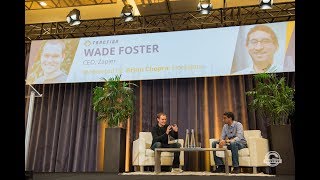
Wade Foster built Zapier from a side project into a $50 million revenue company with 3 million users by spotting unmet integration needs on SaaS forums. He kept the company capital-efficient, hired globally for a fully remote 250-person team, and relied on product-led growth instead of sales. Early pricing used a Fibonacci sequence: $11, $23, $58.
Chapters
Um, Wade, thank you so much for showing up. We'll— there's a lot of great stuff, a lot of great insights that you have. Um, would love to just dive right into it.
Let's do it.
Um, awesome. So, um, so in Missouri with, uh, with your co-founder playing saxophone, belting out the blues, and then all of a sudden you guys have this vision that SaaS applications want to get connected. How did that happen?
Well, it turns out you're playing the blues for a reason, and that's that there's not much in your savings account. So you're looking— in our case, Brian and I and Mike were doing a lot of freelancing. We started to use tools like MailChimp, Stripe, QuickBooks, see the emergence of these tools, playing around in their message boards and forums, notice that there are a lot of recurring themes asking for integrations. and a lot of these message board threads are pretty old, um, you know, year, 2 years old, tens, hundreds of comments asking for these, and for whatever reason, they're not getting built. So we felt like, hey, there's an opportunity here to try and help connect all these emerging SaaS tools together and make these integrations a lot easier for the end customer, uh, to use. So we felt like the risk wasn't that we were building something that people didn't care about. We felt like people cared about it. It was just, could we make it easy enough that they could actually do it? And so we just started there.
And did you guys, you know, for those in the audience who are looking or in the throes of a startup at this point, you know, when did you guys feel like, okay, this could be a thing, this is potentially going to be our life's work, we're going to put in a lot of effort and make this happen? Did you guys give yourselves some sort of timeframe that you want to spend trying to make this into a real business before you move back to being a side project? How did you think through that?
We didn't actually have a lot of those discussions. We probably should have. We mostly just started working on it nights and weekends as a side project. I remember the first time I felt like, wow, we have something, was our very first customer. We'd just sort of gotten it to a beta, alpha-ready stage, emailed him and said, hey, here, you can have access. He emails back and says, hey, can we jump on Skype? I'm having a little problems using this. And I'm like, oh, great. Get on Skype, help him use the product, and he's stumbling through it left and right, can't figure out how to use it at all. And I'm like, "Oh boy, we're in trouble." Then we get to the very end and his Zap works for the first time, and he goes, "Oh my god, this is gonna be so great for my business. Where do I send you money?" And I'm like, "We just put him through the worst experience possible, and the guy still wants to pay us." And so I was like, "Okay." If we can pull this off, it's going to work. And so I felt like that was enough to keep working on this thing.
Awesome. And then Paul Graham, the founder of YC, is famous for having said, life short, build something people want. So you guys decide that you're going to pack your bags, potentially at least for the short term, head out to California, join Y Combinator. What were your thoughts going in? What made you decide that that's the spot for you guys to be at? And what were the aspirations for you guys coming out of that?
Yeah, at the time, our hope was— our goal was to connect all these different companies, all these different vendors. And we're in the middle of Missouri, which— I love my hometown, but there's not a lot of software going on there. For better or worse, most of those companies are happening in California. So we felt like if we were closer to there, it would make it a lot easier for us to build relationships with our partners, being close to where their headquarters are. And so YC felt like— felt like a way for us to sort of tap into an ecosystem that would help us build out this connection of apps that was really important for the product we were building.
Got it. And how did you guys pick the first few apps that you're gonna go? You know, there were the ones that your, I guess, newfound buddy in Skype was kind of wanting to get you guys to build, but did you come up with— did you do a lot of market research on that side? How did you think that, okay, I think we're gonna go with Salesforce next and connect to Expensify? How did you work through that process?
[Speaker:BRAD ABRAMS] It was driven by customer demand predominantly. So a couple things we did. One, we had our app directory that had landing pages for the different apps that we could support. And so we paid attention to the traffic that was coming into those pages. We collected email addresses for people to vote on what they wanted next. And then also our early beta, we charged customers for the beta. So our first customers, we said, pay $100, you get access to the lifetime of the beta. which is a pretty rare thing to do, but we felt like if you were willing to pony up some cash, you probably have a big enough problem. So through a combination of those 3 things, we basically were just able to build a list that was like, okay, this should be next, this should be second, this should be third, and we just started to work down that list of adding those services to the platform.
And has that philosophy continued through the evolution of the company? Are you more in the, you know, kind of the Bezos camp, which is, In God we trust, everybody else brings data, or the, you know, the Apple and Steve Jobs' camp, which was customers don't know what they want, you know, they will buckle at the brilliance of my product.
Yeah, we tend to be closer to the data-driven side, but there is certainly a place for intuition in building products. You know, I think a good example of this is, you know, early on we built out our developer platform, so that was a way to allow partners to build apps apps onto Zapier. We didn't have a lot of data that supported that partners would build apps. In fact, we really had one anecdote, which was we'd gotten to— we'd built out the first 50 apps ourselves, and then on a— it was like a Saturday morning at 2:00 AM, we got an email from Aaron at Box saying, "Why isn't Box on Zapier?" And we were like, "It's still just 3 of us. We just haven't gotten to it yet. Of course Box should be on Zapier." And through that, we thought, well, if Aaron cares enough, maybe he would devote an engineer or two to help build this out. And so—
Especially if he's tweeting at 2:00 in the morning.
Yeah, exactly. So we thought, well, maybe if we were able to have a developer platform, we could accelerate the number of apps coming on the platform by getting the vendors to build the integrations directly. And so we had one— anecdote that sort of supported that with some intuition that, hey, that could be useful. And so we built out the first prototype of our developer platform in a couple weeks. And since then, you know, 99% of the apps on— of the 1,500 apps on Zapier have been built by our partner ecosystem. So, you know, there's moments where you have like a bit of intuition around it, and I think you have to chase that. But also you're, you know, like the early days of deciding what apps to build next, that was predominantly data-driven. So, I think there's a place for both.
Sure. And as you guys are going out building these apps, I'm sure it takes a lot of work, there's a lot of effort, so you gotta figure out, okay, how do we convince our customers to pay us money? There's various ways in which we've seen companies do this. There's the value-based pricing, there's the, well, how much does it cost? Well, it depends on how much you got sort of a deal. There's usage-based pricing, there's per user per month subscription pricing. We haven't really seen cases where people have come up with an algorithm or try to get— be inspired by an algorithm, which is how you guys got started. So could you talk a little bit more about how you initially priced the product and how that's evolved over time?
Yeah, so, you know, we initially had our beta pricing, but then as we started to launch, we needed like an actual set of prices. We knew people were gonna pay for it, but we didn't know how much people would pay for this thing. And this is our first company, we don't have a lot of experience with pricing, so of course we go to the place everyone goes, which is Google, and we start googling how to price a product, and you hear things like 3 landing pages or 4 pricing models, and they should end with 9s, no, they should end with 0s, and each of us had read these articles, and so we're up late debating this and just arguing over what's the perfect pricing model for this product, and, you know, the 3 of us couldn't agree at all on what we should do, and finally we just kind of got fed up with each other and said, well, we should just do something random like the Fibonacci sequence. And so we actually committed our first pricing to be $11, $23, and $58 a month as our pricing model. Now obviously, that's not great pricing, but we had that live for several months. And we got subscriptions, and people paid us, and it was kind of working.
Now eventually—
[SPEAKING GERMAN] I think there might be a couple of users still on those plans. Not a lot, but maybe a couple. Eventually we evolved from there, but I think pricing is part art. You have to just start somewhere, especially when you don't have any data around it. Then as you get more and more customers, you learn where the value is, you learn what the levers are that you can pull, and then you refine it to be hopefully something that more aligns with what your customers need rather than the Fibonacci sequence.
Pricing is a great way to Being master of the obvious, get a lot of revenue in the business, which you guys have very successfully managed to do. $50 million plus in revenue at this point. And you've done that on the back of very, very little capital raised. I work for a venture capital firm in the Valley. We're seed investors. We've seen some of the best companies in the world go through us or our friends. It is extremely rare. I don't know if everybody appreciates how rare this is. It harkens back to the old days where Microsoft went public after raising just $1 million. There's Mailchimp, you know, Viva Systems, which is at about $61 million the year before they went public. They're a $15 billion company today. But outside of that, there's really very little folks who do that. You know, everybody's kind of on this venture treadmill. They feel like they have to be in the Valley to raise that. They tend to raise a lot more money. That money gets spent on higher and higher costs that go out. You know, before you know it, you've got 5 flavors of coconut water at the office that you're offering all the employees, and it just— it spirals out of control. You guys have resisted that temptation. I'm sure folks like myself have been beating down your door. How have you managed to do that? What's your philosophy about fundraising? How do you stay so lean and capital efficient? Please shine some light on that.
Yeah, a couple things. One, we've always felt like the success of our business was about making our customers successful. It wasn't about dollars raised. Even from the very get-go, we were ferociously focused on helping our customers be more productive at work, helping their business grow. We spent our time chasing that, and as long as we were shipping product, customers were growing, revenue was calling, we were pretty happy with how the business was being run. We didn't feel like adding more money to the equation was our bottleneck. That focus on our customers was really where things went. Then if your business is growing at the healthy clip that you like, if you're meeting your goals, why take on the dilution of what a capital raise would bring, especially in Series A and Series B rounds these days? You're often diluting yourselves 20%, 25% in one round, the next round's 15%, 20%. That's a lot of capital that you're taking in and dilution that you're giving to yourself, to your other shareholders, you know, you don't need at that point in time. So we made sure that we fixated on the thing that we felt success was, which was our customer success. And then as long as we were driving towards that, nothing else mattered. And so for us, capital was never the bottleneck to making our customers successful. So we just never chased after it.
Yeah, we've, you know, the thing we've tended to see, for what it's worth, is There's this notion that we find with companies pursuing fake growth, and we feel it's as poisonous to a company and a startup as fake news is to politics, so to speak, right? Where you're spending a lot of money. There's— if you haven't seen the site, there's a site called VC Fund My Life where you get all these promotions from companies where VC dollars are basically giving you free stuff, right? They're trying to pursue growth, which is not real. How do you guys think about your budgeting and forecasting and the kind of sales machine to fuel a 250-plus person company at this point?
Yeah.
And how do you go through that process to keep the systems aligned?
Yeah, before we hired a CFO, it was basically me just paying attention to, here's what went out the door this month, and here's how much we made this month, and making mostly hiring decisions based on that. Because in a software company, your payroll tends to be your biggest expense. So it was just paying attention to saying, "We made this much this month, we spent this much. That means we have the budget to hire 1, 2, 3 more people next month." So that's where it started. When we brought in a CFO, the business got larger. We started to develop more, some forecasting mechanisms. They're still pretty simple to this day. I think simple forecasting is way better than complex models because that's stuff that people can understand and relate to. What we've done this year is, We projected out a baseline forecast that said, if we don't invest anything in the business, if we don't change anything, this is what we think it will grow at. We set our budgets according to that baseline forecast. So we give all of our teams and say, here's what your budgets are for the year. Here's what you can spend on things. And then we step back and say, OK, now what if we do make investments in marketing, in product, in these areas? What do we think— incrementally we can grow based on. And usually we set a pretty beefy goal based on that. We say, "Hey, we think we can get to this rate." We don't always get to it, but usually we far surpass that baseline model, and then that becomes incremental revenue that goes onto the balance sheet that for the next year we can use to sort of fund operations from there. So it's not a super fancy or sophisticated forecasting model, but it works for us.
[Speaker:Wade Foster] Right. Right. And as you mentioned, you know, if a big portion of your costs are payroll, as Lloyd mentioned, you guys have no offices. I know you've written extensively about that. There's a few seminal tweet— seminal blog posts that Wade's put out. I'll tweet those out on just the tools of trade that you've used. But you were also kind of, I guess, innovative for doing the delocation package that you offered people. So could you talk a little bit more about how you've thought about growing the team, and how you've thought about the location and where they work.
Yeah, you know, early days we started hiring folks, actually our former colleagues is where we started hiring. Our former colleagues happened to be in the Midwest. So we were in California, they're in the Midwest. We noticed, one, customers continue to grow, we continue to ship product, we're hitting our goals. So we realized location isn't the thing that's slowing us down. So why not open us up to a strategic advantage, which is hiring great talent anywhere it is in the world. And so, you know, we have a team of 250 across 30 states in the US, 20 countries. In fact, we have 20 people here in Vancouver that work at Zapier. And that sort of has allowed us to build up a team of some of the best people in the world at the things that they do. And our retention rates are so much better because we don't have— we have a a way of working that sort of aligns with their personal life and their work life can align together. And as a result, we get that sort of continuity and knowledge that is really hard to build in companies when you're constantly turning over your workforce every 2 years, like many companies in the Valley are doing. And it allows us to just grow better and more efficiently because we have people who've been around for a while.
And how do you think about, as you've got distributed teams, how do you think about which teams are located nearer or closer to others. You know, there's certain teams that need to potentially communicate in real time. There are other teams that may not need that, and there's benefits that you get from teams being in different time zones. In other cases, it's a curse. How do you, how do you think about putting, setting all that straight?
Yeah, I think it's, it's evolving. Early on, we were very optimistic about time zone diversity being hugely beneficial for us. So for example, with you know, support, having a 24/7 follow-the-sun model, all of a sudden you're able to give 24/7 support. You know, if you have a follow-the-sun model for your ops team, all of a sudden no one's getting 3:00 AM pager duty calls. So we are really optimistic about the benefits of hiring globally because we could do that. As we've continued to grow, we've sort of seen that on certain teams, think like your product teams, your pizza teams in the Amazon model, There is benefits for time zone overlap. And so we are a little bit more intentional about trying to shape that where there is some continuity or overlap in time zone to make it easier. Because it is difficult when you have a product team with an individual in Americas and in Europe and in Asia to collaborate. The cycle times are just a little bit slower. So we are a little bit more intentional, but we still are a very global company in how we operate.
Yeah, and speaking of teams, how do you guys think about your sales team that goes out and gets you net new logos versus your customer success team that once you've closed a particular customer, they're gonna spend the time to land and expand within that account and get you the quote unquote negative churn that, at least in this case, investors love to see, not that you care about that, but how do you think about your go-to-market and the sales motion?
Yeah, our go-to-market is primarily driven through marketing and in product. We don't have a sales org today. We do have a large customer support team, about 60 people working on supporting the customer base, but mostly what we're trying to do is hear through our customer support teams where the product is being successful, where it's not, what is causing churn, and then our product teams are paying attention to how do we make it simpler, how do we make it easier, how do we make it more valuable, how do we reduce friction in the buying process so that Through the product, we're able to sell more and more and more, and we're able to drive more and more adoption of the product. That way you don't have to have a person doing the selling. Instead, your product is doing it, your marketing, your education materials are doing that selling for you, rather than having to staff up with a pretty expensive sales org.
Right, right. And since you guys are breaking new ground in several of these areas, right, or there's very few other examples and the ones that are there are not completely the same as what you're doing. How do you think about people that you tap into to get insight from, to learn from? So what, you know, your kind of personal set of mentors, how do you seek them out? How do you work with them? How do you select the people that have kind of done what you'd like to see done when there's so few examples in the market?
Yeah, I think the thing that I've tried to do is reach out to, you know, CEOs, founders, C-level people who are in companies that are just beyond where we're at. So if we're at $20 million, we're looking at $40 million. If we're at $50 million, we're looking at people who are at $100 million, trying to understand what have they done, what are the sort of successes they've seen, what are the challenges they've seen as they've scaled through that. And we tend to get people who have just experienced that, who just lived that, because they tend to have very real visceral opinions on what those things are. Then we sort of step back and try and apply those to our situations to understand, okay, what of that experience is relevant to Zapier? What of that experience isn't relevant to Zapier? And think through first principles about, okay, given that, where should we make investments? Where are the things that we should improve? You know, a good example is I remember hearing from a bunch of folks at about the time we got to $25 million in ARR, a bunch of CEOs started asking me, do you have a CEO coach? And I'd been pretty like skeptical of the coaching industry as a whole, but a whole bunch started suggesting that. And so I started going, okay, well, a bunch of smart people are suggesting that, maybe I should look into it. Turns out, like, it's pretty valuable at that point in time to have a sort of objective third party that doesn't have a vested interest in the business just looking out for you. And so we started using them. So those types of, that way of seeking out advice has allowed me to have kind of just-in-time learning that is relevant to the business.
Fascinating. And in the few seconds that we've got left, I gotta squeeze one more question in. For the folks in the audience who have companies going, with hindsight, what are the few things you wish you had done less of?
Wish I would have done less of? You know, I think there's not a lot that I wish I would have done less of. There's a lot more that I wish I would have done more of. The number one thing is we spent a lot of time on Zapier as a side project, and knowing what I know now, like, I would have just dive right in and gotten right onto it because of how successful it has continued to be and how big the opportunity I think is for us to help a lot of people grow their businesses. I wish we would have just gone full throttle in right out the gate.
If it's going to be your life's work, get it done.
Totally. Awesome.
Thank you so much. Thank you, folks. I need some traction.
You need some traction. Let's get some traction!
More from Wade




From Workflows to Agent Teams: Wade Foster on How AI Reshapes Enterprise Automation

The Top Scaling Lessons from Zapier's AI Transformation with Wade Foster, Co-Founder & CEO of Zapier


Why Companies Force AI: Zapier’s CEO Wade Foster Explains | Belkins Podcast Episode #21



INSIDE How AI Startups hire, AI Roundtable with Wade Foster, Mikey Schulman, and Ali Ansari | E2225
