Zapier, AI Workflows, and the Future of Integration | Wade Foster
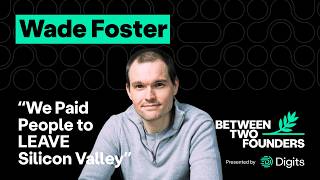
Wade Foster, Zapier's co-founder and CEO, discusses how a frustrating API experience inspired the no-code automation platform, the company's bootstrapped growth and remote-first culture since 2012, and how AI workflows mix deterministic and agentic steps to handle messy data. Zapier's new Copilot feature lets users describe automations in natural language.
Chapters
Workflow is one of the best ways to deploy AI inside of a company. You can wrap an LLM in a harness inside of a workflow and say, hey, I want this to be deterministic here. I want it to act more agentic.
You were no-code before that was really that hot of a trend. Was that a sort of an intentional move? Like, what was the insight that made that so successful?
In the past, like, no-code made it easier, but it wasn't necessarily easy. You still had to do a bunch of configuration, click through a bunch of menus, and had to think really structured in systems. Partly why Zapier was appealing was because I was struggling with that Marketo API and folks were looking for integrations. They know how to use Salesforce, know how to use QuickBooks, they know how to use the software. So why are we directing them to APIs if you can give them a sort of point-and-click interface that makes this stuff simpler? And that then obviously became the no-code industry.
I'm so curious about is obviously the vast majority of startups fail. Is there anything in that early days where you thought like, oh, this is going to succeed where others aren't?
I think what we figured out.
All right, welcome to Between Two Founders. I'm Jeff Seibert, the founder and CEO of Digits. We don't build AGI, but we do build the AGL, the first accounting platform that automates the general ledger. It handles everything from bookkeeping and reconciliation to analysis and insights, giving businesses real-time visibility into their finances and helping accounting teams close the books automatically at month end. Digit is my third venture-backed company, and way back in 2007, I ran Stanford University's Entrepreneurial Thought Leaders seminar series, where we hosted amazing folks like Reid Hoffman, Mark Zuckerberg, Vinod Khosla. With Between Two Founders, I'm super excited to host candid conversation with today's generation of world-class entrepreneurs. You can check out the full series at digits.com/btf. Today, I am thrilled to welcome Wade Foster, co-founder and CEO of Zapier, one of the most quietly powerful companies in tech. What started as a side project to connect apps together is now a platform automating over 80 billion tasks for millions of people and businesses worldwide. Zapier pioneered the no-code automation movement long before it was mainstream, helping people build workflows and systems without writing a single line of code. Wade Foster also hosts Agents of Scale, a new podcast exploring how executives are navigating the opportunities and risks of AI transformation. From bootstrapping Zapier out of Missouri to building a fully remote, globally distributed company, Wade's story is a masterclass in leadership, steady growth, and staying independent by design. Welcome, Wade.
Yeah, thanks for having me, Jeff.
It's so great, uh, to have you here. I'm really excited for our chat today, and I wanted to start sort of way back at the beginning. You grew up in Missouri, far outside Silicon Valley, obviously studied industrial engineering and business. How did your early experiences shape how you think about business and systems and people?
You know, I grew up in Jeff City, Missouri, the state capital, which is a very slow, not particularly entrepreneurial city. So, you know, I don't know that I was thinking too much about like business concepts, systems, people, things like that. You know, it's a very like blue-collar town, you know, Midwestern work ethics. 'Penny saved is a penny earned,' like stuff like that. It'd be very sort of like normal, um, where I'm from. And so, you know, I guess, um, where you most see it is in like Zapier's like bootstrapped background, or sort of like, uh, you know, uh, unconventional thinking perhaps, or, um, like our willingness to sort of go against the grain, uh, you know, I think is like, um Probably all come from some of our founding roots here in central Missouri.
Totally makes sense. I mean, you said you didn't grow up imagining yourself as a founder. I'm curious, what did you want to be when you grew up? And how did that vision change? Like, what was the moment you were like, actually, we should start this business?
I mean, it went in waves. Like, I think the first thing I wanted to be an astronaut.
Yep. Nice.
And then I saw Michael Jordan play and I was like, well, shoot, I want to be a basketball player. And then I realized I was short and I thought, well, maybe I'll be the GM for the Cardinals. You can see a sports theme here, you know, impetus for entrepreneurship came from two things. One, I quickly fell in love with playing music, and one of the first times I ever made money was playing in a quartet at the governor's mansion in Missouri when I was in 9th grade. And I remember getting $50 for that gig. And as a 9th grader, You're like, "Holy cow, this is incredible!" That following summer, I had a job as a lifeguard. I'd have to work all day to get $47. I just did the math on that and thought, "Shoot, $50 is way better than $47." This idea of getting paid for your skills is way more interesting than getting paid for your time. The second thing that I think really ticked it over was, I was, I guess, a junior at the University of Missouri during the financial crisis. And, um, you know, it's kind of in that time when people are starting to like get internships, get jobs, like figure all this stuff out. And I was always a very good student, but, um, that summer, like, nobody, nobody would hire me, full stop. Now, there's a lot of things I think I was doing poorly in the job search, but, you know, I had good grades, I was a smart kid. It sort of felt like this should be easier than it was actually being for me. And I combined that with a prior job I'd the following summer working in corporate America and just being bored out of my mind and just thinking, well, shoot, this ain't for me. And, um, you know, I fell into finally taking a job in marketing, of all things, at a small tiny software startup in Columbia, Missouri. And, um, company wasn't like particularly successful, wasn't making tons of money, but there was so much freedom to just go problem solve and figure this thing out. Um, the act of building software, like getting to being around software engineers made me want to start to learn how to build my own software, uh, that I, I kind of just fell in love. I was like, I know I want to build software, I know I want to start my own company, I want to figure out how to do, do this and be a part of this.
That's awesome. That's, that's so cool. I want to touch on the music thing. Does that still carry through? How, like, what's your creative influence?
Um, my co-founder and I played in a quartet for a while, um, while we're in Central Missouri, uh, You know, after we came out to California, that kind of took the back burner to, to the company. So, uh, you know, I think my, my creative endeavors are, are generally largely still oriented in and around Zapier, uh, more so than they are music. But you get, you know, I don't know if folks are seeing in video, but you can see my saxophone's kind of hanging out over here.
I'm curious, when you look back at college, like How did you learn to become a leader, or was that something that emerged as you built the business?
Definitely something that emerged as I built the business. Uh, you know, I, I don't know that I had any natural, like, leadership traits. You think back to, like, I don't know, the kids that are, like, the captain of their, you know, high school sports teams and stuff like that. That certainly wasn't me. Like, I was quiet, introverted, you know, bookish. Um, like, that, that was where I sort of —how I'd be categorized. I think the leadership skills came on just as the company scaled up and just, you know, eventually getting more and more comfortable in that role. Though, yeah, I don't know that it's ever felt totally like my natural state.
Yeah, I think for so many founders, it's just a constant evolution and maybe something you're not ever fully comfortable with because it's just so personality dependent, particularly across like different co-founder relationships and who does more of the speaking or whatever it might be. I want to go back to the inception moment. So, so take us back to the sort of founding idea. What was the spark that got you obsessed with something and like, how did that evolve?
You know, Brian and I— Brian's one of my co-founders. We were working at the mortgage company and, you know, he and I, we were playing music at nights. We were hacking on side projects like we were just kind of doing a lot of stuff. And so often we would pitch each other ideas. And I remember one day he message me on iChat about this idea that became Zapier. He's like, hey, I'm noticing on these integration forms people are always asking, you know, when are you going to integrate with this or that or whatnot? And, um, the responses were always like a bunch of customers saying yes, I want this, uh, followed up by a product manager saying hey, thanks for the suggestion, we'll take a look at it. Um, which if you built these kind of software, you know, that's basically code for probably not going to happen. And At the time, my J job, I was working in email marketing, and, you know, I'm not a particularly good engineer. I'm like learning, you know, I'm trying to get better at this stuff, uh, but we were working with a Marketo API, which at the time was this old-school SOAP WSDL API. The documentation was in a PDF. Needless to say, I was having a bad time. And so I felt like if the thing Brian pitched me existed, I was like, I, I would use that. That would be so much better to be able to just like point and click, build these integrations, versus having to, you know, figure out how to use the underlying APIs myself. And so it just hit me kind of at the right time, the right moment, and we ended up teaming up with Mike, our other co-founder, and building out the prototype at a startup weekend in Colombia. And, uh, you know, as they say, the rest is history. That's awesome.
And it sounds like you kept your day job for a bit. Like, when— how long was that? When did you decide to go full-time, and how did you make that decision?
Yeah, I mean, that's another very Missouri thing. It's not like there's, uh, investors like throwing buku bucks at you that you can just raise money. It's like, hey, if you, you want to run a business, you better start making some money. And so, you know, we kept our day jobs. Uh, Mike was still in school, he stayed in school, and we worked nights and weekends. And, you know, I think for me, you know, I, I managed to go full-time, uh, I guess it would have been, uh, January of 2012, which would have been about 3 months in. And then Brian and Mike, uh, went full-time after we accepted to YC, which was in, I think, March or maybe May of that year, uh, give or take. So not, not too far after.
And, and you applied for YC multiple times, is that right? And so, yeah, what happened the first time, and what do you think changed the second time that you got in?
Well, the first time we applied right after Startup Weekend, and so we had just basically no progress at all. We had a bad demo, no customers, and you know, if you looked at our resumes and backgrounds, we didn't go to any fancy schools, we didn't work at any fancy companies. Like, there was nothing that would suggest that we were impressive at all. So that first rejection was kind of like, yeah, makes sense. Um, the second time around though, we just been working on the project for 6 months. So we had 1,000 people who'd paid for beta access, we had another 10,000 that were on a waiting list. The product wasn't weekend MVP anymore. It'd been like worked on for 6 months. And so, you know, it just was one of those things where I think, you know, YC looked at it and said, okay, like these guys are serious, they can ship software, they can get customers. Let's, let's invite them out for an interview.
And you came out here, you got in. What— how did that impact your mindset? What did you learn? What was that sort of moment like?
Well, I remember coming to the Bay Area for the first time and looking around and thinking, Where are the flying robots? Where's the, like, I thought this was supposed to be Disneyland for tech. And if you've ever been to like Mountain View, which is where the old YC offices are, you're like, huh, this is just kind of like a, like an office park. So that was like probably the first surprising thing I noticed. Beyond that, I think the most important thing we got was we were able to be full-time on it and we were able to focus all of our attention on that. That summer, you know, like, we, we worked every waking hour of the day on, on Zapier. Uh, I think we only took one day off, which was the Fourth of July that summer. But other than that, like, we just, we just built Zapier. It was like our everything. And, you know, you'd go to office hours on Tuesday, hear the talk and whatnot, but beyond that, it was just build, build, build, build, build. Uh, and I think being around other people who were approaching, just like working with the same intensity, having that kind of ambition. It's just, I, like, the lack of distractions was like so incredibly important, I think, for like getting those, getting the product off the ground.
And what I'm so curious about is obviously the vast majority of startups fail. I mean, 90+%. Even the vast majority of YC startups fail, even though they're put on such a pedestal. What set you apart? Was there anything in that early days where you thought like, oh, this is going to succeed where others aren't?
Yeah, I mean, shoot, I look back at our batch, there's 80 companies, probably another 150 founders. I got— most of them are probably smarter than me. Like there was a team that had beat the Massachusetts lottery in our YC batch. I'm just like, this is clearly people who are like out of my league from a just raw IQ intellect perspective. I think what we figured out was how to get distribution early on. Like, we knew how to, like, make distribution baked into the product experience. And yeah, I think we also just didn't get distracted. Even at the time, like, it's— it feels like it's, it's even more of a challenge for YC founders these days. But even at the time, some of this existed where it felt like a lot of folks got influenced by the environment where it was like, oh, we— this is what a startup is supposed to be. And YC tries to coach you against that and things like that to say, hey, you're supposed to focus on customers, you're supposed to focus on writing code. Um, these are the things that like will help you win and be successful. But you know, folks sort of, they get into the scene, they want to go to the party, they want to be at the launch events, they want to be popular on social and like all these other things which don't necessarily correlate to success. And so I, I think the two things were, one, we were just incredibly focused on our customers and the problem, And as a result, like, that's all we did was we wrote code and talked to our customers.
And it proved out. I mean, that was exactly the right choice in retrospect. What you talk about distribution in the product, which I completely agree is really the only thing that matters. How did it work in those days? Like, what was baked into the product that really got the distribution flowing?
Yeah, you know, Zapier is somewhat known for our, you know, app directory. You know, we have an integration page for every type of integration that you could want. So if you wanted to integrate Sendesk or Jira or Salesforce or Mailchimp or whatnot, there was a landing page for all those. So all those landing pages are, you know, well optimized for search. And when people would go searching for, hey, how do I have an integration for that, they come across Zapier and it was either a nice, like, well-designed SaaS service that you could find through Zapier or a bunch of like gnarly code documentation. And so we just stood out in the search results and people, most folks were like, yeah, this is what I'm looking for. And so, you know, every time we added a new integration, we'd spin up those landing pages and it just created this nice like loop of more integrations, more that, and that just meant more keywords we could rank for and more people coming in the front door. And it just, it, it just sort of was this nice reinforcing, um, loop that we had.
And you were no-code before that was really that hot of a trend. Was that a sort of an intentional move? Like, what was the insight that, I don't know, that made that so successful?
Yeah, I mean, we didn't really call it no-code at the time, but I, you know, I You know, if you recall, uh, partly why Zapier was appealing was because I was struggling with that Marketo API. And, you know, folks were looking for integrations. They want to integrate this, this tool and that tool, but they didn't want API docs. And so from our perspective, it's like, well, how can we abstract away the API layer? Which for most of the power users of these tools, um, they're, they're like, they're fluent. They know how to use MailChimp, they know how to use Salesforce, they know how to use QuickBooks, they know how to use the software. So why are we directing them to, you know, APIs if you can give them, you know, a sort of point-and-click interface, drag-and-drop interface that like makes this stuff simpler? So that's what like kind of our original observation was. And that then obviously became the no-code industry. So let's, let's fast forward.
And now we're sort of entering or have entered this AI age. How does that change the product? How does that impact where you see this working, not working, what the future looks like?
Yeah, well, I think the thing that, like, I didn't appreciate sort of like, you know, when ChatGPT launched but have come to learn is that workflow is one of the best ways to deploy AI inside of a company. And part of it is because, uh, AI is— there's a couple of characteristics. One, AI is really great at working with unstructured data, and it turns out there's tons of unstructured data inside of companies. Uh, it could be email, Slack text messages, call transcripts, PDFs, documents of all sorts, um, you know, images, videos. Like, there's, there's just tons of unstructured data that companies were not able to do interesting automation with in the past because they didn't have a tool for it. If it didn't— if it wasn't well structured in like a, you know, JSON format in a database somewhere, like, it kind of got left out of the, the automation world. The second thing that I think is really important is that these AI tools, they're, they're, they're non-deterministic, they're probabilistic in nature, which means that for critical workflows, it's hard to deploy them, you know, 100% purely agentic style because they're gonna make mistakes. Uh, and so for a lot of workflows, um, you're not willing to tolerate the error rate on it. And so this magic is you can wrap an LLM in a harness inside of a workflow and say, hey, I want this to be deterministic, this to be deterministic, this to be deterministic. Here, I want it to act more agentic. I want to have inference in place. Then I want it to snap out to determinism again. And so you can mix and match these concepts and these features very effectively. And it turns out that all this workflow engine that we built since 2011— we launched workflows in 2016— it turns out that that is a really effective way to deploy AI right now. And as a result, like we've just been, you know, furiously trying to add AI capabilities into the workflow engine to make it easy for folks to go deploy this stuff.
Is MCP a threat? Is it a value add? How does that interplay?
I mean, it's a protocol, like, is what it is, you know, not too dissimilar from how like REST is a protocol or HTTP is a protocol. Yeah, I think it helps figure out how like agents can talk to each other. I think it's useful for agent-to-agent communication. It's not particularly good at deterministic workflows yet. So I think it's just another way that you can build automation experiences. I think it probably adds more, like creates more new types of automation than it, than it displaces at this point in time is my suspicion.
Yeah, I totally agree. And I think it's going to create this renaissance of people wanting all their things to work together, which just doubles the need for these types of integrations. I would agree. So your scale today is crazy, 81 billion automations and counting. I'm curious— congrats, first of all. What's been the hardest sort of challenge to get there, technical or otherwise?
It all feels hard. Um, you know, even when it works, it still feels hard. Like, I think back to that, you know, startup that I was working at right out of school where, um, you know, we didn't have product-market fit at all. Nothing seemed to work. Um, that was like hard, hard. You know, at least with Zapier, you know, we got product-market fit pretty quickly. And so, you know, from that point of view, it felt like like, you know, you're chasing a, you know, a boulder down a hill versus pushing it up. Um, obviously pushing a boulder up a hill is, is challenging, is impossible. Chasing one down a hill is also very hard. Um, but it's, it's hard in a more, um, like, I guess, financially lucrative way. Like, at least this is— at least this is— I'm not particularly better at it, but at least it's working, right? Um, it is, is probably how to think about it. Um, I don't know, shoot. Like, I would say, like, the hardest moments have been just, like, the leadership side of the house. It's learning to, you know, build teams, work with teams, hire talent, nurture talent, um, exit talent if it's not working. Like, you know, these are things that are like— they just didn't come naturally. You're not trained on it in school. Uh, the software side of the house, at least pre-AI, computers just kind of did what you tell them to do. Yes, there's hard technical challenges for sure, but they felt a lot more solvable, I think, whereas the, the people side, there's times where you're scratching your head going like, how am I going to figure this one out?
So this was the perfect bridge. So let's shift gears and talk about the sort of culture and team side of things. Um, you've previously called Zapier, quote, a weird company through and through. What do you mean by that? What makes it weird?
Uh, you know, we were distributed in 2012. We started building a company that way. Um, I remember being told by famous VC, no important company has been built that way. You know, we were neither bootstrapped nor VC funded. So like, you know, we did the one and done financing round, which at the time, like, sort of was, was odd. We didn't feel like we belonged in either camp. Nowadays, there's a term for it, seedstrapping. But at the time, like, it was just weird. We didn't have a sales team for like the longest time, which also was odd, where it's like, why are you just doing this SMB thing? You should be doing more enterprise stuff, which we finally did start doing more of that and have gotten quite good at it, but, uh, you know, it was something we didn't pay much attention to. You know, we ran campaigns like in 20— I think it was in 2016, we announced a delocation package, which was if you lived in the Bay Area and wanted to move somewhere else, we would pay your relocation cost to move anywhere else. So instead of paying you to move to the Bay Area, we pay you to leave. So, you know, all these things are just, uh, you know odd. Like, they're not the normal way people have gone about things. And some have been proven to be, like, you know, more correct than others, and some still look kind of odd. No, I love it.
I mean, so let's touch on remote because we're actually the same. So we started Digits fully remote in 2018. Our investors literally told me the same thing. They were like, you are crazy. There's no successful company that's been fully remote. Like, why would you go do this? And so you actually predated us by 6+ years. How did you make that decision? Where did that come from?
You know, it was— it's kind of playing the cards we were dealt. So, you know, the three of us, you know, had moved to California for YC, but then Mike, his girlfriend, now wife, was still back in Mizzou in law school. And so he went back to Missouri for— after YC. And, you know, we're not going to kick him out. So it's like, okay, we've got— now we've got two locations. And then the second thing was you know, when it came time to hire our first employee, we just didn't know anything about hiring talent. Uh, and you know, we're looking around the Bay Area and looking at the price tags on all these engineers and just thinking like, how in the world are we supposed to play this game? Well, we had a mentor say, hey, you know, one way to de-risk this is to just hire people you've worked with before, like folks you know and trust. Um, and you know, and if you know them to be good, like All right, you're off to the races. Well, those folks were back in the Midwest. And so, you know, we'd hired a former roommate of mine that was in Chicago now. We hired an engineer I'd worked with before that was in Colombia. And so, you know, we like— by the time we had 5 or 6 people, not a huge team, but we're just kind of looking around. And this early experiment showed that the team was happy. We were happy. Customers were happy, revenue was growing, customer count was growing, and it just felt like, why can't this work? Like, maybe we know something that the rest of the world doesn't, so let's go scale up this way. That actually felt like the easier path for us versus to try and go toe-to-toe with like Google and Meta for engineering talent. Like, this— it just felt like a, a better play for us. So it was kind of, you know, just playing the cards we were I love it.
I completely agree with you. What I'm curious about is, in terms of running the company, what did you do differently? Did you, did you create some practices that were like uniquely tailored to being fully remote?
So it's like, uh, we were pretty— we've always been pretty transparent. Default to transparency is one of the values, and we're pretty, um, adamant about documentation. Uh, one of the early practices that lasted a real long time for the entire company was this concept of Friday updates where the tail end of the week you would just share, you know, here's what I did this week, here's what I plan to do next week. And then eventually one of our engineering managers added in this question, which was unplugged, like here's some fun things I did outside of work as a way just to like get to know you and have more sort of like camaraderie building. And it turned out that practice was like just really, really helpful at spotting like work in progress. I mean, shoot, I wished it would have scaled even further because I have to imagine, um, that kind of like context would be incredibly valuable in the age of agents and AI and stuff like that. But it didn't quite scale, uh, super well for us at the time. Maybe I just should have been more dogmatic about it, but that practice was, um, really helpful. And then, you know, we were just very adamant about documenting stuff and like just making it easier for when a new— when someone new joins, they ought to be able to just like read through the documentation, get up to speed, know what they need to do. Um, so that was pretty prac— uh, important. Probably the last thing that I would share that was very helpful for us— I don't know if this was a remote thing or not, but we had this concept of all-hand support. And so everyone who joined the company did some amount of support all the time, and it forced people to really learn the product well. It forced them to work with each other because everyone was doing support. You were meeting people across the company a lot just in your doing doing support shifts. And I think that created like a shared framework for communicating about our strategy, our product, understanding the problems. You'd often hear people cite like, oh, I saw this and that happen in support, like we need to figure it out. And people go like, oh yeah, I saw that too. And so it just felt like you were not having to do as much like context sharing because everyone sort of had this like background process of, oh, this is what I see our customers dealing with. And it just made it more obvious like what the right great product decisions to make would be.
How did you operationalize that? Were people on rotations for days or weeks, or like, how did that work?
It evolved a ton over the years. Um, in the early days, it was literally you join, here's your, here's your login to the help desk, and just pluck some tickets and start answering them. Um, you know, I think eventually we, we made it like fairly structured where, you know, if you were— obviously you're in support as your full-time job, If you were in engineering, you would do a rotation, I think a weekly rotation, where basically you would be, uh, one week out of every— I don't know, it might have been 4 or 6 or 8 weeks, I'm not exactly sure, uh, you would rotate through, um, being like tier 1 or tier 2 escalation. And so you would just handle like the more technical tickets, things where there's bugs, things that are just troubleshooting required. And then if you were in like, I don't know, marketing or, um, something like that, you would just do a 4-hour shift every week. To, to do it. So that's kind of how it basically worked, um, at the time. And our, our customer problems and stuff wasn't so sophisticated that it needed any more rigor than that.
And just to sort of share with everyone listening, where are you today in terms of team? Like, how big is the team? How many states or countries are you in? I think it's quite global now.
Yeah, it's, uh, 750 folks across most states, I think 40 countries. Um, yeah.
And what do you do now at that scale to keep folks together? Like, how often are you doing all-hands? Do you ever do on, like, in-person things? How does that work?
Yeah, so we do a weekly all-hands, uh, every week, uh, in person. We get the whole company together once a year. Um, I do the exec team about once a quarter, and then we have other groups of people that will get together periodically for more like mission-driven, you know, on-sites, I guess, so to speak. So, you know, we're getting humans together pretty regularly. If everyone has like a monthly— it's like some— it's like a monthly budget to get people in your like area together. So, you know, if you're in, you know, a major city, if you're in Chicago, it's like, great, let's do the Chicago happy hour once a month or something like that. And so, you know, teams will kind of self-assemble just to meet up with coworkers from time to time.
Awesome, totally. And now at that scale, I'm curious, where is your time going? Where do you tend to focus your energy?
I spend it predominantly on a, like, a very small number of things. Uh, one, I'm reviewing tons of work, so I'm just like constantly reviewing, you know, the quality of the work. And this can be everything from you know, product decisions, marketing campaigns, uh, sales calls, like you name it. I'm just like constantly just like trying to audit the work to understand, um, you know, what are we doing that's working well, what's not working well. Um, some of it's me learning from the team, some of it's me teaching the team, but just reviewing tons of work. Um, two, through reviewing work, there's a, you know, a handful of key decisions you're making. It's like, what is the key strategies that we're trying to drive for the next you know, 6 months or whatnot, uh, and making really critical choices on what are the 1 or 2 most important things for us to do. And then a ton of time on hiring, uh, you know, I tell folks I'll help close the intern. So, you know, I'm, I'm involved in many, many hiring loops, uh, either as like a, uh, you know, someone on the panel or just simply just someone there to meet and greet and help close candidates at the end of the day.
And it came out you recently appointed an AI transformation officer What's the vision behind that role? What have you learned from that so far?
We nominated or made Brandon, who's our Chief People Officer, into this AI transformation role. I think the learning here is we had— I think this role is— the when and why of this role is pretty important. We had about 2 years ago called a code red after the launch of GPT-4. And basically said, hey, we need to change our product roadmap. We need to change how we operate internally. You know, we need to be AI first, the whole AI memo, all that, that stuff. And, um, we stopped the company for a week and said, hey, first thing we're gonna do is run a hackathon. And so we got people's hands on keyboards, got them starting to build. Now, over the course of that, the next 2 years, like, we didn't have like a centralized person who was the, the AI person inside of Zapier. In fact, I like— it felt like a little bit of an anti-pattern based on a lot of the companies I've to where they would name somebody this and it would become like, well, that's the AI team and then the rest of us, we're just doing normal jobs. Our perspective was like, well, let's just not name somebody that, let's just have this bottoms-up groundswell happen. By and large, that's worked. Now, 100% of the employees are using AI daily in their work. Now, that might sound like all sunshine and rainbows, but it's not. There is a lot of positive things happen, but there's many areas where we are— we, we know that there is so much more opportunity to be gained. And so a lot of those things require us to rethink how we think about organizing teams, rethinking jobs, rethinking culture. Um, you know, the technology is there, but that doesn't mean that everybody snaps to and just like rewrites the workflows internally overnight. And so Brandon, who I mentioned is our Chief People Officer, his team had been like the fastest to do this. The people team was rethinking jobs, rethinking roles, rethinking ways of engagement. It felt obvious, okay, I need somebody to help everybody else kind of corral like all this energy that's like bubbling up inside the organization around it, where there's a lot of like desire and positive momentum to go beyond the sort of like solo AI usage to rethink how these entire systems work. Um, but it needed more top-down support, and so that's where that role came from. And I think the hope is to help, um, sift through, you know, the sea of opportunity and laser in on a handful of like high-impact like workflows and use cases, and then figure out how to, you know, transform the organization that way, and then hopefully teach those teams how to do it themselves. So like more and more teams can self-direct on some of this stuff. But I think the reality is like, you know, these hackathons, they raise the floor for what's possible inside the company, but they don't necessarily raise the ceiling. And that's where you do need more leadership to come in and, you know, paint a picture of how this could work differently.
Totally. And I'm very curious because of course there's been so much hype about some companies are like, oh yeah, the AI writes 80% of our code. And I'm like, okay, And then others are like, yeah, 95% of AI projects went nowhere, didn't save any time. Like, can you point to areas where like it's really helping?
You know, probably one area is like a lot of our like RevOps funnel. And so we have a bunch of tools that help hand like get data into like sales and customer success hands ahead of time. So, you know, a lot of times this problem exists in like an enterprise sales process where, uh, you know, customer will come in and they get handed from, you know, the SDR to the AE to the CSM, and every single step of the way they're answering the same questions over and over again because the context gets lost. Well, with a lot of these AI workflows we have, these are generating briefs based on like the prior conversations. And so, you know, now when the AE talks to them, they have all that context. Now when the CSM gets handed to them, they have all that context. So these automated briefs are really, really powerful. Another use case that's really value is we have a bunch of coaching workflows in and around these processes. So, you know, if an AE gets off of a call that has a Gong transcript that feeds through a prompt that delivers a Slack message that says, here's, here's what went well, here's what didn't go well— this is all trained on what we think is like an ideal, uh, you know, sales experience. So there's like way more like coaching conversations than could reasonably happen for more. We do this also in support as well, so where we recently built out a system that allows us to QA every single ticket, where in the past, you know, we were just cherry-picking tickets. And so if you were someone in customer support, you might get, you know, 4 of the tickets you worked on in a month, like, looked at. And it's just sort of like, what are you going to learn from like 4 reviews? It's just not that much feedback. But now with AI systems, literally every ticket you get worked on can get evaluated and coached, uh, and, you know, help you out along the way, uh, in In addition to like we have just like everybody, like, you know, customer support agents that are helping with like tier 1 tickets in doing these things. So yeah, I think there is across every aspect of the business you can find areas where we're having an impact. Now, as again, as exciting as that sounds, I still feel like even for a company like us, we're scratching like 1% of the possibilities, maybe not even 1% of the possibilities here. And I think that's, I think that's pretty exciting for what's possible in the future because we're already seeing like big gains on what feels like relatively simple stuff. That's awesome.
That's great. I want to end with some quick things on just like advice for founders, today's founders who are just starting out. You did take a really, as you said, weird, unique fundraising journey. How did you decide decide to stop raising rounds? Was it just the company became profitable? What was the sort of strategy thinking that went into that?
Well, you know, again, uh, being from the Midwest, like, we're not like crazy familiar with this environment. I think probably have more skepticism than positive experiences. Like, you hear all the horror stories of like the VCs are gonna kick the, the founders out and, you know, you're gonna lose your baby. And, uh, the three of us had worked at the mortgage company which was owned 50/50 by two brothers. We'd seen it grow. I was employee 500, and when I left 10 months later, starting Zapier, there was 1,000 people there. So I'd just seen bootstrap companies can grow fast and have big impact and just had this other perspective. So when we took the seed round, we— it was $1 million and change, and we thought, okay, like, we still have control of the company. Let's just treat this like it's the last money we're ever going to raise. And so that was the approach we took. And along the way, we would periodically step back and say, hey, you know, would it make sense? Could we grow faster if we had you know, more capital and whatnot. And the answer was never yes. It was always like, nah, there's some other bottleneck in the business that's holding us back. You know, I think a lot of ways, because we're an automation company, like, we embrace this way of building way before AI came around and, you know, became sexy to talk about how much revenue per headcount you were making. We were always just like, hmm, how do we automate this first? In fact, we have a value that's don't be a robot, build the spot. So every person in the company on the margins was just thinking and building and operating this way, which meant that, like, for a software company, your biggest expenses, like your, your headcount, your payroll— if we just had fewer people, so we just didn't need the capital to pay for them at the end of the day. Totally. That's awesome.
And I mean, speaking of teams, you said you spend a large part of your time on hiring. At the early days, you're hiring your friends. What have you learned about hiring over the course of this journey? Like, if you had some advice for founders today, how should they approach it?
Hiring is one of those ones where, like, the more things I know, the more I feel like I've yet to learn. Um, that might be the thing, is to recognize that, like, it's just exceptionally challenging. I've hired some incredible people who are like diamonds in the rough, like way outside the beaten path. Path. I've hired folks from mainstream who've just not been all that, all that, all that great. Um, and then vice versa, like you find who— someone you think is a diamond in the rough and is like, nope, they're just in the rough. Uh, and then you've hired people who've got great resumes and then they back it up, and it's like, yeah, you have this great resume for a reason. So, you know, maybe I can give you one more recent thing I've changed my mind on. Um, I've definitely changed my mind on reference checks. I used to not do very many at all, and if I did, I might do written ones. Nowadays, I'd like reference check pretty much any role I hire for. Um, you know, I think maybe all but like entry-level roles probably deserve some amount of reference checks and back channels. And, you know, if you're, if you're hiring executives, you should probably try and talk to as many people as you can get your hands on. I would try and aim for at least 20 to really know like this person inside and out, to see if they're going to be a fit for, for, you know, the problems you face and the culture you're trying to build and things like that. So that's probably like the latest thing I've probably changed my mind on.
How do you get beneath the surface? Because so many reference check calls are like, oh yeah, they were great. Like they don't want to say anything that negative. How— what signal are you looking for?
Yeah, I mean, you got to ask like a bunch of probing questions. So, you know, I usually start with, hey, tell me about like what you worked on with them. You know, tell me about like the most impactful thing you saw them do. Then I start to go like, well, I'm talking to a lot of other people. Like, what are their biggest fans going to say? What are their top office critic's gonna say. So you're gonna start to tease apart, like, here's the good stuff, here's the bad stuff. Um, and then as you, as you progress on, you'll start to pick up little stories and anecdotes. And so as you start to get in, into the rhythm of asking these questions, you can start dropping bombs where you can say, like, hey, so I heard, um, you know, that this person told me that they, this project, they're not particularly detail-oriented because they miss this and this. Like, do you, like, does that resonate with you or not? And, you know, I think the more you kind of ask, like, a controversial question or a pointed question, you— a lot of folks can't help but like respond to that. And so, you know, you'll hear like the people who disagree, they'll be like, ah, they'll be like, I don't— that does not sound at all true. Like they'll just be flabbergasted. Or you might hear the opposite, you might be like, oh yeah, I can kind of see that. Like, you know, um, I'm— maybe I wouldn't say it quite that way, but like, you know, I, I kind of get it, right? So you can— the more you just pick up these little stories, this is why it pays to do a lot of references, because you just get these little nuggets, and then you can use the nuggets to plant seeds for the next one. And then it starts to just build you a bigger mosaic of, of what this person is like, uh, at the end of the day. Um, and so I just wouldn't shy away from, you know, asking those, those, you know, questions that like are provocative, um, for a reason.
That is priceless advice, a master class on reference checks. That's awesome. Um, well, to wrap up, two, two questions. What is your favorite use of Zapier today? What are you using for?
Uh, so those coaching bots, I am a huge fan of that stuff. So I take like all my granola notes, I feed them through prompts, and I usually like give them feedback. So like we have one that's like designed around 5 dysfunctions of a team, and so, you know, it's like tell me how I stack up on that. But I also like, you know, have a whole bunch of like coaching bots. Coach me on this, coach me on that. There's a bunch of automations just again looking at meeting transcripts and trying to help me show up better. That's awesome.
And you've been doing this now almost 15 years, approaching that milestone. What still excites you? What's— what about Zapier's next chapter gets you really pumped?
Ah, I mean, that's probably cliché, but I am pretty excited about what's possible with AI. Uh, you know, I, I felt like our, our job has always been to make automation, like, easy for everybody, make it work for everybody. And AI has opened the aperture up on that. Um, you know, we have a Copilot now where you can just come in and describe what you want to automate and it like pretty darn nearly builds your automation for you. And that experience is like jaw-dropping. You know, in the past, like no-code made it easier, but it wasn't necessarily easy. You still had to like do a bunch of configuration, click through a bunch of menus, and had to think really structured in systems. And, you know, AI just like can take natural language and do stuff with it. And so I think there's a ton of surface area left to help people just take off just annoying work off their plate and, you know, help them lever up, leverage up with automation.
Wade Foster, that is awesome. Any last things you want to share for upcoming founders out there?
You know, I would encourage you to think about automation early. I mean, it feels a lot more popular now than it did, but, you know, in 2010 it was blitzscale, hire all the people, figure it out later. And I've seen a lot of founders regret that. And so I would start figuring out like, what's the— once you have something working, that's about the right team to start thinking about, okay, how do I scale this up efficiently and effectively? I think you're going to find yourself in a much more pleasant spot if you do. And yeah, maybe check out Zapier to help you out with it.
Wade Foster, Zapier, thank you so much for joining us. Thanks.
More from Wade




From Workflows to Agent Teams: Wade Foster on How AI Reshapes Enterprise Automation

The Top Scaling Lessons from Zapier's AI Transformation with Wade Foster, Co-Founder & CEO of Zapier


Why Companies Force AI: Zapier’s CEO Wade Foster Explains | Belkins Podcast Episode #21



INSIDE How AI Startups hire, AI Roundtable with Wade Foster, Mikey Schulman, and Ali Ansari | E2225
