How to Execute Your Strategic Plan Successfully
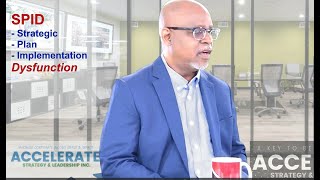
Dr. Walter Vernon Murray presents the DiMES framework to fix Strategic Plan Implementation Dysfunction, where 70% of strategic initiatives fail. The framework covers decision-making, innovation, metrics, engagement, and synchronization, with tools like the 4R3I decision algorithm and a 7-question innovation technique.
Chapters
All right, so here we are, another masterclass from Accelerate Strategy Leadership Incorporated. My name is Dr. Walter Vernon Murray, CEO and Chief Accelerator at Accelerate Strategy Leadership, and from the Dimes Strategic Leadership Conference, I am of course your main facilitator, presenter, and trainer. Anyway, today's masterclass is gonna touch on a topic that is recognizable to most, if not all of you today as a business owner and a business leader. We're gonna talk today about a struggle, a pain point that most business owners and business leaders encounter as they try to implement strategy. What is it? A couple of tips on how to overcome it. And that'll be the gist for masterclass, some red flags to look for, etc. So let's dive right in.
All right. So, Dr. Murray, this is going to be an informative discussion about the 5 common roadblocks that many leaders and business owners face while leading their strategy implementation toward achieving their strategic goals and objectives and strategic vision. Should our attendees feel that they are the only ones struggling with these roadblocks? I get that a lot. Leaders feeling like everybody else is killing it in strategy implementation and they are the only ones struggling with these roadblocks.
So you are not alone, definitely not alone. And, and the data, as we'll see in a few minutes, bears it out that the, the vast majority of business owners and leaders like yourself struggling with this same problem. I've got a name for it. You know how I love acronyms, right? So I've got a special name for it. What, what am I talking about? You have invested time, resources, human capital, team members, yourself, stakeholders. You invested carefully and meticulously in crafting a strategic plan, strategic goals and initiatives. That are supposed to get you strategic vision. I mean, that's the best, that's the plan, right? That's the game plan. But, but for the life of you, try as you may, you and your team just can't seem to get over that hump and achieve maximum acceleration of strategy implementation. You make some progress, but achieving that maximum acceleration, it just eludes you, elusive. And so you are not alone. If you feel the frustration and the futility of strategy implementation, you are definitely not alone. Here's some data, quite alarming, but this data documents the reality of what I call STID, S-T-I-D. Strategic plan implementation dysfunction. Here's some data, some studies that were done. The Harvard Business Review noted that while setting goals, strategic goals is critical, up to 70% of strategic initiatives fail. So that's an alarming number, right? 7 out of 10 business owners, business leaders, leadership teams that set strategic plans and initiatives, 70%, 7 out of 10 fail. Another study done by McKinsey and Company, McKinsey and Company is a leadership and management consulting firm. They noted that many companies struggle with what they term the strategy to execution gap, the strategy to execution gap. Only 30%. And this, this sort of, this sort of validates the Harvard Business Review study. McKinsey study found that only 30% of executives say that, that the organization successfully executes strategies and achieve their goals. So it's crazy that, that, that the one thing that defines your leadership, which is setting and achieving strategy. The one thing that defines your leadership is the one thing that so many business owners and leaders are struggling with. If you're struggling with it, that's okay. You, you're not alone. Well, I shouldn't say it's okay to struggle, but don't feel bad. Don't be embarrassed because 7 out of 10 leaders struggling with the same issue. The challenge though is, okay, what do we do? How do we identify the cause? How do we overcome this struggle? So what this data really highlights is that there is a significant gap between the recognition of the importance of setting goals and benchmarks and the actual achievement of those goals. We've got to have strategic goals. We've got to have a strategic plan. Also, there's data that shows that only 65 to 70% of business owners and leaders recognize and implement even the creation of a strategic plan. So there's a bunch of people out there flying by the seat of their pants. But for those leaders that recognize the importance, there still exists this strategy execution gap, or what I call strategic plan implementation dysfunction. What this means then is that you've gotta have a framework, right, that helps you to identify the reason for your dysfunction. It's like a physician. When the physician makes a diagnosis, they have to figure out what's causing the illness, right? What's causing the SPID in this case. So it's very important that you have a systemic, systematic framework that helps you to identify the cause of your strategy implementation dysfunction and prescribe a cure for that strategy implementation dysfunction.
So then I guess the next big question is, how do leaders and business owners identify both the cause and the cure for their struggles with the roadblock that you call SPID, strategic plan implementation dysfunction? What's the cause? And most importantly, what is the cure?
What we're going to discuss today in this masterclass and what is the focus of our Dimes Strategic Leadership Conference, and so much of what I do with business owners and business leaders is what exactly are those elements that create strategic plan implementation dysfunction and what is the cure? So the cure is dimes, okay? Not coins in your pocket, but the cure is dimes. V-I-M-E-S.
What is this cure for strategy planning implementation dysfunction? It's called the Dimes Framework. Basketball, Magic Johnson, my favorite assist leader. Man, you see Magic Johnson coming down the court, uh, Showtime in LA. Magic Johnson is still the assist leader in the NBA. Trae Young, that's my man right there. What, 9, 10 assists per game? In NBA basketball, sometimes making an assist is called dropping a dime. My framework is just like that. I'm gonna give you some information, some inspiration, some tactics, some tools that will help you catch and shoot and score big with your strategic planning. Dimes are 5 key things 5 things, paradigms, best practices, tools, resources that you need so that you can effectively engage in strategic planning so you could sustain today's success into tomorrow or create success that is sustainable into tomorrow. The data and the studies show is that these are probably the 5 most frequently occurring things that keep leaders and managers and business owners from engaging, accelerating their strategic plan, or what I call closing the strategic vision gap. Dimes, decisions, strategic decisions. You've got to have a system to make strategic decisions that are aligned with your strategy, that gets you closer to where you want to be. In a sustainable fashion. The I is innovation. The marketplace as a business owner, business leader is so competitive that if you are not able to out-innovate your competitors, there is no way in the world that you'll be able to out-compete your competitors. The M is your metrics. You've got to measure what matters because you master what you measure. So if you measure the wrong things, you're going to master the wrong things. The E, engagement. Any plan worth achieving is going to require that you engage the right people at the right time in the right way. If you are the only person that it takes to achieve your goal and your strategic vision, then your goal and your strategic vision is way too small. The S is strategic alignment. Strategic alignment of your organizational culture. The people within your organization, are they on board? Have they bought in to where you want to go? Strategic alignment of your operational model. Are you focusing on doing the right things as much as you are focusing on doing the things right? It's a nuanced concept, but if you're not focusing on doing the right things, and spend all your time focusing on doing the things right, then you are in for a big surprise, a big surprise when it comes to strategy implementation.
I've worked with thousands of CEOs, C-level executive leaders, business owners, leaders in both the for-profit and nonprofit arena, thousands of leaders since 1990. That's what, 30-plus years ago, 35-plus years ago. I have observed that the failure to effectively and efficiently implement a strategic plan comes down to these 5 things. It has to do with either a misalignment in decision-making, there's your D, in innovation and change management, there's your I, metrics, measuring performance and implementation, there's your M, engagement, how you engage stakeholders There's your E. Or synchronization, synchronizing operations and organizational culture. There's your S. V-I-M-E-S. One of those 5 areas, sometimes all, are out of balance, out of kilter, that creates strategic plan implementation dysfunction. Now, did you recognize any of these? Let's look at them again. Decision-making is off. People are just making bad misaligned decisions. Innovation and change management is not effectively executed. There are people innovating all kinds of stuff that doesn't even have anything to do with your strategic vision. Recognize anything so far? Metrics, your numbers, you don't, you don't collect the right numbers. You don't measure the right thing. You're measuring things that are not aligned to strategy. Engaging. This is a big one. Engaging the wrong people to get on board with strategy implementation and engaging the right people in the wrong way. You know, it's just as bad to engage the right people but engage them ineffectively. And synchronizing, synchronizing operations and organizational culture. Again, those are the 5 things that make up DINES. So, Decision-making, innovation, metrics and KPIs, engaging stakeholders, and synchronization. D-I-M-E-S. Those are the culprits, plain and simple.
Those are the culprits.
Now that we know what these culprits are, let's look at each one a little bit more in depth. Now again, remember the Dimes Strategic Leadership Conference. And the Dimes 5-module coaching program will go into so much more depth, a much deeper dive into what these elements, the Dimes elements are, how to recognize them, red flags, how to mitigate them. I'll look at case studies. In this masterclass, in the interest of time, of course, we will do an overview. As part of this masterclass, you also get the ebook, which is an introduction to my full 80-90 page book on dimes, right? The ebook is like a primer, so to speak, level 1.
We'll do an overview.
You get the ebook, which is an introduction to dimes, but you have the opportunity to register for the dimes Strategic Leadership Conference, and from there you also have the opportunity to register for the 5-module in-depth training program, coaching program, where you and your team become part of a training, uh, and we'll walk you through how to implement DiMES in your organization.
The DiMES Strategic Leadership Conference caters to busy executive leaders just like you. The on-demand feature means that you can access every session of the conference at your convenience and have access to the content for 90 days. Not only do you access Dr. Murray's training presentations and workshops on strategic leadership, you also have 90-day on-demand access to the conference library of tools and resources to power up your strategy implementation and strategic leadership.
Just because the conference is on demand and pre-recorded doesn't mean you lose the interactive and immersive benefits of an in-person live conference. In fact, we think our Dimes Strategic Leadership On Demand Conference is even more interactive and immersive. In every one of Dr. Murray's presentations, you can send your questions and/or comments at any time to Dr. Murray. You can pause the recording as many times and at any time during his presentations and send him your question or comment. You will get a response from Dr. Murray usually within 24 hours or sooner. And then there is the conference discussion.
Here is where you can interact and network with other attendees, even if they attended the conference weeks before or after you attended. Many of our attendees have formed long-lasting relationships with other leaders and even gained new contracts and access to professionals, all from networking with other attendees at the Dimes Strategic Leadership Conference.
Another huge benefit is that all attendees get access to our advanced-level Dimes Strategic Leadership Training at a very special price that saves them thousands of dollars.
So the conference begins with a special welcome from Dr. Murray and a couple of his team members. Then there is a session that gives you an overview of Dr. Murray's experience and expertise that make his presentations so powerful and practical. You will hear a little about Accelerate Strategy and Leadership Inc. and Dr. Murray's other successful business ventures over the last 35+ years.
Then Dr. Murray goes into his training presentations. He breaks it down into 3 informative and interactive sessions. Between each session, you will hear from some of his associates, attendees, or other experts on strategy leadership. At the end, you will hear details about the advanced level, DIME Strategy Leadership Training, and how to take advantage of the special conference pricing. You will definitely want to grab this conference pricing that can save you thousands of dollars.
Dr. Murray ends the conference with a short, powerful, and inspirational call to action. He reminds each attendee that the knowledge they gained at the conference puts them ahead of the game and ahead of competitors. He reminds you that you have what it takes to lead your organization or team to achieve their strategic vision much faster and more efficiently than ever.
And the conference doesn't have to end here for you. Remember, you can replay the entire conference or just selected sessions as many times as you need to for the next 90 days. So go ahead and register now, and we will see you at the DiME Strategic Leadership Conference.
Jump into our DiME Strategic Leadership Conference and learn some of the powerful best strategic leadership practices Dr. Murray is teaching this group of business executives. The DiME Strategic Leadership Framework is based on Dr. Murray's 35+ years of practicing, coaching, and researching best practices and paradigms for effective strategic leadership. It is also the focus of his best-selling book, Five Key Risks of Strategy Implementation. So click the link provided below and access Dr. Murray's complimentary pre-conference resources for the DiMES Strategic Leadership Conference.
I was blown away by the DiMES and the 4-Hour Framework that I learned at the Accelerated Strategy and Leadership Conference. They're simple yet powerful tools that help me align my team and execute my strategy with clarity, and speed. I highly recommend this conference to anyone who wants to level up their leadership skills and achieve their goals faster.
Let's first look at the D. Dimes.
The D in Dimes is decision-making. The cause that mucks up, clogs up strategy implementation is what I call misaligned decision-making. That's the cause, right? The cause is misaligned decision-making. Obviously, the cure is strategically aligned decision-making, right? So you get the contrast. Making bad decisions messes up strategy. Making good decisions makes strategy go Voom, if you know what I mean.
So let's talk about what is a strategically aligned decision.
It's simple, really, when you think about it. You've spent time and resources creating a strategic vision. This is where we want our team and our organization to be. That's your vision. You see that in your corporate mind's eye, so to speak. Every decision, and I mean every decision, that you and your organization makes at the leadership level and at the mid-level management staff level, every decision needs to be aligned to get you to where you want to go as per your strategic vision. It might sound simple, but you would be amazed because people don't usually take the time to compare decision to vision. You make decisions so fast in the daily execution of your roles as a leader, you never really stop and compare decision to vision to say, okay, is this decision going to get me to this vision? You make decisions based on expediency, in the moment, and that is what most leaders do, most business owners do, and it is the death of strategy implementation. Here's some red flags to tell you if you're, here's one red flag that will tell you if you and your team are not making strategically aligned decisions. It's the kind of decision that you look back and you say to your manager, why in the world would you decide to do that, right? And that's in hindsight. Well, how do you get ahead of that so that he doesn't make, he or she does not make those kinds of decisions that you have to say, why would you do that?
Right?
So if you constantly have them to say, why would you do that? Why would you make that decision? If you find yourself saying that too many times, that's a red flag that you're not making strategically aligned decisions, you or your team.
So how does making strategically aligned decisions turbocharge or accelerate strategy implementation?
For one, it establishes a clear decision-making framework. And so it ensures that choices are made quickly and in alignment with strategic goals. It reduces delays, enhances the focus of the organization. Again, in the DIAMS strategic leadership conference or in the 5-module training program, we will give you several other red flags and several other ways that strategically aligned decision-making will facilitate your strategy implementation. Just wanted to kind of give you a couple here in the master class.
Now let's look at a case scenario, a case study, right?
And of course I've changed the names, but the reality is real. In other words, this is coming from an actual client that we consulted with. Of course I've changed the name of the corporation, et cetera, just to make sure We're protecting everyone's privacy, right? So we'll call this leader Sarah. She's the CEO of a tech company, small tech company, and she's been struggling with slow decision-making. And typically what happens is slow decision-making, she finds herself, she and her team finds herself on the brink of the deadline of submitting a proposal. And because decision-making all along was slow, And the deadline is imminent. You push, and you've done this, I'm sure. You just kind of throw some stuff together to meet the deadline, right? Because you don't want to miss the opportunity. Only to find that because you didn't take the time to actually do the proposal right, because you were under time pressure, which was caused by slow decision-making, you end up losing the opportunity anyway. Right? So what she did after being in one of the training programs, she created a decision-making a decision-making framework. And one of the things that we teach is called the 4R3I decision algorithm. And that decision algorithm gave her and her team some clear criteria for evaluating strategic options. 4R is relationships, resources, roles, and rules. And the 3I is impact, image, and income. Again, in the training program and in the conference, I'll expand and unpack All of those 4 Rs and 3 Is. But I'm just letting you know that because she took a proactive step, implemented some of the training that we provided her on decision-making, i.e., the 4R3I decision algorithm, she was able to streamline her decision-making process, speed up decision-making time, make more effective decisions, and capture a whole lot more opportunities that the company was previously losing. All right?
Yeah.
I remember that client very well. They were showing all the red flags of non-strategic decision-making, or what you refer to as strategically misaligned decision-making, and it was clogging up the organization's decision-making process, which led to them losing many major opportunities for new contracts. Okay, just to be sure you remember what Dr. Murray said, remember, in the DIME Strategic Leadership Conference, we will give you several more red flags to help you identify if your decision-making process is strategically misaligned. This way you can use the strategic decision-making tools that Dr. Murray will teach you to avoid strategic plan implementation dysfunction. One of those tools is the 4R3I decision algorithm. Just this one tool made the difference for Sarah and her team between winning or losing millions of dollars in new contracts. So be sure to take good notes and ask questions at the DIME Strategic Leadership Conference or in the DiME Strategic Leadership Training Program when Dr. Murray does the session on the 4R3I decision algorithm.
Now let's look at, uh, the I in DiME.
Innovation. So again, the cause of strategic plan implementation dysfunction is non-strategic innovation or misaligned innovation. So the cure would be strategic innovation.
Having a well-defined, carefully constructed innovation strategy is an absolute necessity. An innovation strategy is an innovation strategic plan that sits inside your organizational strategic plan. It uses strategic planning tools and principles, but focuses only on doing innovation effectively. Without this level of intentionality and focus on innovation, there is a pretty good chance that you and your leadership team will succumb to what Dr. Murray refers to as misaligned innovation. The reason you want to have an innovation strategic plan is to make sure that your innovation is strategically aligned innovation. Here are 3 key elements of strategically aligned innovation. First, strategically aligned innovation must have an innovation strategic plan that sits and fits inside of your organizational strategic plan. Secondly, strategically aligned innovation must address all 3 levels of innovation: product innovation, process innovation, and delivery innovation. Third element of strategic innovation is that strategic innovation innovates with the customer and not just for the customer. There are actually 7 elements of strategic innovation, but we will look to 3 in this masterclass. So, so here's the thing.
Innovation is probably the easiest element of Dimes to, to sort of succumb to in terms of making bad innovation decisions, misaligned innovation.
People kind of get carried away in innovation because Innovation drives competitiveness.
If you could be 10% different and better than the competition, then you have a good chance of outcompeting the competition. And so, you know, companies like Google and Apple invest billions of dollars in research and development, which essentially is innovation. And that's good, but without a well-defined, structured innovation strategy. In other words, a strategic plan for innovation that sits inside of your strategic plan for your company. So without that, people tend to fall prey to misaligned innovation. So what is strategic innovation? Strategic innovation is innovation that, one, that has an innovation plan that carefully crafts an innovation strategy. Secondly, Strategic innovation looks at all 3 levels of innovation, product innovation, process innovation, and delivery innovation. Once again, I'm giving you top-level information here. What exactly is process, product, and delivery innovation? We'll dive more into that in the Dimes Strategic Leadership Training Program, right, which you have access to once you get into the conference. So, and the third thing is strategic innovation is innovation that innovates with the customer, not for the customer. Right? I mean, that is so critical. Organizations say, I think our customer needs this. And just pour dollars and millions of dollars into creating something for the customer. Where is your market research? Where is your customer preference studies? Corporations that have big budgets probably take the time to do that, and even then they fail, let alone small organizations like you and I who don't have a budget or resources to conduct some of these market studies. We just have, well, We just have an idea that, hey, the customer might like this because I would, you know, using yourself as a customer study. It doesn't work.
Trust me, guys, it doesn't work.
That's a sure sign of non-strategic innovation.
It is a true statement in business that the organization, the business owner that could out-innovate the competition generally is the one that leads the pack? Elon Musk and Tesla. There are literally dozens of other electric vehicle companies, but Elon Musk is still leading the pack at Tesla because he was able to out-innovate and be first to market. But innovation, if not done right, could actually be the death of your company. For example, when organizations and business leaders innovate, creating a new a new product, a new service, they make one cardinal mistake. Cardinal mistake is that business owners and business leaders invariably innovate for the customer rather than innovating with the customer. It's a big difference. It might sound like a nuanced difference, but if your organization is hell-bent on innovating for the customer rather than innovating with the customer, you're going to probably end up like Google. Now you say Google, right? Google is a successful company. Yeah, they are one of the largest companies in the world. I think their balance sheet, last time I checked, had almost $10 billion in cash. How many of you have ever heard of Google Glass? Google Glass? No? Well, you see, Google had this brilliant idea to innovate something extraordinarily innovative for the customer. Google Glass was a type of wearable technology, I mean, it's real high tech. So you imagine your smartphone on the inside of your glasses. Some engineer thought that was a brilliant idea for the customer. Never really did enough research with the customer to find out if this brilliant, creative, innovative idea was actually going to work. But needless to say, the fact that none of you here are wearing a Google Glass, or half of you have never even heard of it, tells you that it did not succeed. It was innovating for the customer rather than with the customer.
Again, that's one sign. In the Diamond Strategic Leadership Conference and training programs, we give you at least 6 or 7 different red flags. So this first red flag we talked about is when you find that your innovation is driven by personal preferences rather than customer preferences, right? Strategic innovation, how does it help strategy implementation? Well, it's sort of obvious, but let me kind of give you an example or two.
So here are two ways strategically aligned innovation helps you overcome the roadblocks of strategic plan implementation dysfunction. First, strategic innovation fosters a culture of continuous improvement. This is a culture where every team member is always looking for ways to improve one or all three levels of innovation: product, process, or delivery. Secondly, strategically aligned innovation protects your profitability. One of the quickest ways to lose money and become unprofitable fast is to throw money at some new fandangle innovation that is poorly planned and poorly executed. Remember the example Dr. Murray gave earlier about Google Glass? And there are countless thousands of businesses that have gone out of business because of a strategically misaligned innovation.
Organizations and leaders that have robust, strategically aligned innovation tend to foster a culture of innovation. By encouraging continuous improvement. When organizations make innovation a strategic priority, then that drives or creates a culture of continuous improvement. The second way strategic innovation helps strategy implementation is that you don't run out of money. Okay, I can't tell you how many organizations have lost their shirt chasing down a rabbit hole of an innovation that was poorly planned and poorly executed. And the problem with that is sometimes the money you lose chasing one poorly executed and poorly planned innovation not only jeopardizes that department, it sometimes jeopardizes the entire company. Again, I can't tell you how many organizations have lost their shirt, lost this, filed bankruptcy quite frankly because innovation was not strategically executed. So a quick case study. We'll call this person David. David was the COO of a manufacturing firm. They manufactured backpacks, you know, backpacks you see folks wear.
They made backpacks, customized backpacks.
And he noticed that the company was letting or falling behind its competitors because their products were cutting edge, whereas David's company was still doing stuff that was from back in the dark ages, right? Stone Age type stuff. So he used a 7-question innovation technique that we taught him and his team, 7-question innovation technique that helped him to ask the 7 critical questions about innovation that forces innovation to be strategic. What are those 7 questions? Again, we're not going to go into it in this masterclass, but one of those questions is who is benefiting the most from this innovation and how? That question right there, if you and your team you have an idea for an innovation and you sincerely, honestly, and effectively explore that question and you cannot find credible answers to that question, who is this innovation going to benefit the most and how, then you need to drop it. Just drop it. As brilliant and as cutting-edge as it might seem, just drop it because chances are You're going to lose your shirt on that innovation if you cannot identify who the beneficiary is and how the benefit is delivered. All right? So that's the I in DIME. So we talked about D, decision-making. We talked about I, innovating strategically. Next, let's look into the M, metrics, measuring strategy implementation. This is the end of part 1 of this masterclass. In Part 2 of this masterclass, I will discuss the M in Dimes. Remember, the M stands for metrics. I will discuss how to strategically measure the progress of your strategy implementation.
Just click the Mark as Complete button at the end to jump into Part 2. In Part 2, Dr. Murray will cover metrics, engagement, and strategic synchronization. See you there.
Jump into our Dimes Strategic Leadership Conference. And learn some of the powerful best strategic leadership practices Dr. Murray is teaching this group of business executives.
So go ahead and register now, and we will see you at the Dimes Strategic Leadership Conference.
Click the link provided below and access Dr. Murray's complimentary pre-conference resources for the Dimes Strategic Leadership Conference.
More from Walter








All You Do Is Win ! https://acceleratestrategyleadership.training/saltresources/


