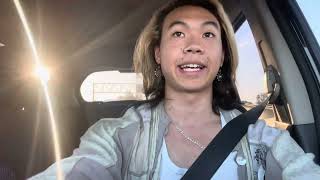
Jaden Kim explains how he learned to play any melody in any key and identify song keys instantly by treating music as numbers. He converts chords, scales, and melodies into numeric patterns, then sings them over chords until they become intuitive. These skills aren't innate, he argues, but built through everyday listening to radio, live performances, and nature.
Chapters
Yo, what's going on? People in the car again. Thought I'd drop some thoughts. Let's just get right into it. How to become a musical or how to make people think that you are a musical genius, a savant, a prodigy, a gifted person. The answer just become one. So let me dive in a little bit into like what I mean with this tongue in cheek title, right? And I just want to get out of the way. I'm really not trying to come on here and claim to be like those things that I mentioned, savant or prodigy or musical genius or anything like that. But with that being said, I have developed some skills through intentional training and practice that I think many people and musicians assume are skills that are not really developable. Developable skills that you can't develop. Just things that people assume that you're born with, right? So an example of some of the things that I have learned to do. One, like I've mentioned this in my previous car videos. I can play any melody that I remember in any key on any instrument without having to like fish around for notes. Like, I can just play it right the first time because I understand the structure of what it is in my head. Two, and kind of related to this, what I've learned to do is basically learn to, like, if I'm on the. On the drive home like I am now and the radio comes on and there's some song that I've never heard before and I'm like, oh, this is a cool song. I just listen to it, analyze and learn it in my head. And then what I can do is go home right after I get out of the car, go to the piano or the guitar and be able to play that song effortlessly in any key. I'm not going to say I'm going to get like the exact arrangement if it's like a piano or a guitar part. But what I can do is, you know, basically play an accompaniment for the chord, chords and the verses and play the melody too, if it's, you know, simple enough and I remember it well enough. Third, I guess I would say is that when I'm playing with a recording or playing with other people, it never takes me more than one note to know exactly what key we're in and exactly where I am in the key. I feel. I see, I see so many musicians, like good musicians, people that are really good at this and they go to like find the key of the song and they play like five notes. And in my experience that's really unnecessary. So I'm sure Some of you guys are asking, like, how did I develop how to do this? I have a couple of other videos on the channel that explain that. But basically what I did to develop this, these abilities is that I found a way in which to look at music and harmony and just how the whole picture works together that I was able to apply beyond the scope of just one instrument. Right? It basically has to do with turning all everything that happens in the music into numbers, purely numbers, and then developing a personal relationship with those numbers. Right. This video isn't so much about, like, how to do that. I have other stuff, but more just about, you know, the what and the why. And also just encouraging people that for those that are willing to seek this treasure, for those that are willing to go down this path of becoming an improviser, becoming a creator creative with this music thing, these are skills that are not out of reach for people. And I also want to stress that, like, I didn't practice, like, 10,000 hours to get to this point. And what's funny is, I had played a long time and made some significant musical strides. I mean, I got a full ride to jazz school for trombone, right? And I couldn't even do pretty much any of the stuff that I just mentioned. I couldn't do it. I couldn't do any of those three skills. And I literally got a full ride to go to jazz school. So it's not something that's really being taught in these institutions, right? Basically, to kind of pedal back a little bit, I started studying the music as numbers. I did some basic exercises to associate these numbers with sensations and feelings and just finding out what the stories were. In my mind. It involved a lot of singing numbers, you know, like, 2, 3, 4, 3, 4, 5, 3, 4, 3, 2. And just being able to do that over every chord. Eventually, stuff just starts clicking into place. And really, just to say to you guys, like, this stuff is possible, these skills, you can develop them. It's not something you need to be born with, and it's not something that takes, like 10,000 hours of practice. That's what I was saying earlier. Really, once I got this system in place in my mind, what I was able to do is just take it everywhere, right? Every single song I heard on the radio became a chance to practice. Every single performance I saw live became a chance to practice. You start to just be in nature, and then, like, Mother Nature, like, whispers you these melodies, and you're like, okay, I know exactly what that is. I have a way of understanding it. It's not Just. Now it's 3, 2, 1, 7, 6, 7, 1, 7, 6, seven. And to understand what that means informs the types of chords, the type of harmony that you can put under that. And so for those that are curious, my friends, I'm here to tell you that there is a way. And it doesn't have to be about you just like hitting your head against the wall, practicing really boring stuff in a practice room for thousands of hours. No, it's really just about developing a personal relationship with these sounds. Having something to call everything, in this case numbers, and then just applying that as many places as you possibly can. Look at your favorite songs. How does it line up with this numerical approach song did you hear on the radio? Melodies just everything can be put on the map, basically. And once you start getting into this mode of thinking, the world is just going to open up for you guys. I don't know if I have much to say, but best of luck and you can do it. If you have questions, you can hit me up on Instagram. Also, if any of many people here watching are intermediate guitarists that improvise and compose, I would love to interview you. I'm currently doing interviews of those types of people to basically get a better idea of what people's frustrations, struggles and goals are. Just for my own music teaching project. If you have any other questions, I'd also be happy to answer those on the call. Great. Best of luck all you guys. Bye.