Corporate vs Private Employment
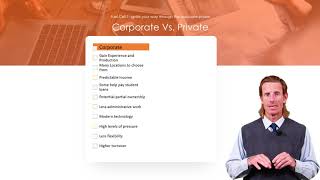
Justin Reed, a CPA and CFO advisor, breaks down corporate versus private practice dentistry for early-career dentists. Corporate offers predictable salary, student-loan help, and modern tech, but demands higher production and less schedule control. Private practice gives clinical autonomy and a real path to ownership, though you may need multiple offices to go full-time in crowded markets.
Questions this video answers
$5,250 per year (employer payments up to this amount are not taxable to the employee).
Chapters
All right, associates. Hello, I'm Justin Reed. I'm a CPA CFO advisor here with Practice cfo. Today we're going to discuss what's quite possibly one of the largest decisions you'll make early in your career. And the question is, should I take my first position as an associate in corporate dentistry or in private dentistry? And like any big decision that we have, and this is going to require us to look down the road a bit, we're going to need to project out into the future and determine what is going to be most important to us. What do I want to achieve? Where do I want to be five years from now, ten years from now? Because this decision that we make is going to really have an impact on. On us, you know, now, but also more importantly, in the future. So here at Practice cfo, we work with a lot of private practice owners, actually, primarily private practice owners. But I can promise you, as we go through these, I'm going to. I'm not going to be biased. I want to walk you through the pros and cons of each option and really help us to determine what might be the best fit for us. Okay, so let's jump right in and take a look at the corporate option first. So we come right out of gates. We are this thoroughbred horse, and no doubt are we willing to produce, and we want to earn income. And those are our two main objectives right out of the gates. We're looking for production experience, and we're looking to generate some income. Right. And corporate dentistry is going to provide both of both of these opportunities to us. We're going to be able to meet these objectives. At the end of the day, we're looking to produce efficiently, and we know that the more patients we can serve with quality work, the more income we're going to have, more job satisfaction, life satisfaction, and all of that. Okay, so, okay, next one. Many locations of practice. From location to many of us, this is kind of a big deal, right? At this point, we have bounced all around the United States, possibly even out of the country. We've done our undergraduate work. We have done our dental school, perhaps specialty school, perhaps residency, perhaps. These have been done at a variety of locations. And at this point, we're just ready to settle down. And so location is a very personal decision. We actually have our own separate module specifically on finding the right location. So I'd encourage you to check that out if you have a chance.
But the main questions, as an associate that we want to answer are, number one.
How much effort do I want to put into finding a job in a specific location, and how long am I willing to wait to find that specific job, that specific location? Because in corporate dentistry, because they're hiring more often, you're going to have more opportunities to find a job in a place that you like. Okay, so that's one of the benefits of being in corporate. Okay, next, so a predictable income. And we're all wondering right now, hey, am I going to be able to meet these monster student loan payments that I have every month? My answer, have you watched Wes's module on student loans?
If not, I suggest you do. I'm sure he'll get you all squared away. But no, we're going to be fine meeting that monthly student loan payment. But we also want to know, are we going to meet our car payment? We're going to make our rent payment, Is it going to be on time? What are all of our expenses going to be? And are we going to earn enough income at the end of the month to cover those? And how much surplus income can we plan for? Can we budget for now, in corporate dentistry, you're going to be on a salary, most likely. There might be a bonus there that's based on production, but because you're on a salary, it's going to be easier to predict out what your income is going to be, easier to budget and so forth. So that's another pro of being on the corporate side.
Okay, so next we're looking at student loan assistance, and many or some corporate employers are kicking in on your behalf towards your student loans. And this is something that's no doubt it's a benefit to us, but we want to keep in mind.
That really when we're evaluating our options, we should be looking at compensation in one big bucket. And student loan payments assistance would fall into the bucket along with your W2 wages, along with any 401k benefits that you might have, any group health care benefits or any other employer benefits that you're receiving. They kind of all go into this one big bucket. And we want to compare that entire bucket between our options that we're looking at now. One other thing to note is that.
Our employers can pay up to $5,250 towards our student loans per year. And that amount will not be taxable to us as income. Anything that they pay in excess of that amount, we have to report on our 1040 tax return as income. So we certainly want to keep that in mind as we're evaluating our options as well.
Okay.
Potential partial ownership. What do we mean? By this. Okay. So when you go into corporate dentistry.
You may be presented with the opportunity to own a little bit of the corporation, you know, at some point down the road. And obviously equity is a great thing. We all hopefully know a little bit about what equity means, but it's a long term stake in that particular corporation. So what does that mean to us? We're more vested in, in our practice. We're more invested in, you know, the culture and the initiatives of the owners and we are part of that ownership group. So at some point we'll be able to cash in that equity down the road. And that is a benefit that we see from some corporate dental employers. Okay. So moving along, less administrative work. Well, what do we think about when we think administrative work? I think many of us might think of like paperwork. Right. Or really just non production related activities. Okay. It could also mean training staff.
Working on processes or internal controls within the organization. Okay. Now keep in mind that under the corporate dental model, one of the main objectives is to centralize and make efficient all administrative functions. Means that if there's 20 offices, they want to centralize those down to one corporate office if possible. So that everything takes less time and it's operating like a well oiled machine within that corporation. That's part of the method to them earning the returns that they're looking for on that corporation. So what does that mean for you? Means they want you out of that picture. Okay. They want you producing and staying in your lane. And for a lot of us, that's good. For some of us, we like to get our hands dirty in a little admin work really just depends on your preference. Okay. So that's something to keep in mind with corporate dental. Okay. Modern clinical technology, this one's pretty straightforward. But along with corporate dental's main objective, to produce at a high volume, we want to get this done as quickly as possible. We're going to invest in the biggest and the best and the newest equipment for the most part. So this is something that you would experience in corporate dentistry.
Okay. Next, higher levels of clinical pressure.
We just talked about how speed and production volume is at the top of the list for the owners in corporate. And we've heard from others that it's more of an assembly line type of a feel as an associate coming into a corporate practice. And what this means is there's higher expectations for you to meet certain goals that the owners have put out there. And because these aren't your own expectations.
Which may be more of the case in private practice.
It puts A little more stress, a little more pressure on you as an associate to perform. And this is something that we want to keep in mind. How much stress and pressure can we handle? How much do we want to be part of our, our lives and our careers? And how much do we want to be able to determine, you know, on our own, how that's generated from, from the goals and expectations that we're trying to meet? Okay. And this, this piggybacks on. With high expectations, there's less flexibility in the schedule. Perhaps especially early in your associateship with a corporate practice, you may be required to work Saturdays or maybe some longer hours during the day that you may not be required to work in private practice just because corporate wants to keep open for a longer period of time during the week to serve more patients. Once again, we're looking to meet volume objectives there. So if we have things like family and friends and hobbies, this is something we want to consider as we're looking at our different options here.
Okay. Higher staff turnover. Why does this matter? Does this matter if I have people around me leaving and getting replacements that need to be trained? Yes, it does matter. We do better when we're working, when we know what to expect from those that we're working with and we're who are relying on. Right. And.
There tends to be a higher level of turnover in corporate dentistry, not only from the dentist, but also from your assistants, from hygiene. So those key players that are there working side by side with you, you may not develop that consistency and that continuity that you would if you were working in private practice. Okay.
So we kind of covered through corporate and some of the pros, some of the cons there. Let's jump into private and let's start by looking at our first bullet point here. We may need multiple practices to work full time. Well, this is particularly true in markets where we're over saturated, such as here. Right here in San Diego. Many times it's hard to find a full time associate position. So you may find yourself working two or three different, for two or three different offices part time. And it may be good opportunity because you get to learn from different practice owners. But at the same time, logistically, it might create a little bit more time spent driving to and from and kind of mapping out your week and how everything's going to work there. But keep that in mind that depending on where you, you practice in private as an associate, it just might be harder to find a full time spot. Okay, so a more boutique feel. What do we mean by boutique? Do we Just mean smaller. Yeah, part of it is smaller. You're definitely going to be working in a smaller office in comparison to corporate. But we're talking about more authentic, really.
For a good practice owner, a private practice owner, they want to have their fingerprints on the feel of the practice on the inside and the outside. They want to be able to attract and target specifically children or elderly or military or whoever it is that they want to serve. And they want to be able to market a certain way and they want to give a unique experience to their patients while they're in their office. And so you'll have this more of a feel. You know, every private practice kind of has their own vibe, kind of their own style style. And this is something that it would be much harder to find in corporate dentistry. Okay.
Less turnover. This kind of goes hand in hand with that family boutique kind of a feel. Our staff tends to work there for a longer period of time. So you develop that consistency, you kind of develop longer relationships. For some people, that's, that's a big part of the job. And the satisfaction is not only, you know, the quality of work that I'm providing to my patients and the satisfaction that comes from that, but also, hey, what type of an impact can I have on my team's life and what type of relationships do I have with them? And a lot of people really value those longer term relationships that they get to establish with their teammates. Okay, so let's turn over there. Okay, moving on. Clinical autonomy. What do we mean here? What we mean is that you working in private practice, even as an associate, you'll have a greater say in how you go about your clinical treatment. And you might say, well, hey, well, how does that work? I'm not the practice owner. Yeah, but practice owner in private is typically one person. It might be, maybe it's a partnership and there's two, two owners. But either way, you're a big part of that team and you'll have a strong, stronger relationship with the ownership in private than you would in corporate. And if you have ideas or if you have specific supplies you might want to use, or a specific lab provider, or let's say you would like the assistance to maybe implement a different type of a process throughout the treatment, any of these preferences that you have, it'd be easier for you to bring them to the owners and to implement those types of changes. So you get better say over how you practice. And ultimately that's going to make you feel more comfortable working in a private practice like that.
Okay, so potential for Full ownership. Full ownership is something I won't say never, but you're 1% chance of being a full owner. In corporate dentistry, that means you'd have to buy out all the existing owners in private practice. However.
A lot of times that's, that's what the plan is. When they hire you as an associate, they're looking to hire associates they can see taking over their spot.
At some point down the road. So it makes sense, right? It makes sense. You'll be able to be mentored and trained by this owner. You'll develop this trust there between the two of you. You'll get to know the clients, the patients, you'll get to know the team, and it'll help for a smoother transition into full ownership. And so I certainly hope that if, if private is the route that you want to take, that ownership is, is also part of your goal, part of your goal there. So keep that in mind as we're, as we're looking at corporate versus private, that the potential for full ownership is going to be much greater. Working in private.
Okay, so why does it matter that we have the opportunity to own our own building? Think of it as the difference between paying a mortgage or paying a monthly rent. Check the mortgage. You're building equity in an asset, and that asset is part of your personal balance sheet. And at some point you'll be able to sell that asset off and cash it out. And oftentimes those assets, whether it's a building, a residential building, or a corporate building, those are going to appreciate in value over time. So it's a, it's, it's looked at as an investment. So you're essentially investing your money each month as opposed to just writing a rent check. And that's going to be an expense on your P and L. So keep that in mind that you'll have a better opportunity to buy the building as a, as a working in private practice, as a private practice owner, Certainly.
Even if you had equity in a corporate dental practice, chances are you're not going to be able to own, have ownership in that building. Okay.
Okay. So you get the chance in private to work with more fee for service or FFS patients. And why do we want FFS patients? Well, because these are people that are not relying on insurance companies. So Dr. Comes in and we tell them, we give them the treatment plan and we present it to them. And oftentimes our patients that are covered by insurance, they say, doc, well, is it covered by insurance? And right there, there's a barrier that goes up and A lot of times our patients covered under insurance are only willing to do those procedures that might be covered under insurance, even though maybe.
They need it, maybe they need the extra work, their own health benefits, and in order to progress their oral health. Well, fee for service patients typically have a higher case acceptance rate. These are people that value their dental work a little bit more, and we certainly like working with these types of patients. Additionally, we don't have to spend the administrative work collecting or billing the insurance company. So that means if we work with more fee for service patients, our labor cost for administrative responsibilities will go down, which means more profit to the owners in private practice. Okay.
Moving on to more cosmetic dentistry. This is kind of similar to fee for service patients. It's the quality of the patient that we're looking at here. A lot of dentists enjoy practicing cosmetic dentistry because of the people that they get to work with. These are people that really care about the way that their dental health affects their appearance. And we get to perform treatment that makes them feel good about themselves and then that makes us feel good about ourselves. So there's that reciprocating satisfaction that goes on with serving a lot of cosmetic patients that we would get more taste of that in the private side certainly than in the corporate side. And I think that goes along with your fee for service type patients as well. So consider that a benefit of working in a private practice. Now, moving on, we've already talked about what administrative work really looks like. Well, we can expect to see a little bit more of that in private practice as an associate. Why? Well, keep in mind, we've got a smaller staff, we're working there, so we need to pitch in a little bit more outside of the production related activities. We may need to train staff a little bit more. We may need to do a little bit more of the paperwork type of items in order to keep the practice running. And ultimately this is our preference. Some of us like to wear that different hat or those different hats sometimes. And ultimately, if we're looking to be a practice owner, this is capitalized job experience. It's only going to help us transition into that role as an owner at some point, so there will be that greater administrative demand on the private side. Okay, so lastly, guys, this is my favorite. So you get to run a business, really, you get to be a big part of running a business. And this will be a huge step in your career as a business owner. And if this is anything that you seek after, and if you think you have what it takes, you like to wear those different hats. I strongly suggest that you look at this as your option in private. Really? Like I said, it'll help you transition to being a practice owner at some point and really lead you to a long success, satisfying career. So this is all I've got for you guys in this module. Remember, you associates, you're on fire. Keep doing great things, take it easy, and I will see you next time.










