Dental Business Plan and Marketing
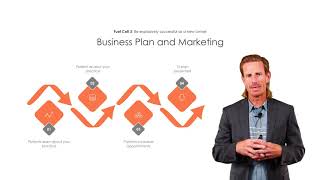
A Practice CFO presentation by Justin Reed on building a dental practice business plan and marketing strategy focused on keeping new-patient flow consistent and targeting ideal patients. Reed outlines six phases of the patient/customer journey — awareness, review solicitation, scheduling/first contact, treatment-plan presentation, treatment delivery, and collections — and gives tactical recommendations for web/SEO, community outreach, referral incentives, online reviews, front-office scripting, case-acceptance tracking, patient financing, and AR collection practices.
Questions this video answers
15–20% per year.
Roughly 27 patients per month.
About 25–50 new patients per month.
Approximately 50–60%.
About 25–35%.
Chapters
All right, welcome, associates. Today we're in FuelCell 3. I'm Justin Reed, CPA, CFO advisor here with Practice CFO. And today we're going to be talking about your business plan and your marketing strategy. And when you're at the point that you're owning your own practice, one of your main areas of focus is going to be keeping that new patient flow consistent. And this is like turning on a water faucet. We want to turn that puppy on and we don't want it getting turned off. And by the way, we want that water to be clean, filtered water. And what does that mean? We want to be bringing in those patients that are the ideal types of patients that we want to work with. Okay. So in order to accomplish all this, we need a solid game plan. And we've kind of broken that down into six phases that we're going to talk about today. This, each of these phases comprises kind of the meat and potatoes of what you'll be doing as a practice owner. Okay. Many of the items that we're going to be covering today might fall a little bit outside of our scope. And you'll find that you'll work with a separate consultant, whether it's a marketing consultant or a practice management consultant, to really fine tune your skills and your expertise in some of these areas. But our job here is to provide some context. We want to bring to your attention those factors that differentiate the average and mediocre practice owners from those that are super highly successful practice owners. Okay, so today let's go ahead, let's jump right in to phase one. And during this phase, the patient is learning about our practice. And this is where the marketing process all begins. Okay, how do we drive traffic into our practice? And before we even start to drive the traffic, we need to look at our practice and evaluate. We need to do a SWOT analysis. If you've ever heard of it coined this way, SWOT S WOT So we need to look at our strengths, our weaknesses, our opportunities, and our threats. And by looking at each of these areas of our practice, it really helps us to hone in on. Okay, what is our target patient population looks like? Because we know that certain demographics out there, certain patients are going to respond differently to the, to the different marketing material that we're sending out. A lot of patients respond well to mailers. Okay, Something they get in the mailbox and it's got your practice there. And we're explaining a bit about our practice via old school mail. Others are going to respond better via social Media, okay, They're on Instagram, they're on Facebook, they, they're searching for their dentists in those avenues. And then we have others that might respond better. You know, when they see your name out in the community, you know, you have community meds. And so the list goes on and on. But we need to be aware that the patients we're trying to attract, they're not all going to respond the same way. So because this is so critical, you know, and every market is a little bit different and unique in that sense, we often have practice owners that work specifically with marketing firms and experts to tailor a plan to attract new patients that's specific to that demographic that we're really targeting. Okay. Now, there are some items that we can do to drive traffic, and these are really applicable to all practices. Regardless of where we are, who we're trying to attract, one of them is our website and our logo. We need to have a clean website, something that's interactive, something that showcases our team and that's easy for our patients, you know, to maneuver around. And we don't want to skimp in this area these days. That's going to be one of, you know, as soon as they Google and find you, they're going to click on your website. So we want that first impression of our website to be right on point. Okay, Search engine optimization. Okay, what is this? This has to do with structuring our website in a way to where we're, we have certain titles in there, certain words or links or, you know, we need to be pushing through fresh content in order to continue to generate that organic Internet search result that we're looking for. Essentially, we want our product practice to come up higher in the, in the Google search when, when the patients are looking for a dentist in their area. And this is something that will work with a, an IT consultant with, or maybe some type of a webpage designer with, okay, word of mouth referrals. Sometimes these are our best sources of driving new traffic from a standpoint of, you know, the quality of the patient that we're receiving. Because they're hearing about your practice from somebody that they trust or somebody that they know. And so we want to be able to incentivize those people that are referring our practice, whether that's your staff or whether it's your patients. Let's come up with a program where we're giving bonuses for patient referrals. Okay. Finally, let's get out in the community. Let's generate some goodwill. Whether it's youth sports and activities Whether it's the environment, whether it has something to do with animals, we want to find something that we're passionate about, an area where we're comfortable.
With, and somewhere where we can give back and leave our fingerprints on our community. Okay. These are all very important things that we need to be doing. In addition to our very targeted marketing plan, we need to keep in mind that on average, the. The average dental practice is going to have about 15 to 20% of patient attrition just naturally each year. Whether that's from our patients moving away or they're just price shopping and they just jump around to the cheapest dentist that they can find. So we're going to lose 15 to 20% of our patients each year. So what does that look like on a practice? Let's say. Let's say we have 1600 patients. Well, at a nutrition rate of 20%, that means we're losing roughly 27 patients per month. So we need to be able to not only replace that amount, plus we need to be looking to grow our practice. Right. So we need to be targeting somewhere between 25 and 50 new patients per month. So we really need to have our.
Marketing plan dialed in. We need to be making sure that that water faucet is turned on high and that we're getting those clean, filtered patients coming through. Okay, so on to the next phase. We're talking about the patient giving you a review. And this is generally done online. This doesn't necessarily happen in the second phase of our six phases that we've presented here today, but it goes hand in hand with driving in new traffic. This is something that's so critical these days that, you know, I have a few dentists that say, hey, I do only a few things really good in my practice. And one of them is soliciting feedback every time the patient comes into my office. And I've seen doctors that are very intentional about this, and they, they can. You know, a lot of them will offer gift cards to their patients. You know, whether it's Starbucks gift card, five, ten bucks right there on the spot. And they'll actually bring the iPad to them during a very certain point in the, in the treatment or during their appointment. And there's a very. There's definitely an artwork to this. And I have other doctors that it's not the doctor that's soliciting the feedback, but it's someone on the team. And so it's important that we get our entire team involved in this and let everybody be really aware of how critical it's going to be for us to generate a large quality of Reviews that are 5 star reviews. We don't need them to be super detailed or.
You know, specific as to what they actually say about our practice. We're just strictly going for volume and we need high five star reviews. Okay. So really it's important to be intentional about getting this type of feedback from our patients. Okay. So next, the patient has learned about our practice and they've called us and they're ready to schedule their first appointment. Okay. The way that we handle this interview action, this initial interaction is so critical because the way that they feel and the confidence that we instill in them could determine the length and quality of our relationship, you know, for years to come. Okay, so what does this mean for you, for the doctor? Well, we need to make sure that our front office process is dialed in. Okay. They need to have a well written script. It needs to be delivered consistently. We need to have consistent responses to any questions that come up or when the patient presents some type of a hesitancy. Okay. And we need to remember that our plan here is really only as good as the team that we have in place. So as a doctor, we need to be reviewing and providing feedback to our front office and to our scheduler, make sure that, that they know that this is really critical piece of the puzzle. Scheduling can be a huge point of stress for the doctor. So when it comes to scheduling, we need to have strong goals in place. We need to have cancellation policies and different protocols there. And really we need to offer a range of solutions to our patients so that we have our scheduling right working like a well oiled machine. Okay?
So now we're moving on to the next phase, which is in the back of the office. And this is where the treatment plan gets presented to the patient. Okay?
Now there are statistics out there that will say that case acceptance averages between 50 to 60% for recurring patients or those patients that we have had for, for greater than a year. And this case acceptance rate dips to about 25 to 35% for our new, our brand new patients. Okay. And what's staggering, what we've found is that there are so many doctors and practice owners that aren't even tracking their case acceptance percentage. And why, why is this so critical? Well, think about it. We can be driving tons and tons of new traffic. We can be dialed in when it comes to our scheduling. We can be, we can be completely booked out. We can have all of our patients giving us all the best reviews we want. But at the End of the day, if we can't get our patients to buy off on the treatment plan we're presenting, then all of that cost is kind of sunk. It's all kind of wasted because it's when they accept our treatments that we actually capitalize and we're able to earn on what we've done. All of. All of those other marketing strategies that we've implemented up until this point. So what does this require? At the end of the day, there's a huge artwork involved with treatment plan presentation, and you can find lots of online resources. There are consultants out there that work specifically on treatment plan presentation and increasing that case acceptance rate. But at the end of the day, this really the biggest factor that determines this percentage is the trust that we have between doctor and staff and the patient. Okay. And developing trust with our patients, this can be challenging, especially when we're only meeting with them maybe two to three times per year and, you know, we've got masks on. It's really kind of not the best scenario for us to try and connect with them emotionally as doctors. So we need to be thinking outside of the box, and we need to have our entire team involved in this process. Okay. So treatment plan acceptance is improved when we connect emotionally and when we continually demonstrate our expertise. And there's a lot of statistics that will say that, you know, most patients may look at one doctor compared to another doctor. They both have the same credentials. They're both licensed. Really, most patients are going to assume that, hey, the service, the level of actual treatment that they're going to receive is probably going to be about the same. Okay. So what that says is that what's going to tip the scales for us is how well we connect with our patients emotionally. Okay. And building trust emotionally there. You know, we need to have our patient feel absolute trust from the moment that they walk in to our practice. If they feel in any way negative about any of the staff or any of the interactions that they've had up until that point, all that's going to do is lower our case acceptance rate. So we need to make sure that our team is on board with our philosophy and that we understand how important it is to connect emotionally with our patients and really just provide an overall quality experience for them while they're in our office. Okay. But we need to be thinking outside the box. How can we stay frequent and consistent in our communication with our patients outside of when they visit us two to three to four times per year? Okay. Does that mean we send out newsletters on a Monthly basis. Does that mean we get out in the. In the community a little bit more and let them know that we're giving back? You know, what does that look like? We need to. We need to develop that philosophy. Okay. Now we're moving into the portion where the treatment is actually delivered. I'm not gonna talk a whole lot about this one here. I'm not the expert. That's you.
One thing just to keep in mind in any service industry is that the quality of the service that we deliver, all that's going to do is accelerate that level of trust between us and our patient or our client. Okay. So as you move throughout your career, you'll be able to strike that right balance between efficiency and quality. We still want to be able to provide very high quality treatment while we're increasing our number and our reps and being able to serve and produce higher volumes. Okay. And that will come with experience. Okay. So now we're rounding off our business plan and marketing strategy, while at the point when we are looking to collect the fees that we've earned on the treatment that we provided. Okay. At the end of the day, a financially healthy practice is one in which we can collect our fees for. From our patients and get them into the practice bank account as quickly as possible so that then we can turn around and redeploy these funds out to pay down our practice debt to invest in our 401k plan to make payroll happen to cover our lab supplies, our rent, all of our other overhead costs that need to be covered. We have a lot of cash inflows. We have a lot of cash outflows, but we are not a bank. And so it's important for us to monitor those outstanding accounts receivable. Okay. So we need to have some strategies in place and really good guidelines and protocols for our front office in order to collect our outstanding fees. Okay, here's a. Here's a few general tips that we can use. Okay. We can offer prepaid discounts. We can ask that all payments are made in full at the time of service. Okay. We can offer. This one's a must. We need to be offering different forms of patient financing. We don't want the fact that they can't afford to pay for it right then and there. We don't want that to impede our ability to provide them with the treatment that they need. So carecredit and there's others that are out there that help with patient financing. We need to have other options available. We need to be billing more frequently. We need to have different staff members potentially involved with follow up on outstanding amounts. Okay. We can consider reaching out to our patients via text, via social media, phone calls, in addition to our monthly bills, if we feel like we can connect with them better that way. And then finally, just something to keep in mind, the more courteous, the more friendly. The bigger our smiles are when we interact with our patients. The more they're going to look at us as family, the less likely they're going to be to not pay us for the services that we provided them with. And that's all part of that building the trust. Okay?
But at the end of the day, we need to be in the numbers. As practice owners, we need to be monitoring our accounts receivable and following up and doing all that we can to get those fees into our practice as quickly as possible. Okay? So that's all I've got for you today on business plan and marketing strategy. Remember, associates, you're on fire, stay on fire, and we'll see you next time.










