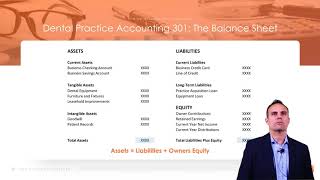
A short instructional video (Dental Practice Accounting 301) explaining the balance sheet—its two sides (assets vs liabilities + equity), how it represents account balances at a point in time, and an illustrative house-purchase example (100,000 house with 20% down equals 20,000 equity and 80,000 debt). The video applies these concepts to dental practice accounting, noting buyers often acquire the financing/equity side of a practice.
Chapters
All right. I want to give a quick introduction to an accounting financial statement that is important. And whether you realize that or not, you can have a, these sort of financial statements in your personal life and business life.
So the one that I'm going to.
Talk about, about today is called the balance sheet. And the way that I remember balance sheet is two different mnemonics.
One is.
The balance sheet balances out.
On its two sides and there are two sides. One is assets and the other is the sum of your liabilities or debts plus your equity. And the analogy that I'll give to that is like buying a house. So imagine you bought $100,000 house, that's your asset. But you need financing an equal amount to buy that. And probably if you're going to put 20% down, that would be $20,000 and that's your own money, that would be considered your owner's equity. But of course you're $80,000 short that you need still. So you go out to a bank and get debt, which, or a liability, and that's the rest of your $100,000. So that's how the balance sheet equals out. Okay. The other way that I think about a balance sheet is it shows the balances in all of your accounts at any given time. Okay.
So if you, if you were really.
Aggressive, you could create a balance sheet.
Every day of the month because your.
Cash balance probably changes in your practice every day of the month. And it could show the balance sheet would show the balance.
In your cash account every day. But that's, it's just a monthly thing for most, most companies.
So right here I'm showing the left.
Hand side of the balance sheet, which is assets, things you might expect, cash account balances.
And then the assets you bought when.
You bought the practice, tangible and intangible assets.
And on the right hand side is.
The financing that you used to buy these assets or fund them. So liabilities or debt like credit card or your practice acquisition loan.
And then the equity is the money.
That you put in of your own to buy the practice or that you've earned. And that's the whole idea about having a business is you build up equity as the value of those assets has increased. So at the end of the day, those two sides equal.
And in a previous segment I talked about which poor. When you buy a business in the.
Dental space, you're really only buying the right hand side of this practice.
Then the seller will take the price.
That you paid for the assets, pay.
Down whatever liabilities they've got left.
Whatever's left over is really their equity or gain in the business.