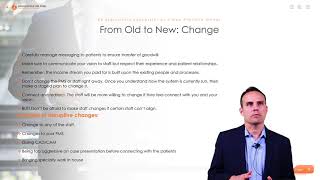
Wes Read CPA, CFP® advises new practice owners on taking over. Manage your stakeholders carefully: warm handoffs for a well-regarded seller, thoughtful patient letters, and keep staff relationships professional. Always be recruiting to protect against turnover, and tackle operational changes like PMS and suppliers in your first year.
Chapters
When you're doing a transition.
One of the biggest, there are going to be a number of things going on that it's going to be a big juggling act as you put the CEO's hat on and try to do everything beyond clinical that perhaps you've never done before. So the stakeholders that you're going to want to be conscious of are your patients, your staff, and potentially the seller, because the seller can act as a person who helps you transfer that goodwill not only to the patients, but also the staff. So if you can form a good bond with the seller, either through an associateship or something else, that can help, depending if that owner was beloved by those parties. And.
That can affect the messaging you put out. And there's no one right way to message out to your staff or your patients. The business has changed hands, so you really want to gauge what the seller's reputation was. And maybe if they were beloved, you're going to want the warm handoff, the smiling handshake picture, the it goes out. You put that in your waiting room with a new bio and the endorsement statement from the seller, and then the phone call from the seller out to a lot of your patients just to let them know how great this new buyer is. In some cases, maybe they don't want to do that. And a letter might work, but make sure you have that letter read by a few different people, including your advisor, because patients will have a lot of questions if it's not worded well. Are you still going to take my insurance? Is my favorite hygienist still going to be there? This and that. So you want that. A poorly written letter out to patients can be very cold and leave a lot of unanswered questions. You also have to wear the hat of leader when you take over practice. And this is probably one of the things if you're not a natural leader, that you need to read up about and practice. And.
A lot of. One of the mistakes that I think a lot of new practice owners make is they want to be friends with the staff. And I would put it as, you need to be friendly with the staff, but not friends. You're still their boss, and that's because you need to be able to tell them what to do, even if they don't want to do it, or make changes if you need to. Too often, you know, you try to make friends with the staff and make them happy, and they call the shots and you can't do it. One of the things that I try to encourage my clients to do to hedge the risk of a bad employee or employees threatening to leave is always be interviewing, I call it abi. Always be interviewing them. Because there's a little bit of, you know, your good employees who know they're doing a good job aren't going to be threatened by somebody coming into the office for a quick interview. Why not just get to know people, but your troublesome employees who know their job is on the edge will be threatened. And why not prepare yourself? Because chances are, troublesome employees know they're on the edge and they're looking around anyway, so why not be prepared?
And you also have to prioritize what you're going to do. There are probably a million things you're going to do when you take over a practice. And the key thing is to size up the staff, give them your vision, communicate to patients, give them your vision, get that warm transfer and then start prioritizing the other things after that, like, am I going to change the practice management software, pms, or am I going to change suppliers or any number of things or staff and just rank order them? And you're just going to have to work your way through it. And it's probably going to take a lot of your first year to get it to where you want if you've taken over a practice.
But don't be afraid to make changes if you need to. That's where leadership comes in and there's no one right answer to that.