Reopening Your Dental Practice Right
Dental practice leaders discuss reopening safely during COVID-19, covering staff screening and PPE protocols, clinical changes like reduced aerosols and staggered schedules, and financial strategies to maximize PPP forgiveness by hitting the 75% payroll target during the 8-week covered period.
Chapters
Recording. Okay, we are now recording and live. Yep. Thank you everybody for coming. I know a lot of you have been, have been actually, actually busy right now as we're staging ourselves to resume operations more fully. And this will be recorded. We'll send it out afterward so you can watch it again or for any of your colleagues or anybody would like to watch it. Can, can do so. Can do so then. I'm Wes Reed. I am a, I'm the, the owner of practice cfo, dental CPA and financial planning firm here in San Diego. We work with clients everywhere. Most people on this call are going to be clients. So I'm really not going to do much of an introduction for me and my firm. That's really not, not the purpose, really the purpose of this is to address a lot of the questions that are in our clients minds about the sequence of events to reopen. What are some of the landmines to be careful around, particularly around the labor law side of things and what are some good processes and best practices that we should be following? In a way there are no best practices because this is brand new for everybody. So we're all trying to figure out, determine what are the best practices. And this, this webinar is a panel led discussion about what we are doing as dentists and what some advisors in the practice management space and in the accounting and tax space and as well as in the employment law space are giving as advice to our clients. So specifically on the panel today we have Terry, Terry McEvinney. She has worked with a number of our clients over time. She, she is a practice management consultant, has excellent processes, has been in the world of dentistry a very, very long time and has been consulting a number of clients right now on resuming practice and working with their team and communicating with their patients. So thank you for joining, Terry. We also have Anita York. Anita, you are in Orange county, right? In Orange County. And she is a longtime labor law attorney specializing in dentists. She has helped a number of our clients as well as, and just a really, really good resource with all things related to working with your team, staying protected and doing the right thing. And then we have four doctors, two general dentists. That's Nick Maranju and Weston. Spencer. Weston may not. Weston, are you with us yet? Weston is not with us yet. That's okay. He may join but we've got Nick Maranju has a very large practice here in La Jolla, San Diego and has been on the board of the CDA for a while and has been following a lot of the regulations very closely around Covid and how it applies to our offices. So really happy to have Nick, same thing with Dr. Spencer. And then Dr. Eric Baker and Tim Batida are partners as oral surgeons in Laguna Niguel and Dana Point area. And we've been working with them for a while and they have a number of general dentists that they work with. So I really wanted to get their take from the specialist point of view, and I think they have a lot of good things to contribute. So the way I'm going to run through this webinar is I'm going to ask a series of questions, just one by one, and let a targeted panel member answer that question. And then we're just going to have, hopefully, a lively discussion about what we're doing and seeing within our own practices. So let's start off. Terry, this one goes to you. As a practice management consultant, what are your recommendations for doctors in terms of managing their teams right now? Re engaging their teams, establishing processes that are ensuring safety as you sort of reopen or at least resume operations more fully?
That's a great question, Wes. Thank you again for having me on here. I've been navigating this for quite some time. There's so much information right now that we're being inundated with. So some of the things on my slides I want to talk about, really the answer to your question, how to manage the teams. There's so many different processes involved in this, and I think doctors are either they've got their foot on the pedal and they're moving on it, or they're not at all. So I've heard quite a few different things. My sister happens to be a hygienist and she has one employer that hasn't reached out to her since March 16th. So, you know, first and foremost, the most important thing to do for managing the teams is communicating this really parallels with the patients, though. But we've got to make sure the teams are on board in order to bring the patients along as well. So if you want to bring up that slide with the communications, I mean, this is really the pivotal part in terms of making sure the communication touch points is really what I wanted the viewers to see today. In order to rebound, we've got to make sure that we've got a team in place to help do this. Obviously, that's the obvious comment. But returning, they have to have a plan. And I can tell, I've talked to so many doctors and I'm always asking them, what's your plan? Let's go through it. Let's get some strategy involved in that. One of the first and foremost pieces of this is to make sure they're communicating. So when this started, I was asking clients to make sure that they communicated weekly. So whether that's happened or not. Some doctors haven't communicated weekly, but they've attempted to have some communication. Whether they furloughed, terminated, whatever the process was. What is difficult for many is to not understand that the leadership role shifts a little bit. So what the team is looking for is appreciation to make sure that they know coming back in that they're in a safe environment. They're inundated right now also with information saying that the highest risk.
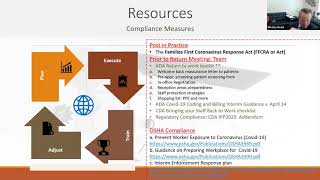
Industry right now, and the hygienists are certainly. I've talked to lots of hygienists and they have concerns, but the ones that have the least amount of concerns are the ones that the doctors are communicating. What I really think so important right now, and I said this in a couple webinars a few weeks ago, is what's important for the doctors, I think right now to communicate with the teams is that this is an essential health care provider. They're all involved in making sure that the patients are safe, that we're taking care of their health. So the silver lining in this is as you communicate or the doctors communicate with the teams, is to remind them of how important their position is. I think they need to feel some purpose. They've kind of gotten lost and in this two and a half months, and some of them have more fear than others, but remind them of the essential health care aspect of their positions. And I think that it's important also, as we're listening to so much information out there, is to also take that same information and share how important it is to maintain good health in regard to patients. So the silver lining there is, I think that maybe this is going to help doctors move into more of a position or at least train the teams to get on board with a different level of care. Maybe it's a little more vocal. Maybe they have more dialogue involved in making sure that they understand how important it is to keep their patients healthy. We understand that connection and now's the time to do that. It really kind of comes on the piggybacking the idea of obviously the COVID crisis. So for the team, what to expect, have some training. They need to know that the PPE is there. This has been another kind of gray area with the teams that I found. They don't know if there's PPE or if there's enough or what it is that they have. I know with the hygienist, they're looking at obviously having something for the aerosols. So that's a big part of making sure that they feel comfortable coming back in. The other part of the training for the doctors is to make sure that they are trained on the new compliance standards. It's changed and I'm going to go through that in just a second. A couple of the things that I want them to use. So going back to paralleling team and patients, it's really, we want to make sure that there's a commitment to their safety for the patients and the team and then they also have some planning involved. So it's important basically for the doctors and managing the team to answer the question is to just make sure that there is a dialogue that is in place and there is a plan and that leadership really shows through. And all that leadership needs to be right now is saying, I'm going to take great care of you, you're important to me and we're going to get through this together and it's going to be better than ever. We're going to take all the, all the things that perhaps we weren't really focused on as much. We're going to focus on all of it now. And I think that's one part of what's been, I guess, advantageous in this whole thing is it's allowed people to step back and spend some time working on their business. So what this means is we're going to retain the patients and we're going to retain the team. So that's kind of the communication touch points. And then the next slide, Wes, is really about what do we need to communicate when we come back in. So excuse me. These are some of the resources that I'm having doctors work on.
Excuse me. They need to post when they come back, the family's first Corona Response Act. So that needs to be posted in the practice so they can get that. Yeah, they can get that piece off of the websites. Excuse me. And then of course, what I like about the ADA return to work toolkit, I think that's fabulous. What I like about that is it's really specific, has other information in it in terms of forms, especially the screening forms. So I'm advising everybody to use that return to work toolkit. I had created one in the very early stages and this came about and this is fantastic, in my opinion. So, so welcome back. Reassurance letters. Part of it, pre appointment screening all of the things that you see listed here are part of that plan. So when you're communicating with the team, this is what you're going to basically bring to the table. So you had mentioned a lot of the doctors are coming in and they're saying, okay, this is what we're going to go over. This is a very simple way to engage the team. They're going to feel that, wow, this is fantastic. At least I know we have a plan going in. And then what they can do is almost do a mock trial of a patient coming in. Whether they're having them call or text from the parking lot depends on, obviously, the footprint of the practice. I have a Michigan client, he has a huge office, so we're going to just set it up differently, but some of them will have to come in and maybe use the idea of calling or texting when they come in. So basically, this is their forms and information in terms of being able to come back in with the plan. There's some coding and billing interim guidance that I'd like the doctors to make sure that they have in place for the front office team. Some of that's changed. There's a new code, D1999. It's going to be by report. I know Delta isn't recognizing it just yet, but there's some other ones. Of course, that's one time per visit that you can use that. That might be an additional $20 fee for any of the PPE. So some of the insurance companies actually, time will tell which ones are going to recognize it or which ones are going to bundle it, like Delta is doing right now, unless they change that. The other checklist that I'm recommending is the cda. That's actually very good, too. Slightly different. So if you pull out two of these toolkits, one being the CDA and one being the ada, those are two really good checklist to follow. So here's your plan moving forward. Bring these checklists to the table and utilize them. That way everybody's going to feel like they know what they're supposed to do when they come in. In terms of regulatory compliance, there's a CDA IPP 2020 addendum that should be brought in. I'm not sure if Anita's going to touch on that, but this is a regulatory compliance addendum that they should have in their practice, as well as, excuse me, the OSHA compliance. Just to bring that up, I put the links on here that basically at the OSHA site, prevent worker exposure. That's something they want to bring in in terms of OSHA and then guiding on Prepare Workplace for Covid. That's another one they should bring in. This is really good information that I feel is important for them to share with the team specifically in having them read through this, the 3990B on here on the compliance information. That one is something that I would suggest that every team member read, whether they have it signed or something like that. I'm kind of big on initially and signing anytime they read any information. So I think that's important for them to read. The other one, the 3989, the first one, that's obviously quite lengthy, but I still think they should have access to that and make sure that they are prepared in reading it. C is basically. That's also one the interim enforcement response plan. Again, it's not as if they have to go over a piece of it. These are very lengthy compliance sheets. But I think it's important that the team understands and knows that they have taken the time and we're really running from A to Z on this in terms of making sure that we're prepared. And so as I compiled all this information over this period of time, I found that this would be the easiest, most pragmatic way to engage the team and go through the plan. Behind all of this, though, is I can't emphasize enough the importance of just making sure that the team is comfortable through these screening processes. Yes, they're going to be having their temperature taken. There's a long sheet, obviously, on the 18th ADA toolkit. There's a lot of information that falls within this that I think they're going to realize that they are being taken care of. But I think it's so important for the doctors just to even call them before all of this and just make sure they have this communication, this dialogue so they feel comfortable coming back to work. I do know that there's a lot. Anita was saying that earlier. I've already heard it too. Doctors saying, okay, well, I went ahead and put that on Craigslist as a. A backup plan. And, you know, we don't know. It just seems like there's a lot of people that aren't jumping back on board. I take a few steps back and ask a few questions. Why? Why is that? And then I really like to take some opportunity to, you know, just engage the team members individually so you can at least reduce those concerns. I think maybe they don't know. I know Nito will probably hit this too. They might not understand the ramifications of not re engaging. So there's probably a lot more conversation in regard to why people aren't returning. But again, most importantly, I think just the communication touch points we just went through and then utilizing these measures, the compliance measures, and having this plan in front of the team is probably the best opportunity that they have to get back in there and reboot their practice.
Great. Thanks. Terry. Yeah. I want to emphasize one thing you said was being a leader through this period of time, it's in periods of uncertainty and periods of just unchartered experiences, a leader is still going to show a confidence that they know what they're doing, that they're following a plan. And as you're working with your staff, this isn't something I believe you can delegate to an office manager. I think you can delegate pieces of a plan to an office manager, but I think you, as the owner and as the doctor, need to show your staff that you have come up with an order of events and a way of doing things that you feel confident about and that, you know, if implemented, will create the highest likelihood of success for your staff and for your patients as you resume operations. So that question, I just want to open it up to anybody else on the panel as well. What are your recommendations? Or maybe you doctors, what are you specifically doing in your own practice? And I really like specifics that you are finding helpful as you connect with your team and patients to help everybody feel comfortable and move forward effectively.
I'll jump in, Wes.
I think it's just incumbent upon us to take this really, really seriously and make a plan, as Terry mentioned, have it written and roll it out in a really detailed fashion so that your staff and your patients know just how seriously you're taking this. And if you don't do that, then you leave everything to their imagination. And so you just, you have to take any of their imagination out of this and just let them know just how seriously you're taking this. Show them all the resources. You know, they may have had, things that they've heard, hearsay, this, that from another hygienist here or some other office. But you just tell them, this is how we're doing it here. This is all the data. We're scientists at the end of the day, and we're looking at this from a scientific perspective. And this is exactly how we're tackling this issue.
I think a lot of it has to do with how you manage the team, just managing people and expectations.
So, for example, you just have to tell Them that a lot of the things that are coming out, recommendations and guidelines and things like that, are in flux constantly and are changing daily, weekly. So you have to tell them that this is the direction that we're heading. We don't have to be exactly right, but we're going to be generally right all the time. And if there's some new information that comes across in a day or two, we're going to know about it and we're going to adjust accordingly. So if they understand that from the beginning, then their expectation isn't going to be like, well, we were told this. Why are we changing now? So that will be a lot better for staff and patients to know that we're always changing, we're always going to be progressing towards a better tomorrow, basically.
Well, if the laws are on the clinical side, or at least the guidance around the clinical side is as confusing as the guidance around the financial side, you're absolutely right on that because that is changing pretty regularly too. And I'm going to talk about that as well. Did any of you else want to comment on this question around your teams and your processes?
I'll make a quick comment. I know Nick's going to follow up too, probably. I specifically wrote down my plan, kind of in a keynote, actually, and just kind of went side by side, step by step of what I wanted to do day by day this week. That started with meeting obviously with our PCFO guys and getting our plan in place from the PPP loan standpoint. So when we got funded last week, I knew that we needed to get a certain number of the team members back and that was the plan. So we started that today. We didn't see any patients today. We had an entire day where it was just us. It was eight hours of work today. But we all met together like our normal starting time. And we went through all the things that the California Department of Health specifically said we needed to go through in terms of reviewing that with our teams and specifically specific documents that we needed to sign, including updated like injury and illness prevention plan and some of these other things. I'll let Nick comment on some of those. So we went through step by step, each and every one of those, answered all their questions. We talked about what PPE we had available. I shared with them where I have and what PPE I have available coming to me soon so that we made sure we had adequate amounts for everybody. And then we did just what Terry recommended. We took about an hour and a half and we took. We pretended as if we had a Patient coming through the front door step by step. Exactly what we did. Took them back into the hygiene room, for example. Talked about communications between us and the hygienist and the other team members, depending on whether they're in hygiene or on my side. And then what we were doing differently in terms of checking in and checking out. Things such as small treatment plans could easily be reviewed over the phone or certain things could be paid for over the phone. So we weren't asking people to come to the front desk and spend a lot of time checking out. They didn't have to. So we ran through that patient by patient. And then in the afternoon, we spent a whole time just looking at the schedule and saying, okay, today we did training, tomorrow my hygienists are back, but they're actually working in their own operatories, kind of getting certain things prepared. So everything's organized. Thursday we're going to do a little bit more training together. I'm doing my emergencies tomorrow on Wednesday. Thursday we'll do a little bit more training and then we're going to do kind of a very soft, soft run through with patients on my side and a couple of hygiene patients that the hygienist felt comfortable bringing back that they knew had wanted to do that. So we're kind of using this week to go really, really, really slow. And then we're just going to take it day by day next week. However many patients we can kind of add in, if we feel comfortable with that, then we may add a couple more the next day and so on. So that's kind of our plan right now.
Cool. And Nick, I want you to comment too. Let me emphasize to everybody on the webinar that we have a Q and A panel. Most of you are probably familiar with the Q and A. Been on a million zooms over the past month. Please use that. We'd love to hear what questions you have around all of these subjects. And we'll take those in and we'll propose them to or we'll present them to the panel here for further discussion. So, Nick, you have a large. You got a large practice here. You have 20, 25 people. Imagine following processes and guidelines is really important at almost like an institutional level in your practice. What are you doing?
Yeah, it's a great question, Wes, and I'm going to follow up, probably echo some of the comments that Terry had made with regard to the strong leadership and being very clear. I think it was Tim that made the comment about clear expectations and clear guidelines for your team. And then keeping Them informed During the whole, you know, pandemic. The last nine weeks we've had most of team here in place in the office. Dental was listed number two essential service. We were never told to shut down. So we shifted our practice from mostly cosmetic and rehabilitation to essential services, keeping endo oral surgery going and treating a lot of folks in acute pain. Being located here on the hospital campus is Cripps Memorial. Keeping those patients out of the hospitals, out of the EDs and ERs out there and not clogging up the hospital system. But during that whole time, the folks in the office, the team, we kept very well informed. We did shift a lot of the services that we could shift remote as far as the patient coordination, phone with patients and communicating with them. So we had half the team still staying home. We had emails twice a week, group emails with the entire team keeping them informed as far as what was happening in the office, if they weren't in here, what's happening at the hospital and controlling the message. And someone else made the comment earlier that if you're not leading your team with that strong leadership and controlling the message being conveyed to the team and to the patients, then they're on Facebook and they're on Instagram and they're watching the general news to get their information. So it's either you control the message or you be controlled by the message. And we took a stronger position from the very beginning in wanting to control that messaging convey to our patients and to our team members. So last week was probably the most exciting week I've had in the last two and a half months. And that's on Thursday night when we finally got to the workgroup paper out and that was from the Health and Human Services Agency. I'm sure most of you have seen that. Now it's the California Department of Public Health position. And that was some work from the governor's task force that was put together to get things going in California again. You know, it's kind of a top down structure and how the country's turning back on once federal regulations were lifted. He was kind of said, all right, each of the state's governors can start to bring services back online.
Our state came back online, California came back online obviously last week with this position. And then San Diego conformed yesterday to that regulation after a final weekend of debating whether or not it was in alignment with CDC and osha, et cetera. And what it's meant for our office is that, yeah, well as of last Friday, office is folded back in there currently, aren't Any restrictions on practice and service in San Diego County? There are some counties in the state that are still restricted. So there are some things there to look into based on geographically where you're practicing. And yeah, it is not practiced as usual. It's quite a bit modified. Terry mentioned the resource kits from ADA and cda, both excellent resource kits. We've been using those or similar thing the last two months and starting yesterday we're now using the CDA one which is posted up and I'll have to look into it and Wes maybe send me an email so I can get the information for you. Maybe Terry knows whether or not you have to be a member to have access to that resource kit or is that publicly posted?
I think it's publicly posted because I got my hands on it.
Excellent. That's a great resource. So I'm glad that they posted that publicly because it's got a lot of good stuff in there. And Wes mentioned as well the iipp, the Injury Illness Prevention Plan addendum that's been written by CDA to add into your regulatory manuals in the office is going to be something that's important as well.
So Wes, I mean I know you wanted me to talk about what that means for our office and what that means for our practice and really for California. From the standpoint of California Department of Public Health, it's a go for dental care with modifications.
The ppe. The city has adequate ppe. I was part of some of these work groups and working with the state to come up with some of this stuff. That is a lot of stuff is left very open ended and up for interpretation. Generally speaking, adequate supplies of PPE are for you to run your office and treat your patients. Two weeks supply on hand. So that's been the metric that we've been using and it's one that's a pretty good one to work with.
The other one that's come up there, quite a bit of question has been the use of level two three surgical masks versus N95. And you see that the current wording with the Department of Public Health is that if you don't have N95s available due to shortages that you're okay to treat the patients.
With surgical masks. So that was one of the modifications that was made that was pretty substantial for dentistry to be able to get going. And of course taking into consideration some aerosol reducing techniques and your use of high volume evacuation.
And some modifications to some of the instruments that we typically use.
Sorry Wes, I'm looking through your other questions. Here, real quick.
I just want to echo again, I mean, the main thing here as far as getting your practices. I mean, you're an accountant. You're your big focus is getting us going financially again and making payroll and not being dependent on banks. And the big thing there is standing up and leading your team. I mean, there's a lot of misinformation out there. Even right now, if you look at California Department of Public Health, you look at cdc, you look at osha, you see a different recommendation at each of those sites. Right now, OSHA hasn't updated the recommendations, even though OSHA was part of this task force with the California Department of Public Health. So really keeping your team and your patients informed about best practices and best resources and keeping them very aware that stuff's changing on a daily basis. I think that comment was made by Eric or Tim, but stuff really is changing daily. So it's really important to keep the clear message to the team and clear message to the patients. But I'm super excited to get back to work next week and have all three hygienists back and have all those rooms cranking and modifications we've made to the schedule hopefully will accommodate and keep us in compliance with the recommendations from San Diego and from California doing all staggered appointments so we don't ever have patients checking in and checking out. And Wes, to your point? Yeah. Big office, 2018 members.
Big office. We have enough space to spread stuff out, but that's been the biggest headache, is looking at our schedule and seeing. All right, well, how can we make this the best for everybody? How do we create a safe environment for our team and for the patients? So we've actually lengthened hours doing some split shifts to minimize the number of total bodies in the office at one time.
And it'll be a work in progress. The whole team is supporting it. They're informed and they're behind it. And we're going to go week by week. At the end of the week, we'll check in with each other, see how it went. We'll implement new ideas for the following week, and we'll keep tweaking it as we move along and get through this together.
Great. Thanks, Nick. Somebody asked for the where they could get the CDA return to work toolkit. Hey, Drew. Drew's one of my colleagues. He's one of our panelists here. Would you find that and would you post that link into the chat window? There's also going back to hygiene. A couple of you commented on hygiene. There's a few Questions here around hygiene. One is how many hygiene patients are you starting with per day? Another is, is your hygiene? There's actually a lot of hygiene questions here. Is your hygiene using cavitron and polishing or just polishing? And how many hygienists are you bringing back if you have more than one? And another question on hygiene is hygiene. Margins were small before. Now with increased costs of PPE and likely less production per provider due to scheduling, how do we prevent hygiene from being a bigger loss leader than they already are? Maybe we can just talk about that subject of hygiene really quickly.
Are hygienists on the call?
I'm sorry?
Are hygienists on the call?
Possibly. There's a few anonymous, but I'm sure.
They'Re curious as well.
Yeah. So what are you doing with your recall and your hygiene department? Let's say you have two or three hygienists. Are you bringing them all back? Because we want to get the PPP forgiven knowing that you have to stagger your patients. Are you doing part time hygienists and how are you helping the hygienist feel like they're going to be safe given they're up close and personal with patients.
So I'm bringing three hygienists back on Monday and we are 24 patients on Monday to kick off hygiene.
Hygiene is an integral part of practice. I don't really see a restorative practice or even multi specialty practice without hygiene. They're an integral part of it and it really does drive the rest of the system. So we're fortunate. Our hygienists are super eager to get back. They've been.
Bowing at the door to get back in and wanting to start work back up again. We have made some modifications I mentioned earlier as far as the staggered start. So we're spreading it out and limiting the number of patients together. We are not using ultrasonics. Next week we're going to wait for a little more clarity and just do a slower roll of it as far as that. So everything will be hand scale, hand hand instrument. We are using contra angles and polishing paste. I saw that question popped up. As far as gowns, I'm just going to west address some of the questions that came up over the Q and A. Great disposable gowns are being used in hygiene or will be used next week. The.
Are put on in the operatory and they do not leave the operatory. They are taken off and disposed of when the hygienist exit the operatory and disposal gowns are not used for multiple patients in our practice. So they're used for that patient in the operator and then they de gown when they exit the operatory.
Let me comment on this one about the hygiene margins. Hygiene, Terry, I'm sure will comment on this or knows this, that hygiene is very much a profit killer or a profit producer for practices. If you have empty chairs and you're paying somebody 50 bucks an hour plus benefits and payroll taxes, that can sink your profitability very, very quickly. And right now that profitability could be even lower given you have these additional costs. What I might suggest from the financial standpoint is the government is basically giving most people on this call, particularly if your clients have a practice CFO where 95% of our clients about pretty much received the PPP. You've got that money and now it can be forgiven to the extent you use it to protect the paychecks, the pp. That's why it's called the PPP program.
And so it's probably okay a little bit right now if you have some hygiene that don't have people in the chair, ideally they are in the chair.
Any amount. If you don't allocate 75% of your PPP money toward your payroll costs, then some poor of that loan is not going to be forgiven and you're going to have to pay that back. So what my general guidance has been is to generally fully re engage your team, even if it is a little bit slower from the patient.
From a patient traffic standpoint and try to use them more calls and whatnot. This leads to another question which was, Let me ask Dr. Spencer. This is. I had a client in Alaska who told me that they had their first week last week. They opened up in Alaska last week and they said they were so busy and they said they definitely had people canceling because they weren't comfortable yet coming out in public and going into a dental office. But he said for everyone that canceled, we had two or three people that were ready to come in and eager to come in to fill that gap. So it was one of his busiest weeks in dentistry ever. Now that's Alaska. Maybe a different mentality there than California. What are you sensing, Dr. Spencer? And then really anybody can comment as to how quickly your patients and willing they're going to be to come back and have their dental work done.
This I'm going to use anecdotal evidence of me communicating with my patients, whether through email or through phone and having conversations with them. But I feel like so far throughout this period of time, even the last couple weeks, probably about 10 to 20% of my patient base is maybe going to be a little bit more nervous.
Now.
My practice is in La Jolla, in the village of La Jolla, so we tend to have an older demographic. So I know coming in that I'm going to have some patients who would rather stay back and wait a little bit longer. I talked to an emergency patient today and he said, you know what, I'd rather just wait for a few weeks and that's totally fine. At the same time, I have tons of hygiene patients that are calling, saying, when are we going to come in? When are you going to open? When are you going to open? When are you going to open? So I think from there's going to be plenty of patients to see at the speed that you want to open with your team. I really want to emphasize here how important it is that everybody's practice is a little different. Your location is a little different, your demographics a little different. You know, I communicate with Nick here all the time and me and him have two totally different practices with different numbers in there, right? And so my capabilities versus his capabilities are different. So please, please, please, the number one thing that you have to do and what I feel like I'm doing for my team is go open at the speed that you feel is comfortable that your team can handle the amount of patience. I do believe there are going to be plenty of patients, especially on the hygiene schedule and your restorative schedule, to be busy right away. No question. The question is, is your team comfortable enough and you're ready to go so that as you add in day by day by day, everybody's comfortable and nobody's freaking out. Because I've heard a lot of dentists opening up in a lot of different states and they just go full bore on day one and everybody's completely exhausted and just like, what are we doing? So just take your time and do the thing that's right for your team. Take what you're gaining from everybody else here. Decide with your team how many patients you're going to see and use this time for the next few weeks while you have the PPP loan to not stress about overpaying a hygienist right now. The thing is making your hygienist feel comfortable that they are safe to work in it. So when you're ready to see seven to eight patients a day, they're ready to go. The last thing you want to do is stress them out right now. And make them overwork just so that you can make sure you're pro. You're going to be profitable because you have the PPP loan right now if you're doing 60 to 70% of what you normally do. So stop stressing about the over the hygiene compensation side of it and just work through the next few weeks getting your schedule refined and work just like Nick Moranji said at the end of every week, decide what's working and what's not working and then, and then, and then make it better the next week. That's how we're trying to take it.
And I don't spend time in dental offices that much, you know that. But it seems to me like right now it's going to be very important that you have maybe multiple people answering or handling the phones, that if people are canceling, I suspect there's going to be a number of cancellations that you have, that you're filling those up quick and that there will be people ready and willing to come in. Somebody mentioned in the chat that she said her patients are dying to come in and they almost feel overwhelmed by that. There's just going to be a lot of different mentalities even in my own family and friend network, just very different mentalities about getting back out in public and going into stores and offices and some people want to wear a full on hazmat suit and other people are, they don't care at all. And you're just going to experience that. So I would just think really be ready with how you're going to be handling the, I think the nuanced differences right now around scheduling and filling gaps that will be different than maybe what you've experienced in the past.
I was just going to add Wes, that to your point and Dr. Spencer's, there's no doubt that you're going to need to reserve more time. It's almost, and you know, I've worked a lot in the transition arena. It's almost like, you know, going in after you've purchased a practice and every patient's a new patient, you do have to spend a little more time now. It's not necessarily spending more time with the patients themselves that you're going to have to allocate more time for all the sterilization and you're going to probably chat a little bit more about any questions that come up. Because the bottom line, and in my slide I did mention your goal right now is retention. You just want to make sure that whatever you're doing right now is for the betterment. Of the patients and the team and it will come back around. It's just going to be strategy that changes from day to day. I've reviewed a lot of different schedules. We've color coded in the schedules in terms of maybe those that are more of an emergency level or could be. So there's a lot of different ways to strategize in terms of getting ready to come back. That's one of the things I didn't really mention. But preparing in the best way would be to go through your schedule if you haven't actually removed them from your schedule. Some practices have like it when they haven't because then you can start color coding and then moving your patients that way. The other thing, last point I'll make with the communication services available, so whether that you're using demand for solution, Reach, Lighthouse, whatever, any of those communication systems or an email blast to go out to the patients and discuss the situation in terms of rescheduling for those of you that need to be rescheduled, it's very important. We're working on doing that and we want to make sure we maintain your health. For those patients that have upcoming appointments, please let us know in advance and just at least communicate specifically that there is going to be a scheduling shuffle to work with so that maybe they feel a little bit more comfortable. For those that are concerned, maybe they'll say, hey, I'm happy to reschedule my appointment, maybe work with them a little bit or communicate. Not to say you're opening it up for cancellations, but just make sure they know the language is specific to making sure they understand how important it is to either keep their appointments scheduled or communicate if there needs to be any changes. That's not something normally I'm recommending, but right now I think it has to be done just so you can be ahead of all the last minute changes in the schedule so that you're not having multiple people in the front office.
Hey doctors, would you guys mind going through the Q and A right now? There's a lot of these questions that are outside my scope of understanding and maybe tackle some of those about the PPE, the N95 masks. Nick, you seem to be a good authority on this. If you want to share a few comments.
I don't know if authority is the right term.
So I was just typing back. You know the. It was subsection 5 of the California Department of Public Health where they're talking about the use of the masks.
Let me actually get to that page.
And if you don't have access to 95s, then you can use a surgical mask. When the task force was started with the governor's office to make some recommendations, did some review for that and referenced the articles and I think Wes Spencer, I shared these with you. There was a study that was done and I published in the JMA, the JAMA, in the JAMA in the fall of 2019. And it was an article talking about the use of N95 respirators versus treatment and surgical masks. And there was a meta analysis done the couple of years prior that was a very comprehensive look at the filtration rate of masks, level 2, 3 surgical relative N95s and the various forms of respirators to wear. And what they found was that the risk of contamination was.
Although in the lab they're able to show a difference.
Clinically, it didn't make a huge difference that the transmission was really taking the masks on and off, that folks were having contamination issues. The current update that was put out last Friday talks about having the mask. If you don't have the N95s, then you can use those surgical masks. Level 2 and 3.
Someone asked the question, if you have them, is it necessary? And this is them, the N95s, do you have to do the fit tests?
Typically you have to be fit tests to use the N95 because if you don't use them properly, they're no more effective than any other standard mask.
Under declare state of emergency.
That is suspended. And at one point that fit test mandate was suspended in California and I was just looking to see if it's still suspended and I couldn't find the answer. So it's something to look into. They had suspended it when they started running low in the supply of N95s because they were burning through so much PPE just doing fit testing. So I'm on hospital staff, so I got fit tested with the respirators and I have them through the hospital. We had them in the office. I am going to go through the fit testing protocol and the process with the team, with the whole team, actually, tomorrow afternoon. We're not requiring them. And as long as you don't require N95 mask, you don't have to do a fit testing with your team. So I know it's kind of a gray area between the lines, but since California does not require them, you don't have to require them and you don't have to do fit tests. And that would. That's to answer the question that was there about the V95s. Wes, does that take your question?
Yeah, it does. And if you doctors could on these clinical questions, feel free to answer a lot of these just directly by typing in your answer so everybody can see. I don't think we'll be able to verbally get through all of them. Let's pivot just a little bit right now to one of these questions which is going to take us over to the labor law side of reopening. And we have Anita York here with a labor law firm and she specializes with dentists. There's a question here from Dr. Diaz. How about staff that does not want to come in because they get more money with unemployment? How do we deal with these staff and maybe make that a two part question. They don't want to come in because they want unemployment and number two is they don't want to come in because they're nervous about the virus and maybe they're using number two as a sort of front for number one. Share us what you're recommending and seeing.
Yeah. So if you will let me build up to that for just a minute. So when the CDPH guidance came out Thursday afternoon, I was concerned that dentists were reading it as a green light, open for all purposes, good to go, everybody has to come to work. Monday, hit the ground running. And I tried to slow that a bit because my concern was that that's not what it allowed. It actually didn't say dentists may reopen phases, don't apply, go for it. So I reached out to CDA yesterday, got a response from them today that basically said it's a yellow light. You need to be able to comply with all of the protocols, all of the distancing that is in place in the guidance and the PPE and all of that have replenishment sources available and then slowly begin to bring back folks that you canceled, bring back folks who need treatment and build back into it within the guidelines of what your local city county is permitting. Because some cities, counties are going slower. So last Monday, week ago, the governor said cities and counties will be allowed to go fast, faster or slower depending on these criteria. So I'm glad to hear that San Diego has apparently self attested and certified and said we're good, we can move LA County. Today Dr. Barbara Ferrer, their county public health came out and said, we will not be speeding up the process, we will be slowing down the process. Now that doesn't mean it's a red light. It means we're slowing down. We're not jumping back in and saying Everything's a go. It means we're going slow, slowly. All of which circles back really to my mind in terms of the legality for bringing employees back is if you can meet all of the guidelines, all of the protocols, all of ppp, do everything that's required and your county hasn't said no, then you can slowly begin to resume non urgent operations. You've always been able to do emergency or urgent operations operations. So with that, we're now communicating with employees, if we haven't been before, Now's a great time to start. Get on it. I could not agree more with what all the folks have been saying about that. It is so important that right now you are their leader, not just their boss. Yes, you have every right to tell them what to do and to tell them they have to work and to tell them when they have whatever. But that's not what is needed. What's needed right now is what Terry was talking about. What Dr. Mirandra was talking about is leadership. They need to be looking to you, confident in you, trusting you, believing that you've done all the things that need to be done to make sure that they're safe and make sure that all the patients are safe. So given all of that, let's run through some of the scenarios that Wes just raised and a few more. So folks are saying I can't come back right now, right? You want them to come back, you need them to come back. I can't come back right now. There's a variety of reasons. The first one that I want to mention, because it's a very important one, is if any of the reasons that they can't come back fall under the ffcra. So hopefully you guys are familiar with that, you've heard about it. There's six reasons that they can say I can't come back. One of which is I've been ordered to isolate a quarantine or the stay at home orders still apply. But one of the ones we're going to see, I think the most often is the child care. I don't have child care available. My child care has not reopened and certainly schools are not reopening. So I can't leave my kids home alone. That means the FFCRA kicks in. So one of the things to think about in that context is do you need to bring every single person back from furlough, assuming that you've had them on furlough? Do you need to bring back every hygienist, every front office person, every assistant? And if not, it is Legal to then select folks to not bring back on the basis of who's the most versatile, who's the most senior and who's the most available. So if you make a decision that someone who needs to be home for child care can just stay on furlough, then you don't have to pay the FFCRA benefits. They can remain on unemployment insurance. On the other hand, if you're bringing everybody back and you're taking everybody off furlough and they cannot come back because of child care, then you do have to pay the FFCRA benefits. So I'm not going to get into a bunch of that today because that's kind of been around now for several weeks. Hopefully people folks are familiar enough with that. But very important delineation between FFCRA reasons and not FFCRA reasons because terminating employment, threatening to that you will have abandoned your job if you don't come back. All of those kinds of things, if somebody has an FFCRA reason for being off work is a very, very high risk termination action to take. So one step down from that. I may not have a direct FFCRA reason, but I have some, some high risk factor. I have asthma, I'm pregnant, I'm 70 years old. I have some other medical or health or age related condition such that I am at a higher risk category and I'm not comfortable coming back again. I'm going to call that a very high risk termination or a very high risk threatened. You have to come back or else I have to advise against doing that next level down. I don't have an FSCRA reason, I don't have a health condition. I'm just scared to come back. I'm nervous to come back. I'm not comfortable coming back. Now we're really getting into that gray area. Do what you can to talk to that person to convey to them how important it is that they rejoin the team, that the team come back together and communicate with the community, communicate with our patients, we're doing all the right things, we want you back, we need you back. If they still absolutely refuse saying I'm scared, I'm nervous, I just can't do it, then you're going to have a decision to make that is still going to be some risk because there may be some other variables going on there. And I hate to say it, but in truth, if you take an action like termination and they're unhappy, they may decide later to not necessarily tell the truth about what they communicated to you. They may then decide that they Told you something more than they actually said. So in that case, where somebody's just not comfortable, they're scared, they don't want to come back, really want you to get something in writing. So I want you to communicate to them. Great. I'm going to communicate to you in writing that I have offered you the position back, that we are scheduled to come back, that we're taking all the steps we've done, all the things we meet, the guidance. I need you to respond to me and tell me that you are. That you choose not to come back, why you choose not to come back, and then we'll go from there. If you decide to let that person stay on leave of absence status, stay on furlough status, then are they eligible for unemployment? The answer is no, technically they are not. Because if there's work available, but they are not available to work, then they are no longer eligible for unemployment insurance benefits. Now, what's the reality? Well, the reality is, how are you going to communicate that to the edd? There is no way, unless you want to sit on a phone on hold for hours. And of course, nobody's going to do that. So the truth is, every two weeks, that employee has to certify to the EDD that they have not refused work. There's no work available for them. Now, if they choose to lie to the ddd, that is fraud against the government. That's a pretty big time thing to do. So you can convey to your employees that because you've offered them employment, you have all the things in place that you are authorized to return to work. Your county hasn't prevented it. The CDHP guidelines, the CDC guidelines, the OSHA guidelines, you've met all the protocols. You're allowed to require them to come back to work. If they choose to stay off work, I would communicate to them to be, you know, again, I want all that writing to be clear. You are no longer eligible for unemployment insurance. And when that certification comes, I do expect you to answer that you have been offered work and that you have declined to come back. Now it's up to them what they ultimately do. One step down from that. They just don't want to come back because they're making more money on employment. And truthfully, that's the reality for most of the folks that I'm hearing from, employees not wanting to come back is in truth, they're just making more money on unemployment. So I'm going to give you a couple options. Number one, exact same communication. I want that in writing that you've made it available, that you've let them know they're no longer going to be eligible for unemployment, that they're no longer authorized to answer on the form, that they do not have work available, that they have not refused work, and then when you get that back from them, that is going to be your indication of the fact that they are not off work for any legally protected, legally justified reason. Now, at that point, can you terminate employment? Yes, you can probably terminate employment, but they're not going to tell you the only reason they're not coming back is unemployment. They're going to tell you at the very least that they're afraid. They're scared I'm taking care of my 85 year old mother and I don't want to get her sick. They'll come up with reasons. But at the end of the day, if there's no legally protected reason, yes, you have a right to terminate. I don't recommend it. I just feel like this is going to be a time when disgruntled employees are going to be running to their computer and googling, can I sue my employer? And when they're saying can I sue my employer? It's not just going to be for wrongful termination. They're going to look at have I always been paid overtime properly? Have I always been provided all my respites? Have I always been paid my paid sick leave that law requires in my city? Because some cities are more than state, they're going to look for every reason they can. So even if you have a right to terminate, I really think that now is a very risky time to do that and I'm going to recommend against it. Rather, I'm going to suggest that you just tell them again, if there's no legally protected reason for them to be off work, that you will approve a personal leave of absence. They're not eligible for unemployment. You can't promise that you hold their position open. If you need to hire somebody, you may have to hire somebody, that they should remain in communication with you and let you know when they expect to return. And at that point in time you will revisit whether there is a position available for them. I really want to emphasize that is if there's no legally protected reason for them to be off work, if there's any legally protected reason, then a termination or a threatened to terminate or you will have abandoned your job. Very high risk steps to take.
All of this really boils down to your risk tolerance, right? What is your risk tolerance? If your risk tolerance is, I don't care I want them back or I'm willing to take the risk, then do what you believe is the right thing to do for your business. If your risk tolerance is such that now is just not the right time to risk being sued. And maybe I haven't been crossing the T's and dotting the I's, and maybe my handbook isn't completely up to date. Maybe I haven't documented everything I should about that employee that I've been unhappy with for all this time. Time.
I'm going to say don't take the risk. One of these risks that Wes mentioned early on is that folks are taking this opportunity to perhaps weed out the staff that you really don't want to hang on to. That's a high risk thing to do. If you have not been properly documenting all along, if you are not certain that you've been following all the wage and hour rules, if you have not put yourself into a situation where termination would have happened even if COVID 19 hadn't happened. So if you've done all the things to set yourself up to terminate somebody in the safest way possible and you already have that in place and now's a good time, go for it. Otherwise, take a step back, be patient and let's figure out what you need to do to protect your business in the long run from employee claims. Whether it's a wrongful termination claim, a wage, an hour claim, or whatever else it might be. Now is not the time for knee jerk reactions or decisions based on emotion. You're making long term decisions for the health of your practice now, a month from now, six months from now, into 20, 21 and beyond. So we have to think about the long term priorities and goals when making decisions about what we're doing with any one employee at any given time.
Great. And I want to dwell on this a little bit more and dovetail it into the PPP as well. Everybody knows that to get your loan forgiven, the first and biggest test is to what extent are you re engaging your team and do you have the same number of full time equivalents or FTE after during the eight week period as you did in a time before and there's a couple periods you can use as your benchmark beforehand. But from what I understand on this is if you attempted to have somebody come back and they are not coming back because of the reasons you identified, then we can claim them as an FTE because we've done everything on our part to try to bring them back to the practice and therefore we shouldn't be penalized from not getting forgiveness because of that decision. Is that your understanding as well, Anita?
Wes, I have not. I'm just not knowledgeable and familiar with ppp, so I don't know for sure. I have heard that and what I've heard is that in that case you want to have it documented if you're able to do it. I have no doubt that you absolutely want it documented that you made the position available and they gave you some reason why they could not come back. So I have to leave it to you to know or to let folks know whether that's an option in terms of the FTE count. But if it is that you absolutely want documentation of that.
Drew and Greg, you're both on. Maybe while we're talking, you can confirm that's what I had actually heard today for the first time, is actually news for me. And I'm checking on the Treasury's website every day for updates. But logically it does make sense. And so if you guys could look that up and see if we have an answer for that. And then, Anita, what if you just say, look, I can't bring you back because I don't have the financial ability to do so? It seems like a court would understand that, given the circumstances. Is that, is it still risky to just sort of leave it at that general purpose for terminating somebody?
Sure. So let's talk about furlough versus layoff versus termination, just so we're clear on what those terms mean, because the repercussions are very different. So I can't afford to bring you back, but I'm going to leave you on furlough for a while just to see how things shake out. That's one option. Now, you can't leave them on furlough indefinitely. And frankly, on July 1st, when all the federal, the extra 600 federal stimulus money runs out, folks are going to all of a sudden be clamoring to get back to work. All of a sudden their fears are going to magically dissipate. So I think furlough works for now. I don't think it's going to work in the long run. Layoff means I am reducing my workforce. It means I've made the decision that in the long run, and I can't define for you what that means, but some number of months, several at least, I do not anticipate being able to re employ the same number of folks that I employed previously. So I've decided that I no longer need three assistants. I only need two. You've been Select. I hope you have a really good non discriminatory reason for that. For example, you were the last one hired is always going to be our best reason unless that person's pregnant and then we have a little more concerns. But last one hired, first one let go is always a good sort of reason to select a person. But if you plan to let them go and then replace them. Right, because the person who is your dental assistant two months ago, who you just loved, has said she would like to come back. Now that's not a layoff, that's a termination more risky. But if you're planning to bring somebody on, you cannot call it a. Well, you cannot honestly and lawfully call it a layoff. It's not a layoff. So that becomes a termination. And the reason for termination may very well be my favorite dental assistant has said she's available and I want to bring her back. And I'm sorry, you were the last person hired. I'm going to go ahead and let you go. You need to be honest about what that reason is. I want to make sure, of course, that the reasons are never discriminatory reasons. And the same thing applies to bringing folks back. If you're not going to bring everybody back at one time, but you're going to bring them back more slowly, I don't want you doing that for discriminatory reasons. So if you have someone who's pregnant, you have someone who's in a high risk category by age or by medical condition, I don't want you to make the decision for them that they should not come back yet. If you select them to not come back, I want it to be because again, they may not be the most versatile, they may not have. They may have been part time and not full time. And you're starting with full time, whatever. I want you to have a valid reason unrelated to whatever that high risk category is. Now, if you offer somebody in a high risk category to come back and they say I don't, I'm not coming comfortable because I'm high risk, I'm not comfortable because I'm pregnant, that's great. They've met, they made that decision. Get it from them in writing. You're totally good to let them stay on leave of absence, but don't substitute your judgment for theirs. That is unlawful discrimination.
Last question I have for you, Anita, is can you confirm whether or not dentists are considered health care workers and can they be exempt therefore from the FFCRA for that mandatory sick pay or because they have less, fewer than 50 workers.
Yeah. So that has been very confusing because for some purposes under the CARES act and other provisions that apply, dental offices are healthcare providers. Under the ffcra, the Department of Labor issued regulations and frequently asked questions. They made very clear we do not qualify. So healthcare providers are basically folks who are providing medical care, not dental care. Not fair, shouldn't be that way. But for FFCRA purposes only, dentists are not exempt as healthcare providers. So there are two kinds of exemption. One was for healthcare providers and emergency responders, so dental practices do not apply. The second exemption was if you have fewer than 50 employees and you can prove that it would basically shut down your business to give that employee the FFCRA time off and pay the FFCRA business. Now, the guidance gives you very specific explanations of that. I'm very much shortcutting it here, but truly when I say that that's basically what it boils down to, is you would need to be able to prove that you could not operate your business even on a reduced capacity. You would have to close your doors and not operate if you gave that person the FFCRA time off and paid those benefits. In my little imagination, the only scenario I've been able to come up with that is you have multiple offices, you have an office with an associate dentist, and that associate dentist cannot come back. Now, if that associate dentist cannot come back, does that close your doors? Maybe so. But short of that, I think it would be difficult to prove that you could not hire a temp, you could not hire somebody, replace that person for the FFCRA period of time. So I'm nervous about anybody trying to use those exemptions. I would rather you just leave those folks on furlough for the time being, play it out a little while longer. And again, I really believe that once July 31st comes and goes, a lot of our reasons for needing to be home are going to all of a sudden disappear.
And with schools coming out within, I think the next three weeks or four weeks as well, so the daycare no longer qualifies as a, as a reason to stay home care.
Right. So one of the things that those FAQs explain, in fact, they just added some new ones. And one of the things that explained, which I just read this morning, is that if you don't have child care because school is out and it's summer, that's not a reason. If you don't have child care because your child provider is closed due to COVID 19, that is an FFCRA reason. So they need to be able to demonstrate once, right now school's closed due to Covid. That's fine, fine. But once school's out, they need to be able to demonstrate that their normal child care provider is no longer available. Now, I think really by the time things get rolling again, I think in most counties we are going to see movement through phase two is going to mean in part opening of child care facilities. I might be wrong. That's just my little crystal ball. But I believe we're going to start seeing the daycares reopen as more folks are coming back to work and as the counties and even the states lets us go farther down into phase two.
So I'll do my best to answer this question. I'm curious if you have some insight on this as well as everybody is now, so many people have received their PPP money and they're thinking, okay, how do I, how do I get my. How do I allocate this the right way? Can I start putting my family members on payroll? Question was, can I put my great aunt Margaret on payroll to boost and boost my spouse's salary up to an annualized rate of $100,000 and of course, all my kids? Now, for a lot of our clients, we already have a number of their kids on payroll and we got a job set of duties for them. We're trying to be compliant with that. There's some tax benefits and we have a lot of spouses on payroll to fund their retirement plans as well. And in fact, we meet work with a lot of the spouses, so they are in fact working. But right now I see people sort of stretching that quite a bit. Do you find that as a risk at all?
Well, again, I'm not familiar with the ppp, but what I would say is if you're adding a spouse or one person in particular, I really see that as a pretty low risk. You know, if it's a trade for trade fte on one headcount, I think that probably works and is not going to be questioned. If you're basically closed and you're adding a bunch of family members to take care of PPP money, I think that's, I think that's a much larger risk. So I would be very conservative in how you're adding folks who were not previously on in order to take care of PPP money. But again, I'm not a PPP expert.
Got it. You know, I know where I read that today about the staff not willing to come back. Doesn't disqualify that FTE was from another Attorney's website. It's called Collier. You may know Collier, he's been doing some updates on that as well. He addressed that. So I'll have to see where the source is.
On that question.
What I believe firmly is that I don't want to invite anybody to be dishonest with the ppp, but I believe strongly that there's not going to be a whole lot of compliance or I'll say oversight on small businesses the size of a dental practice. They're going to be concerned about the Shake Shacks and the Marriotts and the ones who are taking many million dollar loans and verifying that they were honest in the use of that money and did they actually have an economic distress that they needed that money for. This doesn't mean you go and hire all of our in laws on payroll to get the FTE count up and our payroll allocation up. But it does mean that if you had your spouse on payroll to fund their 401. What I've done for a lot of my clients is I bumped up the spouse to fund all of the 401k over the 8 week period so that we have all of that pay landing at that point. If you have kids on payroll, maybe accelerating some of that or accelerating the profit share portion of your 401k during the 8 week period. Right now the guidance is not clear on how much you're able to accelerate costs that you'll be paying throughout the year to pay them during the eight weeks and therefore classify that.
As a labor expense and get the deduction accordingly. The big determining factor that I don't know right now is how the banks are going to require you or ask you to show your information. I do know that the banks are not required to validate anything. They don't have to do any due diligence. But they are going to have an application and it's going to have a certain layout of when you hired people and how many hours they worked and that kind of thing. I don't foresee them getting to the level of asking, oh, so you have your 15 year old son on payroll. Were they on payroll beforehand? I noticed your spouse's payroll went up. I don't think they're going to ask any questions like that. So we have to use some discretion. The government's put us in a difficult position and giving a lot of you PPP money and then not allowing you to open your doors. So to whatever extent we can toe that line without crossing it, of course, but toeing the line, you're going to find me as an advisor and as a CPA working on your behalf to be somewhat aggressive there. And all of us CFOs have been working with you as our clients very specifically around structuring your payroll, your family payroll, and going out and mapping out a plan for how we're going to maximize forgiveness on that.
Wes, can I jump in and answer one of the Q and A's that I think is a very important one that a lot of people are asking me about?
Go for it.
I've heard employees can continue to receive $600 a week if they make less than what they were receiving through ui. Is this true? So the way it works is that if you have folks who've been on unemployment, they have two pieces of money they're getting. One is the state, which is called their worker benefit amount, their WBA. And then they're just getting this automatic 600 extra. So whether they're getting $100 from the state or $450 from the state, they're getting the 600 extra. So the way it works if you bring somebody back partially but not fully, is that as long as they are still getting some money from the state piece of their unemployment. So in other words, if somebody's getting 450 a week from unemployment insurance and you bring them back and they're earning from you $400 per week in wages, then they're still going to be eligible for the $50 per week from the unemployment state amount. As long as they're getting that, then they will automatically still get the 600 in federal money. So if you're going to bring folks back partially and you want them to still have that unemployment, that's how you do that math. You figure out whether or not they can still collect, I think it's at least $40 from unemployment insurance and then they will still get the piece from the federal stimulus through July 31st. One thing I want to throw out because I've been asked about this in recent days, is what about hazard pay? I hate the term hazard pay and I'm going to use that term hate. I hate it. I do not want you conveying the message to anybody in your workplace that this is a hazardous place to be and therefore you're giving them hazard pay. I love the idea of giving them a reward. Thank you so much for your commitment to our practice and our patients and our community. And we know that you've just gone above and beyond and being with sticking with us for all these weeks. And so here's A temporary raise through July 31, since you're no longer going to get unemployment, or here's a bonus because you're no longer get unemployment. I am happy to have you reward them for their commitment, their loyalty to you. I really don't want anybody using a term like hazard pay.
Great. Hey, docs, I'd like to move over to Eric and Tim. I don't recall if we went through your question, but tell us from your vantage point as specialists, maybe talk to the specialists out there a little bit on what things might be unique or nuanced to them as specialists in working with their general dentist. What are you experiencing and what advice do you have?
Yeah, you know, I think it's just incumbent as a specialist. You're connected to so many different dentists in your community that as a specialist out there, I think you got to be the voice that's connecting all of those people. And so there's a lot of the general dentists that we have in our community, many of which are on this zoom call. We really have tried to just open communication so that everybody kind of in our area, which is south Orange county, knows what everybody else is doing. You know, we. We went through an immense effort to try to secure masks and things like that for our, our dentists in the community. And through that, we've been doing some surveys and things like that. It's almost a complete consensus with our. The dentists in our area that they're opening up on the 18th on Monday. And we've kind of relayed that information to them because, you know, if you're the only one opening up on the 18th, then you're rogue. And if everybody's opening up on the 18th for whatever reason, this is okay. Right. So it's kind of, if everybody does it together, then it's okay. And if only one of you does it, then it's not okay. And so we've kind of just been that voice to share.
That type of information and really trying to get some of the.
PPE and things like that, since we can kind of form a little bit of a buying group together and things like that to. To get some of these things. Dr. Battitta had a great idea and that was really to front load some of the things that we're doing in our practice is front loading some of the implant checks that we have. We've got all these implants that have been out there that have been healing during the COVID period, and they're ready to go. And we want our general dentists that refer to us to have a big revenue boost. So if we can get our implants from front loaded so we check them and we can send a bunch of implant patients back to these dentists so that they can do an abutment and crown real quick after they open up and that'll be a big boost to their revenue, which they of course need right now. And so we're thinking in terms of that. So I think specialists out there should be doing some things like that.
Yeah, I feel like the role as a specialist is to always be there for your referring practices. So like the whole point that a specialist exists is to service the referring doctors in whatever need or capacity that they can. So whether that be patient care or.
Physical equipment like ppe, you know, things like that. Like it is our role as specialists to service the community and our colleagues to make sure that they have what they need to thrive. Because we're not thriving if the referring doctors aren't thriving. So we really care about the practices that are around us and we have a really good collegial group that are all in it together. And so we feel that as specialists, it's our duty to take a leadership role in that aspect and to guide the group as a whole, the community as a whole, and the dental community.
Wes, a couple of things like I guess one more thing that I wanted to mention is we've been open for a few weeks, seeing elective cases. We received some direction from Cal Amos a couple of weeks ago, maybe a week ago, I guess week and a half, that we were okay as oral surgeons kind of toeing the line between dentistry and medicine and having an MD behind our names, that we were okay to do medically necessary procedures and that weren't strictly cosmetic in nature. And so we've been doing those procedures and just to kind of give some positivity out there to the dentist on the line. We really have not seen any decrease in case acceptance and people falling off the schedule and canceling or anything like that. Certainly there's some out there that are, that are worried. But once we sent a mass text out to all of the patients of record that we have with our kind of patient facing plan. We have an internal plan that we talked about already on this call, but we have an external plan as well for patients to be able to see of all the things that we're doing to protect them and our staff. And we've sent that out to all of them. And I think that proactive nature has really helped patients to feel secure in showing up.
And not missing their appointments. And so I think that there will be a big pent up demand and I think people will be overwhelmed with the amount of patients and hopefully you'll have the same experience that we have that case acceptance really will not fall. You know, patient incomes have probably taken a hit, but it really hasn't reflected in case acceptance numbers or people even accepting large cases.
Well, that's good to hear. Thanks guys for sharing that. That was really helpful. And thanks everybody for answering the questions in the Q and A for all of the attendees. Go through the answered questions and even, yeah, the answer questions. And I think you'll find a lot of helpful information there. We're not able to address all of those verbally here, so I think you'll find some good information. Anita, really quickly, can we ask somebody, can we ask employees their Covid results if they take it?
You're on mute.
Thank you.
Different context. So if an employee has let you know that they have symptoms, they cannot come to work because of that, then yes, absolutely. If they're just coming to work and offhandedly mention that at some point they took a test, I would not ask that. I would leave that alone.
One would certainly hope that if somebody's tested positive and they're in that 14 day period, they have let you know that they've not come to work.
Okay, if somebody said please put up the test again, I'm not sure what that's referring to exactly. I apologize. Let me now dive into the PPP and the eidl the financial side a little bit. And maybe before I do, it's 5:20. Everybody on the call, I mean the panelists, was there a question that you answered that you felt was actually very, very relevant? Maybe we should take a couple minutes to address that question verbally for everybody on the call.
If not, I'll jump into the financial side. But I just want to give you a sec to comment if there was one that you thought was very relevant to everybody.
Okay, well then I'm going to jump into this last question. If you guys could continue to answer these Q&As coming in. There was also a couple Q&As in the chat. One said, if I hire new employees now, will their paycheck count toward the PPP forgiveness? And the answer to that is yes, it will count toward the PPP forgiveness. Another one said, can we increase wages to offset unemployment or give a bonus and still be forgiven with the ppp? So Anita clarified this, that if you pay somebody, their unemployment is going to go down, it phases out until you hit I believe $600 per week. And now they lose unemployment entirely. And so there are some staff, as Anita said, who want to stay home because they're getting paid pretty well. Well, if you have patients that are going to come in and you're ready to resume and your staff need to come in and you'll have to go through that decision making that Anita went over there. But they will lose unemployment if they come in. But if you pay them, yes, it does count toward the PPP forgiveness. So let me just summarize really quickly. This PPP loan and how do we get it forgiven? There's a series of tests. Test number one is to what extent did you reengage your team? If you brought back in terms of a numerical headcount, only 70% of your team, then you're only going to get as the first sort of test, 70% of your loan will be potentially forgivable. Then you move on to the next test which is did you apply at least 75% of your loan toward payroll costs which are your direct wages, your employer portion of health insurance, your employer portion of the 401k and any state local tax typically isn't much. And then the third test is did anybody get a reduction of 25% or more in their wages during the eight week period than in a prior period? There's a lot of confusion around this one and whether that's really going to apply at the end of the day, I don't know. But the original CARES act has that provision. So if you, if you bring somebody back, simply don't give them a pay cut. And then the last provision is the other 25%. So whatever portion of your PPP that wasn't used for payroll, let's say you've got 15% that wasn't used for payroll. Was it used to pay interest on pre existing debt, rent or utilities? And utilities can be your standard utilities for your building, it could be your phone, it can be some other expenses like that. Even perhaps your VOIP system as well can be classified as utilities and you can apply up to 25% of your loan to pay for those things during the eight weeks. Well, here's some key strategies we've been working with our clients on. Number one is whatever. Just make sure number one, that you, the doctor are being paid about $15,300 over the eight weeks. So you have to look at your pay periods really closely and determine where your pay periods land. And if you have a pay period that's landing outside, just outside of the end of your eight weeks. I'm going to tell you to pay that early. Pay it in the eight weeks, even if that means you have to sort of project out some hours. Hopefully we're not getting into any labor issues, Anita, but you just project out some hours. So if your payroll is on June 30, as many of our clients are, but also many of our clients, eight weeks end on June 28th or June 26th, just get that final payroll paid within the eight week period. I have heard some people talk about accelerating, maybe some. They're maybe doing a summer bonus instead of a Christmas bonus this year. That way you're saving costs in the future by putting them in the eight week period and then giving or increasing the amount of forgiveness that you're receiving is an option. Whatever family was on payroll before COVID they should be back on payroll now. You don't want to lose a headcount there. It gets a little bit aggressive. But you could front load. If you have your kids on payroll and you're paying them $12,400 which is the standard deduction for of the year, meaning they don't even have to file a federal tax return, then you could accelerate all that, pay that in the eight weeks. Your spouse, you could bump that up to pay $16,000 during the eight weeks. And if you have a retirement plan, funnel all of that into the 401k. You could perhaps pay three months of rent during those eight week period. That eight week period as well. Here's where you can get really aggressive is if you have a 401k or what's called a defined benefit plan, you know that you have the employer portion of that retirement plan that you pay. You typically pay pro rata throughout the year. At the end of the year, your TPA tells you how much you owe and you sort of top it off. That's how we work with our clients on it. You could potentially front load all of that during the eight week period. So if you have a 401, you have to pay $50,000 during the year. You could pay all of that during the eight week period.
If you want to take it to the extreme, some of our clients are funding $300,000 a year into a defined benefit plan. Some of the slightly older doctors who are really cash flowing well and have no debt, you could front load all of that and it would count. But I suspect that there may be some clarification and language that's going to come out identifying how Much you could actually basically, what you can't do, what you can't front load in the eight weeks, it may be that you can only take a deduction for things that were incurred during that eight week period. But as of right now, there's no language that says we can't frontload some costs during those, those eight weeks. So those are some important strategies. Drew, do you want to step on real quick? You're saying, or maybe it's Greg, that there are some questions about.
Wes. One of the questions is can you prepay vacation time?
And to add to that, not just vacation time, but let's talk about prepaying bonuses and other cash outflows that will happen after the eight week period. So I don't know, Anita, you can tell me, but I don't think you could say, hey, I'm going to pay your July 31st payroll, I'm going to sort of guess what that's going to be and I'm going to pay that on June 30th and then you're not going to get paid on July 31st. We can't do that, right?
No. And I believe that part of what would be required to qualify for PPP is that it is that the expense, so to speak, was incurred during that time. So I don't think you can pay a bunch of forward payroll.
That's a good point. Right now what the language says is cost incurred and payments made.
Yeah. So you need both. But if you have somebody who has payroll, vacation time on the books, I think it would be acceptable to offer them the option of cashing out rather than saving it for later. I would really not force them to because if somebody says, no, I'm planning a Christmas vacation and I want that money again, I just don't want to get into situations where we're so worried about sort of the short term goal of PPP forgiveness that we're forgetting the long term goal of a happy staff member. So I would offer them the option of cashing out what they have accrued if they choose to. By the way, you can't cash out sick leave because sick leave is for sick leave purposes only. So you're not allowed to cash that out unless they're off or for sick leave reasons.
Okay.
I'm just reading a couple other questions.
I like your idea though, of telling folks, hey, instead of doing a Christmas bonus, we're going to do a summer bonus. So just save, set expectations as people have talked about and make sure they know that if you want, if you need that bonus for Christmas time, save it because it's not going to be an additional. We don't anticipate that there will be an additional bonus at that time.
Yeah, most of those on the Go ahead, Drew. No, that was a very helpful answer. One more question Anita, for you. And this has been a big topic across all of my clients especially is if they bring people back now and then for whatever reason there's a resurgence in Covid and they need to go back on unemployment. Per the current language, it says that they have a six month waiting period before they're able to do that. Do you have any insight or additional comments there?
I don't and I will tell you I actually hadn't seen that there was a six month waiting period. So that's news to me.
I believe that if there's a resurgence, assuming that you're right, there is a six month waiting period. I believe that if there's a resurgence the state will undo that waiting period because there's no way they're going to have a resurgence and then have people saying I have to work if I can't get on unemployment.
Somebody asked is there a list that outlines utilities? I couldn't find that list directly on the SBA or the treasury website or in the CARES Act. I found it on somewhat look like authoritative websites. Drew, have you seen a list of what is defined as utilities? There is one out there. I will try to find a link for you guys now. Okay, that would be great. Last thing is we're at 5:30. My last comment is on the Eidl. And by the way, most of you on the call are clients of practice cfo. You've probably met or spoken with us to map out a plan for your forgiveness. If you haven't, you'll probably be hearing from us pretty soon. We wait till you get the PPP and then we have that call. And that's really what constitutes all of our planning right now is just two month planning to maximize our PPP loan forgiveness. The EIDL is now flowing in and it's flowing in heavy for a lot of our clients, which is the Economic Injury Disaster Loan. A lot of you already received the grant which was an advance against the loan equal to $1,000 per employee. The EID loan is a separate amount that you do have to pay back, although under very favorable terms at 3.75% over a 30 year period. It is intended to help you get through the economically injured period. It is not allowed to be used to refinance other debt it's not allowed to be used to go buy your fourth practice or to build out a new op. That's not the purpose of it. And that if you have that loan, you have it for a long time. There's a lot of time that the SBA could come and audit you under that and there would definitely be some penalties for that. So what I'm saying with the Eidl is take it. It is debt. I don't like debt just because it's there. However, it will help you sleep at night as you see your PPP money go down really quick and you're waiting for the insurances to kick back in. It's going to take a month or two before you see a decent flow coming in. It might be really helpful to have what I'm calling as an emergency power generator on your cash reserve by having the Eidl, setting that aside, ideally in a business savings account, if you have one, and you just don't touch it unless you absolutely have to. And then once we're out of this period and you know, you're safely back on your feet, pay it back. Because again, we don't want debt on the balance sheet just because they're good terms. There is no prepaid penalty on this. So I would say take typically around one month of your collection. So if you collect 100,000, go and take $100,000 of a loan over a year, you'll pay $3,750. It's worth it, I think, to have that sleep insurance and backup cushion and then we pay it back later. I've had some clients be offered $500,000 for a practice doing, say 1.2 million. And I've had other doctors offered only $50,000. I don't see why. I don't see the reason or the rhyme behind any of it. But whatever they do offer you, I'd say take that amount up to one month of your collections as a backup reserve and just to feel comfortable there, hopefully. We've answered most of the questions on here panel. I just want to thank you guys. We had 48 questions answered. There's only five remaining that are open. Really appreciate that. And also for everybody's time answering these questions that are both clinical related, office related and financial related. And I'll be posting this as a recorded webinar that we'll send out here shortly. And anybody else want to make any parting comments before we say farewell.
Okay, well, thank you again, everybody. Really appreciate it.
Thank you.
Thanks, Wes.
I'm going to stay on and just answer a few Q and A, but everybody else can check out.
It.










