3D Is Dead. Long Live 3D | What Fashion Got Wrong (and Right)
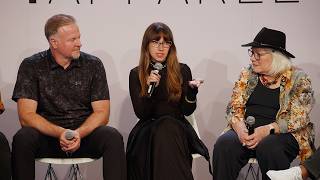
Safir Belhally moderates four fashion industry experts discussing why 3D technology has underdelivered on its promises. Avatars can't replicate real body measurements, garment simulation remains technically complex, and designers need foundational knowledge to use the tools well. AI could speed up visualization and eventually replace menu-driven workflows entirely.
Chapters
All right. Hello, New York. That was— I was okay. It was better before.
Who—
so quick question before we start. Who is leaving this conference inspired and feeling like you've learned something over the last 2 days?
All right.
Who is leaving the conference feeling that things were okay, pretty happy, good news everywhere? Who's ready for some controversy? Yeah? Feels like a good time to have some controversial conversations, so let's do it. All right, my name is Safir Belhally. I have the privilege of moderating this conversation with these amazing professionals and thought leaders leaders. My background is actually in automotive design. I studied engineering and automotive design, and I was an adopter of 3D way before it was cool. And obviously in automotive design, you actually need 3D data to manufacture the product, right? So that's a big difference. I made the change, the switch from automotive to fashion, and I took with me a lot of the workflows that I had developed and I had learned on the automotive side to the fashion industry. I joined VF Corporation and stayed there 18 years leading digital innovation. I pitched and managed the digital transformation, the DPC initiative there. And, you know, I've been a lifelong champion of 3D. However, These days we are witnessing the evolution of technology, of digital technology, where, you know, the effort that we've been putting into advocating for 3D, developing internal skills, competencies, really pushing 3D as the the tool that will unlock digital transformation and digital product creation, things are changing, right? It hasn't gone as smoothly as we all hoped for, you know, pushing change in organizations, you know, through 3D. It's been, for the most part, a successful When this implementation is successful, it's borne its fruit and it's been, it's brought a lot of value to organizations, but it hasn't been a perfect, it hasn't been a smooth ride, right? And we're starting to see, and we're starting to have conversations about the role of 3D, the evolution of 3D, and also the challenges of 3D. So this is why we're here. And we have an amazing, cast of perspectives, different perspectives, that I'm sure will keep this conversation super interesting. So maybe we can start with Pat. Quick introduction. 30-second introduction.
You still need an introduction? I am Pat Trautman. The first time that I became involved with 2D patternmaking, because my expertise and my interest my entire life has been in making clothes. So I want to achieve the design intent and the fit intent that I have both in my mind and that somebody else has. I am a success in my own viewpoint if I have helped somebody else achieve their fit and design intent when they say, "Yes, that's what I had in mind." The first time I became involved with 2D patternmaking was in 1973. With Hughes Aircraft that had the computer. And we did pants for Levi's, which was Levi's for gals, if anybody else is old enough to remember that. It was a failure as a product line, but it was the first introduction. Hughes then became sort of— was merged with Gerber Technology, and I was involved with them through the beginning of the pandemic, not as an employee, but as a consultant and working and training and working with their customers. And I've spent a lot of time in factories and working in charge of technical design, helping all of you people who have brands achieve what you want in production. So I've worked with computerized pattern making. I was excited about 3D, but as a tool, And I wanted it to replace the sample-making process more, and to do it more quickly, and to eliminate the time and the amount of money that is spent in the samples. In my opinion, it has fallen short of what I had hoped that it can do. I can— for me, it replaces the first sample where mostly the designer, the person says, "Yeah, that's ugly, I don't want it anymore," or, "Yeah, let's go with that." But it does not replace me fitting it actually on the form or having the fit model give me a reaction to it. I then use it again at the end when I need to validate the different sizing and stuff there. So I can replace that. So I kind of use it bookends and have a lot of opinions in between. But we'll pass it on to Karina.
That was wonderful. I don't know how to follow that up. But I'll give you a little bit of context about me too. My first approach to technology in fashion was also 2D with Optitex. And through that, I learned that 3D was a tool. And this was back in like 2012. So I decided to move to New York to figure out where I could learn 3D. So I'm a 3D expert. I do consulting. And I'm also an artist. And I have used mainly 3D to do product development and also go all the way to marketing. But I'm a technology advocate. I really believe like this is the age we live on. And there is use cases for this technology in developing our products. So I love testing new technologies, meeting with my clients and see what issues they're having, and Contributing the knowledge I have to solve those issues and train people and come up with solutions and better ways, hopefully, to do things.
Awesome. Hello? There we go. I'm Justin Schlathauer. I'm Director of Digital Product Creation at Under Armour. As you can tell, I don't like digital stuff. Just kidding. But no, I started my digital journey back She's in high school where I went to an aircraft company for a field trip and I saw them making something really big in 3D, like a torque thruster that also saw in physical form being manufactured. I'm like, that's what I want to do. Like anything 3D, like that's where I'm at. So seeing that, you know, the sporting goods industry was, you know, kind of behind, you know, and just apparel industry in general, like and loving that side of it that it kind of brought my passion to that. So yeah, so here I am. Yeah.
Awesome. Christian Harris, or Christian L. Harris, because ChristianHarris.com was not available when I got my domain. I am just in love with garment making, be it digital or physical. I did a master's degree in a program at SCAD for fashion design, worked in New York for a bit. Then I took a detour into software product management. Working on the software side of creating 3D tools. And then I said, innovation in this space is going to be led from the brands, not the solution providers, in my humble opinion, because everyone's product is so different. So I stepped back from that role and transitioned into working on the brand side. That's what I do now. So I have my own consulting company, but I'm off the market.
Love it. Thank you. Thank you all. I think we have some really interesting perspectives coming up. All right, let's get started. So 3D workflows typically bring an incredible range of benefits, right? But 3D has never been a solution to all the challenges in DPC, right? What are, in your opinion, some of the challenges and some of the aspects of 3D that have made it difficult— a difficult sell? And what are some of the limitations you've encountered personally that haven't quite been resolved yet? Pat, you wanna take a stab at that?
Yeah, I think I already took a little bit of a stab at that. I was looking for 3D not to give me a whole new process of achieving the garment fit and design intent, but replacing some of those issues or being able to work on 'em digitally and not have to have them in person. I have not been able to fit my garment on an avatar and work with it while it's on the avatar on The FIT the same way that I can do in person or on a dress form. And that has been a challenge. And I have to admit that I've kind of left it to the side and just continued to work on the dress form. I also want to be able to, all the way along the process, compare apples to apples to apples to apples, and not start having an orange thrown in the middle, and then people— I have to change the fit. So I need my avatar to duplicate my fit model, which duplicates my dress form that I'm working on. And that has not always been possible in 3D, depending upon which one we're using. My favorite one that I'm using, because I have Alvin Aun Dress Forms, I follow ASTM. I'm actually a member of ASTM. And so then I also— we also have the avatar, the Alvin Aun avatars as well.
Christian.
Oh, yeah. So I think so many of the challenges are really propped up by the dream of 3D that sort of pitched it as, this will solve your problems. And it doesn't. It can present your problems. But if you didn't know how to solve them before you got into 3D, it's very difficult to make sense of them in 3D. Because we also— from the tool provider side, it's difficult to do. But even on the brand side in training our people, we didn't provide a lot of context. We just said, hey, here's a 3D tool. Use it. Put a prototype together. But it is so much easier to be successful when you start by making sure people understand some foundational principles about 3D, like your material mesh and the appearance of thickness is optical, not physical. And there are so many other little things like that that once you understand it, you can interpret your 3D a bit differently to be able to get a better direction on, OK, this is an adjustment that we need to make, or this might be a 3D problem. Not necessarily with the physical. And the reverse of that is 3D can help you out with fit and issues sometimes because you don't have sewing issues that you might have with physical product. So if we started by giving people a little bit more context, I think some of the issues that we run into with adopting 3D would be a little bit easier.
Great point.
One thing that wasn't mentioned, I'd say, is just like the learning curve in general, like the learning curve and then almost because there's a learning curve and you're kind of doing both things, you're designing and tech designing, like there's an overlap in that too. So you're expecting people to do a little more in the same time frame. And it might not fully benefit the end of the process, or maybe it's just not visible. It's not set up that way.
Yeah.
Yeah.
Karina, did you—
I mean, sure. Both of those in the approach that I see, like what I encounter is technology still developing. It's always improving. But in garments, and especially like when I was working with virtual try-on, it got to the point that fashion is complex. There are simple fashion, t-shirts, and so on. But you get to a point that it gets very challenging and difficult to have the right simulation that things will behave correctly, even if If you have the best computer that you can find at the moment, and if you get the graphics card that thankfully are cheaper now, but it gets very complicated. And then on the other side, I have learned that I am a 3D lover to the point, as I said, move here, right? I wanted to learn this. I was very eager. But I understood that it's not the same thing for everyone, and you have to meet them where they're at because in corporations, You have to see what are the issues of, you know, why people haven't had like the time to learn. Isn't it interesting? Or do they actually have the time? Have we given them the right tools to implement 3D?
Yeah, great point. And I think when we think about the implementation of 3D, we also have to think about what the purpose is, right? The end purpose. Obviously the end purpose is to be able to manufacture a physical garment unless you're deciding to stay in digital fashion or somewhere in between. But the idea is basically fundamentally to be able to create a digital twin to a physical garment, something that simulates, represents exactly what the physical product is supposed to behave like. The technology is there. You know, we see animations, we see in movies, we see, you know, the technology technically speaking is there. The problem is you're not just— you're rarely just designing one garment and able to spend hours and hours, if not days, just perfecting the simulation of that single product. And most likely you're working within the constraints of a group, of an organization that has been used to working a certain way for a number of times. So adoption. —also plays a big role, right? Let's look at the other side, though. What, in your opinion, are the strategic advantages that still make 3D valuable as a component in your organization's workflow?
Justin, do you want to— Yeah, I can start. I'd say, first of all, there's the accuracy. Portion of it compared to some of the other tools. You know, you have a 2D drawing, it's not quite what you need. It's kind of intermediate between that and a physical. It also opens the door for like someone like a designer to get closer to a pattern, you know, get their intent across quicker, um, and then for somebody else to pick it up from there. And, and you get that visualization, you get the buy-in, you get the— and if, if you do it right, you know, it becomes the product before it's actually a product. And you can start that whole process earlier. And also sample savings too. If you do it right, again, the sample savings is real. Like, you might only need one and not all the colors. You can do that digitally. And as long as it represents the product and you start the right way. And it gives the opportunity for like— I know we've done workshops where it's like you take a body scan, maybe of yourself. Fit a garment that you designed in 3D and then go sew it in a workshop. And like, it gives you that opportunity that where if you're starting from scratch from a pattern, some of that might even be a bigger learning curve than using 3D. And because you got to be a super expert at it sometimes to get it right the first try, you know, or a second try.
Yeah, I love that. Uh, Karina, do you have a—
I think communication. You know, we all work with all these systems, PLM or Excel. We have to send so many emails and then search through the thread, and then we have a Slack, and we're tracking the progress of our product development. Once we have a visual tool like 3D, the communication starts making more sense, right? Instead of like going to search through all this data, all this information, and I think once we're using accurately, as Justin say, and we learn The power of 3D, the power that we can have accurate fit if we have the knowledge, as also as Pat and Christian have said. We unlock the power of 3D with knowledge, and we power our communication.
Love that. Christian, Pat?
I think at this point in our industry, 3D is just part of a balanced product creation diet, right? You don't need to use it for everything all the time, per se. But to not have it is almost just kind of reckless at this point because if you understand what you're creating and you sort of, to your point, you know what you're trying to create, where you're trying to go, sometimes it is there when you need it, when you don't have any other resources. So it's not— the title of this is, "Is it dead?" I think it's not dead. We've just integrated it now. It's a part of what we do. It's a part of product creation. Not in every example, but to not have it there are times where it doesn't do what we want it to do. But I think we've all also seen those times where it's like, oh, thank God we had this. Even if it's down to something like this 3D tool will run on an operating system for more of my designers than traditional tools. It makes sense to have it and to give people the resources to explore patterns, design, creativity, all that. So it's just a part of our process. [Speaker:VICTORIA] Love that.
[Speaker:JUDY] Well, I see that we have a question there. What kind of answers into the way I would respond. I have seen where it's easier on simple garments to have the 3D for my purpose, for fit intent and design intent. But when you get to some of the more complicated garments, those of you who do know sewing and stuff, to sew a curve to a straight or to sew a straight line to a curve, gives you a very different effect. To sew even two curves together and then take the seam allowance and turn it one way or the other gives you two different effects too. And that doesn't happen in 3D, or I haven't done it in 3D. So it's when you're sewing some of those complex things together to be able to get the feeling of what it's really going to do. Also, I'm Waiting for better fabric. Brenda, I've been excited about what's happened at the conference here. We've talked about fabrics. So the question that was here was, how can we upscale patternmaking knowledge in the 3D design space so the patternmakers are not solely trusting the physical sample? You need to understand sewing, and you need to add not just the types of stitches there, but how it's sewn together. Is it the curve on top of the straight, or the straight on top of the curve? And repeat, be able to repeat what people are doing sewing in an atelier. Because after all, that's what they're gonna have to do once it gets to the factory as well.
[Speaker] Yeah, great point. Actually, the next question I was gonna ask is very much in line with the first one up there. So I'll just read that. Will or is AI replacing the need for 3D? What disruptions do you expect in the next 3 to 5 years? And I'd like to add to that. So AI is obviously top of mind for a lot of reasons. There are other, you know, other tools, other technologies that will most likely come online, become available in the next 2, 3 years or maybe next month, who knows, right? So where do we see AI potentially replacing? In which scenarios do we, see AI potentially replacing AI, uh, 3D? You wanna—
Yeah, I can go. I can start this one. Um, so I would, I would say yes, in some instances it's replacing the need because, you know, for digital product creation in general, like, the, the original goal was to speed up the product creation process, make it more accurate, make it more better decision-making, saving time, money, samples, like Like, in keeping that in mind, one of the things that AI does is get a better visual faster, quicker. It saves that work that normally they would come to— like, a designer might come to our team, or a 3D person might dive in and build the 3D model. And now AI is just that picture. It's good enough. It gets their design intent across. And then you can take it from there. It's a lot different conversation. And this was something I said before with 3D. It's from an Illustrator drawing or a sketch. There's a lot different conversation when you see something that's more realistic looking. You can start— tech designers, developers can start to pick out things from that or get it in their brain more than a black and white sketch. And then when it comes to 3D, you have the different angles. And you can start to take it even further from there. So when it comes to that last minute work or like, The stuff that where 3D was too slow in some instances, like, oh, we need this for Monday. It's like, now you have AI to at least get that across. And say disruptions next 3 to 5 years, I think it'll start— those workflows mesh together. I think some of the softwares will start meshing together with capabilities. And it might be like you need to pick what works best for your process. Also the data behind it. I think the data that you're putting in, that you're storing, that's super important.
Anybody else? Sure. I think important part of our process, whether you are smaller brand or bigger brand, is to create a friendly workflow for technology integration. AI could replace 3D, maybe for someone that 3D is not what they feel called to or is too complicated or doesn't work maybe with their workflow, there are ways to use it. But for me, it's better if when you do 3D plus AI, right? It will facilitate your workflow. I think once you have— and if I can give you specific uses is having your 3D model that allows you to have your patterns and allows you to do internal fits and then you do your physical sample, but you are already creating all these assets. And then if you can have AI to generate amazing accurate renders from your 3D, that's a great use for these technologies combined. And then you have your material for e-commerce and so on or for internal presentations. And I think it's very important, as Zephira has said, I've been several times to think, What are we doing? And then just use these technologies as blocks within our workflow.
There's one thing that I get really excited about when I think about AI and how it's going to affect not only the industry, but also more specifically the tools we use, is the way we interact with the tools, right? To me, the fact that we're using a 3D authoring tool. You know, I'm not going to name any names, but still by clicking on menus and pulling down, selecting individual actions, tapping in some commands and things like that, that's like last century. We shouldn't be doing this anymore, right? So the more conversational approach to using software is something that I get really, really excited about because then you can say, OK, I'm trying to do this. Help me build these things. You can break things down into steps, but it becomes a lot more natural. It becomes a lot more human as opposed to trying to fit the way that engineers who developed the tool to fit a behavior, the behavior of the people who using the program to a model that was developed by engineers and, you know, And sure, UX designers. But so for me, that's the biggest disruption that I see is the way we interact with the tool we end up using, whether they're 2D tools or 3D tools.
Yeah. Just, I was playing with one of the systems downstairs in the exhibition, all by myself. But the other thing that we do is we do costumes for for film and for TV. And we've just completed some costumes for a film that's being produced now. The timing is nothing compared to apparel. We went and ended up making 865 costumes in New York City here. From start to where she said what she wanted, to us doing the patterns, the grading, finding the fabric, dyeing it, and making it in 6 weeks. Shipping it included out to LA. Costumers don't give you a tech pack like you're maybe used to in apparel. What I got from the costumer was, "We want a Roman tunic, long sleeve. It has to— can't be straight. It has to be wider at the bottom because if they run in it, then I don't want them tripping because their knees are in the way. We want to do this in a mesh that's about the la— about the quality of old nylon pantyhose." and it has to flow as they're running. And on top of this, we're going to wear— we need this turtleneck thing that has a hood that is so long in the front that it covers their face. But they have to be able to fall down on the sand and the beach and get back up again without it twisting. And I think we need this in small through extra large. What do you think it'll cost? We did it. So I played downstairs and said, okay, so This is what came to our information, and we played around with it downstairs. It was not exactly what we wanted. It kept adding things to it, like it gave me a red neckline. I don't want a red neckline. It had to be worn— the tunic was worn over top of Roman armor, but apparently the internet decided that the tunic is worn underneath Roman armor, so it put it that way. So there were other things, and we said we wanted it full length. It didn't understand that. It gave me like a dilettante skirt, you know, outside, but it's for men. But it got something in the end, and it was kind of fun to do it. But it's just, if tech packs are going to be verbal, like what you were saying, if people are going to come to you and say, this is what I need, and they've done that, right, Christian, a number of times, then we can play around with the AI. And then from there, then put it into patterns or do whatever your next step is.
I think just to add real quick, my hope for AI in the future— I can't really say is it going to replace the need for 3D because I need you to define the need. But I hope that it encourages us to really work on our judgment. Just having the ability to describe exactly what you need to something else that's trying to interpret it is maybe on the way there. But one of the issues that we see with 3D and with product creation in general right now is we haven't given a lot of people in the industry an opportunity to build that judgment. You learn a little bit in school, and then they start throwing tech packs at you as soon as you start working. And you maybe learn how people in your department do things, but you don't have opportunities to really ideate, even if only with yourself, to figure out, how am I describing this? And those are important things, because if you tell your factory, I want you to shorten my sleeve, they might go through that several different ways. A friend recently said, well, they shortened the sleeve cap and not from the bottom like I wanted them to. It's like, well, technically they did make it shorter, right? So, you know, having those exercises with AI, I hope that it leads us to having better judgment and being able to articulate what we need in better ways as good human beings.
Okay, so this is This is kind of connected to this question, but let's take out our crystal balls and let's project a vision, let's say 5 years out, 5, 7 years out. Where do we see design product creation workflows in the fashion industry How do we see them evolving? At the rate at which things are changing right now, what would be your vision and your ideal approach to product creation?
I'll go. I use a calculator reference pretty often when I'm talking about AI and digital tools. Like, you know, it's, it's not going to replace positions necessarily if you embrace it like it's a tool. Like, you know, you're, you have an advantage with a calculator. It didn't replace math teachers, right? Like, and I feel like what it's going to get to is not just the normal calculator with a little solar pad on it, but like a scientific calculator. And then it's going to keep getting more where it comes into like a ChatGPT-style calculator. But I think it's going to get there, and it's solving more complex equations, like with you at the controls, right? So I think it's just going to keep growing and helping you do your job better. And if you— I think if you don't embrace it, like, you're going to kind of fall behind in some ways where the expectations for the industry and industries in general will change. You're going to need that data. So data is a big part of it as well.
So data-informed, hopefully real-time data, ideally. Karina? Sure.
I think in terms of data and what data can do with AI, even for me, I am a creative. I love technology. I do training. But I also get to do costume design for— video games and music videos and things like that. And I love that part of creative. So if someone comes and tell me we're going to train a system with all the brand assets and I'm going to tell it to design based on the data that the clients are just buying these and it's going to give me the best fabrications and trims to make it very cheap and accessible. Of course, you think, do they even need me anymore? Right? And I think— If we start using the technology as creatives, maybe we can shape in which ways we're going to use it. I don't want to see that future where human judgment is not needed anymore. Sometimes I hear from people like, we get very close, or we can make really cool things. But I think there is so much value from creatives that have worked with brands for so long, and they really understand the DNA of the brand. They leave the brand, they wear the products. You know, so many people that work at these companies, they love the products that the company makes, and they are like the best test subjects for these products. And then they come into the office and they're constantly trying to make it better. And I don't think that human part can be really taught to AI. And I think giving the AI to people so it can do all the tasks that are just data analysis, input it, information in PLM so that all the creatives and all the people can focus in the product development and product creation will be like the ideal scenario. And I'm really looking forward to see how the technology could help people make more amazing, beautiful products that they're very proud to put out there. And they have really the time to put their mind and love into it instead of filling up Excel.
Love this. Pat, you have a vision.
I have a vision that's not exactly 3D or AI. My vision is that we will work with holograms, and that the hologram will be a duplicate of a person. That it can be— somebody wants to call me, they can. Sorry. I say, you're wrong, you're wrong. No, the hologram will be a duplicate of you or your fit model or whoever. And Piercia just heard this before, but I say we've got a watch here. Why can't I have my hologram and my watch and just go like this and drop it on the ground? You know, we can be like in a movie and then I can grow it up. It can sit down. I can put the clothes on that I've already designed in AI or wherever, because now it's also going to be a hologram. I can have the person turned around. I can have them bend over. I can have them do everything that I want and I can approve it. And maybe I can touch it. I don't know holograms. I don't have one yet. You know, and I can do my fitting and stuff on there. I keep telling my daughters that I have to live long enough so that I can leave myself as a hologram so that on occasion when I don't like what they're doing, I'll just say, "Ah, ah, ah, ah, ah," and I'll sit down next to them. But I see holograms in the future. So if anybody wants to, you know.
I think Meta or Apple should hire you, Pat, because I mean, it is possible. You can train AI in your personality and then they'll have you. To have you there. I think you should go give them all your ideas. That'll be wonderful. I want to live in that future.
You all should know that Pat was the person who's like, well, I'm the anti-digital person, and gave Safiya so much guff in the emails talk leading up to this. So now to get out here, she predicts holograms for us in 5 years. It's like, get a load of that.
Next year, come back and see the hologram.
Oh, I love it. I would love to have some holograms, but I don't want my mom popping up to remind me to do the dishes. Oh. I'm stupid enough to still believe that we can enjoy the work that we're doing. So I would love to see our digital tools, whether they're 3D, AI, all that, start to democratize some of the things that have been challenging, like pattern making. It's complex. I love it. But people do complex stuff every day, right? And I think if we have tools that make those entries into the pattern-making waters a little bit easier, then I could have more of my technical design and pattern-making friends stay in the industry and not go sell houses. You know, like, I would love to see people stay connected with what it is they came into this industry for in the first place. And I hope our, our tools will be there to help us do that.
I love that. I think it's important for us to remember that we as human beings, human creatives, human makers and doers, we have skills that will never be, would never be able to simulate or digitize. And if we get to a point where maybe each one of us has an agent or a hologram, I've never been slapped by a hologram, but you know, we'll work on that in the development. Whoever's developing holograms out there, But if we all each had an agent that would take care of the tasks, the non-value-added tasks, so we could, as you said, focus on the things that matter, the things that we human beings are good at, that would be tremendous, right? So those who know me know that my commitment to education is kind of what defines my personal mission. And so there are a couple of questions that focus on skills and competencies right now. And I wanted to just finish by asking each one of you, what are the skills that someone who's coming into the industry right now or someone who's interested in keeping up and, you know, staying up to date should invest in to make sure that they stay relevant with all these technologies changing so rapidly, right? What are the competencies that one should invest in right now in developing?
You're looking at me first again? Yes. For me, patternmaking is the on-ramp to digital. If you heard Christian and me give a presentation a number of years ago, we talked about that. We are, in the end, we are making clothes that fit people. We need to understand the bodies and how they're going to— and how it's going to fit. So I think people need to understand that about the bodies. I had a friend who made bras, and he said it is easier for him to make bridges during World War II than it was to try to fit the moving target of a female breast. And I think we're fitting live models. I mean, even if I have a hologram, it's going to be a live model, right? But I just wanted to put in a quick plug. I know that we're running out of time. If you're not connected with me on LinkedIn, please connect with me or some way, because what we have started— I have a group that's called Let's Talk Garment Engineering, and we started a whole process of a whole conversation about what we're calling cross-mentorship between people who are really into the computer aspect and the AI and the 3D, and then people who have been working as patternmakers forever. To bring people together, 'cause I really believe that we need the team of those people together, not just patternmakers over here and the digital people over here and the designers someplace else. And so we need to talk about what the problems are. And I think between us, we probably have solutions. And so what we wanna do is bring together a number of different people in a massive Zoom around the world and break down into groups and kind of see what we can do. We— the post originally, we got 17 reposts and several thousand comments. So there's interest, and we'd like to add other people. If you'd like to help mentor, if you have questions you want to ask people around the world, please join us.
Thank you. Gosh, critical thinking skills. Like, when I see young folks come into companies and they're ready to ask questions but also challenge what they're being told to do, in a productive way, please be good communicators as well. But definitely the ones that come in with those skills, I've seen them pick up the things we need them to learn and move forward more rapidly than those who are just focused on checking the box. So please come with some critical thinking skills. And if you don't have them, if you're afraid to use them, work on that bit. I think that is invaluable no matter what you choose to do.
Kareena?
Yeah, I'll just add to it. Yeah, sorry. I'd add to it just, you know, along with the critical thinking, embrace the technology and use that as the critical thing, you know, connect the dots, you know, like use it to your advantage. Anything, any tools that are, I think someone in maybe his first insights or something said weapons, you know, it's a weapon, you know, it can be used against you, you know, with, you can use it on somebody else or keep that weapon in your hand and keep it close. Yeah, I think that would be a— I like that analogy, but in some ways, some ways it's scary. But embrace it. Just embrace it. Then you got it.
Thanks, Justin. I think I want to say my commitment to education is also big. Thanks to Braswear, several years ago, we created a program to teach 3D in Colombia. And it has been a success. Several of my students have already graduated and go into the industry. Start transforming the way that they work. And I think curiosity, community are very important. If you give yourself the opportunity to learn something new, see how it's going to help you, and also communicate what you need, communicate what you have learned, and have that community. Like, you know, we have to— we are here at this conference because We need this community to move forward. And so I think it is very important. I have seen it, you know, as I say, like teaching in Colombia, how people just keep curious. Like once you understand what's happening, you all are here, all these terms are around, you see what other companies are doing, the idea is in your head, it's not going to get away. And so move forward with it, explore, and reach out.
Love that. I agree with each one of you. Those are incredibly important skills and competencies and mindsets, right? I think for me, the most important one is the importance of staying curious and know that no matter who you are, whether you're just starting in the industry, whether you've been in the industry for 30 years, things are changing. Things around us are changing. Consumer expectations are changing. Technology is changing. Methods of make are changing. We're always learning, right? So don't be afraid to learn because this is how we stay in touch with what's happening. This is how we stay relevant. So thank you all for your time and your perspective. So 3D is not dead. It's just evolving like everything else. Sleep, maybe. Yeah. But thank you for providing your insight. I had a lot of fun with this. All right, thank you.










