3D : What is in it for the Factory? | Oasis Garment Co | PI Apparel
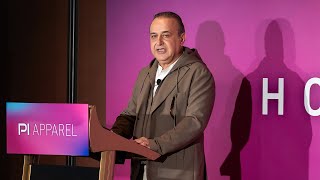
Ibrahim Özsöy, a factory owner in Vietnam, explains why garment makers should invest in 3D digital samples. He identifies four barriers to adoption: factory resistance to change, high upfront costs, unclear brand support, and lack of skilled workers. Within five years, he predicts brands will shift product development to factories, requiring them to redesign workflows entirely.
Chapters
Hello, just a brief introduction.
My name is Ibrahim Özsöy. I am of Turkish origin.
I've been living in Vietnam for the last 30 years, and I started my career as a banking and I did commodity trade, and last 10 years I'm running a garment factory. So today I'll be talking about the digital product from the point of the factory. I have a garment factory— oops— I have a garment factory in several locations in Vietnam.
We are specialized in production of jackets and coats, which basically we can handle all sorts of materials and we can also do all sorts of contractions and we are able to mix them. So we are very, we are highly automated in production. We can up to the garment contraction kind, we can do up to 70% by automated machinery.
I would like to give you an overview of the factory, so— In 2019, I also invested in a digital hub in collaboration with Broseware. Our aim was to engage in accelerating the digitalization among the factories, among the users in Vietnam.
Also, the Bridge Atelier, we are Engaged as an outsourcing hub for the brands for digital product creation, quality control, and digital products, and appointed by the brands' factory training and certification.
We—
some of the brands that we collaborated, we are collaborating here. So in Bridge Atelier, we have capability to make twin or true-to-life samples. We do pattern to specs, construction as intended, and fit on the right size avatars.
We have fabric digitization capabilities, texture-wise, drape-wise. We are recently certified by VIZU. And we have 3D designers to make 3D digital assets. So the reason in Bridge Atelier, we are good at what we do and there are reasons for it. The first reason is that the mindset we basically started at the expense of being naive, a little bit, to make the twin or true-to-life samples.
And with this objective in mind, it developed further. And we made a lot of hundreds and thousands of real-to-digital, digital-to-real samples. And we understood the correlation of the 3D parameters in the real time and the real-time parameters in 3D.
Softwares.
And we engage in the factory the, the departments who are technically, technically having know-how to assist, to coach, and the QA, the digital team. I would like to give you an overview of what we do.
So the reason in 2019 I enthusiastically invested in digital product creation was From the point of view of factory, I realized that a lot of transformation going on in garment sector, and I observed that with all the transformation, all the trends happening outside, the digital sample is the common point, common intersection point or product which actually engage the factory and what's happening outside. So we decided that if we want to be relevant in the future, we should invest to make digital samples. And we, as main objective, true-to-life digital samples.
For us, I mean, we thought that— we are still thinking that a digital sample are more than a Showcase object is not a design object. Is a design object, of course, but there are more things inside the digital sample. These are digital samples are packed with all the parameters of the product, the construction and the material-wise, and also can be tagged a lot of other information along. So we call them that they have a digital identity, so which carries a lot of information together.
So we can say that digital samples in fact are the common language where the stakeholders in the value chain can communicate, transform, and manipulate information So the question comes here that who is going to make this digital sample? In our view, to answer this question, you should answer who has the access to all the information, material-wise, technical. And also the other question is that who has, who will, who handles firsthand in product development, in the technical development of the product. And I would remind that according to my personal projection, in 5 years' time, all the brands will move the task of product development to the factories. So the obvious choice, the obvious answer, logical answer for me was the factory, because factories, they have the information to make the digital garment and they have the technical base foundation to do it. Especially now if your aspiration is to do a true-to-life, a right-fit digital sample. So, and then if this is the question, then why is not happening? Why the factories are not buying or the progress is not as expected? There are several reasons to it. And they can be attributed to different causes. One of them is the factory, the factory management, the mindset, and their ability to— or their disability to engage the right departments into this project, and also their act of isolation of the DPC department being a look-good department in the factory. And the other reason is the factory dynamics, which is basically can be summarized as the resistance to change. The second reason is the cost. The cost of investing in the full-fledged digital hub, digital department is quite expensive. There are software costs, there are hardware costs, there are maintenance costs. And given that the brands are not paying for these digital samples, the factories have to bear all the cost, which last 6 years is quite hard for them to accept.
And the third reason is the brand message.
The brands, some of them at least, they are not giving the straightforward requirement They are dubious in their message for the factories to invest, to excel in DPC. But on the other hand, all the workflow is continuing with the real samples. And the other reason is the lack of skilled workforce and also the difficulty of finding right institutions to educate, to excel. But whatever the cost, whatever the reason is, the factories should invest and should know how to handle digital production because if they don't, they will be left out of the system in a very near future. And this would mean that the cost is very high. Which means they are business. So what is next? As far as I'm concerned, digitalization is about the demand coming closer to supply.
So with this, with next 5 years, the brands basically will be focusing on their primary tasks, which are consumers. The secondary tasks, which I consider garment manufacturing as a secondary task of the brand, and will be basically factories' responsibility. Factories will engage more in the product development, even they will own it. And with these tools that the brands have, they will focus on their consumers, basically trends like mass customization will prevail. And this means for the factory that the POs, the amount of quantity that the brand place on the factory will decrease. So the traditional setup of a factory currently will not be able to handle all the workload because this means more work in a shorter period of time. So the factories have to think about redesigning their flow and get help of the tools available by— available to them. Digital product creation with some AI guidance, could extract a lot of information from the digital sample, and they would further communicate this information to the other systems in kind. Personally, I would really like to see the merchandising department and technical department inside my factory to further utilize the information available in the digital identity, digital product, so that in terms of merchandising, we can handle BOMs, costings, purchase orders with the information transmitted, which are available in the DP, the digital product, to the other processes. In the technical departments, I would expect that the consumption patterns, graded operation breakdowns, markers could be extracted from the digital sample and then further communicate to the other relevant departments, which would ease the task. Of course, The core of what I said is basically digital product. So in order to achieve all what is possible for the factory, digital product creation should be taken seriously. And software owners currently in the market should look not only the design side, the brand side, should look into the factory side. In order that the factories can exploit fully the investment inside the digital product. Thank you very much. I'm not very good in presentation, but hopefully—
and if any questions would like to—
So go ahead and use the app if you have it. Scan the QR code and you'll be able to ask some questions. All right. You've got some questions on the screen there.
How do you balance the workload between sewing workers and 3D artists? The workload here refers to— I am not clear on that.
I think they're talking about The sampling? So digital sampling versus physical sampling?
Basically, we start the process with the digital sample.
So the core, the main point here, to be able to do the pattern by the right people, and then to load, to assemble the pattern on the right avatar in order to have the right fit. Because the software right now has some limitations, you have to understand the reaction of the software. So from there, you give this pattern which you made the digital sample to the sewing workers, which is sample room, and ask them to do the sample. By itself. So this is how actually we organize the work. Do you really enjoy any return on investment? Basically, we have a setup called the Bridge Atelier nested inside our garment factories, which also do outsourcing work. So for us, we do enjoy some ROI because we do outsourcing work for the brands. And intangible benefits, definitely. I mean, because if you engage the right departments inside the factory, not isolate the technical department, all the traditional parts, you will have a spirit of the future to do. And in order to As you say that this is in 5 years' time, many things change in vendor-factory relationship. You will be preparing for the future and your team actually also have sense of futurism. And it's good for the factory to have the ability. What tools and solutions have you found beneficial? Basically, all my DPZ team have the background of pattern development. This is my requirement. I mean, I decided that I will not go from the design side, go back to digital sample. I want to get the resource, the people in the technical room who do patterns to go and do the patterns, especially on the software. We collaborate with the Browserware, so the pattern makers do the software. At first it was difficult for them because normally they use Gerber and the availability of the tools in this 2D program in Browserware was not sufficient, but gradually they They understood, and they also, whatever, which point is not as per their habits, they try to understand. So this basically gave them the project. And we did a lot of real digital, digital real sample trials. So they understand the reaction. Of the software, also the real pattern in the software. Then you make the real, real garment by the pattern made in the digital software. The accuracy of 3D sample. We did a lot of trials. I would say that if you know your software and you develop the pattern and you use a technical know-how, the 3D artist, the accuracy is quite, quite high. I mean, if the aim here is the fitting, we did see a lot of samples. Well, after we, we configure the samples in the software, in the real sample room. And we found that if the fabric configurations are correct, which for that is very important integral part, that to understand the fabric and you input the right fabric, you can easily have an accurate real sample. But in this, in this case, of course, The construction of the garment is important. And also, the avatar, you need to have the right spec avatar in order to try the 3D sample inside the software so that when it goes out, you sew it, the fitting will be relatively good. —What are the— And the cost of implementing 3D technology at this moment is basically at the stage that is not involved directly into production. Actually, you are doing the 3D sample, 3D digital sample, in order to provide to brands. To be able to use it in the manufacturing, as I said, we need to make it seriously. The information inside was correct. As we do, for example, the patterns we make in the, in the Browser 2D system we can use in the sampling. But there should be more tools in order to make sure that the information you store there is basically correctly communicated to the other department. So basically cost-wise, if There are these additional softwares we can explore, we can extract the information. I believe that a lot of repetitive work will be only handled by the information there. But so far, it's under development stage. If brands are adopting digital samples, there are a lot of brands that are working quite hard. I would say that the American brands are more and more advanced. The Europeans, basically, they are— especially on the high-end luxury level, they still treat 3D as an object because to be able to work with 3D digital sample, the counterpart to the brain, they should be also able to read the sample. So, so far this expertise is not there. I would say the most advanced would be Ralph Wrenn, would be PVH. In my view. You have your own digital material library? Yes, we have our digital material library because it's not possible to be able to have the 3D, especially for the trims. We have to design our own. And it's the issue also to be able to have this library and to save and then to do. But mostly the brands also, they have their own libraries which they communicate to factories. At this moment, are there limitations in certain processes where implementing 3D technology may be more challenging or less effective? At this point, it depends from which perspective you are looking. Definitely is not effective effective yet because you have to do processes traditionally you can handle. But if you see it that in a very short period of time, short period of time, you would be using this 3D sample or digital sample in various communications with your brand, with the brand that you are working with, and also to be able to process, to communicate, to carry information to the departments inside your factory, I think the cost that you are enduring right now should be viable.
Well, thank you very much, Ibrahim. Please give him a— Thank you.










