3DRC Annual Shareout 2025: Standards, Skills & Interoperability
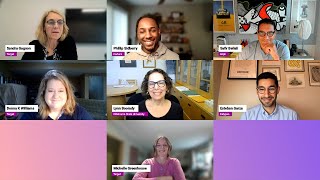
The 3DRC Annual Shareout 2025, hosted by co‑founder Sandy Gagnon, presented the year’s achievements and 2026 road‑maps of the organization’s three core committees – Technical Fit, Innovation (Digital Fabrics), and Education – and highlighted cross‑committee themes of trust, standardisation, interoperability, and workforce upskilling. Technical Fit Committee (led by Philip Sidbury) released the FIT3D Index, a guideline describing current 3D fit capabilities, limitations, and best‑practice workflows. The committee surveyed industry users, performed a SWOT analysis, and identified four strategic pillars for 2026: standards, technical skill development, collaboration, and support. Avatar sizing and cross‑platform fit consistency were noted as ongoing challenges. Innovation Committee (project‑managed by Esteban Garza, chaired by Michelle) advanced the ASTM D13.67 Digital Fabrics sub‑committee, drafted a 3D Fabric Physics Validation Standard, and launched an online fabric‑physics conversion tool. The group emphasized universal digital‑fabric testing, AI‑driven physics generation, and future work on texture, colour, and software‑specific comparisons. They called for volunteers with standard‑writing expertise. Education Subcommittee (co‑chaired by Lynn Brady and Safir Belhally) delivered a DPC certification matrix for apparel roles, began extending it to footwear, and built a searchable database/ontology of DPC technologies. They outlined a change‑management framework, leadership‑upskilling resources, and a feedback loop with industry to keep curricula current. The session included a live Q&A covering avatars, automated fit diagnostics, footwear‑skill expertise, database access, AI trust, parametric patterns, and digital‑twin tolerances. The call was recorded for on‑demand access via MarketKey/PI Apparel. Overall, the shareout underscored the need for industry‑wide standards, collaborative tooling, and continuous education to accelerate trustworthy 3D product development.
Chapters
Good morning, good evening, wherever you're calling in from. Welcome to the 3DRC Annual Shareout for 2025. I'm Sandy Gagnon, and I'm one of the co-founders and on the board of directors for the 3DRC, and I'm so excited for today's call. I look forward to this all year because in this call we share out all the hard work that the 3DRC has accomplished. So if you're not familiar with our group, we're really a collaborative group that comes together across brands and retailers, and our whole is to really advance 3D technology. We do that in a variety of ways. We bring groups together, we unlock networking, and we provide important work that will accelerate what our industry needs to advance 3D. And today's call is to share out the amazing work that's been happening in our technology, innovation, and education committees in 2025, and also to share what they're focused on in 2026. And I absolutely could not be prouder of the work that we will share with you today. I hope it leaves you inspired and looking forward to what is possible. And I hope that all of you will also really want to be part of the work and join our great team. Before I hand off to the speakers, I also want to let you know that one of the other big events that we sponsor every year is our Grand Challenge. And really the idea behind the Grand Challenge is to allow startups and academics to bring really important work that they're doing in 3D to the forefront. And we do that by launching a challenge every year. And this year it'll be happening in December, and then the winners will get to present at one of the PI events in 2026. So keep your eyes and ears out for it. We're excited for it. We'll be bringing the focus and the topic and the submission details as we get further on. But just wanted to let everyone know that's happening. So I want to make sure that our speakers have plenty of time today. We will have a section for questions, so make sure you either add them to the chat or save them up at the end. And we're going to kick off with Philip Sidbury, who's going to take us through the amazing work that the 3D Fit Committee has been engaged in. Over to you, Philip.
Thank you, Sandy. Hi, as Sandy said, my name is Philip Sidbury. I co-lead the Technical Fit Committee, which actually turns a year this month. So happy birthday to the Technical Fit Committee. I co-lead it with my wonderful colleague Aaron Gregory. And this, this committee was created to standardize, not necessarily standardize, but come together as an industry around something that I believe is one of the most critical parts of the garment, the fit. And as we move into the digital age, it's important that we align on technical fit. And our goal was to create a guideline that, one, outlined the limitations that are in our current 3D technical fit environment, and also some best practices, some things that we align on as industry professionals. And we were able to do that in a document we called the FIT3D Index. And basically what it is, is it's a consistent messaging to users about the current capabilities of 3D, some of the limitations we found, and some of the interoperability opportunities between software providers like CLO and Browserware. So as I said, the goal of the Committee, or the overall mission, is to align as industry professionals on standard processes and our expectation of Digital Fit. And this should help us as industry professionals as well as help our vendors across the world so we all know what our expectations are within Digital Fit. We targeted some of the industry challenges, which is cross-platform interoperability. So just diving into the differences between the platforms and identifying opportunities where they can kind of align. So we can have a standard process within our industry practices. Also, we wanted to educate the users and that should increase user trust because we're all kind of doing the same things. And we also can align cross-functionally. Trust is the biggest thing in digital. So we really have to nail down the trust, and we're hoping to do so through Digital Fit Committee by creating these guidelines. And also, it should lead into the AR space where virtual try-ons, and you actually get consumer trust that way too, because trust is very important. So the outcomes in 2025, like I said before, we released our 3D Fit Index. And it basically defined our best practices for cross-functional approval and decision-making. We kind of suggested that FirstFit would be the best for digital. Also, we shared this communication out, as you will see in the next slide— well, in a couple of slides forward. Sorry about that. So, our main objectives were 4 simple things: efficiency. So we're all in this digital space to be efficient. We want to use our resources properly. So we want to streamline, we want to get faster, and we want to get more efficient. The second thing was trust, which trust is big. We need trust within our organizations and we need trust outside of it and trust within our vendors. So it's trusting that the 3D is accurate. And also, trust should lead to that partnership that we need between ourselves and our vendors. And if we share these common objectives, best practices, we can prioritize the issues. And lastly, education messaging. We need to actually understand what our issues are, how to communicate them in a standard way, and we can learn the capabilities and the limitations of our current 3D Fit environment. So this is just a roadmap that takes you through our process of getting to our 3D Fit Index. We started around January, kicked it off fast, and we, we came together and created a list ourselves of things that we thought were best practices and things that we felt were issues within the platforms. We then took that and developed a survey. Finalize the survey, send it out to users. We obtained those responses around May. Then we took those results and we created a SWOT analysis, and that's very important. We'll get to that soon. Then we drafted the SWOT analysis into a nice publication, and in September that publication went out to the public. And here you can see, uh, where Michael had went on LinkedIn and some other social media platforms and shared out our work. And it can be found on the Seamless website. So this is an overview of our SWOT analysis. I'm not going to go through everything, but the strengths are we basically recognize that we're going through a digital transformation and people are starting to pick up and use digital workflows. That's a great thing. The weaknesses are there's a perceived gap between digital visuals and physical garments, which can create a dependency on those physical garments. And also there's a higher learning curve for vendors and teams because everybody's doing things differently. Disjointed workflows, which because people are doing things differently, vendors don't know what to expect. Uh, and then our opportunities are standardizing these processes. Like, how can we standardize these processes so that's no longer a weakness? Um, also improving the, uh, digital asset quality, um, enhancing the avatar realism so that trust, um, gets picked back up, because that's a big word within all of this. Um, and also just, um, refining our visual validation between the digital and physical garments, because eventually we want to not be so reliant on those physical garments. So our threats are basically not wanting to change, being resistant to those traditional methods, and just vendor onboarding collaborations. If things aren't standardized and the vendors don't understand the expectations, then the trust starts to go down. And just no clear metrics for fabric. Fabric's a big thing, and you'll hear about that later. From some other speakers. And our potential things to tackle in 2026 are— we put it into 3 different buckets. So it's standards, technical, and collaboration and support. So I won't go deep into all of them, but I've been talking about standardization this whole talk, and that's still a big thing in 2026. We want to— kind of standardize how the fabrics are digitized and push it out to the mills, kind of pushing the process to be digital first, meaning the first fit or first sample should be digital, trying to reduce workloads up front. And on the technical part, just getting more highly skilled users, so upskilling users so that the output is better, which should increase the trust. And collaboration and support, just breaking down the barriers between the vendor collaborations, also just gaining leadership support, which comes with trust again. And that trust comes with the technical aspect and the standards aspect. So all these things are interconnected. And this is my favorite slide because we started very small, but our group is really, really growing. If you want to be a member, reach out, and I will hand it off to Michelle and the Innovation Committee.
Hello, uh, hello everybody, uh, good morning. Uh, I am Esteban Garza from Calypso, and for the last 4 years I have served as project manager for the Innovations Committee, supporting Michelle, uh, with planning, progress tracking, and communications. For those of you who are not familiarized with the Innovation Committee. Our mission is to enable interoperability of digital fabrics for 3D software solutions. Um, the idea here is that a universal 3D fabrics physics test, a set of tests, would dramatically change the way that we work today by eliminating the need to test a single fabric multiple times to support the data needs of each 3D software. it would drive both accuracy and many other benefits. Uh, back in, uh, 2020, the team developed a standard operating procedure, uh, outlining how to test Fabric, uh, physics once on a classical testing equipment set, uh, to use in multiple 3D tools. Uh, since then, we have made great progress in making Fabric physics, uh, data more universal and usable by brands, retailers, suppliers, and 3D software providers, leading to a reduction of time and cost for all parties involved in this work. We have even developed an online conversion tool that is accessible to all of you. But this is not only about efficiency. We hope that this work will shift the digitization process to the suppliers to drive consistency and confidence in 3D. Additionally, we're looking at ways to ensure that digital twins are accurate, and we hope that all of this work and research will serve as a foundation for the correct use of AI to generate digital fabric physics, which we know that it's, it's the future. So that's a summary of our goals, but who, who are we? The team has changed since the work began 6 years ago, but we still have representation from multiple brands. And today we have 10 active members, including myself and Michelle. There's people from Ralph Lauren, Old Navy, Target, Avery Dennison, even some academic representation from the Dresden University of Technology. And we're very happy that in the last year we welcomed 3 new members. Amy, who joins Christina from CORE, Thomas from BrightMinds, and Zach from Urban. We always welcome new members, so if you're interested, please reach out to me or Michelle. And now I will pass it on to her so she can walk you through the recap of our accomplishments for this year and an overview of work we plan for 2026.
Thanks, Esteban. First, I'd like to say I see some really great synergies between what the 3D FIT committee is working on, the technology committee, and our group. I heard Philip say trust, I don't know, maybe 15 times, and that's really what we want to build out here. One of the great things that we've accomplished is that we've established a subcommittee through ASTM, and it's called D13.67 Digital Fabrics. And we think that this subcommittee is going to help build out standards for not only fabric physics, but for textures as well, and maybe even rendering, lighting, all other things that kind of come into a 3D material. So super excited. We picked ASTM because of their global reach, and also we know that it could then translate into an international standard. So that's the committee that we've launched and started. Then we've created a— what we're planning to do is create a standard called 3D Fabric Physics Validation Standard, where we are going to establish a universal standard where we compare the digital fabric to the physical fabric. So this super exciting work, we know that this is really needed in the industry. We launched this work recently and we put out a press release via ASTM, and the information for the standard is located on both our 3DRC website and the ASTM website. We also published it on LinkedIn, so if you're looking for any of these links, let me know. We— you can find it on LinkedIn or either of those two sites. We had an initial conversation with some 3D software providers already, which has been really great, and there's a lot of engagement from all of the software providers, at least that I know of. CLO, Browzwear, Style3D, ASSIST. We had a lot of people in the room for our first conversation, which is very exciting. So we know that there's interest in this. We've also defined the scope and we've written an abstract already. So we've got the groundwork and we're ready to hit the ground running. Our first meeting is going to be next week, November 20th, and I've already started the agenda and it is massive. So it's going to be a very robust kickoff meeting. So that's our first accomplishment. Subsequently, we have also presented the basis for this validation and why we're doing this validation at PI Apparel. And it was a, a really good conversation to have with other brands and retailers who attended PI Apparel, and it really launched the initiative and, and got us to really understand how important this is and how many brands need this, not only for an actual validation standard to build that trust and consistency amongst our fabric suppliers and the fabric when comes through, but also to understand how this relates to your brand, how this then translates to a garment. Because if you drape it over the avatar and it looks great, and it looks great compared digital to physical, how does that relate to the, um, the garment? So we're hoping to define this in 2026, which we're going to talk about a little bit later. We also had a roundtable discussion where we had a lot of interest and people wanting to join our group. And so we're super excited about that. And then lastly, we accomplished, like I mentioned, some ongoing discussions about how the digital material then translates from, you know, just a square swatch draped over an avatar to the physical garment. And also discussing a little bit more about the future of textures. There's so many different new texture softwares out there. Such as NunoX, you know, Visu and what they're working on and all of the different softwares that are out there for scanning materials in addition to what we know is happening in the future, which is AI physics such as SETI Frontier. So keeping our finger on the pulse of all of that. And yeah, that's what we've accomplished. And then here's a screenshot of some of our launches. As Philip mentioned, Michael put something on his LinkedIn post for the 3DRC, which is great. He added our information as well on the right-hand side. You'll see that. And on the left-hand side, you'll see the ASTM news press release that was also issued. And we have links to those. Last, well, not last, but what we're going to talk about next is our Innovation Subcommittee challenges and opportunities. So what we've learned, or what I've learned so far, is that writing a standard is pretty technical. And so we were hoping to get some recruitment from somebody in the industry or multiple people in the industry who know how to write a standard or who have written one in the past. There are lots of references out there, links and guidelines and templates, which we're going to review in our upcoming meeting. But if you're interested in learning or helping us figure out writing a standard, we would love to have you involved. We're, we're looking for people who have experience in technical writing. And then next, we are hoping to identify our next opportunity for the regular group. So our actual group is going to split off into two sections. The first section will be the digital fabric interoperability where we continue our dialogue about challenges we face in the industry, such as digital color or the introduction of AI, building trust and confidence, digitizing the supply chain. And then the second piece of the committee will be working specifically on the drape validation standard. So we're looking for people to join either or both of those groups. We know that there's a lot of upcoming challenges, so we're hoping to get a little momentum back into the group with talking about digital color and AI. And then lastly, I would like to mention that I've been leading this group for 5+ years now, and it would be lovely to have a partner, especially since our group is splitting off in two different areas. However, I'm very happy to manage both, and I'm really enjoy the work. So, but if there's somebody who has a passion about maybe the new direction of materials and where it's going, maybe they'd like to join our committee. And we have a QR code here for you to scan and get involved. And then last, I'd like to mention, like I alluded to at the beginning, I see a really great synergy between our group and what we're working on and the 3D Fit Technical Committee and what they're working on. There's just like trust and accuracy, digitizing the supply chain, consistencies, efficiencies, all of this I really see working together. So we're super excited about that. Lastly, I'm going to talk you through our roadmap. And as I mentioned, we're sort of having two different paths, if, if you will. So the roadmap is outlining both of those paths. One is like what's happening in the future for digital fabric interoperability, AI, digital color, these types of other issues that we're working on. And then the roadmap for the validation. So for the validation, we know that there's a lot of different work that needs to happen. So you have to actually write the standard and then you, you have to vet it and it has to go through multiple different processes in the ASTM committee. Where people actually vote on it. So once you've written it, you vote on it. And we, we know that writing a standard could take up to 18 months. Our goal is to hopefully get this published by June of 2027. In the meantime, there will be small groups that will be spinning off and working on not only writing the standard, but perhaps also doing some round robin work, testing, evaluating, comparing avatar sizes, specimen sizes, all of the different criteria that we've already identified that need to go into this standard. And then we'll also be working on what our recommendations are for a digital tolerance in the industry. And as I mentioned, how it relates— the validation standard would relate then to a garment. And with that, I do believe I am kicking it off to the Education Subcommittee. Thank you. Hello, greetings.
I'm Lynn Brady, and I'm the co-chair of the Education Subcommittee along with Safir Belhally. Our work is driven by— excuse me. I'm here to talk to you a little bit more about the education. Could we go to the next slide? I'm ready. Thank you. Um, our work is driven by a dedicated team of industry leaders and educators, many of whom have been with us since the beginning, along with some new members who have joined us in recent years. Our mission is to inspire and support members in realizing the power of 3D digital transformation through education, collaboration, and technical skill develop— By creating shared resources, we seek to align education and industry around a common language that defines 3D digital product creation skills and career paths. We have 3 active work streams: the certification matrix, technology and education, and the 3D apparel upskilling and leadership. Next, please.
Okay.
The DPC certification team's goal is to develop certifications based on the skills that industry needs and create a network of universities teaching these skills. We have completed the apparel matrixes, uh, with 4 different job titles and have submitted them to the accreditation Agency for Fashion and Apparel Education and hope to have the first university accredited soon. We would appreciate help in promoting this work and the certification to HR and DPC professionals in the fashion industry. We have now turned our attention to the footwear industry and are looking for 2 to 3 footwear DPC experts to contribute to the development and implementation of a footwear matrix. So basically what we do is we come up with what the positions are that are needed in the industry. We develop a skill list of skills that would be common across companies for each of those positions. We turn them into objectives for universities to work on, and then submit those matrixes to the accreditation body in order to get them out to the universities and to get universities certified in delivering students who have these skills. So if a company was looking for, say, a 3D apparel artist, they could look for a university that is actually training students in that specific skill set. Yeah, and this was the certification announcement that TAPAC, which is the Textile and Apparel Programs Accreditation Commission, put out in August announcing this new DPC certification for universities. Again, we're hoping to get one up, probably submitted by the end of December, and I do know that there are some universities in line waiting for certification in this as well. And now to Donna Williams with the Leadership and Upskilling Committee.
Thanks, Lynn.
As you've heard, as we have been focused on how do we ensure that the future skills of the workforce of tomorrow will, will be in place in 3D and the DPCs that are currently and yet to be developed, we also identified a spot where we need leaders who also understand 3D and the opportunity to not only build teams, but then also be able to upskill those teams that are currently in the workforce. So that has led to this subcommittee that I lead along with Liz Maginot. And over 2025, we have been working on not only increasing the group of members, but we're also focused in 3 key areas. So we are really looking at We know there's many different paths to get to 3D teams, and what we identified is, especially for those who are new to this work in 3D and DPC tools, to go faster, we need a blueprint. So we have been working in Discovery in 2025 on what that blueprint looks like, as well as case studies. So we are currently looking at all of our journeys. So as you've heard common today, we all come from many different teams and companies and how did we approach it and where do we find those commonalities? So that is currently in discovery. And then as we look to '26, we are not only going to build those blueprints and case studies, but also really activate what change management looks like and how do you sustain momentum. It's one thing to be able to build the business case and secure the funds, but But then it's also secondarily and just as important to be able to sustain and really deliver on that ROI that was in those initial business cases. So as I said, we're really giving team leaders the tools to really support and build sustainable teams. It's the future. So from there, I will hand it over to Safir.
All right, thank you, Donna. Hi everyone. So the third work stream we kicked off this year focuses on another very important topic, which is the partnership between educators and technology providers. I think we can all agree that educators find themselves in a fairly challenging situation as they need to know the tools but also continuously keep up with the new updates and the new new programs as they're released so that they can in turn keep their curricula up to date. So this, this third work stream set out to help broker this partnership, helping educational institutions navigate the landscape of relevant technologies and know what kind of support and resources that are available to them. The tech providers in turn get to know that educators who are true ambassadors of their software, we have to remember that, are well equipped to teach the workforce of tomorrow, but also upscale the workforce of today. So the— sorry, I think we— there you go. The team that you see here has therefore worked to build these resources, starting with a comprehensive landscape of DPC technologies organized by go-to-market stage, so plan, create, make, sell, experience, indicating, indicating their intended use, industry focus, their value proposition, and whether the provider offers educational licenses and educator training or other types of support. We also created a comprehensive ontology guide. I wanted to thank Chad for this to help industry representatives and educators navigate the depths of this information in an intuitive and accessible way. The database and ontology guide will be made available for early feedback in the next few weeks and will be released publicly in early 2026. This is an overview of the goals we had set out for ourselves in 2025 across the three 3 different work streams, which mainly involve continuing to develop the resources we set out to make available to the industry, start expanding the scope of this work to footwear in the case of, of the certification work, and socializing the, the work we're doing. And for 2026, the objective will be to continue building on the work we have done in 2025 5, making sure we seek, receive, but also integrate feedback from the industry, and setting up regular touchpoints with our audiences through LinkedIn articles, lunch and learns, and discussion sessions on the resources we publish and continuously update. All right, and that was it for, I believe, for the Education Subcommittee, and I will now hand it back to Sandy.
Thank you, everybody. Those were great updates. And I hope everybody on the call really sees the scope and scale of this work because it's really pretty amazing what our teams have been able to tackle. These are not the easy, easy, you know, challenges that are out there. These are really very complex, you know, items that they're trying to solve. So again, I just want to thank everyone who's taking part in this work. You're all volunteers. You're all doing this just to make our industry better and really, really appreciate that. I do want to just say one sort of administrative thing before we get to the Q&A. This call is being recorded and it will be available on demand after the program ends. And our fantastic partners at MarketKey, PI Apparel will enable that and have that happen. So thank you to them as well. So we have had a couple of questions roll in, and I encourage everybody on the call, please, anything you'd like to know more about, put it in the chat. We're happy to answer that. But already, Philip, lots of excitement around 3D Fit and a couple of things, you know, kind of questions there. The first one is related to avatars. And thank you, Katie, for calling out that the IEEE standards group has been around for a while working on digital avatars. And I was curious, Philip, when you talked about the survey that was received, were there any callouts in that related to avatars? And how is your committee thinking about avatars as they're working on 3D Fit?
We did.
Can you hear me? We did consider avatars. A lot of the, a lot of the members they have proprietary fits, which means they're customizing the avatars within their respective platforms. And some people are using the ASTM-licensed avatars. So we did, we did discuss them, but not, not probably in the detail that you would like to. I invite you to join the group too, and maybe you can, you can set that off so we can, we can discuss it more in detail. But yeah, we didn't discuss it outside of just what sizing we were using and things like that. I don't know if that answers your question, but I invite you to join the group so we can, we can discuss it further.
Yeah. Yeah, I think that's a great idea. More voices in the conversation, the better. And I will say we certainly have a connection to the IEEE group. So we can absolutely connect the two groups. You can see through all of this, right? There's just so many overlaps in the work and it's a giant web, right? So we want to keep those connections happening. So thank you for that question. There's an additional one that's coming across that's a little bit around FIT samples themselves and, you know, kind of to what level can the technologies that are available right now reflect flaws that might be found in a pattern? I don't know if there's something you can, um, share on that, Phillip?
Um, I mean, if you can't view it up front, um, I mean, it's, it's a lot of different ways to, to view that. If you, if you felt that the shoulder was imbalanced, I mean, you could check the sewing lines to see if that, that maybe one is just 3/8 off. Um, if you're, if you're trained in fit, you can see that it's hiking and see that you might need to balance it like you would a physical garment. There are tension maps that show like tension in certain areas where the sewing is off. It'll show that, that there's tension in that area. I mean, it's a few different avenues to get to what you're— what I believe you're asking. Is there a tool that currently that calls it out automatically? I haven't seen that yet. Not saying we can't get there, but I haven't seen like an AI tool that's like, oh, your shoulder's unbalanced. I mean, that would be great. Uh, but right now it's, it's, uh, it's similar to, to the physical world where you look at the fit, you see that it's imbalanced, you check, you check your, uh, your stress points. Um, but you can just go in and check a sewing line and see that, oh, this is 3/8 over on this, this shoulder, and the front shoulder is 3/8 different. Um, and you can correct it there.
Okay. Yeah. Thank you, Philip. Thanks for that clarification. I love the dream state that you're putting out there as well, right? Maybe someday, right? But it's baby steps, as we all know in this work. I'm going to pivot just a little bit, and I had a question for Lynn because you mentioned that your committee is looking for some experts in footwear. Could you tell the folks on the call exactly what they would be working on or how they'd be involved?
Of course. Um, ideally what we would do is meet once or twice a month and try to find what the skills are. I'm not a footwear expert, um, so I don't know what DPC skills are needed to create footwear in 3D. And so what we need to do is we need to identify what positions there are and then identify what skills goes— go with each position. And then I can take it, you know, we've got people who can take it from there a little bit, but we still need experts to help us build this so that the universities— we can ensure that universities are teaching it correctly.
Okay, great. So folks then could reach out directly to the committee and get involved?
Absolutely. Thank you.
Yeah, that would be fantastic. We'd love to have some footwear experts in this work. I think it's amazing to see what this committee, the education group in particular, has accomplished. I mean, the certification, everything, it's tremendous. Which brings me, Safir, to a question for you. Love the database. You mentioned that it will be available soon. How will folks be able to access that and how will it remain super relevant? Because as we know, everything is always changing.
Yeah, that's the big challenge in this initiative, which is not only to gather the information, but also keep it up to date. And so imagine just having up-to-date information about the different areas of the software landscape captured. But, you know, for those who are educators, realizing that you have to be ahead of the curve and continuously be able to, at least know, if not have an experience using, but also teaching the different software packages and their relative updates. So there are two documents that we're looking at right now. The first one is just the database. It's a shared— it's a spreadsheet that will be made available. Read-only, obviously, because we want to make sure that information that is entered is controlled and we can validate everything. But also the other tool, which is the Ontology Guide, which is a lot more interactive and allows you to search, cross-reference in an intuitive and interactive way, that will most likely be made available through a web app. Chad has done an amazing job building that as an interactive interface that we can deploy to a web app and everyone could access that, most likely on the 3DRC website.
Great, thank you. Lynn, did you have something you wanted to add in?
Yeah, I just wanted to say that certification isn't forever. Certification only lasts for a couple of years and what we're planning on doing is have a feedback loop where industry members are reviewing the work coming out of the universities, but also giving feedback in terms of what additional software is out there, what more we should be doing, and how the jobs are changing. So it's, it's a constant updating throughout the years.
I love that. And I think, you know, both what you were talking about, Safiya, as well as Lynn, you mentioning the updating, that's really critical, right? I mean, everything is changing so, so fast. Fast. And, and I think that's one thing that our, our groups really are keyed into, right? Nothing is ever static in this world, and particularly in 3D, especially with AI coming on so strong, so fast. We, we have to be ready for it all. And I, I really appreciate the hard work that's happening in that space. Um, before I leave the education world and go over to the materials team, because there's some great questions in the chat, Donna, I want to just ask you, what are you working on in terms of tips and tricks for that skilling moment, right? Because I loved your comment around you get the funding, that's great. Now you got to prove the ROI. How are you going to do that? And it's really a challenge if the people that are proving it are not always the ones that are the most, you know, fluent in the systems. So what are your thoughts on that?
Yeah, absolutely. That's a great question, Sandy. It's really, I think, as Lynn and Safira have also talked about, it's that database. And often as we think about the leadership A lot of us who are current leaders have come up through the system and now, so we had a great background, but now in the DPC space, it's net new to everyone. So really being able to keep those resources available again as we continue to build case studies, but then also really tapping into SAFIR, the database that SAFIR's workgroup is working on to keep us abreast of what's coming and then also making sure that that teams have that funding to continue to upskill themselves. So identifying what is needed based upon whether you're a small team of 3 or 4 or you're a big team of 20 or more, it's really how do we bring those skills together and continue to build that so that again, that they sustain that momentum. And a lot of our focus is also in that change management piece. So how do we really— it's great to bring an idea to the group, but then how do you actually ultimately flip that entire workforce over as well.
Yeah, great points. And you know, shameless plug here, this is also the reason why to get involved with the PI shows, because this is, this is your industry, right? You get to meet everybody out there who's living and breathing it every day, and what an amazing support system it is. So when you've got questions, you know exactly who to reach out to to get answers. So thank you for that, Donna. I appreciate that. Um, okay, lots happening around materials. So Esteban and Michele, I'm looking at you right now, hoping that you can answer some of the questions. The first one I think that is great. Thank you, Carol, for adding this to the chat. It's all about the assembly of the garment, right? That obviously impacts the fabric and the metrics around the garment itself. Is the group thinking about that at all as you work on this new standard for digital tolerance? And I know that's a little ways out, but is that sort of in scope as well?
Yes, I would say that we have discussed that. We don't have, um, a lot of the people on our group right now are material-specific, so they do the measuring, the scanning, the draping, the validating of the material. We don't have anyone on our team per se that does exact, uh, work how it translates to the garment, but we would love to invite them to join our team. Um, so yeah, that would be, that would be great. We definitely have talked about this. There's a lot of variables, like Sandy mentioned, the, the spider web of interconnectivity and things that kind of all matter to each other, um, like seams and stitching and how the garment goes together, tolerances, that is all related. So, um, yes, we would maybe love to have a conversation with somebody who is in that work day to day and get their perspective so we can build that out as part of a work stream in the future.
That's great. Okay, fantastic. Well, speaking of spider webs, it's going to get a lot more complicated because this question really focuses around what is the future of material scanning and then AI? Like, how do we envision that transition, that overlap? Are there any studies or observations out there in, in kind of how that progression is going to happen? That's a big one.
Yeah. Well, like I said, we kind of have to put the foundations in place first. And once those are established, then you can sort of say, okay, well, it doesn't matter how you measured your physics or how you scanned your material, as long as they meet these standards that the industry has defined that this is what we want, then have at it. You know what I mean? So I think that goes for not only digital physics, but it also goes for textures as well. One of the conversations that we had as a potential work stream for the future of digital fabric interoperability would be to do some comparison studies about the different softwares that are out there and maybe identify this software is great for texture repeats, this software is This software is great for color calibration. This software is great for X, Y, or Z. And I love the ontology that Safir shared with his group. And I just had a thought, which I'm not sure if I can share this here or not, but you know, we work with, we have a website that houses our online tool for digital fabric interoperability where we take the measured physics and then output the information needed per software, maybe there's a tab on that website that we already have created that could house this ontology. And then it could maybe house the other thing that I just mentioned, which is the comparison of the softwares that are out there. So I see synergy happening, and maybe, Sophia, you and I and Chad should have a conversation.
Absolutely, love that.
Yeah. I love that.
Yeah, that's great. So Frederick has added a secondary question, which I think is also a really good one to think about. As we are going through this transformation with 3D and AI, is it still so important to spend as much time as we are on the actual digitization of fabric and the training and the change piece around that when hopefully in the future it might be much more simplified by using AI? What's your thought on that, Michelle and Esteban? If you have any thoughts on that.
Well, I have thoughts, but I'm going to let Esteban chime in if you want to say something.
Yeah, I mean, maybe just like adding to what you were saying earlier, uh, and, uh, going back to the initial question, uh, was that we haven't found necessarily like a, a study and observations of what the future holds. What I can tell you is that since, you know, we start— started hearing of any of these providers are offering some sort of like AI, you know, library that, uh, to their users. We have met with a lot of them, uh, primarily just to understand, you know, what is the methodology behind it. Like, how many— how big is the library that they're using to train this algorithm? How, uh, you know, how broad is it? Like, um, and is it different material types? Is it just focused on textiles of this particular kind? Just to see like how confident would we as, well, not we, I mean, because I'm not necessarily an expert, but Michelle and the rest of the members, how confident would they feel using something, an output from that? And what we found is that every single one of those providers have very different methodologies and not necessarily a very, you know, particular or set framework to define that. So how that's going to evolve, I think everybody's going to do something different. And I still believe that what we're doing is super valuable because it's the foundation of what is going to be feeding these models. And if there is no clear standard on how to do it, I think the output is going to be very, very different. And again, going back to confidence on the solutions that they offer.
Right, right. Yeah, it's all about that trust again. What were you going to add, Michelle? Anything?
I was going to add that that's a really great point. So it's about the accuracy of the data going into those AI models. That has to be first and foremost, right? So if you have bad data going in, you can't really trust the output. The other thing that we've talked about in our digital fabric interoperability is another work stream, maybe talking about different workflows for this. So maybe there's one workflow that focuses on visualization and another workflow that focuses on accuracy. And there's different parts in the development timing where you work— are more focused on these two different workflows. And this could also be how we work with the supply chain as well. So they maybe have a standard of, okay, this is my quick iteration for visualization, but now I need to make it super accurate. Physics need to be accurate, textures need to be accurate, etc., etc. And that's where the standards come into place. And that's where the, the validate, the Drake validation would be super impactful. So I hope that answers your question.
Yeah, I think it's really fascinating and more to come for sure on this one. It will unfold in interesting ways for sure. There have been a couple of questions back, and I'm going to throw this over to the education group, but Philip, I encourage you to jump in if this is more relevant in your world as well. What's happening around parametric patterns as it relates to the body and then also to the fabric? Is that anything anything that anybody is working on currently, or has it been part of your conversations in your committee groups?
Maybe I can take that, and Lynn and Donna, feel free to jump in. Right now, so there's a lot of topics we could take on when it comes to education, because it feels like there's so much happening that it's important to really distill the information and make it available in a very accessible way. Right now, for our work streams, the focus is really on— well, at least on the software, the technology and education partnership, the focus is really at first on the landscape and looking at the technologies themselves, not really the workflows or the processes. I think the next stage of our work will— once we have that database and that information ready and shared, we'll start looking at best practices in terms of workflows and maybe highlighting recent and new developments on workflows leveraging the most up-to-date technologies. But we're not quite there yet.
Yeah, thank you for that, Safir. Anybody else have anything they want to add on that one? Okay. All right. Oh, Philip, did you have something? Oh, I don't think we can hear you. We lost your sound.
Oh.
Can you hear me now?
Yes, we got you now. Thank you.
We haven't actually started to implement any of the parametric patterns into like actual use as far as industry professionals because we still like, we still work off of our blocks and things like that. But it is interesting, I will say, and I think it will become a thing later. But since we're still like kind of in the scheme of continualization with our garments, we haven't gotten into that space yet.
Yeah, well, it's a great thing to be thinking about for the future, for sure. And I think that's another thing that, you know, we can connect with that IEEE group and see what they're working on because I know they've been doing fantastic work for several years. I do want to just go to Adam's question quickly in the chat, and it's related to digital twins. And I'm not sure, Adam, if I understand specifically if that's for materials or if that's for avatars. So maybe if you want to just put in the chat, if you're still on the call, what you were referring, then I think we can get you a bit of a more specific answer, if that would be okay. And then the other thing I wanted to call out while we, we wait and hear from him or anybody else is Kath is saying she is interested in being involved. And thank you, Kath. We love that. And I would encourage anybody who's interested in being involved to go to the 3DRC website. We have a place where you can get aligned right away, see what the committees are doing, get the contact information, and then the chairs on the group will actually get notification of that and can reach out to you and get you best suited for whatever you're interested in. So thank you for that. Love that you're interested. Okay, so Adam was referencing both yarn and fabric digital twins. So I think, Michelle, this is probably a little bit in your space. And the question was, didn't hear you talking about the new innovation in digital twins, which is, you know, procedural, mostly from data. So any aspect around that versus, again, you know, the way we've been doing it, physical samples, scanning hardware, etc.?
Well, I think it kind of goes back to that question. You have to have the foundations first. You have to understand what your standard is. And then you can take that, your brand can take that information and decide what is the tolerance level that you identified for your brand will allow? Is it going to be plus or minus, you know, 5 grams, or, um, is it going to be for weight, you know, like that's an example, uh, is it going to be, you know, by what's our standard hopefully will define is the number of flares around the, um, avatar or the distance tip to ground or the overall volume. So once you have that criteria defined, then your brand can say, okay, well, I want mine to be a little bit more open, so I'm willing to accept a difference of 2 flares. Um, I hope that makes sense, and I hope I addressed the question.
And I would say, if Adam, if you're looking for more information, just reach out, and Michelle and Esteban, I'm sure, can get you connected with the right person. Um, I think we're gonna wrap it there on the questions. I do want to say thank you to Allison for dropping in the chat how to register and how to become part of the 3DR And I think before we get to final comments, I just once again want to thank all of you and your committees for all of the amazing work that you have done this year and in years past. We are changing the industry and it is for the better, and it is all because of your dedication and devotion. So thank you so much for that. And really, really excited to have been here with you today when you shared that out. So, Harry, if you want to take us on to the last slide, um, I just want to leave everyone with a couple of reminders. Here's that code if you want to join in the group. It is an amazing network of folks, right? Whether you're able to attend the shows in person or you're able to join our webinars, the biggest piece here is to stay connected and keep the communication going. Um, the second thing I want to call out is we have another webinar that will be coming up in less than a month on December 4th. And this is where Calypso shares out the results of their survey around retail research every year. And it is a fantastic insight into what everyone is working on and doing. I really encourage you to be part of this call because I think if you're someone who is part of a digital transformation, not only will you gain really great insights But it will give you talking points to take back to your company to share what's happening out in the bigger sphere of the industry. So try and make time for that. I think it is always a great call. It's a fantastic way to finish off the year and look forward to seeing all of you there. As a reminder, this will be available if there's anything you want to see again as you have questions. I encourage you to reach out to everyone who was part of the call today. I know they're happy to engage and discuss with you. You any questions that you have. And once again, thank you everyone for joining. Really appreciate you all showing up. It's our industry, we own it, we can make it better, and that's what we're here to do. So thank you again, and thanks to all our speakers. Fantastic. Have a great day or an evening, everyone.










