6 Genius Startups That Are Reinventing Fashion | PI Apparel
Six fashion-tech founders pitch solutions to apparel's biggest problems. Bodydata's body scanner measures fit through clothing. LeapFrog AI cuts shoot costs 80% with AI-generated talent. Weave lets designers search and edit past designs in seconds.
Chapters
Right, so good morning everyone. Thank you for joining us and thank you to PAI Apparel for hosting this event. My name is Kelsey MacDonald. I'm the VP at Bodydata and our goal at Bodydata is to help brands both in fashion and uniform better fit and size their wearers. So in order to properly size end wearers, we believe that you need to do 3 things well. You need to measure accurately, you need to match skillfully, and you also need to manage the wearer's expectations of fit. So the first step is to capture the body. We have multiple methods for doing this. And while we do have two optical solutions, a 2-photo and a 3D LiDAR, there are limitations with this optical technology. So you need to be wearing fitted clothing. Or even undergarments in order to actually properly capture the body. And that can create quite a barrier for wearers and, and some discomfort as well. And it was that barrier in part that led us to develop the Cora Body Scanner.
So this is it here.
And the differentiator between this technology and all other scanning technologies that you'd see on the market is that Cora is the only scanner that's able to actually penetrate through the clothing of the wearer and measure the surface of the body underneath. So we leverage both millimeter wave radar technology, which is this box on the back here, and optical depth sensing from the iPad. And through that and the multi-sensor fusion method, we're able to then remove that restriction of clothing. And that creates a really comfortable experience for the wearer. So we don't actually store any photos or videos. We generate a 3D body cloud. You can see the optical depth data and then also the radar reconstruction beneath. And you can also see what a variation that would be if you were to measure the surface of the clothing versus the actual body underneath. So obviously capturing the measurements is really important. It's critical, but it alone isn't sufficient. So you also need to have a really strong understanding of the clothing and fit. So we really prioritize the creation of style-specific sizing algorithms to produce a really well-informed recommendation to the wearer. Sorry, I went ahead. We also have Body Map as well. Skipped ahead here, which is a self-measure solution where you can quickly measure a few measurements of the body and then using AI we're able to— and our body database, we're able to create a full body profile and the other measurements specific for fitting. And back to sizing now. So typically what we're seeing as a replacement for a physical fitting is size charts. And there are a lot of limitations to this method. You're usually blanketing an entire garment category. You're not taking into account the nuances of fit within a brand. You're also tasking— a customer to then identify how their body actually fits in that garment without enough context to make a really informed decision. So our algorithms are built on the technical data, the manufactured measured specs of each size, our brand profile, and then account for specific style attributes like the fabric, drape, the elasticity, design and construction among other things. And what results is a really well-rounded, well-informed recommendation for the wearer. But that recommendation also isn't really enough because style is deeply personal. So it's not just about what size is best for the wearer based on a brand's intended fit, but it's also really important to understand— for a customer to understand how it's actually going to fit their body and align with their personal fit preference. So we not only make a recommendation, but we also give a granular understanding of how that size is going to fit fit their body in key areas. And then they can also review other sizes to see how that may better align with their preference. So they really understand how it will fit their body. For me, I love an oversized blazer moment. What size should I buy in order to get that? And this gives you the context to be able to do that. And as you capture this data and learn about the fit preferences of your wearers, You're then also able to start marketing personally to them. So that's— gives you the ability to increase your conversion rates. And you're also offering a really cool customer experience to your wearers by better understanding their fit preference and being able to show them products that would work best for them and what they like to wear. So beyond the size matching aspect, we also want to help our brand partners to navigate improving sizing using data before the style actually reaches the wearer. Um, so we have our product Body Safari, which allows our customers to virtually try their products on, uh, thousands of bodies, um, in a virtual fit safari and analyze the success of fit without needing to do a physical fit safari. We obviously have consistency issues in fit in the industry, and it's really important to be able to analyze fit on a wide group of bodies, not just a fit model, and better understand your wearer population. So through our Body Safari reports, we're able to generate data based on the fit of the garments and also the bodies of real wearers at scale. We can segment down our database to match a wearer population or leverage our partner's data as it grows through the measure, match, manage process. And we're able to create these reports that give well-informed recommendations for improvements for the fit for your wear demographic. You can also use data to explore new markets if you're looking to better fit a certain population or explore a new area. And this helps you to then reduce your losses from styles with a poor fit and also reduce development costs. And as we're slowly shifting away a bit from exclusively physical sampling, we're also able to leverage our 3D clouds and change them within our system into avatars so that they can be used in a design and development process. So we can convert within our system into things like OBJ files and also work with virtual fitting technology as well for like an end customer experience. And with that, I want to say thank you very much for your time. We really want to engage in discussions with brand partners and technology partners. We believe our product really works through from the design and development stage of the process through to the end customer experience and optimizing that. So thank you very much for your time.
Morning everyone. Hi, I'm Phoebe. I'm the founder of Fit Collective. We're another sizing tool. There's plenty of us here, but I promise they're all slightly different, and I'd love to tell you about mine. So we are fixing the $100 billion human error that happens in the manufacturing stage. So if you are someone who is making garments, building software to make garments, making the patterns, anything in production, I think you are the most important people in a fashion business. Not the growth team, not the e-com team, not the influencer marketing team, you guys. And that is because your decisions determine the profitability of every single product. The decisions the production team take, whether this jacket has an 83-centimeter chest or an 87-centimeter chest for a size medium, determines if it returns at 20%, 50%, or 80%. And the profitability of every SKU determines the profitability of the whole business. So it's a really important decision-making process that is currently a bit of guesswork. Now, we know everyone in production teams is doing it because they love making amazing products. Don't we all? But as with all brands, sometimes things just go wrong. And this is the BBC saying that an H&M medium can actually be anything from an extra small to an extra large. Don't panic, everyone. I am meeting H&M today. We will fix this. So, introducing chaos products. This is what we call products that are actively losing businesses money just from selling them. So if you take— this is a real product from one of our customers, by the way. So this is how many units they sold, 40, uh, 75% return rate. This is before we worked on this product, obviously. But then if you look at, you know, £10 processing every returning item, £45 acquiring 65% of the customers who returned this product, the 15% that they spent on the manufacturing cost and the write-down of the value of the inventory every time those returns come back, what looked like a best-selling product actually ended up losing the business money. This doesn't even factor in that this product should have also put money towards overheads and running the business. Just by having it on the website, they lost hundreds of thousands of pounds. So these are chaos products. And in businesses, we actually have found that an average 30% of products are losing the businesses money from this disproportionately high return rate. And every business has them. But the good news is that they can be prevented. So if you've ever sat in your trade meetings and thought, We're making so many sales. Where is the profitability in this business? Chaos products are eating your products. So how do chaos products happen? Well, the production teams have never had access to the right kind of data at their fingertips whenever they need it. Thanks to ChatGPT last week doing an image generation model, I was finally able to put this into a single image. But production teams don't have the data. They have the creative director saying, Susan, I love it 3 sizes too big. Don't touch it. They have one customer emailing saying they hate the fit. They have a return rate. They don't know if it's good. They don't know if it's bad. American customers say something different to European customers. They don't know what the right move is. So all they can go is on their gut instinct. So it's our job. To give superpowers to these creative teams. It's really important that this is not designed by software engineers. This is designed by users. So how do you get production teams to trust that you have anything valuable to add on the fit discussion? You would need to really come in at this point where no other fit tool accesses the conversation. So while everyone else is trying to ask you 5 questions when you're shopping online— what's your size, how tall are you, what's your normal size— none of those tools know if this garment is running true to size, 3 sizes too big, or 3 sizes too small, like that H&M example. So they've never been proven able to make an impact on reducing returns. So it's our job to come all the way back to this human decision, this 5-minute decision, of should this jacket be 80 centimeters or 85 centimeters that determines the return rate. That's where we come in. Now, how do you get production teams to trust that you have something interesting to say about fit? You would need to be like a Savile Row tailor, right? Hands up here if people have heard of Savile Row. Excellent. So luckily for us, that's exactly my background. So 10 years ago, I started the first women's wear tailors on Savile Row. So I spent 10 years behind the curtain with customers, understanding so much about fit. And I'm really excited that from that background, I built Fit Collective and hired an amazing team of people from Burberry, Matches, M&S, John Lewis, all of the above. Not only did that give me like a world-leading expertise in fit because I'm in the fitting room with paying customers for 10 hours a day, It also meant that I spent a decade collecting a dataset that no other AI business has access to. So one of the really big problems in retail data is when you sell Susan a size 10 and she returns it and says it's too small, you don't know if the size 10 is too small or if Susan's a bit too big. I have the only dataset in the world that has both of those measurements for real paying customers, not research. And that means our machine learning is unparalleled in giving fit results. So I don't have a booth. I'm here by myself. Come and chat to me. Book a meeting with me. Scan my QR code. Send me a WhatsApp. I offer gelato, but maybe it's too cold. Let's go for a hot chocolate. I would love to talk to brands who are interested in reducing their returns, not having chaos products, increasing their profits, and giving their production teams the data that they need. I personally think it doesn't make a difference if the pattern is made on paper, on Gerber, or on 3D. The problem will persist that the person making those decisions has no idea of the voice of the customer in an instantly accessible way until now. Thank you.
Good morning everyone. So I'm Ben, one of the co-founders at LeapFrog AI. I'm here with Robert who is there in the background, so if you do want to say hello to either of us, we'll be around, and I'll also have a QR code at the end so you can scan and meet us there. Just for some like super quick context, over the last 3 years we've been working with some of the biggest fashion brands in the world as well as others, 'cause obviously Phillips is not. And now we've sort of a year ago founded Leapfrog. So we are now tech providers that help fashion and consumer goods brands navigate a new world of technology. And for us that's been automation, GenAI, Stable Diffusion, all the way to agents. And we work with a variety of teams from e-com to marketing to product to merchandising. But obviously I've got 8 minutes, so I'm not gonna focus on all of those. and I'll be looking at e-com and our solutions for them instead today. And the area that I think I want to focus on most is the studio. So in our work with some of these global fashion brands, photography studios and model licensing has been probably some of the most time-intensive and costly processes around. I think one of our clients, for 5 models for a 1-day shoot, was spending $35K, which is obviously lots and lots of money. But they are incredibly vital processes to pretty much any global brand. And so what we are suggesting is not necessarily to replace the studio entirely because it's where wonderful things happen and lots of the magic happens. But we are saying or thinking that you should optimize it with AI and improve the process. So the two technologies that we're gonna focus on is talent replacement on the left-hand side and, oh, if I go back, talent replacement on the left-hand side and image to video. So when we are creating these solutions, I think you've probably seen lots of these results online, and it's very easy to get 1 to 2 to 3 good examples. But when you're working with global brands, the results have to be indistinguishable from the real thing because they're going to be consumer-facing and the brands won't accept anything else. The next thing is it has to be hugely scalable. So if you're working with a brand that wants 10,000 videos, you can't just make 2 that look good. Every single one has perfect. And we're able to do that now with our own system, with our own SaaS product, but with no extra studio time required, which is always very, very useful. And last but not least is that we are focusing on solutions that drive results and not just headlines. So there are many, many wonderful kind of PR, creative executions using AI, which are great and really help to drive the space forward. But our focus is on the ones that deliver results, and that's either as performance. And so we've been creating videos for our clients to go on their PDP pages that can add in some cases, not in every case, double-digit growth to add to basket, and then also cost results. So AI in production can be a huge, huge cost saving, and we've seen our production reduce the cost by 80%. So the studio is still running, but it's now a much cheaper process. And when you're running it year round and it's costing you 50 to 100K a day to run that studio, it's, uh, rather useful for brands if you can cut that by around 80%. And I have a graph, but it's quite boring and quite long, so I'm not going to share it today. But if you do want to see it, there's a QR code at the end and I can share that with you. But first I want to look at image to video. And, um, the reason we act not just as solution providers but strategic partners is that the technology is changing so fast and so rapidly. So 3 months ago, Robert and I did try to sell image to video to our clients and they hated every part of it, so it didn't work. Um, but now we are able to deliver results that they need and it kind of does what it says on the tin, which is basically bringing any static image to life. So doing your existing photo shoot, putting your images into our model, and then turning any image into high-impact video. One of the improvements of this, or the benefits of this, is you can test, learn, iterate. You can create video after the fact. You don't need to do it on the day, and you can really see what works. And maybe smiling models is better than pouty models, which we found, even though brands do prefer pouty models, which is fine. Again, quick breakdown of how the system works. We put in images, it shoots out a video, and we do have some examples. Something that's important when you're working with a variety of brands is that it has to understand the material perfectly. So denim is going to fit different, it's going to fall different, um, even close-up of the material needs be perfect. And if any of you here— I'm sure probably work fashion brands— you understand how important the texture, the feel of the garment is to those fashion designers. So it needs to work for denim, but it also needs to work for activewear. And again, this took us quite a bit of time to figure out how to get the material, or gym material, to stretch properly. At first it looked like latex, which would be a very different brand from Lululemon, so we had to avoid that. And we don't actually work with Adidas, but I think there are some, uh, people here, maybe not in the room today. So if they are, we'd love to speak to them and help them with this. But it's not just about being able to capture the individual garments or the individual materials, but also the style of the model, um, both the model themselves and the garments that they are wearing. So here you can see a few examples where we've taken two models, um, and again, this stuff improves, or technology improves every single day. We still have to do a variety of renders to get it right, but we've got an automated system now that basically means you can create 10,000 when you need it. And so the results are pretty good. And again, you can see that you can capture very specific kind of model moods depending on what you want them to do and what you want them to see. And then taking it, and just, this is my last image to video side, I'm 2 minutes 30 left, so I've gotta go quickly. From one-shot movement on the left, that just uses a single shot to a lighter edit, which you can see in the middle. So this requires just 2 shots, one from the front, one from the backs. So that it doesn't make up what it sees behind. And then the premium edit, which I've shown you already. And again, we recommend brands test all of these because it might be that you don't need a premium edit to improve page performance and you actually just need a one-shot movement. And so that does work very, very well. And now onto the next solution, which is talent replacement. So this has been around for a while, like AI models and the way they look, but up until about 6 months ago, it wasn't really scalable and it wasn't consistent. So when you're thinking about different angles of models, it was getting lots of them wrong. So from the side on, they were not looking the same as they were front on. And as it kind of does what it says on the tin, it means you can localize models overnight for every country, region, even person for higher conversion without the added cost. And one thing we have seen brands use it for is not just localization, but they might want to use kind of tier 1 models but don't want to spend the cost on tier 1 models. And so that is something that we are able to do. Some brands take it even further and it's not just about having models for Spain or for France or for sort of any specific country, but they really wanna get granular within one. So they were doing reshoots basically when they were sending their products over to Asia because one Asian person didn't cover all of the Asian people, which obviously makes sense. And so we worked with them on creating a variety of different ethnicities. So you can get as granular as that or you can simply just focus on the markets you're in from APAC to Emir to the Americas, and basically create from one shoot all of the models that you might need, all on brand, and all exactly as you might want. Now, this, I think this is probably a test that you've seen before, but we always like to do it. But I don't know if anyone can tell which of these is real. I haven't got much time, so you're going to have to think about it pretty quickly. But it is the lady on the left-hand side. And whilst you might have guessed it, it is pretty hard. I actually had to ask Rob, because he did these renders, which it was, because I couldn't remember. But I think for our case with AI, whether you license your existing content or AI use, for AI use, or you want to begin to redefine your entire studio process, it's not that you have to jump in and do the full thing. You don't have to do all of it, but you can start to implement the solutions in individual areas. And so whether you want more premium models, reduce shoot costs, reduce cost royalties, improve engagement, cut production costs, Basically, the benefits are endless. And when you tell brands that they can cut costs, they do tend to like it. And I'm not going to go through this just because it's quite long, but basically it's about also being confidential. Model licensing is incredibly important. And I'm going to end there because I have 1 second left. We've made some demos for brands. If you want to reach out and see those, we can show you them. But if you want to scan the QR code there, we can also speak to you afterwards. I think that's it. Thank you.
Hi, at TouchTech, we make it easy to sell more for salespeople that are working in wholesale. With TouchTech DSR, Salespeople can triple their sales capacity. They become much more data-driven and prepared to tell a great story of the collection, no matter if the customer meeting is in the showroom, online, or on the road. And it's just great. Salespeople tell me they love DSR. However, as with all great digital tools, the more advanced features that are introduced, the more complicated and unintuitive they become to use. That also applies to TouchTec. And I think we can all relate to a salesperson trying to navigate B2B shops, ERPs, and Power BIs, and an ever-growing number of complicated digital tools. So no wonder why they feel concerned about where to find what data. Or even afraid of making mistakes. That is why I feel super excited today to unveil a groundbreaking new concept designed to simplify complexity and elevate sales performance, not just threefold, but tenfold or more. I have asked my colleague Stefan to demo TouchTech DSR application. With assisted intelligence as if he was a salesperson preparing for a customer meeting. Let's have a watch.
Hey, DSR.
Good morning, Steffen.
Ready for a productive and fun day of selling?
Absolutely. Let's get started.
Great. Today's first meeting is with Robert Smith, a buyer at Brothers. I've already prepared relevant insights for you. Should we proceed to create a proposal for the autumn/winter collection?
Absolutely. I remember I had a call with them just the other day and they mentioned that their business is going really well. So that's good to hear. I would say let's start by having a look at their last year's orders. Can you bring them up?
Certainly. Last year, Robert placed a preorder of 20 styles with a total of 347 items. Representing €13,100 for the autumn/winter collection. This is a summarized breakdown categorized for clarity.
Mm-hmm. Thanks. And can you also show me the actual styles?
Sure thing.
Mm-hmm. All right. And I remember they also sent us their sellout data, actually. Can you bring that up as well?
I've analyzed the Excel Robert sent and extracted sellout statistics organized by both category and individual style. Here's the overview.
Mm-hmm.
Awesome.
I think we pretty much nailed it then last year. I think that also means we can probably add a bit more extra this year. So I guess 10-15%, something like that. Do they have anything incoming right now?
Looking at previous order data, yes, Robert currently has an incoming order consisting of 7 styles totaling €1,900 scheduled for delivery in September 2025.
Mhm. All right. Of course, we need to keep those in mind then. Speaking of which, is there anything else I shall have in mind?
Looking through my notes from previous meetings, Robert strongly favors a blend of commercial appeal, good margins, and contemporary elegance without overly trendy elements. He also mentioned his customers in Northern UK predominantly prefer earthy tones and outfit-driven purchasing. Robert specifically dislikes graphic or large prints.
Now I'm wondering, we have this global strategy that we always want to promote especially the focus items and the best-performing styles. Can you show me which of those would fit Robert?
Based on Robert's documented preferences, these highlighted global key styles would be an ideal alignment for his store.
Yeah. All right. Makes sense. Then let's have those in mind. Great. I think we're pretty much set then. So I would like you to set up a draft basket to get started.
Here is the complete autumn/winter collection. I'll start by grouping them by category. As a first step, I will filter out styles that do not meet Robert's preferences and past purchase history. Furthermore, considering the incoming orders, I'll exclude any overly similar items. Aiming for approximately 26 styles would match your indicated 15% increase. Do you agree with targeting this number?
Mm-hmm. Yeah, sounds about right. And then, I mean, as I said, I mean, keep in mind the, especially the key items and the best performing ones so that we push those.
Understood. Here's a carefully curated selection of 26 styles. How do you feel about these items?
Mm-hmm. Looks good, I think. Yeah, I think he likes that one. Let's see, let's see. Maybe this one here is a bit too plain, I would say. Do you have any alternatives?
Certainly. Here are several alternative sweatshirt styles aligned closely with Robert's preferences.
Yeah, I think here definitely we should go for this one.
Understood. Good decision. Would you like to adjust anything further, or shall we create the proposal complete with quantities?
I think this looks pretty good. So yeah, please go ahead and, um, um, suggest some quantities for him.
Here is the completed basket proposal totaling around €15,500, reflecting approximately a 15% increase from last year. I've also recommended color assortments for each style. Would you like any modifications?
No, I think that's pretty, pretty much on spot. Then, of course, for Robert, it's usually very important that he can visually see very clearly how he can merchandise these things and also which kind of outfits he can create. So out of this basket, can you create me a presentation that's a bit more visual?
Absolutely. To support your storytelling and boost merchandising effectiveness, I suggest we create 5 thoughtfully curated outfit concepts.
Awesome. That one already looks pretty nice. I always love the titles you come up with. Casual Confidence, Commercial Winners. Yeah, I'm sure he likes that one. Let's see. Trend-conscious commercial. I mean, the colors. Yeah, exactly. That's what he likes as well. Here I'm wondering, can you tell me maybe some pointers of how I can promote this one especially?
Certainly. The cornerstone style here is the sleek dark denim jeans, a proven bestseller offering strong versatility, paired effectively with the heavy knit overshirt. Ideal commercial styles at attractive price points. This combination delivers authenticity and enduring appeal. The inclusion of the premium leather jacket touch adds subtle trend awareness. Lastly, this outfit's selected earthy color palette aligns closely with Robert's historically strong sellers.
Mm-hmm. Great. Thank you.
And that was it, I think, with With the SR, assisted intelligence, we will give salespeople superpowers. Thank you so much.
Hi everyone, thank you for coming to this event. I think I was introduced as Jeff.
We see—
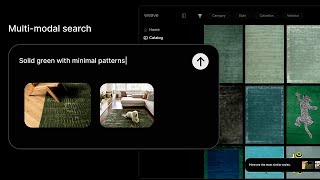
Oh, no worries. But unfortunately, he was taken away by business. So I'm here. My name is Karen. I am the head of product at Weave. We are a startup based in San Francisco, California. So we're coming a long ways away, but really excited to be here and be meeting everyone here. Before I talk about our products, and our business, and what we do, I wanted to share a little bit more about our team and why we're here at PI Apparel. Weave consists of engineers who have worked at companies like TikTok and Adobe, data management and self-driving car industries in San Francisco, as well as world-class universities. All of us have worked on automation, AI automation, tooling, computer vision, but at heart, we're all creatives. We can talk your ear off about software engineering and computer vision, but we also love talking about our history, fashion, and design. We saw an opportunity to bring cutting-edge technology that is driving Silicon Valley industries and bringing it to the apparel industry while also weaving in our passion to make beautiful things and share it with the world. We truly believe that the, the apparel industry deserves the best technology and design and that we have the right team to do it. So what is Weave? Weave offers world-class AI and 3D technology solutions for apparel and home goods companies. What does that mean exactly? Well, a lot of things. Because we're a startup, our primary focus is to figure out your problems and find the best technology solutions to, to solve those issues. Because we come from a wide array of industries, we believe that we have the right technical background to connect with you and find the right technological solutions. We've worked on several collaborations with people both within the design process and the e-commerce space. So a couple of examples from previous collaborations include an accessories catalog for an e-commerce website, 3D room visualization for rug and curtain companies, AI design and material generation software for an AI product company, as well as tooling for apparel industries to convert CLO files into more useful files. If you're interested in any of these solutions, feel free to talk to me. But for the rest of this presentation, I'm going to talk more about one specific collaboration we've been working on in the past few months in the home goods industry and how we can carry that over into the apparel industry and help your business. So a few months ago, we started working with a rug company who expressed that in over 14 years of their existence, they had generated over 40,000 rug designs. That amounts to about 2,000 to 3,000 designs per year, 20% of which are bespoke and custom products. This amounts to about $50 million a year revenue. Now, that's a lot of money and a lot of designs. But truly, they are working with a team of 8 in-house designers who are creating all of this and working on these bespoke products, but also the next season's collection. And the problem here is that they are working with very little data management. There's— they don't have the right software to filter things to look for, past designs to build off of, and there's low analytics. And you can imagine how that results in some— using up a lot of time and money for creating their new designs. So oftentimes this leads to tedious searching and really truly designing from scratch rather than leveraging their 40,000 worth of assets to create new designs. So after a lot of research and conversation, we landed on a technological solution, AI Search, in order to accelerate their business. Now, we looked at other data management platforms and software services. But ultimately, there wasn't anything that amounted to the right visualization and level of detail that they wanted. So we leveraged a technology called vector search. And I won't go into it too much. But essentially, we're embedding the data that they have in order to create more efficient holistic searches. What resulted in this was the AI Design Catalog, which is a platform that allows— this company to leverage AI search and look through their past designs more efficiently. So we can do natural text search, which all of us know, search something more holistically and find everything in our past designs that match this text search. We can do image search, find the similar material and designs and patterns in the past, and also multimodal search. So leveraging text text and image to create— to find more specific types of rugs that they have designed in the past. We've also taken this a step further and landed in their e-commerce website to create a more pleasant experience for searching for rugs for customers. You can imagine how helpful this is for customers who have an idea of what they want for their products, but only have descriptive words to describe it. This way, AI search is really leveraged in order to find the correct products for their customers. And we've also leveraged our 3D simulation technology in this space to allow customers to really see what they're getting and to ensure that they're happy with their products. Now, all of this to say, what does this mean for DPC? What does this mean for the apparel industry? This sort of similar concept converts to the Weave Garment Catalog. This is a web-based software that we have developed that allows you to search for your garments, designs, and patterns more easily. Instead of looking at dense-based antiquated software and text-based databases, we're really leveraging the visualization in the apparel industry to help you work more efficiently, save money, and save time. So an example of this is, for example, if you have a garment sketch and you're looking to change it up a little bit, let's say we want to do something like this but a little bit more outdoorsy, we can find similar assets that our company has developed in the past or you have developed in the past and you haven't been able to search for effectively until now. We've also been able to leverage our 3D simulation in this space. So as you can see here, you can select any garment design that you've developed in the past, look at the colorways, change the material, touch it, look at it in 360, and also even edit the garment— the garment design within the Weave editor. You can imagine how helpful this is for brands. For us in particular, we found this really successful in onboarding Brands into our workflow and find things more efficiently as well. And we've also used this 3D simulation technology for e-commerce websites to allow people to navigate fit and allow clients to really get a better idea of what they are receiving. So that's all to say that if you are interested in hearing more about Weave's AI and 3D simulation products, please feel free to reach out to me or Alex, our AI engineer, for more questions. We have live demos of everything we talked about today. And we'd love to talk more about our AI and 3D simulation technology. Thank you so much.
Hello, everyone. I'm Anna Sihundt, co-founder of Yuna AI. We in Yuna AI, we combine data science, and business intelligence with GenAI. I was working myself for many years, 15 years, I think, as a fashion designer. I was very creative. I won a lot of awards, but creating my own brand and working as a designer, I recognized I need some more skills. And I was always wondering, how can I create faster, smarter designs? I went back to university, starting fashion studying fashion design again. But I learned nothing new. So I went to another subject, which is IT economics. I learned how to use data. I learned a lot about business intelligence, data analysis. We founded a research group, and we have been showing the first AI fashion show during Berlin Fashion Week 2019. We work with neural painters, or GANs in this time, which is nowadays old technology. So what is business intelligence? With business intelligence, we gather all the data what we can find. We analyze them, we process them, and we getting all the insights, and we can directly have solutions and decisions out of it. How it looks that in our platform? We work with brand data, with market data, And with trend data, we have data streams coming in and working with all this data constantly, so designers can really decide for us what they use for their designed building. That looks like that. We know what have been the best sellers, which pricing, which materials, which description. We know all the pattern, we know colors, and we know also in which market has been sold well and other markets which went not that well. And as an image, if you look at visually, it looks like that. We are combining brands again, brand data, competitor data, and trend data, and we have a visual coming out. But now my dream as a designer is coming true. We developed a technology where we combine GenAI, so generating images, with really analytical skills. Skills in agents which bring out bestsellers in seconds. So we directly can calculate if your design which comes out selling well or not that well. And of course, we know all the metadata. We can provide descriptions. We have technical drawings. We can also offer Pantone numbers. And as we work also with patterns on pattern library, We can also help the designer to push their products into 3D development softwares. We have long-term partnerships, they have almost building with us the platform, and of course we onboarding new customers all the time. This is our amazing team. We are here with a booth, you can test our platform yourself and can talk to us, also ask every technical any good question you have. And thank you for listening, and thanks for PI Apparel to have me.










