A Practitioner's Guide to Managing and Advancing Sustainability | Legend Swimwear | PI Apparel
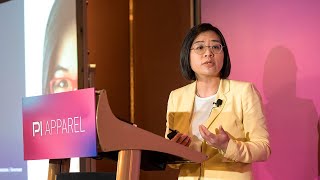
Cecilia Chan, Chief Commercial Officer of Legend Swimwear Factory, outlines how fashion brands can embed sustainability into strategy and supply chains. She maps a five-level maturity model from initial compliance to leading practice, highlights tools like the Higg Index for measuring water and emissions, and presents Legend's Zero Liquid Discharge printing process as a factory example.
Questions this video answers
No direct monetary reward yet; Legend has done roadshows to inform customers about ZLD, but formal sustainability awards or extra cents have not been received.
Chan explains that Legend chose a less profitable location to install ZLD, sacrificing some profit for long‑term ecological responsibility; sustainability is treated as a cross‑departmental commitment rather than a profit centre.
For Legend, carbon credits are not required and are considered not very mature; they are not a core part of the current sourcing or compliance framework.
Chan is not familiar with the specifics; she emphasizes that any new reporting metric (passport, Higg Index) is secondary to having genuinely green manufacturing processes.
Mission: Impossible Dead Awakening Part 1. What's your most memorable scene? Was it Ethan Hunt's motorcycle jump scene? Or was it the train crashing off the bridge carriage by carriage? For me personally, it was what Kittridge had to say to Ethan, Ethan Hunt, when he confronted him on killing the entity.
I mean to kill it, Ethan. The next world war isn't going to be a cold one, it's going to be a shooting war, it's going to be a ballistic war over a rapidly shrinking ecosystem. It's going to be a war for the last of our dwindling energy, drinkable water, breathable air.
A rapidly dwindling ecosystem, the last of the world's energy, drinkable water, and breathable air. Mission: Impossible isn't some left-wing environmental documentary like Al Gore's An Inconvenient Truth. It is a $4 billion franchise blockbuster action movie, and it inserted this line to recognize our climate crisis. In 2023, Barbie also had a go at rampant consumerism killing the planet with this line: You destroy girls' innate sense of worth, and you are killing the planet with your glorification of rampant consumerism. For those who were here this morning, excuse me for the Barbieheimer. I realised that Stanley also quoted Oppenheimer in his, and now I'm quoting Barbie, so it's really making the way to even our conference. But why is it now that the 2020s is so significant when it comes to climate change? It is a fact that as of now, we are 1.1 degrees warmer than 100 years ago, and we are only getting warmer. Assuming that many of you in this room are born in the '70s or '80s, it is a certain fact that we will endure the effects of climate change for the second half of our lives. Our children will most likely bear the brunt of it. The actions that we take will result in one of these 5 scenarios. And if we do not take real transformative actions in the way we live and consume, the Earth will become so hot that it will be unlivable for us and our future generations. The fashion industry is notorious for greenhouse gas emissions, water usage, pumping out waste, and piling out textile garbage all over the planet. As reputational damage control, brands and factories have all rushed to recycling without really appreciating the real impact it has on the environment. Taking plastic PET bottles recycling as an example, recycling a bottle means recycling it back into its original form and be reused in continuous loops, maintaining its food-grade quality. There's also upcycling, which means the bottle is leveled up in value and lifetime, for example, glass fiber reinforced plastic being used for insulation. Downcycling, very common in our fashion industry, on the contrary, means the bottle is leveled down in value from food-grade PET bottles into textile-grade materials such as recycled polyester, and as a consequence, making the bottle impossible to be further recycled for food-grade purposes. The European Commission is recognizing this downcycling problem and is looking to set rules to limit downcycling. Downcycling of food-grade plastic bottles into textile-grade products it's considered not necessarily environmentally friendly and is actually misleading the end consumer. There are brands within Europe now that are having second thoughts about polyester, recycled polyester in their supply chain. So what happens? Projects come and go as we bounce from hero to zero and zero to hero type of projects. The underlying issue behind this is our commercial profit-making aspirations are simply not aligned with our environmental sustainability needs. The tension and the conflict is getting us absolutely nowhere except down the path to a burning planet. Today I want to share and exchange ideas with the fashion industry experts in this room. How can we put commercial reality and sustainability somehow back into alignment so that we can manage and advance sustainability in a way that makes commercial sense. I'm Cecilia Chan, the Chief Commercial Officer of Legend Swimmer Factory. We pride ourselves as being a sustainable swimmer delivery partner for world-famous brands and retailers. Prior to this role, I've worked as a management consultant in strategy implementation. I help organisations execute their strategy, and by helping them embed in the appropriate and required process and people change, so that they can deliver on their aspirations. And I want to share with you some of the thinking and our philosophy and our experience in managing sustainability in our organisations today and really hoping to drive this conversation further. To avoid going from zero to hero and hero to zero, we need to manage sustainability in a business sense. For that, we need a strategy. Second, we need to assess where we are today and— is Terry here? State of play, right? I love that word, the state of play. Where you are today envisioning where you want to get to and then build a roadmap to get there. That's really the overall— what we need to do from a commercial business management manner. Starting with strategy, we've sort of distilled it down into 3 major blocks where vertically sustainability has to have a place in the corporate strategy level and then cascade it down to the individual working level. And then horizontally, every player along the value chain working in tandem in some sort of sustainable manner. And then at the core of the business, there's a culture, defined ways of working, incentives, skills to deliver on corporate strategy that has sustainability in mind. And let's explore this one by one, starting with vertical from corporate strategy level. World War II had a devastating impact to humanity in the 1940s. Once World War II was over, the West devised a new global economic and financial system, capitalism, the free enterprise. And after the war, this capitalism would become a miracle for many countries, rebuilding Germany, France, Japan. For the West, post-World War II capitalism was like a magic elixir, it fixed everything. It was working so well that more and more people wanted to get government out of the system and let the market do its thing. One of the major advocates of this idea was Milton Friedman, a Chicago-based economist that states that the sole purpose of organisations is is to make money for owners and shareholders. Capitalism has been so successful that it lifted millions of people around the world out of poverty through industrialization, but unfortunately there's another side of the coin to this. This graph shows the CO2 emissions by country since industrialization. It has skyrocketed and heating up our planet year on year. The biggest emitters being Europe, United States, followed by China. It shows us that shareholder capitalism focuses so much on short-term profit for shareholders that it leaves out any consideration on how economic activities affect the planet that we live on. To alleviate this CO2 emissions and rising temperature problem is to serve not only shareholders but also the people who are impacted by the business, and they are the stakeholders, such as the customers, the suppliers, the employees, the government, the over-economy, and also the planet. To acknowledge that the businesses that focus only on shareholders would be at the expense of other stakeholders and the planet. This shareholder versus stakeholder primacy impacts the way we structure and manage our business. Is your organisation's primary goal to maximise profit? Structured to maximise profit and everyone from the C-suite, the middle management down to worker level incentivised to only maximise profit without any consideration of the environment and also the people living on it. Or is there at a strategic level, there's a commitment to also consider other stakeholders and also manage environmental impacts and that the organisation structure empowers and incentivises the C-suite, the middle management and the worker level to balance or at least consider the environmental impact and social impact whilst making a profit. Does the organisation have the appetite to move on from the traditional Friedman capitalistic model, or is so-called sustainability merely a marketing exercise in the whole machinery of shareholder capitalism, and that such projects go from zero to hero being no different than running, jumping from one marketing campaign to the next? The second block is horizontal, end-to-end. When we strive for net zero, do we look to minimise impact across the supply chain in a holistic manner? And often that requires us to look beyond what we can immediately see and control. Those present here today, you're either a brand, a retailer, a tier 1 cut and sewn, a tier 2 fabric mill or service provider. For brands, your offices, your retail stores, your warehouses are responsible for Scope 1 and 2 emissions, and that accounts for about less than 10% of the total emissions. A good 90% and above come from Scope 3, and that's your Tier 1 cut and sew factories. Tier 2 fabric mills makes up over 50% of the emissions. That's your fabric dyeing, your fabric printing, molding, shaping of the trims and materials. Scope 3 includes greenhouse gas emissions that impacts the air, the land, the water diversity, and also geological resources. Does your organisation have the appetite, the analytical insight, the data intelligence to really hone in on containing emissions at where it is due? Is your sourcing strategy, does it consider the impact of fabric and materials in a production process? And how do these processes impact and, quote unquote, from Mission Impossible again, How does the manufacturing of your products impact the last of the world's energy, drinkable water, and breathable air? The third building block to sustainability business management is the core, the core of your organisation. Is there a genuine culture and ownership in the business to be ecologically sustainable? Is there a long-term vision and goals set in place to lower the impacts, and do these goals translate into incentivising you in your pay package? Do you and your team and other departments have the skills and the training and the knowledge to do the work required in a sustainable manner? And are you equipped with the appropriate sustainability performance and are you effectively using these measures to contain and lower environmental impact? Because if any one of these are not present, then it is really, really difficult to manage this in the business sense. As the saying goes, what gets measured gets done. Are we even measuring this? Let's do a deep dive on the sustainability measure topic. If you take Legends Swimwear Factory as an example, we manufacture swimwear for world-famous brands and retailers. From a value chain perspective, we buy fabric and trims, we print, we print on it in-house, we cut, sew, and pack it into beautiful swimwear, we upcharge, and we make a profit. That's really how the commercial value-adding process work. At the same time, there are non-value-adding processes that nobody in the supply chain is willing to pay for or care about. They're the energy that we consume, the chemicals that we formulate, and the water that we use up. And out comes the other end, the air that we emit, the waste that we dispose of, and the wastewater we discharge. Do we have an industry measure for this? Thankfully, we do. Many of the brands today, you'll be familiar with the World League Index. And many of you probably subscribe to it as well. The facility environmental modules provides a data intelligence platform for us to benchmark and lower supply chain impact on the world's dwindling energy, drinkable water, and breathable air. For Legend, we've subscribed to Worldly for quite a number of years, and it has been a very useful platform for us to communicate with brands, especially those that are looking to partner with someone that are ecologically conscious around water, and energy efficiency. And it's also a great potential having this metric as a platform for us in the supply chain to measure ourselves against. Complementary to the FEM, we saw there's a social labour module, the FSLM, which you probably are quite familiar with as well. And we have this. So how do we as an industry really embrace this as we advance on sustainability maturity? Here are the 3 building blocks that from our experience perspective in managing sustainability in the business manner. As a practitioner though, how do we put it into practice in our organisations, especially knowing that we have gaps around here and there? It is useful to assess where your organisation is today, state of play. Thank you for allowing me to use that term again. We can do that by using the capability maturity model. This 5-stage framework is often used in continuous improvement. The higher the level, the more mature the organisation is, and if you apply this to sustainability, the initial phase is the least mature phase where the concept of sustainability overall is not yet evident. And then levelling up to compliance where the organisation does the bare minimum that is required to meet regulatory and licence requirements. Then levelling up to obliged, doing more than the minimum, starting to manage sustainability in a holistic manner, to then followed by fourth, efficient, where this enterprise-wide type of commitment to improve and improve on sustainability, and then finally at the leading level, being a market leader, having the intelligence platform to drive innovation in sustainability. This 1 to 5 scale is helpful to help you manage and advance and knowing where you are so that today, you know your state of play today, and also where you need to be in the future to advance. Let's try to apply this 1 to 5 scale to those 3 building blocks that we just went through. The vertical block is that shareholder versus stakeholder primacy. At the initial stage, the concept of sustainability management doesn't exist. Um, the organisation is pretty much entirely shareholder-focused. And then all the way up to the other spectrum, which is optimised, where sustainability is a strategic advantage and stakeholder interests are balanced at that vertical block level. Horizontal, end-to-end, the value chain. The initial stage is, again, the most— the least mature, is that from an organisation perspective, there's no visibility beyond tier 1 cut and sewn. So then all the way up to optimised, there's a high degree of collaboration between your supply partners, your customer to optimise sustainability performance across the supply chain. And it's really, really similar to that, the Five Leaves scores, type of scoring model to measure your suppliers or your partners. The third block is more internally to yourself, the culture, the ways of working, the org structure to consider sustainability management. The initial stage, again, the least mature at the core of the organisation, there's probably no true sustainability team, they're probably not properly skilled, and there's no real measures in place. So then all the way up to optimised, where process and data are fully calibrated, housed in a common information and technology platform, and the sustainability improvement is part of delivering the corporate strategy outcomes. Every organisation sits probably somewhere along the spectrum for these three blocks. Let's try to put this into practice, right, for like a typical brand or retailer. For the first block, what we typically notice is a brand sits in that compliance stage. It's likely to be publicly listed. It's doing the minimum it is required to satisfy regulatory requirements for sustainability. It's definitely feeling the pressure from the peers to level up and has aspirations to level up to the obliged level. Very often they might put in a vice president of sustainability with hope to level up on sustainability capability, but what's really holding them back are the other two blocks. For the horizontal block, typically again, organizations are in that compliant level where there's no true end-to-end view across the supply chain. The brand may have mandated their tier 1 cut and sewn supply to reveal the sustainability measures, but in reality, majority of the emissions sit in tier 2 and beyond anyway. So that really hinders the brand's ability to go beyond compliance when that happens. At the core, the culture, the ways of working, the business sponsorship, metrics are starting to be compiled and probably quite on an ad hoc basis and quite likely scattered across Excel documents from multiple data sources and very disjointed so that there's really no meaningful insight you can draw to support any true sustainability impact analysis. What we see that brands are typically in this compliance space and looking to advance. So where do we get to from there? Baby steps. So if we want to level up from compliance to oblige, it really means true commitment and sustainability measures embedded in the organization's performance measures. Stakeholder primacy has to play a meaningful part, be it out of self-consciousness or regulatory requirements were soon mandated, which is what we are starting to see with the European side. For horizontal, it means making an impact analysis across the value chain. If tier 2 processes are responsible for over 50% of the emissions, then it deserves at least 50% of the brand's attention when it comes to doing sourcing strategy from a sustainability standpoint. For the core, is having a culture and business sponsorship and knowledge and skills in industry common methods to utilize this intelligence platform and make informed sourcing decisions? Is the Worldly Higg Index Facility Environmental Module metrics playing a part in your sourcing and buying decisions, or is this some— simply something that sits with the VP of Sustainability in another department. To improve on sustainability management, we need to level up the three blocks in tandem with each other. So knowing where your organisation is today, the state of play, envisioning tomorrow where you wanna be and having clarity on the gap, we can then start putting a roadmap together including projects and activities to level up on that spectrum. In our example of levelling up from compliance to oblige, we look to build the foundation of the end-to-end processes and measure the performance under a common metric. The World League Higg Index is a good starting point. There might be other metrics available, but at least now as an industry, that's quite a common platform we can all turn to, to start measuring our collective sustainability performance, in particular for those Scope 3 activities on emissions, water usage, wastewater discharge, and also energy consumption. So that's one of the things that can start be put together from an initiatives level to move up from one level to the next. And once we have the data and the intelligence platform, along with the ways of working and the incentives for the people that are required to deliver those outcomes, we can then look to enhance our capabilities and move up the continuum from efficient and then subsequently to optimised. Moving up the sustainability curve increases business value. The Big Four accounting firm PricewaterhouseCoopers published a thought leadership piece on moving up the maturity curve from compliance to leadership, creating business value, and there's a piece that you can do an internet search on, on the paper. They also see that when a Organization that does the bare minimum to meet compliance requirements is simply a risk management exercise. As organizations become more eco-efficient in energy and water and air, they start to create value and allow for relationships and assets to be leveraged, and they're followed by leveling up to leadership and, and then having sustainability as a strategic advantage. Even if we're not being pushed by regulators, our next generation who is feeling the brunt of climate change are telling us that they value environmental sustainability more and more. The big brands, the Nike, the Lululemon, the American Eagle Outfitters, the SHEIN, the PacSun, and the Abercrombie Fitch, they look to this survey by Piper Sandler on understanding what is important in the minds of Generation Z. Sustainability and environment has gotten more and more important while the other topics sort of just come and go. I hope this sharing has helped us further drive conversation on this topic and how we as supply chain players can manage and advance sustainability in our organisations together. Thank you. I believe this is question time, so happy to take questions either on Slido or, as Stanley says, the old-fashioned way, hands up is also fine. I hope it wasn't too much of a heavy topic after lunch. But it is, I think from a sustainability standpoint, it's really going back to that very basic. And last year I did a talk about from the hierarchy of needs perspective, is that when we look at sustainability, it's really back down to the air that we breathe and the water that we drink and the soil in which we grow our food. And looking at from a supply chain standpoint, is it like the Shein type of model to try and really deliver and produce what we require to reduce landfill, or looking upstream across our supply chain As players, who are the big emitters? It really is tier 2, the fabric side, on printing, on dyeing, and then on that, so how can we help our partners as opposed to trying to push all this responsibility upstream to solve our collective problem? I have a question now. Have any of your customers recognized and rewarded you for your sustainability efforts? That's a good point. Last year I said I can't even attribute a single cent. To sustainability. I can do a little bit of sharing about who we are. So Legend was founded in 1995. We have a China factory in Chunzhuang, and if you look up Chunzhuang, it's actually famous for flower planting. So very early days when we installed our printing mill, we had to coexist with orchids, with flowers. It's famous for flowers, and we fixed up our water very, very upfront back in the early 2000s. To now where sustainability has become a thing, we now go knock on the door of our customers and go, "Hey, the fabric that we print on that is on your shelf worn by your customers is actually ZLD, zero liquid discharge. Did you know that?" "Oh, no, we didn't know that. Thanks very much." "Our compliance department would love to talk to you." So, I and Irene, who are in the sustainability committee, we've done 16, 17, we've been to a, a scoring on how many of these roadshows we've done. It's been more like that's nice to know type of exercise as opposed to rewarding at that material level. But in answering that, I don't see any brands having put forward like a sustainability award either, but for certain, and it was bringing ease to my ears when, music to my ears when Terry said that as they look to bring on suppliers, They now look at from a strategic level, this supplier I'm bringing in, in the long-term perspective, what value are they adding? And sustainability is starting to play a big part. So if I get this question again next year, I hope to have more to tell you and actually show you some trophies or rewards or maybe able to tell you that we can assign an extra cent to that now. But that is really the reality. A classic question is how can companies balance short-term financial goals with long-term— Well, with long-term sustainability objectives. This one's hard, and we had to make the choice back in 2000, I think, when we installed our China factory. We could go up north. The fact that we've chosen Chunzhuang as the World of Flowers, it's actually called the World of Flowers, if you look up Google, you'll find it. [SPEAKING CHINESE] We made a choice, we sacrificed on our profit to stay, to be doing the right thing. And I think for manufacturing, this is most likely probably like generation after generation, it sticks to you. Like what you do today is gonna impact tomorrow, then what should I do in that sense? So something has to give, the dollar has to give somehow. It doesn't mean to make a loss, but something has to give. Something has to give. How does a corporation— well, I've answered that. No, no. How does a corporation balance sustainability and profit? Do you need to? Can sustainability be a profit center? Um, it's really hard because sustainability— and, and one of the things we— for Legend, for example, we decided we're not going to put in a role for sustainability. We have a sustainability committee. It is something that is owned by every department. Every department needs to understand it, be it IT, be be it production, be it HR, be it compliance, it's hard to attribute a commercial value to that, and we don't, for example, for us, the fact that we have ZLD, zero liquid discharge for our printing, we don't put it on a website and go, hey, do you wanna buy zero liquid discharge fabric from us? We don't do that, mainly because it's that doing the right thing and the commercial reality does create that conflict, and it is a classic question. It's hard. For what we do is we just try to do the right thing for future generations. It's going back to that United Definitions of Sustainability means managing the needs of the present without compromising the ability of the future generations to meet their needs. That is the ultimate definition from the United Nations for the term sustainability. It's not recycled fabric, it's not recycled this and that, it's about the future generation. R-P-E-T is not sustainable, what do you see as a new sustainable trend in synthetic material space? Yeah, that's a good point. Synthetic material, there's a lot of— Look, I will leave those, how do I say it, the experts in the Tier 2, 3, and 4, where Tier 1 can't sew on, but there's a lot of research around bio-based materials. Again, when we look to bio-based, it's not just the fact that it's bio-based, but the end-to-end process, like how do we actually resolve that problem. So potentially bio-based is one, but I think it's again not forgetting the net impact across the supply chain. And we will not know the net impact of the supply chain until we pull all the data together. It seems like I'm trying to advocate for Higg Index, but the thing is we don't have anything better. Like, if we want to put it into the rubbish bin and start with something new, then some professor will have to put in something together. Or why don't we just, as a collective, as an industry, try to put our heads together? And you know what? Metrics is one. If you do the right thing for your organisation— back to that classic question of profit versus sustainability— something has to give. Are we willing to give? And we need to collectively give as an industry, because if not, our future generations will be. The question about PET is just, I've heard it, I don't know if it's real, but there's such a high demand for recycled plastic bottles that apparently somebody has built like a factory to produce plastic bottles so as to allow for a factory to turn it into fabric, That is just totally wrong. It's bad enough that we are tapping into the food industry into textile and recycling from that manner, making that no longer fully circular. Yeah, it's the commercial, the economics. That's why I brought in Milton Friedman. It's the classic capitalism, and how do we then fine-tune capitalism to the next phase without killing our next generation? Are regulators providing enough incentives and carrots for companies to effectively integrate sustainability consideration in their operations? Last year, Professor Christine— what's her last name? Christine— Christine— last year, Christine— Christine Lo, Christine Lo did a great talk around ecologic civilization. So for China, And I understand it's a slightly sensitive topic, but from their perspective, it's a one-party system for the longevity of quite a long time. Therefore, it's not like in the Western side where parties come and go. So they sort of have to eat their own dirt from the previous, from previous goals and settings, and they have longevity in mind. And with that, there's a lot of funding in Hong Kong, for cleaner production, so our ZLD, our zero liquid discharge of fabric, actually is a beneficiary of their funding, and we do a lot of R&D with the government to reduce the impacts of polluted water and to also recycle water. So, we've been a beneficiary from a semi-regulation government perspective on having incentives in that sense, from a— both carriage and stick. Again, they picked us because we happen to have a factory in the world of flowers. Yeah, and I would say in hindsight, after 20 years, we are now a beneficiary of, of that initiative. Uh, can you share any thoughts about Product Passport for apparel being implemented in 2026? Um, I must admit I'm not too familiar with this. Um, Product Passport, we haven't as a factory being required on that. But I think at the end of the day, when I look at either World League Index or Passport or whatever, it's back to the core. Are you doing the right thing in your organisation in a green manufacturing manner? Because it doesn't matter. If you're overweight, it doesn't matter if you put yourself on a scale of tonnes or stones or kilograms, whatever measure setting is in place, so long as the— processes, your manufacturing process and your supply partners are actually ecologically friendly, then whatever passports or whatever requirement or whatever metric that comes in place, it would just be a new measure to take on from a reporting perspective. Do you feel the pressure from brands pushing you to deliver CO2 reductions? Not really, no. It's not on the sourcing on the sourcing part, what do you call, scorecard, and it's definitely not when it comes to buying decisions. We hear a lot about it, I guess from a soft pressure level we do, but it's not at the order placement level, at least not yet. I suspect it might start with the Europeans if it were, not as of today and not for Season 25. What are some of the best practices on the most appropriate and impactful sustainable sustainability goals and targets for organisations that met people, planet and profit needs. Best practices. Again, looking within yourself, what your input/output processes are. I think what's a great way to tell is look at your water bill, look at your energy bill and you are who you are. If you benchmark against yourselves divided by the number of units that you do or of divided by the whatever yard of fabric that you produce, are you improving year on year? That's a fairly good measure at the start when it comes to sustainability. How mature are carbon credits as a solution for sustainable corporate goals? You mean for us or for the overall? For us, it's not required. Not required for us having a license in our manufacturing sites and certainly not required by our customers. So I would say not very mature in that sense. What more collaborations can brands and retailers do to improve sustainability? I think paying money for it would be nice. I'm a commercial officer, so one of my roles is sales. The fact that I can't even attribute, even going into a sourcing conversation, I can't even grab an order based on everything consistently, same price, same quality, same delivery, etc., etc., and I go, hey, I've got ZLD, zero liquid discharge, for my printed fabric, am I gonna win out? And the answer's no, so. I think that would be nice, that would be good incentive anyway, at the end of the day this is a business. And I think it was Terry also, I keep picking on you, because we had just found so many, things that I could align on in your presentation. It's more than shareholders, it's more than shareholders, it's stakeholders as well, and the French are really advancing that stage to make it a mandatory requirement. I keep asking, when people ask, oh, how do you see sustainability? I ask them, do you see sustainability out of 3 possible scenarios? Is it going to relax? Is it going to stay the same? Or is it going to tighten? Nobody would say it's gonna relax. Is it gonna stay the same maybe for the next minute? But it's certainly gonna tighten. If we know it's gonna tighten, why are we not doing anything about it? And if we do do, or at least we start doing, then those that don't would be at the risk of being left behind for sure. Hmm, collaboration. Again, sorry, I have to say, at least get me through the door when it comes to sourcing or when they're handing out those orders, that'll be nice. While the young— so I hope I answered that question. While the young generation value the environment, are they also willing to make lifestyle changes to help improve the environment? The unfortunate thing though, they are in— I mean, I was born in the '80s and '90s, we were told like, be careful what the television and the TV sells to you. I think the same thing for our generation now, be careful what's on the internet. They are at the mercy of us, so we look to them, they care. We as adults and we as the Gen X or the Gen Ys, I think they call us millennials now, I'm a Gen Y, that is important for us to take leadership and help them through the process, and it's a collaborative thing. Like the fact that our factory is so great that we have zero liquid discharge, but if the brand does not buy my fabric and I go and buy a fabric that is highly polluted and I cut and sew on it, I've got my dirty fingerprints and hands all over that product I'm producing. So we really do need to work as a collective in industry. Alright, thank you very much. Again, I hope this wasn't too much of a heavy topic, and I'll be around and happy to have a chat over afternoon tea later. Thank you.










