Agentic AI for Merchandise Planning | invent.ai | PI Apparel
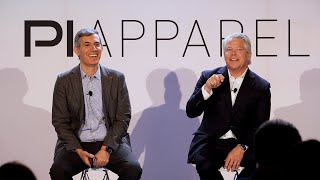
The presentation, led by Karan from Invent.AI and John from Tailored Brands, outlines a three‑year partnership that applied Invent.AI’s AI‑driven merchandise planning platform to both the rental and retail segments of Tailored Brands. For the rental business, a bespoke allocation and replenishment solution reduced re‑orders by $30 million over two years, cut substitution rates by more than a third, and lifted rental NPS by ~40 points. For the core retail operation, the system raised service levels into the 90 % range, removed roughly $12 million of average stock (with further reductions expected), increased product availability by 4 % and cut weeks of supply by 16 % while improving forecast accuracy and enabling rapid tariff‑scenario planning. The talk explains Invent.AI’s architecture – tabular large‑language models that learn supply‑chain structure, predictive forecasting models, and large‑scale inventory optimization – and introduces an “agentic AI” layer that automates data‑quality checks, demand‑sensing, and decision execution with minimal human intervention. Karan emphasizes the distinction between generic AI (e.g., chat‑bots) and AI decisioning that directly optimizes financial outcomes for millions of product‑location combinations. Implementation was fast (June‑July start, live by November) and planners report a shift from 80 % manual work to 20 % manual, freeing them to focus on strategic thinking. The session also covers why Tailored Brands chose Invent.AI over competitors, the importance of AI investment despite tariff volatility, and a call to explore the forthcoming white paper on agentic AI.
Chapters
We've been working together, Invanta and Taylor Brands have been working together for the last 3 years now. So we'll share some of that journey. That will be John's part and I will talk a little bit about the foundational structure of our solutions and the contribution or the potential of agentic AI to make to the merchandise planning area. All right. If you have, we will leave time at the end for questions. Hopefully there will be good discussion. All right, so this is our title. You can scan this barcode. I think this is standard in other talks as well, but if you haven't done it, you can submit questions and in some way we'll see the questions. I actually don't know how we will see the questions, but I'm hoping we'll see them. Otherwise we'll use the old school, you know, raise your hand and— yeah, just you can shoot for, you know, anything you, you want to ask about. All right. Okay. So we've introduced already. Thank you again, John.
Thank you, Hadley.
Right. And we'll, we'll go through basically quick introduction. This is our agenda. I will introduce the two companies. We'll show you a couple of case studies from merchandise planning area in general. Obviously, merchandise planning spans a different number of activities or focus areas. We'll talk about how Tailor Brands' journey was with Invent.AI through some of our solutions. And then we'll talk a little bit about the agentic AI. If we have time, depending on how we use the time, obviously tariffs was a very big question a couple of months ago, or actually not a couple of months, a month ago. And we have—
and still this morning.
Yes. And it changes every day. So that's another area that it has. The reason, I mean, we are not really interested in the politics of it, but it has very strong implications on how everyone does merchandise planning and how systems like ours interact with those decisions, right? So let me introduce Invent.AI. If you haven't, you know, heard about us, I come from academia. I've taught at Wharton, MIT, Duke for a long time working with large retailers, typically fashion retailers on inventory optimization for a very long time. And Invent is about 10 years old. We have, uh, done, expanded our solution from inventory optimization towards assortment planning, merchandise planning. Uh, we have a large number of customers globally around the world. That uses many of our solutions. And we'll talk a little bit about those solutions later. Tailored Brands, if— please.
Tailored Brands, we are men's specialty store. It's 4 stores. We have Men's Warehouse, Joseph A. Bank, Moores up in Canada, and then K&G. And we were— during the pandemic, the company went bankrupt and came out of bankruptcy post-pandemic. And I was hired at that time with the rest of the leadership team to kind of transform the company and help it become more profitable and grow. One of the things we needed to do is update our tech stack and all of our merchandising planning and allocation tools. And that's where we met. Yep.
And you've been actually very successful on those objectives.
Business has been good. Actually a wonderful model, the men's specialty store business in tailored clothing. You know, a lot of what we do is get people ready for events in their life. A lot of people would say, hey, a tailored clothing company sounds terrible, people don't wear suits anymore. But they still wear suits when they go to the prom or they have a job interview or they are presenting at a conference in Manhattan. And it's important to have that. And so our business model is great, The combination of retail and rental, and I'll talk about rental in a little bit because these guys helped us with the tool, is wildly profitable. The company needed to be kind of modernized and updated, and that's what we've been working on.
All right, excellent. So this is overview. This is a bunch of retailers that we work with. These are more the fashion apparel space customers. The way we generate, you know, Invent.AI is an AI solution. It is native, born in the cloud, born in AI. Heavily focused on what we call AI decisioning. We'll talk about that. But we are really focused on not giving, you know, retailers just shiny screens or, you know, we use AI phrase, but actually deliver outcomes. Outcomes meaning a better financial profile of the company, which is typically higher sales, higher profit margin dollars, and not a lot less inventory, but a healthy productive inventory, increasing the productivity of inventory. And these are our case studies from the last couple of years who are using, you know, potentially other solutions as a part of their either modernization approach or the need for increasing their financial profile or improving their financial profile. They went through, in some case pricing tools with us, some cases assortment, some cases inventory tools, and generated the results that you see. Okay? I'll give only one case study example later on. What was the journey for Tailored Brands before we actually, you guys, you know, we started engaging? What was the planning processes? What were some of the challenges for you guys? If you could talk a little bit about that.
Sure. We partnered on two projects. The first was a rental project, which is a very— we have a rental business. We're about 50% market share of the rental market in the United States. But it's a very manual process. If you can imagine, you rent things, they go out to a party, sometimes they come back, sometimes they come back damaged, right? So planning that and how to manage the attrition and the location of where you're placing this inventory was done very manual. And I used to joke with our team, it was like caveman buying. They had spreadsheets, little, little, literally like, you know, graph paper, and they would try to guess by size and by color what was going to be damaged out and then write an order for an allocation for a year from now to come in. and then it would get allocated throughout the country to the different distribution centers and rental locations that we had for inventory. At least twice a year, they would do a wholesale inventory adjustment where they would pack up stuff and move it to different places around the country because it needed to be someplace else based on demand. Every time we got it wrong, think about this one, Customer comes in and we messed up the size or didn't have their size, we would then FedEx them a package often on a Saturday morning so that they could then not get divorced before their wedding, okay? So even when we did that, spent a ton of money and we still made people very unhappy even after jumping through hoops. So our challenge to these guys was to, hey, how could we read this data and help us predict how to write orders and place the allocation of these goods in the appropriate places to better serve our customers? To be, you know, we used to have a substitution rate that was double digit. So if you came in and wanted a 42 long, we might reserve a 42 regular for you because we didn't have the inventory. Or reorders would be if that 42 regular came in and they didn't get it, we would have to do a reorder, which then they would start the whole process of FedEx to on a Saturday. So we talked about this problem and a few months later they came back and said, "Yeah, we think we have a solution for you," and we implemented it. In the first year, we were able to reduce the amount that we've reordered because it was all in the wrong places by $15 million. And we cut, in the next year, we cut another $15 million out. So we cut $30 million of receipts out of the rental business in 2 years. And reduced the reorders and our substitutions by over a third. So like pretty substantial change. It helped our business and our NPS within rental has gone up almost 40 points.
I didn't know this one.
Yeah, so it's pretty amazing. It's helped us really satisfy customers and be much better at what we do. Yeah, so that's Rental and that was a very unique solution. I'm sorry to interrupt you, but you know, we'll talk later. Like, you know, we've posed numbers of questions like this to them, like, hey, this is our problem, do you have a way to help us solve that?
Right, so in terms of maybe just one quick caveat there is that, so obviously Rental is a very unique application in general. Not a lot of big rental businesses exist. This is a mass, you know, this US and Canada major rental business. However, we didn't have a solution for this. So there is, we have an allocation and replenishment solution or inventory planning solutions, different versions of it. So we had to do some level of, let's say development or new capability developments for so that the system can actually take the rental, unique features of the rental model into account. And that was actually a very quick process for us. It's always very quick because I'll talk about AI decisioning. AI makes it very easy for us to model new challenges into the system. And that was the benefits that John described.
And the one, you know, you may ask, why is he here on stage? Karan asked me to come present with him. The reason I wanted to say this to you is because, you know, we've hired and used multiple other solutions in my career. When we developed this rental program, I can't tell you how many calls I was on with the leader of the company, right? And then after we rolled it out, the team was hands-on understanding what impact that had to the business and then working with my team to make sure that it was actually being able to roll out and if there's any issues. I had never seen that type of engagement, so that's why I said yes to come here today.
Thank you very much. Yeah, we appreciate that. All right, so, and this is the retail side challenges, so maybe give us a little bit of a background on that.
We were having, and still sometimes have, a hard time staying in stock, right? But 75% of the Men's Warehouse business, a little bit less at Joseph A. Bank, is all replenishment programs. Suits and dress shirts and belts and all the things that you need. The system we had was very static. It was like buy one, sell one, and lots of inventory, expensive average stock. Our challenge was help us get back in stock, help us manage this more dynamically when there's fluctuations within the business cycle, and then help us also talk to our suppliers overseas because most of it is directly sourced. Giving heads up to our manufacturers as to what this forecast means for their production lines was a huge issue with us staying in stock and being able to manage this. We rolled this out last—
Last November. We were live last November.
It's great. It helps us really see what the forecast is. You'll explain the tool much better than I will, but we see a dynamic forecast. It works across, so it helps us see that if I miss sales in a black suit, but this black suit went up, it will help us dynamically understand that. We're not going to automatically assume the lost sales on everything. We also are using— and I know tariffs later, but I'll give you an example. When Liberation Day came out, we forecasted our business to get hurt. So we went to the tool quickly and tapped down our service levels to control our future demand and were able to really get receipts out of the back half. And then fortunately, business has not been so bad. So last week, we reforecasted. And then we can use the tool to see exactly where we were going to have out-of-stock issues in the future just by adjusting the future forecasts. That is not how the old tool worked, I promise you. And the team is using it to really effectively manage our top line and our inventory levels. All right. It's projected to give you a number.
We'll get to a number.
Any of you guys are number people?
Go ahead. Yeah, yeah. But I think maybe one thing before we go to the full benefits and discussion is you said that we went live in November. Can you tell us a little bit about— you mentioned it a little bit that we were available, but how long was— we started the project and if I remember correctly, November, you know, summer, summer. I don't know exactly June or July, but somewhere in the summer. So June to November. So that's— can you tell us, like, was it faster than your expectations? How was the process? I mean, you more from your team's perspective.
It was much faster than normal, and your team was very engaged. We had a few hiccups like anything else, and the team has been super proactive in helping us fix those. So yeah.
Very good. So, all right, so I'm gonna talk a little bit about now, and we'll come back to the Tailor Brands rental retail benefits. The flow is, you know, we would like you to understand a little bit more what is under the hood before we get to the, you know, fantastic benefits. So that's why he's here. And also mix it up a little with Agentic AI and how Agentic AI is actually adding new and very exciting capabilities to these systems. Right? So in general, I'm sure you've heard a lot, but maybe there is one person under, you know, a pillow that has not heard this. You know, agentic AI is 2025, one of the big pieces of technology. It's a very exciting set of technologies. It's not— there's not a lot of use cases of how it benefits. So I want to give a quick overview. So agents are basically autonomous systems that are capable of making simple decisions or interact with complex systems and take actions with, I don't wanna say without, but with little human intervention. Okay? And the benefits that you hear in very different application areas, you would hear, you know, fast decision making, real-time learning, recommendation capabilities, using different source of data, internal and external data, and benefits from, every aspect. You know, it's faster efficiency, less errors, you know, also all of the good stuff. So that's what agentic AI is promising all of us. And not only in our area, not in the merchandise planning inventory optimization, but also in other areas. So Invent.AI is a unique solution in many different ways. I'll give you a little bit of a couple of hint— no, not hints, but like high-level points. So the way our system works, it has a unique AI architecture that starts from foundational models that understands your business first. And for this, we use what people call— if, if you're interested, and we are happy to give you more details later— tabular LLMs, meaning that things that learn about structure of your supply chain, structure of your store, structure of relationship between different products. You know, whether this jacket and this jacket are actually Are they substitutes? What kind of substitutes they are? And so on. Also interaction with external environmental factors versus your business. So this is a big learning the world type of capability. So we call that foundational models. We take that and we put it in predictive AI models, which is forecasting what's going to happen in the future at all levels, you know, high level, low level, granular, product location combinations next week, next year, all of that. Uh, so that's predictive AI. And then we put them all in large-scale inventory optimization systems. This is true for merchandise planning, but it is also true for assortment planning or even pricing decisions. How productive of the inventory is in the places where the customer and the product meets is very critical. Because if you think about everything you guys do and we do is to make sure that when a customer comes to a website or to a, store, their— what they could possibly like is available in their size. And that's when they give you the money. That's the chemical reaction that generates the financial of turning everything around. And then, uh, this is an AI architecture. We built it over 10 years. It actually makes great decisions. We'll talk about what that— how that contributes. And the next step of our thinking, which is what we've been investing the last few years, is putting an agentic layer around this that will be actually autonomous and self-learning and collaborate with other systems to end to end, making, you know, checking the data quality, looking at what's happening on the forecasting side, demand sensing and saying, hey, you know, demand is actually stronger than you thought it's gonna be like you described a minute ago. Take decisions and then make the act, take actions on these decisions and also monitor if things are going according, according to plan. Okay? So that's the, uh, agentic AI layer that's gonna be super helpful. But I'd like everybody think a little bit conceptually about this. Um, and we'll come to the details of it maybe later. Sorry, I skipped the order. So this is the architecture that creates these decisions. And the key thing for us, maybe before this, I should not show this. One of the big things here is we call it AI decisioning. So what is AI decisioning? I think this is very important. AI is a big buzzword. There are many different applications of it. ChatGPT is an AI, okay? And it's incredible. You know, I go to sleep thinking, you know, this is my new love. How, you know, it's just beyond anybody's wildest dreams if you go back just 2 years. That's, let's be clear about that. But it is not an optimization tool. Okay, it has language capabilities, it has learning capabilities. Uh, predictive AI is a different thing, which is forecasting complex demand streams into the future with using all your internal data and external data, which is basically form of forecasting, let's say, or scenario capabilities. But predictive AI or forecasting doesn't make money by itself. Somebody has to decide for every product and location or channel, what to produce or what to buy and what to deploy or flow to your stores or DCs or fulfillment centers. And if you think about a company like Tailored Brands, 1,000 locations, would it be fair, 10,000 products? Without size?
2.1 million locations. SKUs are being managed by the tool.
Right. So when you multiply the stores and the product is basically millions of product location combinations, okay, somebody has to make these decisions. How we normally work— retail has worked like this for a long time. Some of you have experienced it recently, but also I think maybe still this way— is that somebody brings the forecast to you. You have forecasting systems potentially. Okay. It may be Excel-based. It may be an AI/ML forecast that comes from an external good system. Okay, but then it will come and then it will say, "Dear planner, in your ultimate wisdom, how much inventory should we buy?" Or, "How much inventory should we push to our stores?" You know, that's a very difficult question. I don't want to be asked that question. That's a very tough question. And one, I cannot get it right in general. That's not possible because whatever answer I give you, it's not going to be the right answer for 2.1 million different situations. Right? And it won't be true even on average. So what our system does with this architecture, it actually models the financial profile of every product and location combination, and it optimizes the best financial outcome, which is either revenue maximization or profit maximization for that product, that location for the next few weeks, if that's the decision, or if it is a buying decision for the next couple of months. So this is AI decisioning, and AI decisioning is different from a rule-based system where I would say a rule-based system, and many of you work like this, I know, in Excel or in other systems like this. I want to push, let's say, 5 weeks of supply to my stores, right? That's how you work. A better company or better planning team works like this. A doors 5 weeks, B doors 4 weeks, C doors 4 weeks. Okay, so that's a better system, but it's still 3 numbers to manage 2.1 million combinations. It's not gonna be good enough. Okay, so AI decisioning takes this decision for every product and location optimally to maximize the financial outcome, which is revenue, profit, and inventory productivity. Okay, so we are able to do that in this system and the results is, here's one example. By the way, Taylor Brands was using a different system. We're not gonna name names, but they were using a modern solution before we engaged last June, July period. And what were the results that you expected and experienced?
Well, we wanted to get in stock and we wanted to be able to stay in stock. So it talks about here about long horizon projection of forecasting eligibility. We've raised our service levels on all our products up into the 90s. but then are able to give an accurate forecast to stay there to our factories overseas and how much inventory we have to hold in the DC versus the stores. So that was the big one because top line is obviously the most important, right? Satisfying customers, driving sales. But we've also seen— we've already taken over $12 million of inventory average stock out because we had so much unproductive SKU allocation throughout the supply chain. And I think Scott was telling me there's probably another $8 or $9 million that's going to come out as we move through the next cycle, probably in spring. That's substantial. It's funny, I want to go back to rental for a second. Using the tool, the way the team was buying is we would take our max week and multiply it times 5. This is how we did the orders. We would say, okay, I rent that out 7,000 units, I need 5 times 7 at all times, I think We're going to damage out some 4%. And then they would guess by size and write the order for 1 year's delivery. The tool we built— you built, I paid for— was—
Wow, the tool we configured for you, and that's how much you paid.
Took 5 years' worth of data and said, OK, great, this is what you're going to sell in the future. This is what you're gonna rent in the future by size, by location. Here's what's gonna damage out and here's how you should write that allocation and here are the locations you should put it in. So it's just a very different way of going about the business.
Right.
And this tool has been great. I think I said we use this already for forecasting using the tariff scenarios, but the idea that you can use your replenishment tool to then adjust your future inventory using scenarios is really quite amazing over the weekend.
Yeah, I think the key is this, right? So anybody can push inventory and increase sales, but it's not a healthy business necessarily, especially going into a tariff type of environment. It becomes really crazy risk. But what we have got in this outcome is basically 4% increase in availability while we are reducing the weeks of supply in the stores and the DCs in total. This 16% reduction comes from that. How is that possible? You know, we are basically investing the dollars that you're already allocated or that is already in the system in the right places. You know, basically this is a system because it's a financial, it basically makes different decisions for every product and location. It finds the money, it puts, it increases the inventory where it has higher possibility, probability to sell. And it decreases the inventory levels and it sometimes actually doesn't send at all in places, you know, products, locations, combinations where it has a lower probability to sell in the next few weeks. That's how it actually generates, you know, it's not either or, or it's and, you know, higher availability and lower inventories. Yeah. You talked about the visibility also decreasing your supply chain costs.
You know, for us in a highly basic area, right? So like I said, almost 75% of our assortment is core and replenishment. Being in stock is really important. Helps us in many different ways, not just top line, helps you in customer satisfaction, but also helps us in like avoiding costs. So there's two good examples. One, when we're out of stock on a suit, do an omni order from the store and then pay a fortune to have it forecasted, to have it shipped and okay. So being in stock has eliminated the amount of omni orders dramatically, almost a third, which helps us reduce expense and increase the in-store turn. The second one was we had visibility into our supply chain, what was coming in. So we say we're gonna save $3 million this year. We have two different distribution centers and our old system didn't give us visibility to when goods were coming in. So if a store needed sizes and it wasn't available in our distribution center in Maryland, it would order them out of market from Houston and much more expensive supply chain. Well, now the system is giving us visibility into what's coming in. So before it sends that out-of-market order, we're shipping it from the existing supply chain for those stores and reducing transportation expenses dramatically.
What's the experience of the planners? How do they find this new way of life.
It's been very easy to work with.
All right. Okay. So tariffs is the last part, but let me see. Yep. This I'll skip. So the slides change a little bit. We have about— this is, I think, 6. So one thing to talk about tariffs is, can you tell us a little bit about your thinking the last few months, how you went up and down? You already said Or what are the strategic things that this system can help us— help you with making decisions? And then I'll open up the questions for the last 5 minutes.
Well, I mean, I'll speak about tariffs just in regards to this tool. You know, there's going to be a lot of volatility this year, I think, right? Like, no one quite knows what's going to happen with tariffs. No one knows what's going to happen with demand because of cost increases or because there'll be outs, maybe because supply chain. I think there's going to be lots of volatility, and having good visibility and forecasting is going to be that much more important this year than ever. And I will tell you, this tool is giving us really good insight into the future and allowing us to do scenario plannings with our assortment. So I think that's the biggest piece.
Yeah, this is actually a summary of the survey that we did with, I think, 30, 40 significant, you know, global— not global, US, but large retailers. And you may want to just quickly look, you know, glance at it. Obviously, it's a top-of-mind issue. But to me, a nice piece was that when we asked about, you know, how do you see this to be affecting your technology investments or AI investments, it actually— the answer was only 1% of the retailers said it will slow down our AI investments. And I see that as a very big positive for the industry in general because I think these tools actually help deal with the volatility from the supply side or from the cost side as well as the demand side, which is very uncertain to deal with those volatilities either from an inventory perspective, from a planning perspective, as well as dynamic pricing adjustments perspective. And I think it is nice that actually the industry is, more seems to be mostly aware of the capability of this nice new technologies that will help them. This is just to summarize this and I'll skip this. We had a slide. Okay, if you have questions, you can scan this and submit questions. Please do that. And at the end, oh yeah, so maybe I'll show you this later. This is, we have a white paper on the agentic AI we'll be happy to share. If you scan this code, we'll be able to send that to you and happy to have a conversation about it. So the first question is anonymous. How did you restructure your solution to incorporate Agentic since it's a completely different way of thinking about AI? Yeah, so this is, we have, I mean, this is like what I've been sleeping and eating and trying eating, drinking, thinking about it full-time the last, at least last year, but actually more like 2 years because, you know, for us, AI is a solution that creates decisions and makes, not only makes life easier, but actually makes life a richer, financially more profitable, growing, let's say, outcome. Okay, so that's what AI is. So the decisioning part is very important. Now when we talk about the Agentic part, Agentic is a set of tools that will make it more easily accessible, more easily executable. I mean, the allocation approval rates or pricing approval rates for our solutions have been around 95% for years with our customers. So they've always been approved, but now the other 5% that you deal with, or with the 95%, a planner could be much more informed because when you go, you on a UI and you drill down or you ask questions, you get answers. This is not an easy process. With agents, it could be much more productive. It could enable planners or decision makers or head of planners on head end and head end and, you know, the presidents of the companies much more informed and make them better decision makers. The way we think about this is as follows, though. If you have— this is why I talked about AI decisioning. If you have a rule-based or basic system, agents will empower you slightly more. It doesn't— the multiplicative value of agents is going to be bad because I could have 5 people who will do the things for me. That's the analogy. If my decision-making system is not good, those 5 people will just basically accelerate the bad decision-making processes. So agents is not a solution to that. What we've talked to actually, but a couple of consulting companies also recently, and that's our experience, if you have made the leap from basic decision-making to better quality decision-making that has, that focuses on financial outcomes, it takes all the data sources into account and looks at the future, evaluates alternative scenarios and makes better decisions. Now putting agents around this type of system, is extremely powerful because the multiplicative value is incredibly high. And that's the journey we want to see people go through. And that's why we are actually investing very heavily in agentic AI, because we believe with our solution, the value we deliver— you saw the 4%, 10% increases at Alo Yoga, at Famous Footwear, at Taylor Brands— with agentic AI, the planners are going to be able to achieve that with more confidence, one, more confidence, two, better clarity about what they do. I want to ask, I think I want to ask the second question to you. Why did you choose Invent over other tools?
Well, first, the rental solution, the unique bespoke rental solution these guys rolled out for us gave us a lot of confidence that they were a good partner and would help us kind of— we still did a full RFP with, I think there was 3 other or at least two other companies that we researched. One of them was the incumbent, and we made the decision because of the benefits that were promised and the relationship we had already developed with any other existing tool. Right.
And, you know, one more addition is actually— I don't— you, I'm sure you're aware, but we just had a conversation with the CTO, Scott, with Vivcoin to actually now take over allocation of the retail business as well because of the success that we had in the replenishment side. So it's a growing, very happy, successful relationship. We invest— we have a model called the hub model where we engage very strongly. It's a high-touch— it's not just software, it's actually a high-touch growth and learning model. We learn a lot from the retailers, and as a result, we are able to help our customers to achieve the outcomes that they desire better, faster. Last question is, can the system prioritize core style representation across more stores for best financial outcome, even if it means giving less to high-performing locations? So this is a, you know, this long design discussion you can think of it, but it is system optimizes total revenue that you can generate from the inventory that you bought for allocation. This is an allocation question. But as also you can think of assortment, should I invest more in this category versus in this category, right? So these decisions are the system optimizes subject to the constraints or the strateg— strategical guidance that the planners or the company gives. So it doesn't, it's not, it's not gonna go against the recommendations. So the guidelines are set by the company or the planners. And the system allows, you know, it has a big, you know, lots of UI, lots of parameter configurations for planners to control what their destiny is. But they should do only the environmental factors instead of editing numbers. What we want is a planner to be, and this happened, like one, what was one of the comments we got from one of the other customers was, you know, they used to be doing 80% manual activity, edit, change, upload, download, look for data, and 20% thinking. After the adaptation of our system, their new life is 20% manual. I mean, it does because they still need to tell us, hey, this store is small, I need to edit data so that you don't make this, you know, you take this into account in the future. So those kind of things happen, but now they spend 80% of their time thinking about how to improve the business. And that's what you want, you know, that's what you want from your teams and from the whole enterprise. So the answer is yes. Any other questions? We're out of time. All right, thank you so much for coming. As I remember, you know, just this is the place for the white paper or get in touch with us. We appreciate the discussion. We have a booth if you want to come by and, you know, chat. Would be happy to meet you. And thank you, John, again so much.
Okay, thank you.










