AI in Reality at Amazon: Challenges, Successes and Case Studies | PI Apparel
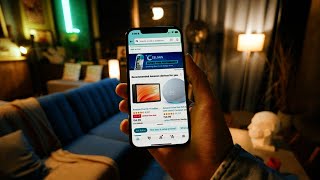
Justin Honeman from Amazon AWS explains how the company uses AI across retail, from traditional systems like Alexa and fulfillment robots to newer generative AI tools. He shows real examples: review summaries written in minutes instead of hours, outfit recommendations, a conversational shopping assistant called Rufus, and automated supplier document analysis. The catch: hallucinations, data quality problems, and skill gaps.
Chapters
Alright, perfect. Let's get the slides up here. Great to see all of you. How's everybody this morning? Good? Great. How's everyone this morning? Fantastico. Come on. Hey, let's start with a little bit of sizzle. How about that? Here we go. [APPLAUSE] All right, I mean, how about that to start the day, right? I mean, you guys have got to like a little bit of business, a little bit of business data, right? Um, hey, Hey, my name is Justin Honeman. I lead worldwide retail and consumer goods over at Amazon. I sit in the AWS organization. And for those of you that are not technical, do not worry. We're not gonna get too technical in the next 25 minutes. But one thing that was mentioned in the setup today is one of the reasons you come here is to meet other people and to network. So I'm gonna give you 2 minutes to stand up and meet someone you don't know around you. It's like church. You gotta go like force yourself outta your comfort zone and meet someone starting right now. Stand up, meet someone new please. If you're in the back of the room, you gotta come in front of the floor. The clock is ticking. Come on, meet one new person. That's why you come here. Content, connections, relationships. Give me 60 more seconds. All right. 30 more seconds. 15, 10, 5. Did you meet someone new? I'm Justin. Alright, you guys grab your seats, so let's get rolling. So good to start with meeting someone. When you go back to the office tomorrow and they ask you, what did you get out of the conference? You can say, I met one new person, right? So mission accomplished. Um, so done. Okay, listen, I've got a lot of content for the next 20, 25 minutes, but do not worry. Like, first of all, if you want more more detail at the end, just come find me. I'll be glad to follow up with you. Also, there's a whole panel after me, like, and we're going to talk about some of these same topics. So, um, just know that I'm going to give you a lot of a flavor of what we're doing at Amazon and AWS around AI, generative AI, define it for you. Um, I think it's super important and relevant. And my question for you all to think about is, what are you doing today so you are relevant tomorrow? Because what you're going to see in a few minutes is some pretty game-changing tech. Now, one thing you're doing is you're here, so that's a great thing. So I admire you all for being here, and I think that's a good step. So here's our roadmap. I'm gonna give you a little bit overview of Amazon in case you don't know our company or how we're structured. How many of you shop on amazon.com? Thank you. How many of you know what AWS is? Couple of, oh wow, more than I thought. Okay, good. And then how many of you shop at like Whole Foods? Do you know Amazon owns Whole Foods? Yeah? Okay. All right, so we're gonna give you some overview of Amazon just so you know. We'll dive into some definition on AI because it's been the buzzword for the last 18 months, 19 months around where I work. I don't know about you guys, but it's been like every day, all day topic. And so I'll share with you a bit about that and how it's coming to life. So when you leave here, you'll not only have a better understanding of what this is, whether you're in tech or not, but also what's real and what's ideal, what's real and what's not real, because there's a lot of noise and I'll help to unpack that for you. And then on the panel that follows, you're gonna get even more kind of detail around that. Sound good? Everybody can hear me great. Okay. We at Amazon, our mission, if you didn't know, if you don't work with us or you just shop with us, our mission is to be Earth's most customer-centric company. And what's so cool about this is the vision is so clear and we use it every day and everything we do with our customers. And a customer is Justin, but also a customer would be like Neiman Marcus or Saks or Lulu, right? I mean, you think about some of the brands we work with. They're a customer as well. Depending on the part of Amazon that you're working with, customer can mean different things, but all of you are customers of ours, and everything we do is centered on being the world's most customer-centric company. Now, we're known for many things at Amazon, right? We're known for supply chain. Some of you leverage us for supply chain capabilities, right? Um, we're known for our scale. We're known for innovation. Like, people like to have us come and talk about our innovation, like culture and how we operate. And then this whole idea of customer obsession. My background, I spent 10 years at Coca-Cola, um, coming up through the Coke system and the bottling network, and then I ran North America retail new business for a couple years, spent some time at Georgia-Pacific, Accenture, and Teradata, all in retail and consumer goods. So, um, just to give you a sense of my background. Now, the reason I tell you that is because we talked about customer at these other brands, but I've never seen it as, as such a focus as at Amazon. I think it's really fascinating how that plays out and It's something that I wish I could spend a whole hour with you talking about. Many retailers and consumer goods brands work with many parts of Amazon. So you, some of you know us just for the marketplace, right? Amazon.com. Some of you know AWS. Some of you work with us in the devices space, in your manufacturing or production facilities, your warehouses and distribution. Some of your companies leverage Amazon for advertising. I'm going to show you another a cool sizzle reel shortly on that. Some of you have products that are in our own retail stores, right? With Whole Foods here in town, if you've ever been to the Amazon Go stores. How many of you have been to a Go store? Couple of you, good. So we've got kind of a combination. If you think about Amazon just overall, it's a number of different companies that sit under this umbrella called Amazon. And what's fascinating, if we went out on the street here and asked most people, you know, what Amazon is, they would say, "That's where I buy things online." Right. So it's just interesting that for us, we often have to explain not only what we do at Amazon, but how you can leverage broader parts of Amazon to accelerate what you're doing from an e-commerce perspective, from a supply chain perspective, from a merchandising perspective, from an allocation perspective, from a technology perspective. Right. We've got a lot of different assets we can lean into. So that's just a little bit about Amazon in retail. We, we're diving deeper here into the retail industry. So as we work with retailers, especially this quarter, these are the big topics that have been top of mind. So everything from in-store tech, in-store experience for many of the retailers that are growing— there's a couple that are struggling, but many are growing, opening stores, looking at new ways to get people back in store and engage people in store. Things like loyalty and personalization are top of mind. Again, this whole idea of composable commerce— some of you heard of like composable commerce, headless APIs. That's really technical. Don't worry, we're not doing technical. Um, but many, um, retailers that have e-commerce platforms are evolving their platforms today and making them more modern and more flexible. So a lot of things that are top of mind— many of our retail customers are asking us for help with supply chain. They're frustrated with kind of inflexible back-office warehouse management systems or forecasting systems. Some of them are here upstairs and they're partners of ours, right? And they're all trying to move faster so they can better serve you, the retailer, right? That's one of the big things they're focused on, innovation and tech. Now today, the pink box is where we're focused. So the next 15 to 20 minutes, I'm just going to really dive deeper into this whole idea of AI and, and give you some definition and where it's coming to life. Now, a lot's happening around innovation, um, whether you like technology or not. I'm going to tell you, all of you, you need to be taking a step in. You really do. You can say you don't like technology, that that's the job of the person down the hall or the other building, And I'll challenge you that if you're not making it part of your day job, you're gonna be left behind. If you're not diving into data and analytics, understanding this topic today we're talking about today, you're gonna be left behind. Because I promise you there are others that are picking up those skill sets and ready to take the job of the merchant and allocation person, the analysts that come in and start diving into syndicated data or point-of-sale data and making sense of it in new and different ways using tools that you don't know and you don't want to know because it's technically scary. But these tools are easier to use than ever. And I'll challenge you leaving today, don't think that this is just another metaverse or blockchain, okay? It's not. It's real. It's something that you all should be leaning into. Many of you are nodding your head. And the reason that a lot of this is moving quick is because of the technology behind the scenes that's enabling it, right? We won't get into that today, but there's, there's reasons why things are moving faster than they ever have been. I mentioned the timing around GenAI, and I'll give you some sense for that in a moment. At the same time, the consumer or shopper is evolving, right? We hear this from like every presentation we go to. The consumer is like changing their behavior. Well, they are to some extent, and their expectations are higher because of those that are innovating and engaging in new and different ways, like through social platforms and whatnot. So a lot of noise around AI. But AI is not new, okay? AI has been around since the '50s. In fact, some of your companies are already using like traditional AI for things like personalization. How many of you have like a contact center that takes calls for support or returns and whatnot, right? The technology there often is powered by AI. For us at Amazon, let me see, I think I put the slide in here. Yeah, here we go. At Amazon, we use AI already in many parts of our business, like traditional AI, like things that have been around for a while, right? How many of you have an Alexa device? Okay, powered by AI, right? If you've ever been to one of our fulfillment centers, that's the second picture here. There's many of them. There's actually a couple just outside the city here. There's little robots that move product around in our, like, our racks and whatnot. That's all powered by kind of traditional AI. If you shopped on Amazon, you all raised your hands earlier, the personalization engine powered by AI, right? This isn't new. Um, the Just Walk Out technology— if you, um, I mentioned the Go Stores earlier. If you haven't been there, um, and you have the Amazon app, you can actually go to the app, and on the top of the app here, you'll see— by the way, Prime Big Deals— but, um, you'll see in-store code. Okay, you go to the Go Store and you go up to the just walk out gate and scan this at the front. The gate opens. What happens? Who's shopped the Go store before? You walk in and what happens? You go pick up things, right? And then what happens at the end of the shopping journey? You just walk out. But how— wait, I don't understand. How did you know what I bought or what I picked up and put back down another different shelf? Using AI. Not generative AI, just traditional AI, right? Use cameras. We use sensor fusion to power that, right? So that's just another kind of interesting example. How many of you shopped Amazon.com? Our live streaming platform. How many of you knew we had a live streaming platform? How many of you know what live streaming is? Yeah, pretty big, especially in Asia Pacific. We see this coming from that side of the world to other parts of the world. And for us, this is powered by just kind of traditional AI. I'm going to flip through a couple of examples here. Virtual try-on. Some of you have experimented with this in different ways. This is actually on the Amazon site where you can actually look at and try different shoes on or sunglasses, right? And some of you are actually experimenting with this on your own e-commerce sites. The whole idea of immersive retail, right? What does it look like putting a product in a certain location or looking at 3D products, right? Powered by traditional AI. Image search powered by traditional AI. These are not generative AI things. These are things that have been around. Back on the Amazon app again, not that I'm like selling on the Amazon app, but it's kind of cool. I just know— I didn't know this. This is embarrassing. I've been at Amazon for 4 years. A couple of weeks ago, someone was like, well, Justin, you could like take a picture of this coffee mug right here and like find it on Amazon. And I was like, really? I didn't know that. And so I took a picture of— let me just take a picture of the mug here. And it brings up tablecloths, white tablecloths, and the mug. So that's kind of funny. But you can actually do image search, right? Powered by— Traditional AI. What else is powered by AI? Virtual stores, right? Powered by traditional AI machine learning. And it's really fascinating. We've seen this kind of as an interest area, but it's an area that hasn't really exploded. But some of our partners are using it. Here's the example of Amazon Go, right? I walked in, I scanned that code, I went and picked up product. That's not me, but I picked up product and then just walk out. We're building a virtual cart. Using traditional AI. Um, Amazon One— how have you registered in the— with Amazon One? So cool. Um, it's using your palm to pay. So at the Go stores, you can register your palm with a credit card. Takes about 15 seconds to register. Anywhere there's an Amazon One unit, you can pay just using your palm. You'll find those now in the Whole Foods stores, for example, and many stadiums and concessions. Imagine if you just walk through, you could grab something and then just Hey, that way with a credit card, whatnot. Powerful. Powered by AI. A lot of things powered by just traditional AI, right? Alexa. Talk about Alexa. So our grocery concept, Amazon Fresh stores, you can actually say, hey Alexa, where's the Jif peanut butter, 20-ounce, and it will tell you the aisle, the store, the shelf, and whatnot in store, right? And retail media, a hot topic for any retailer and consumer brand over the last 18 to 24 months, especially The hopes and dreams of retail media are still to be, I'd say, realized for many, although there is some really good revenue there, but a lot of that's powered by traditional AI. Okay, and then last but not least is in-store. Like, you can take your cameras in store if you have cameras that are watching, and you can use the actual stream of your camera feed and create heat maps. You don't need to pay for any new cameras or new technology. You can do that today, right? But my point in telling you all this is there's a lot of excitement last year when ChatGPT came out. And a lot of excitement for the next 7 or 8 months after that that really transformed like how some of you are thinking, how you're operating. I know how we have been operating because this whole idea of what generative AI is, right? How many of you have like had a meeting or an overview on what generative AI is? Yeah, perfect. So a lot of noise in the media from— for us and my team from March to like September, it was every day, all day. It felt like calls and meetings with not just the CIO or CTO, but the CEO, the CMO, the heads of merch, the heads of allocation, heads of planning, heads of store ops. Like, what is it and why, why is it so such a big deal, right? Why is it that all of a sudden something that seems like it's been around since the '50s, right, we just looked at all these examples, is so interesting and challenging, right? Because a lot— and it's because of the power of the technology, and I'll show you what that means. Our customers are asking Amazon these questions. So what is it that you all have? Talk about your platform for this. I mean, I've used ChatGPT. What's wrong with that? Like, what's the difference between all these different platforms and why should I care? Right? How do I use it? What are the real use cases? And I'll show you some of those in a moment. What are things like Bedrock and Claude, Titan, large language models, foundation models? Sound very exciting, don't they? They're actually really powerful. But you shouldn't have to worry about them. You, the business user, the business leader, should not have to worry about those models, right? At some point you won't have to be choosing those. Right now you can. A lot of innovation is happening because of the movement in generative AI. A lot of questions around roles, around jobs. Hey, is this going to replace people's jobs or just make them better? Right. A lot of questions around skills. Do I need to upskill? Need to hire different types of people? Do I need to reskill? What if I don't want to skill? We all know people that probably don't want to pick up a new skill, right? Your consultants that you work with are having an amazing time the last 18 months figuring out what skills they should be building and hiring for, and then to be able to meet your need and be one step ahead. Of your question on things like what is Claude, what is Titan, why should I care, what about the data? Like, your big SIs, and we work with them every day, they're like, they're staying one, trying to stay one day ahead on the tech because it's moving so quickly, right? Um, so let's see here what some of these look like. Okay, so, um, this is where Amazon's built it in already. So if you go back to the Amazon app, if you pull up any product now, there's thousands of reviews. How can you read through thousands of reviews, right? One place that right away Amazon went with generative AI was putting it into the reviews. And so this is something that every— I met with 3 different retailers in the last 6 days and I went to their e-commerce site and saw hundreds of reviews, thousands of reviews on their own D2C site. Right. And I mean, I was like, what do you do? How do you make sense of those? Well, we have an agency. And they download the reviews and then they come back to us with a report. I was like, well, how much do you pay for that? Thousands of dollars. Do you know how long it would take for me to take 1,000 reviews and put them through one of the models I just mentioned to you and get you a summary and allow you to dig into that? About 2 minutes for free. Okay, so you think about game-changing, like, I mean, it's not really game-changing, but I mean, it's pretty cool. It would save a lot of time and money. We've saved a lot of our customers thousands and thousands of dollars that you would typically use an agency for that, right? To go through the hundreds of reviews and come back with what the customers are saying about it. Now I really don't have to do that, right? That's kind of what we need for this easy stuff now. Diffuse to Choose, some of your fashion, right? We're talking a lot of fashion here today. This whole idea of being able to do like somewhat like virtual try-on. I take this outfit and then swap it out with different types of fashion apparel, whatnot. Interesting use case. We launched an AI stylist. Some of you have seen this already. This is live. You can go check this out if you'd like, but it's called idea of, you know, I've got a theme. That I need to build an outfit around? What would be the things that likely go with that? I started to see in some of our retail customer sites, um, a better job of now if I buy something, the recommendation on what might go with it based on a, a, an idea, right? Or, or a concept. Um, size recommendations, something that Amazon has now built in in terms of, um, the reviews as well as that go with those size recommendations. And, um, kind of the whole idea about fit, because guess what? No retailer wants— that's an e-commerce retailer— they don't want Returns. Thank you. Because returns are really expensive and it eats into your margin. And if you have a very heavy product, you really don't want returns. In fact, it's during COVID— nobody talks about COVID anymore— but during COVID a lot of the consumer goods brands were like launching their own D2C platform. And we work with a big peanut butter company, and they're like, we got to get product to our customers. And I'm like, my God, you know how much a jar of peanut butter weighs? And you imagine as that gets returned, it's like a— I mean, And so the D2C platform lasted only a couple of weeks because of that. They now lean into Amazon. But so my point is returns. Nobody wants returns. We launched conversational shopping. This is an interesting idea called Rufus. It's on the bottom of your app now. You can actually shop around a concept versus a specific item. What about putting product in different locations? Images are the most, I'd say, effective and accurate place you can leverage GenAI today. It's super powerful. If your marketing teams are not already using this, I would challenge them because I'll show you some many examples here of how this can come to life. I showed you earlier the Amazon One. We're using it to train that. Now, listen, look at, look at some of the capabilities here with images. Okay. You can do a lot with generative AI, with images, putting people in different backgrounds, different locations, taking things out of images. Right. Some of you can do this on your phone today. This is all powered by this new generative AI capability. These people are not real. We're working with a major beverage company and they're like, hey, we want to create a new campaign. And we— you can see on the bottom here is what's called a prompt. For those that are maybe new to this topic, the specificity in the prompt is what gets you the result that comes out of it. But nothing on this page is real, but they're all very accurate and they're getting only better. We're working with one of the top beverage companies in the world. Their marketing team said, "Hey, I love this beer bottle on this beach. It's a great campaign. Can we put it on 100 of the other top beaches in the world?" When I was at Coca-Cola, this would have been 18 meetings with 18 people in each meeting, an agency going off and coming back 18 weeks later for $1 million. And this took about 2.5 minutes to create top 100 beaches, that image that can now be pushed out on their website. Okay, right? Powerful. Same thing with a major pet manufacturer. Hey, can we create a campaign with these dogs? Are so cool and cute. They're not real, but they look very real. And I'm putting them on backgrounds with different parks, right? Because this is stuff that's real today. And if you're not using it, you're behind. Check out this video of how Amazon Ads is used.
At Amazon Ads, we know creative is one of the most one of the most important drivers of successful advertising, but it's also one of the biggest barriers. From budgets to planning to tight deadlines and approvals, it's a complex process that takes time. What if you could have an all-in-one solution? With Amazon Ads, we're using generative AI to turn your vision into reality, and it begins with our Image Generator. Picture this: just select your product, and our AI will do the work for you. We pull insights from your product description and reviews and combine them with our generative AI to create compelling ad-ready creatives that showcase what your brand is all about. You can also scale your creative across a variety of premium placements. Just upload your design and our generative AI will analyze and repurpose for various ad formats. Need your creative resized and saved for different placements? Our AI has you covered. Need the copy translated? No problem. Everything is tailored to your vision. Now that's more like it. Amazon Ads generative AI helps you scale creative across a range of premium supply and maximize reach. From mobile shopping to Twitch streams and more, we bring your ads to life for customers in a compelling and intuitive way. Whether they are shopping at their local store or streaming their favorite show. Less friction, more value to your brand. No time wasted. Amazon Ads Generative AI.
I mean, kind of cool, right? I'm going to wrap up with just a kind of the what's real part of this, and then we'll bring up the panel to dive deeper on things like, well, Justin, what about the hallucinations and when the models come back with inaccurate data? We could talk about that. But this is where it's real today. So personalization, home run. So if you're not using personalization on your e-commerce platform, you're missing out on revenue. This is the most significant area of opportunity that if you're not already leveraging, you should be leaning in to the partners here and some that you work with probably already in your business. So contact center I mentioned earlier down on the creative side, I just showed you images. Guys, I didn't go through any training class to create those images, right? I, I've played with the models myself. I've selected, I've evaluated, I've changed the prompts, and I figured it out. And yeah, I'm a little technical, but I'm not a coder, programmer. So for those of you that are in marketing or on the, like, the business side of things, this is something you could be leveraging today, and you should be. And you don't have to go buy a license. This is not like I gotta download Word. Or PowerPoint or Excel. This is log in and start using, okay? And if you don't know how to do that, go talk to your technical people and they can turn this on for you if you're not already using it. So, and every one of you should have access to some form of what I just showed you earlier. Um, if you're in sourcing and procurement, the ability to create RFPs in seconds, powerful. Georgia Pacific, I was in that space, we'd have to go through a whole process of creating, you know, Word documents and templates and setting up You can do that in seconds. The other nice thing is, how many of you get supplier documents and put them into like a data platform or some sort of repository and never look at them again? These models, these text models, remember, right, they're the most accurate— the text and, and things like images are the most accurate. Imagine if you start holding some of your suppliers accountable to what they committed to in those agreements that you never look at because they're stuck in a system that's kind of not not very flexible, right? It's real. That's very, very good use case. If you are in IT, coding is unbelievable. Like, you can take one code language and create another code language in seconds. That would have taken days and weeks. And the building QA code is powerful. And so in the tech space, you see a lot of customers now using natural language coding, and then they're giving this tool set to their, their technical people, both onshore, offshore too. and search. We didn't spend any time on search today. Search has been an area, a lot of questions from our customers around like, what's next for search? How can we have better search capability on our own site and then other sites that get us to, to the sales area? So I will wrap up by saying this is what's real. There are a number of use cases on this last slide that are not real that many would like to be real. And we can explore those at some point. But the primary area of focus Today, 18, 19, 20 months into this whole, you know, excitement around generative AI is in the marketing sales space of digital commerce consumer experience. Like that, that space is kind of your sweet spot. The others a little more challenging because of the complexity and data. So I'll leave it there and I'll thank you. I know I left you probably with thinking, wondering a lot of different things, but guess what? You got a panel coming up that can address some of those. So thank you for your time and I look forward to spending time with you today.










