Aliph's Mission for Sustainable Design in Africa | Aliph | PI Apparel
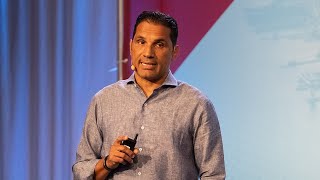
The speaker, a Moroccan‑born designer who studied at ArtCenter and spent 18 years at Vans/VF Corporation, shares a personal narrative of moving from automotive digital workflows to fashion and footwear innovation. He recounts leading several pioneering digital projects at VF, such as consumer‑driven 3D product visualization in browsers, AI‑based size recommendation for Dickies, digitizing a 1932 uniform archive, and translating Timberland’s Maker event into a Fortnite Creative experience, as well as early collaborations with ArtCenter using Gravity Sketch. He then shifts to observations about digital natives—makers who value experience, self‑learning, and question traditional degrees—and cites forecasts from the Institute for the Future and leadership qualities identified by Oracle. He outlines three technology trends reshaping creation: computational design, photorealistic real‑time visualization, and generative AI. As chair of the 3D Retail Coalition’s education committee, he emphasizes aligning industry needs with academic curricula. The core of the talk introduces Aleph, a nonprofit educational program aimed at filling the massive gap in design education across Africa (only 6 of 357 Cumulus‑registered design schools are on the continent). Aleph’s mission is to empower a new generation of creatives with circular‑design and sustainable‑innovation skills through three pillars—Educate, Mentor, Connect—addressing seven UN Sustainable Development Goals. The program will start with pilot courses in Marrakech, pairing students from Morocco and Pasadena, using agile, tool‑agnostic workflows, and featuring student work that integrates Midjourney and Twinmotion. A mentorship case study of Sam, a Ghanaian maker who received a laptop, learned basic digital tools, and later met legendary car designer Frank Stephenson, illustrates Aleph’s impact. The speaker concludes by highlighting partnerships, annual creative offsites in Marrakech, and a funding model that blends grants with revenue‑generating professional programs, inviting the audience to support the initiative.
Chapters
Day 2, everyone's excited. I wanted to start this presentation with a slightly embarrassing picture of myself as a background. So this is me in Morocco. Where I'm from, presenting my engineering CAD thesis at a time where you still needed to hire a professional photographer to take a screenshot of your work. That says a lot, right? So coming from Morocco, I felt very lucky to be accepted at one of the top design schools in the world, Art Center College of Design in Pasadena, California, which was my lifelong dream, and I felt incredibly, incredibly privileged to be able to fulfill this dream. And at ArtCenter, I learned to apply my digital skills to creative projects in automotive, retail, and fine arts. After a few years working in the automotive industry, I joined Vans, and therefore VF Corporation, back in 2004, where I held various design and innovation leadership roles. What was interesting is that Vans actually had quite a few automotive designers on the design team, which means that there was, interestingly, a continuous connection to the automotive industry, to the processes and the technologies it uses. I was therefore able to bring a lot of the workflows, the digital workflows that I had developed as a car designer into a new industry, which was the fashion and footwear industry. So my last project at Vans, I was heading up innovation at that point, allowed us to put the tools of creation in the hands of the consumers, right? And allow them to visualize the products they created in 3D using a 3D interface in a browser, which was quite unique at that point. I also had the privilege of pitching and leading VF's digital product creation initiatives where we transformed the go-to-market process across multiple brands in the footwear and apparel space, and also accessories and equipment, incidentally. You can imagine the complexity of driving an initiative like that across multiple product categories, multiple brands, multiple company cultures, and multiple teams, right? But it was fun. We learned a lot. We learned a lot through this process. We're also able to do some fun things, work on really, really interesting and forward-thinking projects. For example, for International Women's Day, we worked with Dickies China and Tmall to create an immersive and playable shopping experience that allowed the consumer to discover and purchase a limited collection of apparel and using AI, be able to receive a recommend— a size recommendation based on two photos that they had shared with— on the platform. This was all on mobile. This was a fun one. For Dickies' 100th anniversary, we went deep into the brand's archive, really deep. We were able to digitize a uniform from 1932 and bring it back to life. With the technology we have access to, we're able to scan and recreate this uniform with an incredible amount of detail and were able to bring it back to life, which actually brought the manager of the Dickies archive to tears because she finally saw these items that she had been manipulating with white gloves, you know, come back to life and, you know, be animated in front of her. This was one of my favorite projects. This was actually, incidentally, the last project that I led before I left VF 2 years ago. We brought Timberland's signature Maker event, which was a very analog, you know, hands-down event into a gaming platform, which was Fortnite Creative. And we actually ended up using the game as a design tool, which was quite unique. It was not just a matter of creating gamified brand experiences with props here and there. We actually used the game to design new concepts. By the way, for those who play Fortnite, I hope we have a few of them here, you can— I think you can still play the map using the code below. We also ended up partnering with ArtCenter on immersive design educational experiments where students were asked to learn a brand new tool. In this case, it was Gravity Sketch, which at that point was still in its infancy. And they used the tool to ideate and present innovative product concepts and environments, all that in the context of a 2-week intensive course. So that was pretty incredible because within 2 weeks they were able to learn a new tool, ideate, and present their concepts, their projects to the stakeholders. So leaving VF after 18 years was a big decision, but it felt like it was the right time. And I now have the privilege of consulting for some amazing organizations that are inspiring leaders in their respective fields. We heard from Nelly yesterday. I had the privilege of working with her quite a bit, and then the EPIC team, you know, a team of really amazing individuals who inspire a lot of us. So I wanted to share a snippet of my personal journey for two reasons. First, I wanted to highlight the fact that I'm grateful to have had opportunities that not many people in Africa will ever have. The second reason is because I'd like to emphasize the importance of creative experimentation in an ever-evolving and more and more digital world. This is something that is, I think, very important for us all to, to remember. And you'll understand very quickly why, why that is. But first, let's talk a little bit about the topic of teaching and learning. What's really interesting, and this is something that I've been focusing on quite a bit in the past few years, is trying to understand digital natives, right? So digital natives, those of us who are 20 years and younger, 25 years and younger, I think we all qualify, right? Have a very unique relationship with education. What's interesting about them is that they're makers, they value experiences more than things, they know where to find information— you'd be surprised— they are comfortable being self- or peer-taught. They also question the value of degrees— this is a big one— and don't want to go into debt to educate themselves. So the Institute for the Future— if you don't know the Institute for the Future, I highly suggest you look them up. They've done some amazing work. Um, in this case, they forecast that the way of learning in the future will involve what they call emotionally laden immersive experiences where learning agility trumps deep specialization in one specific area. We also had Sandy Elvington, who at that, at that time was working for Oracle, describe an evolving leadership for the digital age and really qualified the capabilities we will be looking for in our creative leaders in the future. You can see some really important qualities right there. Digital literacy, that's a non-negotiable. Learning agility is a really important one. Adaptivity, that goes hand in hand with agility, as well as mental agility. But also cultural dexterity. In a more and more global world, this is one that I think I've latched on quite a bit, being multicultural, being from Morocco with a German mother and having grown up in Europe. As a creative, I'm now giving back and I'm teaching at ArtCenter. And I've developed a set of attributes designers need to have in today's world. As you can see here, we talk about constant curiosity, critical thinking, creative experimentation, continuous dialogue, and global perspective. These are qualities that I like to instill in my students or develop in my students because I think they're really important for creatives in today's world. From a technology point of view, I think there are 3 major developments that are deeply transforming the way we create. The first one is computational design, which is basically the use of computing power to augment our design process. The second one is the development of new photorealistic and often interactive visualization technologies. We talked about real-time yesterday. The way these technologies are developing is fundamentally changing the way we visualize the concepts that we're putting out in the world. And of course, the use of generative AI tools and the effect that they have on our creative process. I also wanted to mention the amazing work a group of volunteers is doing within the 3D Retail Coalition, the 3DRC, for which I have the privilege of chairing the education committee. For those who are not familiar with the 3DRC, it is an inspiring group of representatives of academia, technology, and the industry, very often competitors, coming together to share and align on best practices and create standards to advance the state of 3D technology for footwear, apparel, and accessories. A lot of you in the audience are part of the 3DRC, and I really am grateful for that. The Education Committee specifically focused on brokering critical conversations between industry representatives, educators, and technology partners in order to ensure the skills educational institutions students help build are in sync with what the industry needs. This work is extremely important. I think we can all agree because the promise of education and upskilling without a clear understanding of the needs of the industry is actually a false promise. So what do we do with all this information? Well, we chose to build something we felt is bringing all of this together and call it Aleph. Aleph is the first letter of the Arabic alphabet, and it represents our commitment to excellence, the idea of being first, and the importance of continuous learning. This project really came from two realizations. First, our world needs creative leaders that have skills that are relevant to our new digital reality and that are driven by the will to do things more responsibly. Second, the continent that has the most untapped source of talent and opportunity is lacking educational programs in design and and education— and innovation, sorry. So here's a statistic: out of 357 registered design schools in the world, registered with Cumulus Association, only 6 exist in Africa. And this map shows the distribution of these design schools across 66 countries. Out of 192. It's pretty incredible, right? So what is Aleph? Fundamentally, Aleph is an educational program that is committed to empowering a new generation of creatives with the skills to design their own sustainable futures. The program is fundamentally built around 3 activities. Educate, Mentor, and Connect. It's an educational program focused on circular design practices and sustainable innovation. It's a platform for exchange around purposeful innovation, and eventually it will be a campus for global exchange, kind of a like at Davos or in Aspen for design and innovation. And what's really interesting is that ALIF tackles 7 of UN's 17 Sustainable Development Goals. Obviously, quality education is the main one, but gender equality through education, decent work and economic growth for a continent that has been underserved, industry innovation and infrastructure, the reduction of inequalities in the world, climate action through the focus on sustainable practices and circular design, and the eradication of poverty. And the impact this program creates will have not only social but also environmental and economic ramifications. That are, I think we can all agree, much needed in this evolving world. So Aleph is built as a nonprofit organization. It will leverage grants as well as revenue created by paid programs in professional upskilling, leadership seminars, and certificate-based programs to subsidize the education of talented driven and passionate creatives who may not be able to afford this kind of education. At the core of the program is what we call creative collisions. That's a term that you'll hear me use quite a bit, where learners and professionals from all horizons interact, exchange ideas and best practices. And so far, we've, we've been fortunate to have amazing thought partners as we built out this this vision. It's, it's a project, it's, it's a moonshot. And this is not something that we can build, you know, with a small group. It takes partners and understanding what's at stake and understanding what it takes to get from the vision to education is, is critical. So we're fortunate to have these partners with us. We also organized since 2020 a yearly creative offsite in Marrakech that is designed to bring together a number of thought leaders, innovators, and creative professionals from different fields to discuss the big shifts that are happening in their world and the skills and competencies needed in their respective environment. The, the last one, the one that happened this year, was just about a month ago. This offsite is about 4 days long and it's packed with activities that alternate moments of learning and exchange. You can see there are campus visits. We visited UM6P Polytechnic University, which is an amazing institution, 4 years old, extremely well-funded, extremely well, you know, structured. We had personal— the sharing of personal journeys and personal presentations. From creatives in the automotive space, in the product design, in the fashion design, etc. We also created remote sessions with participants who were not able to be present. We had reflection time, but also moments of exchange through paired walks and lunches together where we put together, in this case you can see in the photo in the middle, In the bottom, they had the chief designer of Citroën at Stellantis in France, who is a well-respected and admired creative, with a young student who is getting into industrial design. And of course, we had also cultural immersion because we were in Marrakech and you need to understand the magic that this place represents. We also make time for casual conversations and, let's call them, cultural experiments, like the creation of a new signature cocktail on the right, which we call "Johnny Morocco." Patent pending. So who will we be teaching? The idea is to prototype this idea in Marrakesh and focus first on students from Morocco and Africa, But if the model is proven to be successful, we can deploy it in other parts of the continent and possibly even other parts of the world. The program will combine building foundational non-digital skills and knowledge because that's important. It's critical. And combining that with an approach to digital technology that favors workflows that are agile and intentional over deep specialization in one specific software. And these workflows and the tools that create these workflows will be evolving. We know it. And it's important to be agile, to be able to hire and fire the tools as they become useful for our creative process. So I'm currently teaching a class at ArtCenter that serves as a pilot for this kind of curriculum. And the kind of curriculum we'll be bringing to Aleph learners. It caters to creatives from different backgrounds like automotive designers, fashion designers, interaction designers, fine artists, and it focuses on using digital tools to augment your creative process and supercharge your storytelling with digital tools. So this is an example of one of my students' work right as generative AI was becoming a thing a couple of years ago. It was maybe a couple of weeks after Midjourney became available. So this student, Weiying, was able to incorporate Midjourney into his creative workflow, and that ended up inspiring the look and feel of the apparel collection that he designed. [FOREIGN LANGUAGE] So this is another example of the work another one of my students, Inga Huang, did for a project last year. She went a step further and used Epic's Twinmotion as a new way of digital storytelling, where she focused on making a case for digitized product creation process in the fashion industry, which culminated in the presentation of her line of clothing, which was developed using the workflow she actually evangelized. So this is a really interesting way of using a tool, a presentation tool that is built on real-time technology, that is interactive, to present things in a different way, and not just present the reasoning behind your work, but also present the result of your work. What was great is that she presented her whole workflow as part of this, and at the end of the presentation was able to animate these garments that she had created. So the next step is to run a series of pilot courses starting in fall of this year where we'll be teaching a class concurrently to students in Pasadena and Marrakech, and where we will build teams of two across continents, so one student from Marrakech and one student from Pasadena, and these teams will tackle what we call problems worth solving. And through this pilot course, we'll learn a lot, obviously. We'll be able to understand the pros and cons of running programs like that, and we're hoping to learn how we can build a formal program using these methodologies. We're also going to experiment with other modalities, you know, shorter, more condensed intensive courses, 2 weeks for instance. Longer, over a whole semester, where students meet once a week and we'll experiment with content. So we're giving ourselves a year of experimentation to really fine-tune our offering and fine-tune the modalities in which we teach. So on the topic of mentorship, I wanted to share the story of Sam, whom I've been mentoring since May of 2023. Sam is not a fashion designer, but he's the archetype of the creative we want to help become a designer. We want to help him develop the skills he will need as a professional because Sam's a maker. He's based in Accra, Ghana. And we flew him to Marrakesh about a year ago. He had never left his town. He had never stepped foot on a plane. We bought him a laptop. He did not have a laptop. And all the supplies he needed to start developing his sketching and ideation skills, which we incidentally been reviewing during our weekly 30-minute touch bases. He had never used a computer, and it took him about 4 days to learn Microsoft Windows, Google, YouTube, and WhatsApp. And we've been communicating ever since. And you can see how his skills evolved in just 6 months from his first drawing on the top right to the sketch right below. And he's been able to apply this ideation, his ideation skills, to further develop his ability to share and develop his ideas before actually going and making them. So for me, the culmination of this mentorship was when during our last creative offsite in May, during a Zoom panel discussion with creatives of African descent, Sam got to meet his idol, Frank Stephenson, who's a legendary car designer and who incidentally was born and raised in Casablanca, Morocco. And so Frank was presenting his workflow and his focus on biomimicry. And that fundamentally, I think that was one of the truly transformative moments in Sam's education. And we're working on finding ways to have them meet in person, by the way. So Aleph is a bit, bit of a moonshot, as I think you can see. It's a project very much in its infancy, but it feels like the right thing to do. And with partners who believe in the mission and are truly committed to supporting us as we execute this vision, I trust we'll be able to make an impact. So if you're interested in learning more, feel free to scan the QR code. And for that, I thank you and shukran.










