An Individualized Approach to Apparel Fitting | Carhartt | PI Apparel
Tiffany Radon, Manager of Technical Design at Carhartt, argues the apparel industry should move from one-size-fits-many to individualized fit. She proposes unisex sizing to cut inventory, clearer size charts, and QR tags with personalized data, plus body-scanning and 3D simulation to help consumers find their fit.
Chapters
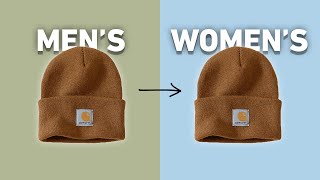
Today we're gonna talk about apparel fit and an individualized approach. Of course, I'll throw this up here now. I'll get this up again in a little bit for you guys too. Instead of passing a mic around, we're doing questions through Slido, so feel free to scan the QR code if you would like to type any questions in during the presentation, but I'll have this up again at the end of the talk too. If you haven't, I know I've got a lot of friendly faces in the audience today, but if you haven't heard me talk before, my name is Tiffany Radon. I am manager of technical design at Carhartt. I am a proud SCAD grad, spent a couple years in the home decor industry before I pivoted back to my true love, which is apparel. I was lucky to be hired in at Carhartt in 2008 as an entry-level technical designer, and I'm now so fortunate to still work for a company that I love with an amazing team and amazing leadership. So fortunate to have really grown up at the company. 15 years ago, I had to tell people who Carhartt was, and I'm so fortunate nowadays that we've experienced such great brand growth and consumer awareness now that I don't have to explain who wears brown, brown duck jackets anymore. So individualization. If you've seen me speak before, you know I love a little audience interaction, so show of hands, who here is a consumer? Who here wears clothes? And who here is an individual? So when we think about individualism as it relates to apparel, there's kind of two main aspects that I'm gonna talk about today. One is obviously the product that we build and how it relates to each of you as an individual consumer, and how we as an industry talk about the product that we build. So when we think about product, most of us are in a mass market apparel, whether we're a wholesaler or a retailer, the product that we make is a push model. We make it, hopefully we do a lot of research before we push it out to our consumers. And of course, we've done the research, we hope it relates to our consumers. But if you think about a general alpha size scale, and an 8 size range is pretty inclusive for a lot of brands these days, across the US population of adults 18 to 70 whatever, it works out to be about 30 to 35 million people per size. Think about the variety of individuals across 35 million people, right? Think about shape within— or size within that given alpha size of product, individual body proportions, individual body measurements. It's a lot of variability of the people that are wearing our product. And how we talk about that product that we build to those individuals that are wearing it. As an industry, we've taken to giving our product fit names. As a tech designer, we've spent all this time and effort and put all this energy into building the product that we make. And so we want to try and help our consumers understand it. So we've developed terms like slim and skinny and relaxed and loose and original fit and regular fit. You know, and sizes too, of course, play a big part of that in how we try to communicate what size we want that consumer to wear or what size human that we've built that product to fit. You know, we build size charts, we put them out on our website, we hope the consumer understands, and we say, here you go, here's lots of information. Go figure. Go figure it out. Good luck. How many consumers have a tape measure at home? Some do. We're in the industry. If you're a tech designer, I guarantee you've got lots of tape measures laying around. But at Carhartt, we hear all the time from our consumers who have a Stanley tape measure in their toolbox. Imagine trying to measure your chest circumference with a steel tape measure. So we know, sure, there are consumers who are maybe more body savvy, or they do have a tape measure, or mom sews maybe. So they've got those tools at home to be able to make use of the size charts that we put out there. But there's still a lot left for us to do as an industry. So mass market apparel being pushed out there, push model in the product, and a push model in communication. If we jump back to the other side of things, what's the opposite end of that? It's made to measure, right? You go to a tailor. It's a pull model. You say, I want a blue suit. Or I want a really sparkly wedding gown. And so it's a pull model from the consumer, but it's not widely available. It's not available in all parts of our country. It's not available at a cost level to a lot of our consumers. And the types of clothing that we could get made for us, even if all of those factors weren't limiting, You know, it's, it's, it's, it's less likely that you're going to find made-to-measure in casual wear. You know, think of what is America wearing on a daily basis, especially post-COVID. Probably not a suit. There is a bit of a middle ground that, you know, over the past couple of years has started to become more popular, which is a kind of a customization approach. It is a pull model. In terms of the product. It's kind of proactive communication, so that you're still going to try and communicate in some way to the consumer about the product you're going to offer them. But again, this still isn't something that's widely available. So when we think about all those consumers, all the gender labels, the size labels, the fit nomenclature we're throwing around it, it's quite a complex math problem. So I'd like to throw out at you the concept of product leverage. So thinking about using the products we already make, for most of us being mass market retailers, taking that existing product and how do we use that fully to our advantage? I would think everybody, if I asked another raise your hand question, would raise your hand if I asked if you wanted to sell your product to more people. Probably, yeah, right? Of course, the concept of product leverage is not new to us as an apparel industry. At least half the room probably knows what this is. So the humble underwire supporting bodies for years and years and years comes in, I'll say roughly 15, 16 sizes. How many sizes of bra do you think you can make out of 16 sizes of underwear? More than 50? More than 60? 88 sizes. So it's broadening the concept of who can wear the product even though it's— there's one size and it can work for a lot of different things. If anybody's in the lingerie industry, they know about sister sizing and whatnot. So taking this concept of product leverage to a consumer-facing way, how could we better use those products that we already have in our line, already have in our assortment, and market it to a wider range of consumers? Well, certainly we can expand our fit offering if you're selling it to more people. Thinking about primary and secondary dimensions, both leveraging product across gender is another way we can think about it. If you were here last summer, we talked about that. As well as SKU optimization is another factor that we can consider that, I mean, certainly as, There's discussions of economic downturn. Everybody's tightening their purse strings these days. How can we better optimize our SKUs, which of course will lead to cost savings in managing inventory and shipping, et cetera, et cetera. So, speaking of humble things, the humble white t-shirt. Carhartt's K87 Loose Fit Pocket Tee, named by GQ as the best OG loose fit t-shirt out there. We're very proud. Millions and millions and millions of these get made a year. We market it as a men's tee in a loose fit. And this one I'm showing you here today happens to be a size medium. We make it for a man with a 40-inch chest. It's how we build the product. We build it with 6 inches of ease over body. But do you think he's the only one who can wear it? A man with a 40-inch chest? No, right? What about a guy with a 44-inch chest, though? Is it gonna fit on him? Is it still gonna be a loose fit? Right. So as we think about nomenclature that we're using to describe the product that we're putting out there, it's not the experience our consumers are having, necessarily. Maybe there's a subset of men with a 40-inch chest and their wearing experience is exactly like we built it. But that same t-shirt obviously works for a broader range of consumers. When you consider the size offerings that we range, we run it from a small up to a 4X. The sizes of bodies those shirts can fit on, and we have a 4-inch chest grade, which is pretty standard for a lot of men's garments. But of course, men don't come 4 inches apart in their chest measurement. They come in every variable in between there. So who else could wear it? We talk about fit nomenclature. What about gender? What if I'm a woman who wants to wear it? Totally works, right? And if you upsize— oh, the other thing I was going to talk about here too is we as an industry— I spoke a little bit last summer on unisex product, or the concept of how do we help consumers navigate our fit offerings. 'Cause at Carhartt, we often have men's and women's like-for-like styles, like a t-shirt. But unisex, if we create that true blended gender standard, can create a fit compromise for both genders. So why wouldn't we still offer a men's tee and a women's tee, remove the gender labels, and sell it to whoever fits best into it, or wants to wear it with that fit offering? My husband actually wears our women's K87. Because he prefers a trimmer fit and he likes how it fits on his, you know, and he looks cute in it. You know, so again, as brands, we can create conversion charts to sell product across gender, but I still feel like there's probably a better way. Also, if you size up, super cute t-shirt dress. The women around the office wear it this way all the time. SKU optimization. If you saw me last summer, you guys know this one, right? For a long time, years and years and years, Carhartt made a men's beanie and a women's beanie. Right? So this was a case where we were able to offer a single SKU out to the consumer, be more inclusive because now we're marketing— this is a case where unisex works really well because the size and shape and proportion of the head does not vary that much. That same variance is found across men and women in size and head shape. And also a beanie is a very flexible item as well. So this is a case where we were able to take, instead of offering two products, offer a single one and leverage it for anyone who wants to wear it. Just as another fun proof of concept here, maybe a little bit more detailed than just a beanie SKU option, optimization. These are some leggings from a popular athletic wear brand for women. They offer a crop, a 7/8, and a full-length legging. Each one comes in petite, regular, and tall. Petite and tall only come in 5 sizes, and the regular is inclusive of a plus-size offering. So altogether, it works, I think, 19— yeah, 19 sizes per legging style. The interesting thing is when you stack up those petite and Regan tall, a lot of them are the same, the same inseam. So kind of a fun proof of concept here that I was playing around with. If you stack those up leveraging the same product for multiple wearers, so the, you know, the crop in tall has the same inseam as a petite in the 7/8 length. 2 SKUs for a very similar product. If you combine them and you play with that same size style SKU offering, you can actually come out ahead in your SKUs and be more inclusive because you can repurpose those additional SKUs from having separate styles into being able to offer a full size range offering across each one of those inseams. Kind of fun. So as we think about how our consumers are shopping, the key to doing something like that example I just gave is gonna be communication. We are in a push model, here's 5 legging inseams, go figure out which one you want. But as consumers are shopping online, they're spending, I'll talk about it in a minute, but attention spans are getting shorter and shorter with everyone. As they shop online, the key is individualization. What does it mean for me? In fact, we were just talking about that in the challenges presentation right before lunch. They were saying, what's in it for me? We have to do that within our organization, but for our consumers too. That's what they want to know. I'm going to take you on a little history lesson around fit and size communication. So 3,500 years ago, ancient Egypt, nobody had papyrus hang tags on their garments telling you what size it was, right? Historically, back then, I was trying to go back. Anyway, historically, a lot of clothing was either custom-made or size-flexible clothing, things made to be altered over time. Because it wasn't until the Industrial Revolution that mass-produced clothing became a thing. Especially post-World War II, there were some WPA grants that went out around trying to create studies to make sizing more universal. There was actually— I forget the exact name of it. It was a catalog marketing association that funded one of these studies to try and create standardization of sizing. But as we know where we're at today as an industry, they've all failed. There is across brands, across fit offerings, there's a lot of complexity there. So historically, how did consumers find what they needed? Well, it was a knowledgeable sales associate in a store helping them who understood their assortment and was able to direct the consumer to the product that they wanted to find. It wasn't, and part of that too is that clothing back then, fit preference wasn't a thing. You know, the fashion was the fashion. The amount of ease over body was what was popular at the time. And it wasn't really until we got into the '60s and the hippie movement where people really started to kind of, you know, they wanted to break free. They wanted to do what, you know, be free and, you know, not look like everyone else. And they wanted to have their own take on fashion. Of course, as we moved through time into the '70s, '80s, '90s, shopping malls became a thing. And then that led to a drive of a more consumer-led shopping experience. Not every mall store had a knowledgeable sales associate willing to guide people through the fit offerings in the store. And of course, as fast fashion became a thing, trends started to move faster and faster. It added to the complexity of what our consumers were having to navigate. In today's offering, you know, our solution is fit names. You know, we try really hard to communicate to the consumer, but the reality is, you know, a skinny fit might be a super skinny on somebody with a different body shape, even if they're wearing the right size. Based on those individual size and shape proportions, the communication we're using isn't necessarily relevant. Of course, we're at a technology conference. There is a hall full of technology providers who are offering tools to help improve the consumer experience. You know, fit finders are great. Size recommendation tools are great to help consumers who are willing to engage navigate your fit and size offerings. I did one the other day on a website, and I think I went through 3 or 4 pages of entering information about myself down to my bra size. And, you know, it's not every consumer is willing to invest that level of time and energy into finding the right product for them. Right? Twitter gives you 40 characters. TikTok launched with a 60-second length video. As consumers, our attention span as we go through social media, as we live our daily lives and deal with online advertising and Consumers' attention span is dropping. Could a goldfish read through 6 bullet points on a PDP? I'm sure every one of you has probably experienced this, depending how much you believe in it. You're having a conversation with a friend, chit-chatting about something, and then a little bit later that afternoon, you get ads for it. So whether or not you believe your phone is actually listening to everything that you say, our phones do know a lot about us. And this is where I think our phones can be the conduit to that individualized and personalized communication. Our phone knows where we are. It knows where we've been. It knows how fast we're going. It knows everything you have ever asked Siri. It knows your bank account. It knows your passwords, why couldn't it know what my body looks like? There's some technology out there around body scanning, but it doesn't link the consumer to the product in a really direct way yet. Of course, consumer adoption of technology has increased over the— well, as we go on, it increases, right? People are more comfortable using ChatGPT to plan their vacations. People are getting more comfortable with the fact that their Roomba has a camera on the front of it and it knows what your house looks like. As a whole, consumers are getting more and more comfortable with the idea of technology being around and knowing more about them. Of course, there's still some tech-averse people out there. Does anybody have a mom who doesn't text? Or maybe a grandma. I think a lot of those technology-averse people, though, it's generational. Younger generations are, are more and more comfortable with technology being a part of their lives. So that consumer tech adoption is really going to just increase over time. Of course, COVID, I think, accelerated a lot of our technology adoption. QR codes were introduced in 1994. Really didn't take off until COVID. COVID was a big accelerator, right? You ordered through your restaurant menu because the QR code was on your table. You can get your coupons. You can map yourself to somewhere with a QR code, again, because your phone knows a lot about you and it knows where you are at this given moment in time. You can even use a QR code to ask questions of your presenter in Slido. Long story short, I'm not saying QR code is the answer to individualization, but it's a potential path. A QR code, whether it's on a hang tag or on a website or on a garment, would be one way of streamlining that communication path, 'cause currently, a.com experience is very different than an in-store experience. So QR codes could be one way of streamlining that communication to the consumer, because right now that looks really different in different channels. There's actually a movement, if anybody's a home sewer, there's a movement in the home sewing community to sew NFC tags into your garments that you make because you can then use it to track, you just tap it with your phone to register some information about the garment. People are using it to track number of wears of a garment. They can be used to track, even thinking about re-commerce, be used to track how many owners a garment has had over time, to kind of take a look at where it's been and what its history is, and continue the life of that garment. So I think there's a lot of technology out there that could help us as an industry map to that individual. So instead of thinking about one garment working for 40 million people, how could one garment map to one person. We wouldn't have to call it loose fit. We wouldn't have to necessarily even tell them what size it is. We wouldn't necessarily have to talk about gender because there's so much product out there that works for a multitude of bodies. I happen to be wearing— thinking about size and fit communication, I happen to be wearing a men's Rugged Flex relaxed fit low-rise tapered leg jean. If I, as a woman, if I weren't a tech designer, was trying to find a nice relaxed-fit stretch jean for myself, would I know to go look in the men's department and find a relaxed-fit tapered-leg low-rise jean? Probably not. Most of our consumers aren't willing to go through that go-figure method of communication to navigate this system themselves. Until we get to that point in technology, Because, right, it's there in a lot of pieces. We have size recommendation tools. We have body scanning technology where you take a front, side, and back picture of yourself with your phone and it registers your measurements. You know, connect— using the phone as the avenue to connect us to that consumer, it's, it's absolutely possible. We as an industry just need to come together and connect the pieces to be able to connect to those consumers on an individual level. But until we get there, what can we do? What's a little bit more tangible? I like tangible solutions. I'm a tech designer. One thing I'm really proud of, on our ccg.com website, which is Carhartt Company Gear, it's our uniform outfitting business, we've taken to taking our existing product, so in this case, it's our men's K122 sweatshirt, but leveraging that product for a broader range of consumers. In this case, it's 'cause we don't happen to have a women's equivalent of that same garment. And outfitters who are outfitting a workforce want to have a consistent aesthetic across their workforce. So I partnered with our dot-com team to ensure it got photographed on both genders. We took men's out of the style name. It's still built as a men's product, but we're trying to be a little bit more inclusive with the language that we're using around it. Another thing brands can do, please be clear if it's body measurements or garment measurements on your size charts. Guys, it's 2023. I can't tell you how many websites I visit, and it's go figure. You have to figure it out. Maybe you even have to contact their customer service of a brand to understand what they're trying to tell you. And imagine how many consumers aren't willing to go through that. So be clear. Maybe even offer multiple options. This is a really great example. I think it's actually from Wildfang, where it gives the consumer the choice of how they want to see the measurements. Is it body measurements or is it garment measurements? So that way, if maybe somebody doesn't want to know their body measurements, maybe they can measure a t-shirt really easily. You can measure the t-shirt on a chest with a Stanley— the chest of a t-shirt with a Stanley tape measure a lot more easily than you can measure yourself. So by giving consumers potential options in how you're communicating about product, that'll help them find what they're looking for more easily. The other thing we can do, and this is something I'm a huge proponent of at Carhartt, is working within your greater organization. So in tech design, I don't own anything consumer-facing, and I would bet it's probably that way for a lot of you. Tech design builds the size and measurement specifications of the product, Brand marketing are the ones marketing it. Does brand marketing know about tech design? Do they know how we built the product? We need to stay connected. Our tech design leader at Carhartt, Mark Charlton, wrote a really interesting article about the concept of a CFO, which is a chief fit officer within an organization. Because in most, I would bet almost every single one of our organizations, It's very segmented in how our brand is structured and where the ownership of fit lies. Merchandising should be deciding what fit we need in the line and how that fit shows up at retail. Tech Design, of course, heavily involved in fit. Brand Marketing is the one communicating it out, but maybe you have a separate D2C team who is actually putting the site, putting the information on the website. Those different pieces of the organization have a say and have a part in how you talk about the fit of your product to your consumers. So let's stay connected. Push for change within your organizations, whether it's for the sake of inclusivity, whether it's talking to your merch partners about SKU productivity and how they could better utilize those SKUs to offer a more inclusive assortment to your consumers. Whether it's changing the language you use to talk about the product, perhaps removing some terminology even. I know we tend to be so focused on we wanna communicate everything we possibly can, but when we think about those 40 million consumers wearing a single size, by the time you add a gender and a size preference label, a size label, a size preference description, you're narrowing the funnel of who the consumer is that thinks that product is for them. So there might even be some opportunities to remove some communication to help broaden the assortment of who you're actually able to sell and market that product to, to help them navigate your offering. Again, as mass market retailers, we think about all of the people out there that are wearing our product. Of course, we've built, as an industry, we've built standard averages for who our consumer, right? Because we have to have a fit standard to fit to for the sake of fit consistency. But what's the difference between the average consumer and the actual consumer? So if we can map it to the actual consumer for the product we wear that they want to find and wear, it'll help us sell more product. and it'll help our consumers have a much better experience with each of our brands. Thank you. If we have any questions, I can take them now if you've put them in Slido. Just a quick question. I don't know if you could share more on the research that Carhartt went into about your your consumer and the fit, did you find anything that deviated from what you thought was your average consumer? And did that influence the work that you've done here? Yeah, so Carhartt, we, like many brands, developed our own body standard. Our men's has been around for a very long time. We're a 134-year-old company, not that our body standard's been around that long. But we based our, like many brands, based our average consumer on our core demographic. For our women's product, our women's line is only about 25 years old, so relatively new in terms of the longevity of our brand. And so I think it's— as a tech designer, of course, we have to have standards. We're big into rules and all of our methodologies and our construction standards. And body standards are a huge part of that in building fit consistency for your brand. So I think it's It's not necessarily about the body standard being wrong because we as an industry have to have that. It's how do you bring that product to life for the consumer? So it's the connection from the product you've built on top of that average and helping to better communicate it to the consumer that wants to find that product. Does that help? Yeah. Yeah, 'cause I mean, if we didn't have a body standard, developing product would be really hard, right? If you didn't have a fit form or a fit model that you built to, your product might not be consistent in terms of the fit that you're putting out there, and fit consistency is such a huge portion of consumer satisfaction that it's important to have those standards for the sake of consistency across your product line and across everything that you make and push out there into the world. But I think the key is how do you communicate it differently at that individual level rather than trying to essentially have average communication to go with your average, your product built for that average. When fitting unisex garments, do you fit on men, women, or both? So we have a pretty limited assortment of unisex garments. We really have headwear and accessories that we market as unisex. But what we do as we're developing product, and we're starting to do it more and more, is fit it on both. So, like most brands, Carhartt has, we have a men's merch team and a women's merch team. We have men's design, we've got men's designers and women's designers. Tech design is merged between the two for the sake of construction standards within a product category, but that cross-checking of the garments across genders helps us understand, even if we haven't quite got brand marketing on board with it yet, understand how that product could work for a broader assortment consumers. There are some products we take to market in special collections, and that's where we're starting— that are more limited or maybe only available in men's product. We're still working with brand marketing and how do we communicate those, or do we provide conversion charts? That's where I still feel like there's this missing piece in that communication to the consumer that we can do better on. How would you deal with individualization and customization and delivery times versus having stock? As mass market retailers, we've all got stock. Everybody's got warehouses full of inventory. And that's where I think individualization is about talking to the individual consumer about the product you've made. When you're doing either a made-to-measure or or some of that customized product like the Carhartt Pilot we've got through DXM. It is manufactured on demand, which is— it's its own challenge, and I don't think it will ever be relevant for every product. Not every consumer wants or needs customized made-to-measure product. I think we'd have to change a lot as an industry in how we make product to make that happen. So I think there's room for for both. But again, communication and how you talk about your product to the consumer is, is really key. I have a question. Uh, thank you very much for very useful information. My question is, what 3D technology are you currently using in your organization? What TD technology? 3D. Oh, 3D. Oh, we've got CLO in our organization. Um, we're fortunate to have, you know, talking about body forms those average bodies. We're fortunate to have a wide range of sizes of both genders' body forms in our organization so that we can take physical product and put it on. We use CLO, and that's certainly an enabler in how we can more easily and more quickly check things on different sizes and shapes of bodies too when we're in that product development process. Any other questions? Hi, just a quick question on unisex. On one of the slides, you had a unisex hoodie. What challenges do you have when it comes to the conversion chart and how to communicate that with the consumers online? Great question. So unisex product or product converted across gender I think the biggest challenge is how do you communicate the differences in proportions, the differences in the body that it was built for? Because most consumers out there don't understand what a bust-to-waist ratio is, right? They don't even know their own measurements to know what that ratio might be. So I think the best we can do in current state that we're pushing for is to communicate more about who did we build this product for? Okay, our men's product is built for someone who's 5'11". Our women's product is built for somebody who's 5'6". Somebody could buy a product built for the opposing body standard, but it's about how do we communicate, like, "Okay, we built this for somebody who's 5'6". If you are not 5'6", if you're 5'10", your sleeves might be short. You might have flood pants. So setting that consumer expectation is really key so that they understand who the product was built for so that they can— it's still a bit of a go figure model, but essentially understand, OK, well, they built this for somebody who's different than I am. So what does that mean for me? Does that help? Thank you. Anything else? Well, I'm thrilled to have a full house. Thank you all so much for joining me today. Thank you.










