Arc’teryx’s Path to Retail Digital Transformation | Centric Software, Arc'teryx | PI Apparel
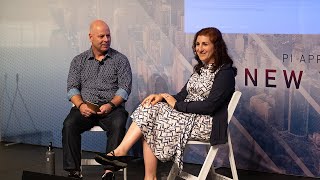
Arc'teryx's product lead Jennifer and Centric Software's Joe discuss the outdoor brand's shift from a custom PLM system to Centric's platform and SAP. They cover 3D design adoption, data integration across Anta's portfolio, and how Arc'teryx embeds sustainability through repair centers and vendor scorecards.
Chapters
We have been adopting 3D more formally over the last, I would say, 4 years. And we started sort of by focusing on digital product creation for customer-facing and dealer-facing applications, and then have been sort of moving that back earlier and earlier in the development process, which I'm sure a lot of you are dealing with the same thing now. So yeah, that's— those are kind of my areas. I've been with ArcTeryx for about 6 and a half years and my background is in business analysis.
Yeah, ArcTeryx. I mean, I always assume— I am Canadian. ArcTeryx is Canadian. I went from Toronto and lived last 30 years in Vancouver, British Columbia, which is where they're actually on the very street where ArcTeryx is. And so I know them intimately well as kind of the premier outdoor, you know, facilitating luxury in hiking. And some of the proud moments are, you know, when I drive down that street on Dollarton Highway in North Vancouver, you know, they'll do these random, you know, customer factory store outlet sales and it's literally lined up around the street. And then when I go to China and I'm in Shanghai, The new color comes, a new colorway comes out and it's lined up around the block. And so, you know, we have a lot of customers at Centric who utilize our solutions. Arcteryx is this unique, they create color sometimes, they create and they manufacture on their own. And it's, you can see one walking away when you can't see the logo. And it's a source of pride in Vancouver, which is awesome. So if you guys don't know who they are, that's who I know them as. Maybe describe for yourself, assume even though they kind of do, give us your interpretation of who Arc'teryx is.
Yeah, sure. So Arc'teryx is a Canadian brand specializing in technical apparel gear, anything to support mountain athletes or really anyone that is wanting to get outside, do their activities and not have to deal with wetness or cold or any of those things. So I guess one of our distinguishing features is we We design for purpose. All of our designers are also athletes that specialize in the activities that they design for. So they're always looking for design problems. They're always looking to solve real problems in their area, in their sport. And that's kind of where we start from. And we're also trying to produce product that can last forever, product that can be circular. So if someone is done with their Gore-Tex jacket, they can return it and someone else can get it and it just lasts and lasts, or product that can be fixed. So those are some of our goals. Yeah.
Yes. And you're doing it really well. We, you know, we partnered with you first. You know, there's a complicated organizational structure at Arcteryx and the ownership group. And so, you know, Anta has now acquired Almer, which owns Salomon and Arcteryx and Ottomac and Wilson. These are all customers of ours and partners with us, but Arcteryx sort of utilizes us in a better way than most. And I'll give you a couple examples before I ask my next question. But they adopted our PLM, they embraced our visual boards, they embraced our data model, but they've actually innovated a few things with us on some of their projects. You reminded me of one where you said, "We test with athletes." And so one of them was they built our— right from their mind, we said, "What's one of your challenges?" When we go out for fit, it's really being used and we do these Frankenstein versions of a product and we want feedback out in the field. And the guy who was running this one group is a real badass guy. And He's like, "I want it to be like this." And it's a lot of asking somebody on a mountaintop or God forbid in a military situation or on and on and on in real use cases. And they said then they were asking to come back and use PDF and all these reviewers and Excel. And he's like, "I just wish there was an app." And so we walked him through it, we workshopped it, we built that app right out of this guy's head. And it's one of our apps that we provide to our customer base. Not everybody's up for that journey. Not everybody's willing to tackle a problem and embrace a technology partner. It's super cool to us. Maybe describe your point of view of the ownership group and some of the benefits and challenges.
Of the ownership group?
Yeah.
Oh, like— I see, I see. Yeah, so as Joe said, we're part of a group of brands that are under Amr. Heavily invested in by, by Antasports. Yeah, we, everybody's different, but everybody is sort of sports and athletics oriented. Obviously everyone here probably is aware of Salomon and their like footwear and ski business and all of that. There's also Atomic. We've got Peak Performance who's based in Sweden and we've got Wilson and Ballsports that's based in Chicago area and so forth. So yeah, it's been really interesting to work with all them. We have some shared services. A lot of our sort of common technology services, middleware and so forth, have been based in France. So we frequently collaborate with all of our sort of sister brands across the world. And at the same time, we all have very different businesses. We all have different philosophies, different mission statements. We serve, in some cases, different markets, and we do things differently because we all formed separately. So that was, I guess, part of the genesis of our relationship with Centric. Originally at Arcteryx, we had a homegrown system that was sort of built very purpose-built specifically for us when we were quite a bit smaller. The whole company started as sort of a bunch of climbers in North Vancouver that wanted to build a better harness and wanted it to be comfortable and not cut in as much to their legs and be more usable. So as the brand grew, apparel got added, some more gear and so forth. So we needed a system. A system was built by, I think, a husband and wife team that there were fun little things. You could go into this one menu and there's a little song and there were little jokes when you're looking at tooltips in different places. But we totally outgrew that system. We way outgrew it. Before we even could retire it. But eventually, some years back after I started, but a few years back, they were going to move to a new ERP and also adopt a more mainstream PLM system. And yeah, so we replaced— the system was called the Arcteryx system, or TAS. And so we had to replace that. So that was definitely a journey. Yeah. And in working with the group brands, like Salomon had already been using Centric. So I think originally when we first started looking at Centric as a PLM system, the thought was, well, Salomon's already using it. Let's just adopt and join their instance and we'll all work together as a big happy family of group brands. And as those conversations unfolded, it became very clear that there was no way that was going to happen. Everybody had totally different data models, they had different processes that had to be handled. And so it became clear that everyone needed sort of their own, their own instance and their own stuff.
Those days, so Taz and the couple that built it, real creative guy, this named Guy. And I, I went in to a meeting with IT and my head of innovation was meeting with Guy because he's really trying to understand Taz. And then he came out with this real awesome glass-blown vase, real creative. Where'd you get that? Because we just left each other at a meeting. He went to that meeting, I went to this meeting. Comes out and he's like, "Guy hand blows glass as his hobby." And so I took a picture of it and brought it home. It became the centerpiece of the giveaways at my wedding. My wife got ahold of them and had them dynamically make them. And now when I go into my president's front door, the vase from my wedding is the first thing I see. When I go into my brother, my sister's, the same vase. And so it's like Arcteryx is near and dear. But back in the day when that all went down, it actually went down a little differently than— because just before you got there, Salomon really wanted to get a new system and they didn't want to inherit TAS. Arcteryx said, no, we're staying put. It's customized for us. Fast forward 3 years, Arcteryx was pushing. Now it's our turn to go, but I had to fly from North Vancouver to Annecy, France to get the deal done. But it was Arcteryx. It was supposed to be Solomon was a simpler use case. We'll configure to that and then we'll add the complexity of Arcteryx and it all went sideways. And so an interesting lesson learned, which I want you to dive into a little more, is we subsequently did an analysis of harmonization or not.
Should we?
And we've done it with like Acushnet, which is Titleist and FootJoy and shoes and all these things. And we did a harmonization. We said, you know what? There's a lot of advantages of having all these brands in one system and to harmonize. Like you guys have shared services and other things, but sometimes the answer's no, it should not be, but let the data drive that. And so You do a lot of that in your role. You do a lot of sort of like let the data drive the behavior or the decision. Give me, dig a little more into your role and your sort of day in the life of what you do.
Yeah, so I mean, like I said, one of my roles is to help support all of the integrations out of Centric. And for that, there's obviously like a business team on the downstream side that is benefiting from that integration. There's a system that they use and they need certain data in that system. And also there's teams on the upstream side. Those are the teams that are feeding the data into the PLM system. So they're the raw material teams are building and adding all of those raw materials and their different attributes to the raw materials library or whatever. So we did an integration into our customs automation system, like the system that helps us automate classification and free trade agreement qualification of all of our products. Because we are, we're an international brand. We ship all over the world from our various suppliers into the various places where we distribute. And yeah, we had to really understand kind of what was needed in that system. We ended up building a bunch of customized attributes in Centric in order to support that. And to do that, to really understand that, I had to like almost embed with the customs team. So now I'm kind of like the junior customs expert which I never thought that that would be part of my—
One of your many expertise. So I should have at the beginning mentioned, you have a unique starting point in my point of view. Just for fun, describe your academic career because it's kind of misaligned. I mean, I'm kind of similar in what I do now and what I was planning to do, but yours is kind of awesome, no offense. And so I know you'll probably blush, but Tell me about— tell us about your academic career.
Yeah, it's kind of random. So I've only been in apparel and consumer goods as long as I've been at Arc'teryx for the last 6 and a half years. So when I originally went to school, I studied chemical engineering and biochemical engineering. I ended up getting a PhD in that from UC Berkeley. And that was just wrapping up just as the tech boom was happening in the San Francisco Bay Area. And I was really tired of pipetting things And I'd done some kind of software modeling for my thesis work. So I applied to some chemical engineering-type companies, but also to some software companies in the Bay Area. And they were basically hiring anyone that could fog a mirror at that point. So I got a job in customer relationship management software and did that for a while. And then I was a technology evangelist for a haptics company that was a startup. Where haptics is force feedback. So we worked a lot with video game companies, but also with BMW or anyone that could use some haptic in their controls. I think we worked on some projects with medical device simulations for training nurses how to catheterize a patient or something like that and add some haptics to that. So yeah, so that kind of random stuff and then From there, I ended up moving with my then-boyfriend, now-husband, to London, Ontario, where he was in business school, and I needed a job there so I could get a visa since I was American and needed some way to live in Canada legally. So they had a business analyst position, and I ended up being a business analyst in higher ed for a while. When we moved to Vancouver, I, I Did that too for a while, had some kids, took some time off, went back into business analysis for a local university, and then it was time to leave the unionized environment that I got kind of sick of. So, so then Arcteryx was also down the road, and, and someone I rode with, uh, in Deep Cove, uh, was also like a business analyst and hiring business analysts at Arcteryx. So that's how I got—
When did the MIT When did you— what did you—
that was my undergrad. That was my chemical engineering.
So I forgot to mention that, you know, the undergrad at MIT, just awesome. But, but the data model now kind of— now it clicks a little bit, right? Because, you know, everybody's on this digital transformation journey. It depends where your starting point and where you're coming from. Um, give us a little landscape of this sort of technology architecture But data model is near and dear to Centric. We think if you get that right, then you can utilize your best practices in your process. But if you can't work at the data model, you're done. And so I just want to understand, give us the landscape of all the challenges of all the systems and that kind of architecture for us.
Yeah, so I guess one thing that I've just been working with the group that works with the PL and with Centric since about 2020, I joined And around that time we were also increasingly aggressively moving from our old system into a new ERP system. We adopted SAP. So we, yeah, we had to really understand all of the data that we were moving, all of the data that we were moving into. We ended up sort of against best advice from Centric, redoing our whole product hierarchy to fit our new ERP system and so forth. In doing that, I became really familiar with the data structures in Centric. And actually, I'm really fond of it. Like, it's all very kind of business object based. So it's a very kind of relational data structure. So if any of you work with relational databases, there's sort of a core object and it's related to other related objects. Like, there's children and there's parents and there's, you know, keys that link two things together that are related. And then really like that helps you kind of make sense of the whole business and all of the key user groups that use Centric and how they relate to one another. So even though they don't necessarily know how they relate to one another, you can sort of see how the whole thing holistically works together and how each depends on, on the others. And then that's also very useful for understanding in order to do these outbound integrations and understand like what it is you need to export, what what attributes are important, what attributes fit where, what belongs to what. So I don't know, it's fun for me. I like seeing how all that stuff connects together.
We have a counterpart on our side, Ravi, who's our CTO. He's in the Engineering Hall of Fame. Who knew there was an Engineering Hall of Fame? But there is one. And his contribution is in the field of data modeling to the field of engineering, which is amazing. But it is the, it's the core of what is possible for us is you get the data model right, um, and it, it facilitates our ability to move with a changing need. So I find a lot of times some of our customer partners, they get wrapped around a need or a change or a willingness to integrate, and the decision criteria might not be valid or even done. And so walk us through a few examples of why that integration or not, or a change that you need to facilitate on a digital level from the data model and the architecture and the systems, how do you go about figuring out whether to do it or not? And just kind of walk us through. I think Arcteryx does this kind of in a best practice way that I think would be great for people to understand.
Like whether to integrate a particular thing?
Yeah, don't integrate for any, we always say, If it doesn't change the decision, well, like some people just go crazy with integration and it's just wasted effort and money. And then things move, no one even looks at that attribute or that report or that it doesn't drive a decision. And so how do you guys assess that? Like how do you decide whether to do it or not?
I mean, I think our goal is always like how do we make the work of our business teams easier? So if people have manually integrated two systems, meaning they're, looking at the screen and retyping all that data into this other screen, then that probably is a good candidate for automation and integration. I mean, an obvious one is everything used to be in one system, sort of. I mean, it was also like that one system and a lot of spreadsheets. But now, from PLM system, which owns all of the product data and is sort of our single source of truth of product data, we need to get all that product data into our ERP system so we can transact with all those products, right? We need to sell them, and we need to— we need to order them from suppliers. So we need all that product data in there. So we had to figure out how to do that, how to trigger that. We ended up, we hadn't previously had SKUs in our, in our Centric system and there's not really any activity necessarily around SKUs on that part of the business that uses Centric, but we decided that we would, we already had models, we had colorways for the models, and then we decided to actually build the SKU records in Centrix so that those could then be, again, the source of truth for all of the downstream systems. We could establish the IDs and then those would be the key that linked that SKU through all the different systems that use it. So it goes to the ERP system, we send the information about those SKUs and all of their sort of parent objects to our product information system that then feeds the content on our website. So yeah, stuff like that. Yeah.
What about what's coming next? There's change. I kind of see us as the change agent vendor, right? We're good at change. Change is easy for us. And I think systematically sometimes it's not. You're stuck in a system. We don't like to say the customized word. So I know you said we customize some attributes, we configured some attributes. No offense, but it's a word for us, it's a no-no. Instead, we're like, no, we didn't do that, we didn't customize anything, we're configure. But we want to be that, it's good to sell a technology stack that meets requirements now, but it's really about the constant changing needs.
So tell us what's coming, what changes are I mean, the business is always changing. Like, even looking back a few years ago, um, I think when I started, most of our business was all in-house development. And, you know, we would do like everything from pattern, you know, design, pattern making, and we would send out for the first round of samples, and only then would we send the tech packs off to the suppliers. And now we do a lot more direct development and co-development, so we have a lot more relationships with trusted supplier partners that we know can do that kind of work for us. But we also— that means we have to communicate with them a lot earlier, like, what's the design intent? And what are they supposed to be pattern making for? What are all the details? And how do we do that in a streamlined way? So that's, in many ways, pushed the 3D enablement part further upstream into our design and development process because we need to be able to communicate in a realistic way to those suppliers what it is they're supposed to be building. So I guess that's been sort of a big change in terms of the integrations. We've been using, there's a native batch exporter, I think it's called the Gateway exporter in Centric. So we use these sort of nightly predefined batches that can be either incremental or sort of full whole dataset, but we're really reaching the end of the capability of that for what we're trying to do and the amount that we're— it affects the performance of the system if we're doing it at the time when everyone else is hitting the system with their daily tasks. So we generally run those overnight. But now we're realizing that we really need something more sustainable and more scalable. So one thing we're about to implement— Centric has this high-speed exporter capability that basically replicates the data in the Centric database, which is not queryable at all. It's not structured to be a queryable database, but it replicates it into a queryable database that you can build views against, and you can configure it to say, like, not all the business objects move, but like, these are the business objects that we wanna be able to report on, we wanna be able to integrate from. And so yeah, so that's coming for us.
Nice.
Yes.
I'm going to throw you a couple curveballs we didn't potentially prep for. Excellent. How would you score yourself on the journey to meet your sustainability goals?
Arcteryx as a company?
Yeah. I mean, when I think of Arcteryx, they got to be one of the leading brands in sustainability, just in your philosophy and your mindset and your mission and just your DNA of who you are. From your level, how you think you're doing?
I mean, I think we're like, it's definitely one of our kind of big goals. Like one of our core kind of mission statements is to leave it better. Like generally, whatever we do, like leave the world better for whatever we're doing. So we're trying to innovate in materials and make them long-lasting, trying to get stuff that's not like, you know, creating a bunch of waste when it's being made. We try to utilize all the material that we order. We try to use more kind of sustainable manufacturing processes for the raw materials and so forth. We're also investing heavily into more of a circular economy where, like I mentioned, people can sell their gear back, return it back, and then it gets resold at a lower price to other people, but it still totally has tons of life in it. We're also putting kind of more repair centers in various of our retail locations so people can bring their stuff back if it's got a broken zipper or like the something has delaminated, then someone can go and fix it or there's a tear, you know, like, you know, it'll maybe be like cosmetically not perfect, but it'll still be totally functional.
Yeah, makes sense. Second curveball. I'm just curious. I mean, you know, we got about 4 minutes. She knows the last question I'm going to ask her, so I'll say it. But I've done a lot of these sessions with different customer partners in different roles. I always find they get bombarded when they leave because they're like, ooh, she'd be great resource to have. Anybody got a real burning question you'd like to ask? Shout it out if you do, unless you'd rather make it a private conversation. I'm just curious if anybody wants to know a little more that I haven't asked back there.
Only how can the Centric do, um, call correct, uh, that, like, be slow, get there, be excited, run everything?
Yeah, so I think, like, we have all of our suppliers in Centric, and we're, we're trying to sort of— they need, they need to meet certain standards to be our suppliers. So we're, we're trying to sort of catalog all of those capabilities for that, for them. It's not like I'm getting out of my depth here. So I think I've sat in on a couple of meetings. But yeah, we're trying to track those capabilities, how they're meeting those standards.
And it's actually a question I can help maybe with. So we tried to figure out, what kind of partner can we be? Because this is coming, right? It's coming in different regions, different countries. Some of it's already legislated a lot in Europe. We started to, you know, a lot of, a lot of things we do at Centric, we get like experts from industry. And so we actually ended up with 72 kind of outdoor brands in the Nordics in Europe. Helly Hansen, like a lot of leading people. And we actually got them to come together. We came up with these 5 pillars and we're like, the software, we're talking about attributes. It's not like a magic sauce. Here's your sustainability software. It's like, you need to, you need to think this through and decide to manage it.
It's the data.
And so the attribute, yes or no, who can see it? And it's got to go all the way through the thing. And then you need the external proof point. Did you really do that proof point? So we're pushing on Higg, we're pushing on Blue Sign, we're pushing all these guys. Cue that you're, you're monitoring these 11 things. There's 62 things you should be looking at. And I— my customers want that attribution because they want to report it. And then You know, so we, we help in a consultative way. It's not— the software is a software. You could have done this, but what's your strategy around it, and can you prove it? And is it part of your marketing because you're an outdoor awesome brand, or is it part of you're trying to catch up to legislation, see they're already there, about to be there? And I think there's areas for improvement. So I'm proud of the 72 because they're talking to each other, dead competitors. Like, it's, it's pretty awesome. And we've learned a lot from them, but we've got to push further. You need that sort of external source to be true. Um, and then, yeah, it used to be all of our customers were, get your vendors and your suppliers so you can improve your margin, so you can get better visibility, so you get the time to market faster. Now it's so you can prove the, the chain, right? And so it's really just consultative strategy that we're doing with our customers to say, like, you own it, You just didn't turn those things on. You didn't manage it, right? And so if you're not measuring it, you can't improve it. And so one of the things we're doing is we're trying to teach people how to do their vendor scorecards. And we're like, so Bass Pro, for example, they're like, if it's under 80% on a score, and 80%, the score of 80 is a complicated thing in the system, but designers and sourcing can't see that vendor if you're under 80. And it might be just like they're within 6 months of their social compliance or something. or it might be they're, they're failing in these ways. And so it's, it's kind of the way we're, we're trying to help. Um, being conscious of time, I think I'm at it, so I'll, I'll ask this last. Oh, sorry. Sure.
So you have your vendor set up in your central backend application. Do you also share, um, your API or change everything through Then check this on in your vendor portal or—
There's this— Yeah, we've implemented the supplier portal both for our raw material suppliers as well as our finished goods suppliers.
Jennifer, that's it for your vendor thing. Raw—
Yeah, also our raw material vendors. Like, we arrange with our raw material vendors. Like, that's part of the sustainability capabilities, right? Is— Yeah, because we need to know where the whole vertical comes from. Yeah, yeah. And we actually manage our raw material purchase orders requests through Centric as well. And then—
It's more of the— not a full package, I guess. Yes, it's more on the material.
Yeah, I mean, I think in Arc'teryx's case, yes. And by the way, they probably excel in this use case. Some of our customers have pretty arm length. Just give me a sample and a quote, man. Come on. What? It's pretty easy, right? Some people are tech-packed full. Some people are a blend of both. Yes for footwear, no for apparel. It's a blend. And so these guys have gone— they're getting ahead of this because if, like I said, they're kind of— you think of them as this like sustainable awesome engine. So they needed to go to the raw material level. Not all customers do. And it's again, one of those starting points on the journey. Options, you should iterate. We've got a lot of examples of how to do that.
We're done.
I'm a little over time, but I'll ask one more question out there before I ask the last one.
The AI on Unimorax is not just one AI at this point?
We don't have any AI at this point just because we are so purpose-driven. We're not looking for broad ideation. To move ourselves forward, we're looking at a particular functional need and how to solve that. And I don't know that AI would necessarily help us do that more than our specialist designers who know the need.
But we do. So some of our customers are using us for AI for pricing insights on their competitors in the market. They're doing it for inventory optimization. They're doing it for inspiration. We can build a bill of materials with an AI thing that's like you or your competitors and populate the PL. As it's pretty next-level AI, you can't just grow up one morning and wake up and say, I'm going to leverage AI. It'll— it's— you'll get hallucinogenic results. You got to have the data, and you have to understand the structure of the data. And so we've been doing that for years. And so we acquired 3 different company technologies and built some of our own. And so we Pointed AI at real specific industry use cases works great. We're going to cut this off with one last question.
That's okay.
We're good?
Yeah, I think we're good.
Is everybody okay?
Yeah.
I was going to ask her some advice on what she would tell herself from 5 years ago, but you guys can ask her that later. And awesome. I hope that was valuable.
Really appreciate it.
Thank you.
Thanks.










