Are Recycled Materials Truly Sustainable? | Ventex | PI Apparel
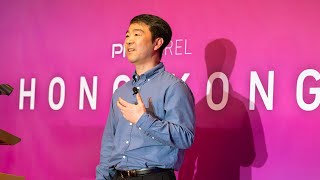
The presentation by a Ventex representative addresses the sustainability of recycled textile materials within an ESG framework, emphasizing that while recycling can reduce waste, it often incurs high costs and incidental pollution. The speaker outlines Ventex’s four core ESG‑focused technology pillars—temperature control, water control, air control, and composite control—detailing specific innovations, performance metrics, and durability testing. Temperature control includes conductive polymer films that provide simultaneous cooling (Qmax > 0.03 W/cm²) and rapid moisture wicking, as well as the AirX solar‑self‑heating system and SolarBall down‑alternative insulation that deliver up to 14 °C warmth gain. Water control technologies feature ultra‑thin nano‑coatings, the PFC‑free Magic Shield three‑layer laminate, and Eagle WR durable water‑repellent (DWR) finishes, all maintaining performance after 20+ washes. Air control is represented by Aerin liquid aerogel, a lightweight (98 % air) coating offering insulation, sound absorption, waterproofing, and antimicrobial properties; IR imaging tests show a 23 °C temperature reduction on heated surfaces. The HessaClean antiviral/deodorant chemistry eliminates multiple odor compounds and retains >70 % efficacy after 20 washes. Composite control integrates solar harvesting, liquid‑aerogel energy storage, and moisture management to achieve continuous heating. The speaker highlights Ventex’s 112 Korean patents, eight Chang Eon‑shik awards, and extensive military and commercial deployments, noting production in four Korean factories and partnerships with brands such as North Face. Durability (20‑wash standard) and safety (toxicity, skin‑irritation tests) are emphasized throughout. The talk concludes with an invitation for Q&A and contact for further collaboration.
Chapters
What is true ESG technology? It's linked. So today I will pay more focus on ESG technologies for textile part. Okay. I think you guys all know about ESG, the wording: environmental, social, and governance. Back to the first question, are recycled materials truly sustainable? In some case, yes, I can say. But some other case, no. In order to make recycled materials, it requires high cost, of course. And there are incidental pollution. During making the recycled materials. Also, there are some accident risk when someone collecting recycled materials from the— I mean, that kind of fishing net from the deep ocean. Today, I will focus on E, energy saving and carbon reduction part, and also for the S, protecting animal rights. For energy-saving technologies, we have 4 core technologies: temperature control, and water control, air control, and composite control. This is 4 core technologies we have for now. Brief information about our company. We have 112 core source technology patents in Korea, and we received 8 Chang Eon-shik Awards in Korea. It's a kind of Nobel Prize in Korea, award that given to the company achieved technical innovation. This one, this is for the textile part. The first part is temperature control. Due to the global warming, I mean, cooling materials market emerging very fast. And this is a cooling and quick-drying materials, and then offering a refreshing cooling effect in extreme hot weather. As you know, there are yarn-based technology, basically, mostly by HDPE, high-density polyethylene. Against the polyethylene, but due to some technical limitation, normally we use it for the batting products. For a garment, we use some special techniques. Like, currently we are using highly conductive polymer film. We attach that kind of film on the backside, and also offer two functions. One is kick— One is cooling effect, the other is wicking and quick drying at the same time. When we measure cooling effect, we refer to Qmax value. Customers can feel cold when there is a difference of 0.03 watt per square centimeter. If you compare untreated and treated fabric, there are 0.04 and 0.03 differences. Depends on the fabric though. For example, polyester spandex is a little bit higher, and for nylon spandex, a little lower. But anyway, it's over 0.03. For moisture management, for wicking and quick drying, I— maybe you know about MMT, Moisture Management Tester. Is checking overall moisture management of face side and back side at the same time. And there are two curves. The upper part is moisture contents of top layer, and the bottom curve shows the moisture content of skin layer. If you compare the two charts, the red one shows considerable amount of moisture on the skin side, but the treated fabric shows nothing, almost zero. So that means completely dry. So with this kind of treatment, we have— we can have both two different functions. I mean, cooling effect and also wicking. And the quick drying functions simultaneously. This is another technology, we call it AirX, and this is a solar application and self-heating by vibrating themselves when receiving sunlight. So, offer warm and comfortable, uh, functions, especially during the winter season. Basically, we have two different types of materials to have this kind of special functions. One is mineral complex, the other is conductive polymer. So, as I said before, when receiving sunlight, the special nanochemicals vibrate each other and heat themselves. At night, it reflects body heat, infrared rays from the body, and still keeps warm. So it has a 24-hour heating performance. We tested outside in winter season. The temperature was -13 degrees. And we made a garment, one side without treatment, and the other side we did special treatment. We checked the temperature difference. From surface temperature was 12.2 degrees difference. And in chest area, the Garmin side, it showed 14 degrees Celsius difference. So for consumer side can feel 14 degrees warmer. If we treat these special chemicals on it. I mean, the materials can apply to the yarn directly and also can be applied to any type of fabrics by padding process. So, there are huge applications. This is another synthetic insulation. This is a yarn-based technology. We applied— we put the Air-X chemicals into the yarn, into recycled yarn, and then make ball-type insulation for permanent heating function because this is a yarn-based technology. And it's a kind of down alternative. I mean, the animal love technology. So basically, we applied mineral complex and the conductive polymers to have training for our heating function. And we compared with natural down that exactly— it was 20/80, 80/20 natural down. And the temperature difference was something like 10 degrees Celsius. Now, so we compared our SolarBall insulations to the other synthetic insulation, then it showed 15 degrees of the temperature difference. The second part is water control. I mean, this technology shows, I mean, It has water control, water control materials that dries just in 1 second. It offers a comfortable wear, especially even after extreme workout. We applied ultra-thin nano coating on the backside of fabric with special kind of mold type. And there are two special features. One is excellent sweat transfer. It, compared to normal cooling fabrics, it shows 6 times fast sweat drying— no, no, sweat transfer, and 2 times faster drying speed. So basically for the wicking, if you see the table, the left and right is the test method was MMT, Moisture Management Tester. It shows drastic difference for the moisture control, especially inside of the fabric, I mean the skin side. And the other feature is semi-waterproof against the drizzle. When it rains, light rains. In case of normal cooling fabric, the inside, skin side of the fabric is totally wet due to reverse capillary action. But this kind of special treatment, it has a semi-waterproof function, so inside is totally dry. Outside is still wet, but the skin side is totally dry. You can feel dry. So this kind of technology we used, we provided our special functional fabrics to Korea Army for 7 years already. And the next one is we call Magic Shield. This one is PFC-free, eco-friendly, a highly breathable and waterproof material. Basically, it's a 3-layer laminated fabric. It's a kind of a total solution for moisture control. So there are 3 layers. First layer, we applied PFC-free durable water repellent finishing. This is super durable. And the second layer is a hydrophilic PU membrane, so non-PTFE film inside. And the third layer, we treated special nylon thin coating, so it has excellent moisture management, quick drying, and the wicking function. This one is 3-layer fabric, but compared to other 3-layer fabrics, it has perfect, I mean, moisture control functions. So basically, PFC-free, eco-friendly, and we apply this technology to the all-knit fabrics, face-knit fabric and hydrophilic membrane and another circular knit on the bottom layer. So this is 4-way stretch. And very light, it's only 100 grams per square meter. We can apply other functions, something like that, some solar heating functions as requested. This is, we call it Eagle WR. This is PFC-free. Super DWR, and this is extreme durability to washing even after 20 or something. I will show the table later. And basically, there is no impact on fabric properties such as hand feel and color, something like that. So I know there are a lot of see zero PFC-free chemicals on the market already. But the difference is the durability. We tested against all other existing chemicals. After 20 washes, if you see, our chemicals are over 90% polyester, nylon, even on cotton and rayon. In general, it's very— it's more easy to achieve that kind of performance for synthetic fabrics like nylon, polyester, but cotton is very difficult. But we can achieve over 90% even after 20 washes. This is the difference. And third one is air control. Technologies. We have, we call it Aerin. It's a liquid aerogel technology. I know you heard about aerogel already, but on the market you can see some aerogel products, mostly insulation, but this is liquid type. And Aerogel has specific features like this is very light because it's composed of 98% of air, and it has ultra excellent, I mean, insulating properties and sound absorbing, waterproof, antimicrobial, and more. So, warm and cool function, insulating, properties, so cool in summer and warm in winter. It has that kind of insulation properties. Not like solid aerogel, we developed a liquid type aerogel. That means it can be applied to the fabric very easily by just coating, life coating easily. If you apply this to the windbreaker with Varilight, it has waterproof function, breathability, and also warm and cool effect. So it's going to be a perfect solution for windbreaker. And with these specific properties, there are wide range of applications. It can be applied to the blind because it has sound absorbing and also has insulating properties. Also, it can be used as paint on their textile factories. For example, it can be painted on the dyeing machines, and also, why not, stenter. Then, it can save a lot of energy. I can show you some test results in the next slide. So, this is the image from IR imaging camera. We made a radiator. We prepared a radiator. One side we printed with aerogel, and the other side with a normal print. And we set the temperature at 100°C. After 10 minutes, we check the temperature. The area 1 is the Aerion printed area, and area 2 is just a normal print. You can see the temperature difference is 23°C in just 10 minutes. That means if you apply this kind of printing technology at the factory site, you can save a lot of energy because it blocks heat loss like this. This one is another test with ice. We also set the temperature at 100°C. And the left side, we put a small ice on it. And left side is a normal steel plate. And the right side, we just painted with liquid aerogel. So the condition is here. Few minutes, you can see the difference. The right side, the ice melts away in a few minutes. The right side is still there. So, it blocks the heat drastically. It can be applied to the factory. Why not? Because— So, with this test result, in Korea, some textile companies, they already try to paint this aerogel on their stenter and dyeing machines to measure the energy savings, something like that. This is a brand new one. The next one we call HessaClean. This is a natural antiviral and deodorant materials. So you can feel free from body odor and also even on sweaty days. This, this, the difference for differentiated property of this chemical is the deodorant performance. It can kill 7 different bad smells, not only acidity odor, acidic smells, but also basically odor. Normally, for basically odor, it's more easier to manage, such as a fish odor and, uh, uh, puritan gas, something like that. But for acidic odor, it's very difficult to manage. Uh, there are Now, um, food smells, I mean, it's just isophthalic acid gas, and also the sweat smells like an acidic acid smell. It kills over 90% in the beginning, and even after 20 washes, still over 70%. It can be treated, the chemicals can be treated onto yarn. And also can be treated on the fabric by padding process. So even for natural fabrics and synthetic fabrics, all types of, no limitation. The last one is composite control. This is all mixing from the air, moisture, and the temperature. We call, uh, hot vesting materials, energy harvesting materials with continuous heating function. The keyword is continuous heating, not just once. Even after 1 hour or something, still I have certain amount of the warmth. Basically, we can get energy from nature, for example, from solar, from the sun, and waste heat, potential energy, and the human body, pressure, electromagnetic, and like that. From them, mostly we collect energy from solar and human body. This is the two main energy source. The first, energy collection and energy conversion, then application. Before, I explained about solar application. So, we use that technology in— on the front side. And the application, the same meaning. The next step is energy storage. We have special layer in the middle by using liquid aerogel technology. So, it has— it maintains energy for a certain period. And the last— so, finally, we can achieve continuous heating. So basically, we apply this to the fabric like a magic shield. It's a 3-layer. First layer, we have a solar heating technology. And then in the middle, we apply a liquid aerogel to save energy. And the last layer, we can use water control technology, one-way moisture management. So basically, heating and then continuous heating means. This is a brand new one and it will be on our product very soon. This is a new one. And I can explain, recycled materials is a kind of old mobile phone. And now we can add special technology, we call it App Tech, Apple Application Technology, such as temperature to water and air control, all this technology. And then it's going to move to ESG smart materials, not just recycle, and then we can add more application to the hardware. And most importantly, all this kind of technology can be applied to any type of materials. So, that means if we apply this technology to the cotton, why not? It can be hot cotton, cool cotton, and moisture curtain or something like that. It can be, you can apply it to the, you know, the jeans in winter season to keep you warm and you can have different functions. Anyway, this is all for my presentation. If you have any questions, please feel free to let me know. I know there are different kind of technologies on the market already. In my presentation, I want to show you it can be applied to another idea, not just one thing. All these technologies can be applied open request. If you just want to have moisture management, yes, it's possible. If you want some solar heating technology there, we can apply as well. They can be applied to the cotton. And cotton blend with durability, because the durability is very important. We normally test even after 20 washes. Can I get a chance? Aerogel, especially liquid aerogel, is very new on the market. So we are currently proceeding durability test after 20 washes and 50 washes, and also we are currently applying to the consumer products such as blind and umbrella and like a paint I explained before. And also for military use in Seoul of the combat shirts. It's already— we finished products. You are an innovation company where you supply chemicals to textile industry. Export. We currently, we have 3 different business fields. One is functional textiles, and the second is chemicals, because we also make chemicals to make functional textiles. And the other part, we also supply some special machines to make, you know, one-way moisture management controls like that. It's going to be both. Yes, we supply chemicals to the industry. Have you tested application to home product? Sure. We have, for example, for Hestaclean, it's an antiviral and also deodorant chemicals. We apply these chemicals to the textile first, And this is totally safe. We tested in rats. I mean, toxicity test and skin irritation and everything was passed. This is fully safe. So currently we are selling spray, deodorant spray, to the Korean market already. So not only textiles, it can be applied to the household products. And when you talking about this kind of chemicals being tested, is that meaning if that applies to the fabric, that is able to pass the lab test? Sure. We are selling functional fabrics to overseas brand, so basically durability is very important because in most cases antibacterial and deodorants and solar heating function and, and quick dry, quick drying or something. We, our testing standard is 20 washes. So basically all our chemicals tested already with other brand, other mostly outdoor brands. Which current textile companies do you provide your technology to? Any international brands using your technology? Sure. For example, for solar heating materials, solar amplification materials, currently we are selling our chemicals to Korea Textiles. And also we are selling heat-generating polyester fiber to Yongwon Corporation. They are making, yeah, North Face. They are using our technology to make that kind of product. So some case we sell chemicals. Some cases we sell functional fabrics. Most of our fabrics use proof, I mean the functions already proved by Korean military army already for 7 years already. All the functions you talked about are not new concept. How do you differentiate with existing other chemistry? Yeah, chemicals is not brand new one. I mean, except liquid aerogel, you can find that kind of chemicals and similar chemicals on the market already. But when it comes to the durability and cost efficiency, sure, there is a difference. And the other part, for example, liquid aerogel is a brand new one, and the energy harvesting is a brand new idea. So I think this is We cannot find similar products on the market for now. Where do you produce functional fabrics? In Korea. We have our own factories, 4 own factories in Korea. One is for military, and the second factory is for special chemicals, and third factory is for textiles, especially for one-way moisture management control. And the 4 factories for the bio or something. So basically, we produce all the functional fabrics in Korea for the time being only. But we can provide chemicals to overseas countries. So currently, some other textile mills, I mean, famous textile mills like Everest and Caratex, So they are testing our chemicals at their factories. Okay. I think this is it. If you have any questions, please send me a mail or contact me directly. I'm going to stay here for the rest of the day. Thank you. Thank you.










