Can AI Really Transform the Retail Journey?
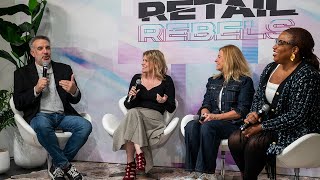
Paula Bianchi, Paula from WH Smith, and Kim from QVC discuss how retailers can use AI to unify fragmented data and empower frontline workers. They emphasize the human-AI partnership, from using ChatGPT for seasonal displays to coaching staff on customer interactions, while protecting brand identity and avoiding bias in personalized experiences.
Chapters
I'd like to welcome everybody here today. Hello everybody. This panel is called Paula, Paula and Kim. It's a talk show, Paula, Paula, Kim. It's actually called AI Across the Retail Journey: Data, Digital and the Store Experience. I'm going to give everyone 30 seconds of introduction. The key for these introductions is pronouncing the Paula, Paulo correctly.
Perfect.
Kimberly or Kim, by the way?
Kim.
Kim. So really monosyllabic, simple. And then you guys decide to screw around. So start here. Here we go.
Hello. So this is Paula. I'm with Napa Auto Parts, digital and e-commerce. So very happy to be here.
Hi, and I'm Paula, or for all you New Yorkers, how would a New Yorker say?
Paula.
Paula. I'm Paula. Paula from Philadelphia. Don't hold that against me. And I am with WH Smith, travel and hospitality retail.
And then I am Kim. I do not hate you because I'm also from Philly. So go Birds!
Two Philly girls, go Birds! Go Birds.
Yeah, so I'm joining from QVC. I am the VP of commercialization for their growth sector. So launching a shoppable streaming marketplace.
I love it. So we have either the Paola Pola contingency or the Philly contingency.
Yes, yes, exactly.
Oh, sorry.
You're just the outlier here.
No, we could be the Quebecois contingency. Oh, there you go.
Perfect.
All right. So we are speaking today about AI across the retail journey, a topic that I feel does not get enough coverage. So we are here to break that barrier. I'm going to make this easy for everybody. Start off. Most retailers start fragmented data. How can you unify that data so it— for customers, it feels real?
It's a huge challenge. We're actually living through it. So We heard just now from a 100-year-old company. I'm also a 100-year-old company. All of our data lives in a million different places. And with legacy systems, they're usually not smart and they don't like to talk to everything else. And so we have a tendency to think that AI is the end-all to end-all, right? So like it's just this magic wand that you Swipe and everything works, right? But it starts with your data and how do you bring it together. And there's so much work to do. And that's really where it starts, bringing it together.
Well, if that answer was good enough, we have one more Paula to answer the question. Yeah.
I think I'm always going to give you a different perspective because I've been in the field my entire career. And I'm probably one of the only field people here at this event this week. So I would say, you know, getting the data is one piece of it, but then really what do you do with it? And then taking it one step further, how do you integrate that into the frontline worker's life? What does that look like? How do we apply all this great data that we learn to make their life easier and to make it and to have them appreciate it? You know, there's a big skill set scare out there. Is AI going to take my job? It's not going to take your job. It's only going to help make it better. But we have to help the teams to understand that. So I think collecting the data and bringing it into one place, and then from my perspective, how do we leverage that to make decisions in store? How do we leverage that to get more market pieces for each area? I can tell you in any store team that I've ever worked with, they want to do a good job. They want to have what their customers want. So the more that we can tailor it for them and have the goods that makes them happy, have the products that the customer wants. You know, we don't want to have scarves and hats in a Florida store. That makes no sense. But we want to make sure we have plenty of swimwear and sunblock and all those things. So using that data to help us with that is one thing. Obviously, using data to help us train better also to be more equipped to help our customers. So— So there's definitely a lot of examples on what we can do with that data.
Kim.
And I think also, to your point, it's helping people understand what AI is, what data can do, and making it very crystal clear. Gone are the days of the generalist. We're very much specialized. So oftentimes, I think people feel that the data is dictating, and it's fearful, and it's what is going to happen. Give people the connection of what is the insight, what does that mean, how is it deployed, and then how can they then increase their productivity by leveraging it as a tool. Giving that clarity, I think, diminishes that threshold of resistance and helps spark that creativity of how on the front lines they can use AI to better, to better create those experiences for the customer. But then also, I think it's really imperative to then ask the people on the front lines to make sure that the data comes back. Oftentimes we just say data upstream is in your data lake, is in fragmented ecosystems. How then do we give them the information? But they also have a lot of data too. And that's how we can modernize and make sure that we're staying abreast of what the customer wants.
I'd like to just add one more thing onto that. Oh, just one more thing. And I think, okay. Oh, I'm sorry.
Thank you.
No, no, I lose my paycheck.
You are in charge.
It's not me.
It's not the Paula Show. One more thing I would like to add is just, you know, when we're getting that data back for our teams, teams, making sure that we don't add one more maybe platform to them. Let's integrate it into a system that they have now to start with so that they have— it's really a smoother transition. And then if we have to add new things, add new things. But initially, we should find out, you know, integrate it into our existing systems and platforms that they can, you know, have resource to, access to.
But sorry.
Oh, oh.
I think this is the Holland, Holland show.
When one Holland jumps in, the other Holland jumps in.
Yeah, of course. I think what you just mentioned You mentioned is key because it's moving from data to insights. So we have tons of data. What our teams need is the insights so that they can action, right?
So I think that's—
Wow. And you ruined the next question.
I'm sorry.
Because the next question was about action.
Damn it.
We get all— so I'll pretend you didn't say it.
Okay. Darn it.
You all mentioned the data and the frontline teams. How do you put this into action for your frontline teams, whether in a physical locale, physical locale, or a TV, switch the channel thing? But how do you get it there? How do you get this actionable so that people can actually use it? Who wants to hit it first?
I'll hit it first. Is that okay, ladies? Yeah, it's shocking, right?
Shocking.
I think that, you know, how you get it is really you want to start with the why are you sharing it? What's the why? Let me explain. You know, however you pull them together and you're sharing the data to create the actions, You want to explain why we're doing it, and then you also want to make it as collaborative as possible. Here's the data, here's the insights, now we're going to take action. Let's work on this together. Let's not plug it into Perplexity and let it pop out an answer. Let's think about it together. Let's be collaborative. I think the most important thing, if you take away anything from these next 2 days, is really it takes the human touch to make AI the most successful.
Wait, we're going to pause on that quote.
It takes the human touch to make AI most successful.
Just want to emphasize it. It was that good.
All right, that's my keynote. Thank you. All right, thank you, Don, for that moment.
Come to me.
A moment for my, my motto or my mantra. Um, okay, that's all I got.
That was good. That was good though. We, we have to break up the parallel party with Kim.
So, um, I think it's key is translation. Um, when we think about data, that's one world. We think about all of our cross-functional partners that we work with. Everyone is so in-depth and into their specific siloed field that you have to think about how does this data, how does this insight— you move it from data to insights, then insights, you have to think about how to tailor it to the specific circumstance. So zoom in, and then you zoom back out of how does this work within the larger ecosystem. People want purpose. They want meaning. They want to see how the work that they do influences the company's bottom line, influences the customer's delight. So it's, I think there's that key piece of thinking very critically about how do you translate that information and make sure that you're able to distill the insights into something that's going to land equally as well if you're talking to a product manager as if you're talking to a salesperson.
And sorry, I think—
Oh, oh, that's a good one. You did, we broke. Thank you.
You did good. I think it's about looking into what's in it for me from their perspective. Why should I care about this and what do I do with it? What's in it for me? I think if we put it in that perspective, then our field teams are going to feel empowered to use that data and those insights and turning themselves those things into action. It's not up for us necessarily to turn it into actions, but rather how do we put it together for them to do it.
Oh, I like that. You had a little pause. I felt the drama. I liked it. Right? That was good. Speaking on pause, I'm going to give everyone the reminder again in the QR codes. If you ask a question, I will weave it in so naturally you won't even know and you won't feel embarrassed. If you just have a comment like, I like ice cream, it would just be funny to see that. You could do either or. As you guys know, I have to twist things up because that's what I'm known to do, or else again Michael does not give me a bonus at the end of the day. Um, let's start right here with Cam. You have a platform, QVC. There's no QVC stores. Well, I don't think there are.
There's, there's 3, but it doesn't matter. Yeah, generally it doesn't really matter.
The Magic TV channel.
Yes.
Makes it slightly more anonymous, but then you have AI on top of that. Like how do you personalize with AI and use AI on the data, keep it personal?
Yeah.
When it's not as personal as let's say a physical Napa Auto Parts or WH Smith travel stuff, you're seeing them. So how do you do it?
Yeah, so it's, I think first and foremost, QVC, HSN born leveraging cable to reach the customer. At that time, that was an intimate way. Of reaching consumers. Today, we have more than just the one TV screen in their living room. We have one in our pocket. We have our iPad. We have our tab— other tablets. We have all of these smart devices. So, first and foremost, we have to go to where the customer is. And that's really what my job is, is to say, what are those growth ecosystems that we need to tap into so that the customer can see us as a natural extension of their everyday life and we're not just an add-on. So it's starting with just going to where the customer is. We also have a— we do a lot of business on our website, surprisingly. So, you know, people are cutting the cord. Our average consumer is in their mid-70s. We are going after the woman in their second act, so 50+. And that is a different segment from what you probably think of when you think of a QVC host. Most people say, "My mom watched QVC, my grandmom watched QVC," but people in the 50-plus don't usually say, "I do." So it starts with understanding who our existing customer is and then understanding who our new customer is that's on these different platforms. So like TikTok, we launched a TikTok shop. We are doing things with YouTube. So it's really thinking about what are those platforms where we can collect that information to make it less anonymized so that we can then feed that into not only the cable distribution, but our assortment online and our new channels that we are reaching the customer with.
I like it. Did you guys have any big thoughts on that, either of you? Because I have a different question if you're ready for it.
I'll take a different one.
You'll take a different one?
I'll take option 2, please, Duncan.
You'll get option 2. You like it because option 2 you're going to like. I'm going to vary what I see there.
OK.
One of the audience had a question on technology, and I'm going to vary it a little bit though, because they find technological models can be influenced by those who create them. And she nodded knowingly where this is going. And it might not be representative of certain demographics. How do you, with the focus on technology, how do you keep individual identities throughout when they're made by the monolith of one individual group? I'm going to jump to Kim because she had the most like, "Oh yeah, I know where this is going." It's all you. Not to double up, but then I want to see your follow-up after that too.
Yeah.
So I think first-party data is so key, whether you're a small SMB or whether you are a legacy brand. So really being able to collect those data points on not just who you want your customer to be, but who they actually are is super important. So if, as we think about technology, as we think about leveraging like the Perplexities of the world and other different tools, they are training on the aggregate of data. Every single brand, every single customer. So if you're not training on your brand identity, then you're already behind the game. You're diluting your brand from a digital perspective because it's not tailored. So it's really about the feedback loop between the customer. You have a diverse customer that has to be integrated into your model. It's not one directional, it's bidirectional.
I agree.
And I think one of the most important things, and we talked about it today in multiple different areas and panels, is that combination of AI and human. You're still in charge of your business, right? So it's not AI running your business. You need to make sure that your AI is being trained in a way that is relevant for your business. So whether you're using— your AI cannot run alone. Yeah, it's not running alone and crazy and creating its own customer audience and personas and all of these things, right? Like you're in charge and you're in control of it.
And you're in active control of it, I guess.
Exactly.
So like, remember that and, you know, it's your responsibility.
Go for it.
I can tell. Yeah. Just to complement what both of you said, I would say that, you know, the companies that are going to win are the ones that are investing in training on how to use this AI to the best ability. Frontline or back of house. You know, again, I'm always going to stand on that frontline worker hill, you know, till the day I die because that's, you know, who I advocate for. But the companies that are winning, and there's not a lot out there, I heard Walmart has really invested in a lot of training with the frontline workers of AI, but there's not a ton. So, right, you're still responsible for your business. And if you want to remain relevant and get the most you can out of your teams, front or back of house, you have to invest in training, and that takes capital, and that takes money. And so it's a question of, are you ready to do that, and at what level?
I like this. I like the depth. Now, I'm going to also go off script in terms of this in-store experience has been mentioned. But what is interesting to me when I'm hearing this is, No in-store, or minimally, I should say. Travel. W.H. Smith, your customer base is not living in Atlanta but passing through Atlanta or LA, whatever. And I'm not going to NAPA Auto Parts weekly. You're going when there's an issue. Exactly. You go when there's an issue and you get out. So there's not necessarily— there's a common element here. Your customers have an identification issue at times or not, but also are transient and only when needed, not necessarily like a local Trader Joe's. You're going every Friday, you know the customer in your frontline reports. How do you handle that data? Because each of you have 3 unique circumstances, so each of you might have a different answer. Start with the transients. Transient is not the right word, so please erase that from the script.
Yeah, okay. You know, I think that you have to do your research or you have to, you know, get your data from AI and really see, you know, where are your travelers, are they originating from? if they're passing through Atlanta, is the biggest base, are they starting in Atlanta, are they passing through Hartford Airport, like what is the biggest part of your customer? And if it's somebody who's passing through, if we identify that, then guess what? All of our gift shops that have all, you know, welcome to Atlanta stuff, or I love Georgia, or Georgia peach, or whatever the, all the Georgia sayings, but So you have to really, you have to know first who is your customer. You have to identify it and you have to dig deep to figure that out. And for travel, yeah, it is, you know, sometimes it's more like a balance. So you'll have somebody who is originated, you know, talk about PHL. And so, you know, right now, I tell you what, I travel all the time. This is just a side little note, and I know you're going to agree with me. I travel everywhere. There is no city in the US that reps their cities more than Philadelphia. You cannot walk through PHL without seeing green, and when in the rare times that we're winning for the Phillies, red. So in that case, you know, your customer is a homegrown, and we have a lot of Phillies or Eagles merchandise you can buy there. But yeah, you really have to know. I don't know if somebody coming from New York is gonna buy an Eagles shirt. I don't know. But so in that example, you would have more hometown. Our hometown because maybe we've done the research and we know that more people originate their flights in Philadelphia as opposed to passing through. Very interesting perspective.
No, I can add to that. I've been a photojournalist and you'll see my photos are in the DK Eyewitness Guides for Washington, D.C., but I can only get a copy of it at LaGuardia because there's an abundance of people go LaGuardia to D.C. So you get these common elements. Who wants to tackle that question next in terms of the data? Go for it.
I think it's, you're not in their face all the time. In our business, for example, you're not coming in every week, right? Like, neither should I expect you to. But that's what I call, and there's my day job, which is selling parts, and then there's, my marketing job, which is building the community. So the data doesn't come from my day job. Yes, it does a little bit. And that's ultimately the purchase, right? But where do I become relevant is in the conversation, in the social interactions, in every single touchpoint that we share, in every conversation that we share. Between the customers and ourselves. So it's not at the transaction level, you know, so whether they come every week or not is not as relevant as the conversation.
Whoa, that's deep and philosophical.
So deep.
So deep. Kim, can you get very deep and philosophical?
I like to go deep. So I think one of the things that I forget whether it was Paola or Paola said, but it's about we ultimately still have to know our Right? So, in a digital economy where the majority of, at least my business, is done online, there's a beauty of what we call like the lookalike audiences. So, you can understand who your customer is, but QVC sells all types of merchandise. We have a marketplace, we have private label, and it's understanding what is their holistic lifestyle to the point of the community. That's one of the really, our hosts were our original influencers. They embodied trust. They embodied— you had a specific aesthetic. They, they helped you navigate this purchase. So really that's what we're selling and that can be applicable to anyone. But we have to understand the entire landscape, not just who are our customers today, but how are customers and their patterns changing over time through the tools that they're using to discover our platform and then reacting to that. So I think it's, it's not looking at your customer at static way, but thinking about them in a more dynamic and always thinking about the whole landscape. Who's your customer today? And then also who potentially can be your customer tomorrow?
I like that. We do have another audience question. I'm gonna vary again. Brick and mortar, omni world, but I am coming at it thinking QVC is only based on TV. There's no chance it's anything but TV.
But— I'm lying too.
Exactly. And then there's now brick and mortar. Are you guys all affected by this omni world? And who wants to hit it first?
It's very challenging because you can customize and create this experience online and you can control that a little bit more. But then everything becomes true when people go into the store. Right? So all the work that's been done can be either experienced and you can surprise and delight in store, or you can destroy that whole experience in a second. So that's the challenge of omnichannel. It's that moment of truth. They're going to be on your side or they're not. And it all depends on one human.
I like this.
I would jump in with that. In my past, I worked for Dormy, and they were initially an online, and they started opening brick-and-mortar stores. And so we were really functioning as a true omnichannel company. And so to your point, it would kind of go back and forth. We would deliver a great, amazing customer experience in store, and then online they did a loyalty program. And so then in store, I was asking back and forth, okay, so how are we going to mirror that in store because the online customer is getting this great loyalty program, we want to do that as well. And then we kind of influenced online because we spoke about the amazing best-in-class customer experience, you know, selling bras. And that's a very intimate experience and you really make or break at that point of connection. The most important thing with the intimate space is really trust. You know, do you trust me? Will you try this bra on? Sorry. You know, can I see you in it and etc.?
You don't know what's—
Right. I know. I don't know. But so I think what's most important about the omnichannel that has been brought up is that they have to complement each other or be exactly the same, to your point. You know, you can't have them online and then bring them in store and drop the ball. You know, you've lost them then. Because let's face it, our customers are smart. They are smart, especially our younger generation. And they have all the product knowledge, they've done all the research, they've seen all the TikToks. They walk in the store, they know what they're buying, and they want an experience. And I say that when people these days, if someone's crossing your lease line, right? They're being so intentional to come into a brick and mortar store. Man, it's up to us to deliver the most memorable customer experience That is what we own, field people, field workers, you know, the whole frontline piece. You know, I also always say no one goes to Starbucks to look at coffee, right? They're going to Starbucks to buy coffee. So if somebody is crossing your lease line, they want to buy. So we better really knock their socks off. So I couldn't agree with you more.
I like it.
And I think the interesting thing is oftentimes we think about omnichannel in the context of one brand or one retailer, but in reality, we all have them. A mega computer in our pocket. And I don't know, every time I go into a retailer, I see someone on their phone in front of an item, looking at their phone, looking at the item. Same thing on digital. Unless you are so compelled in the moment to hit purchase, and which is why Instagram ads are so detrimental to my personal pocketbook, there is that consideration. So whether it's high consideration, low consideration, there's so many things, not even other retailers, so many competing pressures for our customers' time. They do not, they have finite time. And whether it's ads, whether it like, everyone has to have that moment of what is the other reason behind this one thing? 'Cause you can buy a bra anywhere, almost anywhere, you know? You can, even if you have a brand, it's, you can go, a brand that has a white shirt, you could go buy the branded or you could buy the private label. So, there has to be that other reason for being that the customer has bought into, whether it's at the top of their mind or in the back of their mind. So, it's not just about the product, it's also about what are the other competitive differentiators that is it, is it, hey, they make me feel aspirational by buying this, or is it, hey, it's the race to the bottom line and I just want the cheapest price. But omnichannel, like we have to think about, in the share of wallet and share of attention span. And that's very valuable for the consumers. So I also think that we just have to look at it in the total landscape and not just on a brand-by-brand basis.
So if I was going to ask my fellow panelists, who do we think gives a great customer experience in store?
That's officially my job or I lose the $2 Amazon gift card. Oh, shoot. So who do you think has a great customer experience in store?
You said it, my friend. Much better.
Thank you, thank you. I said dramatically too.
You did, you added that. Yeah, that's a curveball. It is a curveball. What do you think? Ladies, what do you think? I'm going to pass it to one of you.
Yeah, so I think honestly, when I think about, I think tech and I think Apple. I think people who are already so invested in the brand that they will wait outside. I pass an Apple every day when I I go to Pilates, and there's a line down the street because people want to get in first thing and talk to someone about the product, about the experience, about the features. I think that one of the things that they do well is that they don't necessarily have specialists. The people that help you are knowledgeable, they're broad and horizontal in their knowledge set. I think that's part of it. So even in-store, like Nordstrom, for example, it's, I think the retailers that are not looking at widgets, the Model T type of you just put a tag on the product and you just keep it moving. It's the retailers that think about how do we empower the retailer associates to have the knowledge about the things that are most important to the customer.
I think just that you mentioned Apple. One of my favorite people and authors is Ron Thurston. And so I was recently relistening to a podcast he did, and he had experience at Apple. And so he said, as they do really obviously put a lot of time in training their people to get them engaged and give a great customer experience. And one of the things they really ingrained in them is if they don't know, because obviously Apple is very technical, I don't know the answer, but I'm going to find out for you. And that kind of was something that put them on the map for their associates, not to brush anybody off, but I don't know, but let's find out, or let's find somebody who does.
We're missing a poll response, please.
I have. 2 conflicting ideas.
So—
Oh, 2?
Yes.
I thought it was one.
Because like, yeah. So one would be Sephora. I love their customer experience from the support standpoint and the letting you experience different things. The other one, and this is the reason for it to be the second because maybe less people are going to relate to it is gelato stores.
In general, just gelato stores in general.
Well, okay, so I'm from Argentina and like we're very much into our gelatos. And so when you walk into a gelato store, you don't just go and buy ice cream. You get to, you know, there's so many different flavors and for the most part they can be overwhelming. And so you get to try them and they will never say no for you trying like a different flavor and you can You can try literally all of them before you decide which one, right? So I think that's an amazing customer experience. And it doesn't matter the brand or the company. Every single one in every country I've been that has a gelato store, I challenge you to go and try it.
Now, since you asked your fellow panelists, I will answer this, which is to me, I just think the Disney experience is that standard of— and I just love the fact you go depressed and they're like, "You need to find a bathroom? Well, I'd love to get you there." And you're like, "Wow, I want to go to the bathroom, but thank you." And it's really that standard when I talk to— I'm on some boards and we'll always say in the middle of meeting, like, "Oh, we need to get to like a Disney-level customer service." Cast service.
Like the cast members.
Yeah.
Because they're into their—
And I I think, you know, I believe also—
I believe you both do.
There's that culture that starts at the top where you have to reward your team in saying, "No, spend the 5 minutes extra because it's worth it. It is worth it," which builds the brand, which builds the loyalty, and it kind of causes that little happy feedback loop, I think.
Yeah.
I think just one more thing, and this is just to marinate on, not to talk about, but I think sometimes, unfortunately, people would have more examples of of poor customer experience ingrained quickly in their head than good. And so I think the challenge for us in the field is to flip that narrative. But I think if you asked everyone, where have you not experienced good store experience, I bet we all could come up with, and we won't do that, but that's the power of a good one.
You just led to the next question. I love it. In an earlier panel we had, I was saying I think AI is an extension of the human, and an AI should be additive. And in my opinion, when we're discussing the front lines, you can't— if they're the— one of the questions was kind of like, how do you, um, train the staff? And to me, if they're using it, uh, as a replacement, not good. If they're using extension in a certain manner, it can work. But I already saw Somebody have an opinion. I don't know which of the three of you might have this opinion. It could be the most timid of us all.
Paula.
Paula.
Paula from Philadelphia, please.
Philly Paula. I think that's a great question. I think, you know, what you have to really think about when you're in stores, and I'm really passionate about this, is that, you know, there's a level of diversity in ages and learning in your stores. And so you have to, just like we have to meet the customers where they are, we have to meet our team our team members where they are. So some people grew up with, you know, or are really, you know, very familiar with ChatGPT. Others aren't. And I spend a lot of time traveling, you know, stores. And so, you know, I may walk into Kim's store and we may look at a setup and I may say, hey, what do you think about this? And you're like, oh, I don't know. And I'm like, you know what, let's do something cool. Let's take a picture of it in ChatGPT and ask it, how can we make this look more seasonal? How can we make this setup look more like Halloween? And, you know, the associate's like, oh my gosh, really? You can do that? And so in that moment, I engaged her. We used the tool. We taught her how to use it. Of course, ChatGPT came back and was like, oh, add some pumpkins, put some orange towels there, put, you know, whatever, some candy there. And it gave us a picture. And so I engaged her. I taught her not only something to help her in the store, but I taught her a life skill. I helped her, you know, take her learning to the next level. So So in stores, we're using it for that. We're also using it as a coaching tool. Hey, I observed Dom not saying hi to customers. Always say hi. What can I do about it? Or how can I inspire Dom to say hi to all the customers or to give a— the worst greeting in the world is welcome in. I literally hear that and my skin crawls. And so how do we help? Welcome in is kind of like a lazy answer. It's really taking away saying, "Oh my God, you have the cool— both of you have red shoes on. I missed the memo, by the way, but oh my God, the coolest shoes. How's your day going?" You know, that's an engaging welcome.
So I feel like, Paula, your passion on this subject has diminished.
I am so passionate.
But in the interest of time, I need to get another Paula, just a random one.
Okay. So—
Could be any Paula.
In my business, actually, we're in a way competing with our own customers. For the knowledge. So there's less and less technicians out there. There's less and less people going into trades, right? And so for us, we need people that are very knowledgeable about, you know, the parts and all of the technical stuff. But if I hire them, I'm taking them away from working into my customers' garages, for example. So how do I empower people that are not specifically technicians and how do I use AI or technology to future-proof my business so that I can hire anyone and leave the specific technicians and the trades to where the trades belong?
So to enhance the human to be better at answering these questions.
Exactly.
I like that. Kim.
So I think that's a great segue. I don't know we're running on time, but when we think about training, it's not just training the employees, it's also about training your AI models. And without that intentionality between your models, if your team members are just going out using ChatGPT or DeepSeek or all of these other tools, they are running the risk of— you're putting your brand identity in other people's hands. They're training on Reddit, on TikTok. We all know— I, I know what I read on Reddit, and I, I don't think it's always of the utmost quality, um, or even always true. So when I think about how to differentiate, how to want— get your employees to want to use AI, it has to be additive.
They—
it needs to be true to your brand identity. So that starts with, is your AI model— are there tools that understand deeply who your customer is, who your brand is, what to say, what not to say, what is the tone, what is the color palette, so that when they then take a picture of that end cap and say make it seasonal, it's not just a generic, it's actually relevant to your brand because then that enhances the credibility to the frontline associates.
I love it. And in the interest of time, also to switch it up, What's the— I'm going to give you mine, but what is the best thing you learned from this panel? And for mine, it's going to be you kind of have this AI layer, this omni layer, this human layer, this first-party data level connecting it all, and just the complexity that actually makes it to me very interesting of solving this kind of like a little Sudoku puzzle to me. How do you solve this all? Who wants to go first? Smartest thing you learned on this panel in one line, given the interest of time.
Oh, one line, you stumped me there. I think it's about the omnichannel experience. The customer is not just looking, seeking, transacting. We're competing, we're all competing against different things. So we have to be very smart about how we engage the customer to make their lives easier.
Paula, Paula.
I love the idea of, you know, making sure that we're empowering the frontline employees and And how do we bring all of the data that we have in the AI, not just to bring insights, but how do we bring those insights to empower those frontline employees so that our omnichannel can be actually a better experience?
Of course you're going to bring it home. I'm ready.
I think that really the perspective shared by my fellow panelists really makes me think a little bit more about about the data collection and what we're doing with it and really how valuable it is. You know, sometimes frontline, when you're in the frontline, you're just running, running, running and you're doing, you're an activator and you have to really make it a point to mentally, okay, I have to slow down, I have to look at the data. Any true retailer that runs a store or is in the field, they're running. And so there's so much to gain from slowing down and to digest that data. So slow down to speed up is what I learned.
Slow down to speed up. Yeah, I like that. I like that. I'd like to thank our panelists. I am Dominic Miserandino, CEO of RTM Nexus.
Paula Bianchi from Napa Auto Parts.
Paula from Philadelphia.
Kim from Philadelphia.
And lastly, in the last minute, best Philly cheesesteak, Kim.
Oh, gems.
Jim's. Best Philly cheesesteak?
I'm gonna have to say Pat's.
Pat's. Alrighty.
I don't do Pat's Argeenos.
Thank you all very much.
Thank you all. Thank you.










