Collaborative Workshops for Sustainable Practices | KIABI | PI Apparel
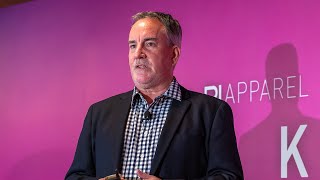
Terry Broderick from Kiabi outlines the retailer's Vision 2035 sustainability roadmap targeting 20% lower carbon emissions, 30% less water use, and 2% less land use. The "Design the Future" workshops bring suppliers and material partners together to co-create durable, eco-designed products, while the "Five Leaves" framework scores suppliers on green manufacturing practices.
Chapters
Um, my name's Terry Broderick. I'm the Operations, Technical Services, and Non-Apparel Sourcing Leader at Kiabi, and I'm going to share with you today a bit of an update on what we're doing in Kiabi in relation to our sustainability journey. Just a little bit about Kiabi for those of you that may not know who we are. Kiabi is a French company. We were started in 1978. In 2023, we turned over €2.4 billion and we have approximately 580 stores across Europe, Northern Africa, and the Middle East. In December 2023, we launched our new Kiabi Vision 2035. What that is, that's our new strategy which is based around sustainability. And we call that the three capital approach, where it's about acting for the environment, acting for people, and creating shared value for both our customers and our suppliers. So what are our vision targets for 2035? Like everybody over the past 5 years, sustainability and what we're doing in relation to that area has become much more important for everybody. In Kiabi, we set some targets. We want to reduce our carbon emissions by 20%. We want to reduce our water use by 30%, and we want to reduce our land use, which is much more challenging, by 2%. Where are we at today in relation to our carbon footprint? In 2023, working with some organizations in Europe were able to map our carbon footprint, which is quite a difficult thing to do because if you spoke about carbon footprint 5, 10 years ago, nobody really could tell you how you could map it in that. But there are a lot of companies now working in this space, and we're working with some of them. So in 2023, our carbon footprint in Kiabi was 2.4 billion tons of CO2. That's a pretty big number. But what was more important for us was to understand how do we impact that number. What are we going to do? Where are we going to target to try and reduce? And as most of you would know, because I think a lot of you work in supply chain areas, it's all about the product. It's all about the process we go through to create product for our customers. And for us, when we mapped it, we were able to identify that 72% of our carbon footprint came from product-related areas, 3% transportation, 5% the product use, 14% customer transportation, and 6% in other indirect areas. So what are we going to do about it? Well, we started thinking in Kiabi, and we started in January 2020 Not the best time to be starting a major program with what happened in the world about a month later, but we decided to implement a program called Design the Future. And Design the Future was about how do we use all the collective intelligence we have across Kiabi, across feedback we get from our customers and our supply base to improve our sustainability offer. We decided to focus on 3 areas. Lifespan extension, linking to how do we implement a strategy around secondhand product and circularity for the future? Eco-design, how do we reduce our impact on the environment and people? And green manufacturing, how do we work with our suppliers to do what we want to do? There's no free lunch. It's going to cost money. So how do we work with our suppliers to develop something that's good for them, good for us, good for our customers? And we're convinced, in the results we've seen today, that if we all work together, we can succeed. When we think about design the future, What's really important for us is what are the commitments we're making in relation to the program. What we're trying to do in Kiabi, like every company, we've got multiple programs, multiple projects, multiple ideas all going in different directions all around the place. How do we bring it all together under a program where we're not actually competing for resources, we're not competing for CapEx or OpEx to support projects, How do we bring it all together? So what we decided to do was let's try and work cross-functionally instead of vertically. Quite challenging in a large organization because you have different stakeholders, you have different priorities, you have different targets that they're all working on, different KPIs. So what we tried to do with Design the Future was bring together A lot of people across different projects, including eco-design, durability— really important for the future. How do we make product more durable? Eco-fabric, eco-finishing, standardising product and what we make to help us improve efficiency with our manufacturers, trims, and then low-waste fashion. So what we thought was, who are the actors in this? And we call it the dream team. It's not an American basketball team that went to the Olympics. It's actually a collaboration across our suppliers, our teams in France, and our supply chain teams in Asia, together with our supply base, raw material suppliers. Everybody that interacts in our ecosystem is involved in this process in some way. Well, they have the opportunity to be involved in this process if they'd like to join us on the journey. What's the methodology behind it? This is just a high-level sort of what we do. There's a lot of work goes into doing this sort of stuff, but the general methodology is we need to communicate with people. So we communicate with our material, trim, and packaging suppliers. What's happening in your world? What are people doing that's interesting that we can learn from? We don't want to spend a lot of time and effort doing something and then find out 6 months later that there's something else everyone else has been working on that has been much more efficient and much more supportive of where they're going with this sustainability plan. We meet with the project teams from internally in Kiabi across our merchant teams, our sourcing teams, our suppliers, mills, garment techs, production engineers, and costing team to share the scope of what we want to do and list the options we're looking at for the workshop. We have a thing we say sometimes in Kiabi, garbage in, garbage out. If you put in garbage, what are you going to get back? More garbage. What we want to make sure is when we're doing a workshop that the inputs are validated, that they're sustainable, durable, price optimization, everything's been looked at, but they need to be validated information before the workshop for the workshop to be effective. Or when you have the workshop, you have a lot of people sitting in a room arguing about what's correct and what's not correct. So when we actually have a workshop, what happens? We do a workshop, we highlight product categories. We do it by what we call a product category, and I'm going to share an example with you of what we did with one product category shortly. Okay, when we start, obviously, you know, what is the state of play? Where are we at with this product? What's working? What's not working? And then what we call a fresh co-impact, which is what could be possible in a perfect world. Part 2, brainstorm. I think everybody's very familiar with brainstorming and how you do it. When you're trying to do it with 15, 20 people from 5 or 6 different product areas in a company, it can be a bit challenging. So the project management part of it and having good people that can actually project manage those discussions so you don't get sidetracked is really important. We also look at benchmark. Before we do a Design the Future workshop, we've done a pretty extensive benchmark. What is best practice in the industry? Who's doing really smart things that we can learn from and maybe help implement for the benefit of Kiabi and our customers in the future? We also do a very extensive durability test on our existing product. We want to know how is our existing product performing so that we can determine where do we need to go. If we want to create product that is more durable as part of this process, we need to know where we are today in the way that product performs. Part 3, there's got to be an outcome. Obviously, the team that are involved in the workshops, they collaborate. They confirm what are the modifications they're going to make in the product. Probably the most important part, people go away from a workshop, everybody's busy. You come back 6 months later and say, oh yeah, we had some really good ideas, but we didn't actually do anything. So part of the workshop at the end of it, collection team, because they're the decision makers when we talk about product in Kiabi, They have to come back within 2 weeks with their commitments on what they're going to do in relation to design the future on the product category and what's been recommended. The workshop's limited to 3 hours. When you do this sort of thing, you could spend days on it. But by doing all the preparation work beforehand from all the different stakeholders, we believe it gives us an opportunity to be very efficient and to really focus people for a short period of time. What's possible? Where do we want to go? During the workshop, you have to have a format. If you don't have a format of what you want to do at a workshop, you're going to get lost. So what we do is we use— we call it a Kiabi Wheel. And what it is, it's based on 5 different areas that we look at in the workshop. And all the teams have prepared information to bring to the workshop to share with their colleagues and to talk about. Raw materials, obviously a big part. Production— what can we do to be more efficient in how we work with our suppliers in the manufacturing process? Packaging, transport, distribution— sometimes the peripheral things people forget about. Customer use, the end of life of the product. How do we, if we're going to do a design the future product, how do we try and come up with a product that is going to have less write-downs at the end of the season? Things like that. What is the end of life of the product? How can we share with the consumer the best way to look after the product to make it more durable? And then obviously the end of life, which is something that everybody I think is challenged by at the moment. How do we manage the end of life of product, especially apparel and textile-related product. So we've got a toolkit, and in our toolkit, we've got some tools, which is always good to have. So what we do during the workshop, we follow a process where we look at things like raw materials, single composition materials, increasing the fabric weight potentially for durability. Maybe actually making the fabric a heavier weight can actually help us with durability, which will offset some of the other challenges we face with this sort of product. Compacting the yarn— we found that that can have a really good effect on some basing product in giving us a better result. Production— looking at eco-processors, there's so many, I could go on for days about it. Packaging transport— We've got a policy now in Kiabi, no air freight. That was mandated as part of the vision. We're not allowed air freight unless it's approved by the board of directors in France. Getting them to approve that, pretty brave person if you're gonna go and ask them to do some air freight at the moment, but we don't do that. We don't wanna be discounting our permanent offer in store. 50-60% of everything we sell in Kiabi is what we call our permanent offer. We don't want to be discounting that. We want that to be running product that we have in store all the time. Packaging— we're eliminating plastic. We need to. The impact on the environment is not good. We're also working on, as part of our strategy, how we can eliminate all plastic by the end of 2026 in our supply chain activities. We then talk about the customer care. The washing conditions, what's the best way to wash product to help it be more durable in the future? How can we help educate our customers how to look after the product better so that they get a better experience working with Kiabi and the products they buy from us? Repair and service in stores. We're experimenting at the moment. We're having small repair stations in stores where people can bring product back to Kiabi and there's a service there that can repair the product if you've got a small damage on it of some type. End of life, cradle to cradle. I think this is one of the big challenges that everybody's talking about at the moment. How do we recycle or make product recyclable? End of life, how do we do that? How do we make our product last longer? How do we give it a second life? What are we going to do? To support the strategies around that going forward. Here's an example of something we did on a product. It's a puffer jacket. And when we did the workshop— it's just an example— the workshop covered one product category, puffer jacket. And there were 21 styles in VIVE involved with a quantity of approximately 500,000 pieces. And what the team came up with, this was the recommendations they came up with. And a lot of it was about replacing virgin materials with recycled materials, and how could we adjust the dyeing process to get some benefits in reducing our CO2 and water consumption. And also, what can we do in relation to the inside of the product? Sometimes when we think about product, Everybody thinks about the shell fabric and what can we do. What about all the other bits and pieces you've got in your product? That can have a really big impact as well on what you can do. What we're able to do on this product was go to 100% eco trims, where all the trims, interlining, thread, labeling, hang tags, packaging, they're all made from recycled materials. The zipper, obviously when you think about zippers, everyone thinks, yeah, you can get recycled zippers. Not all, not 100% of zippers are recycled yet. They're nearly there. 100% of the teeth and the tape is recycled, but the slider, it's now 96%. So it's not quite there yet, but I'm sure in the next 12, 18 months, somebody will come up with something that will make it 100% recyclable. So one of the key things for us when we talk about this was looking at, Don't just look at the outside of the garment, look at what's inside as well, because you can also have a big impact on what you're doing by looking at that. What are the benefits we've got to date from this program? We've completed this program on 6 product categories. It's minimized the cost impact of implementing the eco-design strategy, really important. Like I said before, there's no free lunch. Going eco is not cheap. It costs money. What can you do, especially a company like Kiabi? We're a mass market retailer. We're competing at the sharp end of the market. We need to look at how can we be more eco-friendly, but at the same time, we've got margin challenges from our shareholders that we need to meet. And they're not going to accept if we say, ah, we've got a great eco-friendly product, but your margins drop by 20%. That's not going to be acceptable. So we've got to look at how can we minimise the cost impact and still be more eco-design friendly. We've also been able to, with this program, improve the durability on the 6 product categories that we've done. That's something in Europe especially that is really, really important for the future— durability. I think we're going to hear this afternoon from Redress about some of the work they're doing, and we work with Redress as well. And durability is a really big topic in Europe at the moment. The more durable product you can provide to the market, there will be some indirect benefits for you in the future. Okay, so we've come up with a new design, we know what we want to do, how do we do it with our suppliers? We've got a strategy. This is the second program I'm going to share a little bit with you today, is what we call our Five Leaves, which is our green manufacturing strategy in Kiabi. And again, when you're talking about designing the future, it's not just about product. It's how do you help your supply base get ready and change and adapt to what they need to do as well for the future. So over the last 12 months, we've developed this 5 leaves approach, which is around eco-materials, eco-processes, green factories tier 1, tier 2 and 3, and then use and end of life. Again, for us in Kiabi, this is something that has been shared now right across the company, and everybody is very aware of our green manufacturing and 5 leaves in Kiabi. Whenever we think about or we're talking about introducing a new supplier now, the first thing we talk about, what is their 5 leaves score? It's the first thing we do when we're talking to suppliers about joining us in Kiabi. We're also reviewing with our existing supply base, where are they at the moment and what can we help, what can we do as Kiabi to help them on the journey of green manufacturing for the future. When we talk about Green Manufacturing 5 Leaves, just to confirm what we're talking about, the definition of the tiers. Tier 4 is the fibre producer. We're not looking at that at the moment. To be honest, it's too hard. We need to focus on where we can actually have some input and control some of the outcomes at the moment. So that's that. Obviously, tier 0 is us. Tier 1 is our garment producers. Tier 2, the fabric producers. And tier 3, the yarn producers. So that's where we're focusing our attention on what we can do to help them on the journey in the future. Here's an example of a roadmap that we put in place for packaging 3 years ago. And just to give a bit of a snapshot, we do have KPIs like everybody. You have to have KPIs to measure how you're progressing on your roadmap. Really important. It's not just going to happen because you want it to happen. You actually have to do something to make it happen and engage with both internal and external stakeholders to get a result. And that's just an example of some of the work we've been doing. With our packaging team, which is based here in Hong Kong, with our suppliers, and with our service providers. Okay, how do we measure our success? Again, we can tell you, yeah, we reduced our carbon footprint by 20%. How do we validate what we're doing? We need to have certification and work with organizations to help us confirm that what we're doing is correct. And it's also real. It's not just something we're saying and then we can't back it up. So we work with companies like GOTS, GRS, Ocotex, Cradle to Cradle. There's a lot of different organizations we're working with now that we didn't work with 5 years ago that we need to work with. To help validate what we're trying to do in Kiabi to go forward and not be challenged by the market or regulatory authorities in relation to the claims that we're making as well. Obviously, we want to have a link between the 5 leaves and design the future. When we think about design the future, the scope, scope of it. The scope of it is, it's covering raw materials and eco-processes, and it's covering use and end of life. Very important that when we do this and we're talking to our teams in Kiabi, that they understand, hey, we need to be taking this into consideration when we think about how we're going to work in the future and what we want to be doing. How do we make sure we've got the right partners? So what we're doing now as well as part of this program with Design the Future, we're talking about green manufacturing. We're also talking to our suppliers, our service providers, both tier 1 and tier 2. What are the conditions we need for the future for you to be a Kiabi partner. Going forward, you know, we talk more, you hear everybody in the past 2 or 3 years talk about, yeah, yeah, we partner with our suppliers, we've got really good partnership. I think during the COVID pandemic, there was a lot of great examples of what happened to that partnership and what worked and what didn't work. For us, it's really important if we're going to partner with a supplier, We need to have some skin in the game just like they do. So a big part of what we're trying to do in Kiabi is what can we help you do to be a better supplier to Kiabi? How can we help you on the journey? Is that by sharing with you our strategy? Is it by helping you have a more stable order flow? What is it? What can we do to help you because, At the end of the day, if we don't have suppliers, we don't have a business. And I think if you look at the attrition rate of manufacturing across the apparel and footwear industry over the last 3 to 4 years since we've gone through COVID, it's diminished a lot. And it will continue to reduce because the challenges that our suppliers face in the future are just as challenging for them as it is for us as brands and what we're trying to do. So very much we're talking about, have you got a green manufacturing strategy? Are you prepared to be transparent with us on what you're doing and how you do it? Are you committed to delivering an eco-design mindset? What are you doing in relation to automation and digitalization in your world? And do you have a manufacturing excellence roadmap? That is going to deliver on what we need, but also on what you're going to need to be one of our partners in the future. So when you think about all those things, you sort of think about what's next. And in Kiabi, we're doing a thing now we call Cost Plus with strategic suppliers. And we've now implemented this with 8 suppliers in the subcontinent, where we're actually now been able to, by using tools like Shapeshifter, which we've been using for 2 or 3 years now, we've been able to really optimize the fabric cost and the utilization on what we're doing, which has really helped us a lot. And there's transparency on that with suppliers now. We've also been working with GSD Cost in relation to what do we do with SMV. In Kiabi 3 years ago, nobody— 4 years ago, nobody knew what an SMV was. It was like talking a foreign language. Kiabi traditionally had a buying strategy where we bought things. So it was FOB price, we'd buy things. 4 years ago, we headed down the path of moving to an SMV strategy where we looked at what is the real— what are we really doing with suppliers? What we're doing is we're buying capacity. We're not buying units. We're buying capacity. Capacity is minutes. So we need to start changing the culture in Kiabi around how we spoke with suppliers and how we looked at our business and what we needed to do for the future to have better conversations. By implementing these two things, we've now got to the stage with strategic suppliers, we don't talk about fabric utilization anymore or cost. We don't talk about SMVs. We talk about what profit margin do you need on this product to work for Kiabi? OK? And that's a big step from where we were 5, 6 years ago. But we believe that that is a really important thing for the future. 'Cause if we're going to be asking our suppliers to invest in new technology and things to support green manufacturing and our 5-leaf strategy, what are we doing to understand the challenges that they face in their business as well? Sure, we're a customer. We're going to place orders. We want to buy things. But they may have a lot of constraints going on in their world. The wage increases that you see in some regions of Asia which are double-digit in some cases every year. If they invest in CapEx to put in the new technology, they're looking for a return on investment. They're not doing it because we asked them to do it. They may be, but they're doing it because they believe it's going to help them in the future. So that's really important as well. So it's sort of thinking a little bit different about how do we interact with our supply base. How do we influence them in the direction they're going to take in the future? And how do we try and get to a win-win situation? Unfortunately, not all of our suppliers will be able to come on this journey with us in the future. We know that. We hope that most of them can, but we know that not all of them will be prepared to come on this journey. But we believe by being transparent with them, and sharing where we're going, we're giving them the opportunity to engage with us if they want to. If they don't want to, great. That's your decision. But we need to be transparent with them where we're going, why we're going there, and then hopefully we can get a win-win situation. And that was what I wanted to share with you today. So thank you. Wow, questions. OK, I'll try and answer these as best I can. Remember, I'm just a supply chain guy, OK? I'm not an expert on everything. As a retailer, we should promote durable products to be ESG. How does Kiabi weight between sustainability to business targets set by management? How to balance. Well, the new vision we set for Kiabi, which is our three capital approach, which is ESG, number one on that is actually sustainability and how do we meet our sustainability targets for 2035. So it's very much at the forefront of any decisions we're making in Kiabi at the moment. The first thing we're talking about is it sustainable? Does it support our ESG strategy. How is Kiabi preparing itself to the requirements of the EU Green Deal supply chain regulation? Are there aspects of their requirements that are too burdensome? It's challenging. Every 2 or 3 months, we get an update on what's happening in Europe, and it's, wow, how do we manage that? Again, we've got a very good team in France that monitor that very closely. and then they work with us in supply chain when it impacts on what we're doing with our suppliers. How do we meet these goals going forward? The new laws in France that are being put in place at the moment are quite challenging. We believe that with what we're putting in place, with our Design the Future and some other things that we're doing as well in the environmental and social compliance fields, that We're on the journey. Hopefully, we'll get there, and hopefully, we can meet the requirements of what the expectations are of the government in the future. Do you consider all recycled fabrics as equal, or are you working to minimise plastic-based fibres? I'm not the expert on this topic. When we talk about recycled fabrics, we're focusing very much on cotton. 75% of all the fiber and fabric we use in Kiabi is cotton-based. Plastic-based fibers are not as big a component of what we do in Kiabi as cotton, so we're focusing on where we can have the biggest impact first, which is on cotton-based materials. How do you evaluate the eco-score of your suppliers for existing, new suppliers? OK, the 5 leaves, which we've implemented 6 months ago. Currently, Kiabi globally, we've got 120 suppliers across a factory base of about 320 factories. Based on the initial scoring we did on our existing suppliers, we only have 3 suppliers that can hit a 5-leaf target at the moment. So we've got a lot of work to do, but we're on the path. So our aim is we've got different goals for '25, '26, '27 to increase the scoring of our existing suppliers and what we can do to help them on that journey. But at the moment, it's a pretty low base. If we look at who's already where we want them to be, we've got 3 suppliers across 7 factories. That are actually there. So it's going to be a challenge. Do you think suppliers are ready for the challenges of Cost Plus? Hmm, good question. Based on when we started this program 3 years ago, quite painful, like going to the dentist. We knew we had to do it, and it was going to be a good result, but it hurt. Suppliers traditionally, most of our suppliers, because we've always worked in a buying mode at Kiabi on FOB pricing, they were very much wary. Why do you want to know what our costs are? So again, it was an education process with them. And NDAs were put in place, of course. We already had NDAs with all our suppliers on confidentiality. But it was more— about how do we educate them that, hey, this is something that's good for you, but it's also good for us. If we've got better transparency on cost and you know what the real cost is to make product for Kiabi, you're going to be able to focus on where you can improve. And we found that when we started that program, a lot of our suppliers, they didn't know what the real cost was. They thought they did, but when they started digging into it, they got a few surprises. So we saw it as sort of a win-win where they actually knew the real cost, not the perceived cost of what their products were. What kind of tech digitalization initiatives are you asking suppliers to invest in? We're working with several solution providers. We've been working with Browzware for approximately nearly 5 years. We're working with Shapeshifter. We've been working with them for 3 years. We work with GSD-COST. We also work with Gerber for 2D pattern as well. And our PLM solution that we use in Kiabi is Centric. Nick may not like me saying it. I call Centric the filing cabinet. Because for me, everything has to go in one place. So what we're very, very focused on and very careful about is whenever we're looking at new technology solutions things like that software's in Kiabi, we're very careful. Will it go and can it connect through APIs or whatever to Xentrik? Because we need to have one source of truth. The days of having merchants, tech people working on Excel spreadsheets on standalone computers, that's gone. You've got to have one source of truth that you're using in a company and for us, data-centric. So we're— and it's challenging. A lot of people still like getting their Excel spreadsheets out and, look, I'll do it my way, it's quicker, it's easier for me to do. But then we lose all connectivity to the other parts of the business, and is that data actually valid or not? So again, it's transformation, it's changing the way you work to embrace use of digitalization and the technology that's available. To hopefully get a better result. Wow, more questions. Can you elaborate on what and how to minimise the cost with eco-concerns? What are the 3 biggest challenges? The 3 biggest challenges, maintaining margin while implementing an eco-strategy. How can you implement eco-fabric, materials, trims, et cetera, and still maintain your margins? That's why you need to be working very closely with your supplier base. How can I improve efficiency in my supplier base? If I improve efficiency in my supplier base, I improve my overall cost. I can then use some of that to help offset some of the additional costs I'm going to incur in implementing my eco-strategy. Some of the eco-strategies we've implemented with packaging were actually cheaper than using virgin materials. We were really surprised when we looked at some of the packaging options. We actually saved money by going eco on some of the packaging, which was a pleasant surprise. So it's not just looking at one thing, it's looking at everything you're doing. Where are the opportunities to save some cost that you can invest then in being more eco in the way you do things? "For the 2030 roadmap replacing plastic from trims and packaging, besides cost challenge, what are the technical challenges you have seen so far?" Compliance is a big challenge for us with replacing trims and packaging. A lot of our suppliers, they've got an internal supply chain where, especially in countries like Bangladesh and India, they're not just a manufacturer. They also have a packaging company. They have a trim company. And they want to use their internal supply chains. And we're saying, look, we really need a global solution for Kiabi. If we want to have visibility and transparency, traceability on what's happening, we need global suppliers that can give us that. And not all the local suppliers, unfortunately, can do that. So that is one of the big challenges we have is convincing our suppliers that sometimes we need to move to a global supply option away from a local supply option, even if it sometimes results in a higher cost for us, because we need to be thinking about how can we be compliant with all the rules and everything what's happening in the future. Do you believe the apparelists will reach net zero by 2050? Hopefully. I don't know if I'll be around in 2050. That's 25 years. Again, I think it's a target that's been set. And I think it's great to see that a lot of brands, suppliers, manufacturers are embracing that and saying, we need to. How soon we can get there, I think we will get there eventually as a world, but how soon, I'm not sure. I think there's so many different things happening in the world geopolitically, and other influences and that at the moment, that it is going to impact on what companies and brands are able to do in the future in relation to trying to be more sustainable. What does an excellent green manufacturing look like for a tier 2? Based for us, it would mean that you comply with our 5 Lees strategy. Is what it means. And obviously you'd be on a journey on that if you're a Tier 2 supplier, where we'd be looking at raw materials first, we'd then be looking at process, then we'd be looking at compliance as well. Okay, okay, thanks everybody for the questions. Okay, thank you.










