Creating Concepts, Developing Capabilities, and Cultivating Culture at Footlocker | PI Apparel
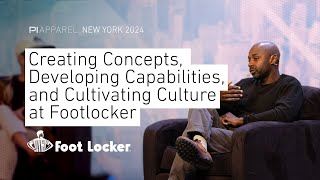
Ricardo LaJoie, VP of Global Product Creation at Foot Locker, talks about building products through three pillars: creating concepts with AI tools like Canva and Copilot, developing capabilities through continuous learning, and cultivating culture through trust and diversity of thought. He stresses staying uncomfortable and measuring value to drive adoption.
Chapters
Over here to my left is a good friend and a person who has actually introduced me to PI Apparel, and I'm very thankful for that. He is the global or the VP of global product creation over at Foot Locker. A very good friend of mine, a colleague in the space, Ricardo Lajoie. Give him a warm welcome for Ricardo. Get the energy back in the room.
Thank you.
How's everyone feeling? You guys are good? Give me a yeah. Yeah. All right, cool. Good deal. So this—
Hopefully you got your second round of coffee in.
Yeah, that's it.
Long day. Long day.
So the topic of this conversation is creating concepts, developing capabilities, and cultivating culture. Before we go into it, Ricardo, why don't you go ahead and give a brief introduction of yourself? Let me know what you're all about.
Yeah, appreciate it. Just first of all, just always want to kick it off, thank you to PI for this opportunity and platform, and obviously yourself. You know, it's awesome. First time for us to kind of connect this way on that front. So, you know, it's been an interesting journey for me. You know, originally I actually was born in Haiti, right, which is one of the poorest countries in the Western Hemisphere, and migrating, you know, to the US, you know, and being able to, have an opportunity to find a way to provide, obviously, for our family in different capacities. And thinking about it in a sense of perseverance, right, from that perspective, and being able to kind of teach yourself has kind of become a lifestyle for me, right, from that perspective, because of the environment that I've kind of come up in. So I've been fortunate enough to have the experience to work for some amazing companies. Currently work for Foot Locker. Prior to this, I've worked for Gap Inc., Urban Outfitters before that, PacSun before that, and been fortunate enough to have some amazing learning experiences and opportunities for growth. And that's a constant kind of theme for me in the opportunities I look for within both my personal and professional career. So kind of a little bit of why I'm sitting here with you now, Father.
You know, when you presented the topic, or actually you were workshopping the topic, quite frankly, but the opportunity to participate in this one-on-one fireside, you started workshopping the topic out and the topic again, creating concepts, developing capabilities, and cultivating culture. When you're presented this, why was it important? Why was this an important conversation and topic for you to have?
Yeah, no, it's a really good one. I think, you know, historically we've operated in moments of disruption followed by stabilization. Right? And the reality is I think that's been really flipped, and we're kind of in this constant state of disruption, right? And I think it's really called for a new approach and level of looking at, you know, how do you think about the concepts you create, and how do you develop capabilities, obviously, to drive those concepts? And probably most important, you know, how do you obviously cultivate the culture necessary to be able to deliver on both? So that's why, you know, this is one that I tend to really I think dive into and highly consider because I think it adds a lot of value in terms of my professional thinking as I look at it day to day.
When you say something like we're in a constant flow of disruption, I mean, that's absolutely accurate and I think everyone feels that, but it also feels like it makes taking bets that much more riskier on both flip sides, not taking the bets and taking the bets.
Yeah, no, no question. It definitely presents, I think, a unique challenge, right, from that perspective. The social uncertainty, the economic uncertainty in terms of what we're experiencing. But in reality also, it presents itself an opportunity, right, from that perspective in terms of how you evaluate your investments and how you prioritize those investments and tools and capabilities that really enable kind of Your ability to be very nimble, right, from that standpoint. Your ability to be adaptable, 'cause really underlying current in a lot of this is how do you adapt, right? And how do you kind of manage through the new changes that are occurring, 'cause they're constant.
We have about 20-plus minutes, let's say, in this conversation. What do you envision, or what would you like to drive in terms of messaging or value across the next 20 minutes to the folks that are sitting here?
Yeah, no, if I had to really share a major thing to take away, and obviously we'll talk about concepts, we'll talk about the capabilities, we'll talk about culture, it's about really human interaction, all right, from that perspective. And the elements of like, you know, how do we think about the interaction that needs to happen with one another knowing the dynamics that are occurring, right, from that perspective? And how do we bring that together in a cultural environment that I think is really critical. 'Cause you can tend to talk about processes, you can tend to talk about strategies, you can tend to talk about initiatives, but really if the individuals aren't coming together in the right manner, right, and not having the right conversations, then ideally none of those things really matter, right, from that perspective. And I think we tend to kind of have an intolerance for discomfort. And the reality is working with people you don't know is hard, right, from that standpoint. Trying to develop new concepts and strategies with people who have different points of view is hard. And you've gotta be able to actually, let's just say, step into those things, right, from that perspective, and be comfortable with being uncomfortable.
Yeah, so we'll start with, maybe we could break down the conversation literally by the topic. So if we start with new concepts, we'll start there. When you're presented a new concept, or when you're thinking about a new concept, You know, what makes concepts worth approaching versus— I mean, I'm an ideas person, and you know, you would say 9 out of 10 ideas are shit, but that one is worth diving into. Like, what are you looking for? Like, what are you taking into consideration when there's a new concept?
Yeah, that's a great question. I mean, to me, a really solid concept is when creativity delivers on identity and meaning. From that perspective, especially for the target consumer that you have in play. And you have to really obviously understand that. We know consumer comes first in the foundation of a lot of the things that we decide to do and how do we think about the ideas that we want to obviously get after. For me, when you think about creativity, it's really how do you kind of balance that kind of rigor, right, from that standpoint versus wander, right? And how do you kind of work through that to solve problems, to deliver value, right, and to obviously kind of inject meaning in terms of what you do. So to me, that creativity is a really central part of it. There was a McKinsey study that really kind of, I think, got after it and really kind of quoted that 70% of enterprises who focus on creativity have a higher, kind of, let's just say above average enterprise value, right? And you think about that from that perspective, how within your company, your culture, are you thinking about creativity and its importance in terms of how you think about the concepts you develop and how do you deliver those concepts to your consumer?
I touched on it this morning with Nelly, but I think it's worth revisiting with you in the sense that in the early 2010s, we went through this period of big data guiding a lot of the decisions that we made, including the creative decisions. And we were in a, you know, there was a moment where the conversation, a pretty extended moment where it felt like the creative director was being asked to do things that they wouldn't normally do because the data isn't telling them one thing or the other. Are you feeling the same way, like when you're having conversations with colleagues and peers around generative AI and those sorts of things that are taking— enabling decision-making? Are you feeling the same way this round?
Yeah, I mean, I think it's a unique time, right? Knowing obviously how the technology is moving so fast and obviously the hot topic of AI and its impact. And the reality is, is obviously it already has impacted just about every industry, right? Every kind of functional activity and will continue to do so. You know, but I think you've got to look at it as a tool, right? From that perspective and its impact and its ability to be able to be a resource for you. And really augmenting capabilities that can help with personalization, right? From that standpoint, help with efficiencies. It's not a replacement, and I think if you look at it in that aspect only, don't get me wrong, there'll probably be some elements of that, but if you look at it in that aspect only, I think you'll lose sight of its true, I think, holistic impact, again, to really augment certain elements of what you do. And I think about, again, the creativity component, and you think about the levels of creativity, and I think sometimes people confuse it and think that originality is creativity, right, from that standpoint. And the reality is most ideas actually come from something that already exists, right, from that standpoint. And it's your ability to take an existing idea and potentially be able to make it more practicable, right, from that standpoint, make it more actionable. And I think that's what AI really can potentially be able to help to do. From that perspective because it's really got to be rooted on some foundation of dataset, some machine learning to really be able to augment that component. I think a lot of times people are going to think, bring AI in, it's going to fix my problems and it's going to make everything better from that standpoint. But if you don't have good foundational structure, if you don't have a good formula already in place, AI is not going to fix that. It's not going to be able to provide that for you.
You know, it's— I went down to Consensus, which is, of course, like a crypto blockchain conference down in Austin put on by CoinDesk, probably like 2 weeks ago, 3 weeks ago. And one of the folks I interviewed over there is the founder of a company called Theoric, Theoric IQ, some of that. And essentially what you were able to do with their platform now is to create an agent, an AI agent through text, not code, and then have two agents essentially learn and talk to one another. And just the power of that is absurd. And that's where you get to this point of, is machine going to be more powerful or smarter than human and all this stuff. So I'm going to skip right over that. But that's kind of like where I'm coming off of, of this like, very deep tech state where I'm like, you know, do we have fashion brands that can be created just through the development of AI agents?
I mean, you have it today. I mean, that's the reality is it's happening, you know, and I'm not here to predict the future for anyone from that perspective. The reality is I think you've got to stay in tune to how it's evolving and the impact it's having. And some are obviously accelerating much faster. In terms of its usage and what it's doing, right, within the industry. But, you know, people again talk about the idea that AI will replace this, that, and the third. And I think the best way I can, again, I try to look at it is, you know, those who understand AI will probably replace those who don't.
Right.
And really trying to make sure that you're again understanding a little bit of its evolution.
That's exactly what we saw with the advent of the title Chief Digital Officer. And then it became your CMO.
Yeah.
Right? So that's kind of what we're seeing. So notice to everybody is get comfortable with the tools that are available, if that's a good way to put it. Let's talk about maybe some of your favorite examples of brands utilizing AI though in an applicable manner where you feel is strong.
Most recent example I'll give, if anybody's familiar with a company called Canva, It's a really interesting one. I think traditionally is known for you create invites and things like that, but we've started to use it.
It's a design tool.
Yeah, yeah, it's a design tool. Thank you for that. And in reality now, they've really evolved and embedded a lot of new solutions and capabilities into their software where we're using it for some presentation work. Obviously, I think depending on who you work for and definitely enterprises, you're building a lot of decks, let's just say. And the reality of being able to kind of like, do that in a more kind of, let's just say, efficient manner, right? From that perspective, their tool has become really significant on that to be able to even use it where it can formulate and provide for you verbiage and ways to articulate things, right? From that standpoint, depending on obviously the query and what you ask it, and also even provide templates and formats, right? With pictures and visuals that you provided and pulling that together. I think that to me from a, you know, kind of let's just say professional, most recent example has been one that's interesting. I think the other one which I think that will become really impactful in the mainstream is obviously, you know, Copilot from Microsoft. You know, if you haven't obviously heard and started to embed yourself a little bit in that, I mean, you know, think about the Microsoft suite and how much you utilize that between Excel, Word, PowerPoint, Outlook, whatever the case may be to be able to have an assistant that can pretty much look across all of those components and then be able to schedule your meetings and organize things for you. I mean, that's a massive game changer that Microsoft has got sitting there that I think will be interesting to see what that looks like in 5 to 10 years.
How about on the consumer product side? Are there any brands that are implementing in a way that has stood out to you?
We are. It's funny. Recently, I think, interacted with one at an accelerator event that we were at, a company called Flock.ai.
Oh, yeah, yeah. New York Fashion Tech Week.
Yeah, yeah, yeah. And that one, it's really interesting, is they're transforming pretty much your ability to— today, where you have photo shoots, and you gotta hire photographers, models, right, from that standpoint, pull samples together, find a destination of where you wanna shoot that, the imagery, and the lighting, and all that. And they're using AI to pretty much pull all that together, right, from that standpoint. And it's an amazing tool in terms of, obviously, if you have the product, you know, they are creating AI models from that standpoint. So you're not paying for a physical model that really, you know, kind of tailor to your kind of consumer set.
Yeah, they had hundreds of them.
From that perspective. And then obviously from a styling point of view, giving you many options that they're obviously generating with their AI, adjusting the lighting with their AI, giving you different backgrounds backgrounds in a very realistic manner. It's a pretty amazing tool that, again, if you're in the consumer product kind of end and you're doing photo shoots and then using those photo shoots for your e-commerce or your social, they are doing a lot in terms of disrupting that. That's kind of interesting.
So let me take this to part 2, which would be, let's see, developing capabilities. So in that, having an idea is rarely ever enough, right? You generally have to already have, to your point, an infrastructure in place, good habits in place, and, you know, a culture around innovation. What's required to bring a good concept to fruition?
Yeah, as far as capabilities goes, you know, it's, I think, an important step, right, from that perspective, And the individual I usually quote is Satya Nadella from Microsoft, and he always talks about the process of renewal and the idea of being able to have a growth mindset from that perspective. And how do you make sure you're not staying stagnant, you know what I mean? And how you're constantly looking in new ways to stretch your capabilities from that standpoint, understand your resources, your abilities to be able to obviously inject yourself into a new space, right, from that standpoint? 'Cause obviously there's just levels of disruption to that that you wanna be able to manage, but I think it's really critical that you are constantly looking at honing in on your current, right, from that standpoint, strong suit, right, from that point of view and sharp point, but how do you make sure you're not becoming a slave to your ideology, right, from that point of view? And how do you stay open-minded to being able to receive new information in, right, and new ideas and new tools, and how those be able to foster through your organization in ways that can provide individuals that are working together to think differently, right, from that standpoint, and be able to be okay with the change that obviously I think we're all dealing with on that standpoint. So I think in order, obviously, again, to drive concepts that you're looking for and obviously evolve those concepts, you then have to then start to think about, do we have the capability Do we have the mindset? Do we have the elements of the individuals who potentially are gonna be able to welcome these things in? And the adoption that obviously needs to happen to that.
You know, when I was talking about the transition from Web1 to Web2 with brands, the conversation about, oh, well, you know, a brand is a technology company, and you kind of would agree and you kind of didn't. I think there was a lot of licensing of external tech and investments of, But now you're seeing a lot more homegrown technology. And you're really seeing that brands are techno— like, there is no company that's not a technology company now. So going back to our original kind of, you know, I guess early on in our conversation about it's risky doing something, it's risky not doing something, and how do you take your bets in this warp speed of innovation. How do you see brands kind of figuring it all out? Like, what do you do as a professional in this space to keep abreast and keep ahead?
Yeah, I mean, I think it's a lot of it is where obviously, you know, as an individual, you spend your time, right? From that standpoint, you know, where you surround yourself in terms of being able to attend, you know, kind of, you know, moments like this, right? From that perspective, spending time in terms of being able to learn from some of these new founders and some of these new technologies that are coming into play. And again, allowing yourself to stretch your comfort zone, right, and access to that information, I think is really gonna be critical. As long as you think about it from an organizational perspective, there's the element of the internal process of how do you think about these things in terms of how they can be incubated internally, right? And then obviously how to assess the external opportunities that maybe can help to bring in or breathe in this new innovation that's coming to life, right? There's not an answer to that I can give. I think you have to kind of be able to understand your capacity, right? Your bandwidth from that point of view. And again, your skillset in being able to say, hey, is this something that potentially is important for us to embed and really kind of incubate internally? Or do we need to kind of bring an outside resource to be able to help us steer through this? And how do you think about this in ways of being able to make sure you're testing? right, from that perspective, that you're exploring and you're allowing yourself to have the ability to be able to kind of, again, have that fail quick, learn, right, and evolve from that point. Because the reality is there's, you know, you mentioned earlier, you're going to have a bunch of ideas and, you know, the odds are most of them are probably not going to be successful. But the couple that will, will be really meaningful, right, from that point of view. I think earlier we had First Insights on here. It's another really great company, right, helping provide organizations with ways to become much more accurate in terms of the decision-making they have around what products they get after and things like that. So as much as you can internally build a dataset that can help you to be able to formulate information that can provide your teams to make the better decisions that are needed to be out there, I think there are obviously external resources that can help to at least accelerate some of that, right, from that standpoint, amplify it to some degree. So you've got to be able to make sure you're looking inside and outside. I don't think you can just do one.
In terms of looking outside, like for me, my scan is, you know, a few publications or newsletters that I like to subscribe to. One is like CB Insights. There's, of course, you're a mentor and I mentioned we're both mentors in the New York Fashion Tech Lab. So getting involved in the incubator side. I know Target has a retail accelerator. There's a ton of retail accelerators, right? So getting involved on that level if you're—
What, LVMH?
They're always looking. Yeah, LVMH. VMH with the Innovation Awards. But like, again, I think there's a lot of opportunity, especially if you're coming from the brand side, to really get involved and help early-stage technology. But that also allows you to be on the finger, on the pulse of what's, what's coming about, right? What's around the corner and what's applicable. I really like Retail Brew by the Morning Brew team. I like Vogue's Tech Edit. Yep, there's just— usually does a deep sourcing journal, does a great job. So I mean There, there's a ton of stuff that I just want to make sure that we're naming so that if there is an interest and you're not subscribed to some of those things, it's interesting. There's, there's a great newsletter that we've done a lot of work with called Web3 Daily, which, you know, generally will— it's a daily newsletter that is distributed on Web3 news, crypto, blockchain. They give a lot of examples. It's peppered in just by the nature of what's happening in the ecosystem, but retail ends up participating in that newsletter more often than not. But I'll move over to, I guess, the next thing is like rolling out tech. So it's one thing now you identify tech. It's the rolling out part is where I think that it either thrives or dies. And have you had any best practices of, how to kind of galvanize the base and really move tech through the system?
Yeah, I mean, I think this is where relationships and trust play a real critical role, right, within the organization. Again, human interaction, right, from that standpoint. I think in any, let's just say, transformation, new kind of initiative that you're trying to get adopted, you've got to make sure that the individuals that are in that room that are the stakeholders that you've kind of already have some level of communication and established kind of, let's just say, rapport with, right, from that standpoint. It's hard to get buy-in on something new with individuals that you have not really connected well with and don't have some kind of relationship with. And then the idea of how do you make sure that there's a level of transparency around those things, right, from that point of view, is important within the organization, especially throughout the kind of roadmap and the processes it kind of evolves, right? And then I think reality is, I think it's also important as you think about any level of adoption in consideration is how practical and actionable is it, right, from that perspective in the individuals feeling like, hey, this is something that yes, potentially can stretch us, but we feel really strong we can accomplish. If it feels like it's so far Yeah, right. You know, beyond someone's capabilities, that usually can sometimes be a bit daunting.
You know, the interesting example of that is, you know, I'm friends with a bunch of agencies that do great work, one of which a friend of mine worked with, Shiseido, to develop when they were talking about internally, how do we get Web3 adopted into the system and start working on, you know, applicable use cases. They actually looked internally and they built a learning tool that was based on rewards-based behavior. And it was like kind of like a Udemy but in-house. And, you know, each employee that wanted to sign up for this and learn about Web3, they were able to. But what they were doing inherently was galvanizing the base and teaching people and making them unafraid of what Web3 is. Yeah, because it's a, it's a scary word with everything that's happened in the crypto world, right? With, with kind of bad actors.
And that learning process is critical. The other one I would mention is really one that's really critical is the value creation, right? You've gotta really be clear on the brand and enterprise value that any new initiative capability, right, that you're trying to add really brings, right, from that perspective because that essentially becomes why, you know, an organization, you know, whether small, big decides to potentially get after anything. They've gotta see the return.
Look, I think I'm coupling that based off, or I was responding to, you're saying it could be really far out there or really scary. In someone's mind's eye, but it may not be, right? So there's that. Before we transition, we only have like 2 minutes left, but I want to make sure that we touch on this part is that I spoke, I was in a seat similar to this with Mindy Grossman at the time she was over at, she was the CEO of Weight Watchers, and we were talking about creating a culture of disruption and moving that forward. And I think that's perfect kind of transition. What she did was, I mean, she flipped the furniture. She did drastic things to say, okay, there's a change here, and it's going to be a change for the better. But it goes into cultivating culture. So in order to influence culture, you must first cultivate culture. Why did you choose cultivate as the word?
Yeah. I mean, culture is to me, in establishing, is both an internal and external exercise. right? And if anything, it's the foundational principle across all of this from that point of view. And what ends up happening a lot of times within culture with organizations and what they're trying to build is you try to find individuals who obviously represent what currently already exists, right, from that point of view. And the reality of that is you then build more of a mirror-tocracy is what I call it, right, from that perspective.
Mirror, mirror, think I'm mirror.
Yeah, exactly, right, from that perspective. And everybody's very similar, similar, it's homogeneous, right, from that perspective. And the diversity of what that needs to be, right? I think the diversity of thought, 'cause diversity can be looked at in many different ways, is really central, right, to the elements of what a culture needs to be.
And you're talking about internal team building or?
Yeah, I mean, and again, an understanding externally the culture of your consumer, right? The dynamics of what's happening in terms of the community set, right? And the value set that you have. I mean, culture is about, Who you hire, right? Who you fire, from that standpoint. Who you work with, from that point of view. And how do you kind of establish that as clarity within an organization to bring it to life in a way that's also very authentic, right, from that point of view? And we know we've had moments of that that have been pretty challenging out there within that mix, so.
[Speaker] I agree, and to further that, I agree. I think the consumer can, can really feel when, and not even a consumer, anyone in the ecosystem, your partners, your internal team, they can, you feel it when a company is truly authentic, right? And that's a word that gets thrown around a lot, but for a good reason. I think what we found a lot lately over the last, let's call it 3, 4 years, is people spending money on kind of throwing money at metrics and let's call it like caps, headcount needs to be looking like this. And that doesn't work. It really has to be an inside-out strategy.
Yeah, I mean, in order to harness the value of culture, you gotta deepen your understanding of it in a way that you really kind of understand what it means in terms of the languages you need to have, the community you're serving, right? Perspective and the reflection that needs to occur internally that is consistent with, again, the consumer set that you've got, right? From that perspective, you could put metrics into place, but again, it goes with how much do people really believe in what we're trying to do and the purpose that we've got in order to do it.
Yeah. Ricardo, it's a pleasure. I love being on stage with you. We could have this conversation over dinner, but it's more fun doing it with an audience. Thank you so much Thank you so much for your participation. Really appreciate it. What is the best way to connect with you and your work or just follow along?
Yeah, I'm on LinkedIn, so definitely Ricardo LaJoy, hit me up there. That's usually the best form and access point for myself, but appreciate the opportunity. Hopefully I added some value to all the attendees today, and again, thanks for PI.
Great, good deal. Thank you, PI, and thank you to Ricardo. Appreciate you, man.
Thank you.










