Creating Synergy Between Traditional Craftsmanship and Digital Innovation | lululemon | PI Apparel
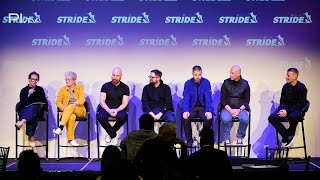
Leaders from Steve Madden, New Balance, VF Corporation, and other brands discuss how digital tools can enhance rather than replace traditional shoemaking. They debate whether computational design counts as craft, how to keep artisans central when introducing automation, and whether shared AI models risk intellectual property.
Chapters
I'd like to get started. Can each of you just take about a minute to explain your background, and then we'll dive into some topics.
I'm Miranda Morrison, VP of Sustainable Design at Steve Madden. Close to 40 years as a shoe designer. I had my own brand for 20-odd years, and then I've been at various companies. I'm on my third tour of duty at Steve Madden. And I'm really old school, utterly analog, pencil and paper kind of designer. These are the digits I work with. So I'm hoping to have skipped over from never learning how to use Photoshop or Illustrator to using digital tools now that they're actually really taking things to a very exciting place.
Wow. That's great. Hi, this is Onur Gün. I'm the director of computational design at New Balance. I'm an architect by background, but I've been a computational designer for more than 20 years now. And I have a master's and PhD from MIT in computational design again. So that's the only thing I know, pretty much. But I got a chance to work with and develop intelligent systems all through my career. And recent AI boom, just to touch upon that, has been an interesting discussion for me. So I'm going to share a little bit of that.
Hi, I'm Matteo Burzio. I'm a footwear designer. After a few years, I learned 3D. And I work both in sportswear industry and fashion industry.
I'm Brett Goliff. I'm an independent footwear designer working predominantly with a lot of independent brands. Previous to that, I was a global design manager for the automotive industry with Corvette and Chevrolet. So about a 20-year experience of doing that. So here we are.
Very good.
I'm Mark Vickers, responsible for the technologies underlying Product creation processes at VF Corporation, so for all of our 11 brands globally. I've been in this industry, actually I graduated from college and started in the apparel footwear equipment industry, so I've been here the whole time. And I've been a technology guy the whole time, so I'm not the creative one. I get to be with the world's creative— most creative people and provide them the tools that they get to do cool stuff with.
Cool.
Well, I've only been in the industry for 30 years, so I'm in admiration of Miranda. My name's James Carnes. I was creative director at Adidas for about 15 years, and then I was the head of strategy there, running a lot of innovation programs. And now I'm chief of staff at Hilos. I do some additional consulting, working with startups. Continuing my passion for anything that's innovative, sustainable, or is looking for an update to competitive advantage and a new strategy. Awesome.
Thank you.
Sweet.
Well, we're going to jump into some questions. The first question I have is for Matteo. And I feel like, Miranda, this might be a question that you like too. Tell us, what does true craft mean in today's digital landscape? And should digital craft be considered a new form of artisanal skill?
Yeah, I think that craftsmanship is something very important for the footwear tradition, the shoemaking tradition, and it focuses on skills and details. And it's something that is really important for my job as a 3D modeler to keep that too. So the craft itself is something in common between these two worlds. So yeah, I think it's really important to keep that in mind when you have to 3D model something for the footwear industry. It's really similar. So I would say yes, it's the same approach but different tools.
Yeah, I mean, I feel very lucky that I was able to work with true old-school shoe craftspeople in Italy, the greatest country on earth for leather shoes, and to absorb from them all the things that they take into consideration when putting a shoe together. And I found that endlessly applicable in traditional lasted footwear, but also even in preparing designs for molded footwear. Because it's all about how it holds the foot, how it feels, how the pitch is, all those things that you just absorb through your skin when you're working with people for whom it's been their life's passion. You know, it can't be dismissed.
Thank you. I'm curious with the computational folks that are on the panel, what do you think about computational design as craft?
Who's first?
No, go ahead.
I feel like the whole end over there.
All sorts of opinions.
Yeah, OK. I'll just jump in. I think it's interesting. Craft involves thinking through your body. So is there— stitching and putting things together. So there's this embodied understanding of what you're pretty much doing. And of course, the digitization has been the— it's been there. The discussion has been there. But what's happening there is probably you are this time trying to think everything like a system. So as you're stitching, let's say, parts, you at this time need to stitch the parts of making conceptually, which is pretty much algorithmic design. To me, interestingly, when I'm trying to influence people towards computational design, what I try to do is instead of writing the code first, I want to come up with a pseudocode, which is the way of putting things, the parts together to create this working whole. So to me, it's kind of like this digital craft involves that sort of crafting of the algorithm.
How about folks down at the end here? James?
Oh, I mean, this is like the most, you know, I've heard it all day long, the common topic about like what's this relationship between digital tools, you said it yourself, they're tools, right? Like we still use hammers to pound in a nail. And I think there's a reemergence of the importance of that simply because we're now at a stage where the tools can actually be created to service what they should be servicing, which is allowing people to come up with ideas, do their problem solving that they would normally do with their hands with new tools. And so I think we've lived through— I know I have lived through, you know, very long era of people kind of thinking that we would change the way we create because of the tools, when actually we don't. The tools should be created to service what we want to create. And we're just starting to get into that phase now with AI, with a lot of the way that we can actually approach algorithmic design, generative design. And that's what we're on the cusp of. And there's not enough of it. I mean, that's the work we're doing at HILOS is to change the order of the thinking to say, we're always going to create from our minds and our hands. I mean, the fastest connection between your brain is your hand, right? Whether it's a keyboard or a mouse or anything in the way, that's still outside of, you know, it's a secondary or tertiary tool. And I think that's why this topic has emerged again, is like there's a realization like, wait a minute, why are we trying to change the design process to fit the tools when we actually should be changing the tools to fit the design process? And if you look at like where we're at in the industry, like we've adapted so much to the tools that stuff starts to look a lot the same. And we need to go back to things looking more unique and different and utilize 100% of the creativity that's available to us instead of having designers spend 20% of their time solving problems and 80% of their time detailing them out and using the tools in ways that they normally wouldn't. So I think that's the state that we're in, and I think that's what's getting everyone excited is like we're just emerging into that, and it's a race to kind of get get those and create those and have everybody come together and work together on how those things can be in one place.
Thank you. I think this is sort of riffing on what we were just saying here. This question's for you, Miranda. How do we balance the precision of automation with the imperfection of handcrafted products to feel alive?
Yeah, I think— I mean, I've definitely come across situations in my work as a designer where there's been a digital tool available to, let's say, to wrap a last with a pattern. But then if it's done purely on the basis of geometry, it very often just seems dead in the hand. It looks wrong because it might be geometrically correct, but when it shears over surfaces, it becomes weird looking. And you're kind of like, what is wrong with this? And at that point, I would we always choose to go in and say, we've got to pull out some of the geometry here because it's not working. The human eye and hand can fix this because we know it looks wonky. I don't know. I can't really even explain it. But it's like a back and forth between what you can achieve with the machine or the tool and what you need to do in the old way, hand and eye. That's all. Yeah.
Any other thoughts here about that?
Yeah, I think it's really important also to study the tradition, the traditional approach, and understanding all these little features that makes it more real and try to make them in 3D also. I don't know, like a little stitching around a curve, they need to be shorter. But the automation makes stitch always the same. So you have to go there by hand and make it shorter, maybe add another one. And that's like the level of details that you need to achieve that.
I understand.
And time to spend into that.
I think adding to that, coming from automotive, we would do full clay scale models of our cars, right? And that's a blend of using CAD, and then you would have it milled out on a massive mill on the clay and everything, but we always went back in and added the hand touch to it because no matter what you did, it would look what we would describe it as is stiff. Like, it would just be so firm and not have that movement to it. And for me, when I look at a lot of footwear that's utilizing the new technology, you can completely tell if that person never took it out of the math scenario, and you have to go back in and add that, like, that human flair and touch to it because it it's gotta move with the foot and it has to feel soft and it has to feel and wrap around it. Even though it's surfacing, it's still growing out of the foot. You can completely see when it's still kind of a weird art project that hasn't been finished yet without those details.
I love that.
I have to tell you a story from this morning. We were talking about, we were sitting with one of the engineers in the team and Miranda was telling the story about creating a last.
Oh yeah.
And she said there was this moment where you see the last being created by hand, and something was wrong, not quite right, and she couldn't tell what it was. I might be paraphrasing, but she would close her eyes and feel it. And that's how she could understand whether or not it was achieving, you know, the sculptural shape was achieving what she was looking for. And the team was like, how do we create software that mimics this human interaction visually? Because it can only be visually unless we create some device. But how do you create that sensation you're looking for that you can only capture through touch?
I hate to tell you, but after you left the room, we talked about how we could make it tactile.
Next up.
Yeah.
But yeah, that was lovely that they were open to putting thought of how that could be represented in the system or even become a 3D experience. That was very encouraging to me.
Yeah.
Brett, you mentioned a little bit about the automotive industry. Where do digital tools help in that industry that maybe haven't been fully realized in footwear?
Well, a lot of what the first panel was this morning, scanning and bringing together. I mean, I've talked with a few people about it. I do think footwear is behind in that. However, automotive, it's really cost of scale. I mean, for us to do a concept car, it's like $6 to $8 million, right? So for us to do a proof of concept on a sample, it's not the same thing. But what I do find is that especially as you go to a smaller brand that is more independent, having those digital assets, like even myself, I've started hand sculpting a lot of stuff out of clay. I'll scan that digitally, on a quick poly cam and being able to, 'cause ultimately most decision makers are not people that can fully visualize, so being able to send that piece still entirely helps. I tend to skew maybe a little bit more on the old school side of things with footwear compared to automotive, because I think it's still so tactile, whereas automotive is based off of, to build an entire new program or a car is like a billion dollars, so those decision making tools have to, really be utilized that way, whereas this, it's still buying off on a physical thing that bends and molds. So I think I'm going to say the opposite of your answer. I think it's still— I don't want to say it's like making more samples all the time. I think you have to have validation that goes in between. But I actually think using the digital tools to enable the hand is what's most important to me.
Yeah. Thank you. Mark, there's a question on the screen for you, but also a question I had that's similar. "What is the best way to introduce digital processes in a company without sidelining traditional craftsmanship?" And I think what's interesting about your world is you have multiple companies, right, that you're trying to address, and those could probably ebb and flow out, right, over time, and so tell us a little bit about that.
[Speaker] Yeah, so to answer the question that's on the screen is that, so VF has 11 different brands, and those have mostly come through acquisitions. And so with them comes all the different tools that they've got. So we have 5 different PLMs and 7 different DAMs and 31 different design tools. And then with that as well, each category or each even different region has different processes. So you end up with like, and 30 I think is probably too short of a number. We probably have probably closer to 70 different processes for product creation. So the key for changing that is standardization. And everybody's like, oh God.
There they go.
It is, it's like really like, what's the best tools? How do we integrate those together? How do we automate stuff and make things easier? So like, as a designer, like everything I need just comes to me and I can do my creative work and then it leaves and goes away from there. So we really enable them. And you can't do that when you have this massive array of different tools and processes. So what we're looking at, and there's the activity right now around transformation is underway. What's the best way to do this? What's the best tools that are out there? How do we enable those people to do those things? So we are actively looking at reducing the number of product creation processes. And I'll say that a big chunk of that is that no brand that within our portfolio is doing it super well today. And so Now, when you think of, like, one brand in particular, it takes 106 weeks to get something to market. This is ridiculous. And so how do we enable them with, like, digital tools and really cool best-in-class processes to make, like, to do things faster and build products which customers really, really love?
Do you think it's— you mentioned standardization. Do you think that one standard digital team that services all VF, or do you think it's specialists in certain areas of the business?
So there's definitely specialists. I mean, think about a lot of the tools are like— it's like a set of surgeon's tools and their scalpels. They're very highly specialized. And we should continue to enable that. But there are basic foundational things which we need to standardize. Eyes on. So yeah.
Thank you.
Anyone have any other thoughts about this?
I mean, I think exactly what you're describing is the track we need to go toward. And the way we've been talking about it at Hylos is, do you try to standardize the tools, or do you create a platform that enables different tools to still come together? So that's the approach I've been taking is like, It's more like a workspace than a work tool, because if you create a new tool, you've got adoption rates, you're trying to get all those 11 different brands and hope designers, developers, everybody works on it. Whereas if you have the ability for everyone to use or bring even tools that they use themselves, right? Like, the best proof of a tool is that people pick it up on their own, right? You know, I've seen the top-down strategy where they're like, everyone's gonna work on Rhino, and then everything looks the same. So if you have a platform and a space where you can bring in Viscom sketches, or you can bring in Illustrator, or you can do a hand sketch, or, you know, a photograph, now you're actually enabling creativity, but capturing it in one space, and then you can work in that workshop, you know, kind of an online studio. But that doesn't exist, that's the problem.
Well, there's actually, so one of the most exciting things that I'm seeing out in the industry right now is is the whole Universal Scene Descriptor, or USD, format. And that's really coming from the entertainment and gaming industry right now, where they are, it's like there's one format that goes through the entire thing. So from a designer perspective, you could use any of the 31 different tools as long as they speak in USD. And so that's something we're like definitely like really looking forward to, of like that, how in that 3D pipeline can I enable of this and studios scattered all over the world, how they can do things independently, but yet it all comes together in one unified voice. Yeah.
Yeah.
Oonar, I have a question for you about AI. How do we ensure that AI supports rather than stifles human intuition in the design process?
That's me?
Yeah.
All right. OK, I'll try to answer that. Yeah, it's interesting. I think it helps to kind of like step back and try to look into things from a distance. And before AI, maybe it's pretty helpful to talk about computational and digital, what they are. When we talk about digital design tools or computation, it implies almost some sort of absolute, very refined idea of a form or of a system, right, as we usually see. But that usually depicts a very small portion of the story, right? With that kind of refinement and conversion of ideas to the digital, you redact a lot. You reduce everything, right? So one thing we have been discussing actually on the roundtables today too, and here as well, is that we are very sensory creatures, right? So we have so many senses. So vision is kind of connected to touch. Touch is connected to, let's say, sensation of heat and texture, and so on and so forth. So everything— when you combine all of these, actually, all these digital tools feel very distant. But then AI exploded. And we all started thinking, hey, it's making images. Oh, it's talking to me. Oh, it understands, and so on. So there's this sudden anthropomorphization of the tools. But what's happening there is actually, again, if you look from— these systems existed for a long time. So AI has been with humans for 80 years. It's like 8 decades. And intelligence systems, digital computation has existed more than 50 years already. So what happened in the last 2 years is that it became accessible suddenly for everyone. And I think the first response we got was, oh, OK, it's doing this, doing that. Although the sense— if we, again, step back and say, actually, we think it's thinking because I read this string of words and it makes sense. And it's designed to do that. So from that perspective, OK, the questions maybe might be, OK, how can I plug this into the existing design process? Some of the commentary is saying, OK, there's a way of doing things with touch. And I cannot immediately forget about it and change the whole design process and the whole value chain. You would realize that maybe you can change like 1% of the total process or like 0.5% of the design process using, you know, AI-generated imagery. And even more so, you know, maybe there are ways to, how you generate that image is also important. I'll just stop there maybe saying, you know, you can use, let's say the first thing that exploded was the diffusion models, like, you know, creating images through kind of prompting, which felt super crazy interesting for people and then super boring immediately because it wasn't doing what you wanted to see. And then Viscom came and said, hey, you can sketch and prompt simultaneously. And we're like, yes. Pretty much kind of like retaining, preserving that human touch and human input, which is all of us, I think, know good or bad how to sketch, right? So that's the common, let's say, language we use while designing. So anyway, when we are looking into these technologies, I think it's important to kind of like step back. Oh, we are humans. These are the systems that exist. And this can add value here. And this can fail terribly here and show the failures. So that's very important.
Any other thoughts on AI on the panel here? No other thoughts?
We are blank.
I feel like I keep answering everything. Again, it's a tool. I think it's awesome how you described it. Like, all of a sudden, people who are visualizing things were asked to now verbalize things. What a ridiculous idea. Then just have a product manager enter the brief, and it's done, right? Again, the tools have to adapt to what we're good at. And the thing that I kind of come full circle to is, it was mentioned twice, this idea of old school. What does that mean? That just means you're good at designing, right? So I think this, again, this reemergence of realizing that the thing we're trying to do hasn't changed. AI just needs to be employed in the right way that it starts to work for what we already want to do, and it's just not there yet.
Can I just plug in something really, really fast? Uh, I love this. I, I'll just quote, uh, uh, you know, which is, um, like, we make the tools and tool— tools kind of like make us back, right? So as we have been using the hammer, which is a tool, it kind of like shaped us because previously probably we were hitting things by stone or trying to bend it and so on and so forth. So when the humanity will look at us in 2200, like 2200, it's going to say, oh, the old school of designing using Midjourney. And so I think it's really interesting to— so this is one thing that we are having in the company. So I'm trying to identify the best way possible to inject and use these things with in a way that we can create meaning and value, right? So that's essential. And New Balance is a company that has been making shoes more than 100 years, right? So I've been learning, I'm still learning, this is my 9th year there, about craft. So then I think the question becomes, okay, this is going to be a bidirectional kind of like growth as we use AI, right? So interestingly, the humanity already changed within the last 2 years because everybody uses ChatGPT to fix their emails probably, you know, more or less. So the question would be, how can we respond to that, right? So because we know that it's, it's changing a little bit, like bits and bits, you know, it's changing our daily, let's say, exercise in designing, and just kind of like trying to position yourself according to that is kind of like interesting problem.
I think one thing that I was thinking about as both of you were talking about it was, so I teach at College for Creative Studies, and this year was the first year that I saw AI really come into the creation phase with it in an overwhelming way. And I had like a moment of I had to make a decision, like, you know, how do I handle this and what I'm going to do? So I asked everybody to start sharing their prompt and that was what I would critique off. And ultimately what it taught me is that you're only as good as what you communicate with it. So, you know, one person focused on solving an arch issue on the medial side. But they had no reason why they were solving it, right? So they had just put that. So there's like 100 graphic designs of like what this could look like, but it took them nowhere. Ultimately, you have to give the input into it to get the best out of it. And I think that that's where it still becomes a tool because the first time I used it, I used to think I was a good communicator and I was like, oh, I'm not good at communicating at all. Like, I'm horrible at this. And but then once I started talking to it in some different ways and trying to get the best out of it, that's when I got better results. Ultimately, it's what you feed into it.
Do I have 30 more seconds? Of course. No, I love this because one thing we discussed was I just published something today which was precision versus illusion. That's what happened with AI and that's when I'm putting my foot on the brake. Just seeing the previous presentation, the shoes that you design by using this algorithmic thinking, you see how precise the outsole is becoming, right? So everything is kind of like the tolerances are 200 microns, 50 microns, and everything is kind of like planned, which is the precision. And the maker knows where all those points are. 10,000 points for reaction diffusion, probably, you know, you could, you know, you can do a shader too. But then you use Midjourney and it does something, looks as if it's very close to that production in like 30 seconds, right? And then a lot of people fell into that trap saying, oh, I did this. I can do it in like 30 seconds by prompting. And the challenge would be for the— you can't judge that because you had 20 years of experience, right? So you can't fix it. You are the creator now. The question is, how are your students going to build that precision of knowing where all the points are if this thing kind of like raining on top of them? Is the question.
Totally agree.
You're all good. We have a question from Carol. Does the future of footwear creation design become more inclusive because of technology? Thoughts on this?
Potentially.
It's pretty philosophical.
Yeah.
I think so. I think it enables and it opens up, but I still ultimately think it's it comes down to the why. Why are you creating? Why are you doing? I mean, does it open up globally and help many people that want to get into design and use it? Absolutely. But I don't know that it makes better design.
As a technologist, it's like technology does not enable really cool design. I mean, it enables it, but it does not like, if you think about like, the, like, Air Force One or the samba or the band Slip-On or, like, the Timberland, like, yellow boot. And those are— those came out of the souls of people, and it was not a technology thing that enabled that to be created. So enable makes us go super fast. Is AI now— is, like, an incredibly powerful tool. We can go really, really fast. But is that really the creative part of it? And I don't think so.
I would offer one way of looking at it, because I struggle with the inclusive part. But there might be one answer, which is that there is a— you mentioned it earlier— there's a threshold between imagination and experience. And I think when you have tools that allow you to take a design you've created in 2D, which, you know, essentially everything from Viscom is 2D, it may look amazingly 3D, but it doesn't have the experience to know how to then engineer that product. If you have tools that allow you to go from 2D to 3D, and then you include in that design engine the ability to engineer product using the right materials, whether that's 3D printed or knitted or whatever output you're using, then you are being more inclusive because you're allowing a designer to fast forward into processes steps that they normally would have to be excluded from. They would have to create the design, then hand it over. And that's, to me, that's the current gap that still exists, is I can create something in 2D, I can do all of the technical specifications in 2D, but then I have to rely on a technician who helps me see and validate it in 3D. And by that point, I'm committed to the time, costs, resources, but I don't know if I'm right yet. And so if you're enabling a designer to experiment further into the engineering phase through 3D, you are being more inclusive because you're taking people who have good ideas and allowing them to explore deeper into the process through prototypes and 3D prints and things, and then back out of it. And I think that's the next step in sort of the iter— expanding the iterative creat— creative process from what it is today, right? If I don't need, if I can have the skill sets to be a designer and I don't need to have 3 other people lined up to help me produce the technical aspects, you're including more creativity or more people who have that creative set of skills. I think Aaron Cooper was talking about that earlier. I don't know if he's still in here, but he was mentioning how he didn't have the skill set to create the software, Well, why should he? Shouldn't there be software existing that allows him to do some of the things that he would want to do? And I think that's where we need to go. Then it becomes more inclusive.
But call me old-fashioned, I don't want to give up those 3 people because those 3 people and myself in conversation is what gives products the soul of humanity.
Glamour.
The creative conversation combining aesthetics with technical excellence or whatever it is. That's where the richness of our jobs lies for me. I can appreciate the digital tools. It's fun to look ahead and see that it can work, but I still want those people in my room, you know, on some level, because I want— I value that side of my job almost more than anything.
Well, if we do it right, they also can use the same tool.
Yeah, if we can talk with the tool—
Within the tool.
And within the tool and across the tool.
Yeah, you don't want to lose that expertise of a glassmaker or someone who's actually able to create the engineered version for you.
Yeah, yeah, I see that.
Who are your valuable collaborators? Like, who is your dream team?
Well, I mean, you know, working with James and Elias is fantastic, but you know, I've had I've met so many lovely people in my life because of these conversations from technicians I've worked with in China, Italy, factory owners. I mean, the list is endless of people who've inspired me, made me better at my job, and created lovely things with. I mean, that's just been the joy of my life.
Do others have examples of effective ways to foster experimentation cross-disciplinary collaboration in their work?
Yeah, of course. My favorite thing is finding someone who's so much smarter than me at something that inspires me to think about things in ways I would never think about it. Like, that, that's for me where you get people together. To your point, I'll think my way and I can take it so far, but I need someone who's just way smarter than me at something else, whether it's a developer. And I want developers who are developing, not data entry. So my vision is like, our tools should help them to be developing. I want last makers who are spending time making lasts, not data entry and so on. So anyone who's smarter than me is my favorite person.
We have another question here on the screen. How much more quickly are these early generative AI tools shaving off the time to market? And what physical limitations exist in the creation process? Anyone want to answer that?
I can take it. Yeah, I can start. It's interesting. And for now, I don't think it's changing the calendar because we had these sensations pretty much like computational design too. When parametric design tools started exploding, especially like Grasshopper on Rhino, everybody was, oh, all the buildings are going to become, let's say, parametrically designed all these like twisting skyscrapers and so on. Prior to that, we were kind of like programming, right? So we were kind of like writing by using programming languages. What happened is actually some buildings took longer to build because we started overshooting the complexity. And then we spent so much time post-design rationalization, which is you shouldn't do, right? So because your design should be optimal, you don't want to make a mess and then try to fix it. So all that happened, to be honest. And we were working, which was elongating the time. But if you become really smart in how you apply computational design tools, you can do fast iteration. So design is kind of like— design is made out of cycles. So you make options, options, options. And it cannot be purely computational. Computation is a part of it. Sensation, I would say, is a bigger part of it. To be honest. So I'm with you. So what's happening in AI is very similar. So when it started first, some designers are resisting now. Oh, I'm not going to— I don't need to learn rendering because it's doing it for me. And I was like, well, if you think that way, probably it's going to be doing it for your boss, not you. So that's the really, really kind of like— I'm sorry, this is the really thin line about what's going to happen next. In the workforce, which is kind of like, OK, slow down and think, how can we make those intelligent, fast iterations to make the product better within where it sits? Because generative AI is not changing how the machine knits, how the 3D printer prints, how the injection mold kind of works, how long it takes to ship something from, let's say, overseas. Those are all the same. So you are in a little bucket, little frame. You just need to be kind of like very kind of cautious and intelligent in that. But I'm also assuming, you know, like as this is just the beginning, right? So it's going to be, it's kind of becoming better and it's going to affect some other areas of the business too. So probably we can start discussing maybe shortening the calendars within 5 years, maybe. Like predictions are wrong, but I'll just do it.
So we're not at all— you said slow down, and I think that's, that's the most important thing. I think this whole expectation of speed to market is like, please, let's just get over that. I think what, what I heard from you, I— these tools shouldn't be expected to service speed to market as our primary purpose. Yeah, they should be expected to alleviate anxiety and bad decision-making and improve quality. Like, there's no need to go faster necessarily. There's a need to make sure that we're creating less crap and waste.
Yeah, can you make it better? Yeah, exactly.
Make it better in the same amount of time and don't focus on doing it in a faster amount of time and then making another one. We're just making too much stuff. So that's what I really think is the benefit of this, and just stop looking at this speed to market as the only benefit of 3D.
Yeah, yeah. I think the AI is like, it's enabling faster decision-making or like better decision-making earlier. If you think about like illustrations or sketches, that kind of thing, like trying to make decisions on these are the ones that I'm going to go to market with versus that I can generate a whole bunch of photorealistic images that I can make better decisions around what the aesthetics of it. So that's where we're really starting to see some of the benefit from that. I think, just to answer the second part of that question, what are the physical limitations in the creation process? Right now, it's like cyclical decision processes, these gigantic things that, like, we've got these built-in giant stage gates and it takes forever for her to make decisions, or you, like, revisit things. Those are, like, those are not, like, that's not a technology thing. That certainly isn't sped up by AI. So those are some of the opportunities that we can, like, shave giant chunks of time out of your overall calendar by, like, better decision-making and enabling people to make decisions.
Any other thoughts on that one?
Yeah, I think like AI is a great tool, but you need to use it in a smart way. And it's really great discussion. I really don't know much how to add to this.
Yeah.
Thank you. All right. Ooh, and looking at your peers in the footwear industry that are loving digital tools to improve their business, what brand inspires you to emulate?
I really like the Zellerfeld brand, because they are kind of breaking up some rules of the traditional shoemaking. One thing that I think is really interesting is challenging the process. So they do have, let's say, like a last department. You can scan your foot and they readapt the file to your foot shape in length and width. So this is something that it's really interesting to think about the process.
Any other thoughts on this one? Any companies that you're inspired by?
I think one that really— Puma taking some of their classic stuff from the past and then taking it forward by utilizing it was really impressive from the outside because you tie brand heritage to it, you give it a new look and feel, the depth that you could see both visually and in person on it. Is pretty incredible, and it's still built around the foot as well. There's one brand that comes to mind.
What about VF? What's like the aspiration within the collection of brands there?
Well, like, so we're trying to be much better, and we're like, we're not in a lot of regards. So actually, one of the things that brought me to VF is that they're like, we want to be the best in this.
Space.
We're not right now, but we're really striving for it, and there's some major investments which are coming into our zone to drive really hard at that. So yeah, I would hope that in the future we're the ones that people are asking about or want to talk to, but we're not that right now.
All right. I have like one final question. This is a one that we'll have to be creative about. If you could build the ideal workflow for footwear creation today, What would it look like? And maybe how would traditional and digital craftsmanship coexist in a seamless way? And Onur, maybe you can start that off.
Can I pass it to somebody else? Because I want to answer the last question there.
Oh, sure.
You're welcome to pass.
I'm going to use my time for that.
Pass the potato.
OK. Yeah, I think like— Digital tools are really important in the future process, but also the traditional aspect of the process is also important. And we need to find a way to preserve that and keep that into this new approach. And I don't know, simple stuff like workshops And as a designer, as a 3D designer, I must be open-minded also into that. So really learning the tradition and try to include that into my, my work. And also on the other side, the traditional approach needs to be open-minded and try out new things and just get over kind of like a cultural clash that can happen.
Thank you. What about Helos? I feel like that's it. I feel like you can start that.
I didn't speak up because I felt like I was biased in answering that. That's like the problem we're solving.
Yeah, yeah.
To create, like I said—
Tell us a little bit about that.
I mean, the goal is not to create so much a tool because, like I said, people will bring their own tool. Designers will bring a lot of their own tools. It's to create a platform or workspace, whatever you want to call it. I'm not even sure we know what to call it because platform sounds entirely too established and traditional. But if I think about the way you want to work, you want to be in an environment where you can collaborate, you have all the tools you need. It's like a studio. I can adopt new tools and bring them in. I can try things out, but I can also do all of the old-school things that I want to do, like sketch, import materials, and I can go in and out of the system as I need to, you know, and maybe one of the benefits of this speed isn't speed to market, it's I want to get my idea in the system, convert it to 3D, get a printout, touch it, feel it, and go back into the system and know that I'm not losing tons of millimeters and dimensions and proportionality, and now I want to switch last. That's a big thing for us is like, You can have a design idea and you can build it, and as soon as you've locked in a last, you're into the $6 million program where like, I gotta build the whole thing. I just wanna change the last without somebody from the operations team saying, oh my God, we gotta start over. No, I don't wanna start over. So for me, the base of what we're trying to create is capturing the essential iterative process that you talked about cyclical process. When you're creating, you're not thinking in a linear, in a linear stream. You're open to new ideas, you're exploring, you're getting input from other people, you know, you're going to bed and then waking up with a new idea, and you want to be able to keep all of those things as part of that iterative process and go forward, go backward. And then when you really feel like you've found what you're looking for, you can prototype it. And even then, I don't want to have to be done. I want to be able to hand it over to a technician, or I want to go back in and change it. So for me, getting digital tools that reflect the analog process of thinking iteratively is— that's the essential way of capturing these tools for design. And I think what we're trying to create is If I look at the history, and again, I spent a lot of time on this, the closest we've gotten so far to capitalizing on the capabilities, whether that's AI or not, we started at the back end. We adopted these tools for sourcing and then for development eventually. And then we stopped. So design is on an island.
Yeah.
Right? And the best you get is maybe a really well-done tech pack handed over. We need to capture that. That's the ultimate workflow, is when tools actually are made for the design process and the iterative thinking of design and not for the engineering process. So that's why I'm biased. That's the holy grail. That's where we're going. That's what we're creating. So if you're looking for a tool, I got one for you to try.
Exactly.
I think drinks are after this, so we'll check.
Should we talk about sustainability?
Of course.
Yeah, so the question here is from a sustainability aspect. How do you feel about AI's impact, the trade-off of speed and ease for water consumption and land usage in the server farms? I think you wanted to answer that.
Yes, I wanted to answer that.
I really like that question.
Yeah, because MIT published the actual amount. I don't remember exactly the numbers, but I think last year or 2 years ago. It was in the MIT News, just average water consumption for running those servers. Again, I think all of us will face this technology and more and more moving forward. It has happened and it's different than other digital technologies that happened within the last 200 to 30 years. But again, it's interesting and we are trying to understand if it is creative, if it is helping with design process, if it is bringing anything new, if you think about the mean distribution, like the bell curve, the graph, the diagram, so that's your data set. So everything is within that. And everything is embedded in the past. So whatever we find that's creative, novel, and so on from generative AI, actually, it's not. So as innovation designers, actually, we are trying to shoot out of the bell curve. That's the leap we are trying to take. So I think that's a kind of like a nice call to slow down and think about it. Every time you open the tap to search for something under that Belcur, you are kind of like itching on others' ideas, other brands and other designs and stuff that happened in the past. So maybe that can kind of like cool down and reduce the amount of water we are kind of like spending. But we are in the phase of being a cost center, meaning that we are researching, we are trying to understand the technology, we're trying to interact with it and see the responses. This is how we learn. We're going to keep spending more water for a while until we have a better understanding and clear understanding of how again we can use these technologies in a meaningful way without consuming more water. That's going to be the important point. So if you have anything in your system, I would say use this, be done with it as soon as possible, and then step back. And then talk to people actually who are spending their time intellectually a lot on this kind of stuff.
Any other thoughts on sustainability? All right. We have another question here. Any concerns about intellectual property confidentially of brands? If everyone's using the same image AI generator feeding the same data pools?
They are now.
Yeah, yeah, yeah.
It's not— it's going to change. I mean, I can tell you that I don't have any concerns about it, but every brand that wants to use our software, it's the first question they ask is, how do we make sure that everything we put in can't be used by someone else? And the answer is, we're going to set up your own, you know, archive and training model. Because if you're a big brand, What you want to do is start creating your own AI that feeds off itself. Of course you want to pull in what's available to you, but this thought that like everyone's going to be using the same dataset and the same, you know, background data, that's not possible. It's not sustainable. So there will be massive creation of individualized brand-based, you know, data usage for their AIs going forward. It's inevitable.
And one of the aspects of it, so in a roundtable that Safiya led earlier, there was a conversation around the, like, if I'm using only my own images to generate additional images off of that, I've kind of got this like circular thing going on. Is anything new coming off? And what that leads to is the value of adding in disruptors into that so that it like really like it blasts you forward in a lot of ways and gives something something super different and challenging. So I think that there's going to be— it's going to be really important for us, especially with the AI, so that we don't continue to generate AI off of that, that there are other influences which are coming into that.
Yeah, you need fresh air into your circulation.
Absolutely. Yeah, yeah.
So it's, it's a little bit of like a question in the past because every model that you can customize depends on a foundational model, right? So there's a kind of like larger model for images. Actually, it started with, uh, 600+ million images, and the final ones were like 5 billion images with CLIP-like tags. But if the— if you try to create a shoe 2 years ago, 2+ years ago, it would definitely create the silhouette of one very known brand. Because if you— because if you— they, you know, everybody scraped the internet and they had the 70% of the images. Again, the mean distribution, the bell curve. So the way to beat it is you have this big chunk of 5 billion clipped images trained diffusion model. And on top of that, you put your icing, which is your data set. And then it uses that to transfer the learning and creates your images, which is the custom AI models. So it's not perfect yet. It's much better. My expectation is there's going to be more and more of these custom models. But the IP and all those concerns are already there. And so you have to be super cautious about what you're using, where your data is going, and what you're implementing into your own design.
So.
Thank you. Any other thoughts?
I mean, just it's going to be a huge topic because everyone wants to use everyone else's data. And no one wants to share the stuff they've create, so— Yeah. There'll be a lot of one-way streets going on.
Totally.
Well, panelists, thank you so much for your time this afternoon. It was great to hear all your perspectives. And if there's any other questions that folks have, please see these guys at happy hour, which will start in a few minutes. We have a couple other things to wrap up before we end, so I'm going to excuse the panelists and give you some last closing remarks. Thank you so much.










