Digital Materials With Chris Hillyer | Fashion Made Podcast
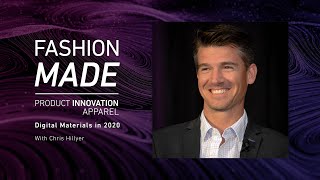
In this episode of the Fashion Made podcast, Chris Hillier, Director of Innovation at Deckers Brands, discusses the industry's push toward digitalization of materials and 3D workflows, a shift accelerated by the COVID‑19 pandemic. He explains why apparel and footwear have lagged behind other sectors—primarily due to the difficulty of representing drape, fit, and material properties in a virtual environment. Hillier describes the current maturity of 3D software, noting that while tools are now capable enough to begin adoption, they are not yet perfect. He outlines the work of the 3D Research Consortium (3DRC), where he chairs the technology sub‑committee and collaborates with innovation and education sub‑committees to develop industry‑wide standards for material attributes, data exchange formats, and skill‑set definitions. Standardizing material metadata would enable seamless transfer of material data across platforms, reduce duplicated effort, and improve communication with mills and suppliers. Hillier shares concrete examples of how a shared 3D material file can streamline feedback loops, support rapid style variations, and empower sales, marketing, and product teams with interactive visualizations. He also highlights future challenges, such as building collaborative platforms for reviewing collections, integrating 3D assets with PLM systems, and leveraging AI for forecasting. Throughout, Hillier remains optimistic that the pandemic has catalyzed the necessary momentum and that the industry now has the tools and collaborative will to realize a more efficient, digitally‑driven product development ecosystem.
Chapters
Hello and welcome to another episode of Fashion Made. On this week's show, we have Chris Hillier. He's the director of innovation over at Deca's Brands, and we're going to be talking about digitalized materials. So yeah, hope you enjoy his conversation I had with Chris the other day. Chris, hey, how you doing?
I'm doing fantastic, thank you.
Excellent, excellent. Well, welcome to the show, good to speak to you again.
Yeah, always nice to be having these conversations, for sure.
Yeah, well, there's, there's a lot of them happening right now, aren't there?
Yeah, you know, it's, it's funny, we, we had a meeting right before we were asked to start working from home, uh, um, we had a meeting talking about digitalization and the need for us to move faster towards this end goal for the very reason that we're all experiencing right now. So I think that this is obviously bringing the conversation to the forefront and motivating, if for lack of a better term, motivating our own companies and the industry to move faster, which makes me thrilled. I was hoping we didn't need a global pandemic influence that, but for sure, it's on everyone's mind at this point.
Yeah, for sure. Yeah, it's acted as a bit of a rocket up the you-know-what for a lot of people to sort of look into digitalization opportunities.
Absolutely, and I think that we are all going to resume work in a You know, we're gonna go back to normal at some point, whatever the new normal might be, but I think that what this does is at least puts in all of our minds that, you know, there is a different way, you know, that we might work in the future. And it'll be interesting. Every company will respond differently, but I think that it's undeniable now that we need to at least develop practices to allow for for a new situation, which is, you know, as an innovator, this is exactly what influences change, is the need to do things differently. So I'm quite inspired by it.
Yeah. Well, let's get into it. You know, I mean, talking about digitalization of materials, I know that you've been working on this for years now.
Yeah. For sure. And, you know, the thing to really consider is, you know, I came into this— materials are but one sub-segment of the big picture, which is for us to be able to communicate clearly with a network of designers and developers and material manufacturers and suppliers and marketers and salespeople and everything else, right? So digitalization is is a very big theme which touches absolutely, I believe, touches every aspect of a business. And it really comes down to communication and the efficiency of being able to communicate clearly and to eliminate a lot of traditional manual work which needs to happen behind the scenes. And sometimes, you know, the salespeople don't see that, the marketing people don't see this, but the more involved you are in the product development process, you see all of these different layers of people doing endless amounts of clerical work to facilitate this end result, which is a product. And I believe that our industry really is one of the last, and not because we're slow or laggards or irresponsible, but really because what we make is made by hand. It's traditionally made from flat materials, which are stitched or molded into three dimensions, which end up being quite complicated three-dimensional shapes. And so, by, you know, by design, this is a very challenging thing to digitize. And so, I believe that's why our industry has been so late to the game, is it's a really challenging thing for us to imagine what a lightweight material might look like draped over the human form and how it might move when someone walks. Whereas when you build that sample, which doesn't necessarily take very long or cost particularly a lot of money to make that sample, we know exactly what it's going to look like. So this whole idea of trying to represent that digitally becomes a very complicated thing. But that is the path that we're on, is trying to represent more before we request those samples and make those decisions. Because it does— when you look at the scale of it, it turns into a much different conversation. So materials are one very, very critical element to this because it defines how that 3D representation appears.
Yeah. I mean, on those challenges, do you feel like some of them have been overcome in the last few years of all the work that's gone into this area?
I— overcome, I think, might be a strong, strong word, maybe a little premature to say, but I think what is happening is we have now some pretty mature software solutions, which are beautifully, you know, beautifully— have been beautifully executed in the industry. And we have more and more examples of how this has successfully transformed certain workflows. Now, it doesn't work for everything. Like, for instance, one of our brands, the UGG brand, they're developing hundreds of new styles with very complicated appliqués and fur and other bits like that, that frankly are overwhelming to imagine doing all of that digitally upfront. I mean, it's a tremendous amount of work up front to do that. So it's not as easy as just flipping a switch, even though we have at Decker's built, you know, a beautiful foundation for all of this. It's not easy for these behaviors to change. But in this conversation, I think that, you know, I want to— one, I want to make sure that we're talking about materials because I know that that was the emphasis of it. But again, the other side of it is You know, this is about evolution. And what I do believe is the tools that we have available today are absolutely good enough for anyone to start down this path.
Yeah, that's the key point, isn't it? You know, you can't really look for perfection in this area. Will it do the job? And I guess your answer is yes.
Well, I mean, you look at the very first 3D software that was, you know, ever developed, like some of the first, like I know Dassault Systems was creating aircraft in 3D in the late '70s. And it looked like Pac-Man, right? I mean, it was very, very low resolution, but what it did is it paved the way for what we have today. It was an engineering challenge for them. That's why they went in 3D, they were building airplanes. They needed to justify changing the shape of a wing for engineering reasons. Whereas what we're doing is trying to visually represent something like a t-shirt, which is a completely different engineering challenge. And so in many ways, we're just trying to visualize. We're not trying to engineer. But along the way, we now have We have photorealistic rendering, which, where people can't even tell the difference between something that's real or not. And that has now become our expectation, is that not only is everything engineered perfectly, but it also is visualized perfectly. And that's a big hurdle for us as an industry that hasn't really embraced 3D, to actually have tools that engineer it and visualize it So nobody even knows that it's not real. That's a big shift. And I think that that's being 2020 and the rest of the planet being able to design cars and toothbrushes and everything else in ways that you can visualize them in perfection. Our industry having that expectation is a challenge. And I think that it unfortunately is a distraction to many of us because it's so easy to say, oh, this doesn't look real. And it's just like, yeah, but what we're— I think what I like to remind people of is let's compare it to what we used to do or what we still do, which is that two-dimensional Illustrator view of that. That apparel piece or shoe or whatnot. That's what we have today. So when someone says that your 3D rendering doesn't look perfect, let's all remind them what we're comparing it to, which is far from perfect. And I think that that should be our representation of success rather than whether you're fooling someone into whether it's real or not.
Yeah. Yeah, I mean, because that must be the first sort of question that anyone ever asks you is, you know, this doesn't look exactly like the thing that we're going to wear at the end, or, you know, the material that we're going to buy at the end.
Well, you know, it actually gets even more complicated than that because when you get into materialization, it's like, does it drape accurately? Does it represent the fit and the stretch of these materials? Does it, you know, Does it have the proper sheen or transparency? Or, you know, it's like it gets quite complicated. And we've seen examples of very compelling representations of apparel and footwear in 3D, so we know that it's possible. But I think what people don't know is the amount of hours that it might take to represent some of these things. And how accurate truly is it truly? So is fit, how close, and this is the big question that always pops up is how close are we to being able to represent fit digitally? And these are all very challenging, complicated things, and it all comes down to representing a material accurately. And so that's why materials have become such a great place for us to focus as the 3DRC is materials themselves are in many ways the building block that is quite necessary to define. And it's something that as an industry, we know our materials. And so it's something where the 3DRC can really participate is helping to define that. Because frankly, the companies making the 3D software, materials are important to them, but they don't really understand materials like the the industry does, as far as apparel and footwear.
Yeah.
So it's a great place to collaborate.
For sure. I mean, tell us a little bit more about the 3DRC subcommittee work, because you chair one of the subcommittees for them, right?
I do, yeah. There's 3 subcommittees. There's a technology subcommittee, which I'm working with. There's an innovation subcommittee, which is Abhinash Sahu from Target. Is working on that one. And then Safir Balale from VF Corp is working on the education subcommittee. And these subcommittees, you know, we've decided what projects are necessary for the industry. So education, which Safir is leading, is a great place to start, you know, having an understanding and standardizing, you know, just the the career path for a digital, you know, digital person within the industry and what type of skills are necessary and how to benchmark those and standardize those. It's a whole new vocabulary, frankly, that we're embarking on. It's, you know, that's new to our industry. So that's the education one. Abhinash, working on innovation, is taking on this very big challenge, which, you know, getting in the weeds a little bit, but every 3D apparel software out there has a way of testing a material, and you're testing it for the physical properties which allow you to simulate how that material is going to drape or fall on a body. And so you're stretching it and you're pushing it over the edge of a of an object to see when it starts to bend and how much it bends and how much it rebounds after stretching, all these different parameters. But the big challenges, and they all do, all of the different software platforms do a very great, good job of representing these materials. But the problem is there's no standard. So if a material has been, tested for one platform, those, the, you know, the data that's been collected to test it can't be transferred into another platform. So what Abhinash is trying to do in the Innovation Subcommittee is see if there's a way that we can, you know, creatively work on redefining how that is done and see if we can create some sort of standardization. So these, these, uh, this data can be transferable across different platforms. So that's a, and that's a great project for Avinash, um, who's, who really has a, has an amazing understanding. And, and, you know, and, and it's a real problem. It really is, because if you have many different people working on many different platforms and your materials aren't transferable, it just becomes duplication of effort, which is obviously tremendously inefficient. And then the subcommittee that I'm working on is actually in some ways connected to what Abhinash is doing, where we're trying to, you know, just from the industry standpoint, trying to organize the way that we are describing materials. Because, and many people don't know this, but, you know, one company might have different attributes that they use to represent cotton than another company. And but, you know, it's like what we're finding is everybody kind of uses the same language, but it hasn't been standardized. So we're working with some groups that are creating standards. I'm partnering with Keith Hoover from Black Swan Textiles. He's been helping me organize this, and basically what we want to do at the end of this is from the industry's, you know, standpoint, have a collection of attributes which are used to define all of the different materials and components that we use in our industry. Just have a standard. It's actually not overly ambitious, but it's basically we want to have a blueprint for if you have a piece of leather or a textile or whatnot, that it is described in these different ways which are standardized, which having standards is so helpful because then all of our material suppliers can say, oh, as long as I answer these 20 different attributes about this material, as far as country of origin and, you know, fiber content and width and thickness and, you know, etc., etc., as well as adding in this information that Abhinash is working on in the innovation subcommittee, and then in addition, working on the 3D side to describe visually what these materials look like. The vision is for us to start imagining 3D formats or a file format which describes all of the different information necessary to describe and to have a transferable— or a way to transfer information about a material. And that's— that is We feel that by having a standard around that, we could— we can gain a tremendous amount of efficiency if we, for instance, reach out to our suppliers or use— I mean, there's a couple different products or solutions on the market now. You have Swatchbook, you have platforms like Material Exchange. If they can be operating with a file format where you can download that file and it works transferably in all software solutions to represent what that material looks like and all of the characteristics around it, as well as the physical properties to represent the simulation. We think that that could be a tremendous efficiency in our industry.
Oh, absolutely. Is it quite difficult to get all of the different parties singing off the same hymn sheet with this?
You know, no. I will— there have been some challenges getting software companies to agree to go down a similar path. That's been a challenge. But as far as our industry, one thing to say is that this is all still so new that people haven't necessarily gotten to this yet. They have their solution for their pipeline. But seeing it as a global challenge. But I don't think it's really been defined to the point, or there isn't enough awareness about it that people have so much of an opinion. So I think it's actually, the timing's quite good because if we can identify this, because I mean, just explaining it, it all sounds quite logical. So it's not, people aren't really particularly opposed to it. Keith Hoover has been great just because he really wants to make sure that, for instance, the material suppliers have the information baked into this, you know, this format where they can get the information that they need, whereas the brands, you know, they're focused on what they need. So I think that, you know, if we collaborate and work with all, then then I think that now is the time to establish this. And frankly, it's like the nice thing about a digital format is, you know, if someone wants 30 different attributes and another company only needs 22, you know, as long as all 30 are there, then the company that's only looking for 22 of them gets everything that they need as well. So that's what's nice about it. And the suppliers only have to enter this information once to describe their material, and then it lives with that file or that material forever. So it actually becomes quite efficient for them. And the way that we operate today is, you know, you might have 6 different companies all requesting information about a particular textile, for instance, from one mill. That mill has to, you know, find all the data that that company is looking for and put it in an email and maybe in an Excel spreadsheet and send it off to 6 different companies. If you have a transferable file, they can literally just download it from a platform and everybody has exactly what they need. And eventually, we can be working with PLM companies and that file format could be read into a PLM platform and all of the data can automatically populate that PLM platform, which could become even more efficient. And that's, I mean, that's the future that I would like to participate in creating. And I think it's quite possible. And I think the timing is perfect, frankly.
Yeah. When this is all achieved, you know, this zenith that you want to get to, what kind of things will it enable companies, education, mills, what will it enable them to do differently?
Oh man, I mean, this is the thing, is it works front ways and back ways. I mean, and back as well, just from the standpoint of being able to communicate back to the mill, you know, what you're trying to do. You know, for instance, like you could download one of their materials represented in 3D. It's quite accurate. Then you could send it back to the mill and say, hey, you know, this is what we're trying to do with that material that you've provided. 'But we would like to see a little bit more flow in the material. Do you have any suggestions for how we might adjust your material to accomplish that?' And it's like that type of community, like I was working with a mill, gosh, I guess it's been almost 2 years ago now, and showed them some 3D renderings using their material that I'd scanned and represented on a shoe. I was able to show them what their material looked like in in a 3D rendering. And they were so excited about this. They were just like, "Wow, so we could see how our material is being used on the product?" And I'm like, "Exactly." And they're just like, "Oh, because we would suggest a different material if we knew that you were putting the material where you're showing us that you've put it." And it's like that type of feedback becomes so much more efficient for all, because right now they just get, you know, They just get an order for a certain material in a certain color. They don't know how we're using it. So it's about visualization, it's about communication, and it's really truly about efficiency. And there's places, there's pockets of people's business where they don't realize the influence this could have. And a good example is like one of our brands, Teva, Teva sandals. They have these patterned webbings that they use, but the design of the sandal hasn't fundamentally changed for decades. And for them to be able to visualize different patterns on that, you only have to build one model and they can look at thousands of different variations of color and patterns and nobody has to do any 3D modeling. I mean, it's been done It was done years ago. And so those type of efficiency, we call them carryover styles in the industry. So how many t-shirts, you don't have to build a new t-shirt every season. You have a t-shirt, you have that block already figured out, and then you just apply graphics to it. And it's like that side of the work is far easier than trying to build 3D models of everything each season. So I think that there's different ways that people can approach this that aren't quite as daunting as building all of your new product every single season in 3D. And those are the type of things that I think that companies can focus on and really get a head start, or rematerializing an existing style. So swapping out a textile for a leather or something like that on a shoe, if you have those materials already built, then it's easy just to pop in a new one and visualize what that might look like. You don't have to do any 3D modeling, you just have to swap the material out. So those efficiencies, I think, are really going to change the way that we operate.
What would you say are the other core sort of 3D issues that the industry has, you know, as a collective and that they need to tackle next?
Yeah, you know, I think what a lot of us are discussing and something that I've been putting a lot of energy into is just this idea that that we don't necessarily have a great way to display what we're building. And I think of it as kind of my muse is the kind of the line meetings that we have, the, you know, when everyone gets into a room and looks at this collection and yells at each other for a couple days about, you know, I think that this yellow is too yellow and I think that this, you know, this material is too shiny or I think that logo is too big or, you know, all that type of stuff. Stuff is, I believe, as we're building— and honestly, I think this current situation is bringing this conversation even to another level— is we don't have a great solution to use our digital assets to visualize, you know, what our collections look like and how we can pull them down and how we can, you know, and how people can make comments about specific things. So, One of the things that, you know, we have a way to upload our 3D models onto a website and you can open them and spin them around and zoom in, like people are able to do that, but it's, you know, you can only do it one by one, it's kind of through a third-party website, it's like I want this robust platform where you can, you know, you can put all these 3D models and you can drag and drop the collections and and maybe even forecast how many you want and decide what regions they're going to be in and what the introduction dates are, but have this different environment to be able to leverage the fact that you have these beautiful 3D models to visualize. And eventually this could be a virtual reality environment, so you can kind of see what they all look like. And there's definitely some companies doing, working on these environments, but some of them are just so you can realize what you're— you build out all the assets and then you put them in your store or something like that. And I think of it as being much more inclusive of the datasets that we have, like pulling the PLM data, for instance, about a product and having that all live together. So when you change the forecast, in this app or website or whatnot, it updates that information in your PLM software. Or if you change the assortment, it updates that, or if you make a comment, it all gets collected in one place and a product line manager can go in and see all of the different comments made about a particular product, but it's all done virtually instead of everyone having to get into the, you know, traveling around the world, sitting in that room so they can see those products, which I think we know is that things like sales meetings and line reviews are being done virtually right now. That makes it really challenging when all you have is a side view Illustrator drawing and you're trying to make decisions off of that, or you're having to photograph all of your product and people are looking at some iPhone picture of a of a shoe or apparel piece, trying to make a decision whether that's the right green color, those things get tricky. And so I think that if we have these 3D assets, leveraging them in a way that they can be used to enhance that meeting, I think could be very successful. So I think that that's the next challenge coming is how do we Once we have all these great models, how do we use them? How do the teams use them? How do the sales— how does the sales organization use them, or the marketing team, or the product teams use them? Instead of just a designer saying, oh, this is my creation, and being able to communicate that to the factory, which we already know is a huge, huge advantage, how does it go further and start extending to all of the other groups? I think that that's the next thing on my radar.
Fascinating. It reminds me of a conversation that we had with Kerry Murphy from The Fabricant, who was just saying that when we talk about digitalization at the moment, really what we're trying to do right now is replicate what we do in a physical world in a virtual world. Um, but actually the opportunities are reimagining the possibilities when you don't try and replicate what you already do because of the limitations within the physical world, you're completely free within the virtual world. So when you start creating sort of, um, yeah, systems and processes based on those unlimited possibilities, you might come up with something really interesting.
Indeed, and the real-time almost gamification of, you know, it's like if you're, I don't know, if you're a sales rep, you know, for the state of, or for the East Coast of the United States, and you can be introduced to the product collection, you know, through all of these beautiful 3D models that you can zoom in and spin around and You can, you know, and you have the sales data for what you have in the market at your fingertips, and that can be used to— honestly, it's like this is where things like artificial intelligence, you know, can actually come in and start predicting which colors are going to be good for you next season. It's like that's— these are the type of exciting platforms which are going to, in my opinion, going to start reshaping our industry. And that's not replacing things that we've done in the past. That's enhancing that. So you're exactly right, but you can be there as kind of the project commander to see how things are coming together for your region, which I think is quite interesting.
For sure. It's a great job title too.
You think about it, we still do so many things very manually. I watch, I was a product line manager for many years and People would come into these meetings and they were a sales rep and they would come in with an old catalog and they would write how many pairs of the blue one that they sold with a Sharpie in the catalog. And then they would have an Excel spreadsheet where they could find out the aggregate data of what retail stores bought a certain SKU. And they would all have their, they're like, well, they bought these, but they bought them at closeout. So I sold them a lot, so our volume's high, but I didn't get, you know, whatever data they have. And then they're trying to determine which one to buy for next season using all this kind of aggregate data. It's like, what if that all lived in one platform where they could get the sales data that they had, they saw the new styles that are being presented and they can be like, well, of course I'm going to order the blue one. We've had the other blue one in the line for 3 years and it sold very, very well, but it's starting to taper off, so I need to update it. That kind of information at your fingertips without having to have the Sharpie, the jotted down Sharpie notes in your catalog. And on the other side of it, as a product line manager, Someone in the back of the room would say, "Hey, that logo looks too shiny," and then someone in the front says, "Yeah, I agree," and then someone over here says, "Well, I'm going to order 20,000 pairs of it, and I think it looks great." It's just like, well, as a product manager, who do you listen to and how do you make those decisions? Whereas if it's all on a platform and people are voting with comments and forecasts, it's like, well, it becomes quite evident which one, what decision you make. But those are the type of things. Maybe I'm just trying to, as an innovator, I always say it, you have to have a little streak of laziness because if you don't, you're always looking, you're not looking for an easier way to solve something. And so maybe it's trying to automate some of these things or some of these challenges that we ran into just from an efficiency standpoint. I think that sometimes inspires these changes. But it's hard. I mean, you would literally have to have that intern or something jotting down notes so at the end you could distill it. They're just like, "Yeah, it was that lady in the back left corner. She was really adamant that you needed to change that." And you're just like, "Who was that? And how many is she going to buy?" It's like, that's where things get really confusing. And so having these platforms that are fueled by these amazing 3D representations. I think that you could do, you know, so much of this could be done at home, and you know, with a glass of wine, and you can make these decisions, and then, you know, basically, you know, collaborate. And I think that it would change, it changes everything, for sure.
For sure. Well, Chris, look, thanks again for coming on and sharing your views with us. It's, yeah, it's a really exciting world. It sounds like there's I think there's a lot of sort of integration challenges to come in this area, but if we can overcome those, then the possibilities are endless.
Yeah, for sure. And obviously, as more things become digitized, the opportunity for those digital platforms to talk to each other is there. Now, trust me, integrations— I've just gone through one. It's not cheap and it's not easy, but it can be done. And when it is, it can really change your life. And I think that, so it's about us being very clear and understanding what we're trying to do and having a vision for that. And yeah, I'm very inspired by the opportunities going forward to really change the way that we operate and move through this. So, you know, maybe it took a global pandemic to inspire the next step, but I believe that It's, it's definitely in the crosshairs of this industry, and, and I'm hearing more and more about it, and I feel we have the tools and the motivated participants to take it to the next level. So thank you for letting me share.
Pleasure, always good to have you on. Yeah, that was Chris Hillier from Dekkers Brands, really good guy, and, uh, always good to, to catch up with him. Um, on next week's show, we're going to have Kurt Covano And we're going to be talking about on-demand, um, so on-demand manufacturing and how, again, you know, COVID is really forcing people to look at this as a serious option. Um, you know, now and in the future. So look, thanks for listening today and hope you can join us again next week when we'll be speaking to Kurt. Until then, have a good one. Bye-bye.










