Digital Transformation and Optimisation Through 3D Asset Management | CLO 3D | PI Apparel
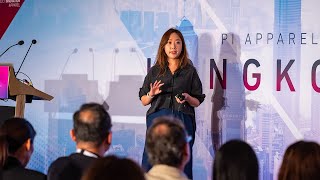
Serena and Jessica from CLO present how the company virtualizes garment production. H&M cut fabric waste and sped up design cycles; GMS reduced sample counts by 50% and halved lead times. CLO's tools automate grading and pattern making, with plans to expand into AR, VR, and blockchain-based asset ownership.
Chapters
Hello everyone, I'm Serena. I am the VP of Business Development for CLO Hong Kong in Southeast Asia. And I came here with Jessica. She's from CLO Korea. She is the Biz Dev Manager for Closet. It's a separate division, a separate product that she would be covering. So like, I'm not, I'm sure that a lot of people have heard about CLO. As a company or as a software before, but just a brief recap of what we do is that we develop 3D softwares and we also cover like the soft goods technology including the fashion-related products. And today we would be covering about the end-to-end digital transformation of all the journeys past to present, and also Jessica would be covering about Closet for the 3D assets management. Yeah, so before we start, I just wanted to quickly cover our company's mission because this was the 3 missions that we have been emphasizing to our clients since 2009, which was the year that we have begun the business. So the first one that we always told our client is We're going to virtualize all the garments on Earth. Second is we're going to transform the way we produce and consume garments. And then the third one is to organize all garments-related data and to make it useful. So actually, today's topic is also kind of related to this mission, so I just wanted to recap and to share with everyone here first. Yeah, and to, To kind of explain a little bit about the journey that we've been going through with our clients since the year 2009, I thought it would be good to kind of wrap up into different keywords to kind of let you understand better. So in 2009, with a lot of our clients, we were talking about piloting. So back then, we were like, a lot of people were evaluating different 3D softwares, whether this would be efficient for their processes or not. And then after 1 or 2 years, now people are getting different benefits and outcomes and proving that this is working. And then the keyword becomes 3D implementation. So not only training the software, people are now talking about how to adopt 3D in the full digital workflow. And how to do the implementation well. And then it comes to the keyword of 3D roadmap, which is about how to set different roadmaps within the company to have specific targets and specific deadlines in doing different things. And then the fourth one would be expansion. So with the roadmap, people started to expand towards within the internal company, so with different teams, with different product categories and also externally with different suppliers and also material suppliers, they started to expand the usage together. And then the fourth one was about standardization, which was a very key topic, especially towards COVID had started. So now everyone not being able to meet in person, they had to work remotely. So to do this, the only way possible would be making everything digital and to also talk with the 3D garment itself. So again, it was about standardization. How do we standardize digital processes? How do we standardize the products that we are creating? How do we manage the quality of the 3D products? And then it's also nowadays, a lot of people are talking about 3D assets management. So now they have built a lot of data. There's a lot of 3D garments built within this company. Now how do we organize, how do we make that useful was a very very big key topic afterwards. And then till now, it's about the end-to-end 3D supply chain, how to make this happen throughout the whole processes. Yeah, so this slide is also just talking, covering about within the 3D supply chain, how 3D garment is not only a 3D garment itself, but it's also consisted of 3D trims, 3D fabrics, 3D avatars, and everything that's used to compose that garment itself. Yeah, and within this 3D supply chain, I'm sure everyone would have heard different brands, vendors using the 3D system. And also not only them, it's also including manufacturing companies for production, also trading companies, material, trims, fabric suppliers, and also even now till the retailers of making use of this data with different stores virtually, also for e-commerce in 3D markets. Yeah, and at the end, I also put some key players of who are the end users of this 3D, which would be, as everyone knows, designers, pattern makers, technical designers, product developers, merchandisers, and now a lot of companies are even building a specific 3D team to kind of make use of this solution. Yeah, and I thought it would be also good to show a bit more detail in a timeline, and this is a case study with one of our clients. They are the pioneers of this 3D digital transformation, and if we could see, They started in 2013. They spent around 1 year doing all the pilots. And then after 1 year, they were doing a lot of, after proving that this is working, they started the implementation, which also took, the initial onboarding took 1.5 years. And then it comes with, now they onboarded different teams, different internal divisions and also external parties together. And then now how do we standardize everything together and to be able to communicate with different parties. And then that standardization is ongoing till now. It's not a one-time-off work that they are doing. And then afterwards, they have set different roadmaps, like target ROIs, like the percentage of sample reduction that they are targeting. And then after setting that roadmap, they have started to expand to different category teams and also different suppliers and even till the raw materials, trim suppliers as well and the fabric suppliers. And then after all these data is ongoingly created, it was from 2020, which is 7 years from that they ever started Khloé, they started to consider different ways of selling the products. It could be through virtual showrooms. It could be about e-commerce or even marketing-related materials that they would create. And then recently, they are now expanding to connect it to PLM systems to kind of make use of this data more for the production-related purposes. And then now, definitely, because of all these data and assets being created, they are now ongoingly organizing all these assets. So actually, it's like a, if we could say it's like a 10 years journey that they've went, but we feel like as a software provider, it won't take that long if people start now because back then in 2013, it was just like so difficult even with the mindsets. So they had to convince different people, different managers, different parties that they would be working. So they had spent even 2, 3 years just to explain that digital transformation is needed throughout the company. But now as everyone kind of understand it's crucial to run the business, I guess it would be even half of the time shorter than how they have experienced. Yes, and not only externally, we also do internal developments to make this happen. So as you know, CLO, the 3D software, it's something that was there since the beginning. We have the CLO Fabric related to the fabrics. We also have Closet, Clovis, and Connect, which I would cover a little bit more. Yeah, and starting from CLO, what kind of developments we had made throughout the years. Actually, there's hundreds of features. I didn't know what to kind of specifically share today, but I thought there was a common keyword that we're kind of emphasizing and focusing on, which is automation. So starting from automatic grading, automatic sewing, also automatic pattern making, and 3D arrangements, motion converting. Nowadays, we are developing more and more automated automated functions, and this is just for our users to kind of make use of the software as easy as possible. Because our users are the key players of this digital transformation, we believe that hearing them and kind of making them easy and convenient would be the most important. Yeah, and we also have further developments of Closet and Clovis, but I would leave it to Jessica to cover more in the second part of the presentation. Yeah, and the third part would be about Connect, which it's a 3D marketplace. It's also for 3D galleries and also a 3D creators community. And here, not only about the marketplaces, we also have connections to metaverse conversions Also AR, VR. Yeah, and also about the NFT. So to secure different assets, our developers are also developing related to NFT. So in the future, we also have the function now, but we would have digital stamps in different 3D assets to kind of secure the ownership of who had created. And also being able to track who had edited further later on. Yes, so I would like to move a bit more towards different case studies of how our clients have experienced Clo, and their feedbacks, their interviews of how the benefits were of using Clo. And the first one is more like a general video of different interviews that was done with our users and clients. [FOREIGN LANGUAGE] It's a foundational building block for every person that works in fashion.
I've used CLO for several years and it's really a very user-friendly software. And for me, CLO is not only the video apparel software, it's also an open platform for the people to use it to develop more different kind of products, which can be fit for their business.
Things I like about Qlo is that it's super fast. It's very easy to use.
[SPEAKING CHINESE] Padangkang ya kon buki gani, paseng ga ramia.
Yep, so this was like an overall video of different clients that we're using on CLO. A lot of them are kind of the pioneers of 3D digitization transformation throughout several years. And I also wanted to specify like two specific case studies of two different clients today, which also kind of explains good of what we wanted to deliver in today's presentation. So the first case is about H&M, and they kind of emphasize different benefits that they are taking by using CLO. One of them is about like they are getting a lot of more design variations, a lot of more creativity, and a lot of options to select from, and about the fabric waste reduction that they're getting, and about sustainability and lead time reduction.
Introducing CLO. Hi, I'm Alba Clare, and this is— What is this? This is The Small Things. Yeah. Thanks, guys. Hi, I'm Alba Clare, and this is The Small Things, a space created by H&M to help you and I get technical about the things in fashion that really matter. Introducing Clo, a 3D garment simulation. Today we're going to be looking at some of the ways in which innovative thinking can positively impact the world of design. In traditional design practices, things like unnecessary physical sampling think fabric waste are a seriously live issue. Creative changes equals excess samples, and excess samples put more pressure on our planet's resources. But how can this be avoided? Introducing Clo3ve, a 3D garment simulation that allows designers to freely experiment without using any resource. Let's take a closer look. An H&M designer will now show us just how seamless the process of 3D garment simulation can be.
Hi, I'm Matteo, a junior designer at H&M. I'm going to show you a quick demonstration of how to design and modify a dress using CLO 3D. Using this software, I'm able to place the pattern, adjust the length, experiment with fabric colors, play around with design elements such as ruching, and change my avatar in an easy and effective way. This dress features in our spring collection. Alva, show us the final result.
Amazing! The finished product is just as major as the design. Designing garments in 3D opens up a world of unlimited design variations. Without the burden of resources and transportation, this leads to a lower environmental impact. As we've seen, virtual sampling is a quick and more sustainable development in the way that brands design. Lead times are reduced, changes are easier, and unwanted samples are completely taken out of the equation. Going forward, it's even possible that we ourselves could buy directly from a 3D garment simulation like Clo, tailoring our clothes to fit exactly the way we want them. Now that's something I can get on board with. You've been watching The Small Things with H&M today.
Yep, so that was the video about H&M. It's also publicly on the YouTube, so anyone could search about Small Things H&M about CLO3D if you would want to look again. Yeah, and the second case would be, um, second and the last case would be about GMS. It's a trading company. They do designs and manufacturing at the same time, and I just cropped out a short phrase that they mentioned about the benefits that they are taking?
I think 3D design can really help a lot to reduce the number of samples. We have some customers who are very big companies and they need around 500,000 salesmen samples per year. We're trying to reduce this number of samples at the moment by 50%. We have several customers who really feel the urge to reduce samples. With these customers, we are working on capsule collections which are developed fully digitally and also being sold to retail completely digitally. And in this way, we are able to reduce lead times from 90 to 40 to 45 days or something like that. So all in all, I think it is more than clear that 3D design is a must-have in the textile industry.
Yep. So just to recap, um, they kind of mentioned that they reduced the samples up to 50%, and they also are fully digitizing their capsule collections in 3D and also even selling digitally, which I would also show like how they are selling this, and also their lead time is reducing from 90 to 45 days. And how they have been selling digitally is really interesting. They had built their own digital showroom. It's also on their website. And they're also actually located in Hong Kong. And I kind of recorded my kind of How's he, like, vision of how I'm scrolling in their website. So you could see different garments. If you click that garment, you would be able to see the 3D products. And then you could also see the different lead times of how much it would be taking, and the buyers would kind of select of what kind of samples they want to proceed with. Yep, so there's actually a lot of case studies, a lot of user stories in the website. So anyone that wants to look more into different stories coming from different users, you could have a look in our website. Yeah, and finally, I just wanted to end the presentation just explaining of where we are heading. And one of the good ways to explain this is on some of the partnerships and the growth that we are having. So first of all, about the global expansions, actually we now have around 13 to 14 different offices. We recently opened in Indonesia. So you could see wherever the offices are are the places that we have the most users. And also the places that we want to focus on kind of Understanding what they need and also developing what they want. And about the partnerships, we have different partners, but I also wanted to emphasize some of the acquisitions that we had lately and also the investments that we are putting. The acquisitions would be for GoVis. It was a company that develops API plugins or also connectors to PLM systems. And you could see how our business is trying to expand to also the PLMs manufacturing on production-related sides as well. And also about the investments that we are putting, we have invested in Pixelpool, which is a virtual showroom technology company, and also Swatch On, a 3D fabric digitization platform, and at the last, FAAI, which is an AI solution for apparel production. So these kinds of investments, you could see how we're expanding. Through different parts of the business. Yep, so I would now pass it to Jessica to cover the second part of the presentation. It's about Closet, but just to let you know, it plays a key role in this kind of full digital transformation, so it would be really interesting to hear. Thank you.
So hello everyone, my name is Jessica Kim and I am the business Development Manager from Closet team, and I came all the way from Korea. So today I'll be talking about how we envision the new way of working, how we can truly be connected with 3D assets along the stages of the product lifecycle. So before I start my presentation, I have prepared a short clip where we— how we envision our way of ecosystem where our the 3D design, it gets developed through the— our CLO 3D software, and how that design gets further developed through our collaboration platform, and how it gets released to the public market using our Connect Marketplace. So that was the end of the video. So before we move into the presentation, I quickly wanted to introduce you what our Closet service is. So Closet is a collaborative 3D creation workspace. And what we want to do is that we want our users to maximize the value of your 3D assets. And how we enable this is by bridging the stages of the lifecycle in one centralized digital space. User base. I know it sounds still vague, so I wanted to go over the next slide and talk a little bit more detail about it. So, at this moment, we have about 339,000 users who are using Closet at this moment, and this number has been increasing exponentially with 150% of the annual growth in a yearly basis, and we have a user base about across the more than 50 countries around the globe at this moment, and we have about more than 8,000 enterprises using Closet as a collaboration tool. And one thing that I wanted to share with you is that our client Hugo Boss and then The Gap. So as you guys all know, Hugo Boss and Gap are the pioneer within the 3D industry, right? And they have been, we have been working together, try to come up with innovative ways to be able to communicate, to utilize the 3D assets as much as possible, not only to communicate internally with their company, but also to communicate with their external users such as the vendors and then the suppliers. So let's get into our presentation. So within this slide, I wanted to quickly go over how the product lifecycle in in the current stage actually looks like. So what I have prepared from the slide is a general workflow of the product lifecycle starting from the design till the production stage. And as you can see from the slide, although we are putting a lot of effort to design the 3D design, we're not really utilizing enough, right? So if we, let's just talk about it. So even if we create the 3D design, how do we communicate? We actually screen capture it and then attach to the email, which is actually We're actually going backward of the 3D, right? And not only that, when we're making the mirror board using the 3D assets, what we do is that we screen capture the images of the 3D design and then copy and paste it in the mirror board or to the PowerPoint. Or when we're creating a range plan, for instance, we're using the Excel sheet to create all the manual works. So the question is, why are we, not fully utilizing the 3Ds along the stages of the product lifecycle? The answer is very, very simple. The answer is because we've never really worked that way. We never had to experience the current stage where we had to use this much of the 3D along with our workflow, right? So that's why today what I wanted to share with you guys is how we envision, how we wanted to tell our users to come up with new innovative workflow to work with 3D, to be closely connected with the 3D assets along these stages of the product lifecycle. So as you can see from the slide, we believe that having a 3D asset centered, surrounded by the product lifecycle is a way to solve these current stages that we are facing at this moment. So in this case, we believe that all the people people who are working with the product side can truly be connected with the product. And also, we believe that it is our job and responsibility to provide a service for our users to communicate, to better communicate with your legacy tools such as the PLM and then the ERP. And in order to achieve our vision, we believe that it is a key to centralize the data and centralize the communication and centralize the workflow in one centralized platform. And in the next slide, I'm going to show you how we're going to enable this by walking you through the key features that we offer. So, you know, like, we— I know that everyone is now like making 3D assets, but now it is really important that we need to— it is really important that we think about how we are going to manage those 3D assets that we created, right? So that's why Closet is providing a perfect asset library where users can where users can store the pre-made assets. So it could be divided into the product category, for instance, avatars, trims, fabrics, and so on. And what's really amazing is that the brands or the vendors, they can invite external users who need to design off from this pre-made materials and then directly use this materials to the CLO3D software and start designing in a more quicker way. And secondly, I wanted to talk about how we're going to enable centralizing the communication across the different department, but also across the different communication parties such as the vendors and suppliers and also between the brands. So within this video, I have prepared the communication tools that we are providing. So here, this video shows the function called attachment annotation, where users can directly leave the annotation on top of the 3D viewers. And also they can attach the image if they have any reference to. And also what they can do is that they can leave a comment. And by leaving a comment, they can also tag someone specific, someone they wanted to tag in. So in that case, the user will have a true source of data where they can see how, where exactly that the counterpart wants to communicate using the 3 assets that they have already made. And the next feature I wanted to share with you guys is a configurator. So we also We all know that now the 3D design is not only belonging to the 3D designer. Now we're living in a world that non-3D designers should be able to design 3D more in an easier way without having any professional skills. So that's why we believe that it is really important for us to provide configurator so that the non-3D designer can just easily change the colorway of the pattern and even to change the texture of the pattern and also even to create graphics within the configurator without having to use the software, and to easily create and amend the 3D design that you guys have already made. So we are going to enhance the configurator function moving forward even more, so that was something that I also wanted to share with you guys. And the next feature is an assortment room. So assortment room, when we are thinking about the design review, Although we have a 3D design, we don't really have a proper tool to review the 3D design. So what we do is that we actually screen capture the 3D design into a PowerPoint and then share that screen as a presentation mode. So meaning that we're not really fully utilizing. Why not we use 3D viewers to review multiple garments in one window so we make the full use out of it? So, what's really also amazing about the assortment room is that a lot of the vendors can actually showcase their collection to the brands by making the assortment room and share that assortment room to each of the buyers if they want to. So that's another use case of using the assortment room in this case. Next, we have a virtual showroom. So we're going to be releasing a virtual showroom, and we believe that all the 3D designs that you guys have made already through our CLO software can be easily implemented within the virtual showroom that we provide. So within the virtual showroom feature, what we expect is that our users can just easily upload the 3D designs that you guys have already created, And whether it's the 2D or 3D format, and they can also implement all the product information. And what we're going to do is that we're going to be adding order management so that the vendors and then the buy— the vendors can also invite the buyers to make the order management within our virtual showroom as well. So the next is a 3D web tech pack. So we know that the production side was a part where the 3D was not really being, you know, fully utilized. So that's why we actually came up with new way how we can incorporate 3D within the production stage. So what we envision is— so what we came up with was to provide the 3D viewers within the bills of material and then within the construction page and within the point of measure and within the cost estimation page so that the, the vendors and then the brands and then the manufacturers, they can be truly connected with the 3D assets directly from the 3D viewers that we provide on the site. And of course, we're also coming up with ways to export that feature into the printable format so that it's easy easy to shareable with the user who are not using this platform at this moment. So I wanted to quickly go over the roadmap that we have at this moment. So firstly, we have assortment planning, and secondly, we have an API and plugin integration, and thirdly, we have a data and trend analysis And then last but not least, we have metaverse and NFT. So, for assortment planning, I quickly wanted to share a slide where we are going to provide a— yes. So, for the assortment planning, as you guys all know, merchandisers are the one who should be really be connected with the products. But in real life, merchant— well, you know, assortment planning, we're not really utilizing 3D enough. And there's a lot of manual processes going on, you know, making range plan manually with the Excel or the range board made by the mirror board or the PowerPoint. So we wanted to make, you know, change this way of working using the 3D. So we're going to provide the web-based range plan and then the web-based range board. So we're using this range plan and then the range board, we believe that the merchandisers can be truly connected with the 3D. Assets and can get away with all the manual processes that they are doing at this moment. So I'll quickly go over the rest of the 3 roadmaps that— the key roadmap features that we have. So as I mentioned earlier, from Clo-Set— from Clo Virtual Fashion side, we believe that it is our— we want our users to have an open mind to understand how much of the benefit that the 3D can bring into to you. And at the same time, it is our responsibility to come up with ways so that our users can easily use our service so that different tools that they're using, whether it's the legacy tool or whether it's the ERP or the PLM or the close ed, does not have any disconnection to each other, but also, that can actually be able to communicate easily to one another. So that's why we believe that it is a key function that we should develop. So we are developing an open API and then the StartStandard plugin for our users to have data integration with their legacy system. And the data and then the trend analysis is one of the key features that we are developing at this moment. So with having all this metadata from our side, we believe that we can make the most most use out of it to our users so that our users can have a better forecast and better design for the upcoming seasons. And not only that, if we actually think about it, there's another feature that I actually wanted to share with you guys today. So you know how when we're designing the 3D assets, once it's done, it's really hard to search for the designs that we have already made. So what we end up doing is making the similar design again because we don't know where where it lies, right? So that's because, but we believe that we can actually solve that problem also by using all the data that we have. So what we are developing at this moment is that we're going to develop a keyword and then the image search within our search engine. So meaning that our users can easily use a reference image and then keyword to search for the assets that they have already made. So that was something that I also wanted to include. And then last but not least, It's all about how, like our Clover Virtual Fashion, it's all about we want our users to maximize the utilization of the 3D assets that they have designed. So we want our users to, once they create the design, we want our users to be able to showcase that design to the public market, especially like within the open marketplace. So we have released a, open marketplace, which is Connect, where the individual users and also suppliers and vendors can showcase their design and even buy and sell the design from one another. So that was pretty much a brief of our roadmap. And last but not least, you know, like, I just wanted to tell you that Clove Virtual Fashion, like, we are striving to come up with new innovative working ways how we can truly be connected with the 3D assets along the stages of the product lifecycle. And if you guys wanted to join our journey, then please come talk to us after the presentation. We'll be ready at the booth. So that was end of my presentation, and thank you for listening today.










