Driving Digital Transformation: Insights from Browzwear | PI Apparel
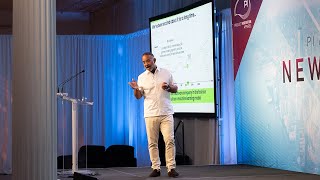
In this keynote, the Browzwear leader frames the "digital imperative" for the fashion industry: a robust, enterprise‑wide digital foundation is essential to capture AI‑driven value now and in the future. The talk reviews the historical cycles of AI hype and winter, explains how cloud computing has finally enabled scalable AI, and shares Browzwear’s early GPT‑based design pilot—its successes in rapid ideation and its limitations around prompting. The speaker argues that companies must consolidate fragmented data (PLM, DAM, spreadsheets, etc.) into secure cloud libraries, protect intellectual property, and align digital initiatives with C‑suite priorities of growth, profitability, efficiency, and sustainability. Real‑world examples such as Nike’s AI‑driven mood boards and Under Armour’s cost‑reduction reporting illustrate tangible benefits. The presentation outlines the challenges that keep many fashion firms stuck in the middle of the digital‑maturity spectrum—change‑management, lack of sponsorship, fragmented tech stacks, and difficulty making a finance‑focused business case. To overcome these, the speaker proposes two parallel tracks: (1) drive immediate efficiency gains (automation, smart suggestions, richer data tagging, faster sampling) to build a compelling ROI for CFOs, and (2) lay the groundwork for an unknown but radically different future by building a secure, collaborative digital asset library. The talk concludes with a call to action: use Browzwear’s survey of 400 brands, identify ten economic levers for near‑term digitization, and partner with Browzwear to articulate ROI, report outcomes, and protect IP, thereby ensuring both short‑term margin improvement and long‑term strategic advantage.
Chapters
Hello everybody, hope you're doing well. I'm between you and lunch, so I will be fast so you can eat. I want to start by thanking you for making the investment in attending an event like this. I think it helps our industry, it helps us, it certainly helps our company with all the feedback we get, and it's a great opportunity. So I really appreciate you doing that. What I'm going to talk about today, when the slides come up, because they are here but not here. What I'm going to talk about today is what we call a digital imperative. And it is building the foundation, the necessity to build a digital foundation to be prepared for the future, coupled with the immediate-term economic benefits that you can drive that actually provide the rationale that will allow you to convince the powers that be in your organization to make the investments to have a robust digital foundation across your enterprise and what that unlocks. In today's environment, the hype around AI is at a fever pitch, and it is there with good reason. But it's not new. The term AI was coined in the '50s, largely around military applications. It was a little bit scary at the time, but it is that old. There was some progression, and there is what people call the first sort of winter of AI that happened in the '70s, mostly because there were not so many use cases, because it was complicated, because there was not investment, because the computing computing power was not sufficient to actually derive the right benefits. Subsequent to that, there was the birth of robotic process engineer automation and the very beginnings of machine learning, and that happened later. And again, there was a great amount of excitement and things would happen, but yet another winter, largely because computing power was too expensive. It was located in colocation centers and within enterprises, and it really didn't get to the commercial applications that people expected. We had another age later, and really the advent of cloud computing and AWS and hosted facilities with great power that were affordable. That has fueled where we are today. And that's the green part of this slide, which is a period of massive consumer interest and adoption. But it's shockingly short. ChatGPT was announced just 18 months ago, and now it is at the forefront of all of our minds and provides great opportunity. So You know, the hype is high. The investment, the trillions of dollars that are going into mostly infrastructure and enabling technologies are vast. Interestingly, we are not seeing— the data does not show that companies are spending their internal IT dollars as much as investors and financial sponsors are spending in the capital markets are spending on these enabling technologies. So I find that sort of interesting. At Browzwear, we have been at this for a long time. The founders of Browzwear were fairly brilliant. They were ahead of their time. Uh, the company is built upon an algorithm. It is a software company focused on the fashion industry, but at our heart is a machine learning model. It is the very nature of the business. Um, over time, that's provided a lot of advancement, so we know that in 10 years, or I would even say 5 years, the world is going to look different. It's going to look different in ways we've thought of and we've conceived and ways we have not. Certainly the world of fashion will look different. We've heard about things like there will be no human designers. I don't believe that. I believe human ingenuity will continue to be critical to prompts and drives things. Manufacturing as a service. Will I be able to walk in somewhere, be fitted, use my avatar and get my clothes immediately shipped to me? I think that might actually happen. And is pretty intriguing. Will I spend more time dressing my avatar? Will I just wear my pajamas at home? I know I don't know, but we know for sure no matter what the future holds, it is going to be different, vastly different. And we know with certainty that it will demand a robust digital foundation that exists across your enterprise to unlock the value. I think we can say those things with certainty. So I'm going to talk a bit about that today. Doing that has been a long part of what, you know, this company that I'm so fortunate to lead is built upon. There have been many innovations over time, things that have been brought to the industry that many of you have adopted. That is, you know, sort of the heart of what this business is. And it has enabled us to do some early things around AI. The initial work that we did was a pilot. I'm going to talk a touch about that. The objective was to apply the underlying powerful GPT-based enabling technologies to increase the speed and the breadth of the early design generation process. It worked. Companies that engaged with us in that were able to generate variations more quickly of things they had in their system. They were able to rapidly ideate, and it was useful as a first step. There were also some limitations and some challenges. You know, the, the, the, the human prompts needed work. Some of the results were quite limited. You know, and it is learning just like all technology is. We will continue advance and continue to learn, but we learned a whole bunch of things from this first pilot. They include, um, what we all have is the opportunity to take care of those trillions of dollars I mentioned. That are being invested in enabling technologies. We ought to ride on the shoulders of the giants we've talked about and leverage the investment that they've made and the tools that they had. That is an opportunity for us. We will continue to learn here, so we need to adopt, we need to test, and continue to find practical applications. What we seek to do with all of you, and we hope you'll engage with us on it, is discover various use cases in partnership. What might we do? What's unique in your environment? What's the bottleneck that we can break through? What's the thing that we can do that will make an impact on your business in the near term? Those are things that I think will really, in the next coming years, drive value and make you champions within your organizations. So we are going to continue to do that. We will continue to embed AI in our platform. And we think about it, you know, with a couple of outcomes in mind in the near term. The first is efficiency, and efficiency can be achieved in several ways. It can be achieved through automation, through smart suggestions along the ideation and development process. It can be achieved in the way we interact with tools, natural language and other ways that allow more people to be involved in the process in a more effective way and allow them to do that more quickly. Tagging and having robust, rich sets of data, broad-based data at your disposal, will allow us to do search and modeling much more intelligently and much more quickly than one might be able to do in the past. And then there's a whole set of insights that can be developed by really, really learning across vast models. But it all requires you to have a broad-based digital foundation. And many companies are doing it too. I read an article in May that I would encourage everyone to have a look at in Fast Company about Nike. And an experience they've had, an experience they've went through as they're planning their Olympic lines. And you can see from the note on the slide, but they were able to establish many, many, many AI-driven mood boards, create a bunch of collaboration, create ideas more quickly than they ever had before, engage more people in their enterprise than they ever had before, and moved on to the ability to create technical designs quicker than they had in the past. It shortened the cycle that they've done there, and it resulted in an investment in a proprietary AI model. I think that's interesting for two reasons. One, it drove enough to make the investment, and two, it highlights another sensitivity here around your intellectual property, right? And the requirement to sort of fence or gate the IP that you have when we start to use these common tools with such power. So all of these things together are interesting, exciting. They require a dependency on an investment in a digital model and then a series of controls around them that give you the benefits of leveraging your past IP, but also require protection of the same. So what does this sort of add up to? What might you do now to take advantage of this? I want to talk about how we might make the leap to true digital-first production in this industry. And there's two elements that I think are practical and important. One is driving efficiency today. Make the business case today for the things that you can do that will increase efficiency, drive profits, help growth, convince your CFO that this spend is worthwhile. Secondarily, be prepared for an unknown future, which we know will be different. Which we know will be— require vast change, but we cannot be successful without connecting this underlying digital foundation. So I'm going to hit on those two things for the balance of this presentation. I am not in fashion, thanks to all of you who over the last 8 months have helped me learn so much, but I have spent the last 20 years running software companies, largely in the financial technology space, where we have seen massive digital transformation. The way we pay, the way we get paid, the way we pay bills, the way businesses interact with each other has changed in the last 20 years in a way that people would not have thought of. And I think, I suppose, that we will see that again. Banks were technology laggards. They were slow to invest. I suspect when we look back at this industry at some time, there will be a retrospective analogy that makes sense around these two markets. So there's an opportunity, and I'm excited about driving it forward. So what's the challenge to address? I don't think I have to convince anybody in this room that what's behind me makes sense. You are here because you are advocates of this, that the old way of taking a long time to develop a line with massive sampling along the way is not as good as this promised future that could be here. I am sure you've all advocated for that in your organizations. But it hasn't worked that well. Right? There are, there are, I would argue, very few examples of successful end-to-end digitization in this industry. There are a couple which are exciting, but, but not many. So why not? I think most organizations somehow get stuck in a gap across the digital maturity spectrum. They don't quite get far enough. Right? And the reasons that happens is Change management is hard. Maybe there's not the right sponsorship. Maybe there's not the right investment capital. Maybe the evangelists and the advocates that are you are in an innovation area or somewhere. And sometimes when there's economic squeezes, those areas don't get supported. So having broad-based executive buy-in and believing that is strategic and making your strategic case is necessary to be successful in driving this through. When you only do partial implementation, you have minimal workflows. You cannot get maximum value. So you end up having partial solutions and broken workflows along the way, and it doesn't let the benefits come such that it can persist within your organization. And then we certainly have data and tech sprawl in this industry. Data lives in PLMs. It lives in DAMs. It lives in softwares. It lives in people's minds. It lives in spreadsheets. It lives in different solutions, and not entire lines or systems are digitized. That disparate dislocation of data, not connected to a single and very robust digital asset that can drive process, is a problem that has to be solved, and it's complicated, and it requires technology solutions. So how do you build that digital foundation? Oop, I missed a part. Second reason that some of these things haven't been successful is that evangelists and folks like us and you don't always, are not always successful making the business case to the finance team that unlocks the capital to drive this through, right? Must speak finance in addition to speaking fashion and speaking digital and speaking robust asset. So there's two things. So I'll go back to the digital maturity divide now. And what needs to happen next. Building a digital foundation consolidates critical and relevant data from across systems. That disparate tech sprawl that I talked about needs to be brought together in some kind of cloud library where collaboration can occur and multiple processes and multiple users can access it in a way that makes sense. It has to be easy. It has to be secure and protected. But some kind of collaboration set in the middle that brings these pieces together in an open way that also protects your proprietary assets and your IP is critical. Another element is we have to think about all the parts of our business that operate in this very complex system that goes from idea to a garment being sold. Those are things that have been done partially in many places, completely in very, very few places. Those that have done it have done it well. You know, and you all know the answer to this. A lot of these vendors are here today. These data exists in many, many, many places, many different ways. So finding a way to bring that data together in an easy-to-use solution that your lawyers allow you to employ new technology again that protects your IP is a critical imperative that has to happen. On top of that, the world is quite complex in what you do every day. It has many different processes along the spectrum, whether it's merchandising, costing, availability, vendor management, many, many, many steps. It is actually— I've learned as I've spent the last year learning about this business that there's a lot that has to happen, a lot that remains manual, a lot that remains people touching things. And it's a challenge. And the only way to reduce this complexity is to have a platform that collaborates, that brings the data and the people together in a way that lets them work. That is going to need to happen to have true digital success in this industry. Point 1. Point 2, got to speak finance, right? It just, it just, it, you just have to understand how to communicate with your C-suite and your CFO in a way that will drive action. And I think there's two dimensions to it. While there's a lot of hype about AI, and there's a lot of both fear and excitement of what it might do for us, certainly there's uncertainty. There is also a series of very tangible near-term economic benefits. Can you go back one, Michael? Near-term economic benefits that can happen. And we have to bridge the two. Somehow we have to say, oh, we make these investments today for the purpose of reducing sampling, speeding time to market, things that are tangible that people will agree to right away, and at the same time lay out that what we are doing enables the future success and ability to eliminate threats and take advantage of technology that is coming. It's sort of a two-part equation, but the first part is the one where you really get the help. And you really get the answers. Because what does the C-suite care about? I think it comes down to growth and profitability, right? I don't think it's much more than that. Growth in this business is about product sales. Profitability relies upon your production costs and the various operating expenses and sustainability concerns that exist. It comes down to those two things. We see this time and time again in the way executives speak. They tend to speak in like a more nuanced language about it, Talk about agility, efficiency, and sustainability. Those really, you know, we hear these words again and again. We hear them from your bosses, from your CEOs. We see them in their 10-Ks and 10-Qs. What you see up here is, you know, a series of recent public filings from public companies in the industry repeating these messages again and again. There's near-term margin pressure that really rises above, and it's what the capital markets are imposing constraints upon us for. That's why we see some, some contraction in labor forces and such. So these are the things that your finance team and your executives will respond to. So we therefore must be articulate about them in order to get initial investment to create the long-term foundation. So you have to translate your robust digital foundation into things that talk about more sales, lower costs, and less waste, because they are the things that map to agility, efficiency, and sustainability. Doing that is a key to making us move forward. And we've done a little bit of work on this broadly. We recently did a survey in Q2 of this year with 400 different brands, and went through and asked, what are the drivers of benefit? What do you need to do in your business? How can you quantify them? So I'd encourage all of you to take a look at that. It's a start. I think there's a QR code that's going to pop up here any moment. You can also get it at our booth or from any of our team. Please have a look at the report. I think it'll help start the conversation, start the dialogue. The other thing we would love is we would love to help. We'd love to be invited in and talk to you about, of the, you know, 10 different economic levers that can be meaningfully moving by near-term digitization. Which of those work in your environment? Which of those can be used to lever investment from your C-suite? And how can we help you build that case? One of the things that I've really, really enjoyed and appreciated about having the ability to lead our great team is we get to be a trusted advisor a lot. Companies invite us in to be part of what they do, and they talk to us about what they're doing. That is how we do our best work. And right now we're really, really quite focused on what are the things we can do to allow you to build this digital future and how do we help you convince your executives that there are near-term economic benefits that they can put in their next 10-Q or their next 10-K that drive margin, that help the sustainability goals. Those are things that we would really like to do with you. So learn to articulate the ROI, keep working, keep going, go deeper, get more people involved in your digital process, think of more processes that can be used to make that better and more effective. And what are the outcomes? What are the reports? What is the data that you can show that it's being successful? I had a talk with somebody from Under Armour last night, and he was describing to me the quarterly report that they do around cost reductions, not just for sampling and other hard things, but travel and reduction of waste, and it is a part of the rhythm of what they do, and it was outstanding. So when we ask for investment, we should set up the business outcomes, which provides an opportunity to do ongoing reporting. If you're a public company, it's terribly important, but even in a private enterprise, it's the thing that protects you and your teams from the next contraction. It's the things that justifies your existence and allows you to continue by speaking finance. So I'll finish with just a few things. The world is certainly, certainly going to look very, very different in 10 years, in 5 years, right? For sure. Artificial intelligence, machine learning, they are here. They are being deployed. There's excitement about them. Some of you are doing great things with them. There is great opportunity to drive great success. But there's work to do around protection. There are immediate opportunities to drive real benefit, immediate opportunities to solve the pressing needs of your corporations economically today, and there are unbounded, understood, massive opportunities for future. None of those will be available to the extent you don't build a robust digital foundation underneath your business that has data-rich assets at its heart that cuts across large swaths of your product set, that has historical products, historical elements of products, pricing data, costing data, all those disparate data sources built into it that is critical for the future and will provide near-term benefits. So thank you so much for having us here, for engaging with us. We appreciate it. I hope you all get home safely.










