Embracing the Future of Fashion | Browzwear, Puma, Timberland, Odlo | PI Apparel
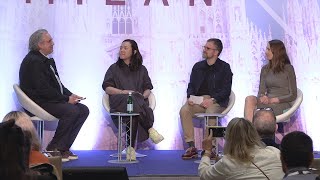
In this panel discussion hosted by Browzwear, leaders from Puma (Adele, Head of Design – Sportstyle), Timberland (Ivo Colasante, Digital Product Creation Lead), and Odlo/Audlon (Michala Jauch, Head of 3D) share their experiences implementing 3D workflows in apparel. The conversation covers where each brand is on the 3D adoption curve (Puma in early‑toddler stage, Timberland mid‑journey, Odlo with 95% of collections already in 3D), the tangible benefits (more accurate prototypes, reduced physical sampling, faster development calendars, higher‑quality CAD for sales, stronger retailer persuasion, sustainability gains), and the biggest challenges (mind‑set shift, ROI justification, tooling and library quality, need for leadership support, and resistance from designers). Participants discuss best‑practice tactics such as defining the purpose of 3D (design vs. development vs. visualization), building robust software and content libraries, over‑communicating progress, pairing 3D with physical samples during transition, and securing like‑minded champions within the organization. Concrete ROI examples are given (Odlo reduced sample spend to 30% of previous levels, time‑to‑market improvements during COVID). The panel also outlines wish‑lists: seamless integration between 3D, PLM, BOM and ERP systems; automated tech‑pack generation; high‑end photorealistic rendering to replace photo shoots; and consumer‑facing experiences like virtual showrooms, AR try‑on, and digital twins. The discussion ends with a Q&A on vendor integration, key‑account versus wholesale adoption, and the need for cloud‑based libraries and training for external partners.
Chapters
Thank you, everyone, for being here and joining our session. Yeah, I'm here with Mikaela from Otlong, Ivo from Timberland, and Adele from Puma. And maybe we can start with a quick introduction and maybe also how your organization is traveling through the 3D journey. Sort of where you are.
I can start. So my name is Adele. I'm the head of design for Sportstyle Apparel. Um, Sportstyle is the biggest business unit within Puma, and I'm part of the 3D integration team with some of my colleagues to drive through the integration within our organization. Um, in terms of where we are at in our journey in 3D, um, I would say we are through the infancy stage, let's say. Graduated into toddler phase. But it's still, I would say, in the beginning of adopting 3D within the organization.
It's my turn. So my name is Ivo Colasante, and I'm working in the Timberland Apparel team, where I lead the digital product creation journey. In my role, I'm enabling the brand to embed 3D technologies and tools in the business processes, with the goal of optimizing efforts, being faster to the market, and ultimately delivering better products because that's the main reason. And Timeland is executing a roadmap which started a few years ago. And we are in the middle of this journey, gradually onboarding new processes among the organization and the teams. We're in the middle of the journey. We are establishing a pretty solid process which is involving all our partners, also our suppliers, and the main focus is both on the assets, so patterns, fabrics, trims, but also on the outputs because an obsession is the quality, the consistency of the quality for us, it's an obsession.
Fantastic. Michela.
Hello. First of all, thank you for being here. It's a privilege. My name is Michala Jauch, and I am head of 3D at Audlon. And to answer the question where we stand in terms of 3D, so I think we have a very good base. We have basically 95% of the complete collection covered in 3D. We have our design team onboarded, whole pattern team onboarded, garment makers, and we are very much looking forward to move more into the visualization space and go to B2C soon.
Thank you. Yeah, it's such an honor to have these fantastic 3D leaders here with us. I joined Browzwear about 8 months ago. And I'm new to the apparel industry. I started my career 34 years ago in 3D, but in automotive. I was 19 years old working on CATIA at Dassault. And it was on metal parts for a car, where things like— stretch and bend and how much material you need are completely not optional. You have to get that right. And it's so exciting. So this year when I joined Browserware, there were still a lot of people I met who were thinking, why do we need to do 3D? But it's really getting more to how, and when, and with who, and how fast. And the why change question is— It's still important, and we're going to talk about that today, how you help your organizations along that journey. But for many organizations, not so much why change anymore, but how and why now, right? And how do you then use that to drive success? So maybe, Adele, if you can share from Puma some of the benefits that your team, your organization has seen since implementing 3D workflows.
I mean, I see the benefits in like two different buckets, and one side is design development and the other side is what we call a go-to-market process. So from design development, definitely, you know, we see the quality of the prototypes comes in a lot more accurate than before because then the design can really tell, you know, for example, where your cut line to be, you know, instead of kind of giving it a measurement that you kind of guess, you know, that that's exactly how you want it to be, you know, where you're coming on on the legging, for example. So then the factories have less guessing work to do. They know exactly how you want it. And so, you know, the quality of the prototypes definitely improve. And as well in, let's say, the overall development process. So instead of asking every single stage for a physical sample, then, you know, some of it you can then approve through digital. And, you know, when it comes to some small changes or small implementation, so you don't have to then ask for physical sample every time. So that really shorten our development calendar. And on the other side, from a go-to-market process perspective, we're able to present much better quality, let's say, CAD. So instead of 2D, which is not a realistic representation of the product, you see it kind of for what it is. And so internal stakeholders, accounts, sales, or retailers that we work with, so they are a lot more convinced when they look at the 3D CAD instead of a 2D CAD. And some occasions, we even managed to convince them. You know, sometimes, if you know, working in the fashion industry, sometimes you get a brief from the retailers, they want certain things, and from a design team, we're like, "Oh, actually, we think this is not the best solution. We'd like to propose you something else." And we're able to do a real-time, you know, let's say, demonstration and say, "Hey, I know your brief is this, we've done this, but look, we have a better example of what this could be." And that, you know, I can't say that we win every time, but in some occasions, we manage to convince them, which for me, it's a good benefit. Yeah.
Yeah, it's interesting. When you're one of the 3D maybe advocates or champions in your organization, you're trying to be this trusted guide who's taking your organization by the hand almost. And it's sometimes a scary journey. And finding the right balance between pushing and pulling and providing stepping stones to go across the river versus making sure that you You get people excited about the end state, it can be really challenging. Ivo, at Timberland, so what do you see has had the biggest impact with 3D?
Well, the biggest impact in this is in the efficiency of the processes. Because if you think about it, 3D allows you to visualize and fit the product virtually before having the physical sample in your hand. Of course, this is embedded in the, in the nature of digital product creation, but if you think about it, it's really disruptive because in the old world— and it's not old because it's still the present for a lot of organizations— to see the product you need to make it. It means creating a physical sample, maybe on the other side of the world. Takes time, of course takes money, and if the product once in the, in the office is not as expected because maybe the execution is wrong, you spent a lot of time. So those technologies are allowing you to do multiple virtual iterations, which are a privilege. Even you need to consider also that this technology now is very accessible and very mature. So the quality of what you are achieving is high. Sometimes it's photorealistic even at the proto stage, which is impressive if you think about it. You can do those virtual iterations, which are indeed faster. You can develop different options of the same product. I want to see it longer, shorter, thinner. Let's try with a different fabric. It gives you a flexibility which you didn't have before. So again, this technology allows you to have, of course, also the digital twins of what you are doing, so helping you on the product development process. Giving you the digital twin immediately without producing, shipping, so all the logistic complexity in between. And it also allows you to enable new opportunities which you didn't have before— augmented reality, virtual try-on, virtual reality, virtual showroom, enhanced consumer experience at home, something which you didn't have before. So DPC, it's amazing because It's a combination of improving the current process and giving you new opportunities. It's really exciting. But something which we learned in Timberland is that the quality— again, I already mentioned it and I will repeat it— it's a must-have. Because if the quality is there, you can take decisions. So the quality. Should be not questionable, absolutely. And again, what allows you being closer to the market, reduce the amount of samples. We don't need to forget that there is also a huge sustainability implications— implication in between. So we are also helping the world, which is not bad.
That's great. Yeah, there are so many of these let's call them success factors, right, that help drive adoption. Michaela, what are the things that, outlaw, that you can also maybe share that can help others support their organizations in driving this process? What are the things to wish for?
So for sure, the first thing every organization should have a look into is to define what we actually expect from 3D. So basically, you should define if you want to use 3D for design purpose or for development purpose or for visualization purpose. So I actually have seen all different scenarios that people are even jumping over the whole design development and going straight into visualization, just replacing photo shooting. This is the first thing every organization needs to ask. Why do I want to use 3D? And then of course, very important point is to prepare the whole infrastructure. So we need to prepare our software, our FTE, but also all the content which goes into it. So for example, I really like the comparison that 3D sometimes reminds me cooking, because if you want to cook a delicious meal, you need to have all great ingredients. You need to go somewhere to bring the ingredients, and then you can only cook fast and good meal. You can cook it actually really fast. That's the same with 3D. You need to bring your perfect avatar, your perfect fabrics, your trims, perfect cut, perfect pattern, and then you can cook, create very beautiful 3D, which fits and which looks convincing to everybody else.
Yeah, I'm Dutch, but I live in the US. I live in Seattle, and there's a saying from a famous college basketball coach: you have to hurry but not rush, right? So quality, doing it right, But of course, we are in a hurry because there's a lot of things in our industry that can be done better. To that point, Adèle, what do you kind of see as best practices at Puma that you could share, things that worked for you?
I'm not sure that's a best practice yet. You know, I still struggle, or let's say we still struggle as a team, you know, on a daily basis. But I think, you know, kind of go back to what you meant earlier, The important point is really to think about what is that why, and why are we doing this, and also thinking of what competitive advantage does it bring to the organization. There are many ways how you use it, and every company is slightly different. You really need to find that why for your company that is unique, and also it brings something different that nobody else is doing. So, once you define that, and I think the rest kind of fall into place quite naturally. And for me as well, it's important to find somebody within the organization, let's say your partners in crime, also find people like you that is passionate about the topic, that you're not alone in this journey because it requires a lot of, how do you call it, you know, just commitment, but also as well ideas. So I think being humble, you know, also being here today, also talking to, you know, people in the industry, would also help to kind of bring ideas and you can kind of prove it and then you can bring it then to the board or management later and say, hey, this is the proof of concept, this works and this really makes us, let's say, has a competitive advantage in the industry. And then I think once you have that, people also kind of believe in your vision and also they feel good to know where is the future, even though at this point, this transition phase is really difficult. But once they know what the endgame is, It makes it easier for them to see through the transition phase.
Yeah, getting some of those buddies on the journey, right? Co-travelers. Ivo, what were some of the challenges you faced that you have, some of the objections that you had to deal with for the Tomberland brand?
Let's call them challenges. The biggest challenge is the change of mindset because While it's really easy to get consensus on the new opportunities, so the augmented reality, the virtual try-on, of course everyone loves it because we never had it before, it's exciting. It's really difficult to ask, to ask for a change in the way of working. So because you need to ask people to believe in an improvement which they don't see, because of course their functions give Their function gives them a limited vision while you have the privilege of having the end-to-end vision, which sometimes they don't have because also some teams are working in silos. So it's a bit difficult. And again, the challenge is on the product development side because we need to believe that this 3D is like the physical one. So that's a big challenge also on the product development engine. And of course, also on the sales side, should I sell this 3D? Come on, no sample, no sales. That's the common objection, which I'm sure all of us already heard. Those are all fair objections. I mean, I understand them. So I think that I don't have a recipe to solve those objections. I think that one way which indeed will help is to have 3D next to the physical one. If you have them together in parallel, you can show that the 3D is like the physical one. You may always also say, look, they are the same, but this 3D was ready one month before. So next time, if for you this 3D is enough, you can have it earlier. That's a good point that you can use. But of course, there are things that need to be true. Libraries, tools, quality, again, must be there. And overcommunication, you need to communicate and communicate and communicate. Even if sometimes you are boring, you are obsessive, but you need to communicate a lot. Because indeed, this is something which is happening. And of course, there needs to be an investment behind. There is the need of tools, of systems of integration. The backbone needs to be there. And of course, also the leadership support needs to be there because otherwise this is not happening overnight by itself. You need also to have someone on top that believes in this change.
Yeah, it's kind of the balance between the rallying cry and the leadership, but also reducing the friction, right? When people reduce the amount of reasons why people— we are all, as humans, in a natural state of apathy or inertia, maybe easier. And we need to remove as much of the friction as possible if we want to move forward. Mikaela, so what are some of the things that you feel helps you communicate the value of 3D at Autodesk? Maybe specifically to people who may not be as technically inclined?
Right, right. This is always a little bit the challenge, but follows your answer, how to communicate, how to convince people why to adopt 3D. And basically for the top management, what I realized works always is just to show the savings. So just to give you an inspiration, I recently had a chat with our head of sales and he told me since we implemented 3D, we dropped the original amount we spent for SMS samples to 30% of that amount. So it's a huge drop, huge saving really. And of course you need to reinvest a part of that into the software and training that people, but it's just part, it's just a small percentage. You still do incredibly huge savings by implementing 3D. Currently, we only are B2B. Of course, if you go B2C, you are again saving a lot of money on photo shooting, marketing activities, and so on and so on. That's just one point. Second point, time. You save incredible lot of time. You will get to it again because we all know we faced COVID, we faced a lot of issues, there were no samples. So again, time to market, it gets really shortened. And then, of course, it's sustainable. It's a sustainable way, and it's the only way in the future. There will be no other ways. Everybody will have to jump on this train.
Adele, were there some objections that you can share that were really hard to overcome, that you got through them?
Yeah, I mean, I like the way you put it. Instead of calling it objections, calling it challenges. Let's say the biggest I can think of, like the biggest challenges that we face is always money, resources, and also having to compete with so many other current problems. Because as an organization, I can understand because it's money to invest in all this software tools, set up the infrastructure for the company. At the same time, we are doing this for the future. We're laying the foundation for the future, but a lot of people kind of look at it for Where's my return on investment? I want to see it now. When can we see the return on investment of how much money we spend on this? I think it's really finding the people to understand that this is for the future and this is really laying that foundation and also not being too focused on the immediate problems now but kind of look at the future. Also at the same time to remind them, change is inevitable. It's already there. I like when you said earlier, it's not about why are we doing it, it's about when and how we're doing it. So, really reminding them that, and so it makes it easy for them to adapt that change and really say, you know what, yes, we focus, I don't know, 70% of our energy on what is happening right now in the marketplace, but then we need to reserve that 30% to plan for the future because or else we're gonna be so far behind to catch up with the rest of the market. Leaders or also with people who are in the same industry. So, that's kind of how I see it to convince or, like, let's say, to kind of work together with management to kind of overcome that.
I've been in the software industry, technology most of my career. And what's interesting when you think of these types of cycles, you have the innovators, the people who really enjoy leading from the front in your organizations, probably. But they're usually in it for themselves. They just enjoy helping build the solution. They're not necessarily going to be the people who will tell everybody else. And you need those early adopters who feel there's a real benefit for the company, who are also willing, in addition to taking risks, to sustain it and help you drive that change. Ivo, with the digital transformation also being impacted by COVID, is there any other Things that you feel maybe has the team's mindset changed, the level of trust in 3D in your organization?
Indeed, COVID, if we want to find a positive aspect, indeed, it was an opportunity to bring awareness of the potential of those technologies because it was a moment in which we couldn't go in our offices, we couldn't access our physical samples. We didn't have any photo shooting, so the 3D was the closest asset that you had in that moment. So indeed, it was an opportunity. Let me say this. But after 3 years, we realized that this change of mindset was a bit smaller than expected because we came back into the old world. And we are happy of that, of course. And of course, also the more reluctant people which never liked 3D, now they are able to come back into the comfortable physical samples. And they found a way to come back into it. So indeed, it was a parenthesis, the COVID which helped us to solve some obstacles, to have hardware adoption a bit faster, to solve quickly some obstacles, licenses, training, to unlock some budget, to raise the knowledge of the teams. But it wasn't enough to turn the page, absolutely. And indeed, there is a lesson learned that forcing people to adopt 3D and DPC is not working. Indeed. Because of course, the opposite, people come back into the old way. So you need to have a gradual approach and you need to build foundations before asking people to make the step, before asking them to believe. So again, workflows, libraries, the backbone foundations needs to be there. And when results will be there, when you are able to bring a proof of concept, in that moment, you can ask trust to all the functions.
Speaking of the functions, Michaela, I think we talked a little bit about the impact on things like the design process and the collaboration and communicating the time to market of 3D. You want to share some of your experiences there, what kind of changed?
Yes, for sure. So, I have to say this was a little bit more difficult part of implementing 3D, basically to switch the design team into 3D completely. So, of course, we had to train the team, and we had even some resistance because some designers felt that we are sort of cutting their creativity. But I have to say, Once you get over these initial obstacles, you get really a workflow. It's a constant workflow, and basically the flow goes from the design team, from sketching— only a few of them are now sketching in hand, a lot of them are really designing straight in 3D— and then it flows to the pattern team, back to the design, back to the pattern, and, and then it continues. So Of course, there are obstacles, but you have to overcome them. You have to communicate a lot, you have to come up with solutions, also communicate with your software supplier and come up with solution together. And once you find that out, it really helps you to streamline all the processes. And of course, then as the next step of the chain is to onboard the, the garment maker as well. And then as the final step, you need some 3D specialist to press the button render and you can go B2B or B2C directly.
Adele, any advice you have for people who are just starting on this journey and kind of how to start with implementation?
I mean, I said it earlier. I think for me, the first and foremost is to find that like-minded people, people as passionate as you are with the topic within the organization. Just because you really don't want to be alone in this journey. You really need to kind of combine all the efforts together, and I'm lucky to have a few of them actually also in the audience today. And second, I think, yeah, to share that vision as well that you want to do for the organization. What is it that we want to achieve in the end of the day? And once you define the what, the how somehow fall into place. And the third actually for me is one of the most important thing that I haven't talked about yet, which is to listen to the people. Listen to the people who actually have to do the work, who has to learn all these tools, who has to work more than, you know, let's say the normal 2D programs that they do, because it's a lot of work and it's a really draining as well exercise. And, you know, for us, we're not really fully 3D integrated yet, so we have our 2D workflow on top of that. We also have 3D workflow, so the whole design development process becomes a lot more complicated than what it is. And, you know, when you have that vision, also then communicate that vision to Dev, like what you said earlier, because they need to understand why they're doing this. And once they understand it, it makes it easier for them to adopt it. And so, you know, to listen to these people, to their struggles, to their concerns, to their workload, is important because, yes, even though you think your way is correct, you really want to accelerate the use, At the same time, you don't want to burn out the people because they are the ones who in the end doing all the job. And so, sometimes we need to slow down a little bit, find that middle ground, how can we help each other? We know what the goal is. How can we find out, let's say, imperfect interim solutions until we have the infrastructure there to change it, you know, kind of fundamentally? And, you know, we do it, you know, holding hands together because if you really go too fast, people will just reject in the end. So, really to listen to the people and be humble and learn from them.
And I heard you also use the word repeat, I think, or repetition, right? You can have a meeting with a group of people who you feel you've made a certain amount of progress, but it might take another couple of meetings for people to really go through the— That's great. Yeah, we're going to wrap up here. Michaela, what do you see continuing to shape the future of fashion apparel and the role that 3D is playing? What are you kind of hoping for, your wish list?
I see currently two areas where we are moving and we still have to do a lot of work. So one area is more on the development and streamlining side. So I still see that we are doing a lot of additional steps which we don't have to do. We still have a design team designing in 3D and then someone typing in the information from their 3D into the PLM system. This is additional step. So, we really are waiting for the tool where we are going to press the button and then from 3D it will go straight into our BOM and we're gonna send it over to the GammaMaker. So, this is really something we are eagerly waiting for and I hope we will get there very soon to this point. So, basically streamline complete process and take away the manual work. That's one area. And then the second area is basically we are now a little bit going into the photo shooting. We are making a concurrence to photographers. We are going into the rendering, into high-end visualization, into all these areas. And we are really trying to replace the real photo shoot. It's very sustainable. It's It's a fast method. We even had situations that we didn't get any samples on time and we had to replace, we were forced to replace it with high-end visualization renders. And for me, the biggest appreciation was when the head of marketing told me, "Oh, where did you get the samples for the photo shoot?" I was like, "Wow." So, this is another area where we really have to push hard the rendering quality. Post-production and all this.
Ivo, where would you like to see digitalization go for Timberland or VF in the future?
In my wish list, there are a lot of innovative applications of 3D. Basically, we know what is needed. We know that we are able to scale. It's just a matter of having the right tools and the right efforts. And we know where we need to improve the processes. So we are in a position in which we can enable those opportunities. And it's, it's really exciting. It's really, really exciting. The unlock, in my opinion, is to use 3D to be closer to the market and closer to the consumer. Because if we see DPC in this perspective, we may have the solution of a lot of objections, challenges, obstacles over development and so on. But this implies to have the innovation in all the departments, which is tough, as we know, and it takes time. Especially in big organizations which are really structured, are global. We have teams in the US, in Europe, in Asia. Takes time. It's not happening overnight. I think that the short-term opportunity which we have is to improve the consumer experience. It's something which we can do in a mid-short term. So virtual showroom, virtual try-on, augmented reality, this is something that we we could enable with a sustainable effort and also having the digital experience. So having DPC completing the experience of the customer going in the shop. This is an interesting opportunity which we already have in this moment and can give an added value while of course we are in the in the middle of this journey, which it's a long one, but it's exciting indeed.
It is exciting. Yeah. So to wrap, same question for you, Adele. You have a ton of technology vendors here as well, right? What's on the wishlist for you? If we only could be able to do this or different things.
I mean, I am actually pretty much aligned with Michaela, talking about that automation and having the different system that speaks to each other. Because, you know, as a designer, we spend a lot of time, or at least in Puma, I feel like we spend a lot of time doing admin work, you know, trying to design something, then we need to create a tech pack, and then the tech pack information that needs to be input manually into a BOM and into a PLM system, and that takes up so much time. And really the wish is having that really linear approach that have that 3D integration from the design development all the way to the end consumer. Also because consumer experience is important, and you see how much AI it is right now. We talk about metaverse and how can the digital assets we created in the beginning can be utilized also further down the line. So really, I think our wish is really to have those different, let's say, platform software system that really speak to each other so that allows us to have a much more seamless workflow instead of like, oh, this shit doesn't work with this. So we have to create another workflow using this software. And so that would be, I think, the wish list that we would like to have in the future. And I think also everybody else would have the same idea.
Yeah.
That's great. Yeah, and I know there's a couple of people probably taking notes on this, which is— thank you so much. Let's open it up for some questions, maybe contributions, other thoughts. From anyone. Do we use the tool as well, or— I have a question. Is there a microphone?
Thank you. One question regarding the integration into your vendor portfolio, so MILDS and all these topics. So how do you integrate them into the product development, into 3D? You mentioned before, so the ingredients is important, your library is important. So, but how can you speed up this? So that you have the most, let me say, best ingredients at the, the shortest time? How do you do that?
Yes, so we have, I would say, 90% of our vendors, our gamemakers, integrated. So most of them, they already knew the tool before actually we decided to go that way. Some of them we had to train ourselves, or we had to give them the access to the training tools and then teach them our own ways, because each company has their own way how to do files and how to do things. And then of course you also have to bring them on board in regards of the library. So we have a cloud-based library which we are sharing with the garment makers, and we have a direct link. Of course, that's also one of the jobs of the 3D team, that we have a direct link with them. They also have their own dedicated 3D team, and we are in a daily communication with them if there is anything missing from the library, they need any help, assistance, we are here to help them and assist them. And basically, they are delivering the 3D sample, the 3D prototype, more or less the same way as they are delivering the physical one, just much earlier.
Thank you. My question is, Actually, I have this idea that when you work with, for example, key accounts and then also wholesale, it's quite different what it takes to convince them into 3D. Being key accounts, maybe more open to it because they're onliners, right? They're used to it. And then with wholesale, they also need to convince their customers. And there may be many and many different countries. So do you have any experience with that and what it is to build the customer experience for them and how they can then use it towards who they are presenting to in their regions.
I can try to give an answer. Indeed, you can convince your accounts basically telling them they can see the collection earlier if they agree on having a virtual assortment. You can engage them earlier, you can, you could potentially ask them to be an active part, so to have their feedbacks influencing the collection, of course with some boundaries, because of course with the physical samples everything is already done. While if they agree in evaluating the collection virtually, You can do it earlier. And of course, their feedback is also helpful for the brand to understand if the direction is the correct one or if we need to tweak it because we wish to deliver the right product. The earlier we have their feedback, better it is.
Thank you.
Thank you so much. I see a lot of red lights blinking. I think the other sessions are starting. Thank you so much, everyone, for staying with us. And thank you, Michaela, and Adele, and Yvonne.










