Emerging Talent Shaping the Future of Footwear Design
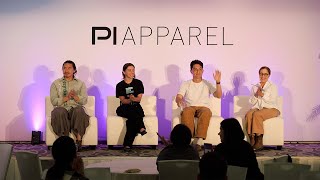
The YouTube panel, hosted by a seasoned footwear professor (Speaker A) and featuring emerging designers Mikey Robbins, Veronica, and Kyoka, explores the transition from design education to professional footwear careers. The conversation covers the impact of internships, competitions, and networking; how mentorship and personal branding shape a portfolio; the balance between avant‑garde concepts and wearable products; and the skills—adaptability, collaboration, independent research—that are rarely taught in school. Participants discuss the growing role of AI and generative tools such as Vizcom, Gravity Sketch, and 3D printing in ideation, visualization, and rapid prototyping, while also emphasizing the continued need for hands‑on craftsmanship. Sustainability challenges, especially sourcing and up‑cycling materials, are highlighted through Veronica’s automotive‑upholstery shoe project and Kyoka’s dead‑stock fabric work. The panel underscores cross‑disciplinary learning (industrial design, fashion, textile, jewelry) and debates how designer roles will evolve from junior to senior levels in an AI‑augmented industry. The session ends with audience‑driven questions about obsessions, future tech, and practical advice for newcomers.
Chapters
So a couple things just to start and let you know about what we're doing. They're going to introduce themselves. I am going to be asking them a few questions, and then they get to ask you questions. So this is a little bit more interactive, is my hope. These are emerging designers starting out their careers, some a little bit more so than others. So I want them to ask you for advice and ask you a couple of questions. And then after all that, I want you to talk to them. Don't ask me anything. I want you speaking to these amazing people. And the questions then can come up on the Slido, on the table. You can ask questions during, but I don't want the Slido questions to show up until after I've asked them stuff, they've asked the audience, and then— OK, we're good with that. All right. Thank you so much for being here and joining us. I do expert witness projects. I work with some footwear startups, and my passion and love after 38 years in my industry is to be teaching footwear design at California College of the Arts over the last 6 years. Mikey was one of my students the first semester that I taught. I think Veronica was in my course 3 years ago, and Kyuaka, I think, 2 years ago. So they're going to introduce themselves quickly so we get through all of that. That so that we can actually start talking. So, um, Mikey, you're up.
Hey everybody, pleasure to be here. My name is Mikey Robbins. I'm head of design at Presque. We are a design technology and footwear company, and background is industrial design, but I do everything from motion, footwear, graphic, all the designs. I'm, I'm all about. Thank you.
Hi, I'm Veronica, recently graduated from TCA, doing a couple different projects between industrial design, footwear, furniture, looking for my next big step into footwear. And yeah, happy to be here.
Yeah, thank you for having me. I'm Kyoka. I just graduated from California College of the Arts also in May. I did a senior thesis collection, and I was in a couple San Francisco Fashion Week events showing my designs, so that was a lot of fun. And I'm kind of now wanting to move on to the next thing as well.
So yeah, so I'm so excited they're here. They are superstars, by the way. Um, so my first question is for Kyuaka. Um, you know, how important do you find that internships or competitions, awards, and all of that, you know, have made a difference for you as you're transitioning from just having graduated in May into starting a career in the fashion industry. His stuff is amazing though. His thesis show was like beyond. Anyway, go ahead.
Thank you. So last year I did a design scholarship contest with the brand Outerknown, which is in Culver City, and Joe's Black Book, and I was chosen to be a finalist, and I got to present my design and its story to a brand. And like, I think that was very important for a student, that's very important for a student to know how to do, is like speak up for themselves and their design. Because I think you do that, I think, in the industry. I'm not sure yet. I need to be hired so I could know what it's like.
Getting out into the real world and, you know, being part of a competition where you're actually in front of a brand, just opposed to like submitting something and then knowing whether you won or not. You actually were able to go down and present and be part of this whole event from what I recall you telling me about.
Yeah.
I think that makes a big difference.
Because of that, there was a recruiter that reached out to me this summer and I went through a couple of rounds of interviews, but I didn't get it. But maybe something's missing, so let me know.
All right. Yeah, no, for sure. Veronica, I know that Veronica was at the Stride, the PAI Apparel Stride event in March, and I know that she met multiple people there. So this question is for you. How has networking and mentorship influenced your journey as an emerging designer? Is there any advice that you garnered or any advice that you'd give or things like that to our audience about kind of what that meant and how that has all worked for you?
Yeah, I feel like it's everything. For me, it's really like having help to put gas in the car as you're figuring out where it's going to go. So it's really essential. It's everything. It's putting a face to the name, whether I'm helping someone or someone's helping me. It feels really good in those tiny moments when I can help others because I'm so fresh and young in my career that I'm like, oh my gosh, no way, how can I help someone? But there's still times where I like have my group of like mentors or people I look to for advice that are really guiding me and helping me. And like, I can ask them like, is this the right pathway? Like, how much time should we be putting into this? Um, and it really is everything. So I am very grateful because I couldn't— I still can't do it on my own, and I don't think anyone in this room has done their career completely on their own. So very grateful. And yeah, yeah.
So Mikey is my superstar from 6 years ago. I'm telling you, I was like blown away the day I walked in and there he was already knowing everything I felt like I was going to be teaching. Um, Prescott's lucky to have you. So what inspired you to pursue a career in design, and how did you take that first step in the industry?
What a question. Um, I guess in design as a whole, it was understanding why things are made the way they're made. Um, but specifically for footwear, What really captivated me at first was the mystery. How is this thing made? It's compiled of so many different parts, so many different materials. Where do I start? And so I think one thing that I did was a lot of independent research. And before there was an actual footwear class at CCA, I had tried to understand as much as I could about what it takes to design and manufacture a shoe. And then, thank goodness, you came along and taught an incredible class where we got to get hands-on with what it takes to make a line sheet, you know, understanding manufacturing, understanding different types of components and things like that. So firstly, it was the mystery, the mystery, and then it was, okay, how do we make a compelling product?
Awesome. Um, so Veronica, and this I think is a question for a lot of up-and-coming designers, um, is, you know, what have you learned makes a portfolio stand out to recruiters and design teams? You've done a lot of requests for mentoring, Zoom meetings, and I know with a lot of industry professionals. And, you know, what have you learned from those experiences?
Yeah, so, so far as I'm still navigating things, what I've figured out is how does your personal background connect with their culture, or what diversity can you bring, and how can you also complement the group? How are you going to mesh with them? Um, what other fresh perspectives can you bring? And then I still like to sprinkle in like a very different project at the end that gives like a snapshot to something else I'm passionate about or other additional skills I can have. But most of my portfolio that I'm showing is really catered to what they're looking for or what the opportunity is. But like the skill set is a given expectation. Like you've gone through school, the softwares are out there. You can even YouTube University some stuff. But it's like, what makes you different than other people? And I think our diverse backgrounds really come to play at that point.
Yeah. The other thing I have found is that a lot of people, they want to see your process. They don't want to just see a bunch of pretty pictures or drawings or 3D shoes or clothes spinning. They want to see your process. They want to see how you ideate. You know, things like that is what I've been hearing and what I've been looking for. I taught the professional practice class with the portfolio component. So, Mikey, how important is understanding materials and construction and trends apply to, you know, focusing on creative design? Does it make sense to design awesome products to get interest, or is it better to design something that somebody can actually wear?
So, I think there is validity in both. Um, I, during my attempt to enter the industry of footwear, I was doing motion design, industrial design, and on the weekends I would crank on footwear concepts that were not wearable. They weren't even physical, they were just digital footwear concepts. That's the reason I have my job at Presque. Adam found me through those posts. He was like, you're an incredible conceptual designer, let's put those skills to the test so we can make something real, because at the end of the day we live in the real world. And so I think it's a balance, understanding how you can unlock some limits and exploring things that maybe will never be made, but oftentimes those explorations will lead to incredible innovations that you can then apply your knowledge of manufacturing or, you know, teaming up with the right engineers. There's always this back and forth between designers and engineers, and I think it's, um, it should be like a symbiotic relationship, less of a head-butting relationship.
So I now have like a little quick round for them. So name 2 or 3 skills that you think are most valuable for breaking into the fashion or footwear or accessories industry that aren't always taught in school. So Kyuaka, 2 or 3 things, what wasn't taught that you think should be taught? As you know, I think there are people here from universities, so Curious. Go ahead.
Oh, maybe adaptability.
Adaptability?
Yeah. Changing, like, on the way, like, through the whole process, changing something last minute or running into, like, a sourcing problem or something like that. Even on, like, a small scale.
Yeah.
Yeah.
So adaptability, you think, is in your design process.
Yeah.
Okay.
Yeah.
Veronica, say collaboration and getting the clock out at the end of the day, because in school there is no clocking out.
Okay.
I would say a lot of times in school you're prescribed like, this is industrial design software, or this is, you know, we only work in SolidWorks. But I think independent research and collaboration with people outside of your field I think those are the two things that can really unlock, um, your ability to like think differently and bring something new to the table when you're interviewing at these footwear companies, let's say, and everybody else is, oh, I'm Photoshop, render Photoshop. It's like, oh, I do Gravity Sketch. It's like, oh, something different here. Um, yeah, I think it kind of changed the way you can think a little bit.
So as a professor, you know, when I started teaching at CCA, um, I was super fortunate because my class was a class that was taught to multiple different majors, right? So usually, you know, someone might be in design school and everybody in fashion design is taking this class. Well, my class, I was so lucky. I had fashion students, I had industrial design students, I had textile students, I had MFA students, I had jewelry students, I had individualized major students. And what I found was that it was extremely rare because a lot of these students were able to learn from each other because they were so siloed. The ID, you know, that industrial design design department, they were so siloed they didn't see things from other majors. And the fashion students were only with the fashion students. And I have always loved the class that I've taught because there were so many different people from so many different majors, and it was kind of unique to the university. So I feel lucky. Kind of segue— I don't mean to be answering any questions. Okay, so next up we have, uh, Veronica. What are some of the biggest surprises you've encountered when transitioning from student projects to professional work?
A lot. So far I've gotten to work for smaller startups, bigger brands, and then individual clients. And I'd say the pace is a little bit slower, and I don't have like 5 to 7 projects on my plate at a time. It's more like 3 to 4, or like I'm emphasizing on one big one. Especially when I'm freelancing, it's much more specific and faster pace, but one project instead of when I'm at a bigger brand when I have multiple projects on my belt that are all like interchanging, but like on a timeline. So yeah, I'd say like the time management pace is much healthier and I like it and appreciate that.
So Kyuaka, you and I have talked a lot about AI and 3D recently, very recently. So, you know, how do you think some of these new technologies and, you know, how is it reshaping opportunities or, you know, what do you think it's going to provide for you as a designer?
Yeah, I mean, we saw a bunch of examples already of how it can help, like AI can help plan or kind of get an idea out quickly. Like I've used Vizcom to just play around with and, you know, put my sketch in there and I type in a prompt and it'll give me something really quickly. So It kind of helps to see, helps you visualize as a designer what something could potentially be before going and getting the fabric and spending the time to pattern and cut and make sure you get the right seam allowances and all that stuff.
Yeah.
So it saves time in that sense. Yeah.
What I found is that, you know, it's like you get, you give it the right prompts and you know what you need to do or what you want to make. And if you're sometimes not able to sketch it out as quickly, it's just like it catapults you into The Next Dimension as it relates to that. So on that note, what role, Mikey, has technology played in your creative process as a design student or in, you know, in your current work? I mean, I remember seeing him, you know, what he was doing 6 years ago. I thought was so forward, and here you are later doing even more.
So I think technology's played in, in a massive role. In concept iteration, exploration, even, you know, renders, pitching. I think there are many different definitions of what technology could be, right? And again, I'm going to go back to it. I think technology is a tool that should enhance your abilities and to let's say, oh, this is for footwear, this is for fashion. I think throwing those labels out the window and kind of finding the tool that you feel can enhance your abilities the best, maybe not the fastest, right? I think like there's a time and a place for speed, which is a question I'm going to have for y'all later. But I think it has given me the ability to create physical manifestations of my ideas, express to people how I think, what kind of products I want out in the world, and also like the ability to collaborate. I think the first time I hopped into Gravity Sketch, which is a VR 3D modeling software, and I was 3D modeling with our friend Davel, who's at Vibram right now, in a VR room. He's in Boston and I'm in LA, and we're working on a concept together, and I was like, holy crap, this is insane. I think those moments are the moments where it's like, oh, it can really unlock whatever you want it to. But using it in a way to unlock yourself, I think, is the first step of utilizing it.
Yeah.
I just want to say the first time I saw Gravity Sketch was when you came to CCA for an after-hours industrial design event. You're like, all right, kids, let me show you. And we were like, whoa.
Yeah.
We all tried it out.
Yeah.
No, it's amazing. I couldn't be more proud or honored to have the three of you up here with me talking about what you can become as designers and what the future holds for you. So I'm going to actually skip the last couple of questions because I want— we have 15 minutes left. I want each of you to ask a question or two to the audience. And then I hope that some of you maybe have put something into the Slido that we'll pull up later. But who wants to start? Ask, and maybe some of you will stand up and answer them, I'm hoping.
Yeah, I think I have a pretty general question. I think as we as designers lean more and more into AI and using it as a tool, there's almost infinite possibility of how it can be used. And I think it really asks the question, what is design going to be in 10 years? What is the designer going to do in 10 years? Is that going to be— well, I guess that's what I would say. But where do you think designers will sit? Are they going to be tastemakers? Are they going to be still technical? Will we have the lost art of the line sheet? Yeah.
Yeah. So you get the question. All right. What's your name?
[SPEAKING CHINESE] Oh, no.
Yeah.
Yeah. Okay.
Hi, I'm Diego. Diego Martinez. Congratulations, guys. Really, it's great that you're pushing really hard. I'm an industrial designer, but my role has shifted a bit more on the engineering side. I'm a footwear engineer, 3D CAD engineer, in fact. So my opinion is that, yeah, AI is getting really strong and it's easier. Each time it's easier, you know, to get a nice looking picture, you know, that looks almost manufacturable, you know. But the difference in my opinion is first that you're able to fine-tune things, but to fine-tune things on the manufacturer and fit level. That means that you need to know more about manufacturing process. But also what I I don't see at all is that people know how to do shoe last design and engineer. So if you can tackle on that, how to really, you know, fine-tune lasts and how to make patterns, you know, to make that final product, that will be great for you. That will be really something that nobody else can do.
Perfect. Veronica or Kyuako, whoever, one of you can ask a question. We'll move the mic along.
It's all you.
Okay. Yeah. So I really like, I personally like to design based off what I'm feeling and what my experiences might have been in a place that's memorable to me. And I try to turn that into like a, manifest it in a fashion and like a wearable way. So I guess I want to know like kind of what everyone's obsessed with right now. Like what are people's obsessions? Right now, a thing, a song, a food, and like a trend?
He's looking for some inspiration. So speak up.
It's a zeitgeist question.
I love it.
Hi, I'm Katrin. My background is in environmental science and fashion design. So I've really been in the space that is combining those two fields. And I think one thing that was not so popular when I was in school was these the idea of bringing together fashion and sustainability. And today, every company is doing it to some extent, especially if you're a large company, you really have to be doing that. And one of the big challenges that brands are having is that their design teams that are deciding on the materials, are deciding on the practices that are going to end up making that product, are not always the most tech-driven. They're not the most data— interested in the data. And so I'd say something that's that can be really inspiring, hopefully, for you guys who are more digital natives and you understand that technology can also help give you a lot of data that, you know, the older generations may not have had, is thinking about how you can use that data not just to make something look cool, but have the impact on the world that you want to see. How do you see the changes that you want to see?
Amazing. So what are you obsessed with? Anybody?
I have two questions.
Oh, well, one more answer on that. What are you obsessed with? And then Veronica is going to have a question. Anybody? Chad, I see you laughing and smiling. Come on. You got something? Leopard print. Leopard print. Okay. Thank you. Sorry for putting you on the spot there.
Okay. Leopard print.
Anyone else?
No. Yeah, I was— who said 3D printing?
Carbon.
Okay.
Okay. Yeah, I love that.
I was literally going to mention, you know, a lot of the work we do as designers, digital designers can sometimes be pretty sci-fi. And I think it's important to have like a referential background, almost like speculative nonfiction background. And so I think all of us at Presk, we talk a lot about Star Trek. And I had someone I knew, and I took it a little bit too seriously when they told me this, but they said all good ideas come from Star Trek.
Oh my.
I think, you know, Carbon is kind of an exemplar of this. Shout out.
Great.
You know, over time we're going to see 3D printing, you know, get faster and faster and faster. And the possibilities are really exciting. Another reference that I'll put out there is actually Capsule Corp from Dragon Ball Z. Capsule Corp. The idea of being able to kind of be off the grid but still deploy cutting-edge technology essentially instantly, I think is really interesting here in the United States and also in the developing world.
OK, that's the—
You're obsessed with it. That's what I'm obsessed with. Thank you, Adam.
Thank you, Adam.
Awesome. I think that Veronica has a couple of quick questions. And then I see, please start adding to the Slido. But Veronica, ask a couple.
Go for it. I'll make them quick. So the first one, kind of backing off your question, as we see AI picking up different roles and we're like, what is the role of designer? How do we see the expectation or role of the junior designer, the assistant designer, And then all the way up to the senior designer, how do we see that shifting? And then my second question goes with obsessions and I'll let you guys go with the first one. But yeah, how do we see those roles shifting with the expectation of where does a designer with AI and what is it from like junior to senior shift?
Hi.
Um, I think that the expectation is to learn to be a good prompter as a junior designer because really you're responsible for those iterations. And then as you move throughout your career, you should be trusted to approve that concept as plausible in real life. That's a big difference.
I second that.
Yes. Yeah, you can just talk. We can hear you.
I think that probably one of the biggest differences is that the senior designer position is acting more like art. And the junior designers will go through the head, I think, you know, like big amount.
Execution.
Yeah, yeah, exactly.
That's right.
Right.
Cool.
No, that makes sense. I'm— please put some questions on the Slido. They're here to answer questions or talk to you, whatever we need. I can ask another question.
I was going to say, whether you're a designer, whether you're an engineer, like, how do you implement AI as a tool for you? How does it augment your process? Do you stay away from it? Are you fully, you know, like, this is going to replace me and I'm okay with that and I'm just going to fly that plane? Or I'm just curious. I have like my own stance on how I use it in my process. So I'm just curious about y'all.
Anybody? Oh yeah, we love this. Go for it.
Well, yeah, I use— I use AI in different stages of the process. But I think that I use it for different, you know, for different things. I think that I rely mostly on AI just for concept, you know, for smashing ideas. Oh, thank you. Just for smashing concepts, you know, hey, I want a shoe that looks like a banana, whatever, you know. So yeah, so what does it look like, you know? But I think that when I have a very specific idea in my head, it's, you know, for me it's more efficient just to sketch it and to use AI to render it. And that's where this comes into play, you know. But I don't want that because I already have an idea in my head. I don't want a concept, you know, from ground zero. No, no, I already have that. And it's very, very, very spot— it's very possible that AI will miss it, you know, it will take me too long. So it will be faster just to sketch it and render it in this. And maybe a bit farther away, if you use, for example, computational design that is kind of, you know, AI thing, you can use it for solving, you know, for solving the final 3D model with computational design for lattices or for textures or whatever, you know. So, so are different needs for, for every stage.
Yeah, no, I'm finding that, you know, I'm talking to the fashion students. I'm working on a big project for a fashion show in October, and, you know, one of the fashion students like, I have to drape it first, I have to drape it, I have to see how the fabric flows, I have to see, you know, where it takes me, and I can't make anything or sketch it out until I see how it drapes, right? That was one of the students talking to me. Another, you know, in our class we tape an actual physical last, right, because I want them to know how to tape the last and draw their patterns on the last before they do anything, even if they're doing everything digitally, right? I want them to physically do that because I feel like it's part of the process because we can't lose that. So it's a combination. I'm finding that in what I'm teaching, it's a complete combination of both. Um, for sure.
Yeah. When we were listening to the Viscom talk, Hector was talking about how he used to render wood by hand. Um, and still do it, right? And I think, like, I primarily work in 3D, and you're talking about lasts and, and lasting. And for a long time, I studied, like, how do I make a physical sample? I bought a post-bed machine. I was taping up lasts and trying to make samples. It sucked. It was hard, but it was also really fun. I learned a lot, and that working in the physical directly translated into working in digital. And I guess what I'm trying to say is like, I don't think the pencil and paper will ever be—
No, I think you need both.
I think you need both. I think understanding like the craft, let's say, or why things look a certain way or do a certain thing will ultimately translate into when you take and bring products into reality.
Right. We have 3 questions. Oh, sorry. We have 3 questions. It's perfect.
But there's another way to do it, you know? Because if you, if you grab, for example, a, a, a 3D scan of a last or a reasonably good 3D file of, of a last, you can take it, you know, to, to your iPad and sketch on it, you know, on ZBrush or on Nomad. So it's kind of a hack tool, you know.
Yeah, no, definitely. Your tool should, you know, enhance your skills for sure, and you can choose what tool you want to use.
So we have 4 questions here and we have 3 minutes. So, Kyuaka, Your biggest challenge is using or finding sustainable materials. Go!
I'm really passionate about that question.
She's passionate about it. I know Kyoko loves that too. Go, Veronica, go!
I'll make it quick so we can share.
Yeah, 30 seconds.
So along with my obsessions, um, actually this project I did for another ID class after I took your footwear— I collect automotive upholstery from like cult classic like Euro cars and I turn them into footwear. And I use like crumb rubber, which is like popular from like tires to playground recycling. Also a great outsole. Um, I'm at a point where I need to collaborate with someone now because I need help iterating outsoles and stuff and like making this like really niche thing like bigger because it has a lot of demand. And like the people I get the car fabric from like want me to make them things with it. And like I know there's people out there doing like bags and belts, but like I just want to do shoes. Um, so that's a challenge. My challenge isn't like using or finding it. It's really like finding someone to work with and make it bigger and like making it more than just like this weird like one-off, um, concept. Because it's really fun and it's very bespoke and unique and it's very like sustainable in the sense of like I'm already using a pre-existing material to have a second life. And another avenue on that, not related to footwear, is I do recycled furniture. I have skateboards and I have That's hard because you have to find community members to get the skateboards from. You have to get friends together to degrip the boards and get them into a processed material where you can like glue them up and mill them into a lumber and then combine them with like natural hardwoods. And that's also a very custom-based program and process. But then you have to think about the dyes in the wood and like all the preexisting elements and like, is that sustainable within the material itself? Itself, and there's no big collection processes within that environment either. But then that can bring you back to footwear of like, okay, when we're using like sustainable materials, like at what point in the process is the material sustainable? And like, what other elements are we introducing into it? And like, I think something that we're really needing moving forward is like post-first life sustainable options. And that goes not only to the consumer, but also the producer itself. Okay.
Sorry. Sorry. That's all right. So what I think is, you know, if you want to just pick one, guys, go ahead and pick one.
What's your favorite product these days? I am a sucker for Cinema 4D. It is a motion design industry standard. I design all my shoes in it. That's weird. And I think it's just like goes back to my mantra, like Find the tools that work best for you. It has unlocked so many avenues for me, exploring designs, concepts, rendering, animating. I think that's something that I really value also working at Presque is I wear many hats and I love it. And I get to do marketing collateral, I get to do renders, I get to do production footwear, I get to— Awesome. All of the above.
Cool.
Kyuaka, you want to pick one?
Well, I'm not going to do the 20 years one.
Interesting. That bottom one is really interesting.
Yeah, I like that one.
Yeah.
Yeah.
Yeah, not the bottom one.
I'll take the bottom one.
Yeah.
I guess back to the sustainable materials, I tried to use donated or deadstock fabric when it comes to making something new, because you can, you know, you can start from the beginning and pattern something out new from the fabric and give it that new life. And then just making sure that it's like something that you're happy with, like it's a design that you're happy with. 'Cause then, you know, someone's going to love it.
I mean, it's not like— It's not rocket science.
Yeah, like it's— yeah, someone's going to love it. And if anything, I've, you know, reused my designs for like photo shoots and collaborations with other creative people who have other visions for my clothing so that they can do some fun stuff. As well. So like, one of my friends and I were published in like a Romanian fashion magazine, which is random, but yeah, we did a photo shoot and it was published in there and it gave my collection a new life. So, I don't know.
Yeah, the advice, if people designing 20 years by hand and having a hard time, well, I will say that I used to do design by hand, and then I took an Adobe Illustrator class at night. I was 20 years in. This is almost 20 years ago, sadly. But I took an Adobe Illustrator class, right? And I had been sketching by hand, color rendering by hand, and that was kind of it. So I did that and it moved me forward. And what I have found is, you know, go talk to the companies that are out here and say, hey, can you give me a student license even though I'm not a student, right? Or take online classes, watch YouTube videos. That's what some of the designers that I've worked with that aren't like in the student group, I've just, you know, there's YouTube videos that are tutorials and I would ask our friends out here to give you a free license to their software and take a class or ask your company to sponsor you to take a class. I was at Esprit back in the '90s, and I said, I want to learn to design shoes, and they paid for me to take classes at the Academy of Art. I had a degree in international business. That's how I transitioned in, um, and this is, you know, 30 years ago. So I think that it's asking anybody and everybody for everything. They can only say no, but usually they will say yes.
I'd also say, um, I use ChatGPT when I forgot how to use a tool in SolidWorks or whatever. I'll be like, where is this tool? Or how do I use this tool? And it'll like walk me through step by step. And then if you want to make it more social or like have like a peer motivation, find a friend that's at the similar level of you or like one step ahead and go work next to them and just like learn off each other.
Oh, for sure.
That's what makes it more fun.
Yeah. No, I found in my class The fashion students are teaching the ID students how to sew. The ID students are teaching the fashion students in my class how to 3D print. And that cross-pollination between departments in a design school, as well as in departments at a company, I think are critical. So.
Cool.
Yeah. Awesome.
How we doing on time?
You guys have been amazing. We're done.
Yay!
Thank you, guys. Yay, my friends.
Thank you.










